

Introduction
The US automotive retail market is one of the most price-sensitive, data-intensive, and competitively complex industries in the country. With over 18 million new and used vehicle transactions completed annually, hundreds of thousands of active listings updated daily across platforms like Cars.com, AutoTrader, CarGurus, and dealer websites, and consumers who routinely compare prices across five or more sources before stepping into a showroom, the margin between a well-priced vehicle and a mispriced one can be the difference between a fast sale and a unit sitting on the lot for 90 days.
For car dealerships trying to compete in this environment, real-time vehicle price monitoring for dealerships in the USA is no longer a luxury reserved for large franchise groups with dedicated analytics teams. Web scraping solutions for automotive pricing intelligence in USA are now accessible to dealerships of every size — and the benefits of scraping car price data for dealerships in the USA extend far beyond simply matching a competitor's sticker price. They encompass inventory strategy, trade-in valuation, dynamic pricing automation, and market trend forecasting that collectively determine a dealership's competitive position across every vehicle category it carries.
This article explores how US car dealerships are using web scraping, enterprise web crawling, and automotive data APIs to extract used car listings data for pricing analysis in the USA to monitor vehicle price trends in real time, and build the data infrastructure that powers smarter pricing decisions at every stage of the vehicle lifecycle.
18M+
US vehicle transactions annually
$1.2T
US auto retail market value 2025
5+
Platforms avg consumer checks before buying
21 days
Avg days to sale for optimally priced units
Why Vehicle Pricing Intelligence Is a Dealership Survival Skill
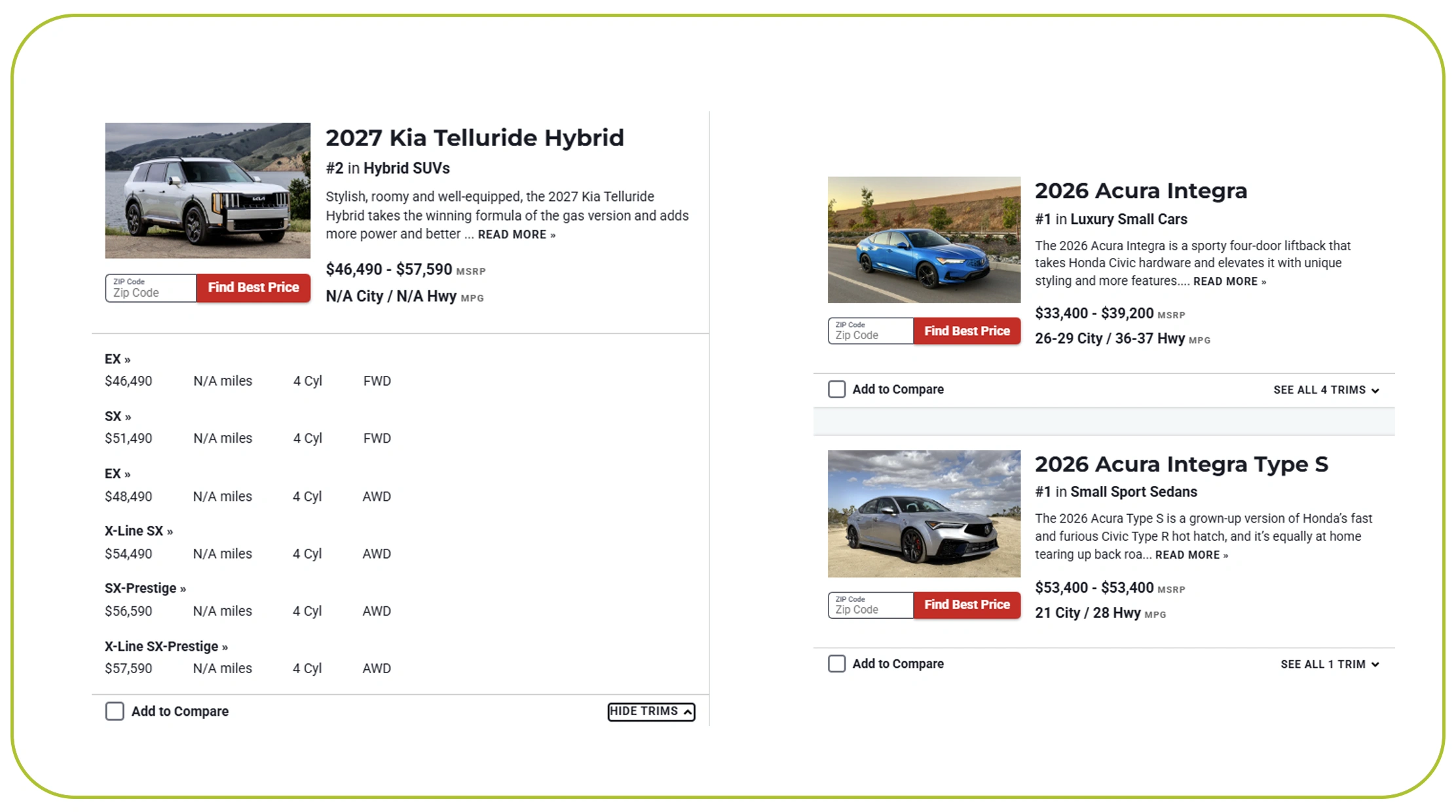
The modern car buyer arrives at the dealership already armed with data. Platforms like CarGurus algorithmically label every listing as "Great Deal," "Good Deal," "Fair Price," "High Price," or "Overpriced" based on real-time market comparisons — and consumers trust these labels. A vehicle flagged as "Overpriced" on CarGurus can sit unsold for weeks while an identically specced competitor unit priced $800 lower moves in days. The consumer's information advantage has never been greater — and the dealership that does not have access to the same market-wide pricing data that these platforms use is perpetually playing catch-up.
This is the core commercial case for web scraping solutions for automotive pricing intelligence in USA. By systematically extracting used car listings data for pricing analysis across the same platforms that buyers are consulting, dealerships gain symmetric information: they can see exactly what every comparable vehicle in their market is listed for, how long those vehicles have been sitting, when prices were reduced, and what the distribution of asking prices looks like by make, model, trim, year, and mileage — updated daily or more frequently.
"In automotive retail, the dealership with the best market pricing data doesn't just react faster — it sets prices that attract buyers before competitors even know demand has shifted."
Key Data Sources to Scrape USA Vehicle Price Trends
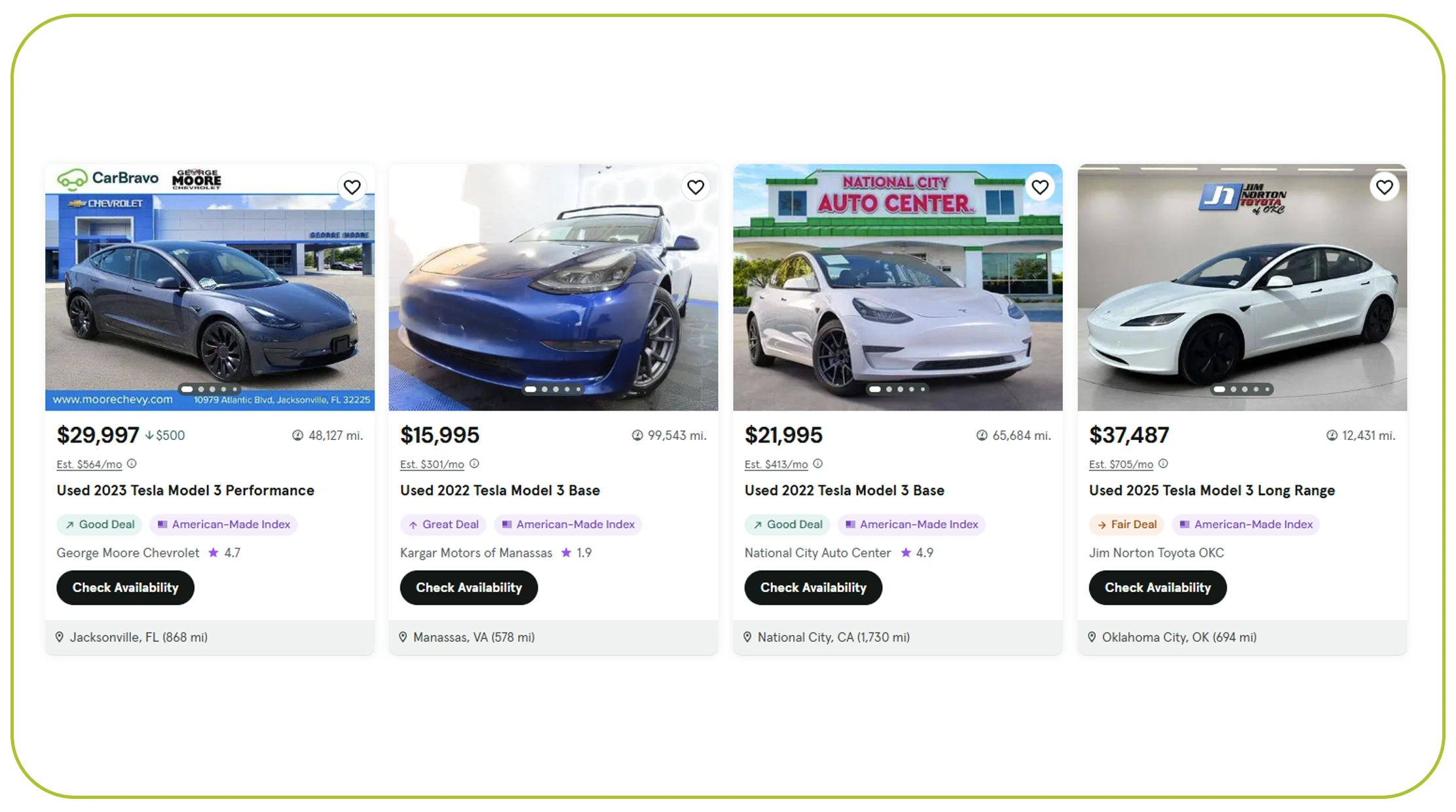
An effective automotive pricing intelligence scraping program draws from multiple platforms simultaneously, each contributing a distinct layer of market insight to the overall competitive picture.
- CarGurus: Market-based price ratings, days on market, price drop history, dealer ratings, and algorithmic deal scores for every active listing
- AutoTrader: New and used vehicle listings with full spec details, dealer pricing, certified pre-owned premiums, and private seller comparisons
- Cars.com: Listing prices, vehicle history report availability, dealer inventory depth, and consumer review signals by dealership
- Edmunds: True Market Value (TMV) pricing benchmarks, dealer invoice data, incentive and rebate tracking, and trade-in value estimates
- KBB / Kelley Blue Book: Retail and private party value ranges, trade-in value estimates, instant cash offer data, and certified pre-owned price premiums
- Dealer Websites: Direct competitor inventory listings, VDP pricing, special finance offers, and certified program pricing not always syndicated to aggregators
Tools and Infrastructure for Automotive Price Scraping
Selecting the right tools for web scraping USA vehicle price trends depends on the dealership's technical resources, the volume of listings being monitored, and the frequency of data refresh required. Most major automotive listing platforms use dynamic JavaScript rendering and anti-bot protections, requiring sophisticated browser automation and enterprise web crawling infrastructure for reliable, large-scale data extraction.
Python + Playwright
Browser automation for JS-rendered automotive platforms like CarGurus and AutoTrader — handles search filters, pagination, and dynamic VDP loading
Scrapy
High-throughput spider framework for crawling large dealer inventory feeds and multiple listing aggregators simultaneously at scale
Web Scraping API
Managed scraping infrastructure handling proxy rotation, CAPTCHA solving, and session management — the core of enterprise web crawling for automotive data
Enterprise Web Crawling
Distributed crawling systems designed for monitoring thousands of vehicle listings across dozens of platforms with configurable refresh schedules and alert triggers
Web Scraping Services USA
Managed end-to-end automotive data extraction and Web Scraping Services in USA for dealerships without in-house engineering resources — from data collection to structured delivery
PostgreSQL / BigQuery
Time-stamped vehicle pricing databases enabling historical trend analysis, days-on-market tracking, and dynamic pricing model development
# Real-time used car listings scraper — USA market pricing
import asyncio
from playwright.async_api import async_playwright
import pandas as pd
from datetime import datetime

async def scrape_vehicle_listings(make, model, zip_code, radius_miles):
    async with async_playwright() as p:
        browser = await p.chromium.launch(headless=True)
        page = await browser.new_page()
        url = (f"https://example-auto-platform.com/used-cars"
               f"?make={make}&model={model}&zip={zip_code}&radius={radius_miles}")
        await page.goto(url, wait_until="networkidle")
        listings = await page.query_selector_all(".vehicle-card")
        records = []
        for v in listings:
            price = await v.query_selector(".listing-price")
            year = await v.query_selector(".vehicle-year")
            mileage = await v.query_selector(".vehicle-mileage")
            trim = await v.query_selector(".vehicle-trim")
            dom = await v.query_selector(".days-on-market")
            records.append({
                "make": make,
                "model": model,
                "year": await year.inner_text() if year else None,
                "trim": await trim.inner_text() if trim else None,
                "price_usd": await price.inner_text() if price else None,
                "mileage": await mileage.inner_text() if mileage else None,
                "days_listed": await dom.inner_text() if dom else None,
                "market_zip": zip_code,
                "scraped_at": datetime.utcnow().isoformat(),
            })
        await browser.close()
        return pd.DataFrame(records)

# Extract used car listings data for pricing analysis — multiple makes
camry_data = asyncio.run(scrape_vehicle_listings("Toyota", "Camry", "90210", 50))
accord_data = asyncio.run(scrape_vehicle_listings("Honda", "Accord", "90210", 50))
f150_data = asyncio.run(scrape_vehicle_listings("Ford", "F-150", "10001", 75))
vehicle_dataset = pd.concat([camry_data, accord_data, f150_data])
vehicle_dataset.to_csv("usa_vehicle_pricing_dataset.csv", index=False)
Benefits of Scraping Car Price Data for Dealerships
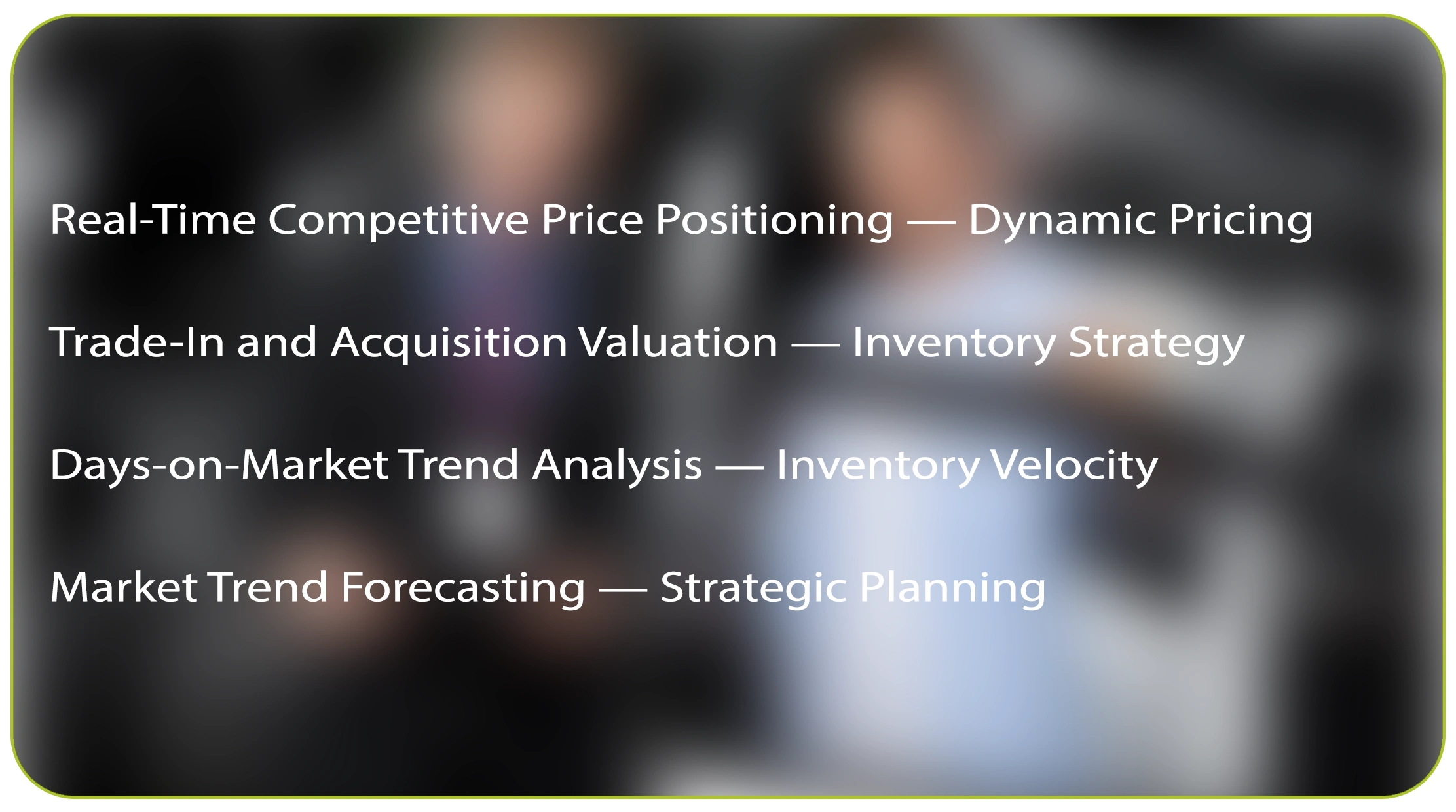
Real-Time Competitive Price Positioning — Dynamic Pricing
The most immediate benefit of real-time vehicle price monitoring for dealerships in the USA is the ability to position every unit competitively relative to comparable listings in the local market. Rather than pricing based on acquisition cost plus a target margin — a methodology that ignores market reality — scraped pricing data allows dealers to price each vehicle based on where the market actually is today, reducing days on lot and improving turn rate simultaneously.
Trade-In and Acquisition Valuation — Inventory Strategy
Accurate trade-in offers depend on knowing what a vehicle will actually sell for in the current market — not what KBB or Edmunds estimated last month. By scraping real-time retail and wholesale pricing data for specific make, model, trim, year, and mileage combinations, dealerships can make trade-in offers that are both competitive enough to win the deal and accurate enough to protect margin when the vehicle goes to the front line or to auction.
Days-on-Market Trend Analysis — Inventory Velocity
Extracting days-on-market data alongside listing prices from automotive platforms reveals a high-value insight: the price points at which vehicles of a specific type move quickly versus sit for extended periods. This analysis, updated continuously through enterprise web crawling, allows inventory managers to identify the sweet spot pricing range for every category they carry — and to flag units aging past their optimal window before they require a significant price reduction to move.
Market Trend Forecasting — Strategic Planning
Scraping USA vehicle price trends over rolling 30, 60, and 90-day windows builds a proprietary market trend dataset that reveals whether prices for specific segments are appreciating, depreciating, or stabilizing. This intelligence directly informs acquisition decisions — knowing that used truck prices in a regional market are trending downward over the next 30 days is critical information for a dealer considering a large wholesale purchase.
Dynamic Pricing Powered by Scraped Automotive Data
The most sophisticated application of web scraping in automotive retail is the integration of scraped market data into dynamic pricing engines — systems that automatically adjust vehicle listing prices based on real-time market conditions, inventory age, demand signals, and competitive positioning without requiring manual intervention from pricing managers.
| Vehicle Segment | Avg Market Price | Price Volatility | Optimal Reprice Cadence |
|---|---|---|---|
| Used Trucks (1–3 yr) | $38,500–$52,000 | High | Every 48–72 hours |
| Used SUVs (1–3 yr) | $28,000–$44,000 | Medium | Every 3–5 days |
| Used Sedans (1–3 yr) | $18,000–$28,000 | Medium | Every 5–7 days |
| EVs / Hybrids (1–3 yr) | $28,000–$48,000 | High | Every 24–48 hours |
| Luxury Vehicles (1–3 yr) | $45,000–$85,000 | Low–Medium | Every 7–10 days |
Dynamic pricing models fed by continuously scraped automotive market data allow dealerships to reduce average days on lot, improve gross margin per unit, and eliminate the human error of manual repricing — replacing subjective pricing decisions with data-driven rules that reflect actual market conditions in real time.
Enterprise Web Crawling for Multi-Location Dealer Groups
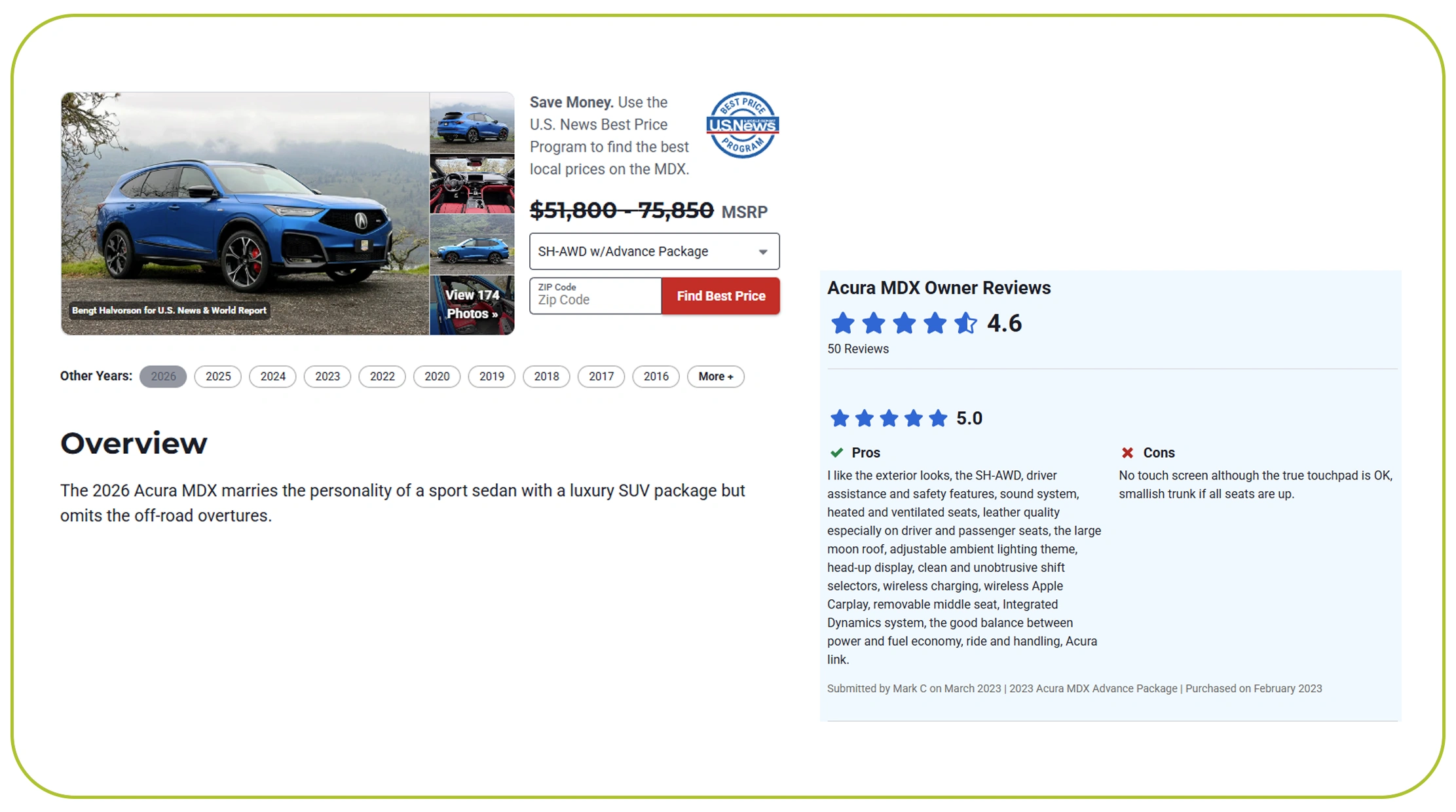
For dealer groups operating multiple franchises across several US markets, enterprise web crawling infrastructure unlocks a level of competitive intelligence that individual dealership-level scraping cannot match. A centralized enterprise crawling system that monitors vehicle pricing across all relevant platforms in every market where a dealer group operates produces a unified competitive intelligence layer that informs pricing strategy, inventory acquisition, and inter-dealership transfer decisions simultaneously.
Enterprise Web Crawling — Dealer Group Applications
- Cross-market price differential analysis — identifying markets within the dealer group's footprint where the same vehicle commands significantly higher prices, informing transfer and allocation decisions
- Centralized competitor monitoring across all dealership territories — tracking every competitor's inventory, pricing moves, and days-on-market performance from a single dashboard
- Unified trade-in valuation standards — ensuring consistent, market-data-driven trade-in offers across all locations regardless of individual manager experience
- Fleet and wholesale pricing intelligence — monitoring auction result data and wholesale pricing trends to support fleet acquisition and auction strategy at the group level
- New vehicle incentive and rebate tracking — systematically scraping manufacturer incentive programs and competitor new vehicle pricing to keep front-line new car prices competitive across all franchise locations
Conclusion: Data-Driven Dealerships Price Better, Sell Faster
The US automotive retail market has never been more transparent or more competitive on price. Consumers arrive at dealerships with more pricing data than most sales teams had five years ago, and platforms like CarGurus make it impossible to hide an overpriced unit from a buyer who knows how to look. For dealerships that want to compete effectively in this environment — pricing every unit optimally, turning inventory faster, making accurate trade-in offers, and forecasting market movements before they happen — web scraping solutions for automotive pricing intelligence in USA are no longer optional. They are the data foundation of competitive dealership operations.
Whether the application is real-time vehicle price monitoring for a single-point dealership, enterprise web crawling for a multi-location dealer group, or dynamic pricing automation powered by continuously refreshed market data, the infrastructure requirement is the same: clean, structured, continuously updated automotive pricing data that reflects what the market is actually doing right now across every relevant platform and competitor.
For dealerships and automotive data teams that want this capability without building and maintaining complex multi-platform scraping infrastructure, Real Data API is the most complete and production-ready solution available today. Real Data API provides structured, continuously refreshed access to a comprehensive vehicle pricing dataset spanning used car listings across all major US automotive platforms, new vehicle pricing and incentive data, days-on-market tracking, trade-in value benchmarks, and regional price trend analytics — all delivered through a clean, scalable web scraping API and enterprise web crawling infrastructure purpose-built for automotive pricing intelligence. From independent dealers monitoring their local market to national dealer groups running dynamic pricing engines across hundreds of locations, Real Data API delivers the automotive data foundation that turns pricing complexity into competitive advantage.
Real Data API — Automotive Pricing Intelligence for US Dealerships
Access real-time used car listings, new vehicle pricing, days-on-market data, trade-in value benchmarks, and USA vehicle price trends — all through a clean web scraping API and enterprise web crawling infrastructure built for dealership dynamic pricing and competitive market analytics.
Pricing figures are illustrative estimates based on publicly available market data. Always verify against current platform listings. Review each platform's Terms of Service before initiating any data collection program.
Latest posts
How Uber Eats API Helps Businesses Overcome Restaurant, Menu, and Pricing Data Challenges

How Myntra API Solves Fashion Retail Challenges with Fashion Product, Price, Brand, and Category Data

How Nykaa Fashion Dataset Solves Product, Price, Brand, and Fashion Market Trend Tracking Challenges

Harrods UK: The World's Leading Luxury Department Store - A Complete Guide to Harrods Data Scraping, API Access, and Datasets






.png)