Introduction
The used car market in the United States is undergoing a massive transformation driven by data, digital platforms, and dynamic pricing strategies. Among all states, California and Texas stand out as the most competitive and data-rich automotive markets, with millions of vehicle listings and constant price fluctuations.
For dealerships, auto marketplaces, and automotive analytics firms, understanding this fast-changing landscape is critical. Prices for used vehicles shift daily based on demand, mileage, inventory levels, fuel prices, and regional preferences. Relying on outdated or manual data collection methods is no longer viable.
This is where web scraping becomes a powerful solution. By enabling businesses to scrape used car listings in California and Texas for market insights, companies can unlock real-time intelligence, optimize pricing strategies, and gain a competitive edge.
Used Car Market Snapshot – California & Texas
| Metric | Value |
|---|---|
| Total Used Car Listings (CA + TX) | 5M+ |
| Daily Price Changes | 20–40% listings updated |
| Avg Price Variation | $500–$3,000 |
| Major Platforms | 10+ (AutoTrader, Cars.com, CarGurus) |
| Demand Growth (YoY) | 8–12% |
These figures highlight the importance of real-time used vehicle price data scraper in California and Texas solutions for accurate decision-making.
Why Automotive Businesses Need Data-Driven Pricing
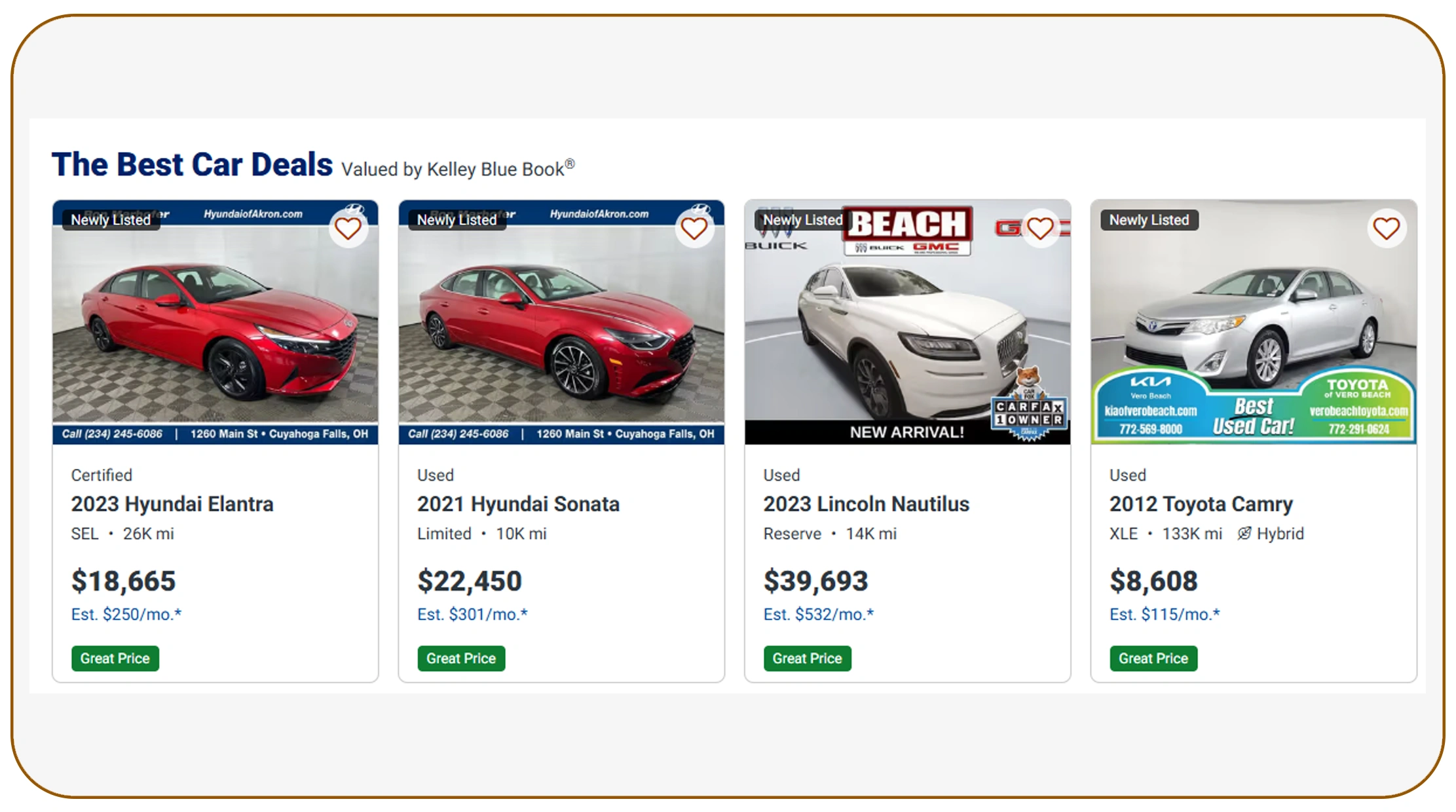
The used car market is influenced by multiple dynamic factors:
- Supply and demand fluctuations
- Vehicle condition and mileage
- Seasonal trends
- Fuel prices and economic conditions
- Regional preferences
For example, SUVs may have higher demand in Texas, while electric vehicles may trend more in California. Without real-time insights, dealerships risk:
- Overpricing inventory
- Missing competitive opportunities
- Losing customers to better-priced alternatives
By leveraging used car data collection for business intelligence USA, companies can:
- Optimize pricing strategies
- Improve inventory turnover
- Increase profit margins
- Enhance customer satisfaction
The Role of Web Scraping in Automotive Market Intelligence
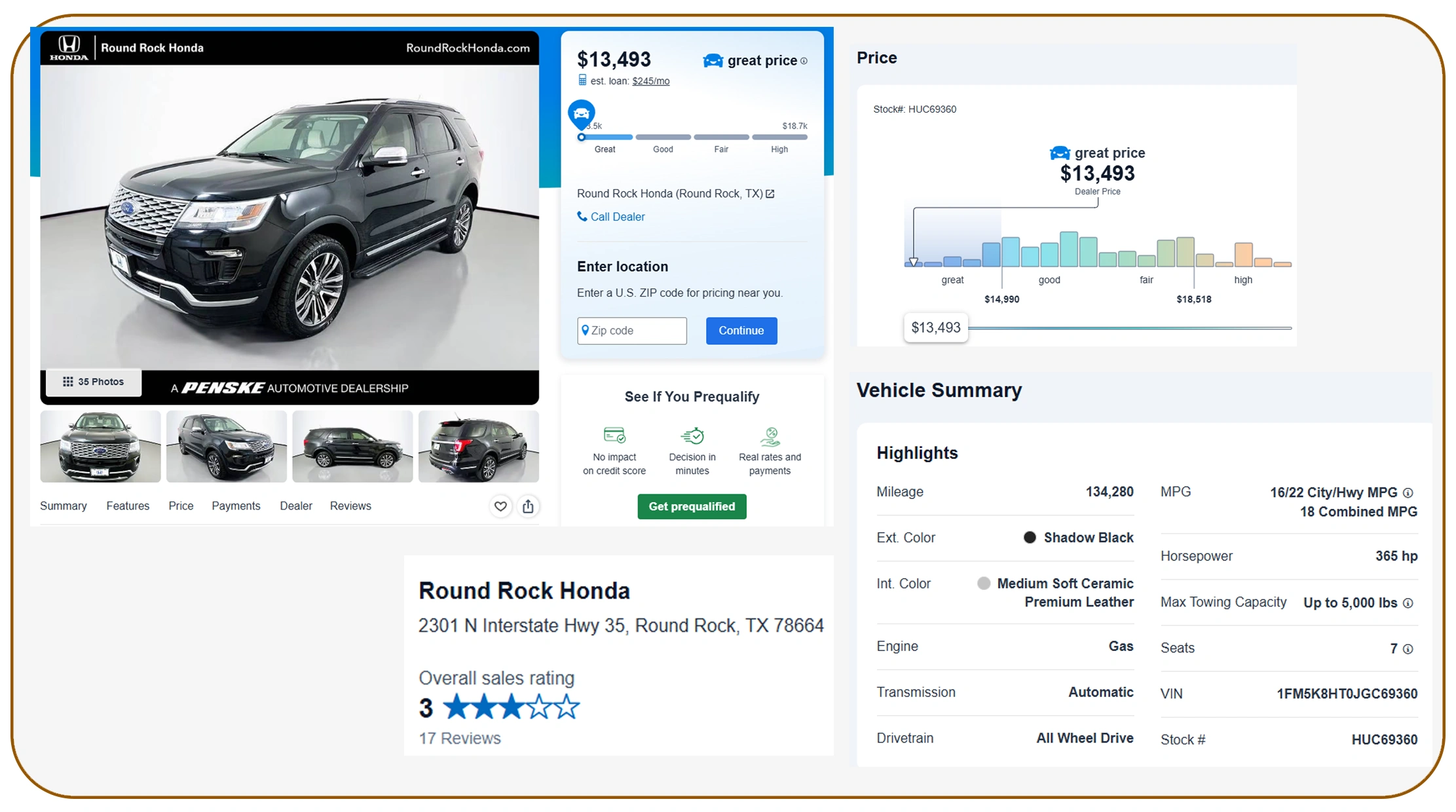
Web scraping automates the process of collecting structured data from multiple automotive platforms. It enables businesses to:
- Extract car listings, prices, and demand data in California and Texas
- Monitor competitor pricing in real time
- Track inventory availability
- Analyze customer demand patterns
Using advanced tools and enterprise web crawling, companies can collect millions of data points daily and convert them into actionable insights.
Key Data Sources for Used Car Insights
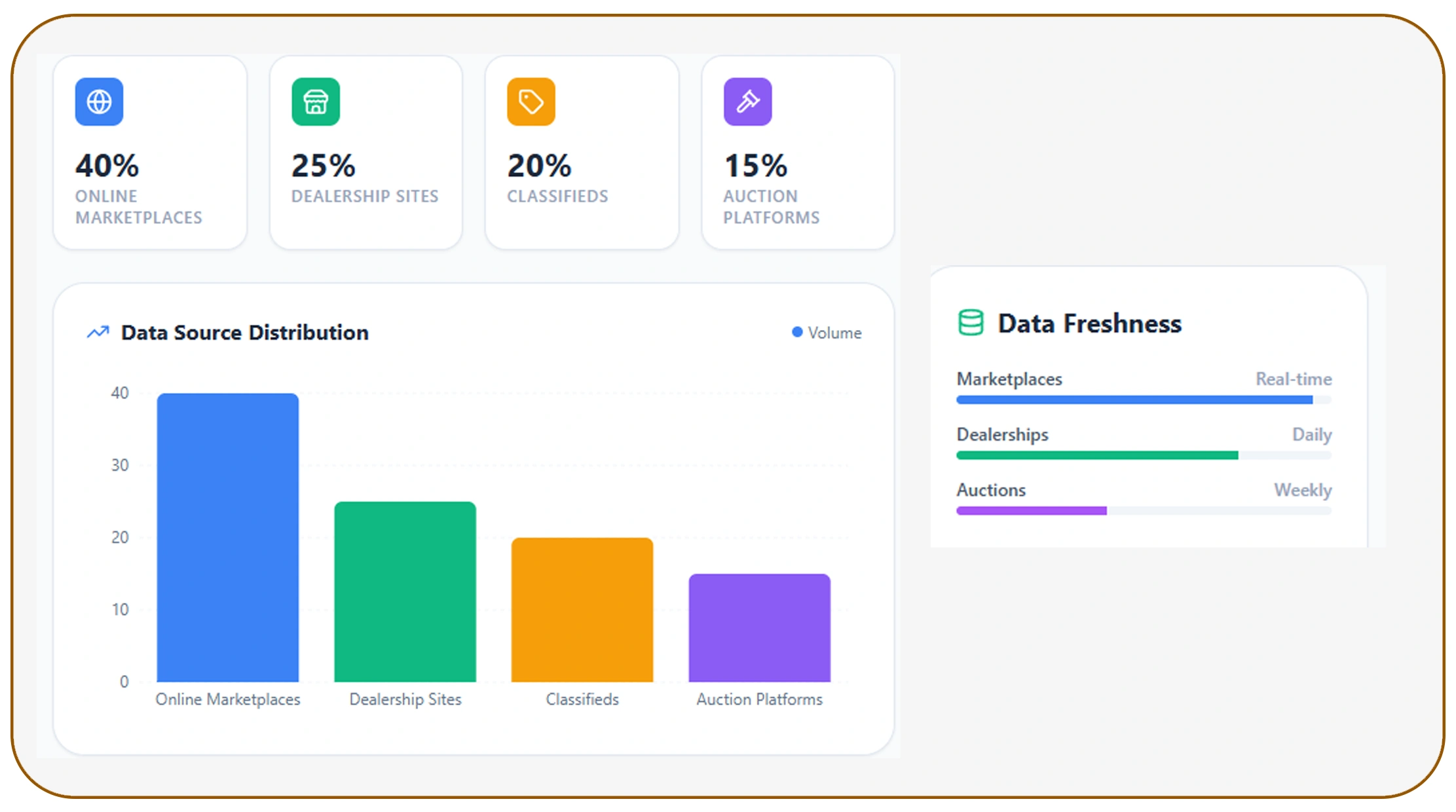
To build a comprehensive automotive dataset, businesses scrape data from:
- Online Automotive Marketplaces
● AutoTrader
● Cars.com
● CarGurus
These platforms provide:
● Vehicle prices
● Mileage and specifications
● Dealer vs private seller listings - Dealership Websites
Direct dealer sites offer:
● Exclusive pricing
● Promotions and discounts
● Inventory updates - Classified Platforms
● Craigslist
● Facebook Marketplace
Useful for tracking:
● Local demand trends
● Private seller pricing - Auction Platforms
● Manheim
● Copart
Provide insights into:
● Wholesale pricing trends
● Dealer acquisition costs
How Businesses Use Scraped Car Data
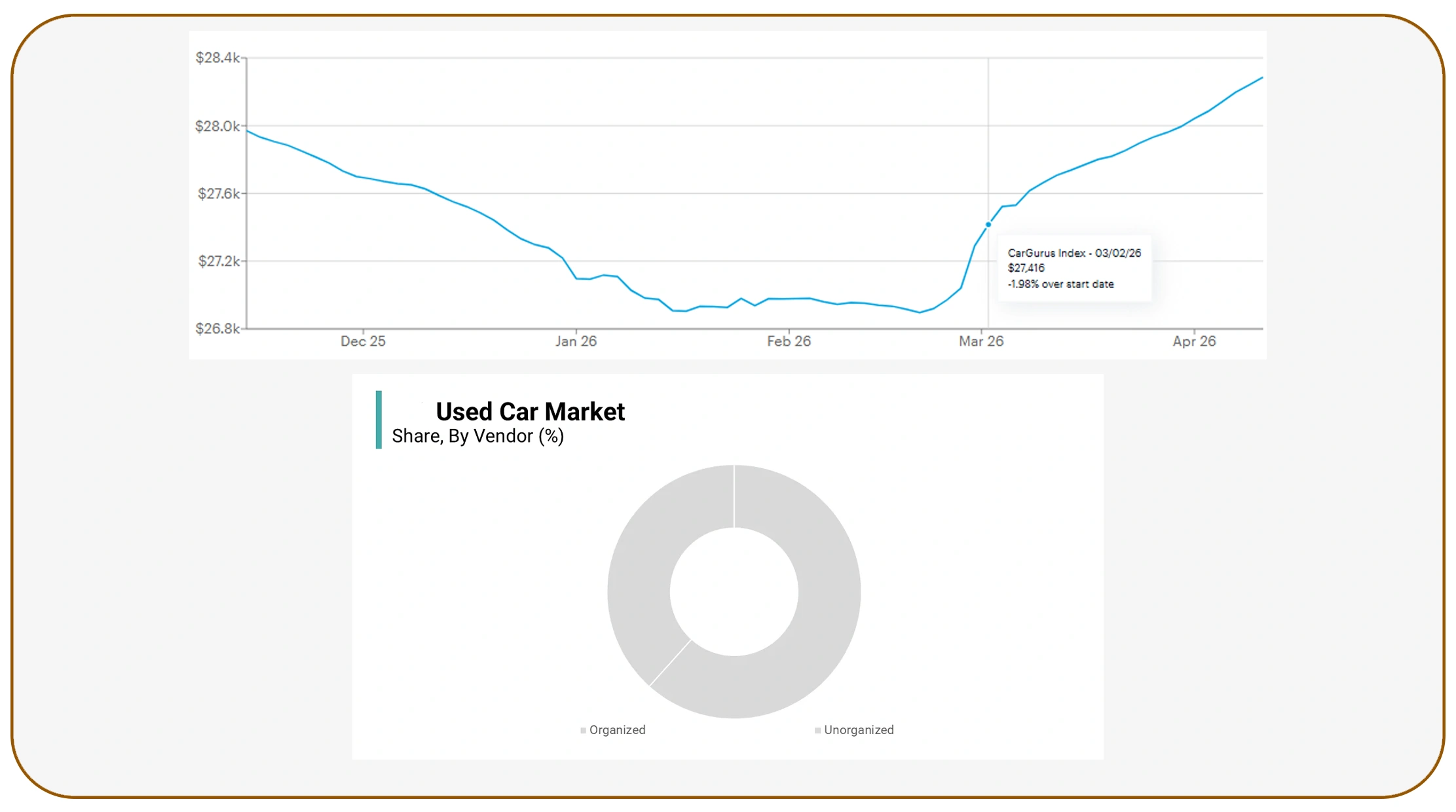
1. Dynamic Pricing Optimization
With dynamic pricing, dealerships can adjust vehicle prices in real time based on:
● Competitor listings
● Demand fluctuations
● Inventory levels
This ensures competitive positioning and faster sales.
2. Competitor Monitoring
By continuously tracking competitors, businesses can:
● Identify pricing gaps
● Detect underpriced or overpriced vehicles
● Adjust listings instantly
3. Demand Analysis
Scraped data helps businesses:
● Identify popular car models
● Understand regional preferences
● Forecast demand trends
This is crucial to analyze used car price trends in California and Texas effectively.
4. Inventory Management
Data insights allow dealerships to:
● Stock high-demand vehicles
● Avoid overstocking slow-moving inventory
● Optimize procurement decisions
Python Code: Used Car Listings Scraper for Pricing Analytics
Below is a simplified Python example to extract car listings, prices, and demand data in California and Texas:
import asyncio
from playwright.async_api import async_playwright
import pandas as pd
from datetime import datetime

async def scrape_used_cars(location):
   async with async_playwright() as p:
       browser = await p.chromium.launch(headless=True)
       page = await browser.new_page()

       url = f"https://example-car-site.com/search?location={location}"
       await page.goto(url, wait_until="networkidle")

       listings = await page.query_selector_all(".car-listing")
       results = []

       for car in listings:
           title = await car.query_selector(".title")
           price = await car.query_selector(".price")
           mileage = await car.query_selector(".mileage")

           results.append({
               "location": location,
               "car_title": await title.inner_text() if title else None,
               "price": await price.inner_text() if price else None,
               "mileage": await mileage.inner_text() if mileage else None,
               "scraped_at": datetime.utcnow().isoformat()
           })

       await browser.close()
       return pd.DataFrame(results)

california = asyncio.run(scrape_used_cars("california"))
texas = asyncio.run(scrape_used_cars("texas"))

dataset = pd.concat([california, texas])
dataset.to_csv("used_car_data.csv", index=False)
This approach helps build a structured dataset for used car data collection for business intelligence USA.
Web Scraping API Use Cases in Automotive Industry
Using a Web Scraping API, businesses can scale data extraction efficiently.
Key Use Cases:
- Real-time vehicle price tracking
- Competitor benchmarking
- Market demand analysis
- Inventory optimization
- Predictive pricing models
Building a High-Quality Automotive Dataset
A comprehensive dataset includes:
- Vehicle price history
- Mileage and specifications
- Location-based demand
- Seller type (dealer vs private)
- Listing duration
This dataset enables advanced analytics and forecasting.
Challenges in Used Car Data Scraping
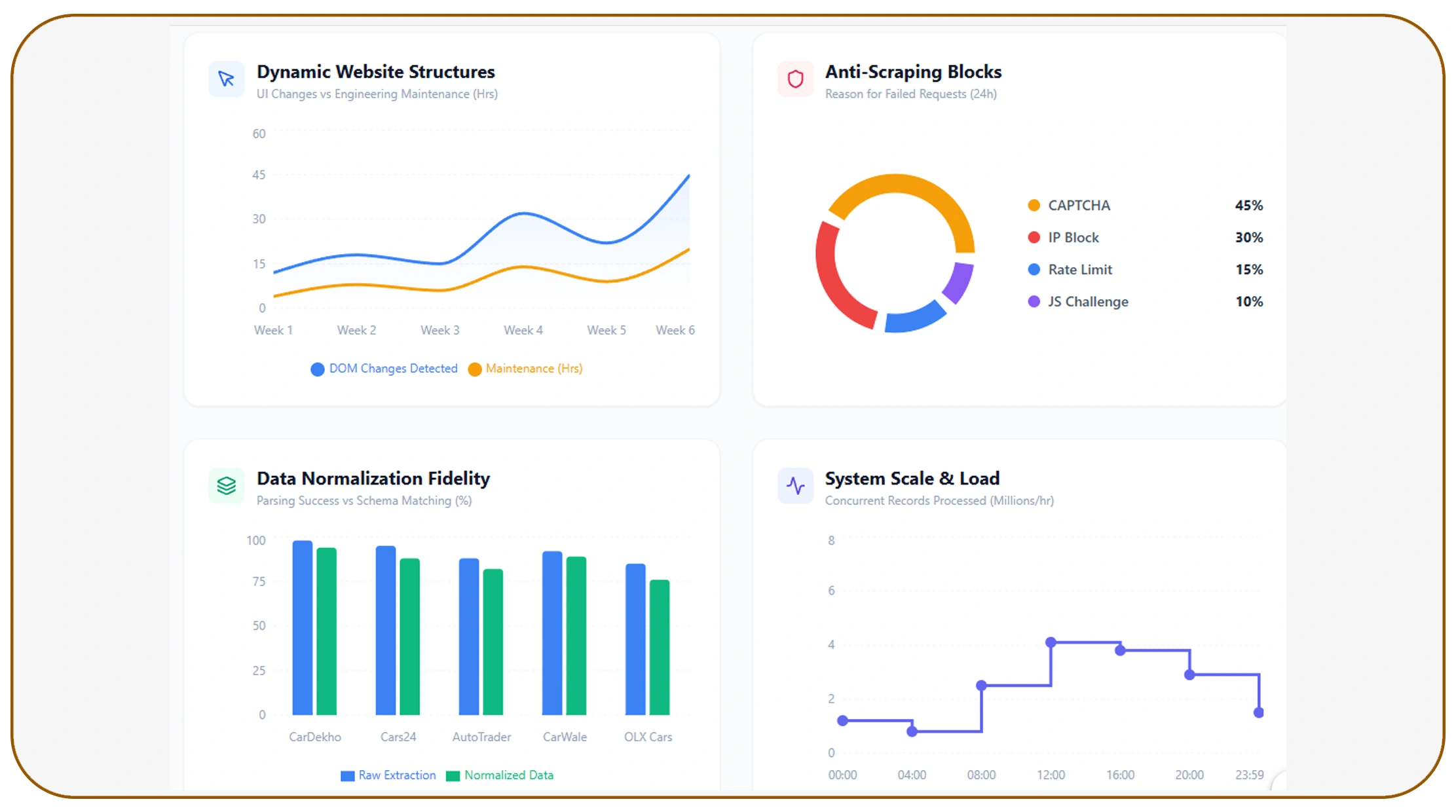
1. Dynamic Website Structures
Frequent UI changes require scraper updates.
2. Anti-Scraping Measures
CAPTCHA, IP blocking, and rate limits.
3. Data Normalization
Different formats across platforms.
4. Scale Requirements
Handling millions of listings daily.
Best Practices for Automotive Data Scraping
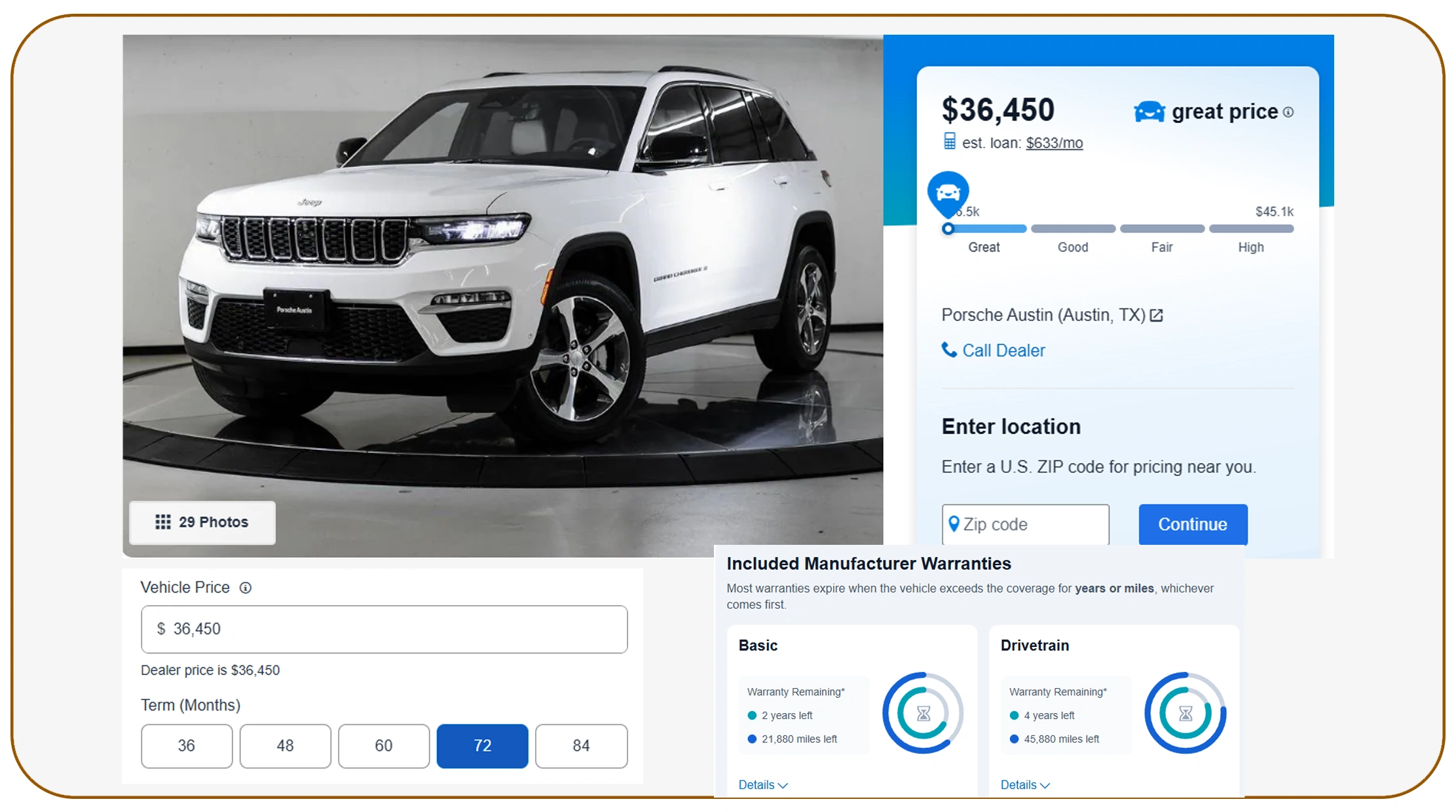
- Use reliable Web Scraping Services USA
- Implement proxy rotation
- Automate data cleaning
- Ensure compliance with platform policies
- Use scalable enterprise web crawling infrastructure
Future of Automotive Pricing Intelligence
The future lies in:
- AI-driven pricing engines
- Predictive analytics
- Real-time dashboards
- Automated decision-making
Companies investing in real-time used vehicle price data scraper in California and Texas solutions will dominate the market.
Conclusion: Unlock Automotive Insights with Real Data API
In today’s competitive automotive landscape, success depends on how effectively businesses can scrape used car listings in California and Texas for market insights and convert that data into actionable strategies.
From used car data collection for business intelligence USA to dynamic pricing optimization, web scraping empowers dealerships and automotive platforms to stay ahead of the competition.
However, building and maintaining large-scale scraping infrastructure can be complex and resource-intensive. That’s where Real Data API comes in.
Why Real Data API?
Real Data API is a powerful, enterprise-grade solution designed for automotive intelligence and large-scale data extraction. It offers:
- Real-time used vehicle pricing data across California and Texas
- Scalable Web Scraping API infrastructure
- Clean, structured, and analytics-ready datasets
- Support for enterprise web crawling
- Reliable and maintenance-free data pipelines
Take Action Now
If you're looking to:
- Extract car listings, prices, and demand data in California and Texas
- Build advanced pricing models
- Monitor competitors in real time
- Scale your automotive data strategy
Start using Real Data API today and transform your automotive business with data-driven insights.
Real Data API — Powering Smarter Automotive Pricing Decisions.
Latest posts
How To Solve Product Data Tracking Challenges At Scale with Costco Web Data Scraper For Product Information
Truthsocial Data Scraping For Real-Time Social Media Insights

Zara Web Data Scraper For Fashion Trend Analysis - How Retailers Overcome Fast-Changing Fashion Demand & Inventory Challenges
How Real Estate Web Scraping Using Bayut API Solves Rental Pricing and Property Tracking Problems?






.png)