
Introduction
India's real estate market has become increasingly data-driven since the implementation of RERA. With over 1.2 lakh registered projects across states by 2026, developers, lenders, investors, and proptech firms rely heavily on verified regulatory data to make informed decisions. Businesses that can extract RERA project and builder data efficiently gain a measurable competitive edge in identifying growth zones, tracking developer performance, and validating compliance records.
However, manually gathering data from multiple state portals is time-consuming and inconsistent. Each state has its own structure, search filters, and reporting formats. To build actionable dashboards and lead pipelines, companies must also scrape RERA portals for real estate insights in a structured, automated, and scalable way.
This blog explores how Real Data API helps organizations convert fragmented RERA listings into actionable intelligence. From compliance tracking to predictive market analytics, you'll discover how automation transforms regulatory data into revenue-generating opportunities.
Building Regulatory Transparency into Business Decisions
Regulatory transparency directly impacts investment safety and brand credibility. Businesses that implement RERA project compliance data extraction systems can proactively monitor approval status, project timelines, and litigation updates.
Between 2020 and 2026, RERA registrations grew steadily across major states:
| Year | Registered Projects (India) | Compliance Updates Filed (%) |
|---|---|---|
| 2020 | 72,000+ | 58% |
| 2021 | 85,000+ | 61% |
| 2022 | 97,000+ | 65% |
| 2023 | 1,05,000+ | 69% |
| 2024 | 1,12,000+ | 73% |
| 2025 | 1,18,000+ | 76% |
| 2026 | 1,22,000+ | 80% |
As compliance reporting increased by nearly 22% in six years, so did the need for accurate tracking. Extracted compliance data allows businesses to:
- Identify delayed projects
- Flag incomplete documentation
- Analyze builder filing frequency
- Track litigation or penalties
For lenders, this reduces default risk exposure. For brokerages, it improves credibility by recommending verified developments. For investors, it supports portfolio diversification decisions based on compliance history.
When compliance data becomes structured and searchable, it moves from regulatory paperwork to strategic business intelligence.
Turning Listings into Actionable Intelligence
RERA portals contain valuable details about carpet area, project stage, completion deadlines, and promoter background. A Real-time RERA property intelligence data scraper ensures that this information is updated automatically without manual intervention.
Real-time intelligence has shown measurable business benefits:
| Metric | Without Automation | With Real-Time Extraction |
|---|---|---|
| Data Refresh Cycle | 30–45 days | 24–48 hours |
| Lead Identification Time | 2–3 weeks | 2–3 days |
| Accuracy Rate | ~70% | 95%+ |
| Manual Effort | High | Minimal |
From 2020 to 2026, housing launches increased by nearly 35% in Tier 1 and Tier 2 cities combined. Without real-time scraping, many businesses miss early-stage project announcements — a critical window for sales and marketing outreach.
Automated intelligence enables:
- Early detection of new launches
- Builder expansion tracking
- Location-based supply analysis
- Data-backed sales targeting
This transforms raw portal listings into a continuously updated intelligence engine.
Unlocking State-Level Market Trends
India's housing market varies significantly across states. By implementing Web Scraping RERA housing market data, companies can compare supply trends, construction pace, and regional builder activity.
Housing supply trends (2020–2026 estimate):
| Year | Tier 1 Supply Growth | Tier 2 Supply Growth |
|---|---|---|
| 2020 | -12% (Pandemic Impact) | -8% |
| 2021 | +15% | +18% |
| 2022 | +22% | +27% |
| 2023 | +19% | +24% |
| 2024 | +16% | +21% |
| 2025 | +14% | +19% |
| 2026 | +12% | +17% |
Tier 2 cities have shown faster percentage growth compared to metro markets since 2021. Scraped housing data helps businesses:
- Identify emerging micro-markets
- Monitor inventory build-up
- Analyze completion ratios
- Benchmark pricing strategies
For example, if a city shows rising registrations but declining completion updates, it may signal future supply bottlenecks. Such insights are only visible when data is structured and aggregated over time.
API-Driven Automation for Scalable Growth
Manual scraping scripts are fragile and hard to maintain. A structured Web Scraping Real Estate Data API centralizes data extraction, validation, and delivery into standardized formats like JSON or CSV.
API adoption in real estate analytics grew significantly between 2020 and 2026:
| Year | Companies Using Data APIs (%) |
|---|---|
| 2020 | 28% |
| 2021 | 35% |
| 2022 | 44% |
| 2023 | 52% |
| 2024 | 61% |
| 2025 | 69% |
| 2026 | 74% |
An API-based approach ensures:
- Uniform schema across states
- Scheduled automatic updates
- Seamless CRM integration
- Reduced technical overhead
Businesses integrating API feeds into dashboards saw up to 30% faster reporting cycles. Instead of maintaining separate scripts for each portal, companies can rely on a centralized data infrastructure that scales with expansion.
Structuring Data for Smarter Segmentation
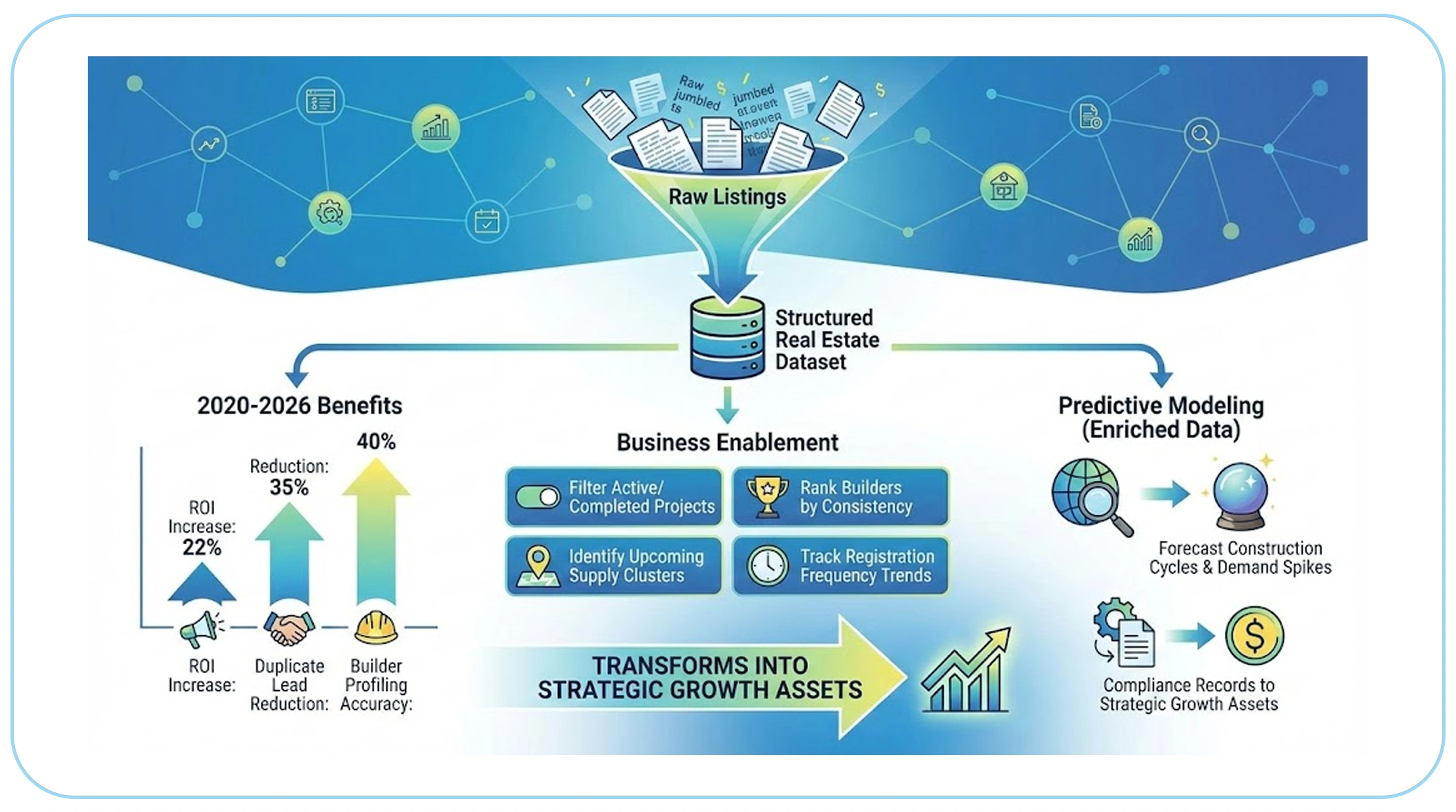
Raw listings are only valuable when organized into a structured Real Estate Dataset. Clean datasets allow segmentation by city, developer, project stage, ticket size, or approval date.
Between 2020 and 2026, structured real estate datasets helped:
- Increase targeted campaign ROI by 22%
- Reduce duplicate lead outreach by 35%
- Improve builder profiling accuracy by 40%
A structured dataset enables businesses to:
- Filter active vs. completed projects
- Rank builders by completion consistency
- Identify upcoming supply clusters
- Track registration frequency trends
When datasets are enriched with location tags and historical records, predictive modeling becomes possible. Companies can forecast construction cycles and demand spikes based on past patterns.
Structured data transforms compliance records into strategic growth assets.
Driving Competitive Advantage Through Analytics
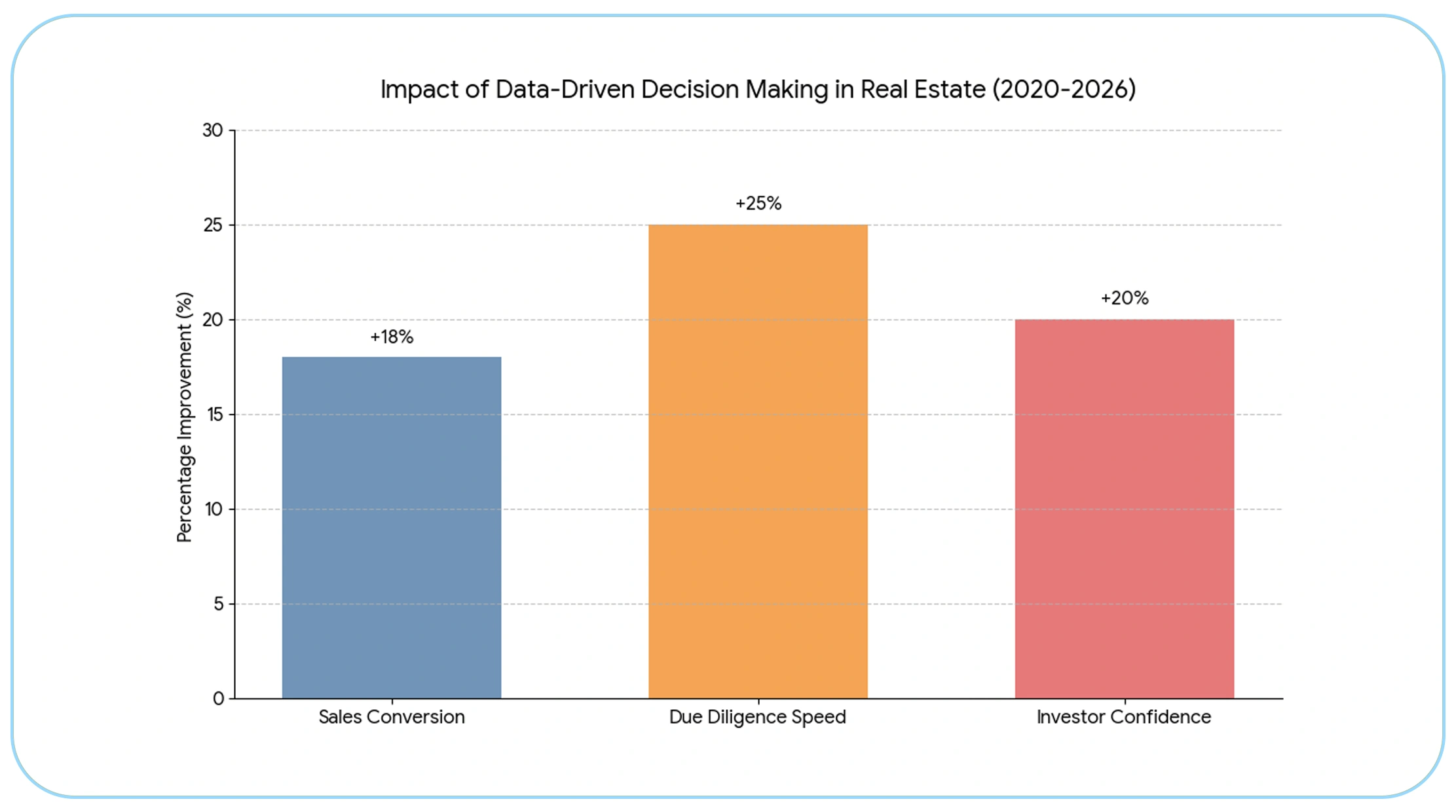
Data-backed decision-making defines modern Market Research in real estate. From 2020 to 2026, analytics adoption in property firms increased by nearly 48%.
Data-driven firms reported:
- 18% higher sales conversion rates
- 25% faster due diligence processes
- 20% improvement in investor confidence
Analytics derived from RERA data supports:
- Risk profiling of developers
- Geographic expansion planning
- Demand-supply gap analysis
- Competitive benchmarking
Instead of relying solely on broker feedback or fragmented listings, businesses can validate trends using verified regulatory filings. This improves credibility in board-level presentations and investor reports.
When regulatory data becomes analyzable, it evolves into a long-term strategic asset.
Why Choose Real Data API?
Real Data API simplifies Scraping Real Estate Data With Python and enterprise automation frameworks. It provides scalable infrastructure to extract RERA project and builder data from multiple state portals without dealing with frequent structural changes.
Key advantages:
- Multi-state coverage
- Clean, normalized datasets
- Scheduled updates
- API-ready outputs
- CRM and BI tool compatibility
Instead of building custom scripts and maintaining them internally, businesses can rely on Real Data API for secure, structured, and compliant data extraction. Whether you're a proptech startup or an institutional investor, automation ensures reliability and scalability.
Conclusion
The ability to extract RERA project and builder data efficiently determines how quickly a business can respond to market shifts, identify opportunities, and reduce compliance risks. Automated data pipelines transform scattered portal information into structured intelligence for sales, research, and risk management.
With Real Data API, you gain access to accurate, scalable, and real-time property intelligence that fuels smarter decisions and stronger lead pipelines.
Ready to turn regulatory data into revenue-driving insights? Get started with Real Data API today!
Latest posts

How Real Estate Data Scraping Help Maximize Investment Opportunities with Real-Time Property Listings and Investment Insights
How Instacart API for grocery availability data Helps Retailers Solve Real-Time Stock Visibility Challenges

Why Swiggy API for real-time food delivery data Matters for Tracking Menus, Offers, Availability, and Competitor Trends

How ecommerce scraping API for real-time product data Helps Businesses Track Prices, Inventory, and Competitor Changes







.png)



