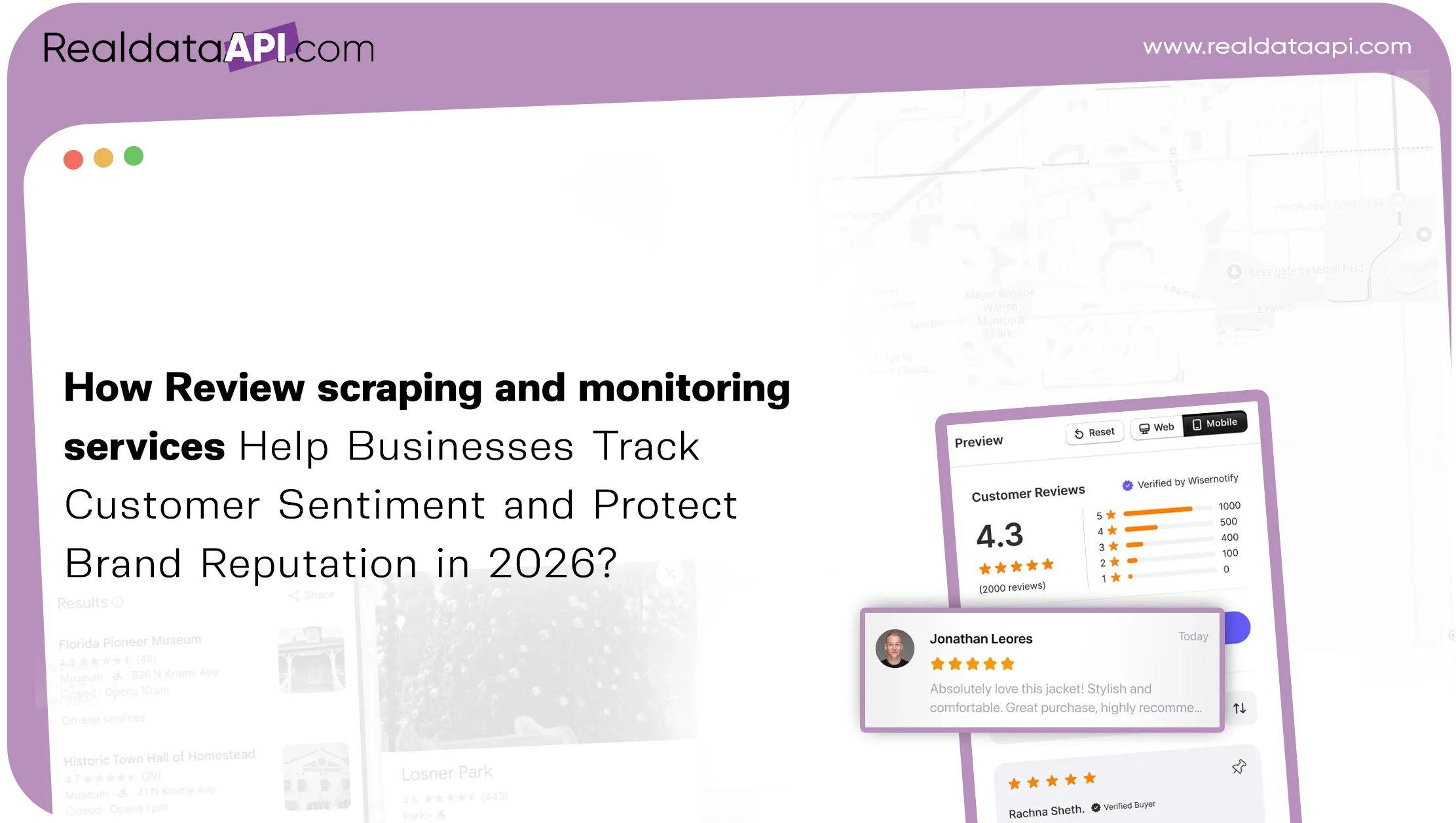
Introduction
Businesses can strengthen brand reputation, improve customer satisfaction, and respond faster to market changes by using Review scraping and monitoring services. Automated review intelligence enables organizations to monitor customer opinions across multiple platforms, identify sentiment trends, and make data-driven decisions that enhance products, services, and customer experiences.
Industry Insight (2026): Industry estimates suggest that more than 93% of consumers read online reviews before making a purchase, while organizations using automated reputation monitoring report up to 35% faster response times to customer issues and significantly higher customer retention.
Customer reviews have become one of the most influential factors in purchasing decisions. Every day, consumers share opinions about products, restaurants, hotels, healthcare providers, retailers, and digital services across multiple review platforms. These reviews contain valuable insights that help businesses understand customer expectations, identify recurring issues, and benchmark competitors.
By leveraging Web Scraping Services, organizations can automatically collect and organize publicly available review data from multiple sources into structured datasets. This enables marketing teams, customer experience managers, product teams, and business analysts to monitor reputation, evaluate customer satisfaction, and respond proactively to changing market sentiment.
How Can Businesses Monitor Customer Reviews More Efficiently?
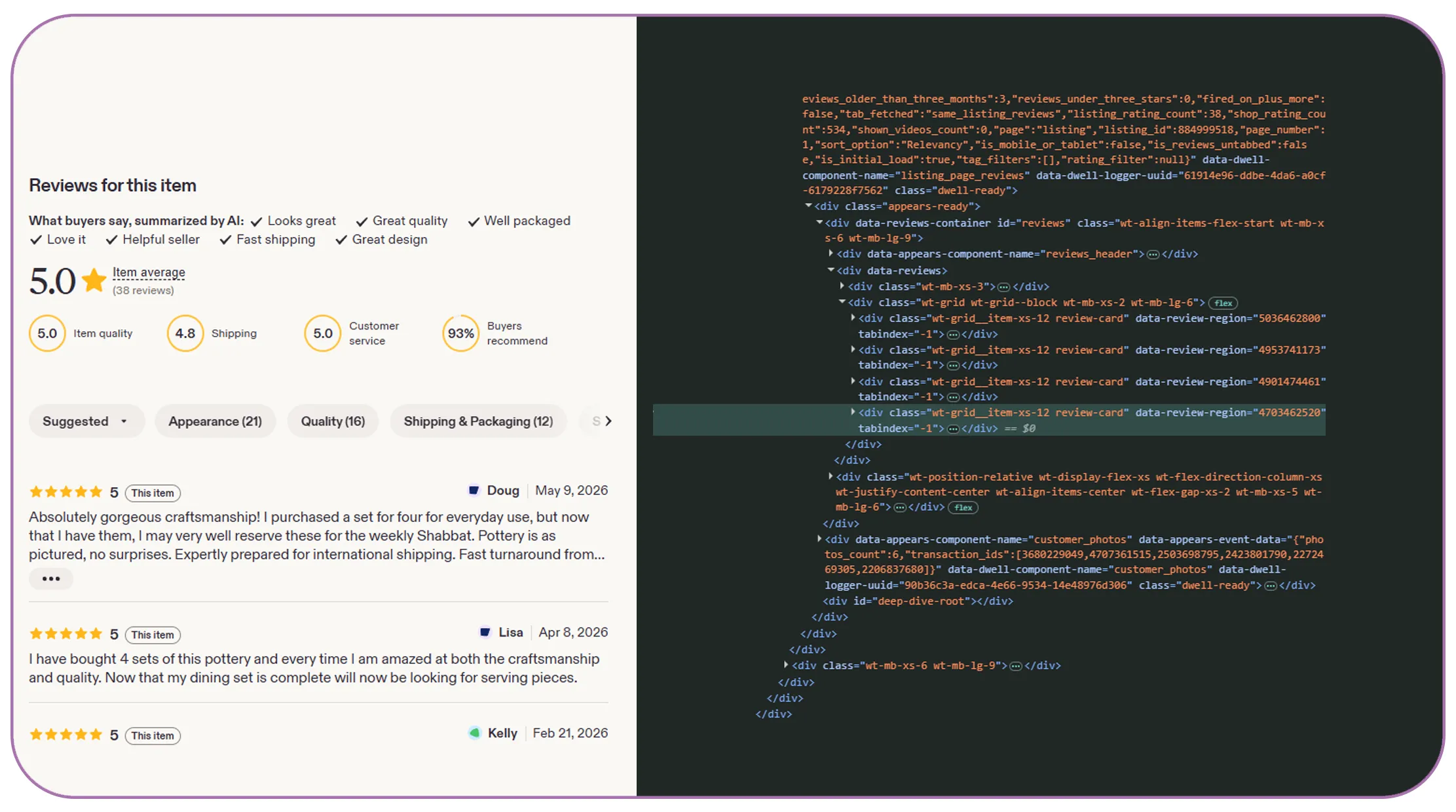
Customer reviews appear continuously across multiple websites and platforms. Monitoring each source manually is inefficient and often results in delayed responses. Automated review monitoring enables businesses to collect new reviews quickly, helping teams respond to customer concerns before they affect brand reputation.
Organizations increasingly Scrape Customer review monitoring across multiple platforms to collect ratings, review text, reviewer information, timestamps, product references, and response history. These structured datasets support customer experience improvement, reputation management, competitive benchmarking, and service quality analysis.
Benefits of Automated Review Monitoring
- Collect reviews automatically.
- Monitor multiple platforms simultaneously.
- Detect negative feedback quickly.
- Compare competitor ratings.
- Identify recurring customer complaints.
- Improve customer response strategies.
Customer Review Monitoring Trends (2020–2026)
| Year | Reviews Collected | Platforms Monitored | Businesses Using Automated Monitoring |
|---|---|---|---|
| 2020 | 38 Million | 15 | 30% |
| 2021 | 52 Million | 20 | 38% |
| 2022 | 71 Million | 26 | 47% |
| 2023 | 96 Million | 33 | 57% |
| 2024 | 126 Million | 41 | 67% |
| 2025 | 161 Million | 50 | 76% |
| 2026* | 203 Million | 61 | 85% |
Projected estimates.
Key Insights
- Online reviews continue to grow every year.
- Businesses increasingly automate review monitoring.
- Early detection improves customer satisfaction.
- Competitor review tracking strengthens market positioning.
- Structured review data supports better decision-making.
- Continuous monitoring reduces reputation risks.
Organizations that automate review monitoring can react faster to customer concerns, strengthen brand trust, and improve long-term customer loyalty.
How Can Review Intelligence Improve Business Decisions?
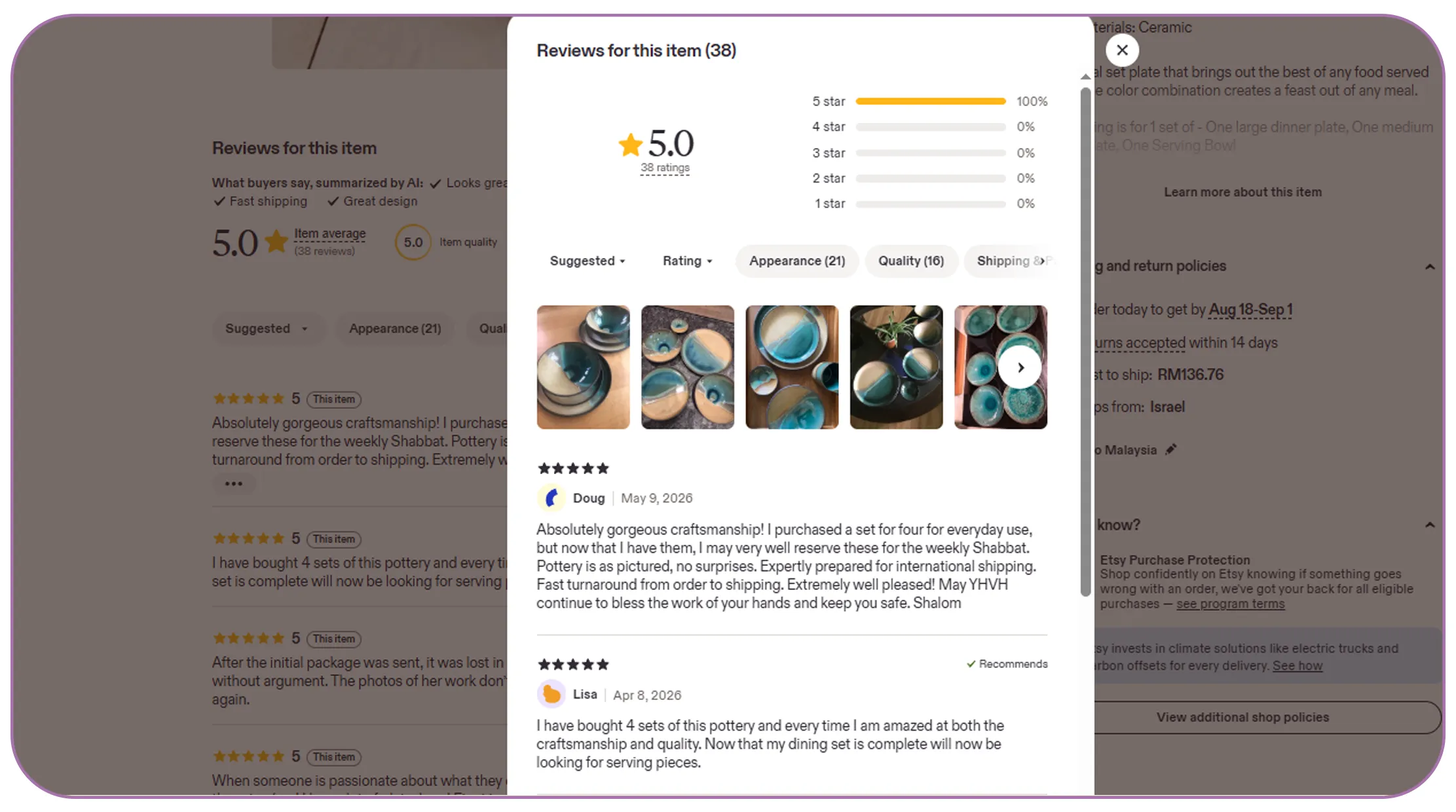
Customer reviews provide valuable information beyond star ratings. They reveal customer expectations, product quality concerns, delivery experiences, pricing opinions, and service performance. Businesses that analyze review intelligence gain actionable insights for improving products and customer experiences.
Companies increasingly scrape Review data intelligence for global brands to evaluate customer satisfaction across regions, product categories, and competitors. This structured information enables decision-makers to prioritize product improvements, optimize marketing strategies, and benchmark brand performance globally.
Business Applications
- Measure customer satisfaction.
- Compare global brand reputation.
- Track recurring product issues.
- Improve product development.
- Support marketing campaigns.
- Benchmark competitors.
Global Review Intelligence Growth (2020–2026)
| Year | Reviews Analyzed | Brands Covered | Review Analysis Accuracy |
|---|---|---|---|
| 2020 | 82 Million | 4,800 | 88% |
| 2021 | 106 Million | 6,100 | 90% |
| 2022 | 138 Million | 7,900 | 92% |
| 2023 | 177 Million | 10,300 | 95% |
| 2024 | 225 Million | 13,100 | 97% |
| 2025 | 282 Million | 16,500 | 98% |
| 2026* | 348 Million | 20,400 | 99% |
Projected estimates.
Key Insights
- Global review volumes continue to increase rapidly.
- Structured review intelligence improves strategic planning.
- Customer feedback identifies emerging product trends.
- Competitive review analysis supports market positioning.
- Automated analytics reduce manual research time.
- Review intelligence enables continuous improvement across products and services.
Businesses that leverage review intelligence gain a deeper understanding of customer expectations, enabling them to improve brand reputation, strengthen customer relationships, and make more informed business decisions.
How Can Businesses Automate Customer Feedback Collection?
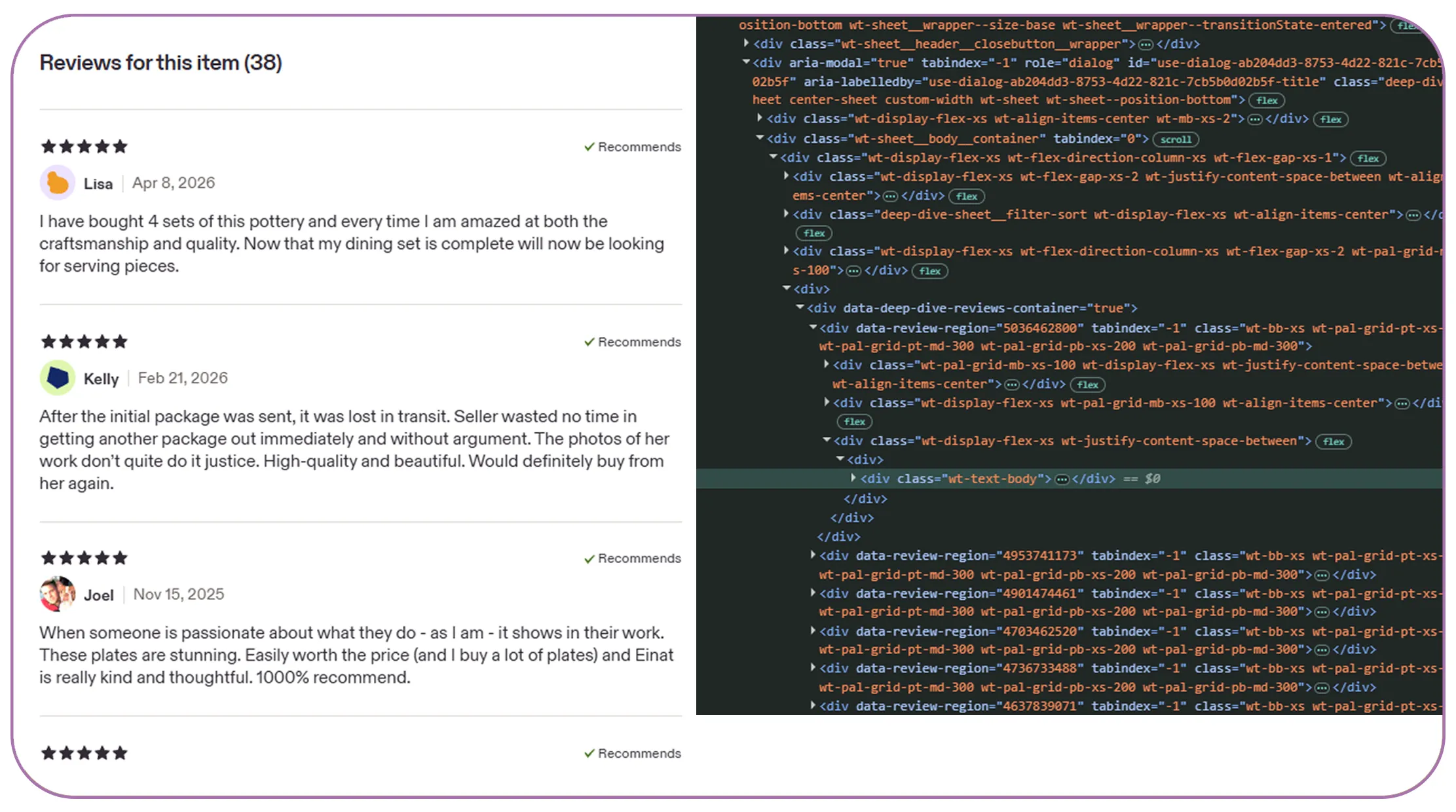
Customer feedback is generated across eCommerce marketplaces, review portals, mobile apps, social platforms, and industry-specific websites every minute. Manually collecting and organizing this information is slow and often incomplete. Automation allows businesses to capture large volumes of customer feedback consistently while reducing operational effort.
Organizations increasingly implement web scraping Customer feedback automation for enterprises to collect publicly available reviews, ratings, comments, timestamps, product references, and merchant responses from multiple sources. The collected data is transformed into structured datasets that support customer experience management, product development, quality assurance, and competitive benchmarking.
Key Benefits
- Automate large-scale review collection.
- Reduce manual monitoring effort.
- Centralize customer feedback.
- Identify recurring service issues.
- Improve product development decisions.
- Support enterprise reporting.
Enterprise Customer Feedback Automation Trends (2020–2026)
| Year | Feedback Records Collected | Enterprises Using Automation | Data Processing Accuracy |
|---|---|---|---|
| 2020 | 95 Million | 28% | 89% |
| 2021 | 124 Million | 36% | 91% |
| 2022 | 162 Million | 45% | 93% |
| 2023 | 209 Million | 56% | 95% |
| 2024 | 271 Million | 66% | 97% |
| 2025 | 339 Million | 75% | 98% |
| 2026* | 420 Million | 84% | 99% |
Projected estimates.
Key Insights
- Customer feedback volumes continue to grow rapidly.
- Automation improves operational efficiency.
- Centralized review management enhances collaboration.
- Faster data collection supports proactive issue resolution.
- Enterprise automation improves customer satisfaction.
Organizations that automate customer feedback collection gain better visibility into customer expectations while improving decision-making across marketing, operations, and product teams.
How Can Customer Opinions Be Converted into Actionable Insights?
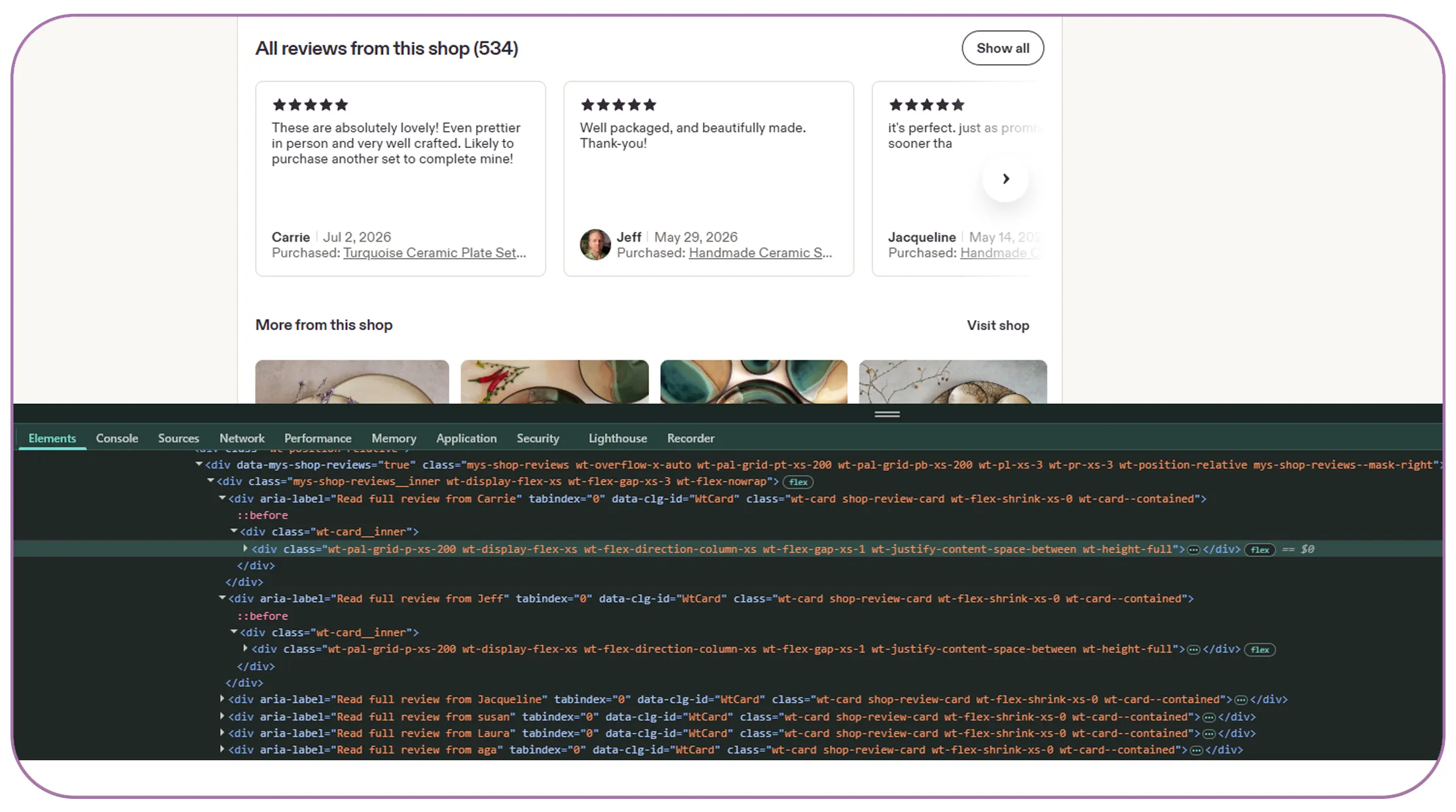
Collecting reviews is only the beginning. Businesses need to understand whether customer opinions are positive, negative, or neutral and identify the topics driving those opinions. This enables organizations to prioritize improvements, strengthen customer relationships, and reduce churn.
Businesses increasingly leverage Sentiment Analysis to classify customer feedback, detect emotional trends, measure brand perception, and identify recurring complaints or compliments. Advanced analytics can reveal patterns across products, services, locations, and competitors, helping organizations respond faster to changing customer expectations.
Business Applications
- Measure customer satisfaction.
- Detect emerging issues early.
- Improve product quality.
- Monitor competitor reputation.
- Support customer service teams.
- Optimize marketing campaigns.
Customer Sentiment Analytics Trends (2020–2026)
| Year | Reviews Processed | Positive Sentiment Detection | AI-Based Classification Accuracy |
|---|---|---|---|
| 2020 | 110 Million | 82% | 87% |
| 2021 | 145 Million | 84% | 90% |
| 2022 | 189 Million | 86% | 92% |
| 2023 | 245 Million | 88% | 95% |
| 2024 | 315 Million | 90% | 97% |
| 2025 | 398 Million | 92% | 98% |
| 2026* | 492 Million | 94% | 99% |
Projected estimates.
Key Insights
- AI-powered sentiment analytics improves decision-making.
- Early identification of negative feedback reduces reputation risks.
- Positive review trends support stronger marketing campaigns.
- Customer sentiment helps prioritize product improvements.
- Review analytics strengthen customer experience strategies.
Organizations using sentiment analytics can transform unstructured customer opinions into measurable business intelligence that drives continuous improvement.
How Can Scalable Data Collection Improve Enterprise Reputation Management?
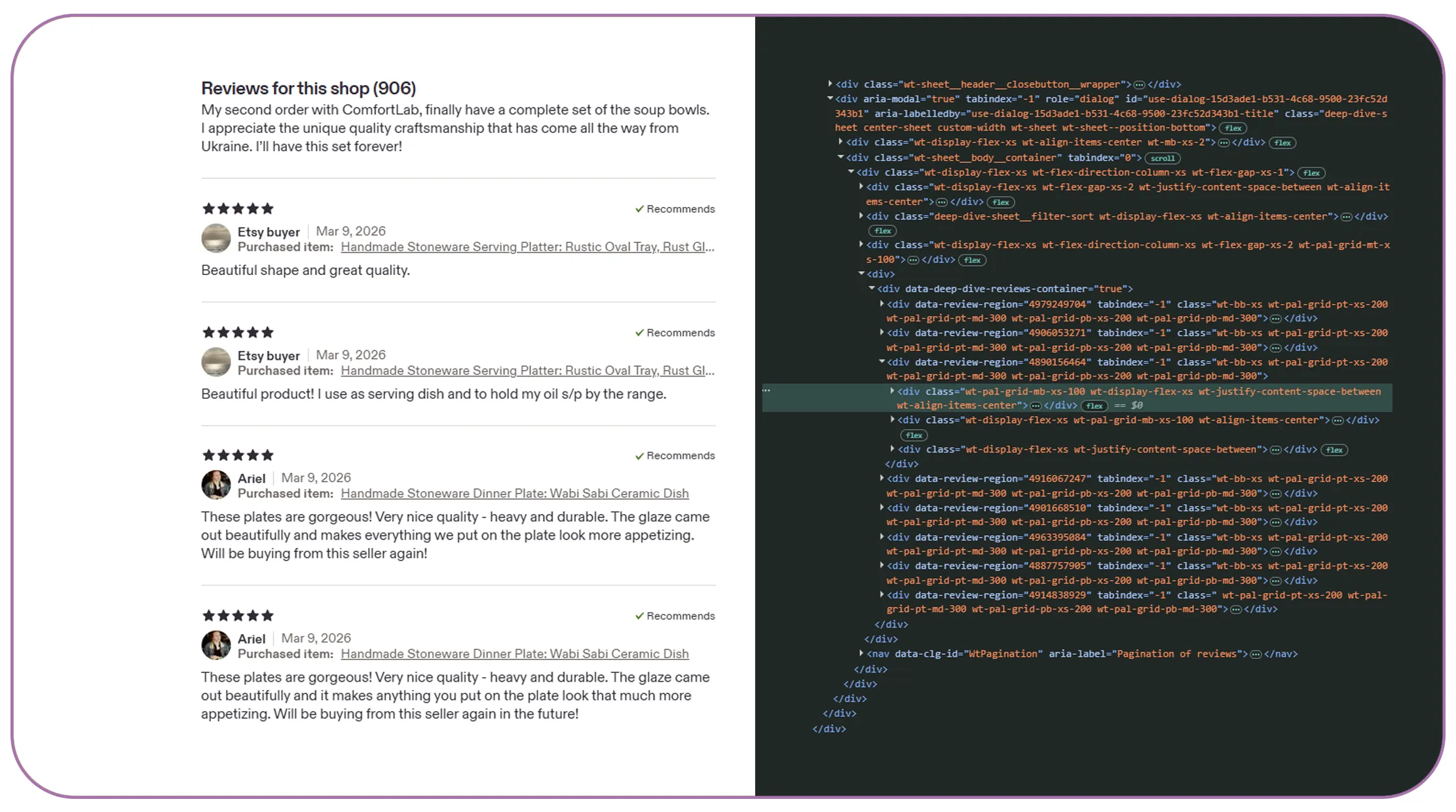
Large organizations monitor reviews across hundreds of products, locations, and brands. Manual collection methods cannot scale to meet these requirements. Automated APIs enable continuous data collection and seamless integration with analytics platforms, CRM systems, and business intelligence tools.
A Web Scraping API, Review scraping and monitoring services solution allows enterprises to automate the extraction of publicly available review data, ratings, comments, timestamps, reviewer information, and response metrics. Structured datasets support enterprise reporting, competitive benchmarking, AI model training, and reputation management initiatives.
Enterprise Advantages
- Automate review data collection.
- Integrate with BI dashboards.
- Improve reporting accuracy.
- Enable predictive customer analytics.
- Scale monitoring across brands.
- Reduce operational costs.
Enterprise Review Data Adoption (2020–2026)
| Year | Enterprises Using Review APIs | Reviews Processed Daily | Reporting Accuracy |
|---|---|---|---|
| 2020 | 24% | 3.2 Million | 88% |
| 2021 | 32% | 4.7 Million | 90% |
| 2022 | 42% | 6.8 Million | 93% |
| 2023 | 54% | 9.6 Million | 95% |
| 2024 | 66% | 13.2 Million | 97% |
| 2025 | 77% | 17.8 Million | 98% |
| 2026* | 86% | 23.5 Million | 99% |
Projected estimates.
Key Insights
- API-driven review collection supports enterprise scalability.
- Structured datasets improve reporting consistency.
- Automated workflows reduce manual effort.
- Real-time monitoring enables faster business responses.
- Enterprise analytics strengthen long-term reputation management.
Businesses adopting automated review intelligence gain the scalability and accuracy needed to monitor customer feedback effectively, improve operational performance, and maintain a strong brand reputation in competitive markets.
How Can Large-Scale Web Crawling Strengthen Reputation Management?
As businesses expand across products, services, brands, and geographic markets, the volume of publicly available customer feedback grows rapidly. Monitoring millions of reviews manually is no longer practical. Large-scale crawling technologies enable organizations to collect review data consistently, ensuring that customer insights remain current and actionable.
Organizations increasingly rely on Enterprise Web Crawling to capture publicly available customer reviews, ratings, review timestamps, product references, merchant responses, and review trends from multiple digital sources. These structured datasets help businesses monitor brand reputation, benchmark competitors, identify emerging issues, and improve customer experience strategies across multiple business units.
Key Benefits
- Collect reviews at enterprise scale.
- Monitor multiple brands simultaneously.
- Identify reputation risks early.
- Support competitive benchmarking.
- Enable historical trend analysis.
- Improve executive reporting.
Enterprise Review Crawling Trends (2020–2026)
| Year | Reviews Crawled | Brands Monitored | Data Freshness |
|---|---|---|---|
| 2020 | 180 Million | 5,200 | 88% |
| 2021 | 235 Million | 6,700 | 90% |
| 2022 | 302 Million | 8,600 | 92% |
| 2023 | 389 Million | 10,900 | 95% |
| 2024 | 498 Million | 13,700 | 97% |
| 2025 | 628 Million | 17,000 | 98% |
| 2026* | 782 Million | 20,900 | 99% |
Projected estimates.
Key Insights
- Enterprise review volumes continue to increase each year.
- Automated crawling improves monitoring efficiency.
- Historical review archives support long-term trend analysis.
- Early issue detection protects brand reputation.
- Structured review datasets strengthen executive decision-making.
- Continuous monitoring improves customer experience initiatives.
Businesses implementing enterprise-scale review intelligence gain faster access to actionable customer insights while strengthening operational performance and brand trust.
Why Choose Real Data API?
Real Data API provides enterprise-grade review intelligence solutions that help organizations transform publicly available customer feedback into actionable business insights. Our scalable platform supports automated review collection, customer sentiment monitoring, competitive benchmarking, and advanced analytics for businesses across retail, hospitality, healthcare, travel, finance, and eCommerce.
With expertise in Review scraping and monitoring services, we deliver structured datasets that integrate seamlessly with BI dashboards, CRM platforms, AI applications, and enterprise reporting systems. Our solutions enable organizations to monitor customer satisfaction, evaluate competitor performance, identify recurring issues, and make informed strategic decisions based on reliable, up-to-date review data.
Why Businesses Choose Real Data API
- Enterprise-scale review data extraction.
- Automated customer feedback monitoring.
- High-quality structured datasets.
- Flexible API integration.
- AI-ready analytics solutions.
- Reliable and scalable infrastructure.
- Customized data delivery for business needs.
Business Benefits
- Improve customer satisfaction.
- Protect brand reputation.
- Strengthen competitive intelligence.
- Accelerate issue resolution.
- Support data-driven product improvements.
- Enable enterprise-level reporting and analytics.
Real Data API empowers organizations with comprehensive review intelligence that supports faster decision-making, stronger customer relationships, and sustainable business growth.
Conclusion
Customer reviews have become one of the most valuable sources of business intelligence. Organizations that continuously monitor publicly available feedback can better understand customer expectations, identify service gaps, measure brand perception, and respond quickly to changing market conditions.
Leveraging Review scraping and monitoring services enables businesses to automate review collection, analyze customer sentiment, benchmark competitors, and uncover actionable insights that improve products, services, and customer experiences. Combined with advanced analytics and scalable enterprise solutions, review intelligence becomes a powerful driver of operational excellence and long-term growth.
Companies that invest in automated review monitoring are better positioned to strengthen customer trust, improve decision-making, and maintain a competitive advantage in increasingly data-driven markets.
Ready to transform customer feedback into actionable business intelligence? Partner with Real Data API for advanced Review scraping and monitoring services and unlock real-time insights that enhance brand reputation, improve customer satisfaction, and drive smarter business decisions!
Latest posts
How Review scraping and monitoring services Help Businesses Track Customer Sentiment and Protect Brand Reputation in 2026?

How Real Estate Investment Insights Using RERA Data Scraping Help Investors Minimize Risk and Maximize Returns
How Can Web Scraping Customer Feedback Analytics for Product Innovation Improve Product Success?
How to Scrape Travel Review Data Analytics for Hospitality Businesses to Enhance Guest Experience?
What Makes Web Scraping ITA Airways Fare Data Valuable for Accurate Airline Fare Monitoring?

Real Data API stands out as one of the premier global companies specializing in web data Scraping and web extraction.





.png)


Rating 4.7
Rating 4.7
Rating 4.5
Rating 4.7
Rating 4.7


Disclaimer : RealData API functions solely as an independent data infrastructure and technology solutions provider. We build customized automation workflows designed to collect publicly accessible web data based exclusively on client instructions. RealData API neither owns proprietary datasets nor engages in the sale or redistribution of extracted information. Our operations are limited strictly to lawful public web data processing and never involve unauthorized access to restricted systems or private networks. Any company names, trademarks, logos, or brand references displayed on this website are used purely for demonstrative and illustrative purposes to showcase our technical capabilities and do not imply endorsement, partnership, or affiliation. Use of our platform and services remains subject to our Terms of Service.