Introduction
Businesses increasingly need real-time visibility into changing consumer interests to identify opportunities before they become mainstream. Search behavior can provide valuable signals about rising demand, seasonal interest, brand attention, and emerging topics. In this case study, Real Data API helped a business establish a structured trend-monitoring workflow using Google Trends data extraction for business intelligence.
The client needed a scalable way to collect search-interest information across selected keywords, locations, categories, and time periods. Manual research was slow and made it difficult to maintain consistent historical records. The solution introduced a dedicated Google Trends Scraper workflow that collected trend information at defined intervals and converted it into structured datasets.
The resulting data environment enabled the client to compare current search activity with historical patterns, identify changes faster, and integrate trend signals into business intelligence workflows. This helped transform search behavior from an occasional research input into a continuously monitored source of market intelligence.
The Client
The client was a growing market intelligence and e-commerce research company that served brands operating across multiple consumer categories. Its analysts regularly monitored search behavior to understand emerging product interests, seasonal demand, and changes in consumer attention across different markets.
Before the project, the team relied heavily on manual searches and spreadsheets. Analysts had to repeatedly check keywords, record trend scores, compare historical periods, and prepare reports for internal stakeholders. This process consumed considerable research time and made real-time monitoring difficult.
The client wanted a more automated data infrastructure that could collect search-interest information consistently and make it available for downstream analysis. It required Google Trends data API for real-time trend monitoring to support recurring data collection and integration with its existing intelligence workflows.
The company also evaluated Live Crawler Services as part of its broader requirement for scalable web data collection. Its primary objective was to create a reliable data pipeline that could help analysts detect important trend movements without repeatedly performing manual searches.
Key Challenges
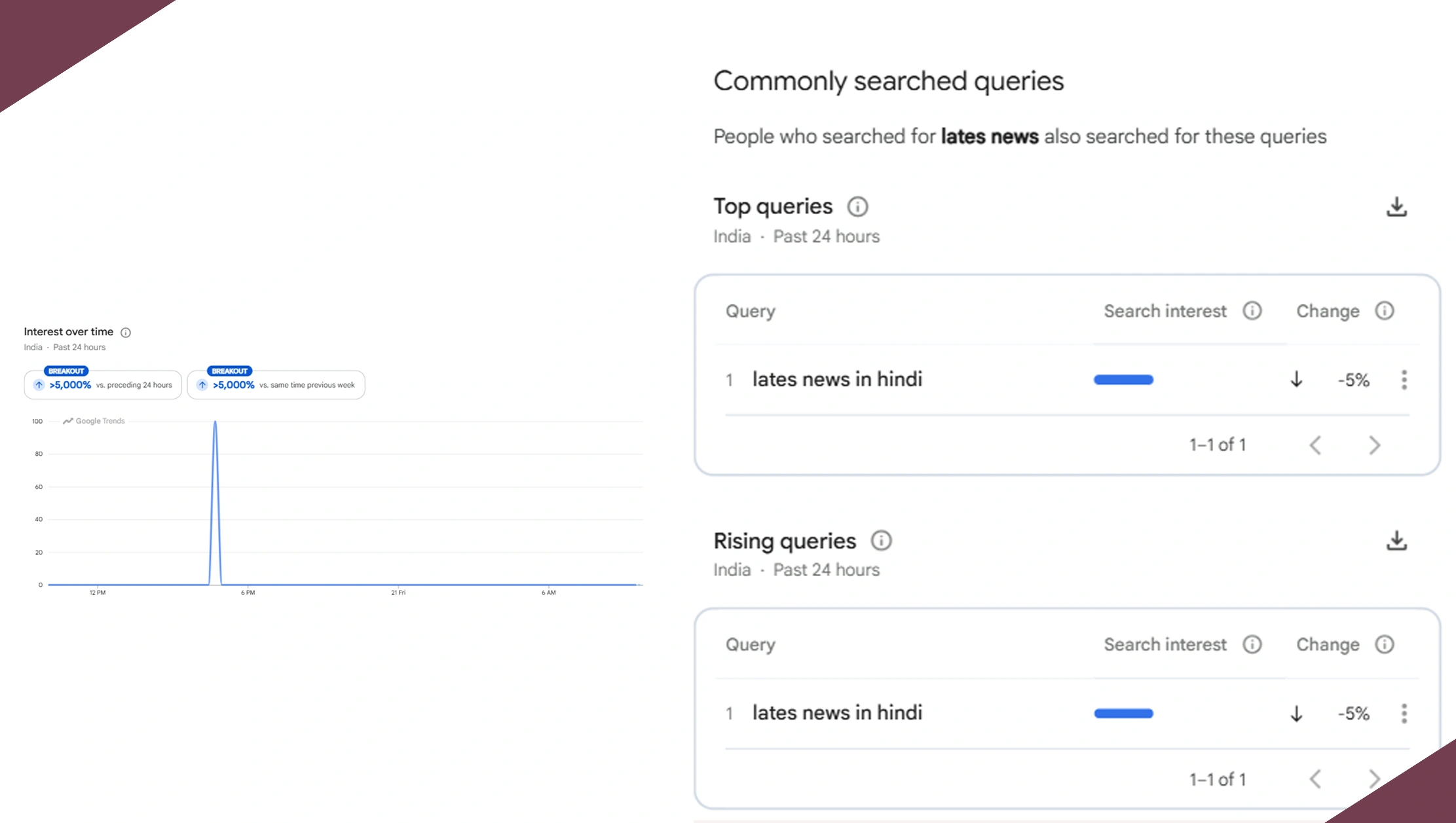
The client's biggest challenge was maintaining timely and consistent trend data across a large set of search terms. Analysts needed to monitor multiple keywords across different regions and time periods, but manual collection made the process difficult to scale. Search-interest values could change quickly, meaning that a report prepared from an isolated snapshot could become outdated before business teams acted on it.
The company also needed a reliable historical structure. Simply collecting the latest trend values was not sufficient because analysts needed to compare current interest with previous periods and identify meaningful changes. The absence of standardized timestamps and consistent data structures made historical comparison more complicated.
Another challenge involved transforming search data into actionable business signals. The team wanted to scrape google trends data for business analysis while preserving sufficient context for segmentation by keyword, geography, category, and time range. Data quality and consistency were therefore important requirements.
The client had also explored Scrape Google Trends via GitHub Tools, but maintaining an internally managed solution required technical resources, monitoring, error handling, and ongoing maintenance. The business needed a more scalable approach that could support recurring collection without creating additional operational complexity.
Key Solutions
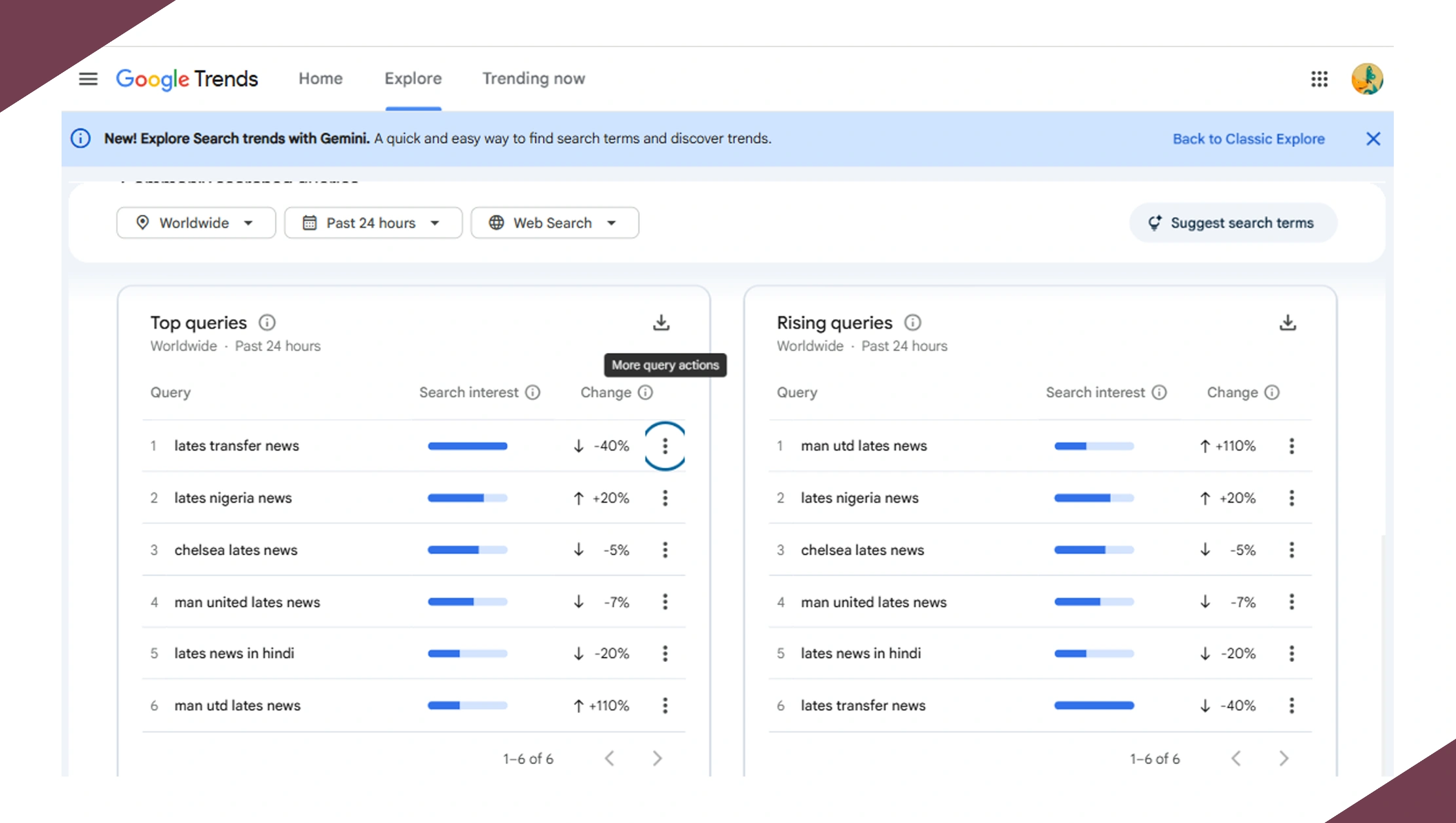
Real Data API designed a structured trend-monitoring workflow around the client's business intelligence requirements. The solution focused on recurring collection, standardized data fields, historical storage, and integration with the client's analytical environment. Instead of treating each trend check as an individual research task, the workflow created a repeatable pipeline for collecting and organizing search-interest information.
The solution used a Google Trends data scraper API for trend analysis to support the client's requirement for structured trend signals. Keywords could be organized into research groups, allowing analysts to monitor related products, brands, categories, and topics together. This made it easier to compare the relative movement of multiple search terms instead of reviewing them individually.
The data pipeline also preserved collection timestamps and relevant search parameters. This allowed the client to distinguish between different observation periods and build historical comparisons. Analysts could examine whether a trend was increasing, declining, seasonal, or experiencing an unusual spike.
A major improvement came from integrating Google Trends data extraction for business intelligence into the client's broader analytics workflow. Trend information could be combined with other business datasets to provide additional context. For example, search-interest movements could be compared with product activity, marketing campaigns, marketplace performance, or regional demand indicators.
Data processing was another important component. Raw trend information was standardized before being delivered to the client. Consistent formatting helped analysts organize keywords, regions, dates, and trend values within their existing databases and dashboards.
The workflow was also designed with monitoring and scalability in mind. Instead of relying exclusively on manual searches, the client could establish recurring data collection schedules based on the importance and volatility of specific keywords. High-priority search terms could receive more frequent monitoring, while stable or seasonal keywords could be evaluated at longer intervals.
This approach allowed the company to move from reactive trend research toward proactive monitoring. Analysts could identify significant changes, investigate the reasons behind them, and provide business teams with timely insights.
The solution also reduced repetitive research work. Rather than manually recording trend information across multiple searches, analysts could focus on interpreting the data and translating changes into commercial recommendations. The resulting system became a reusable foundation for market research, competitive intelligence, demand analysis, and trend forecasting.
Client Testimonial

"Our biggest improvement was moving from occasional manual trend checks to a structured monitoring process. The data gives our analysts a much clearer view of how search interest changes over time and across markets. We can now identify important movements earlier and connect those signals with our broader competitive research. The automated workflow has also reduced repetitive data collection and allowed our team to spend more time interpreting trends and developing recommendations for clients."
— Head of Market Intelligence, E-Commerce Research Company
Conclusion
This case demonstrates how structured search data can become a valuable input for modern business intelligence. By replacing repetitive manual research with an automated monitoring workflow, the client gained a more consistent way to track changing consumer interests, compare historical patterns, and identify emerging market signals.
The project also demonstrated the importance of combining data collection with proper historical storage, timestamps, standardization, and analytical integration. These elements allowed search-interest information to become more useful for competitive research, demand analysis, and strategic planning.
For organizations building scalable intelligence systems, a reliable Web Scraping API can provide the infrastructure needed to collect and structure external web data for downstream applications. Real Data API helped the client turn Google Trends data extraction for business intelligence into a repeatable process that supported faster trend discovery and more informed decisions.
The result was a more scalable research workflow, reduced manual effort, and improved visibility into changing consumer search behavior.
Ready to turn real-time web signals into actionable business intelligence? Contact Real Data API to build a scalable data extraction workflow for trend monitoring, market research, and competitive intelligence!






.png)