Introduction
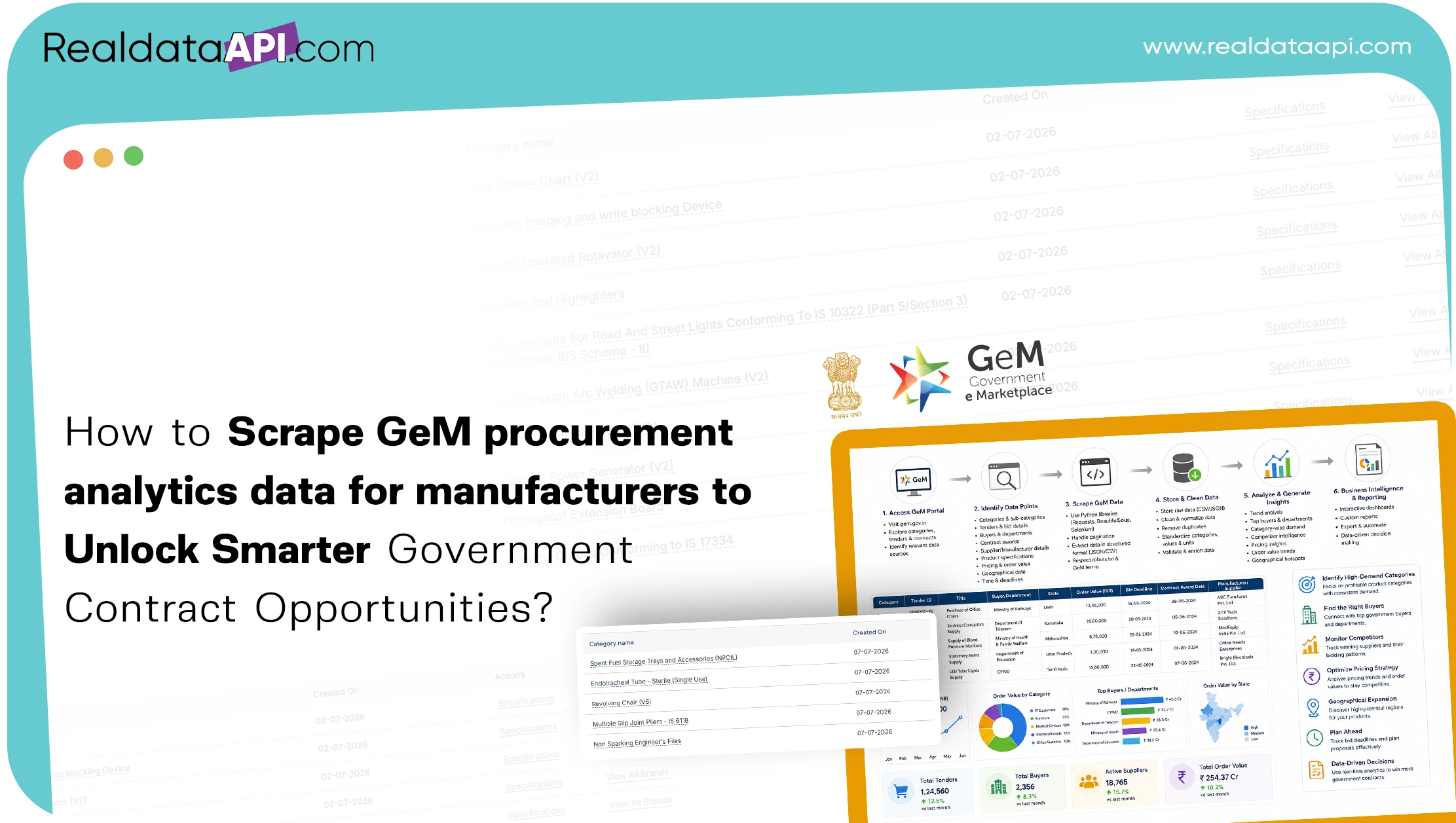
India's Government e-Marketplace (GeM) has transformed public procurement by creating a transparent and digital ecosystem for buyers and suppliers. As government purchasing volumes continue to expand across sectors such as manufacturing, healthcare, construction, electronics, and industrial equipment, businesses require accurate procurement intelligence to stay competitive. Organizations that scrape GeM procurement analytics data for manufacturers gain access to valuable insights into tender trends, purchasing patterns, supplier performance, pricing benchmarks, and category-wise demand. These insights help manufacturers identify profitable opportunities, improve bidding strategies, and optimize production planning.
Using a robust GeM Tender Data Scraping API, companies can automate the collection of tender announcements, bid results, contract awards, buyer information, product specifications, and procurement analytics without relying on manual research. Real-time procurement intelligence enables faster decision-making, improved market forecasting, and enhanced competitiveness in government contracts. As digital procurement continues to evolve between 2020 and 2026, manufacturers leveraging automated data extraction are better positioned to capitalize on emerging opportunities while reducing operational costs and maximizing bidding success.
Mapping Procurement Growth Across Government Markets
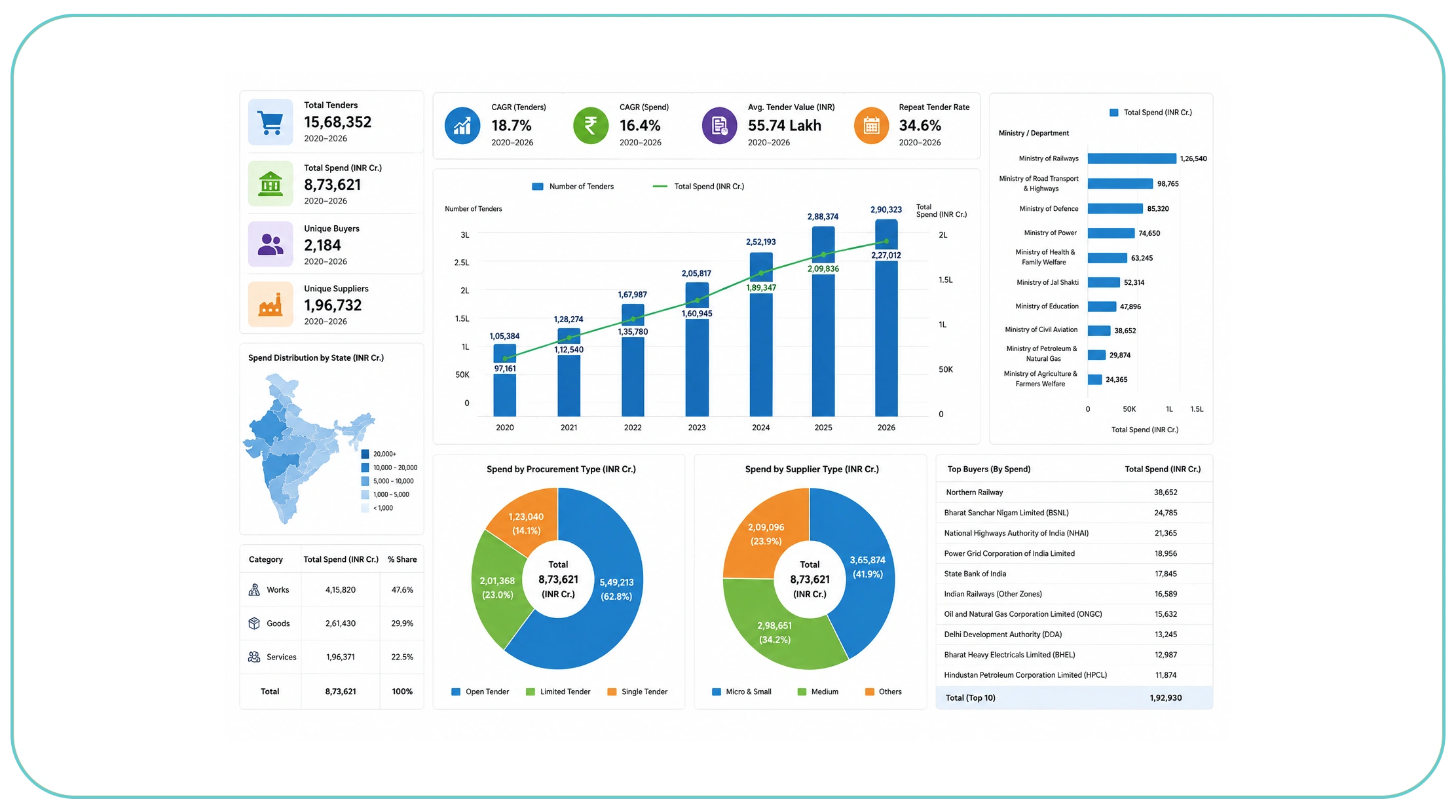
Government procurement continues to expand as more departments adopt digital purchasing platforms and transparent tendering systems. Manufacturers seeking long-term growth increasingly rely on procurement analytics to identify purchasing trends, seasonal demand, category performance, and buyer preferences. Modern analytics transform raw procurement records into actionable business intelligence that supports pricing optimization, inventory planning, and production forecasting.
Organizations investing in Government procurement data intelligence for manufacturers gain comprehensive visibility into procurement cycles, repeat buyers, procurement budgets, and supplier competition. This information enables manufacturers to identify underserved markets, discover procurement gaps, and prioritize high-value government contracts.
Between 2020 and 2026, India's digital procurement ecosystem has experienced consistent growth driven by increased government digitization initiatives, MSME participation, and centralized purchasing. Manufacturers using procurement intelligence can benchmark competitors, monitor procurement frequency, and evaluate category-level demand across ministries and public sector organizations.
Government Procurement Growth Trends (2020–2026)
| Year | Estimated Procurement Value (₹ Trillion) | Registered Buyers | Registered Sellers |
|---|---|---|---|
| 2020 | 1.1 | 48,000 | 3.8 Lakh |
| 2021 | 1.5 | 55,000 | 4.6 Lakh |
| 2022 | 2.0 | 63,000 | 5.5 Lakh |
| 2023 | 2.7 | 72,000 | 6.8 Lakh |
| 2024 | 3.4 | 81,000 | 7.9 Lakh |
| 2025 | 4.2 | 90,000 | 9.2 Lakh |
| 2026* | 5.0 | 1,00,000+ | 10.5 Lakh |
*Projected estimates based on industry trends.
Manufacturers can leverage procurement analytics to:
- Monitor category-wise government spending.
- Identify high-value procurement sectors.
- Analyze purchasing frequency.
- Evaluate supplier competition.
- Forecast procurement demand.
- Optimize production capacity.
- Improve bid pricing strategies.
- Expand into new government markets.
The growing scale of public procurement demonstrates why manufacturers increasingly depend on structured procurement intelligence rather than manual tender monitoring.
Turning Tender Data into Winning Strategies
Winning government contracts requires more than simply identifying available tenders. Successful manufacturers analyze bidder behavior, pricing history, procurement cycles, contract values, and buyer preferences before submitting proposals. Historical bidding intelligence allows businesses to build more competitive strategies while minimizing risks associated with underpricing or overpricing.
Through web scraping GeM bidding insights for manufacturers, organizations can automatically monitor bid participation, awarded suppliers, average winning prices, procurement timelines, and tender frequency across thousands of categories. Automated analytics eliminate manual data collection while enabling procurement teams to respond quickly to new opportunities.
Data-driven bidding also helps manufacturers recognize recurring procurement requirements, seasonal purchasing behavior, and regional demand fluctuations. These insights support better forecasting and more accurate resource allocation.
Bidding Intelligence Trends (2020–2026)
| Year | Published Tenders | Average Bidders per Tender | Estimated Digital Participation |
|---|---|---|---|
| 2020 | 6.8 Lakh | 5.1 | 64% |
| 2021 | 8.2 Lakh | 5.8 | 69% |
| 2022 | 10.1 Lakh | 6.4 | 74% |
| 2023 | 12.7 Lakh | 7.2 | 80% |
| 2024 | 15.3 Lakh | 7.9 | 85% |
| 2025 | 18.4 Lakh | 8.6 | 89% |
| 2026* | 21.0 Lakh | 9.2 | 93% |
*Projected estimates based on procurement digitization trends.
Manufacturers benefit by:
- Tracking competitor participation.
- Understanding successful pricing ranges.
- Measuring contract award frequency.
- Identifying repeat government buyers.
- Evaluating procurement cycles.
- Detecting emerging procurement categories.
- Prioritizing profitable tenders.
- Improving bid preparation efficiency.
Automated bidding intelligence helps procurement teams make evidence-based decisions rather than relying on assumptions, resulting in higher bid success rates and improved contract acquisition.
Building Long-Term Competitive Intelligence
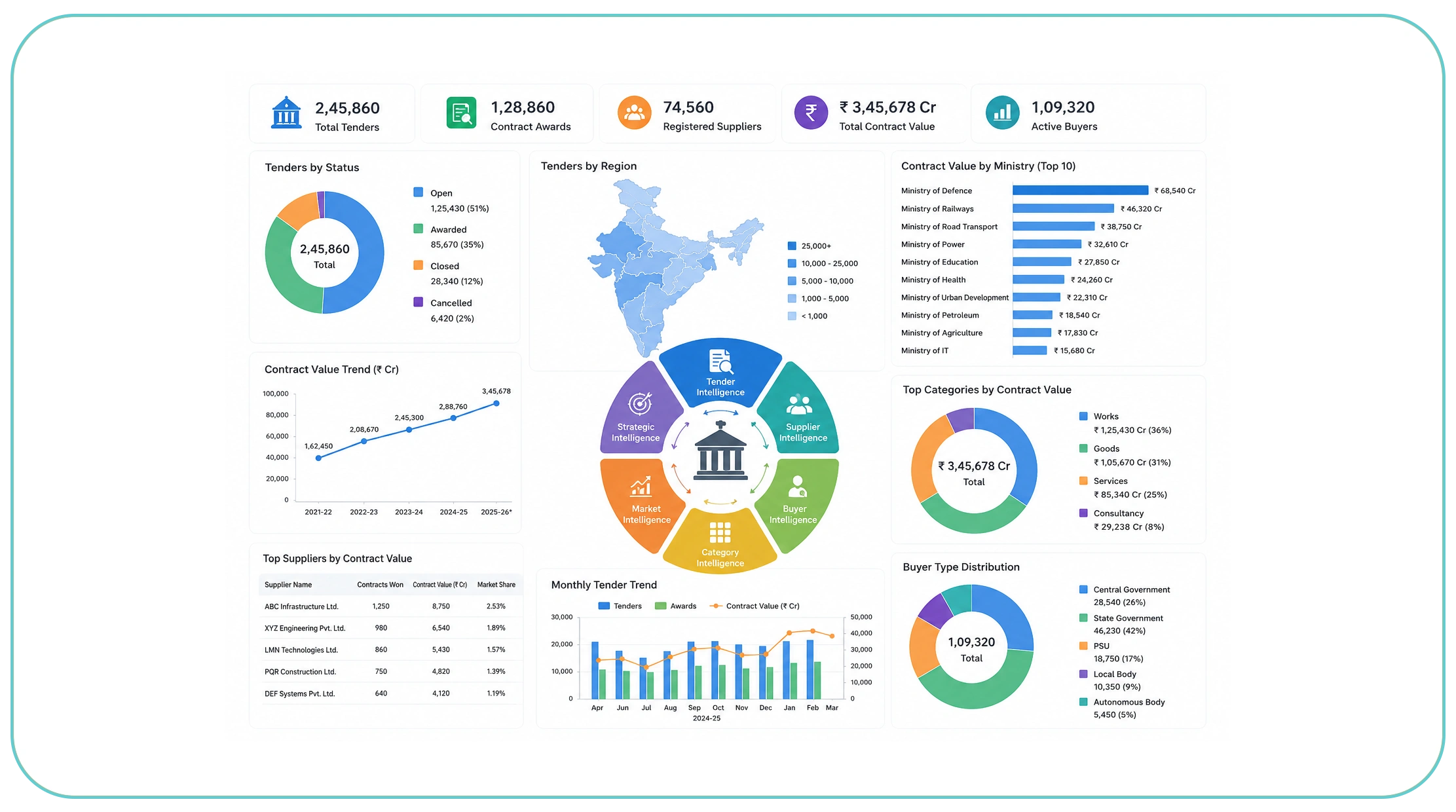
Manufacturers that consistently win government contracts rely on continuous market intelligence instead of isolated tender tracking. Procurement ecosystems generate enormous volumes of structured and unstructured data, including supplier registrations, procurement notices, contract awards, buyer behavior, and category performance. Transforming this information into strategic intelligence allows organizations to anticipate market movements before competitors.
Businesses utilizing government tender data intelligence using gem portal gain visibility into procurement volumes, regional purchasing preferences, ministry-wise spending, supplier rankings, and contract distribution across industries. Such intelligence enables organizations to identify untapped opportunities while strengthening long-term procurement planning.
Rather than focusing only on current tenders, manufacturers can evaluate historical procurement data to recognize demand cycles, procurement budgets, preferred suppliers, and recurring contract opportunities. These insights improve inventory planning, sales forecasting, production scheduling, and strategic expansion into government procurement markets.
Procurement Intelligence Evolution (2020–2026)
| Year | Procurement Categories | Digital Contracts | Analytics Adoption |
|---|---|---|---|
| 2020 | 9,000+ | 58% | 28% |
| 2021 | 10,500+ | 63% | 35% |
| 2022 | 12,000+ | 69% | 44% |
| 2023 | 13,800+ | 75% | 53% |
| 2024 | 15,400+ | 82% | 61% |
| 2025 | 17,100+ | 88% | 70% |
| 2026* | 19,000+ | 93% | 78% |
*Projected estimates based on digital procurement trends.
Strategic procurement intelligence enables manufacturers to:
- Analyze long-term purchasing behavior.
- Benchmark supplier performance.
- Discover emerging procurement sectors.
- Identify regional procurement demand.
- Improve contract planning.
- Strengthen pricing decisions.
- Forecast procurement growth.
- Build sustainable competitive advantages.
As procurement ecosystems continue expanding, organizations equipped with continuous analytics are better positioned to respond to evolving government purchasing requirements while maximizing business growth opportunities.
Unlocking New Revenue Streams Through Smarter Opportunity Tracking
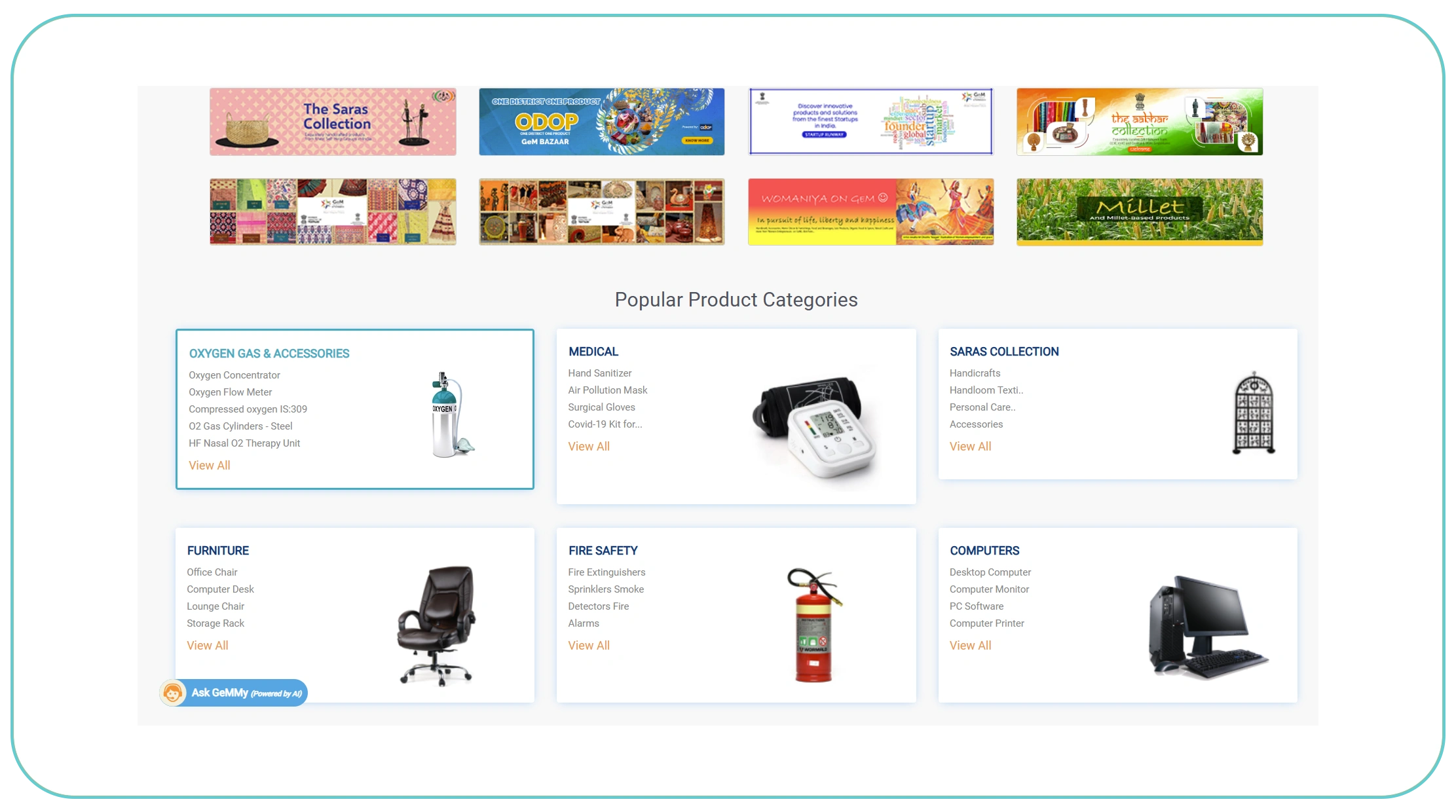
Government procurement is one of the largest and most consistent sources of business opportunities for manufacturers. However, identifying the right tenders at the right time requires continuous monitoring of thousands of procurement notices across multiple product categories. Automated analytics enable manufacturers to move beyond manual searches and focus on the contracts most relevant to their products, capabilities, and target regions.
Businesses can Get Government Bidding Opportunities via GeM Tender Data Scraping to monitor newly published tenders, amendment notices, bid deadlines, contract values, buyer departments, procurement quantities, and eligibility requirements in real time. This automated approach minimizes missed opportunities while helping sales and procurement teams prioritize high-value contracts. It also enables manufacturers to assess demand trends, identify recurring procurement cycles, and prepare bids more efficiently.
In addition to opportunity discovery, procurement analytics support capacity planning and market expansion. Manufacturers can evaluate which government organizations purchase similar products repeatedly and align production schedules with anticipated demand. These insights reduce uncertainty, improve resource allocation, and enhance long-term business planning.
Government Tender Opportunity Trends (2020–2026)
| Year | New Tender Opportunities | Avg. Contract Value (₹ Lakhs) | Digital Tender Adoption |
|---|---|---|---|
| 2020 | 6.5 Lakh | 9.8 | 60% |
| 2021 | 8.0 Lakh | 10.6 | 67% |
| 2022 | 10.2 Lakh | 11.5 | 74% |
| 2023 | 12.9 Lakh | 12.4 | 81% |
| 2024 | 15.8 Lakh | 13.8 | 87% |
| 2025 | 18.7 Lakh | 15.2 | 91% |
| 2026* | 21.5 Lakh | 16.8 | 95% |
*Projected estimates based on industry trends.
Key business advantages include:
- Discover tenders instantly.
- Track procurement deadlines.
- Analyze department-wise spending.
- Prioritize high-value contracts.
- Improve bid readiness.
- Forecast procurement demand.
- Expand into new government sectors.
- Increase contract win potential.
Automating Procurement Intelligence at Scale
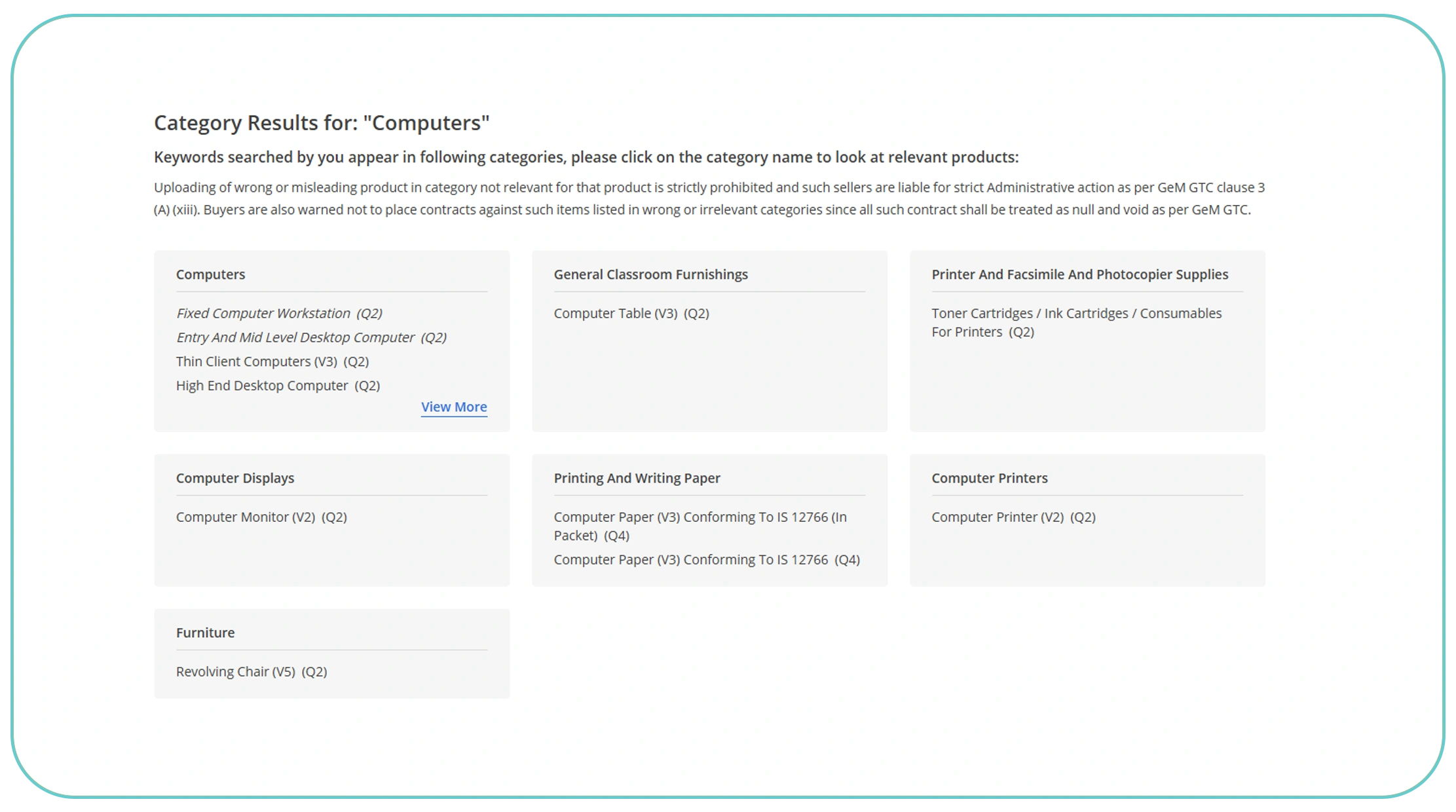
Modern procurement analytics rely on automation to process large volumes of public procurement data accurately and efficiently. Manufacturers dealing with multiple product categories and regions require scalable solutions capable of collecting, validating, and updating procurement records continuously. Automated data pipelines eliminate manual monitoring while ensuring access to fresh procurement intelligence.
A robust Web Scraping API enables businesses to integrate procurement datasets directly into internal dashboards, ERP platforms, CRM systems, pricing engines, and analytics applications. Instead of downloading procurement records manually, organizations can receive structured, machine-readable data in near real time.
API-driven automation supports continuous monitoring of tender announcements, corrigenda, contract awards, buyer profiles, pricing history, supplier participation, and procurement categories. Decision-makers can build customized dashboards that visualize procurement trends, competitor activity, and contract performance across multiple government departments.
API-Driven Procurement Automation (2020–2026)
| Year | API Integrations | Automated Data Updates | Enterprise Adoption |
|---|---|---|---|
| 2020 | 1,500 | Daily | 24% |
| 2021 | 2,300 | Daily | 31% |
| 2022 | 3,600 | Hourly | 42% |
| 2023 | 5,200 | Hourly | 54% |
| 2024 | 7,100 | Near Real-Time | 66% |
| 2025 | 9,400 | Near Real-Time | 76% |
| 2026* | 12,000+ | Real-Time | 84% |
*Projected estimates based on enterprise automation trends.
API integration enables manufacturers to:
- Automate procurement monitoring.
- Integrate data into BI platforms.
- Reduce manual effort.
- Improve reporting accuracy.
- Receive continuous updates.
- Support predictive analytics.
- Enable enterprise-scale intelligence.
- Accelerate decision-making.
Automation ensures procurement teams always work with current, structured, and actionable data.
Preparing for the Future of Digital Procurement
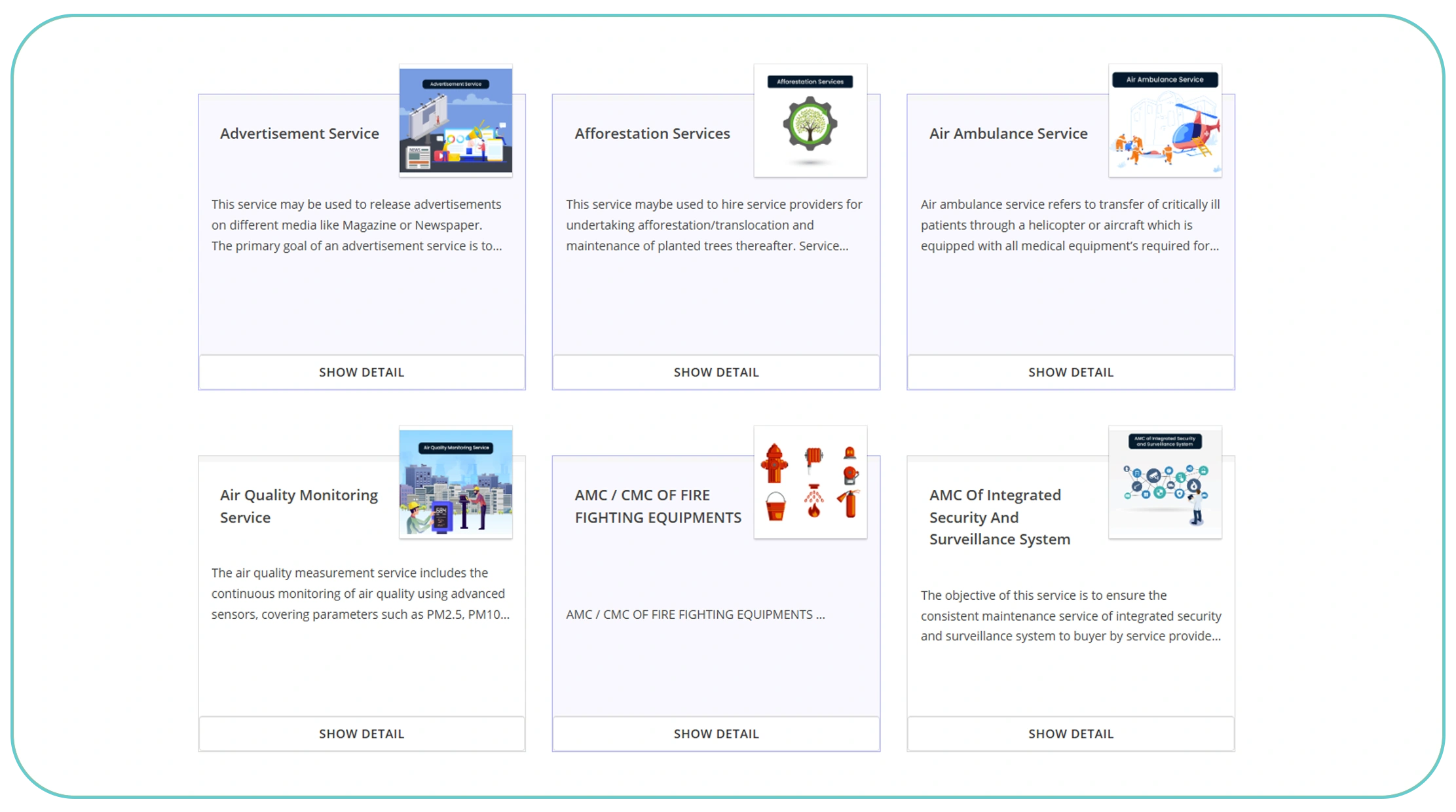
The future of government procurement will increasingly depend on data-driven decision-making, predictive analytics, and intelligent automation. Manufacturers that embrace procurement intelligence today will be better equipped to respond to evolving purchasing patterns, policy changes, supplier competition, and digital procurement initiatives over the coming years.
Professional Web Scraping Services provide organizations with scalable solutions for collecting procurement data, standardizing information across categories, validating datasets, and delivering analytics-ready outputs. These services enable manufacturers to monitor procurement activity continuously without investing in complex internal infrastructure.
Beyond data collection, advanced scraping solutions support supplier benchmarking, category analysis, regional demand forecasting, procurement trend visualization, and opportunity identification. Procurement leaders can leverage these insights to strengthen strategic planning, improve pricing decisions, optimize production schedules, and increase contract success rates.
As procurement ecosystems continue expanding across ministries and public sector organizations, businesses equipped with automated intelligence will enjoy faster response times, improved operational efficiency, and stronger competitive positioning.
Digital Procurement Outlook (2020–2026)
| Year | Procurement Digitization | AI-Assisted Analytics | Enterprise Intelligence Adoption |
|---|---|---|---|
| 2020 | 52% | 8% | 21% |
| 2021 | 59% | 13% | 29% |
| 2022 | 67% | 20% | 39% |
| 2023 | 75% | 30% | 50% |
| 2024 | 83% | 42% | 62% |
| 2025 | 89% | 55% | 73% |
| 2026* | 95% | 68% | 84% |
*Projected estimates based on digital transformation trends.
Manufacturers should focus on:
- Continuous procurement monitoring.
- Automated intelligence gathering.
- Predictive procurement analytics.
- Supplier benchmarking.
- Competitive pricing analysis.
- Regional demand forecasting.
- Data-driven bidding.
- Long-term procurement planning.
Why Choose Real Data API?
Real Data API helps enterprises transform publicly available procurement information into meaningful business intelligence through secure, scalable, and automated data extraction solutions. Whether your organization needs tender monitoring, supplier intelligence, pricing analysis, procurement forecasting, or customized analytics dashboards, our solutions are designed to support informed decision-making.
Organizations looking to scrape GeM procurement analytics data for manufacturers benefit from reliable data collection, automated updates, flexible API integrations, structured datasets, and enterprise-grade scalability. Our experts deliver procurement intelligence tailored to your industry, enabling manufacturers to monitor government purchasing activity, benchmark competitors, identify growth opportunities, and improve bidding performance.
With advanced automation technologies, high-quality data validation, and customizable delivery formats, Real Data API empowers manufacturers to convert procurement data into strategic insights that drive operational efficiency and long-term business growth.
Conclusion
Government procurement is becoming increasingly digital, competitive, and data-intensive. Manufacturers that leverage procurement analytics gain valuable visibility into tender activity, buyer behavior, pricing benchmarks, supplier performance, and emerging market opportunities. By investing in automated intelligence, businesses can optimize bidding strategies, improve forecasting, and build stronger competitive advantages in public sector markets.
Real Data API provides reliable solutions to scrape GeM procurement analytics data for manufacturers, helping organizations automate data collection, integrate procurement intelligence into business workflows, and make faster, evidence-based decisions.
Ready to unlock actionable GeM procurement intelligence? Contact Real Data API today to automate procurement analytics, identify high-value government opportunities, and accelerate your success in the digital procurement ecosystem!
Latest posts
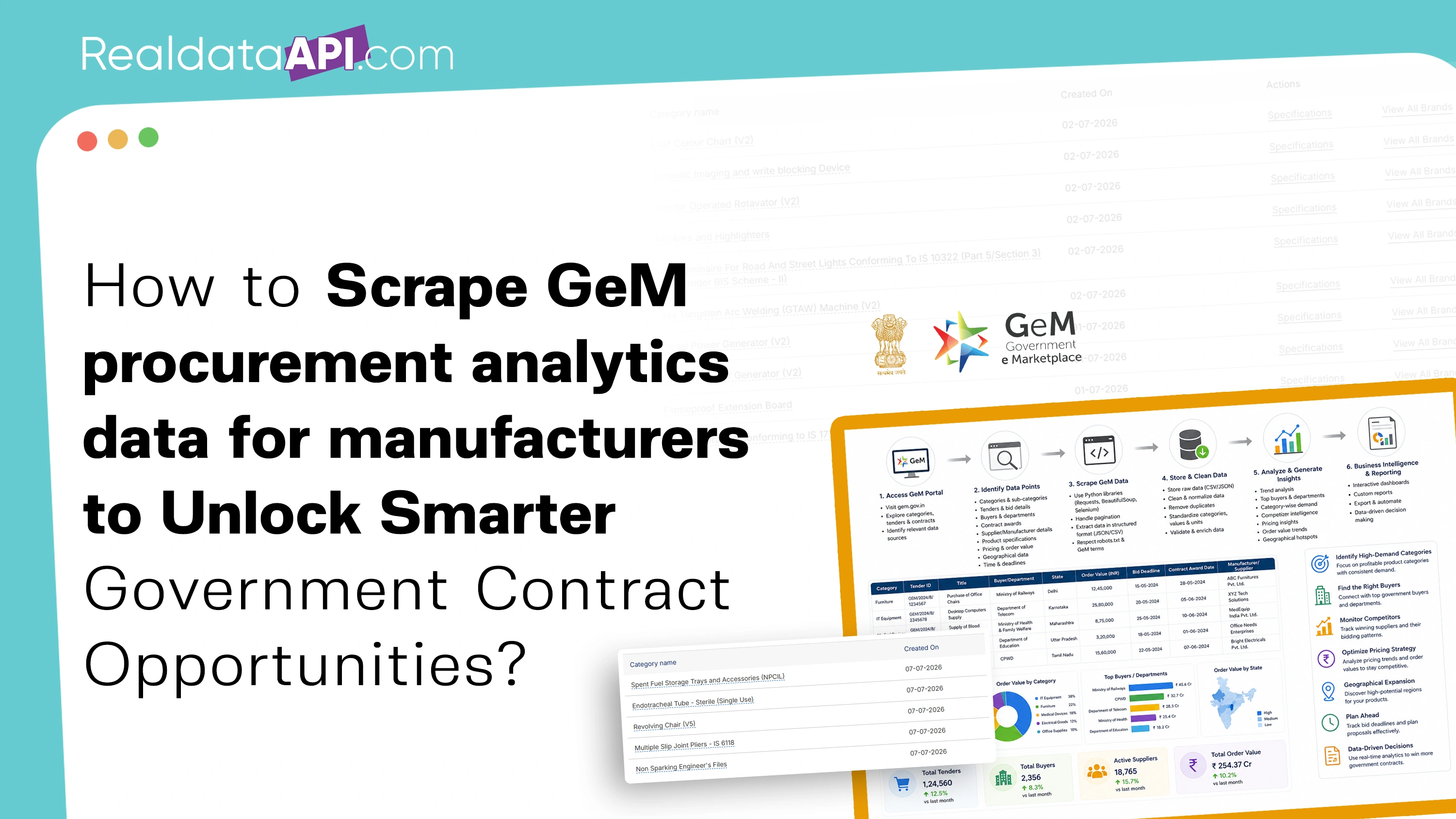
How to scrape GeM procurement analytics data for manufacturers to Unlock Smarter Government Contract Opportunities?
The future of Data-as-a-Service in 2026 - Trends, Innovations, and Business Opportunities
How To Use AI Agents For Automated Data Collection and Analysis to Improve Business Intelligence And Decision-Making
How to Scrape Dynamic pricing strategies powered by travel data for Smarter Travel Pricing and Revenue Optimization

Real Data API stands out as one of the premier global companies specializing in web data Scraping and web extraction.





.png)


Rating 4.7
Rating 4.7
Rating 4.5
Rating 4.7
Rating 4.7


Disclaimer : RealData API functions solely as an independent data infrastructure and technology solutions provider. We build customized automation workflows designed to collect publicly accessible web data based exclusively on client instructions. RealData API neither owns proprietary datasets nor engages in the sale or redistribution of extracted information. Our operations are limited strictly to lawful public web data processing and never involve unauthorized access to restricted systems or private networks. Any company names, trademarks, logos, or brand references displayed on this website are used purely for demonstrative and illustrative purposes to showcase our technical capabilities and do not imply endorsement, partnership, or affiliation. Use of our platform and services remains subject to our Terms of Service.