
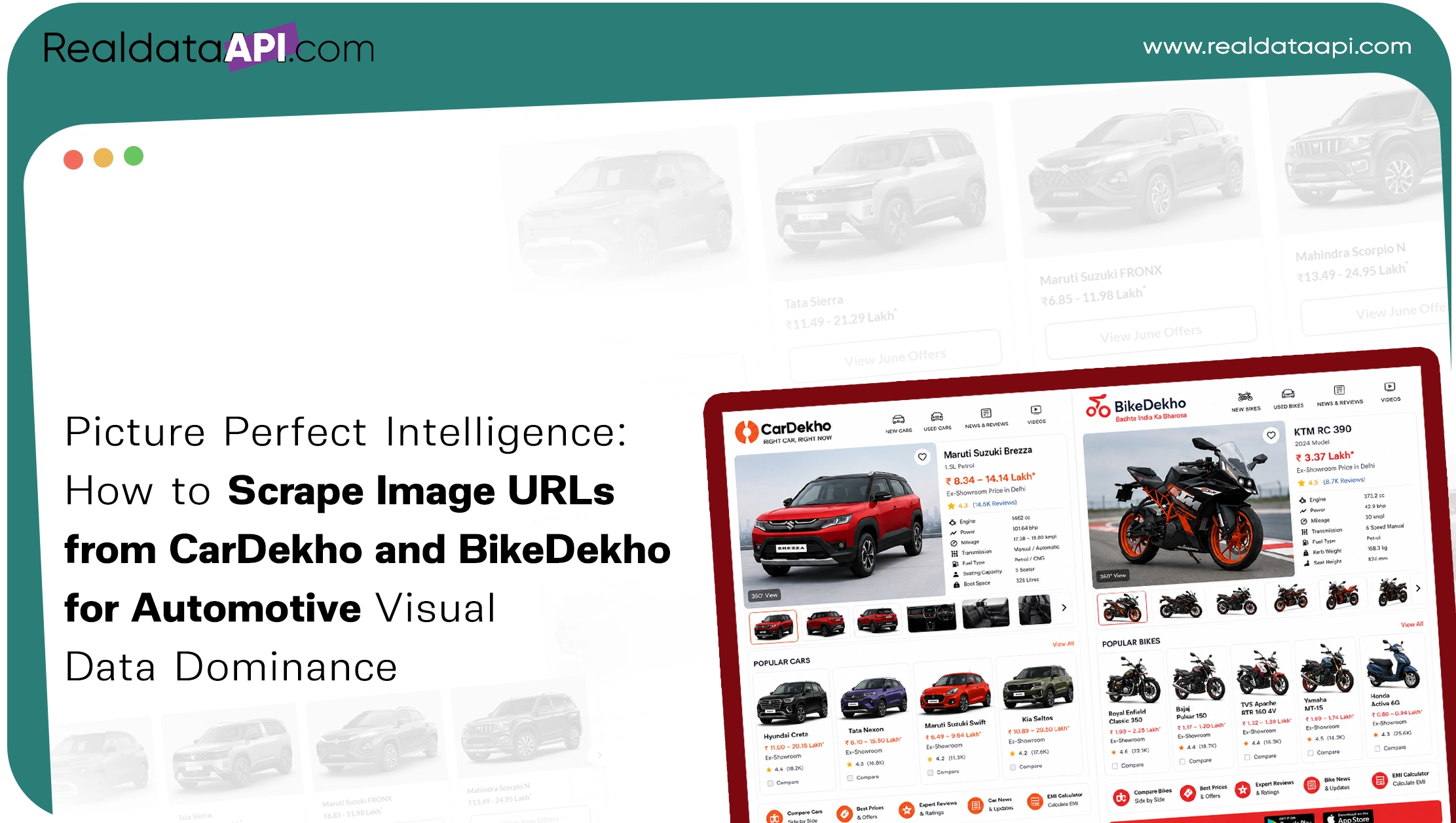
Introduction: The Visual Layer of Automotive Data
In the Indian automotive market, two platforms sit at the center of every vehicle research journey: CarDekho and BikeDekho. CarDekho is India's leading car research and buying platform, hosting detailed listings, expert reviews, specifications, and user-generated content for thousands of new and used car models. BikeDekho, its two-wheeler counterpart, covers motorcycles, scooters, and electric two-wheelers with equivalent depth.
Both platforms are exceptional sources of structured automotive data — pricing, specifications, variants, dealer networks, and user reviews. But there is one data layer that most analysts and developers consistently overlook: image URLs.
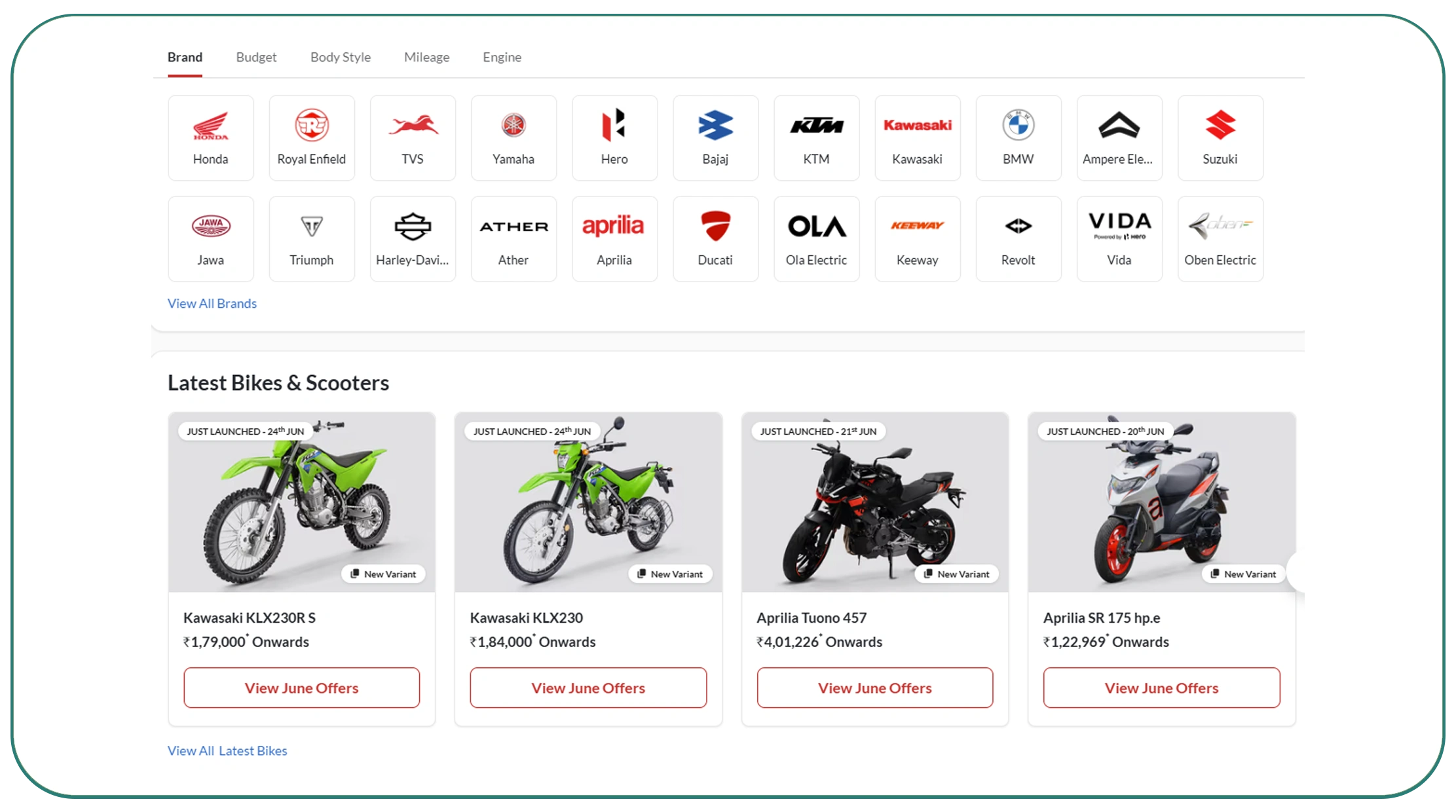
Every vehicle listing on CarDekho and BikeDekho is accompanied by a rich visual gallery — exterior angles (front, rear, side profile, three-quarter views), interior shots (dashboard, infotainment, seats), detail images (alloys, headlamps, tail lamps, engine bay), and color variant photography. These images are systematically organized, consistently named, and hosted on CDN infrastructure — making them highly scrapeable, highly structured, and enormously valuable.
Scraping image URLs from CarDekho and BikeDekho doesn't just mean collecting links to photos. It means building a structured visual asset database that powers automotive marketplaces, AI training datasets, comparison tools, insurance platforms, OEM competitive research, and content publishing workflows across India's booming vehicle industry.
This blog covers what image URL from CarDekho Site Data Extraction and BikeDekho looks like in practice, how to think about extracting it at scale, the most impactful use cases, the technical challenges involved, and how Real Data API delivers this visual intelligence as a production-ready data feed.
Why CarDekho and BikeDekho Are the Gold Standard for Automotive Image Data in India
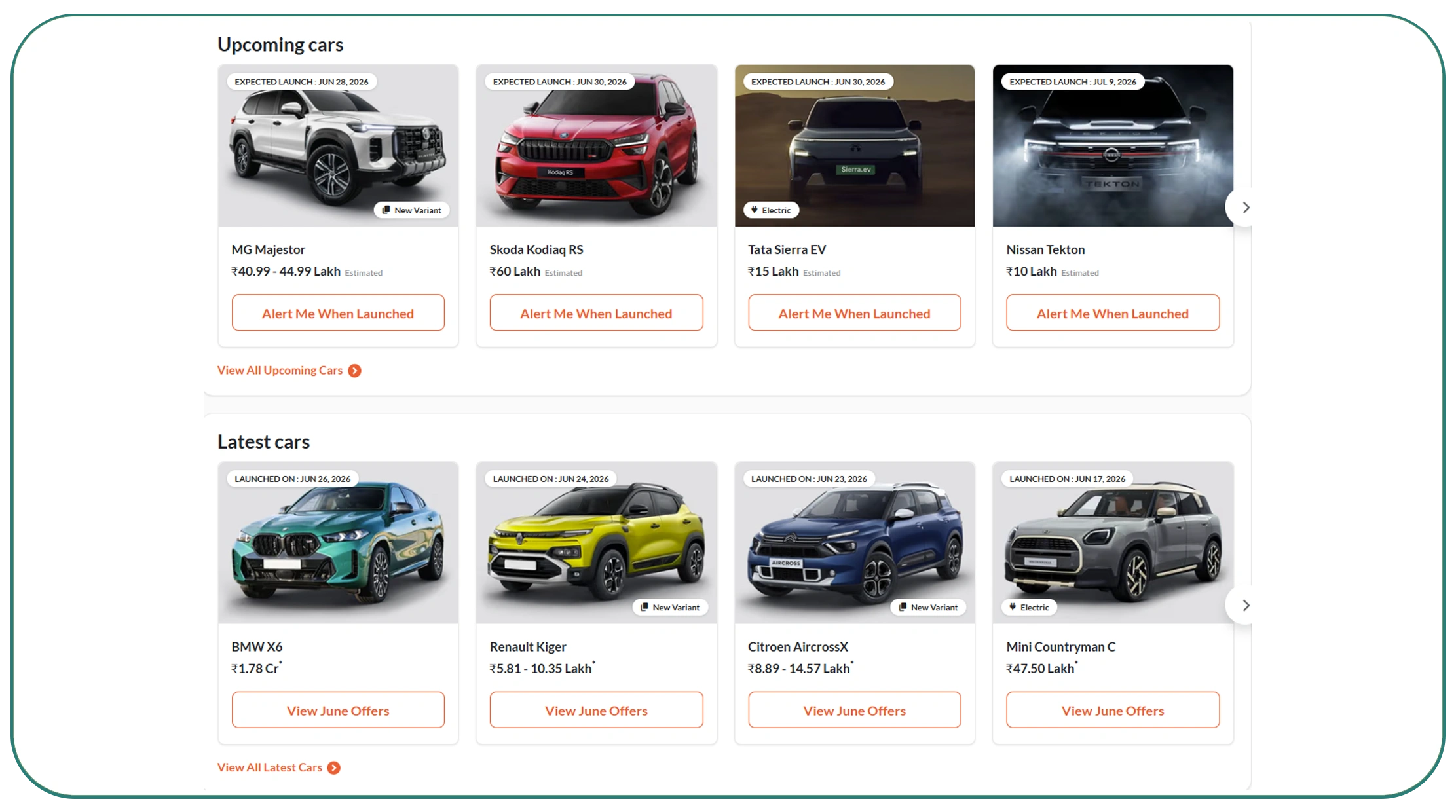
India is the world's largest two-wheeler market and the third-largest passenger vehicle market globally. CarDekho and BikeDekho together attract over 50 million monthly unique visitors, making them the dominant touchpoints in the Indian vehicle research and buying funnel.
What makes these platforms particularly valuable as image data sources is not just traffic volume — it's the structural quality and consistency of their visual content:
Standardized Photography Protocols — CarDekho and BikeDekho work with OEM partners and in-house photography teams to produce standardized vehicle imagery. Exterior shots follow consistent angle conventions (0-degree front, 180-degree rear, 45-degree three-quarter front and rear), making images directly comparable across models and brands. This standardization is critical for computer vision applications and comparison tools.
Comprehensive Color Variant Coverage — Both platforms publish separate image sets for each available color variant of a vehicle. A car offered in 8 colors will have 8 complete exterior image galleries. This makes CarDekho and BikeDekho the most comprehensive public sources of color-variant vehicle imagery available for the Indian market.
Interior and Detail Photography — Beyond exterior gallery shots, both platforms publish interior images (dashboard layout, instrument cluster, infotainment screen, seat upholstery, boot space) and detail images (headlamp design, alloy wheel style, engine bay). This layered image taxonomy supports deep visual analysis that exterior-only datasets cannot.
New vs. Used Vehicle Image Libraries — CarDekho's used car section (Cars24 partnership ecosystem and dealer listings) contains user-uploaded images of actual vehicles in real-world condition — a fundamentally different dataset from OEM studio photography, valuable for insurance, damage assessment, and pricing model training.
Electric Vehicle Visual Catalogues — As India's EV transition accelerates, both platforms are among the first to publish complete image sets for new electric car and two-wheeler launches — often before OEM websites update their own galleries.
The Structure of Image URL Data on CarDekho and BikeDekho
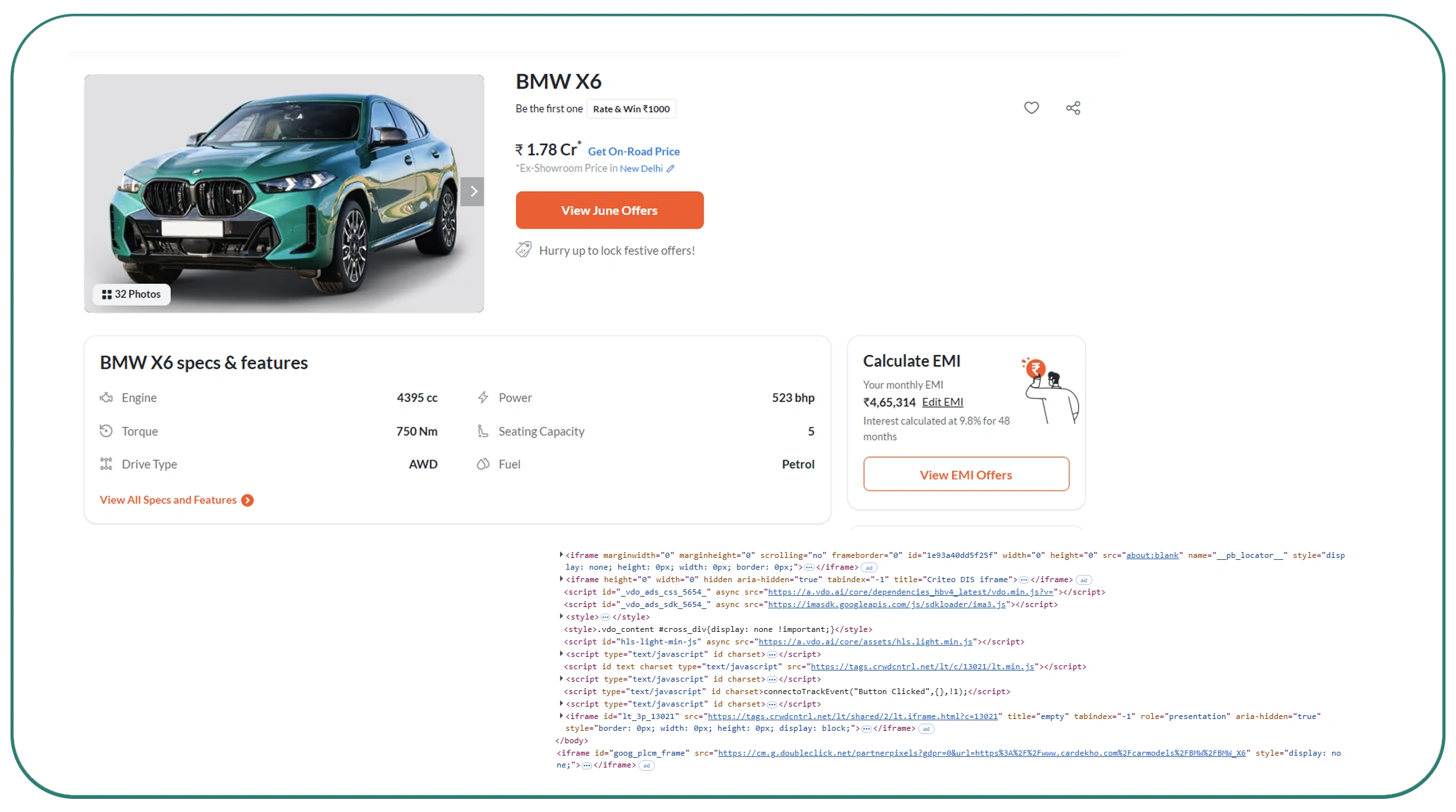
A well-designed image URL scraping pipeline from CarDekho and BikeDekho captures the following structured fields alongside each image URL:
Vehicle Identity Metadata
- Make (brand name: Maruti Suzuki, Hyundai, Honda, TVS, Bajaj, etc.)
- Model name (Swift, Creta, Activa, Pulsar, etc.)
- Variant name (VXI, ZXI+, Base, Top, etc.)
- Model year / generation
- Vehicle type (sedan, hatchback, SUV, cruiser, scooter, electric)
- Platform source (CarDekho / BikeDekho)
Image Classification Metadata
- Image category (exterior, interior, detail, color variant, 360-degree)
- Specific view label (front view, rear view, side view, dashboard, instrument cluster, alloy wheels, headlamp, tail lamp, boot/luggage space)
- Color variant name (Pearl White, Fiery Red, Midnight Black, etc.)
- Color variant hex code (where available)
- Image sequence number within gallery
Technical Image Metadata
- Full CDN image URL (primary resolution)
- Thumbnail URL
- Image dimensions (width × height in pixels)
- File format (JPEG, WebP, PNG)
- Image upload or last-updated timestamp
Listing Context
- New vs. used vehicle classification
- City or region of listing (for used vehicle images)
- Dealer name (for dealer-sourced listings)
- Expert review vs. user-generated image flag
Real-World Use Cases
Use Case 1: Automotive Marketplace Visual Enrichment
A new-generation used car marketplace launching in Tier 2 and Tier 3 Indian cities needs high-quality reference images for vehicle models that its dealer partners often fail to photograph properly. By maintaining a scraped image URL database from CarDekho covering all popular models sold in India, the Car Rental Scraping API marketplace automatically enriches dealer listings with standard OEM-quality reference photography — improving listing quality, buyer trust, and time-on-page metrics without requiring every dealer to photograph their inventory professionally.
This is one of the highest-impact use cases for CarDekho image URL data: using standardized reference imagery to elevate the entire quality floor of a used vehicle marketplace.
Use Case 2: Computer Vision and AI Training Datasets
An automotive AI company building a visual damage assessment tool for insurance claims needs a large, labeled dataset of Indian vehicle images covering diverse models, colors, and angles. Scraping image URLs from CarDekho and BikeDekho — and downloading the structured, angle-labeled images — provides a foundation training dataset of undamaged reference vehicles. Combined with damage imagery, the model learns to detect and localize damage against known reference states.
The standardized angle convention of CarDekho and BikeDekho photography (consistent front, rear, side views across thousands of models) is particularly valuable for this use case — it creates a labeled dataset with minimal annotation overhead.
Use Case 3: OEM Competitive Visual Intelligence
A two-wheeler OEM's product planning team wants to systematically analyze how competing manufacturers present their upcoming models visually — which design elements they emphasize in hero shots, how interior quality is communicated, how color variant photography evolves across model generations. By scraping BikeDekho image URLs for competing models across a 3-year window, the team builds a longitudinal visual intelligence archive that informs decisions about their own model photography briefs, color palette choices, and launch visual strategy.
Use Case 4: Insurance Premium Calibration by Variant
An insurance technology platform uses CarDekho image data combined with specification data to build variant-level visual feature scoring. Vehicles with premium alloy designs, LED headlamps, or panoramic sunroofs (all identifiable through CarDekho detail images) command higher replacement part costs and therefore higher insurance premiums. By systematically scraping and classifying CarDekho detail images — particularly alloy wheel, headlamp, and exterior trim images — the insurtech platform automates feature detection that was previously done through manual specification lookup.
Use Case 5: Automotive Content Publishing at Scale
A digital automotive media company producing regional-language content across Hindi, Tamil, Telugu, Marathi, and Bengali audiences needs vehicle images to accompany articles, reviews, and comparison pieces. Rather than licensing images from OEMs for each publication — a slow, expensive, rights-managed process — the editorial team maintains a structured image URL library scraped from CarDekho and BikeDekho, enabling writers to quickly access correctly attributed vehicle imagery for any model they cover.
For high-frequency content operations covering dozens of new articles daily, having a pre-built image URL database reduces content production time significantly.
Use Case 6: Color Variant Availability Tracking for Dealers
An automotive dealer group operating across multiple cities uses BikeDekho and CarDekho color variant image data to keep its website showroom displays current. When a manufacturer launches a new color variant mid-cycle — a common practice in the Indian two-wheeler market — the dealer's website needs to display the new color immediately. By monitoring BikeDekho image URL additions for relevant models, the dealer's digital team receives automated alerts when new color variant image sets appear and can update the website display within hours of launch.
Use Case 7: EV Visual Database for Charging and Ecosystem Apps
An EV charging network and ecosystem app wants to display correct vehicle imagery when users register their electric vehicles. As new EV models launch frequently in India, maintaining an up-to-date image database manually is impractical. By integrating a CarDekho and BikeDekho image URL feed from Real Data API, the app automatically populates new EV model images when they appear on the platforms — ensuring the vehicle registration experience always shows accurate, current imagery without manual content team intervention.
Use Case 8: Cross-Platform Visual Consistency Auditing for OEMs
An OEM brand team wants to audit how its models are visually represented across third-party platforms versus its own website — checking whether CarDekho and BikeDekho are using approved current-generation photography or outdated images from previous model years. By scraping image URLs for their own models using Car Rental Datasets from both platforms and comparing them to their official brand asset library, the team identifies outdated or unauthorized imagery and raises correction requests with platform editorial teams — protecting brand visual consistency across the research funnel.
Technical Challenges of Scraping Image URLs from CarDekho and BikeDekho
Image URL extraction from CarDekho and BikeDekho presents several specific technical challenges:
Lazy Loading and Infinite Scroll — Vehicle image galleries on both platforms use lazy loading, meaning images only load as the user scrolls or interacts with the gallery. A static HTML request captures only the first image frame; full gallery extraction requires JavaScript execution and simulated scroll or gallery navigation events.
CDN URL Structures and Expiry — Both platforms serve images from CDN infrastructure with URL patterns that include image identifiers, size parameters, and occasionally time-limited tokens. Scrapers must correctly parse CDN URL structures to capture permanent base URLs rather than ephemeral signed URLs that expire after a session.
Color Variant Gallery Navigation — Color variant image sets are not all loaded on the primary product page. Accessing full color variant galleries typically requires triggering color selector interactions — clicking or programmatically selecting each color swatch to load its associated image set. This multiplies extraction complexity proportionally with the number of color variants per model.
Image Resolution Variants — CarDekho and BikeDekho serve images in multiple resolutions (thumbnail, standard, high-resolution) using URL parameter manipulation. A production-grade pipeline captures the canonical high-resolution URL rather than thumbnail variants that would be inadequate for downstream applications.
Model and Variant Taxonomy Consistency — Vehicle naming conventions across CarDekho and BikeDekho are not always consistent with OEM official nomenclature or with each other. A normalization layer that maps scraped model names to canonical vehicle identifiers (using make-model-variant-year keys) is essential for cross-platform image dataset construction.
Pagination Across Used Vehicle Listings — Used vehicle listings on CarDekho involve paginated dealer and user uploads across hundreds of pages per model. Comprehensive image collection from the used section requires robust pagination handling and deduplication logic to avoid storing redundant images of the same vehicle from multiple listing views.
Building a CarDekho and BikeDekho Image URL Pipeline: Design Principles
Gallery-aware extraction — The pipeline must simulate user interactions with image galleries, not just parse static HTML. This means using headless browser automation that can trigger gallery events, color swatch selections, and scroll-based lazy load triggers.
URL normalization and deduplication — Raw CDN URLs often include session parameters, size modifiers, and cache-busting strings. The pipeline should normalize URLs to their canonical base form and deduplicate before storage to prevent bloated datasets.
Structured metadata co-extraction — Image URLs without metadata are significantly less useful. Every image URL should be stored alongside its vehicle identity metadata, image category label, color variant name, and view angle — enabling downstream filtering and use-case-specific queries.
Incremental update detection — New vehicle launches, updated photography for refreshed models, and new color variant additions happen continuously on both platforms. The pipeline should monitor for new image additions rather than re-extracting the full catalogue on every cycle.
Storage architecture — Image URLs and metadata should be stored in a queryable format — structured database or well-organized JSON with indexing on make, model, year, category, and color — rather than flat file dumps.
Conclusion: Real Data API — Your Structured Image URL Feed from CarDekho and BikeDekho
CarDekho and BikeDekho together represent the most comprehensive, consistently structured, and regularly updated source of automotive visual data available for the Indian vehicle market. From standardized OEM photography across thousands of new car and bike models to color variant galleries, interior detail shots, and user-uploaded used vehicle imagery, the image URL data sitting inside these platforms powers everything from AI training pipelines to marketplace enrichment, insurance technology, content publishing, and brand visual auditing.
Building and maintaining a production-grade image URL scraping pipeline for both platforms requires solving for lazy loading, CDN URL normalization, color variant gallery navigation, and continuous incremental updates — a significant engineering investment that most teams cannot sustain alongside their core product development work.
Real Data API solves this entirely. Our CarDekho and BikeDekho image URL data feed delivers structured, normalized, metadata-rich image URL datasets covering new vehicles, used vehicle listings, color variant galleries, interior and detail photography, and EV model imagery — continuously refreshed as both platforms update their catalogues.
Every image URL delivered by Real Data API comes with full vehicle identity metadata, image category classification, color variant labels, view angle tags, and resolution specifications — ready for direct integration into your marketplace backend, AI training pipeline, content management system, or insurance platform.
Whether you are building India's next-generation used car platform, training a vehicle damage detection model, managing OEM brand visual consistency, or automating content production at scale — Real Data API gives you the CarDekho and BikeDekho image URL intelligence your product needs, delivered clean, structured, and continuously current.
Visual data is the new competitive moat in Indian automotive intelligence. Real Data API is where you build it.
Latest posts
Why Brands Use Competitive Data Intelligence to Increase Market Share in Highly Competitive Markets?

How To Scrape Competitor Data To Support Market Entry Strategy And Expansion Planning For Data-Driven Business Growth?

How Hotel Occupancy Intelligence Through Public Data Sources Is Reshaping Revenue Management
The ZIP Code Advantage: How Hyper-Local Amazon Product Data Collection Is Redefining Retail Intelligence

Real Data API stands out as one of the premier global companies specializing in web data Scraping and web extraction.





.png)


Rating 4.7
Rating 4.7
Rating 4.5
Rating 4.7
Rating 4.7


Disclaimer : RealData API functions solely as an independent data infrastructure and technology solutions provider. We build customized automation workflows designed to collect publicly accessible web data based exclusively on client instructions. RealData API neither owns proprietary datasets nor engages in the sale or redistribution of extracted information. Our operations are limited strictly to lawful public web data processing and never involve unauthorized access to restricted systems or private networks. Any company names, trademarks, logos, or brand references displayed on this website are used purely for demonstrative and illustrative purposes to showcase our technical capabilities and do not imply endorsement, partnership, or affiliation. Use of our platform and services remains subject to our Terms of Service.