Introduction
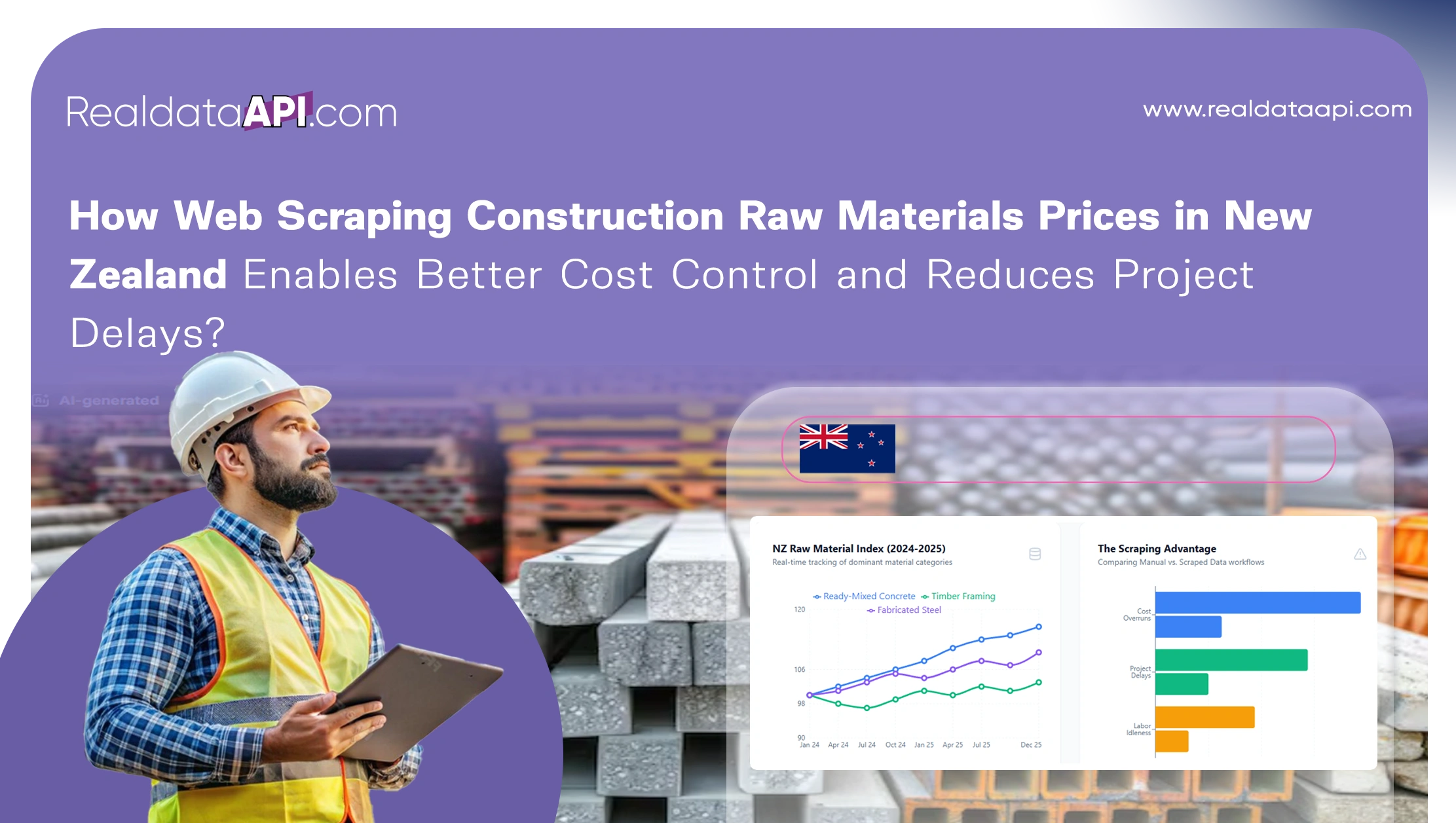
The construction industry in New Zealand is highly sensitive to fluctuations in raw material prices, supply chain disruptions, and demand shifts. Leveraging Web Scraping Construction raw materials prices in New Zealand allows businesses to gain real-time visibility into market trends and make informed procurement decisions.
With the growing complexity of construction projects between 2020 and 2026, relying on outdated pricing data can lead to cost overruns and project delays. By integrating advanced tools like Web Scraping API, companies can automate the collection of pricing data for materials such as cement, steel, timber, and aggregates from multiple sources.
This data-driven approach empowers contractors, developers, and suppliers to optimize budgets, improve forecasting accuracy, and reduce risks. As competition intensifies, businesses that embrace real-time data insights are better positioned to maintain profitability and deliver projects on time.
Strengthening Procurement Strategies with Material Price Insights
Efficient procurement is essential for controlling construction costs. By using tools to scrape cement steel and raw material prices for NZ construction market insights, businesses can monitor price trends and identify cost-saving opportunities.
Between 2020 and 2026, construction material prices in New Zealand experienced fluctuations of up to 40%, driven by global supply chain challenges and rising demand. Companies that actively tracked pricing data were able to secure better deals and avoid sudden cost spikes.
Material Price Trends (2020–2026)
| Year | Cement Price Index | Steel Price Index | Timber Price Index |
|---|---|---|---|
| 2020 | 100 | 100 | 100 |
| 2022 | 120 | 145 | 135 |
| 2024 | 115 | 130 | 125 |
| 2026* | 128 | 150 | 140 |
By analyzing these trends, procurement teams can plan purchases strategically, negotiate better contracts, and reduce overall project costs. This proactive approach enhances financial efficiency and minimizes risk.
Improving Cost Accuracy with Supplier Data Analysis
Accurate cost estimation depends on reliable supplier pricing information. By extracting supplier pricing data for construction cost analysis, businesses can compare multiple suppliers and choose the most cost-effective options.
From 2020 to 2026, supplier price variations for the same materials reached up to 25%, making it crucial for companies to evaluate multiple sources. Businesses that leveraged data scraping tools gained better visibility into supplier pricing structures.
Supplier Pricing Comparison Impact
| Factor | Single Supplier | Multi-Supplier Analysis |
|---|---|---|
| Cost Accuracy | Low | High |
| Negotiation Power | Limited | Strong |
| Cost Savings | Minimal | Significant |
| Procurement Efficiency | Moderate | High |
With detailed supplier data, construction firms can improve cost accuracy, optimize vendor selection, and enhance profitability across projects.
Leveraging Real-Time Data for Faster Decision-Making
The ability to access real-time construction material price data scraper solutions is critical for responding to market changes instantly. Real-time data ensures that businesses can adjust their strategies without delays.
Between 2020 and 2026, companies using real-time data reported a 30% improvement in decision-making speed and reduced financial losses caused by price volatility. Immediate access to updated pricing allows businesses to act quickly during market fluctuations.
Benefits of Real-Time Data Access
| Benefit | Impact on Projects |
|---|---|
| Faster Decisions | Immediate actions |
| Reduced Cost Overruns | Lower expenses |
| Improved Planning | Accurate timelines |
| Risk Mitigation | Enhanced control |
Real-time insights not only improve operational efficiency but also ensure projects stay on schedule and within budget.
Enhancing Project Planning with Data-Driven Estimates
Reliable project planning depends on accurate cost forecasts. Using New Zealand construction cost estimation via scraped data, businesses can create precise budgets and timelines.
From 2020 to 2026, construction projects that used data-driven estimation methods reported up to 20% fewer delays compared to those relying on traditional approaches. Accurate forecasts help businesses allocate resources efficiently and avoid unexpected disruptions.
Impact of Data-Driven Estimation
| Metric | Traditional Estimation | Data-Driven Estimation |
|---|---|---|
| Budget Accuracy | Moderate | High |
| Project Delays | Frequent | Reduced |
| Resource Allocation | Inefficient | Optimized |
| Profit Margins | Unstable | Stable |
By integrating data into planning processes, companies can improve efficiency, reduce uncertainties, and deliver projects successfully.
Scaling Data Collection for Industry Growth
As construction projects grow in complexity, businesses need scalable solutions like Web Scraping Services to handle increasing data demands. These services automate data collection, ensuring consistency and accuracy.
Between 2020 and 2026, companies that adopted scalable data solutions reported up to 35% higher operational efficiency. Automation reduces manual errors and provides continuous access to updated information.
Efficiency Gains with Scalable Solutions
| Metric | Manual Process | Automated Scraping |
|---|---|---|
| Data Collection Speed | Slow | Fast |
| Accuracy | Moderate | High |
| Cost Efficiency | Low | High |
| Scalability | Limited | Unlimited |
Scalable solutions enable construction firms to manage large datasets efficiently and maintain a competitive edge.
Driving Innovation with Advanced Data Infrastructure
Modern construction businesses rely on advanced tools like Enterprise Web Crawling to gather and process large volumes of data from multiple sources. This technology supports comprehensive market analysis and strategic decision-making.
From 2020 to 2026, companies using enterprise-level data infrastructure achieved higher productivity and better risk management outcomes. Large-scale data extraction enables businesses to monitor global trends and adapt to changes effectively.
Impact of Enterprise Data Solutions
| Metric | Without Crawling | With Crawling |
|---|---|---|
| Data Coverage | Limited | Extensive |
| Decision Accuracy | Moderate | High |
| Risk Management | Weak | Strong |
| Business Growth | Moderate | High |
By leveraging advanced infrastructure, companies can unlock new opportunities and drive innovation in the construction sector.
Enhancing Supply Chain Visibility for Better Planning
A major challenge in construction projects is the lack of transparency across the supply chain, which often leads to unexpected delays and cost escalations. By leveraging Web Scraping Construction raw materials prices in New Zealand, businesses can gain end-to-end visibility into supplier pricing, availability, and delivery timelines. This enables project managers to plan procurement more effectively and avoid disruptions caused by sudden shortages or price spikes.
Between 2020 and 2026, supply chain disruptions impacted over 60% of construction projects in New Zealand, increasing project costs by an average of 18%. Companies that adopted digital tools like Enterprise Web Crawling were able to monitor multiple suppliers simultaneously and respond quickly to changes. This proactive approach improves coordination and ensures timely material availability.
Supply Chain Performance Insights (2020–2026)
| Metric | Without Data Visibility | With Data Visibility |
|---|---|---|
| Project Delays | 35% | 15% |
| Cost Overruns | 18% | 8% |
| Supplier Reliability | Moderate | High |
| Procurement Efficiency | Low | High |
By improving supply chain visibility, construction firms can reduce risks, enhance planning accuracy, and maintain project timelines more effectively.
Boosting Profit Margins Through Smart Cost Monitoring
Maintaining profitability in construction requires continuous monitoring of material costs and market trends. Using real-time construction material price data scraper solutions, businesses can track price changes instantly and adjust their budgets accordingly. This helps prevent financial losses and ensures better cost control throughout the project lifecycle.
From 2020 to 2026, companies that implemented real-time monitoring tools achieved up to 22% higher profit margins compared to those relying on periodic updates. Additionally, integrating Web Scraping API into cost management systems allowed businesses to automate data collection and reduce manual errors. This not only improves accuracy but also enhances decision-making speed.
Profitability Impact of Real-Time Monitoring (2020–2026)
| Metric | Traditional Monitoring | Real-Time Monitoring |
|---|---|---|
| Profit Margins | 10–12% | 18–22% |
| Cost Accuracy | Moderate | High |
| Budget Deviations | Frequent | Minimal |
| Decision Speed | Slow | Fast |
By adopting smart cost monitoring strategies, construction companies can protect their margins, optimize budgets, and achieve sustainable financial growth.
Why Choose Real Data API?
Real Data API offers cutting-edge solutions tailored to the construction industry. With capabilities like Live Crawler Services, Web Scraping Construction raw materials prices in New Zealand, businesses can access reliable and real-time data effortlessly.
Key benefits include:
- Real-time data extraction across multiple sources
- High accuracy and reliability
- Scalable infrastructure for large projects
- Customizable solutions for specific needs
By choosing Real Data API, construction companies can enhance cost control, reduce delays, and improve overall project efficiency.
Conclusion
In a rapidly evolving construction landscape, leveraging Web Scraping Construction raw materials prices in New Zealand is essential for maintaining cost control and ensuring timely project delivery. Data-driven insights empower businesses to make smarter decisions, reduce risks, and improve profitability.
By adopting advanced data extraction technologies, companies can stay ahead of market fluctuations and achieve sustainable growth.
Take control of your construction costs with Real Data API — unlock real-time material price insights and deliver projects on time and within budget!
Latest posts
How Predictive analytics using scraped market data Improves Demand Forecasting and Competitive Intelligence?
How to scrape Tender data intelligence for SMEs to Identify High-Value Government Contract Opportunities?
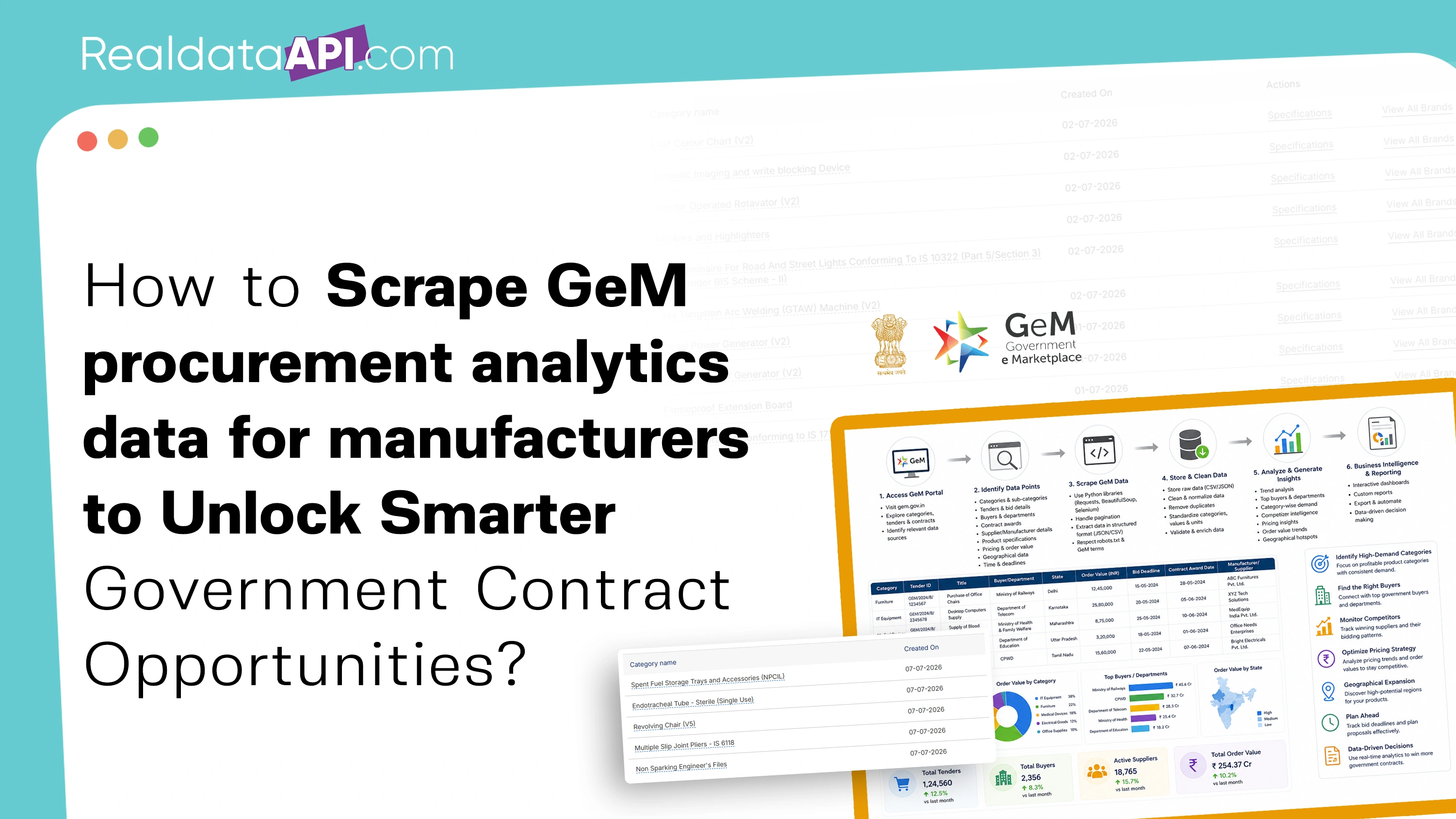
How to scrape GeM procurement analytics data for manufacturers to Unlock Smarter Government Contract Opportunities?
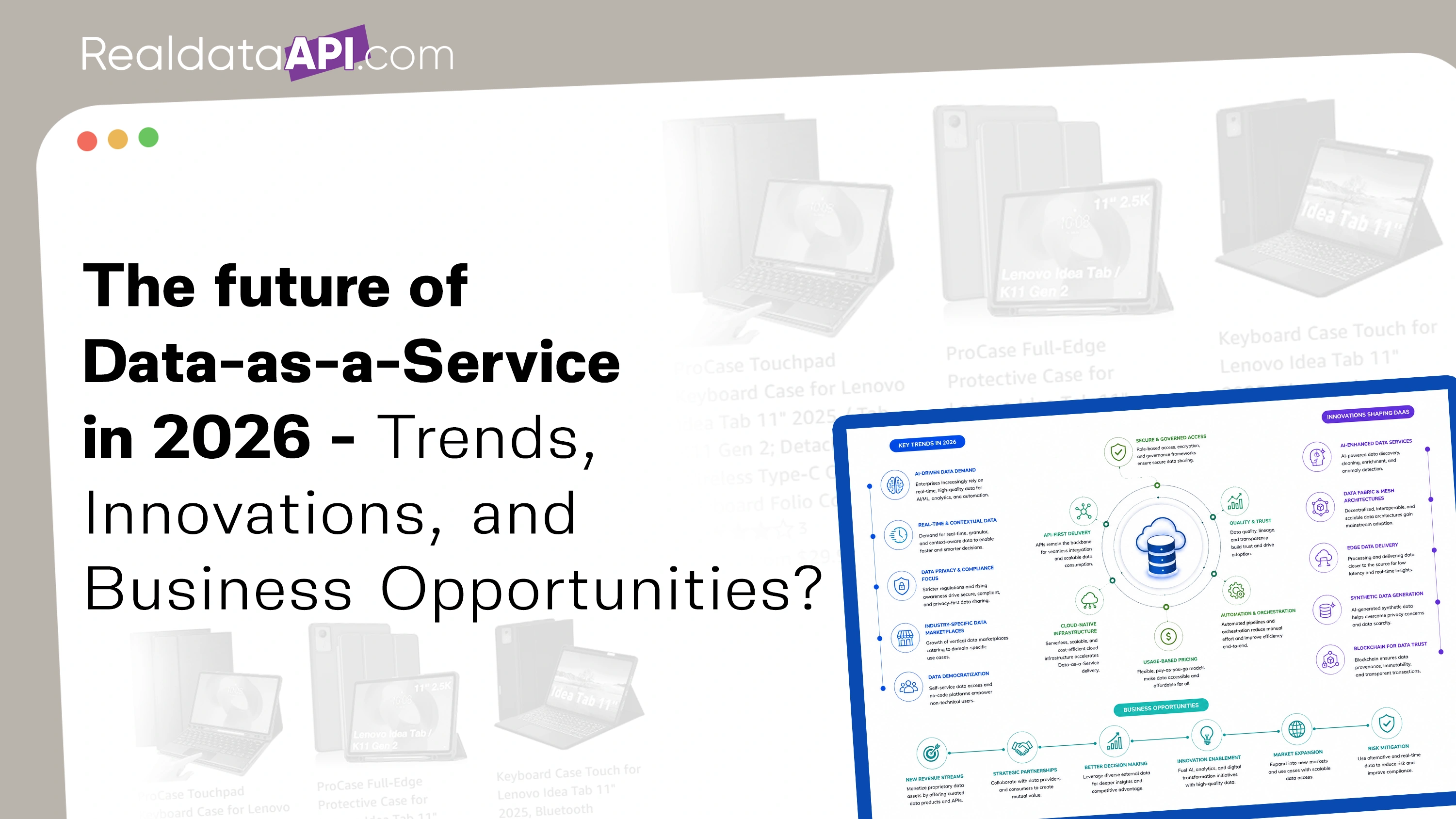
The future of Data-as-a-Service in 2026 - Trends, Innovations, and Business Opportunities
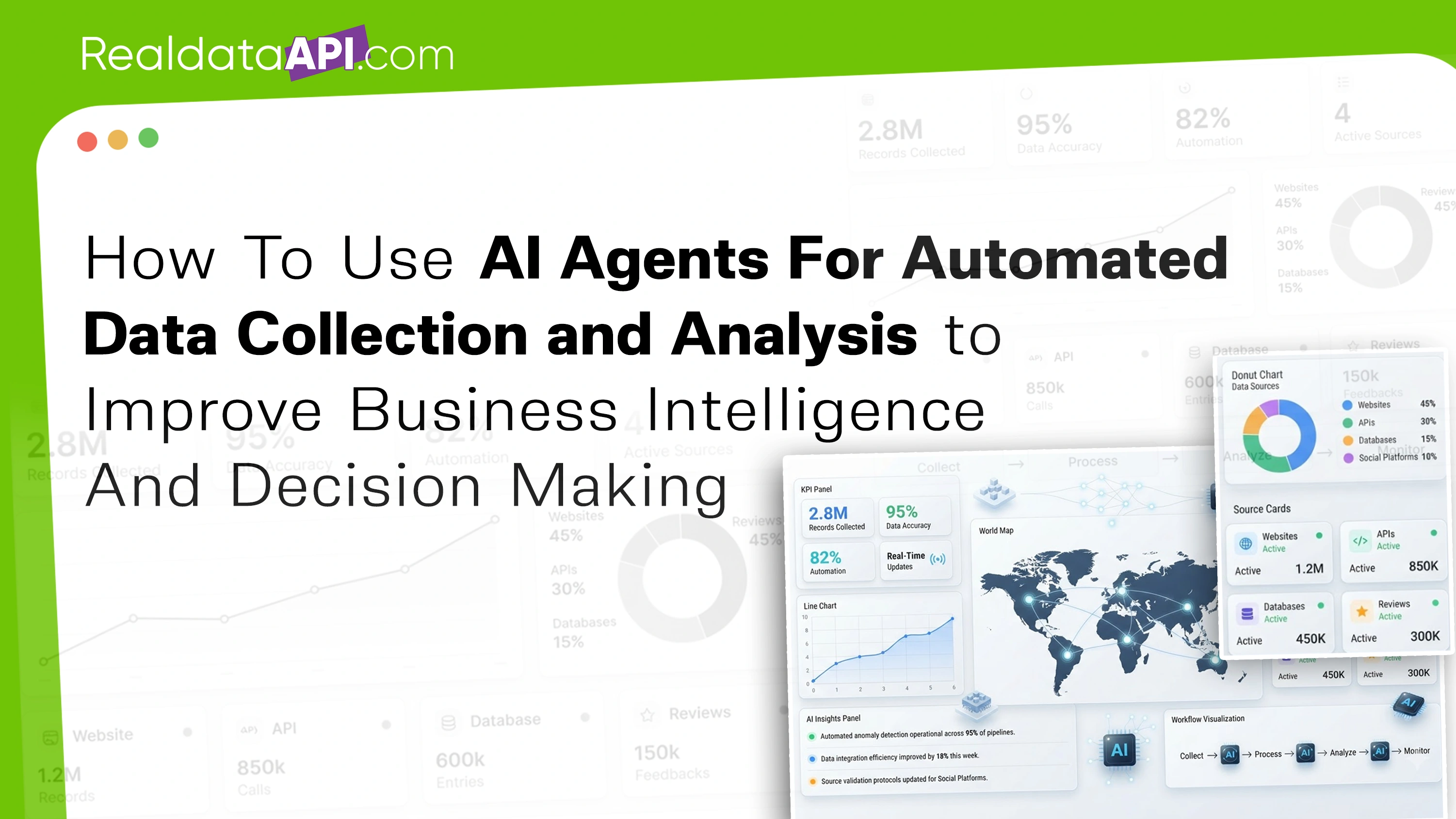
How To Use AI Agents For Automated Data Collection and Analysis to Improve Business Intelligence And Decision-Making

Real Data API stands out as one of the premier global companies specializing in web data Scraping and web extraction.





.png)


Rating 4.7
Rating 4.7
Rating 4.5
Rating 4.7
Rating 4.7


Disclaimer : RealData API functions solely as an independent data infrastructure and technology solutions provider. We build customized automation workflows designed to collect publicly accessible web data based exclusively on client instructions. RealData API neither owns proprietary datasets nor engages in the sale or redistribution of extracted information. Our operations are limited strictly to lawful public web data processing and never involve unauthorized access to restricted systems or private networks. Any company names, trademarks, logos, or brand references displayed on this website are used purely for demonstrative and illustrative purposes to showcase our technical capabilities and do not imply endorsement, partnership, or affiliation. Use of our platform and services remains subject to our Terms of Service.