Introduction
Florida's grocery retail industry has experienced rapid expansion over the past several years due to population growth, urban development, rising tourism activity, and evolving consumer shopping preferences. Supermarket chains, independent grocery retailers, and delivery-focused grocery platforms continue investing heavily in store expansion, pricing optimization, and digital retail strategies to capture market share across the state. As competition intensifies, businesses increasingly depend on location-based retail intelligence and structured grocery datasets to monitor store performance, regional demand, and pricing trends.
The growing importance of grocery retail intelligence using Florida store location data scraping has transformed how retailers, analysts, and market researchers evaluate grocery market opportunities. By collecting real-time store location data, businesses can analyze competitor footprints, identify underserved markets, track expansion strategies, and optimize operational planning across Florida's highly competitive grocery ecosystem.
Modern data solutions such as the Grocery Data Scraping API provide scalable access to structured grocery intelligence, including store locations, product availability, pricing data, inventory insights, and delivery coverage metrics. These advanced analytics capabilities help businesses improve strategic decision-making, optimize site selection, and gain actionable market intelligence within Florida's evolving retail landscape.
Retail Expansion Across Florida Markets
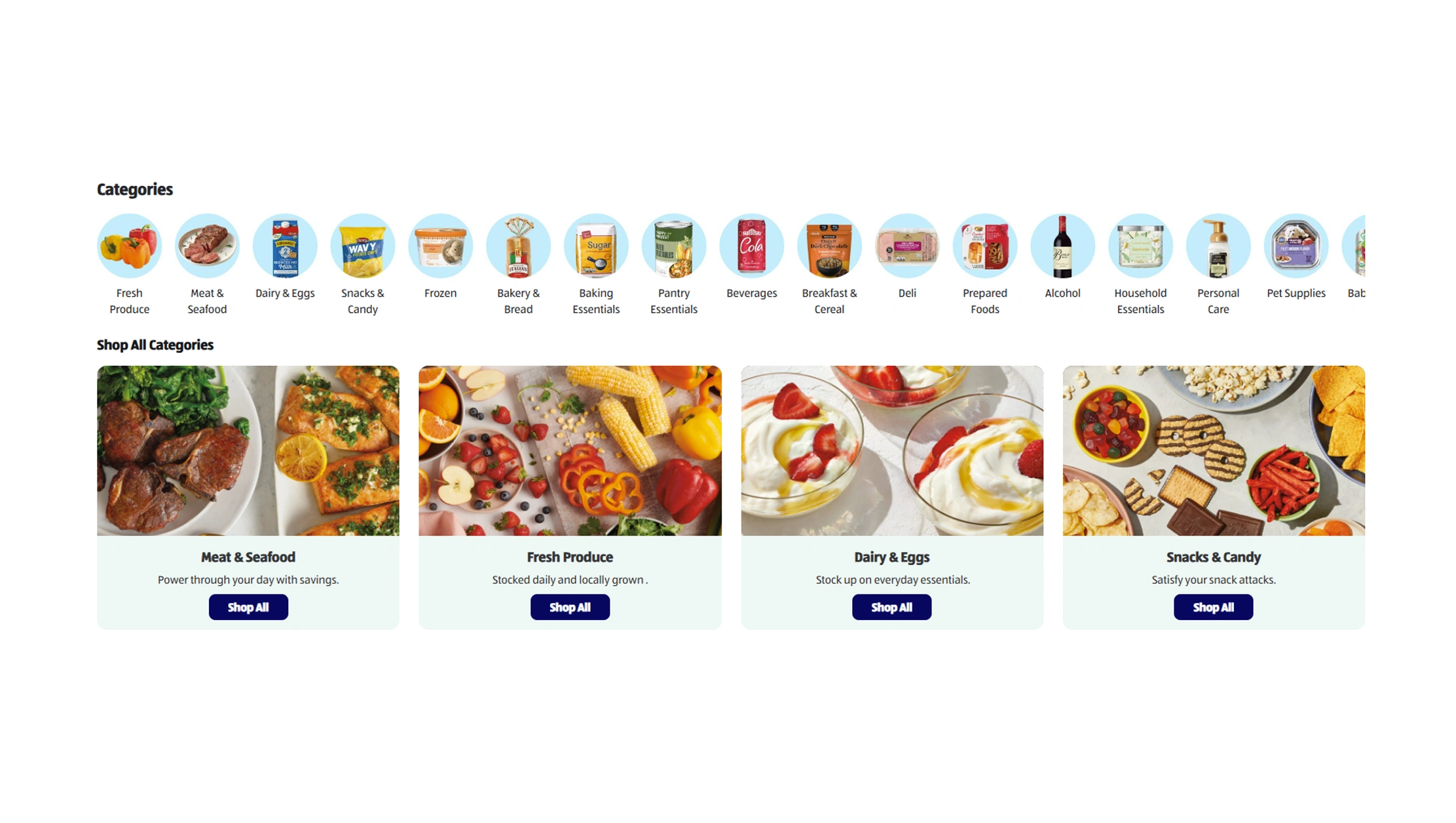
Florida's grocery industry has witnessed significant expansion between 2020 and 2026, driven by increasing urbanization, population migration, and growing consumer demand for convenience-focused retail experiences. National chains, regional supermarkets, and specialty grocery brands continue expanding into both metropolitan and suburban markets across the state.
Retail analysts increasingly rely on Florida grocery chain store count and expansion analysis 2026 to monitor store openings, market saturation levels, and regional retail development. Store location datasets provide valuable insights into expansion strategies, geographic distribution, and competitive positioning among leading grocery retailers.
Florida Grocery Expansion Trends (2020–2026)
| Year | Total Grocery Stores | New Store Openings | Urban Expansion (%) | Suburban Expansion (%) |
|---|---|---|---|---|
| 2020 | 8,200 | 210 | 58 | 42 |
| 2021 | 8,470 | 245 | 59 | 41 |
| 2022 | 8,760 | 278 | 60 | 40 |
| 2023 | 9,050 | 315 | 61 | 39 |
| 2024 | 9,380 | 352 | 62 | 38 |
| 2025 | 9,740 | 389 | 63 | 37 |
| 2026 | 10,120 | 425 | 64 | 36 |
Retail expansion analytics help businesses identify emerging growth corridors, optimize distribution networks, and evaluate competitor presence across Florida's grocery landscape. Store-level location intelligence also supports investment planning and regional market forecasting while enabling retailers to improve customer accessibility and operational efficiency.
Consumer Demand and Competitive Market Dynamics
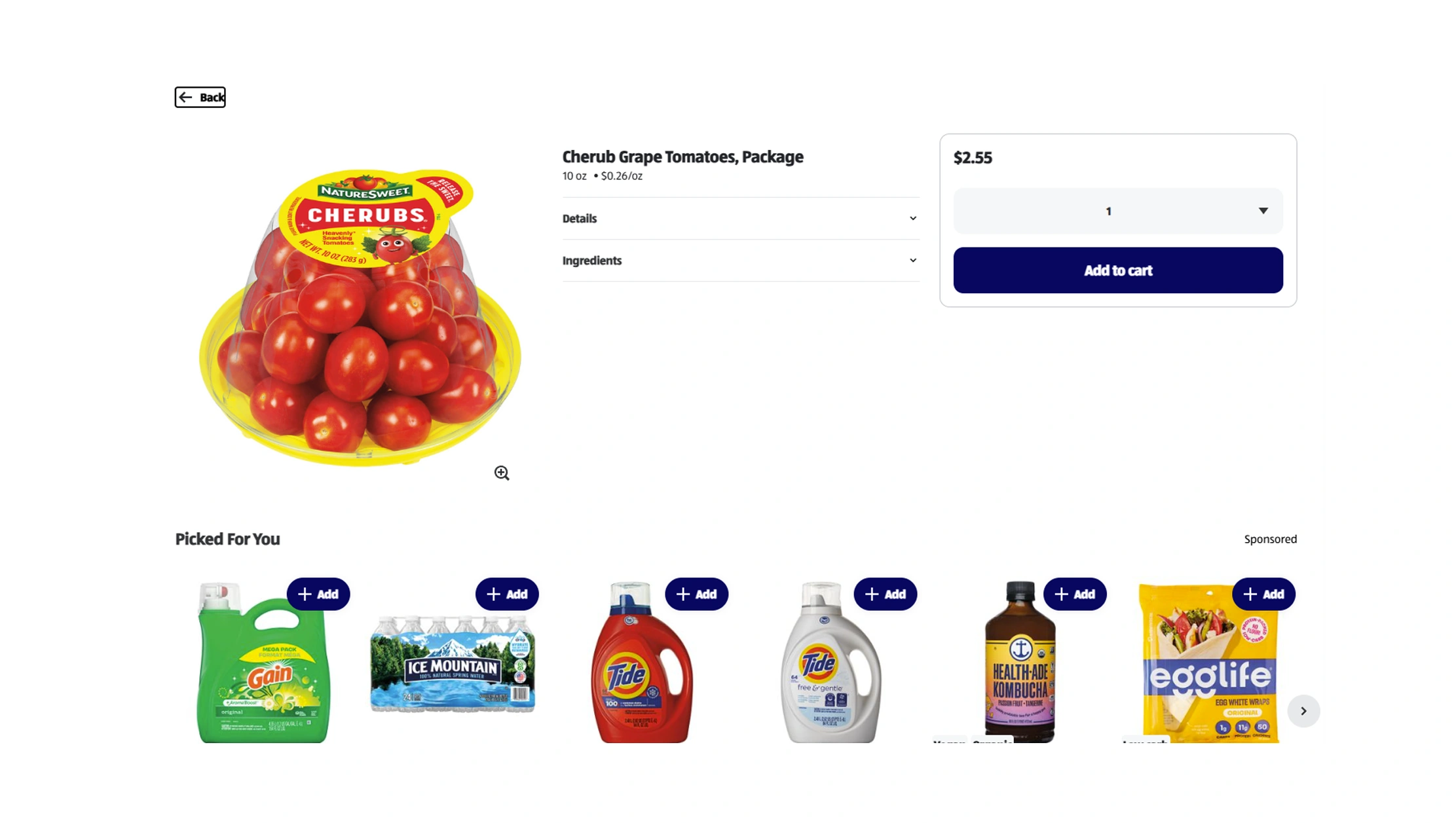
Florida's grocery sector is highly competitive, with retailers continuously adjusting pricing, promotions, product assortments, and digital services to attract and retain customers. Consumer demand patterns have shifted significantly due to inflation, online grocery adoption, and increasing interest in fresh, organic, and convenience-focused products.
Businesses use Florida supermarket competition and consumer shopping trends to analyze customer behavior, pricing sensitivity, and market competition across various retail formats. Grocery datasets provide insights into purchasing frequency, preferred shopping channels, seasonal demand fluctuations, and regional product preferences.
Florida Grocery Consumer Trends (2020–2026)
| Year | Avg Grocery Basket Value ($) | Online Grocery Adoption (%) | Consumer Price Sensitivity (%) | Weekly Store Visits |
|---|---|---|---|---|
| 2020 | 82 | 19 | 48 | 1.9 |
| 2021 | 86 | 24 | 52 | 2.0 |
| 2022 | 91 | 29 | 58 | 2.1 |
| 2023 | 96 | 35 | 63 | 2.2 |
| 2024 | 101 | 40 | 67 | 2.3 |
| 2025 | 106 | 45 | 70 | 2.4 |
| 2026 | 112 | 50 | 74 | 2.5 |
Retailers leverage consumer trend analysis to improve product assortments, refine promotional strategies, and optimize customer engagement initiatives. Data-driven retail intelligence also enables businesses to identify high-demand regions, improve inventory allocation, and respond proactively to changing shopping behaviors across Florida's diverse grocery markets.
Geographic Intelligence for Strategic Growth
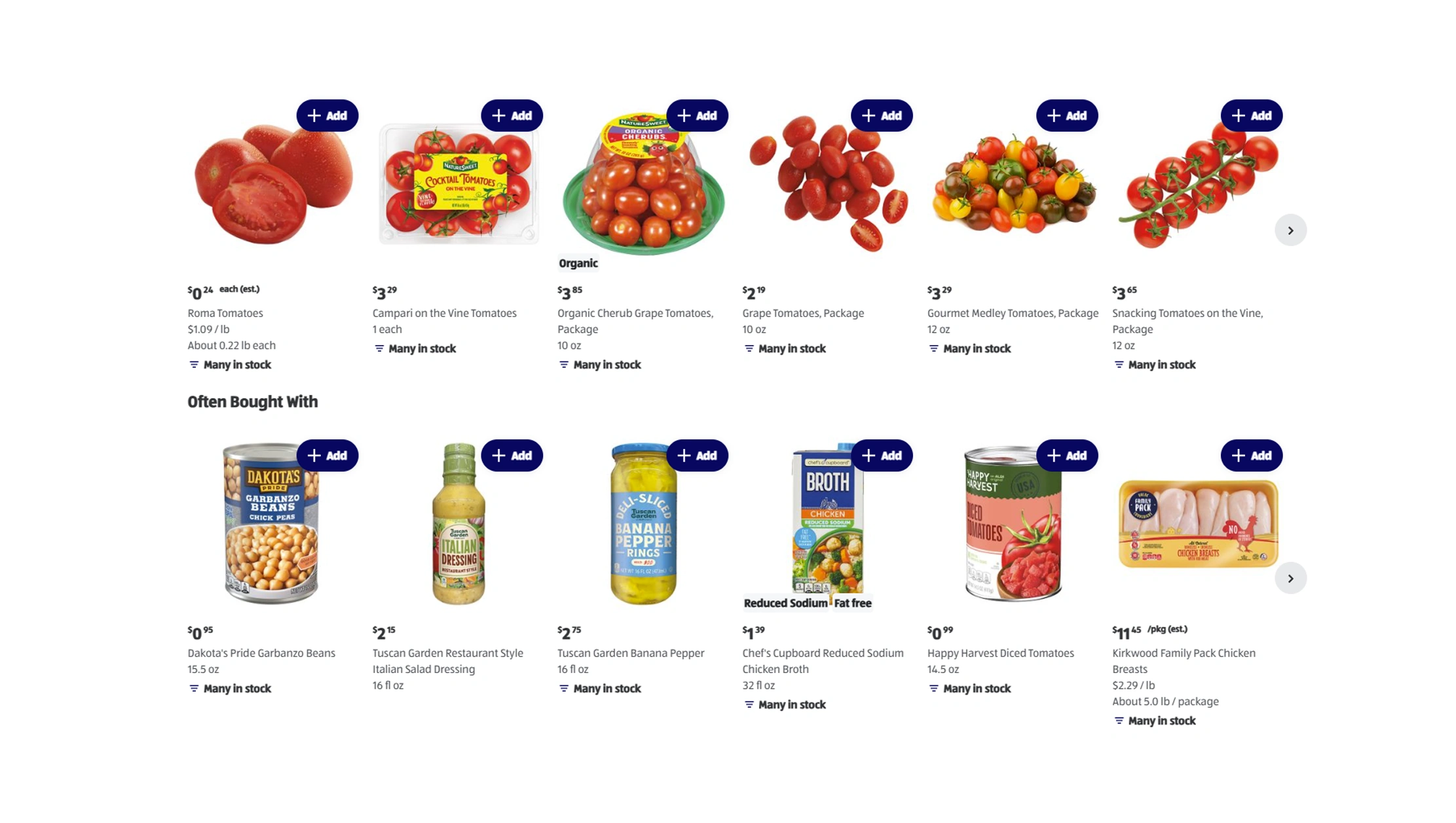
Location-based analytics have become a crucial component of grocery retail planning and expansion strategies. Retailers increasingly depend on geographic data to identify profitable locations, evaluate competitor proximity, and improve operational efficiency within high-growth markets.
Organizations leverage Scrape retail expansion insights from Florida grocery chain locations to monitor store distribution patterns, evaluate new market opportunities, and assess demographic-driven demand across Florida's retail ecosystem. Structured location datasets provide visibility into store density, regional growth patterns, and competitor expansion strategies.
Florida Grocery Store Distribution Metrics (2020–2026)
| Year | Coastal Store Locations (%) | Inland Store Locations (%) | High-Growth Counties | Avg New Store Size (Sq Ft) |
|---|---|---|---|---|
| 2020 | 61 | 39 | 14 | 38,000 |
| 2021 | 62 | 38 | 16 | 39,500 |
| 2022 | 63 | 37 | 18 | 40,800 |
| 2023 | 64 | 36 | 20 | 42,200 |
| 2024 | 65 | 35 | 22 | 43,700 |
| 2025 | 66 | 34 | 24 | 45,100 |
| 2026 | 67 | 33 | 26 | 46,500 |
Geographic intelligence helps retailers improve site selection strategies, optimize logistics operations, and identify underserved regions with strong market potential. Businesses can also evaluate competitor clustering patterns and customer accessibility trends to strengthen long-term expansion planning.
Structured Retail Data and Market Benchmarking
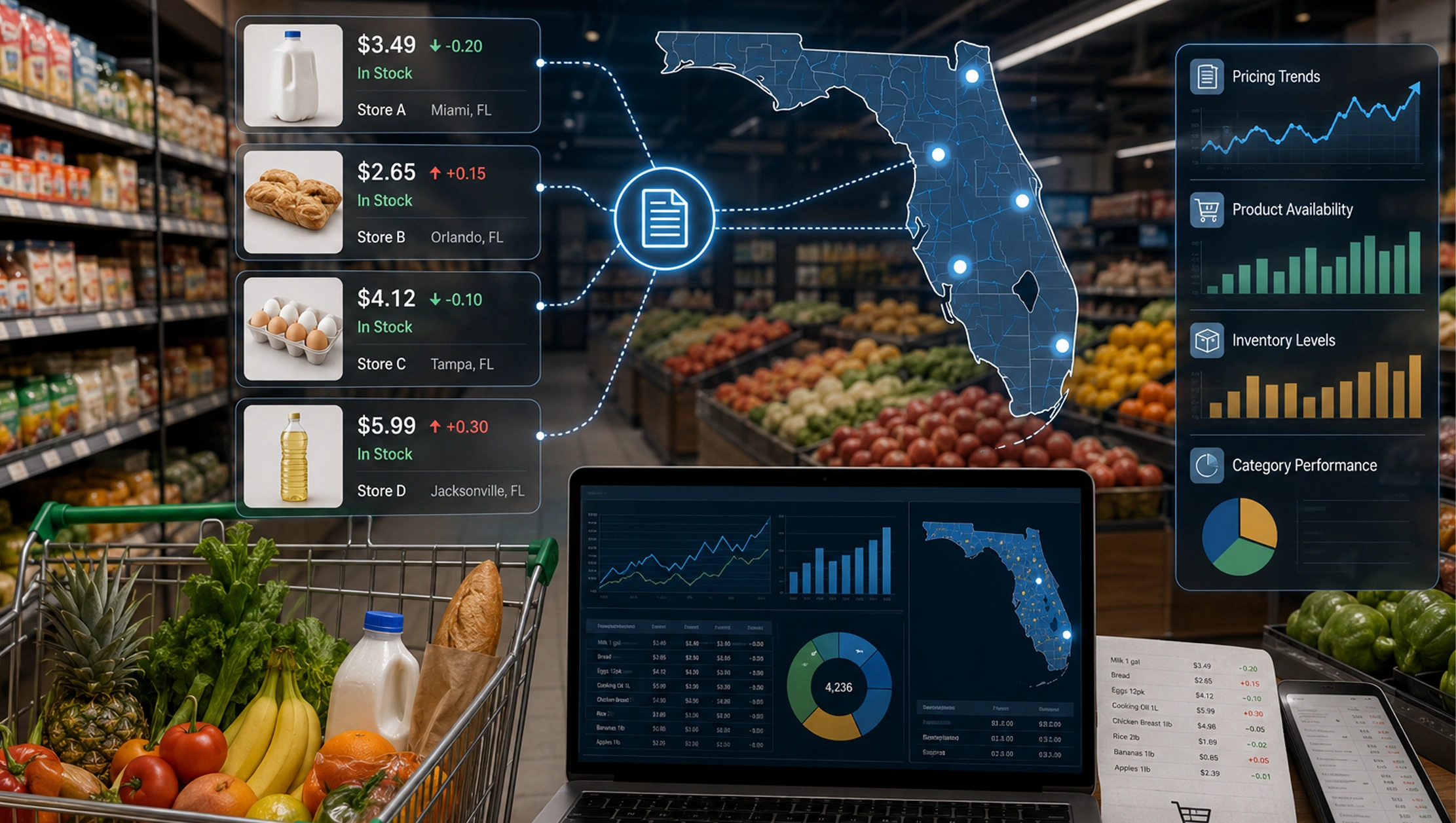
Structured grocery datasets play a critical role in helping businesses analyze store operations, pricing trends, and regional performance across Florida's retail market. Retail intelligence platforms increasingly rely on automated data extraction technologies to collect large-scale grocery information in real time.
Businesses utilize Grocery Dataset solutions to monitor pricing changes, product availability, store-level inventory, and category performance across multiple supermarket chains. These datasets support competitive benchmarking, operational forecasting, and strategic decision-making within the grocery sector.
Grocery Dataset Growth and Utilization (2020–2026)
| Year | Products Tracked Daily | Store Locations Monitored | Dataset Accuracy (%) | Retail Analytics Adoption (%) |
|---|---|---|---|---|
| 2020 | 180,000 | 5,400 | 90 | 41 |
| 2021 | 225,000 | 5,950 | 91 | 46 |
| 2022 | 278,000 | 6,530 | 92 | 52 |
| 2023 | 334,000 | 7,120 | 94 | 58 |
| 2024 | 392,000 | 7,780 | 95 | 63 | 2025 | 455,000 | 8,430 | 96 | 68 |
| 2026 | 521,000 | 9,120 | 97 | 73 |
Retail benchmarking enables organizations to compare pricing structures, analyze product assortments, and monitor promotional activity across competing grocery chains. Structured datasets also support predictive analytics initiatives aimed at improving demand forecasting, inventory planning, and market expansion strategies.
Product Availability and Pricing Intelligence
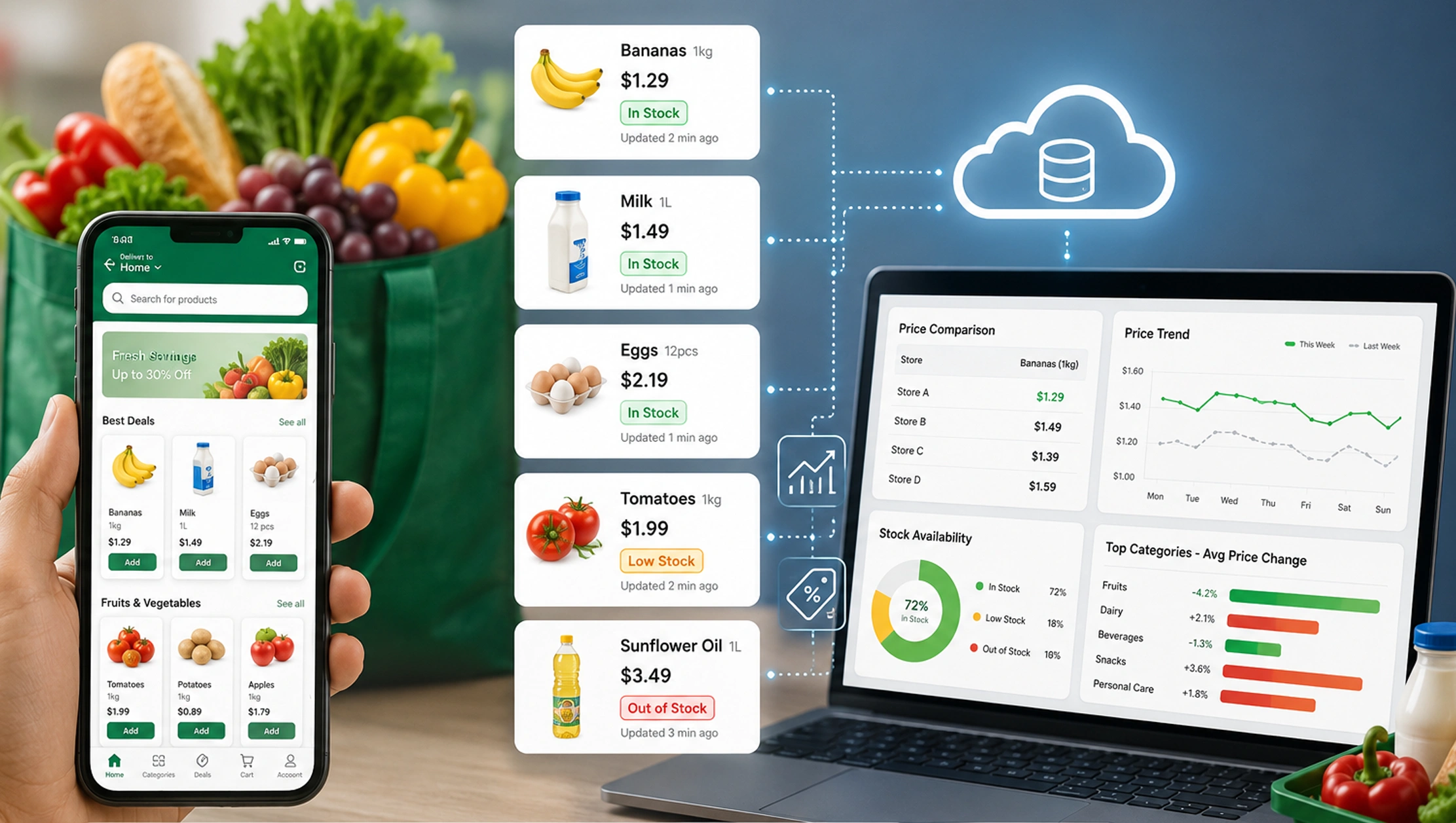
Product availability and pricing transparency have become increasingly important as consumers demand accurate inventory visibility and competitive pricing across grocery platforms. Retailers are investing heavily in digital infrastructure to support real-time pricing updates and inventory synchronization.
Businesses increasingly use solutions to extract product availability and pricing from grocery apps to monitor stock levels, promotional campaigns, delivery pricing, and category-level price changes. Real-time grocery intelligence supports pricing optimization, inventory forecasting, and customer experience improvements.
Product Availability and Pricing Metrics (2020–2026)
| Year | Real-Time Price Updates Daily | Out-of-Stock Rate (%) | Avg Grocery Price Increase (%) | Delivery App Usage (%) |
|---|---|---|---|---|
| 2020 | 12,000 | 11 | 2.1 | 22 |
| 2021 | 17,500 | 10 | 3.4 | 27 |
| 2022 | 24,000 | 9 | 6.8 | 34 |
| 2023 | 31,000 | 8 | 8.2 | 40 |
| 2024 | 39,000 | 7 | 5.4 | 46 |
| 2025 | 48,000 | 6 | 4.7 | 52 |
| 2026 | 58,000 | 5 | 4.1 | 58 |
Retailers can leverage pricing intelligence to benchmark competitor strategies, optimize promotional timing, and improve inventory allocation. Real-time product monitoring also supports operational agility and helps businesses respond rapidly to fluctuations in consumer demand and supply chain disruptions.
Variant-Level Analytics and Product Intelligence
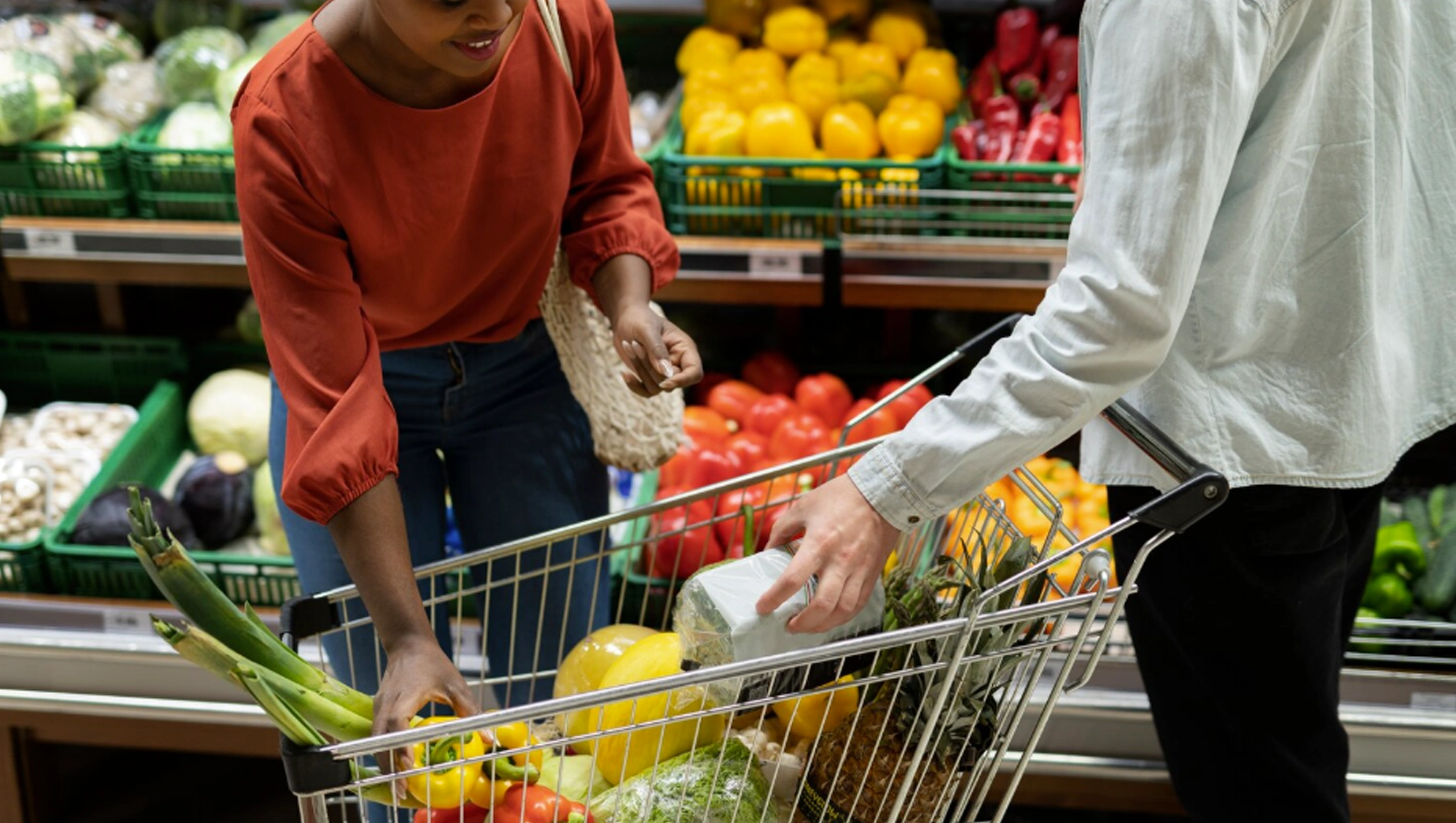
Variant-level grocery data has become increasingly valuable for retailers and manufacturers seeking deeper visibility into product performance and customer preferences. Product variants such as package size, flavor, dietary attributes, and pricing tiers significantly influence purchasing behavior across grocery categories.
Businesses use Extract Variant-Level Data from Grocery Websites to collect granular product details including SKU variations, nutritional information, package configurations, and price differences across online grocery platforms. Variant-level intelligence enables more accurate assortment optimization and pricing analysis.
Variant-Level Grocery Intelligence Trends (2020–2026)
| Year | Variant SKUs Tracked | Avg Variant Price Difference (%) | Organic Product Variants (%) | Personalized Recommendations Accuracy (%) |
|---|---|---|---|---|
| 2020 | 95,000 | 8 | 21 | 68 |
| 2021 | 112,000 | 9 | 24 | 71 |
| 2022 | 131,000 | 10 | 28 | 74 |
| 2023 | 152,000 | 11 | 32 | 78 |
| 2024 | 176,000 | 12 | 36 | 81 |
| 2025 | 201,000 | 13 | 40 | 84 |
| 2026 | 228,000 | 14 | 44 | 87 |
Variant-level analytics help retailers improve personalized marketing strategies, optimize inventory planning, and enhance customer shopping experiences. Detailed product intelligence also supports category-level forecasting and enables businesses to identify emerging product trends across Florida's grocery market.
Why Choose Real Data API?
Modern grocery retail analytics require scalable and reliable data extraction infrastructure capable of handling large-scale retail intelligence across multiple markets. Real Data API provides advanced grocery data solutions designed to support market analysis, pricing intelligence, and retail benchmarking for businesses operating within Florida's competitive grocery ecosystem.
Organizations seeking grocery retail intelligence using Florida store location data scraping benefit from high-frequency data collection, structured retail datasets, and customizable API integrations tailored to grocery analytics use cases. Real Data API enables businesses to monitor store locations, pricing changes, product availability, inventory trends, and customer demand patterns in real time.
Key advantages include:
- Real-time grocery data extraction
- Store location intelligence and mapping
- Product pricing and inventory monitoring
- Variant-level grocery analytics
- Scalable retail benchmarking solutions
- Automated market intelligence workflows
- High dataset accuracy and reliability
- Flexible API integration capabilities
These advanced capabilities help businesses optimize operations, improve expansion strategies, strengthen pricing intelligence, and gain actionable insights into Florida's rapidly evolving grocery retail market.
Conclusion
Florida's grocery retail industry continues evolving through rapid store expansion, digital transformation, changing consumer behaviors, and increasing competition among supermarket chains. Retailers that leverage advanced data analytics and structured grocery intelligence gain a significant advantage in understanding market trends, optimizing operations, and improving customer engagement.
The growing importance of grocery retail intelligence using Florida store location data scraping highlights the need for real-time retail visibility and scalable grocery analytics solutions. Businesses that utilize automated data extraction technologies can monitor competitor strategies, evaluate store performance, analyze pricing trends, and identify expansion opportunities with greater precision.
As Florida's population growth and grocery demand continue increasing through 2026, location-based retail intelligence and structured grocery datasets will remain essential for strategic planning, competitive benchmarking, and operational optimization.
Unlock powerful grocery retail intelligence with Real Data API and transform your Florida market strategy using scalable, real-time grocery data extraction and analytics solutions!
Latest posts
Web Scraping Competitor Product Monitoring Using Marketplace Data for Real-Time E-commerce Insights and Business Growth?
How to Scrape Product Intelligence Platform Using Marketplace Data to Help Brands Optimize Pricing, Inventory, and Product Strategy?
Why Companies scrape business data from Google Maps using keywords to Build Accurate Business Lists and Competitive Insights?
How Review scraping and monitoring services Help Businesses Track Customer Sentiment and Protect Brand Reputation in 2026?

How Real Estate Investment Insights Using RERA Data Scraping Help Investors Minimize Risk and Maximize Returns

Real Data API stands out as one of the premier global companies specializing in web data Scraping and web extraction.





.png)


Rating 4.7
Rating 4.7
Rating 4.5
Rating 4.7
Rating 4.7


Disclaimer : RealData API functions solely as an independent data infrastructure and technology solutions provider. We build customized automation workflows designed to collect publicly accessible web data based exclusively on client instructions. RealData API neither owns proprietary datasets nor engages in the sale or redistribution of extracted information. Our operations are limited strictly to lawful public web data processing and never involve unauthorized access to restricted systems or private networks. Any company names, trademarks, logos, or brand references displayed on this website are used purely for demonstrative and illustrative purposes to showcase our technical capabilities and do not imply endorsement, partnership, or affiliation. Use of our platform and services remains subject to our Terms of Service.