

Introduction
NLP and web scraping for automated job data extraction help businesses collect, organize, and analyze recruitment information from online job portals in real time. Companies use AI-powered automation to track hiring trends, salary insights, skill demand, and workforce changes more efficiently.
Industry reports estimate that AI-driven recruitment analytics can reduce manual hiring research efforts by more than 60% while improving workforce forecasting accuracy between 2020 and 2026.
Modern businesses also use Recruitment Data Scraping API solutions to automate job data collection from multiple online platforms. These systems help HR teams, staffing agencies, market researchers, and workforce analysts improve hiring intelligence and identify emerging labor market trends.
How Does NLP Improve Recruitment Data Accuracy?
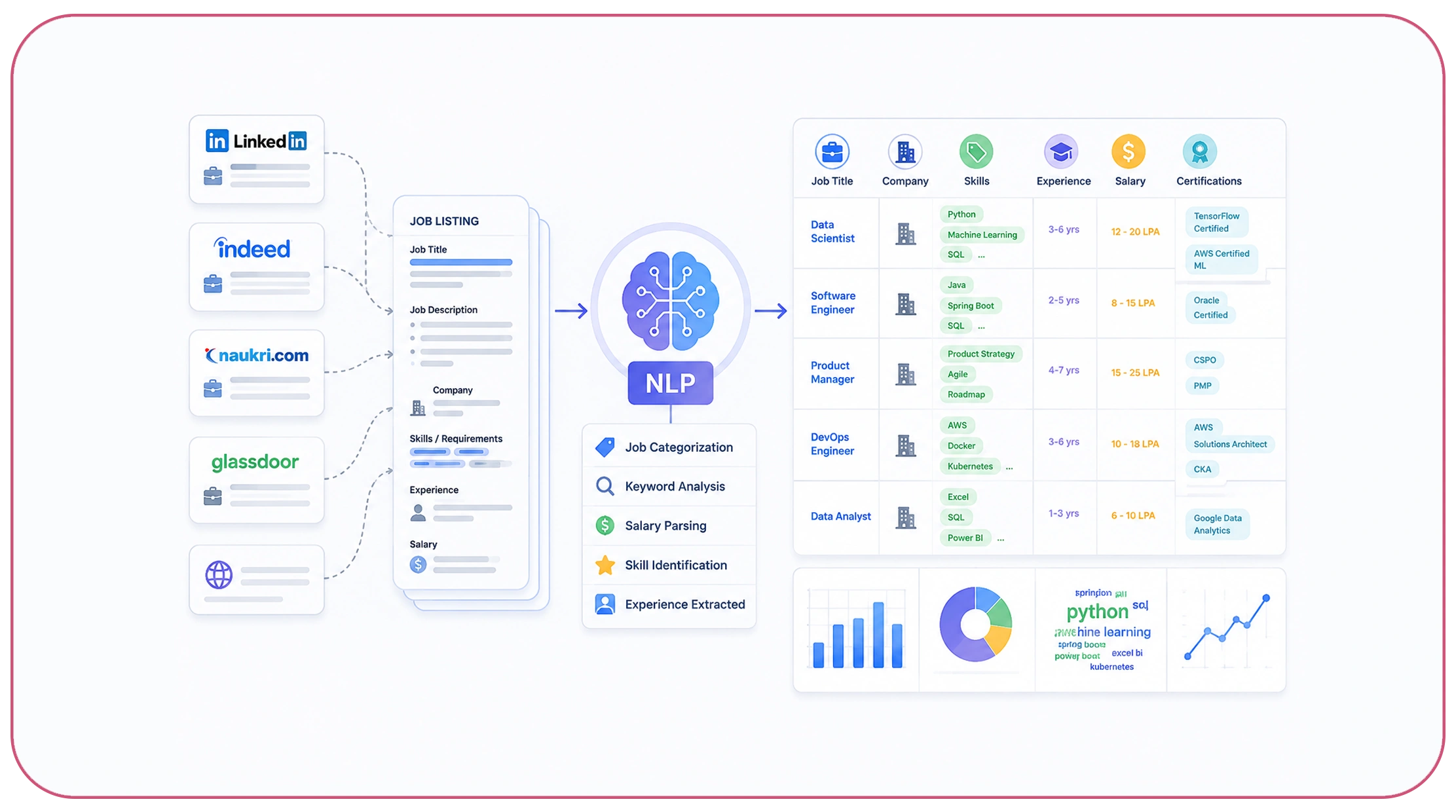
Natural Language Processing helps businesses structure and classify large volumes of recruitment information from online job portals. Companies increasingly study how NLP improves job data extraction to automate job categorization, keyword analysis, salary parsing, and skill identification.
NLP algorithms analyze job titles, descriptions, company names, required skills, certifications, and experience levels automatically. These systems convert unstructured job listings into structured datasets for analytics and reporting.
NLP Recruitment Analytics Growth (2020–2026)
| Year | NLP Hiring Tools Adoption | Job Listings Processed Daily | Data Accuracy |
|---|---|---|---|
| 2020 | 16% | 450,000 | 72% |
| 2021 | 24% | 710,000 | 77% |
| 2022 | 33% | 1.1 Million | 82% |
| 2023 | 45% | 1.8 Million | 87% |
| 2024 | 57% | 2.7 Million | 91% |
| 2025 | 69% | 3.9 Million | 95% |
| 2026 | 81% | 5.2 Million | 98% |
What Can NLP Extract?
- Job titles
- Required skills
- Salary information
- Experience requirements
- Company details
- Employment type
Businesses using NLP-driven recruitment analytics gain faster access to actionable hiring intelligence while improving workforce planning and talent acquisition strategies.
Why Are Automated Hiring Intelligence Systems Important?
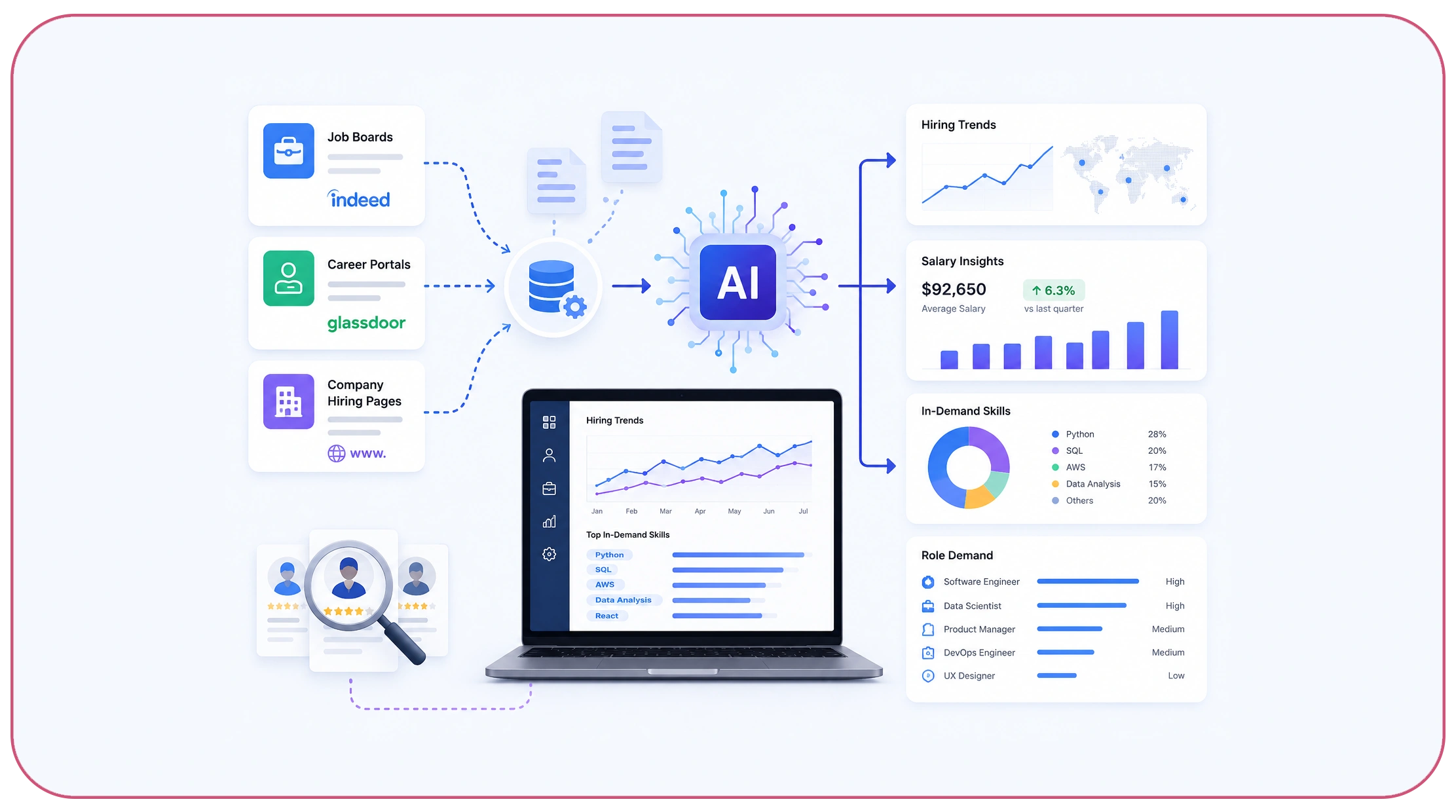
Modern recruitment markets change rapidly. Businesses need automated systems to monitor hiring trends and workforce demand continuously. Companies increasingly automate hiring intelligence using scraped recruitment data to improve hiring decisions and labor market forecasting.
Automated recruitment intelligence systems collect data from job boards, career portals, and company hiring pages. AI models then analyze this data to identify hiring trends, salary changes, and emerging skill demand.
Hiring Intelligence Market Statistics
| Year | Companies Using Hiring Analytics | Job Ads Scraped Daily | Hiring Forecast Accuracy |
|---|---|---|---|
| 2020 | 2,100 | 900,000 | 68% |
| 2021 | 3,500 | 1.5 Million | 73% |
| 2022 | 5,400 | 2.4 Million | 79% |
| 2023 | 7,900 | 3.6 Million | 84% |
| 2024 | 10,800 | 5.1 Million | 89% |
| 2025 | 14,300 | 6.8 Million | 93% |
| 2026 | 18,700 | 8.9 Million | 96% |
Benefits of Hiring Intelligence Automation
- Faster talent market analysis
- Improved workforce planning
- Better salary benchmarking
- Enhanced recruitment forecasting
- Reduced manual research costs
Organizations using automated hiring analytics can respond faster to labor market changes and improve recruitment efficiency.
How Does AI Improve Job Market Intelligence?
AI-powered analytics help organizations understand labor market trends and workforce demand more accurately. Businesses increasingly rely on job market data intelligence through AI and web scraping to monitor industry hiring activity, emerging skills, and employment growth patterns.
AI systems process millions of job postings and identify workforce trends across industries such as technology, healthcare, retail, finance, and manufacturing. These insights support workforce planning and strategic hiring decisions.
Job Market Intelligence Trends (2020–2026)
| Year | Job Listings Monitored | AI Workforce Forecasts Generated | Industry Coverage |
|---|---|---|---|
| 2020 | 5 Million | 12,000 | 18 Industries |
| 2021 | 8 Million | 19,000 | 24 Industries |
| 2022 | 13 Million | 29,000 | 31 Industries |
| 2023 | 20 Million | 43,000 | 39 Industries |
| 2024 | 29 Million | 61,000 | 47 Industries |
| 2025 | 40 Million | 82,000 | 56 Industries |
| 2026 | 54 Million | 108,000 | 65 Industries |
What Insights Can AI Provide?
- High-demand job roles
- Emerging technical skills
- Salary growth patterns
- Industry hiring trends
- Workforce shortages
- Geographic hiring demand
Businesses using AI-driven workforce intelligence can improve recruitment strategies and make better long-term talent planning decisions.
How Can Businesses Structure Online Job Board Data?

Online job boards contain massive amounts of unstructured recruitment information. Businesses increasingly focus on extracting structured job information from online job boards to improve reporting, analytics, and workforce intelligence.
Structured job datasets help organizations standardize hiring information for easier comparison and forecasting. AI and NLP systems automatically classify job roles, salaries, locations, and required skills into structured formats.
Structured Job Data Extraction Metrics
| Year | Job Boards Monitored | Structured Listings Generated | Processing Speed |
|---|---|---|---|
| 2020 | 45 | 3 Million | 10 Hours |
| 2021 | 63 | 5 Million | 8 Hours |
| 2022 | 88 | 8 Million | 6 Hours |
| 2023 | 116 | 12 Million | 4 Hours |
| 2024 | 145 | 17 Million | 3 Hours |
| 2025 | 179 | 23 Million | 2 Hours |
| 2026 | 220 | 31 Million | 1 Hour |
| Year | Recruitment Records Collected | Avg Dataset Size | Forecasting Accuracy |
|---|---|---|---|
| 2020 | 12 Million | 1.2 TB | 70% |
| 2021 | 19 Million | 2 TB | 75% |
| 2022 | 28 Million | 3.1 TB | 81% |
| 2023 | 41 Million | 4.8 TB | 86% |
| 2024 | 57 Million | 6.5 TB | 90% |
| 2025 | 76 Million | 8.7 TB | 94% |
| 2026 | 99 Million | 11 TB | 97% |
What Can Recruitment Datasets Support?
- Workforce planning
- Salary benchmarking
- Skill demand forecasting
- Competitor hiring analysis
- Regional labor market analysis
Organizations using recruitment datasets gain better visibility into evolving employment markets and workforce demand trends.
How Does Market Research Improve Hiring Strategies?
Recruitment analytics play a critical role in workforce-related Market Research initiatives. Businesses use job data intelligence to understand labor availability, compensation trends, and skill shortages across industries and regions.
Market research powered by AI and web scraping helps organizations identify high-growth industries and future workforce requirements. Recruitment intelligence also supports expansion planning and talent acquisition forecasting.
Workforce Market Research Statistics
| Year | Companies Using Recruitment Research | Hiring Reports Generated | Labor Forecast Accuracy |
|---|---|---|---|
| 2020 | 3,800 | 18,000 | 69% |
| 2021 | 5,700 | 27,000 | 74% |
| 2022 | 8,400 | 39,000 | 80% |
| 2023 | 11,900 | 56,000 | 85% |
| 2024 | 16,100 | 77,000 | 89% |
| 2025 | 21,400 | 101,000 | 93% |
| 2026 | 28,000 | 132,000 | 96% |
Why Recruitment Market Research Matters
- Supports strategic hiring
- Identifies skill shortages
- Improves labor forecasting
- Enhances workforce planning
- Strengthens competitive intelligence
Businesses that invest in workforce market research can make smarter hiring decisions and improve long-term organizational planning.
Why Choose Real Data API?
Modern businesses require scalable and accurate recruitment intelligence solutions to stay competitive in evolving labor markets. Real Data API provides advanced Web Scraping Services powered by AI, NLP, and automation technologies for large-scale recruitment analytics.
Organizations also use Real Data API for NLP and web scraping for automated job data extraction to collect structured hiring intelligence, monitor labor market trends, and improve workforce forecasting capabilities.
Key Benefits of Real Data API
- Real-time recruitment monitoring
- NLP-powered job data extraction
- Scalable API integration
- Automated workforce analytics
- Job board intelligence collection
- Salary trend monitoring
- AI-powered forecasting tools
- Structured recruitment datasets
Why Businesses Choose Real Data API
- Faster hiring insights
- Improved labor forecasting
- Better recruitment planning
- Reduced manual research
- Enhanced workforce intelligence
Real Data API transforms unstructured recruitment information into actionable business intelligence for smarter hiring and workforce analytics.
Conclusion
Modern hiring markets generate massive amounts of recruitment data every day. Businesses using NLP and web scraping for automated job data extraction can improve workforce forecasting, hiring intelligence, and recruitment efficiency through AI-powered analytics.
Advanced NLP systems, automated scraping technologies, and structured recruitment datasets help organizations monitor hiring trends, identify emerging skills, and optimize workforce planning strategies. From salary benchmarking to labor market forecasting, data-driven recruitment intelligence is transforming modern workforce analytics.
Ready to improve workforce intelligence with AI-powered recruitment analytics? Connect with Real Data API today and unlock scalable job data extraction solutions for smarter hiring decisions!
Latest posts
Web Scraping Competitor Product Monitoring Using Marketplace Data for Real-Time E-commerce Insights and Business Growth?
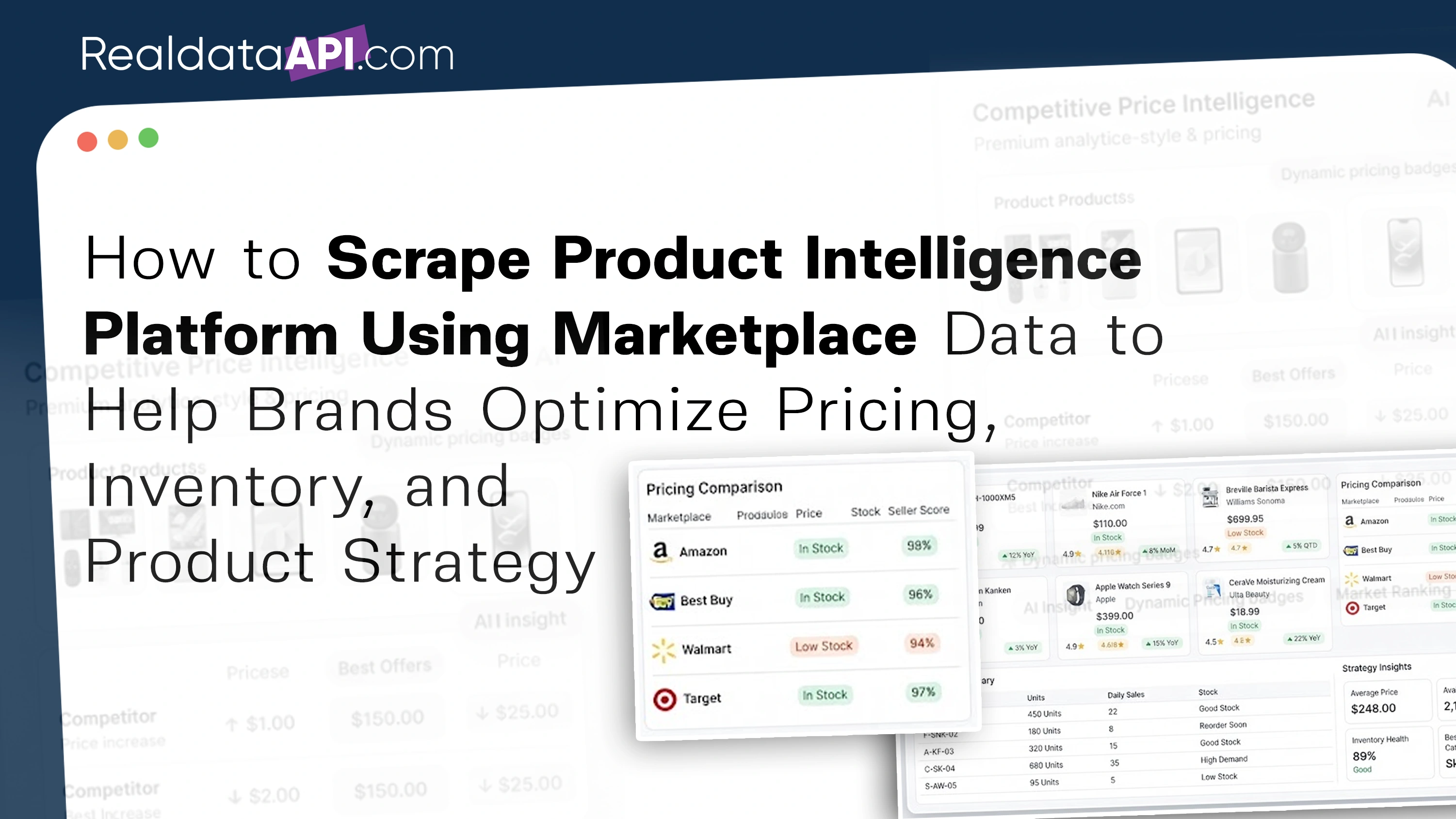
How to Scrape Product Intelligence Platform Using Marketplace Data to Help Brands Optimize Pricing, Inventory, and Product Strategy?
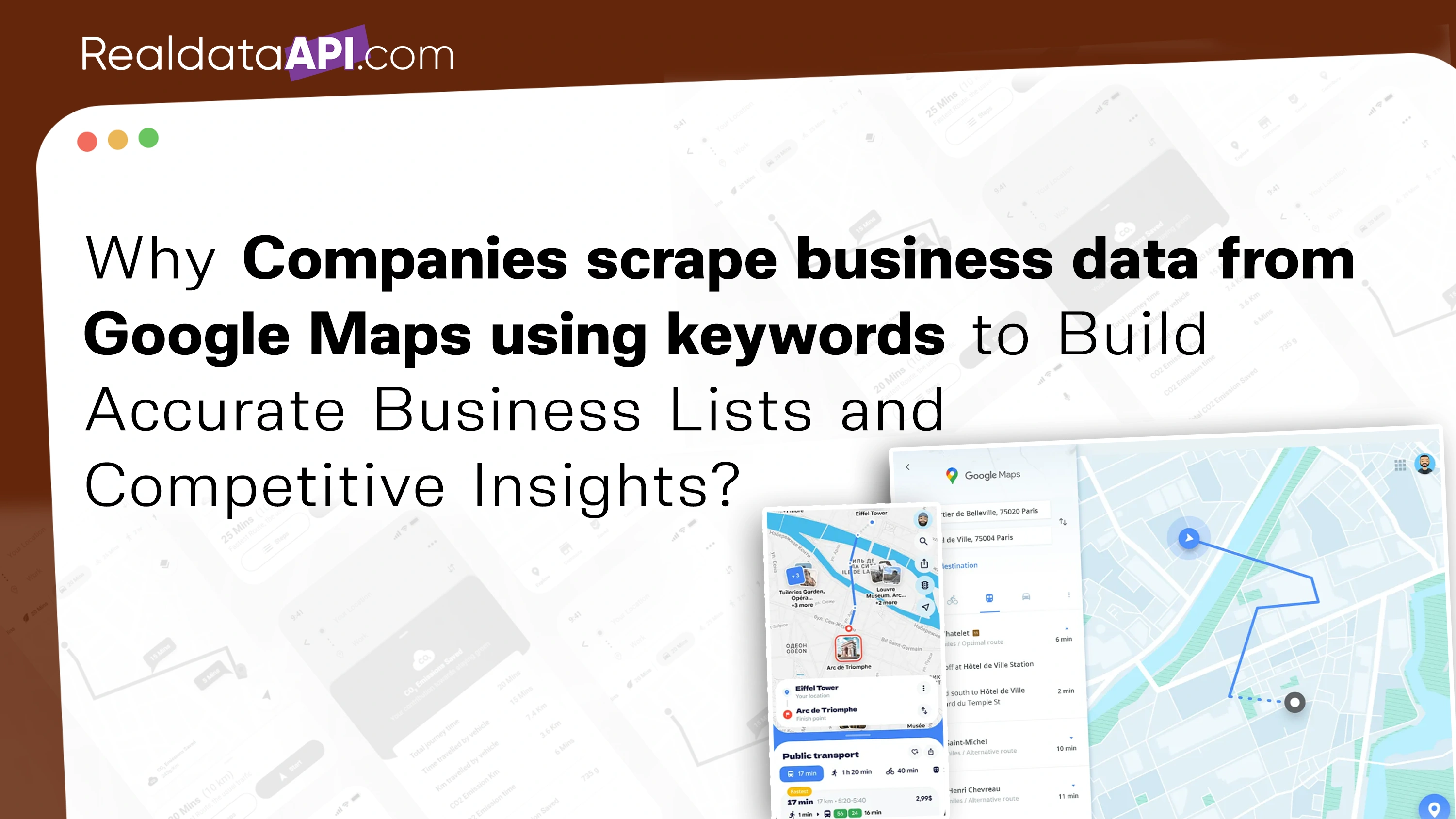
Why Companies scrape business data from Google Maps using keywords to Build Accurate Business Lists and Competitive Insights?
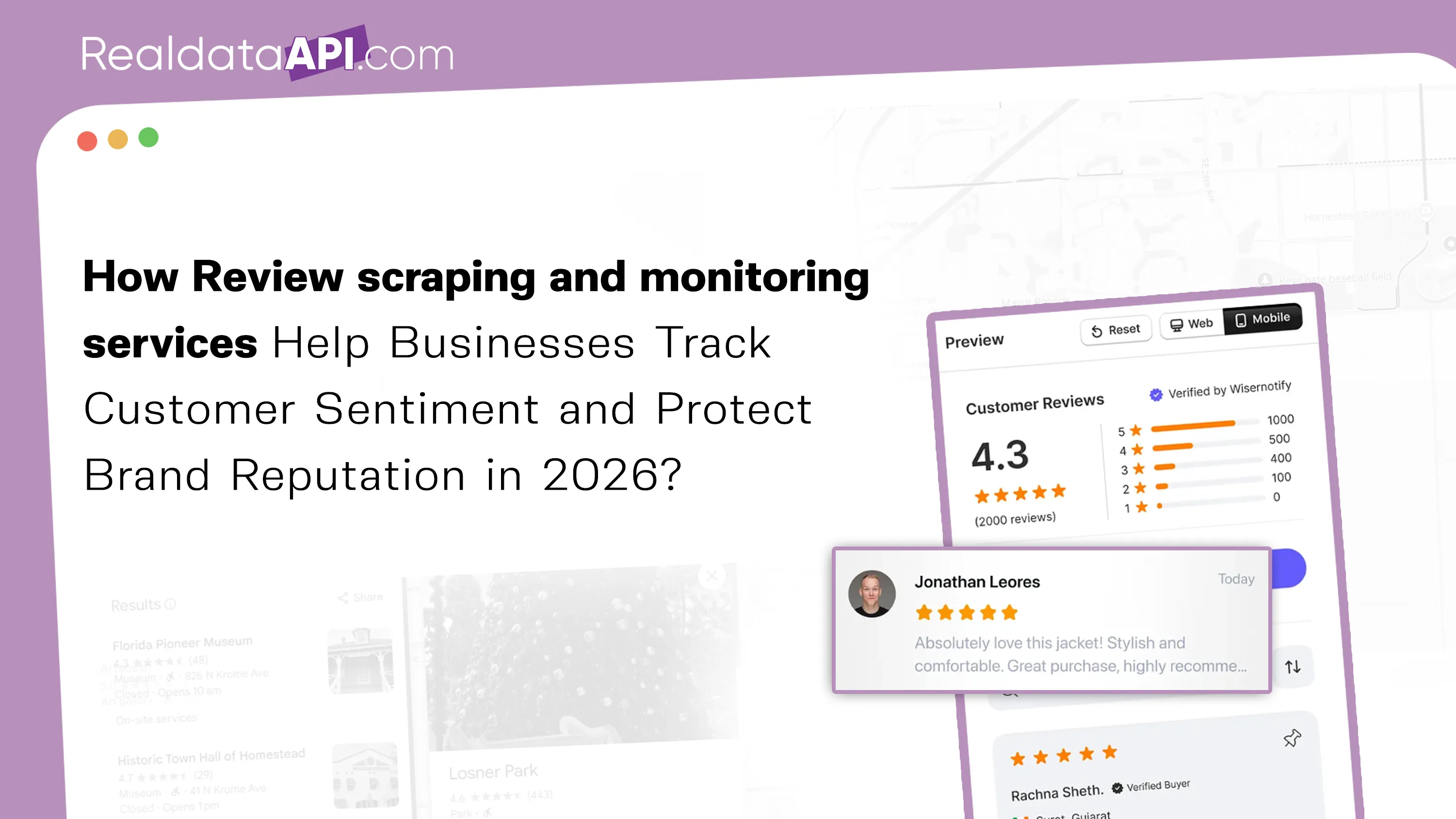
How Review scraping and monitoring services Help Businesses Track Customer Sentiment and Protect Brand Reputation in 2026?
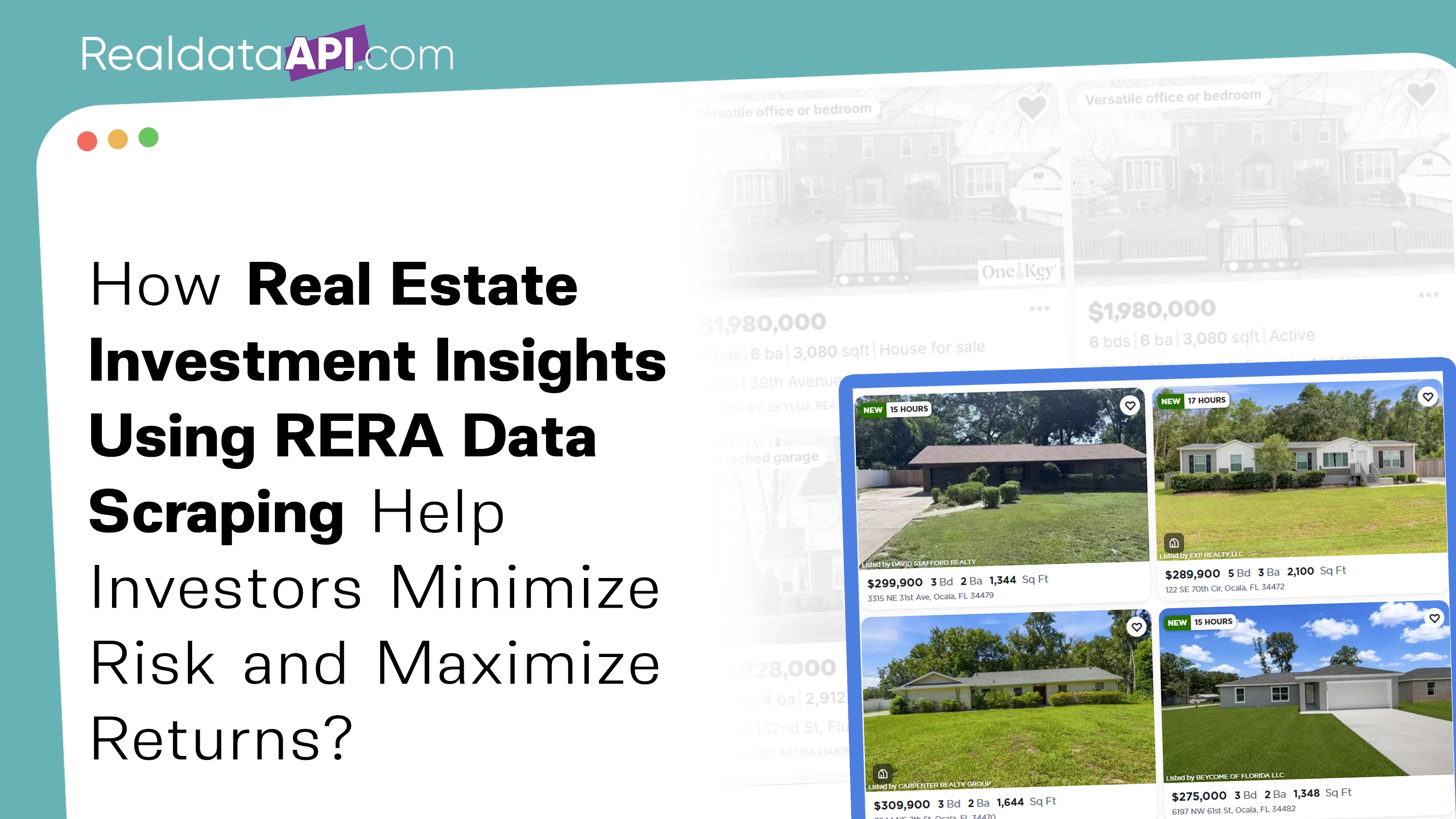
How Real Estate Investment Insights Using RERA Data Scraping Help Investors Minimize Risk and Maximize Returns

Real Data API stands out as one of the premier global companies specializing in web data Scraping and web extraction.





.png)


Rating 4.7
Rating 4.7
Rating 4.5
Rating 4.7
Rating 4.7


Disclaimer : RealData API functions solely as an independent data infrastructure and technology solutions provider. We build customized automation workflows designed to collect publicly accessible web data based exclusively on client instructions. RealData API neither owns proprietary datasets nor engages in the sale or redistribution of extracted information. Our operations are limited strictly to lawful public web data processing and never involve unauthorized access to restricted systems or private networks. Any company names, trademarks, logos, or brand references displayed on this website are used purely for demonstrative and illustrative purposes to showcase our technical capabilities and do not imply endorsement, partnership, or affiliation. Use of our platform and services remains subject to our Terms of Service.