
Introduction
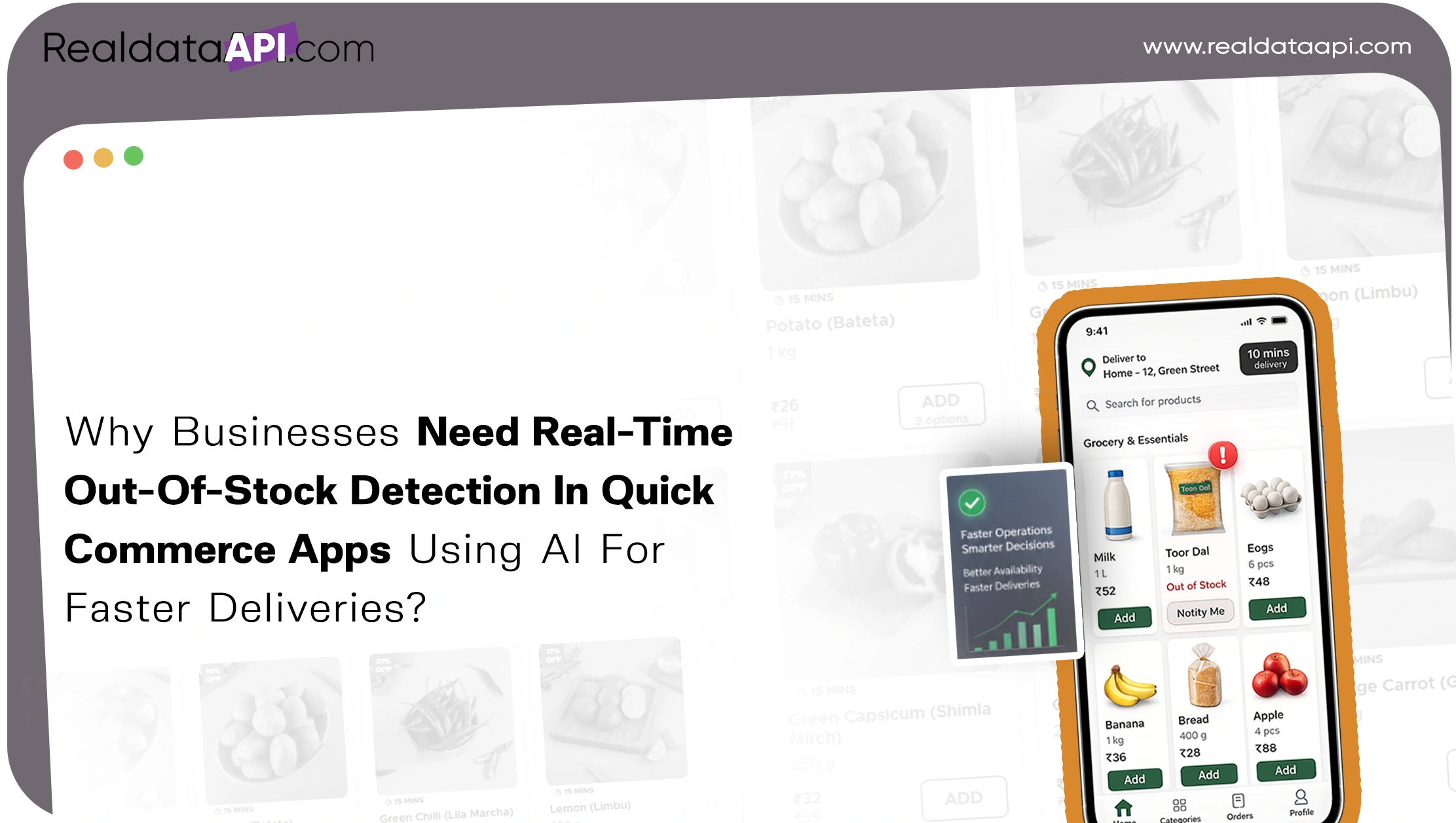
Quick commerce businesses lose customers when products appear available online but are actually out of stock. That is why companies now use real-time out-of-stock detection in quick commerce apps using AI to improve inventory accuracy, reduce failed deliveries, and increase customer satisfaction. With a scalable Quick Commerce Data Scraping API, businesses can monitor inventory changes instantly and automate stock intelligence across dark stores and delivery apps.
According to industry estimates, the global quick commerce market is projected to exceed $350 billion by 2026, while nearly 43% of customers abandon apps after repeated stock availability issues. Real-time inventory intelligence is becoming essential for operational success.
Quick commerce companies, grocery apps, retail chains, and dark store operators face several major challenges:
- Inaccurate stock visibility
- Delivery delays
- Order cancellations
- Inventory forecasting gaps
- Poor customer experience
AI-powered stock monitoring systems help businesses solve these problems while improving fulfillment speed and operational efficiency.
Why Is Inventory Visibility Important for Faster Deliveries?
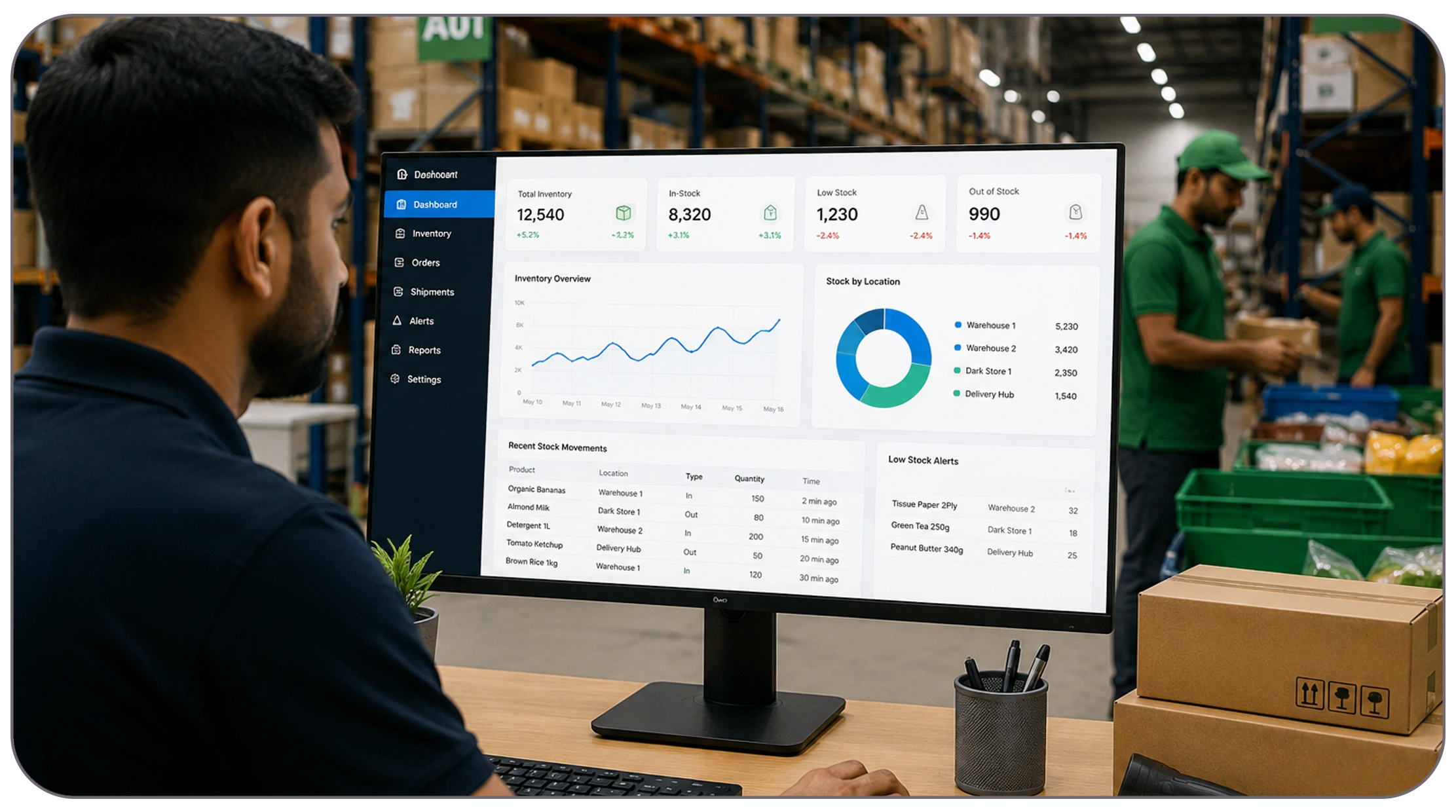
Inventory visibility is one of the biggest success factors in quick commerce operations. Customers expect products to be available instantly, and businesses need accurate stock intelligence to meet those expectations.
Modern retailers now use AI-powered inventory tracking for quick commerce apps to monitor stock movements, product availability, and replenishment cycles in real time. These systems continuously track inventory across warehouses, dark stores, and delivery hubs.
Quick Commerce Inventory Accuracy Trends (2020–2026)
| Year | Businesses Using AI Inventory Tracking |
|---|---|
| 2020 | 24% |
| 2021 | 31% |
| 2022 | 39% |
| 2023 | 48% |
| 2024 | 57% |
| 2025 | 66% |
| 2026 | 74% |
Businesses benefit from AI inventory tracking because it helps:
- Reduce failed deliveries
- Prevent overselling
- Improve stock forecasting
- Detect inventory gaps quickly
- Improve customer trust
Retailers also gain operational advantages by reducing manual inventory checks and improving fulfillment coordination. Real-time inventory monitoring enables faster order processing while helping businesses maintain better stock consistency across multiple fulfillment locations.
As customer expectations rise, inventory visibility is becoming a critical part of quick commerce growth strategies.
How Does Machine Learning Predict Product Stockouts?
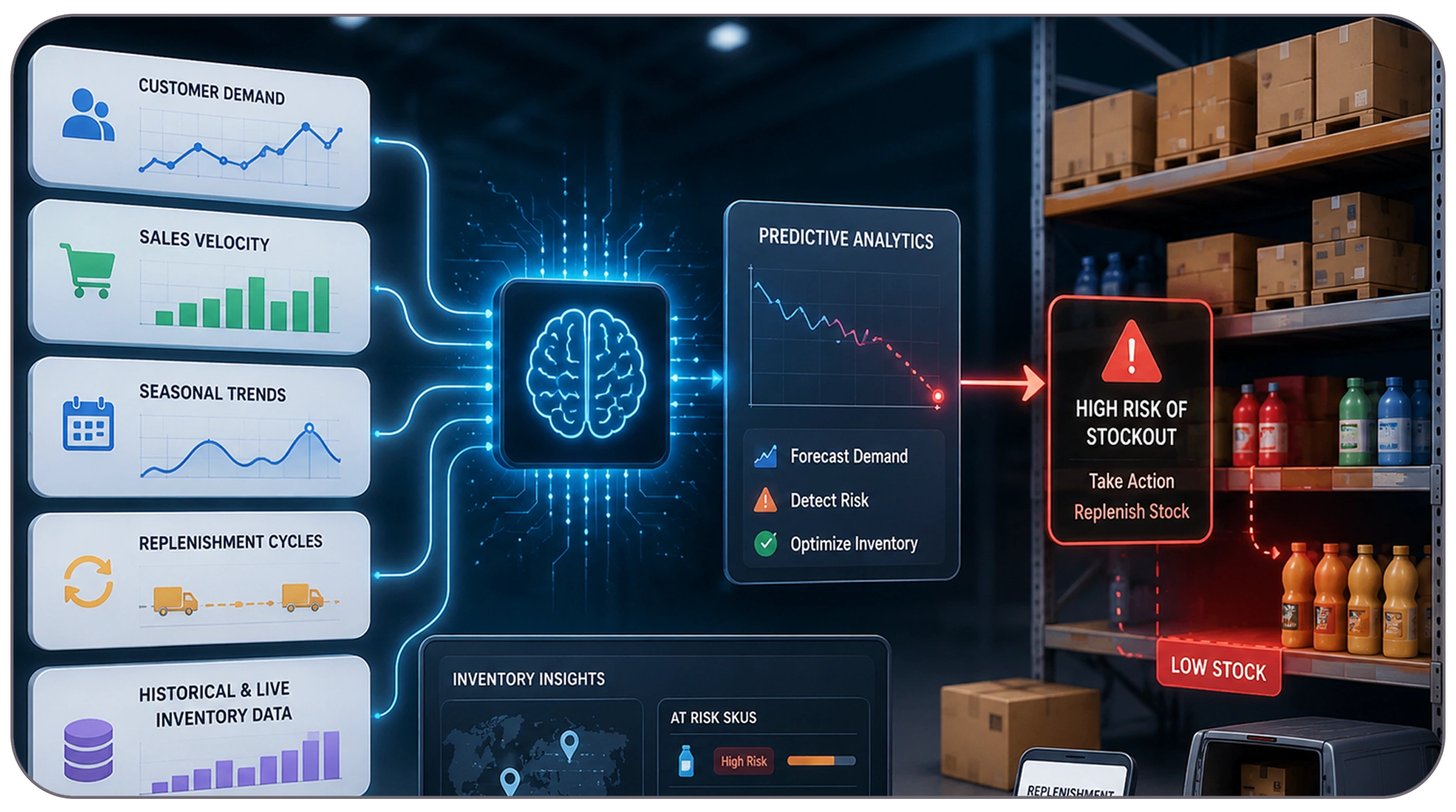
Machine learning helps businesses identify inventory risks before products become unavailable. Predictive analytics models analyze customer demand, sales velocity, seasonal trends, and replenishment cycles to forecast future stock shortages.
Retailers increasingly Use machine learning to predict stockouts in quick commerce to improve warehouse planning and delivery efficiency. These AI systems analyze historical and live inventory datasets continuously.
AI Stock Prediction Adoption Statistics
| Year | Companies Using Predictive Inventory AI |
|---|---|
| 2020 | 18% |
| 2021 | 26% |
| 2022 | 34% |
| 2023 | 46% |
| 2024 | 58% |
| 2025 | 67% |
| 2026 | 76% |
Machine learning models help businesses:
- Forecast demand spikes
- Predict high-risk inventory shortages
- Optimize supplier replenishment timing
- Improve warehouse distribution planning
- Reduce customer order cancellations
Predictive inventory systems also improve operational scalability for businesses managing thousands of SKUs daily. Instead of reacting after products become unavailable, businesses can proactively prevent stockouts before they impact customer orders.
This predictive approach helps companies improve delivery speed, customer retention, and overall profitability.
Why Are Dark Store Operations Becoming More Data-Driven?
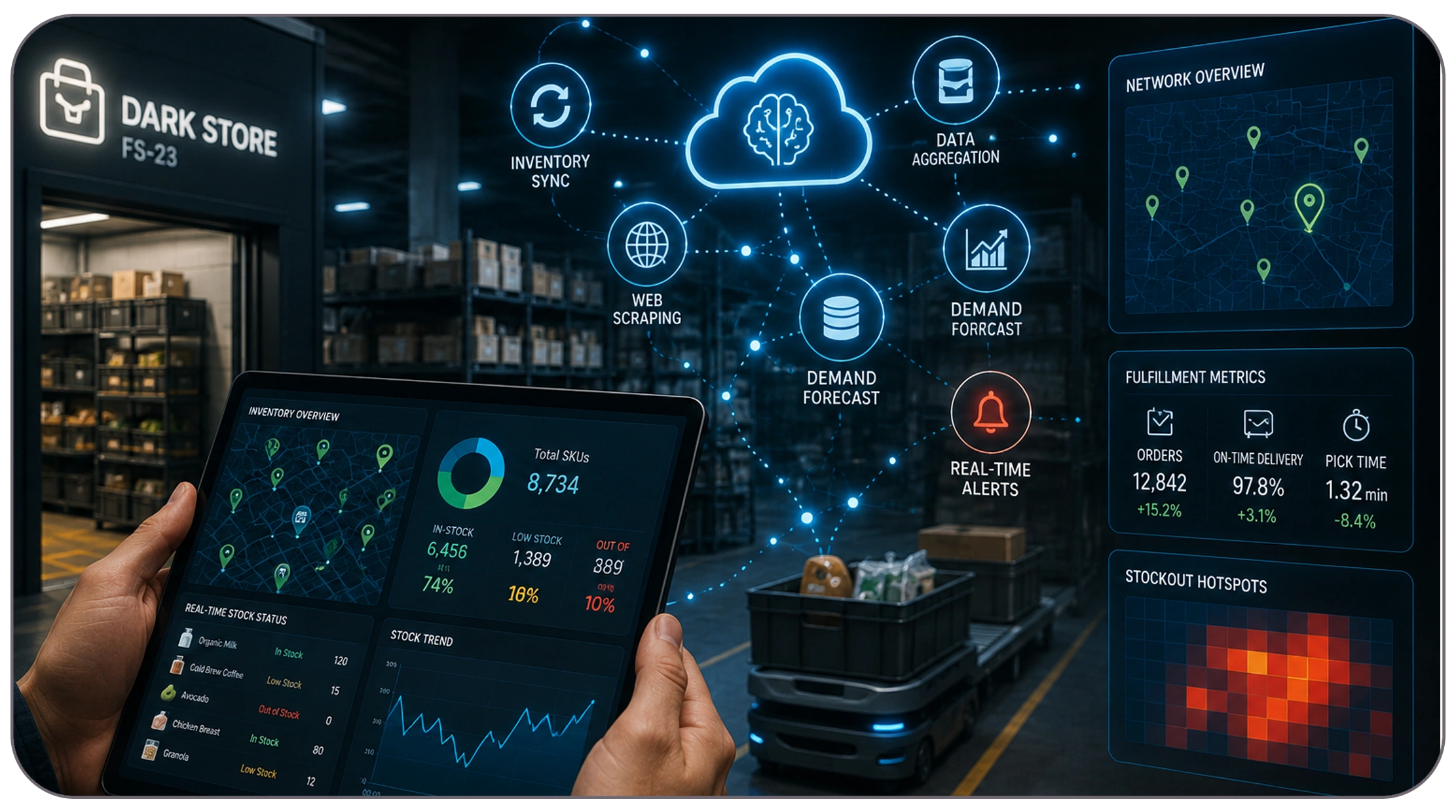
Dark stores operate under extreme delivery speed requirements. Businesses must maintain accurate inventory synchronization across multiple micro-fulfillment locations to support rapid deliveries.
Companies increasingly Scrape dark store inventory stockouts data using artificial intelligence to automate stock visibility and improve operational efficiency. AI-powered scraping systems continuously collect inventory updates, product availability data, and fulfillment metrics from dark store networks.
Dark Store Growth Statistics
| Year | Global Dark Store Market Size |
|---|---|
| 2020 | $12 Billion |
| 2021 | $18 Billion |
| 2022 | $27 Billion |
| 2023 | $39 Billion |
| 2024 | $54 Billion |
| 2025 | $71 Billion |
| 2026 | $92 Billion |
AI-powered dark store intelligence helps businesses:
- Detect low-stock products instantly
- Improve restocking efficiency
- Reduce inventory mismatches
- Track regional demand patterns
- Improve fulfillment speed
Businesses also gain better coordination between warehouse systems and customer-facing apps. Automated stock monitoring reduces manual intervention while improving operational consistency across delivery zones.
As dark store networks expand globally, real-time inventory intelligence is becoming essential for maintaining fast delivery promises and operational reliability.
How Does AI Improve Inventory Optimization in Quick Commerce?
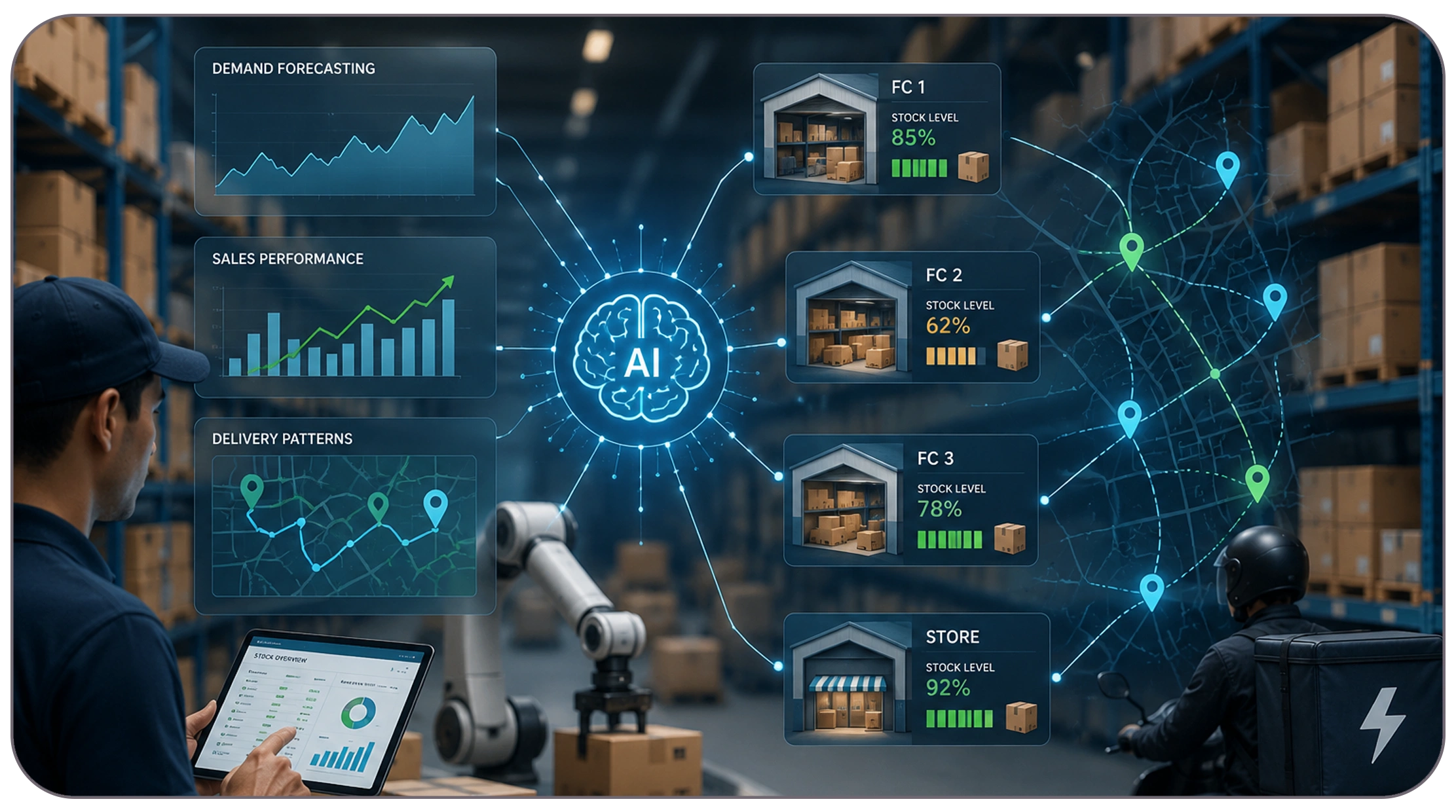
Inventory optimization helps businesses reduce waste, improve stock allocation, and increase product availability across fulfillment centers. Traditional inventory systems often fail to respond quickly to changing customer demand.
Businesses now use quick commerce inventory optimization using AI and data scraping to automate stock balancing and improve fulfillment efficiency. AI systems continuously analyze demand trends, sales performance, and delivery patterns to optimize inventory placement.
Inventory Optimization Impact Metrics
| Metric | Improvement with AI |
|---|---|
| Delivery Speed | +34% |
| Stock Accuracy | +41% |
| Inventory Waste Reduction | +29% |
| Order Fulfillment Rate | +38% |
| Customer Satisfaction | +33% |
AI-powered optimization platforms help businesses:
- Allocate products more efficiently
- Improve delivery route planning
- Reduce inventory holding costs
- Improve warehouse productivity
- Increase product availability
Automated inventory optimization also supports dynamic pricing and regional demand forecasting. Businesses can adjust inventory placement based on purchasing behavior and local delivery trends.
This data-driven inventory strategy helps quick commerce platforms scale operations while maintaining faster deliveries and higher customer satisfaction levels.
Why Is Continuous Inventory Monitoring Essential?
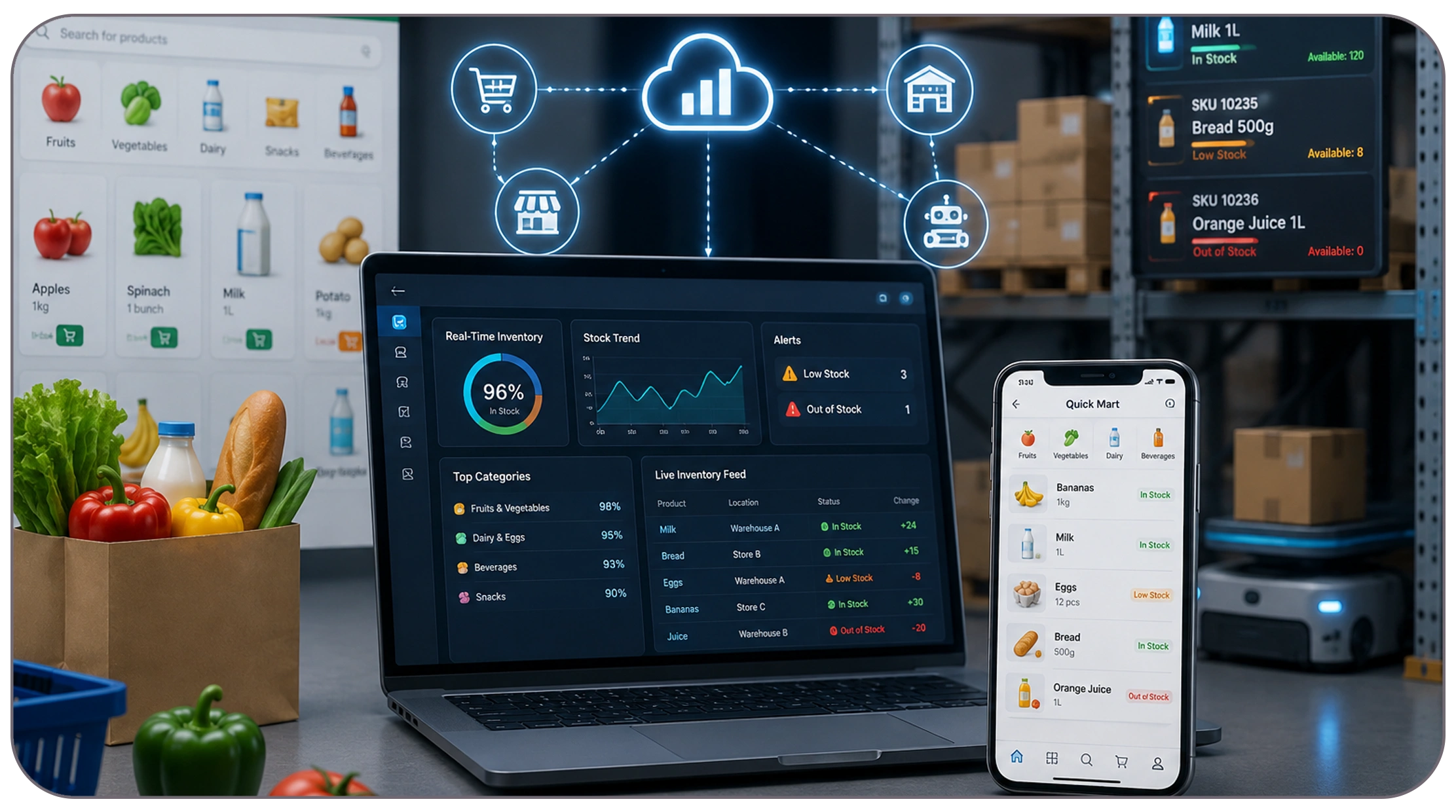
Continuous monitoring allows businesses to detect stock fluctuations instantly and respond to operational issues before customers experience delays or cancellations.
Modern retailers rely on AI Web Data Monitoring systems to automate inventory intelligence across quick commerce platforms, grocery apps, and warehouse management systems. These solutions continuously track inventory changes in real time.
Real-Time Inventory Monitoring Adoption
| Year | Businesses Using AI Monitoring Systems |
|---|---|
| 2020 | 22% |
| 2021 | 30% |
| 2022 | 42% |
| 2023 | 53% |
| 2024 | 64% |
| 2025 | 73% |
| 2026 | 81% |
Continuous monitoring provides several benefits:
- Real-time inventory visibility
- Faster stock alerts
- Better operational coordination
- Reduced manual tracking
- Improved reporting accuracy
Businesses can also integrate monitoring systems directly into delivery and warehouse platforms to automate replenishment workflows and stock alerts.
Continuous AI monitoring enables businesses to improve operational agility while reducing inventory-related disruptions in fast-moving quick commerce environments.
How Is Generative AI Transforming Quick Commerce Operations?
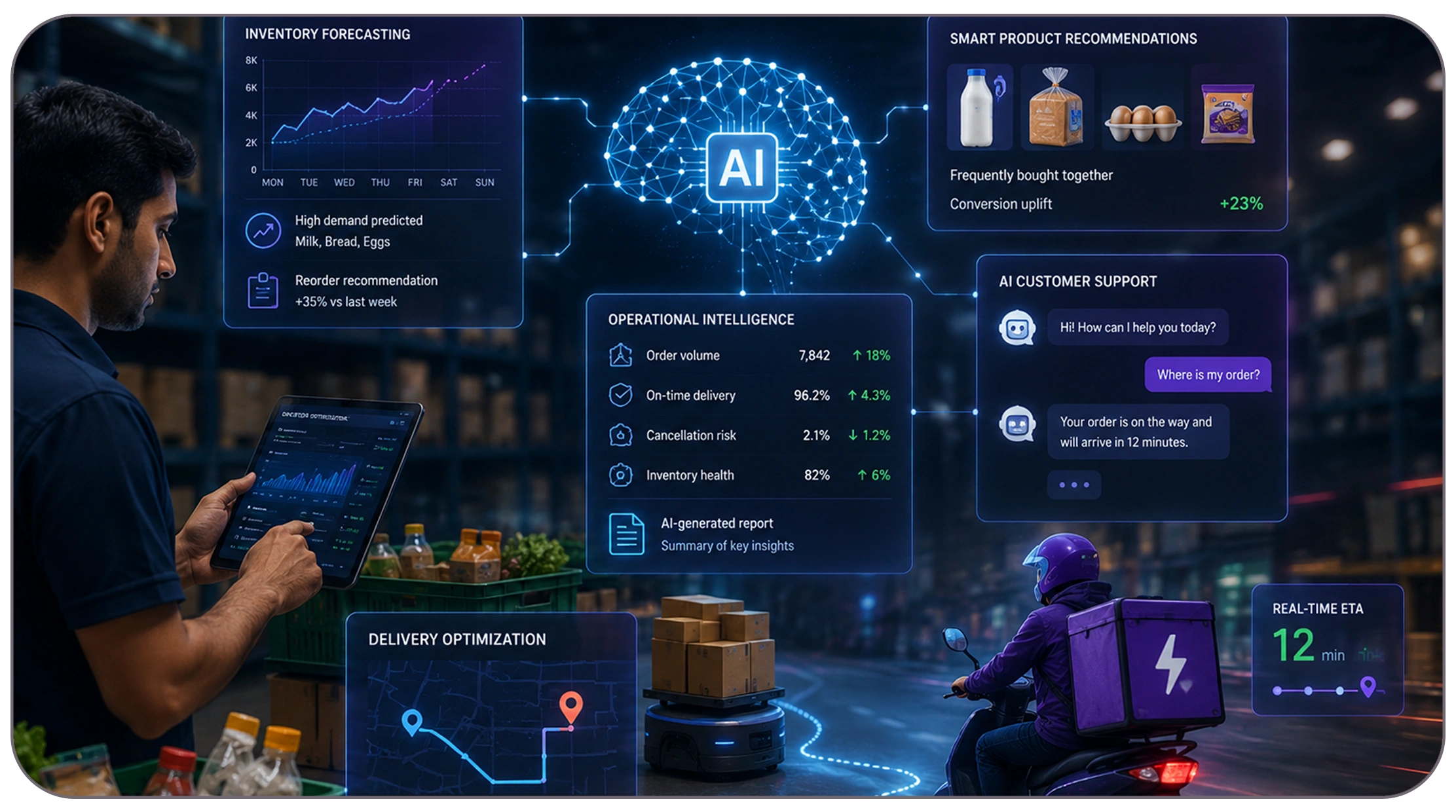
AI technology is evolving beyond basic automation. Businesses now use Generative AI to improve inventory forecasting, customer support, delivery optimization, and operational intelligence.
Generative AI systems analyze massive inventory datasets and generate actionable insights automatically. These systems help businesses identify fulfillment risks, optimize product recommendations, and automate operational reporting.
Generative AI Adoption in Retail Operations
| Year | Retailers Using Generative AI |
|---|---|
| 2020 | 8% |
| 2021 | 14% |
| 2022 | 23% |
| 2023 | 37% |
| 2024 | 51% |
| 2025 | 64% |
| 2026 | 78% |
Generative AI helps quick commerce businesses:
- Automate inventory analysis
- Improve customer engagement
- Generate operational forecasts
- Optimize warehouse workflows
- Predict inventory disruptions
Businesses also use AI-generated insights to improve marketing campaigns, customer personalization, and product recommendations.
As AI capabilities continue advancing, generative systems will play a larger role in shaping intelligent quick commerce ecosystems powered by automation and predictive analytics.
Why Choose Real Data API?
Real Data API helps businesses automate inventory intelligence, stock monitoring, and delivery optimization with scalable AI-powered data solutions. Companies looking to Scrape Quick Commerce Product Stock Levels rely on our advanced automation systems for accurate and real-time inventory visibility.
Our solutions support:
- Real-time inventory monitoring
- AI-powered stock forecasting
- Dark store intelligence
- Automated warehouse analytics
- API-ready structured datasets
- Continuous operational monitoring
- Scalable fulfillment intelligence
Businesses also leverage our expertise in real-time out-of-stock detection in quick commerce apps using AI to improve delivery speed, reduce order cancellations, and optimize inventory planning across multiple fulfillment locations.
Real Data API empowers quick commerce platforms, grocery delivery apps, dark store operators, and retail chains with intelligent inventory automation and real-time analytics solutions.
Conclusion
Quick commerce businesses cannot afford inventory inaccuracies and delayed fulfillment operations. Companies using real-time out-of-stock detection in quick commerce apps using AI gain faster inventory visibility, better operational efficiency, and improved customer satisfaction through automated stock intelligence systems.
AI-powered inventory tracking, predictive forecasting, and real-time monitoring help businesses reduce stockouts, improve deliveries, and scale fulfillment operations effectively.
Ready to improve inventory visibility and delivery speed? Contact Real Data API today to implement AI-powered quick commerce intelligence solutions for real-time stock monitoring and smarter fulfillment operations!
Latest posts

Web Scraping Competitor Product Monitoring Using Marketplace Data for Real-Time E-commerce Insights and Business Growth?
How to Scrape Product Intelligence Platform Using Marketplace Data to Help Brands Optimize Pricing, Inventory, and Product Strategy?

Why Companies scrape business data from Google Maps using keywords to Build Accurate Business Lists and Competitive Insights?
How Review scraping and monitoring services Help Businesses Track Customer Sentiment and Protect Brand Reputation in 2026?

How Real Estate Investment Insights Using RERA Data Scraping Help Investors Minimize Risk and Maximize Returns

Real Data API stands out as one of the premier global companies specializing in web data Scraping and web extraction.





.png)


Rating 4.7
Rating 4.7
Rating 4.5
Rating 4.7
Rating 4.7


Disclaimer : RealData API functions solely as an independent data infrastructure and technology solutions provider. We build customized automation workflows designed to collect publicly accessible web data based exclusively on client instructions. RealData API neither owns proprietary datasets nor engages in the sale or redistribution of extracted information. Our operations are limited strictly to lawful public web data processing and never involve unauthorized access to restricted systems or private networks. Any company names, trademarks, logos, or brand references displayed on this website are used purely for demonstrative and illustrative purposes to showcase our technical capabilities and do not imply endorsement, partnership, or affiliation. Use of our platform and services remains subject to our Terms of Service.