

Introduction
Real estate companies, investors, and analytics firms use property intelligence to make faster and smarter business decisions. Businesses that Scrape RERA data for builders developers and property intelligence gain access to valuable project registrations, builder records, approvals, legal compliance details, and market insights in real time.
India's real estate market is expected to reach $1 trillion by 2030. The rapid growth of residential and commercial projects has increased the demand for structured real estate data and automated analytics solutions.
Companies now rely on Web Scraping Real Estate Data API solutions to collect project information, developer profiles, construction status, approvals, pricing trends, and regional market intelligence directly from RERA portals. This data helps businesses improve property research, monitor builder performance, analyze market opportunities, and reduce investment risks.
This guide explains how businesses can scrape RERA data efficiently and use property intelligence to improve market analysis, investment planning, and strategic decision-making between 2020 and 2026.
Why Is Real-Time Property Intelligence Important for Real Estate Businesses?
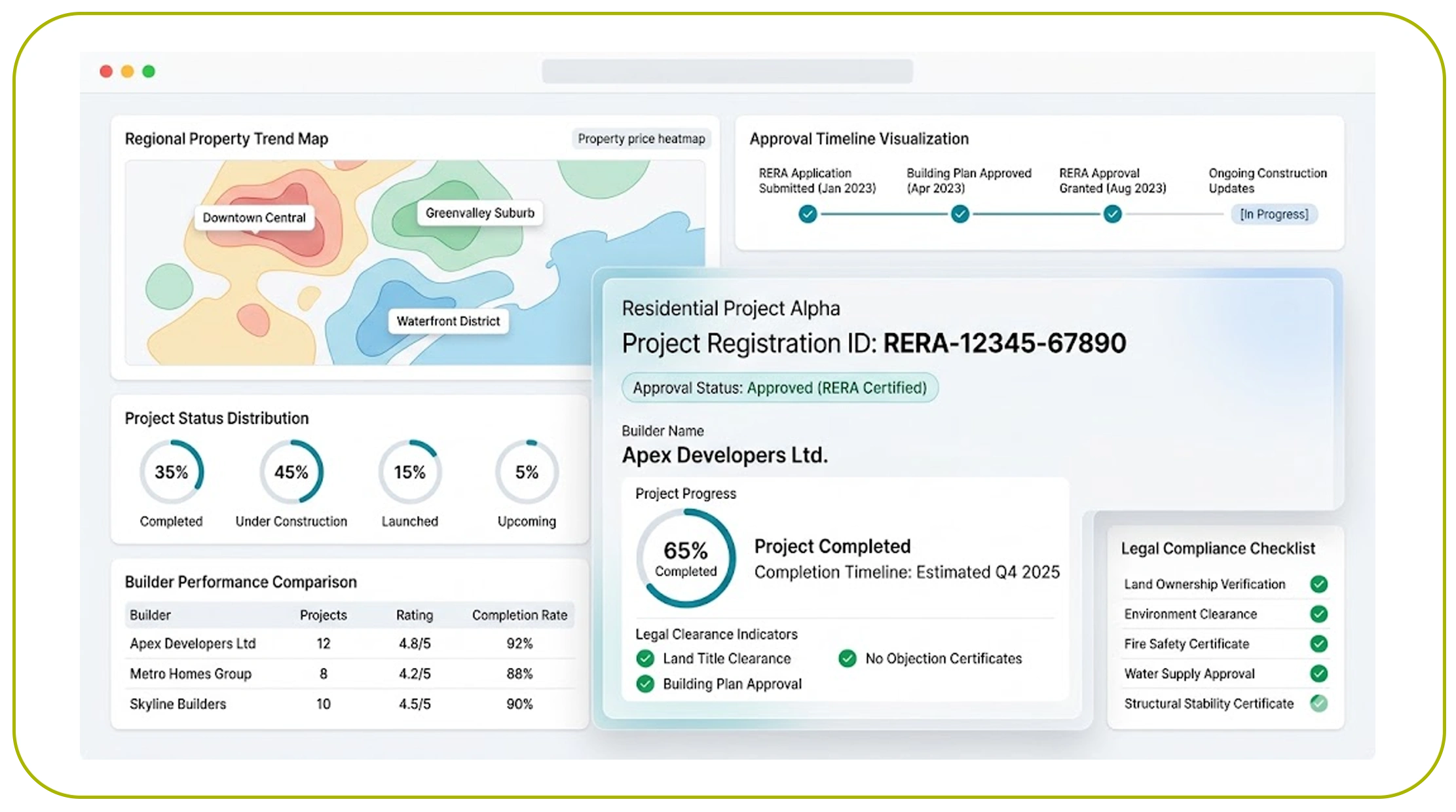
Real-time property intelligence helps businesses track project developments, analyze market conditions, and improve investment decisions.
According to industry estimates, more than 110,000 real estate projects are registered across Indian RERA portals. This data provides valuable insights into market activity and developer performance.
How Automation Improves Property Analytics
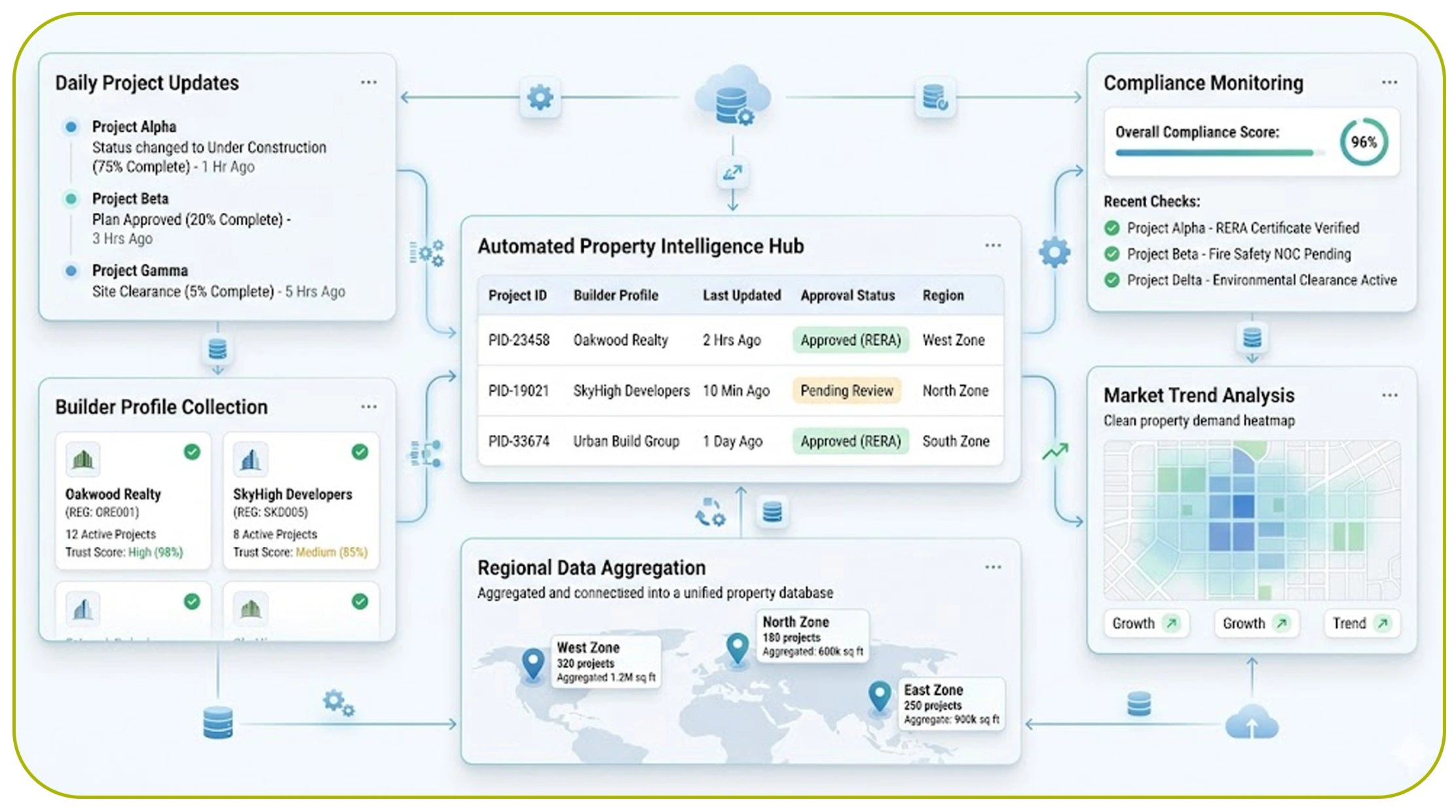
Companies use automated RERA data extraction for real estate analytics to collect:
- Project registration details
- Builder information
- Project status updates
- Completion timelines
- Legal approval records
- Regional property trends
Indian Real Estate Market Growth (2020–2026)
| Year | Indian Real Estate Market Value |
|---|---|
| 2020 | $180 Billion |
| 2021 | $200 Billion |
| 2022 | $230 Billion |
| 2023 | $270 Billion |
| 2024 | $320 Billion |
| 2025 | $380 Billion |
| 2026 | $450 Billion |
Key Business Benefits
Property intelligence helps businesses:
- Identify profitable investment opportunities
- Monitor project completion rates
- Verify builder credibility
- Reduce compliance risks
- Improve property research efficiency
Real estate analytics platforms use automation to process large volumes of RERA data quickly and accurately.
How Can Builder Verification Reduce Investment Risks?
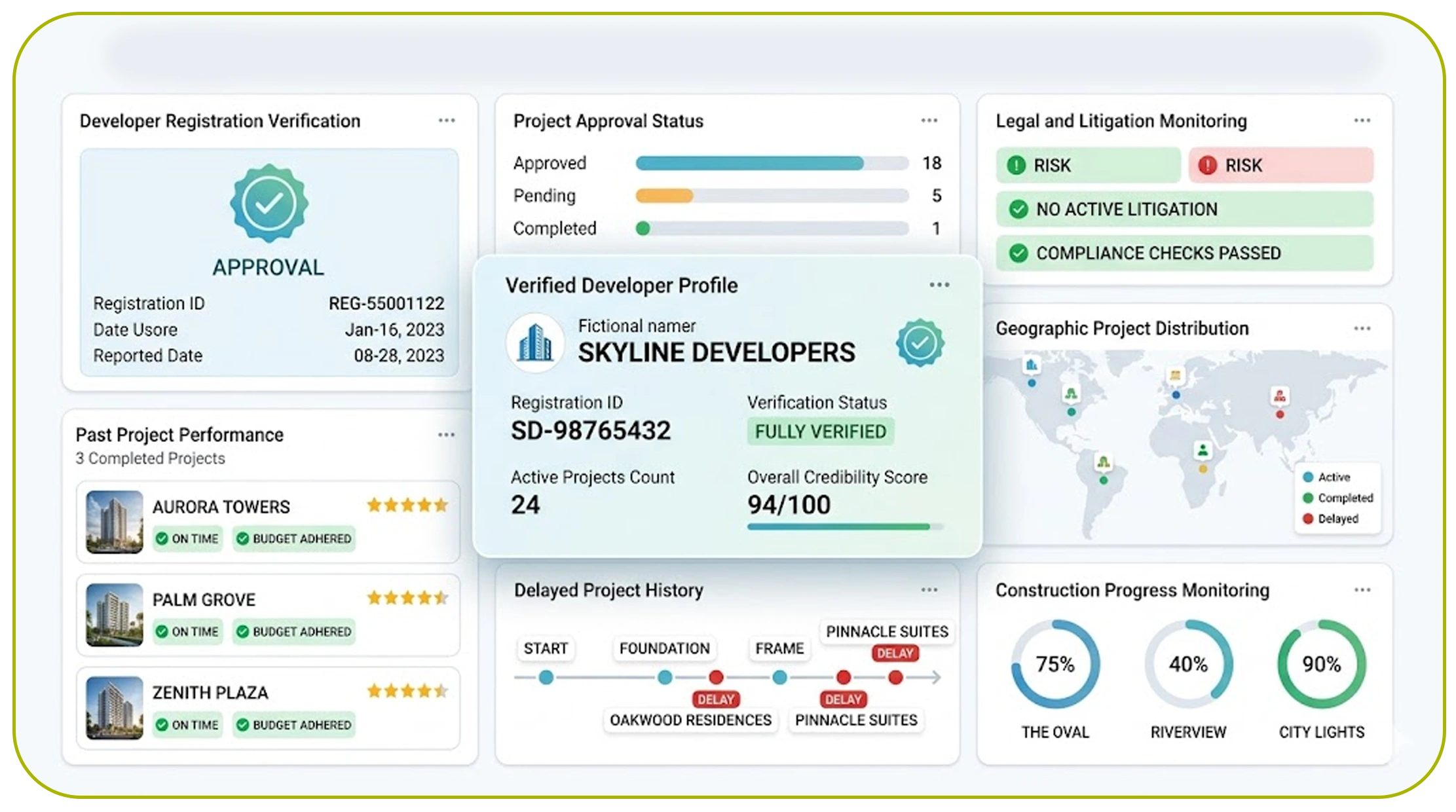
Builder verification helps investors and buyers evaluate developer credibility before making financial decisions.
Many real estate investors rely on RERA data to validate project approvals, registration status, and developer track records.
Why Builder Transparency Matters
Businesses use extract builder registration and project information from RERA portals solutions to monitor:
- Developer registration numbers
- Past project performance
- Project approval status
- Litigation records
- Delayed project history
- Construction progress
Builder Compliance Trends (2020–2026)
| Year | Registered RERA Projects |
|---|---|
| 2020 | 65,000 |
| 2021 | 72,000 |
| 2022 | 81,000 |
| 2023 | 92,000 |
| 2024 | 101,000 |
| 2025 | 110,000 |
| 2026 | 122,000 |
Advantages of Builder Intelligence
Businesses can:
- Reduce investment uncertainty
- Verify legal project approvals
- Analyze developer reputation
- Monitor delayed projects
- Improve due diligence processes
Institutional investors increasingly use builder intelligence to support large-scale property investments and acquisitions.
How Does Continuous Project Monitoring Improve Market Visibility?
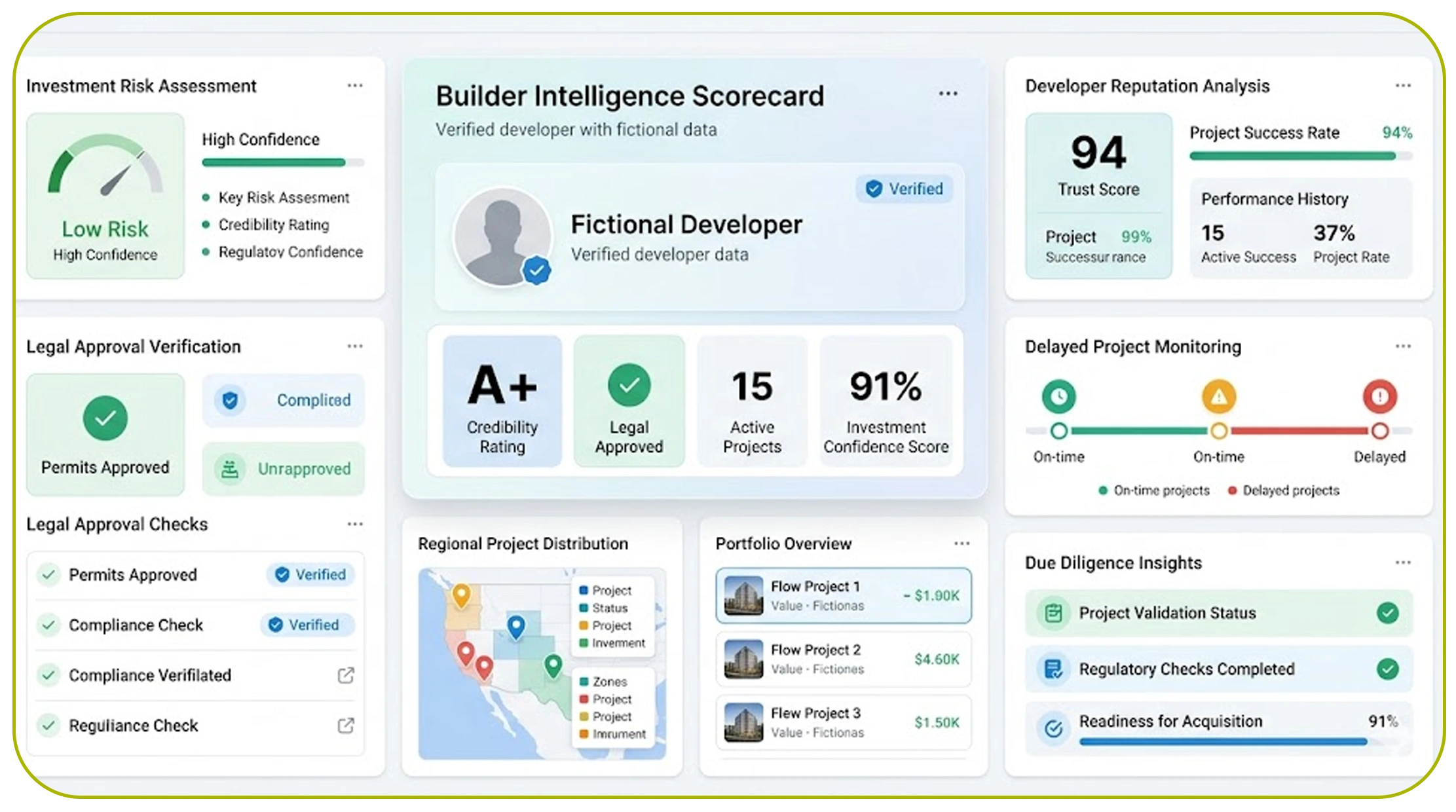
Continuous project monitoring allows businesses to track construction activity, project launches, and market movements in real time.
Real estate markets change rapidly due to demand fluctuations, infrastructure growth, and regulatory developments.
Why Project Monitoring Matters
Companies use Web scraping RERA project data monitoring solutions to track:
- New project registrations
- Construction status updates
- Possession timelines
- Regional development activity
- Commercial and residential launches
Property Development Activity (2020–2026)
| Year | Estimated New Project Registrations |
|---|---|
| 2020 | 8,500 |
| 2021 | 10,200 |
| 2022 | 12,800 |
| 2023 | 15,300 |
| 2024 | 17,900 |
| 2025 | 20,600 |
| 2026 | 23,400 |
Business Benefits of Monitoring
Companies gain:
- Better market forecasting
- Early visibility into new projects
- Improved regional demand analysis
- Faster investment decisions
- Better competitive intelligence
Property consultants and analytics firms rely heavily on project monitoring to deliver accurate market insights to clients.
How Can Data-Driven Market Analysis Improve Property Decisions?
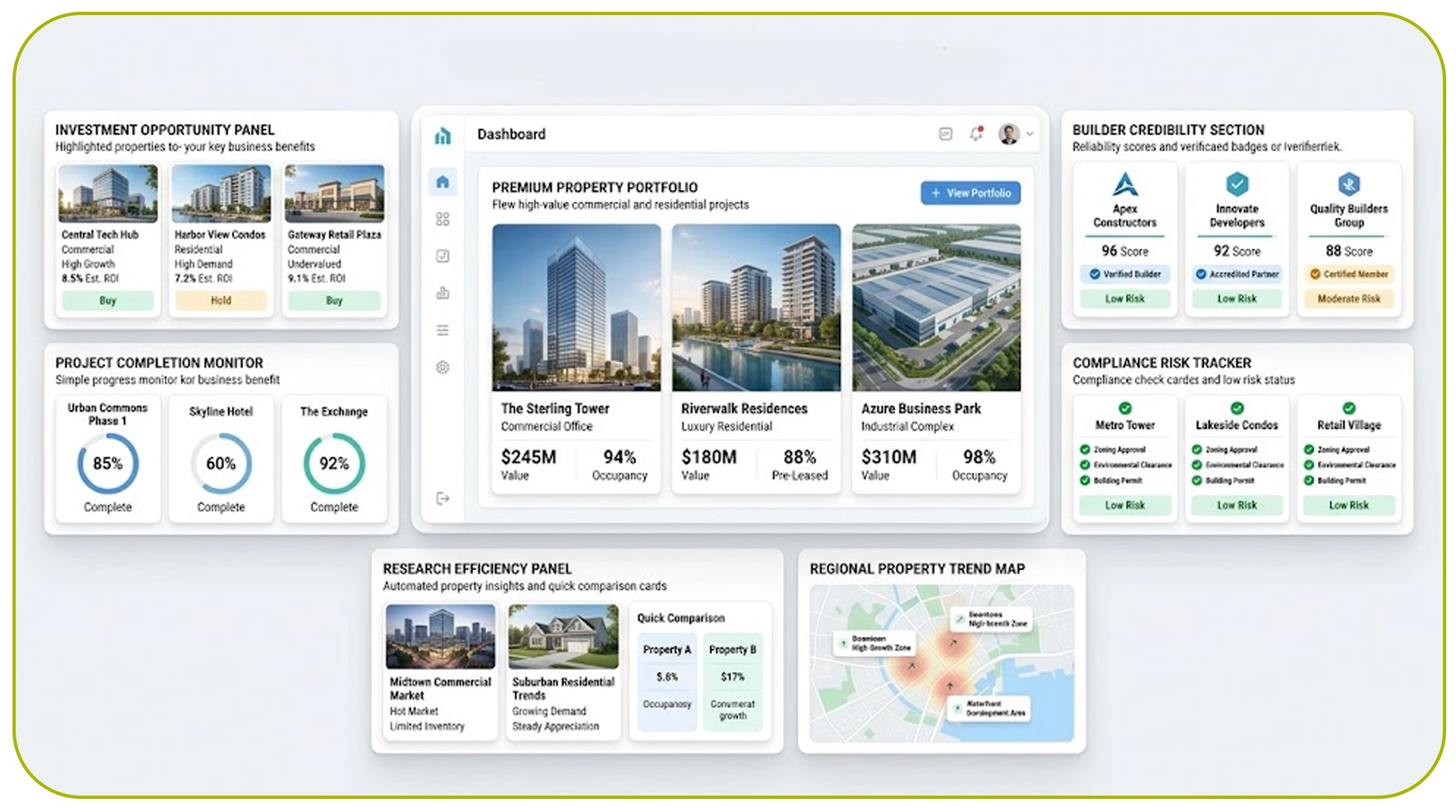
Market analysis helps businesses identify profitable regions, understand pricing trends, and evaluate investment opportunities.
RERA project data provides transparency into regional property activity and construction growth.
Why Property Analytics Matters
Businesses use property market analysis using RERA project data API to analyze:
- Regional property supply
- Builder activity
- Construction timelines
- Price fluctuations
- Market saturation
- Infrastructure-driven demand
Property Price Growth Trends (2020–2026)
| Year | Average Urban Property Price Growth |
|---|---|
| 2020 | 3% |
| 2021 | 4% |
| 2022 | 6% |
| 2023 | 8% |
| 2024 | 10% |
| 2025 | 12% |
| 2026 | 14% |
Key Advantages of Analytics
Businesses can:
- Predict future demand
- Identify high-growth locations
- Improve investment planning
- Analyze regional competition
- Support strategic expansion
Advanced property analytics platforms increasingly use AI models and automated data pipelines to improve forecasting accuracy.
Why Are Structured Property Datasets Essential for Analytics?
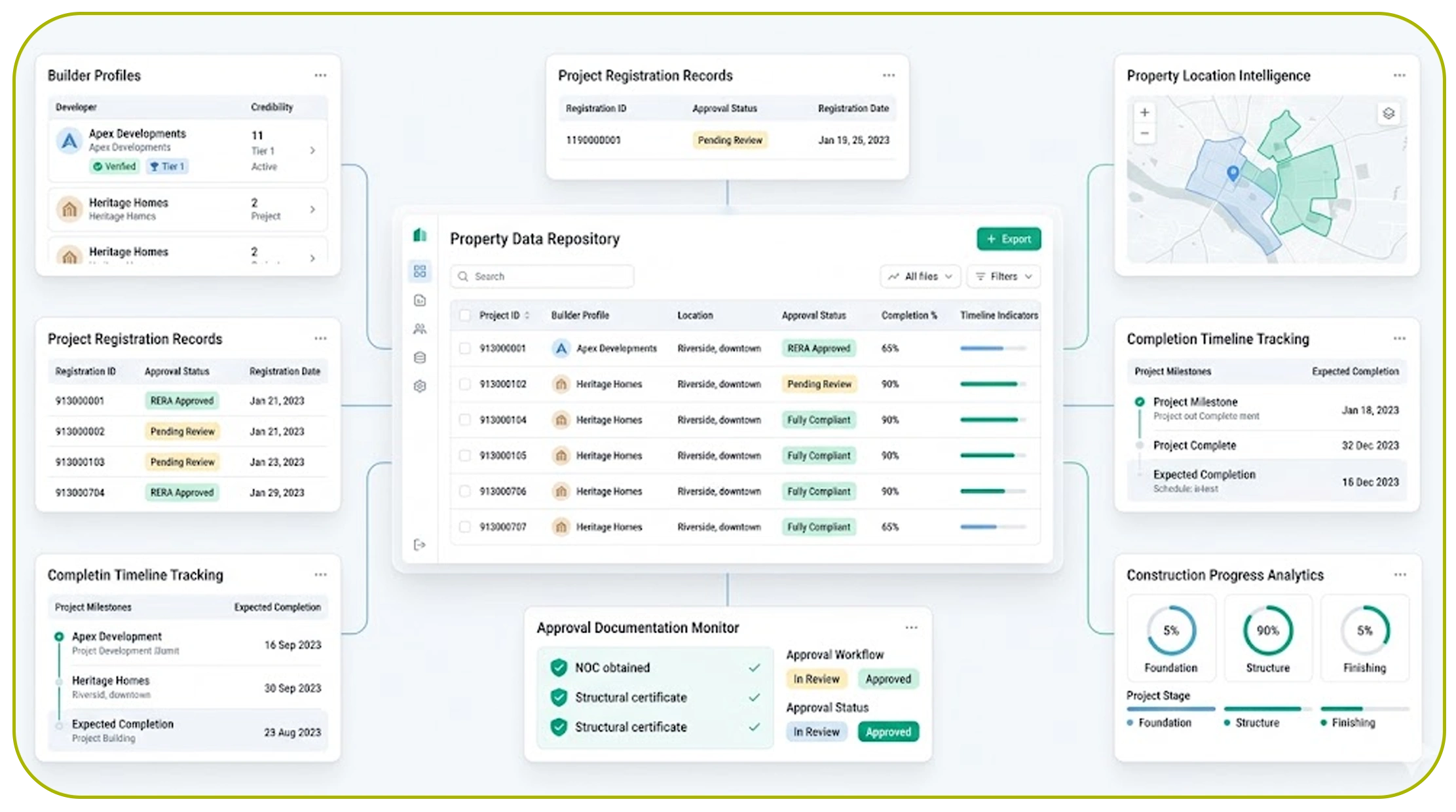
Structured property datasets improve reporting, automation, and large-scale market intelligence operations.
Real estate companies process millions of records related to projects, builders, locations, and compliance data.
Importance of Organized Data
Organizations use Real Estate Dataset solutions to manage:
- Builder profiles
- Project registration records
- Property locations
- Completion timelines
- Approval documentation
- Construction progress
Real Estate Data Usage Trends (2020–2026)
| Use Case | Adoption Growth |
|---|---|
| Property Forecasting | 42% |
| Investment Analytics | 38% |
| AI-Based Valuation Models | 35% |
| Automated Market Reports | 44% |
| Risk Assessment Systems | 40% |
Benefits of Structured Datasets
Structured datasets help businesses:
- Improve reporting accuracy
- Support predictive analytics
- Build AI-powered platforms
- Scale market intelligence
- Improve operational efficiency
Large property analytics firms increasingly depend on structured datasets for enterprise-level analytics systems.
How Can Automated Data Extraction Improve Real Estate Intelligence?
Automated extraction improves scalability, accuracy, and speed when collecting RERA data across multiple states and portals.
Manual collection processes are time-consuming and difficult to maintain at scale.
Why Automation Is Critical
Businesses use Extract RERA Project and Builder Data solutions to automate:
- Daily project updates
- Builder profile collection
- Compliance monitoring
- Market trend analysis
- Regional data aggregation
Automation Adoption Trends (2020–2026)
| Year | Estimated Real Estate Analytics Adoption |
|---|---|
| 2020 | 18% |
| 2021 | 24% | 2022 | 31% |
| 2023 | 39% |
| 2024 | 47% |
| 2025 | 56% |
| 2026 | 64% |
Key Advantages of Automation
Businesses can:
- Reduce manual effort
- Improve data consistency
- Increase operational speed
- Access real-time updates
- Scale analytics infrastructure
Automated data extraction supports faster business intelligence and better decision-making for modern real estate enterprises.
Why Choose Real Data API?
Real Data API provides scalable and reliable property intelligence solutions for real estate businesses, analytics firms, investors, and PropTech companies.
Our platform helps businesses collect structured RERA data from multiple state portals with high accuracy and real-time delivery capabilities.
We provide:
- Builder registration data extraction
- Project monitoring solutions
- Property intelligence APIs
- Real estate analytics datasets
- Market trend tracking
- Automated compliance monitoring
Businesses trust Real Data API for advanced RERA Data Scraping for Real Estate Insights solutions and scalable infrastructure. We help companies Scrape RERA data for builders developers and property intelligence efficiently for faster analytics, investment planning, and competitive market research.
What Makes Real Data API Different?
Key Advantages
- Real-time RERA data extraction
- Multi-state portal coverage
- Structured JSON and CSV output
- Enterprise-grade scalability
- High data accuracy
- Custom analytics support
Our solutions transform raw property records into actionable business intelligence for smarter real estate decisions.
Conclusion
The Indian real estate industry continues to evolve rapidly between 2020 and 2026. Businesses using automated property intelligence gain stronger market visibility, better investment insights, and improved operational efficiency. Companies that Scrape RERA data for builders developers and property intelligence can monitor projects, analyze developers, track regional trends, and make smarter data-driven decisions.
Ready to unlock powerful RERA analytics and property intelligence solutions? Contact Real Data API today to scale your real estate analytics with automated data extraction and advanced market insights!
Latest posts

Web Scraping Competitor Product Monitoring Using Marketplace Data for Real-Time E-commerce Insights and Business Growth?

How to Scrape Product Intelligence Platform Using Marketplace Data to Help Brands Optimize Pricing, Inventory, and Product Strategy?

Why Companies scrape business data from Google Maps using keywords to Build Accurate Business Lists and Competitive Insights?
How Review scraping and monitoring services Help Businesses Track Customer Sentiment and Protect Brand Reputation in 2026?
How Real Estate Investment Insights Using RERA Data Scraping Help Investors Minimize Risk and Maximize Returns

Real Data API stands out as one of the premier global companies specializing in web data Scraping and web extraction.





.png)


Rating 4.7
Rating 4.7
Rating 4.5
Rating 4.7
Rating 4.7


Disclaimer : RealData API functions solely as an independent data infrastructure and technology solutions provider. We build customized automation workflows designed to collect publicly accessible web data based exclusively on client instructions. RealData API neither owns proprietary datasets nor engages in the sale or redistribution of extracted information. Our operations are limited strictly to lawful public web data processing and never involve unauthorized access to restricted systems or private networks. Any company names, trademarks, logos, or brand references displayed on this website are used purely for demonstrative and illustrative purposes to showcase our technical capabilities and do not imply endorsement, partnership, or affiliation. Use of our platform and services remains subject to our Terms of Service.