.gif)
.gif)
Quick Summary
- Food APIs help businesses access structured information about food products, ingredients, nutritional values, restaurant menus, and product categories for digital applications and business intelligence.
- This guide explores how Complete Guide to Food API in 2026 connects food data integration with market research, while examining Swiggy Scraper applications for authorized restaurant, menu, and promotional data collection.
- It also covers API functionality, data quality, market trends, and practical business applications.
Introduction
The Complete Guide to Food API in 2026 explains how businesses can access structured food product information, nutritional details, restaurant menus, pricing, and market intelligence through application programming interfaces (APIs). Food APIs help grocery retailers, food delivery platforms, nutrition applications, restaurants, and e-commerce businesses integrate relevant information into their digital systems.
Food data has become increasingly important as consumers use digital platforms to discover restaurants, compare food products, understand ingredients, and evaluate nutritional information. Businesses need reliable datasets to manage product catalogs, improve search functionality, personalize recommendations, and analyze market trends.
A Swiggy Scraper is a separate data collection concept relevant to businesses researching restaurant listings, menu items, displayed prices, and promotional information. Such collection must use authorized access methods. Swiggy's published terms restrict unauthorized automated page scraping, so businesses should obtain written permission or use approved data feeds and integrations.
Food APIs can provide several types of information depending on the provider and application:
- Food product information: Product names, brands, descriptions, categories, and identifiers.
- Nutrition information: Calories, protein, carbohydrates, fats, vitamins, and minerals.
- Ingredient information: Ingredient lists, allergens, and dietary attributes where available.
- Restaurant information: Restaurant names, cuisines, menus, and location details through authorized providers.
- Pricing information: Product prices, menu prices, and promotional details where the source permits access.
- Market intelligence: Product availability, category coverage, and historical observations from appropriately licensed datasets.
The USDA FoodData Central API is one real-world example of a food information API. It provides developers with REST endpoints for searching food records and retrieving detailed nutritional information.
For businesses, the objective is to transform disconnected food information into standardized, accessible data that supports better digital experiences and commercial decisions.
How Has Food Data Integration Developed Between 2020 and 2026?
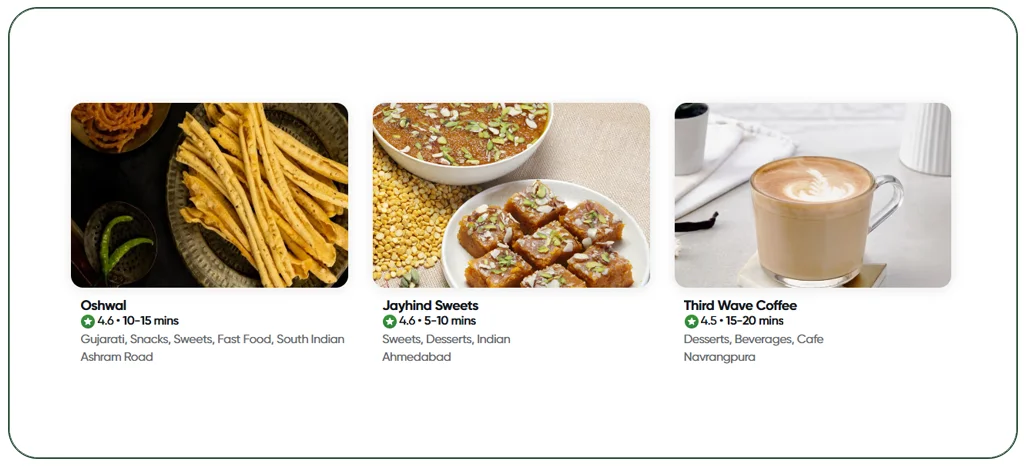
Food data integration has developed alongside digital grocery shopping, online restaurant discovery, food delivery, and nutrition-focused applications. Businesses increasingly require structured information that can move between applications, databases, analytics platforms, and digital storefronts.
A Swiggy web data scraper represents one approach to organizing publicly displayed restaurant and menu information when collection is explicitly authorized. It should not be confused with an official platform API.
The growth of India's online food delivery ecosystem demonstrates why structured food information matters. Swiggy's official annual reports provide useful evidence of the expansion of its food delivery business.
| Financial year | Food delivery GOV | Completed food delivery orders |
|---|---|---|
| FY2020 | Not reported in the cited series | Not reported |
| FY2021 | Not reported in the cited series | Not reported |
| FY2022 | ₹18,479 crore | 454 million |
| FY2023 | ₹21,517 crore | 517 million |
| FY2024 | ₹24,717 crore | 578 million |
| FY2025 | ₹28,783 crore | 629 million |
| FY2026 | ₹34,593 crore | 714 million |
Source: Swiggy annual reports and FY2026 financial disclosures. GOV means Gross Order Value. FY2020 and FY2021 are marked unavailable rather than estimated.
The figures demonstrate the expansion of Swiggy's food delivery operations. Between FY2022 and FY2026, reported completed food delivery orders increased from 454 million to 714 million.
This growth creates several data requirements for businesses:
- Restaurant and cuisine classification for better food discovery.
- Structured menu information for digital ordering systems.
- Standardized product and ingredient descriptions.
- Accurate price and promotional records.
- Consistent data formats for reporting and integration.
Food businesses can use these datasets to examine restaurant coverage, identify popular cuisine categories, and understand how digital food services are developing.
The key consideration is data consistency. Restaurant names, menu descriptions, portion sizes, and product categories should follow standardized formats before being used for analytics.
Business takeaway: Historical market information provides context, but businesses should maintain their own licensed and timestamped datasets to make reliable product and restaurant comparisons.
How Does Food Data Collection Support Digital Food Businesses?
Food data collection helps businesses organize information from different sources into a consistent structure. It supports restaurant discovery, menu management, food catalog development, competitor research, and digital ordering applications.
Swiggy web scraping is a term commonly used to describe the collection and structuring of restaurant-related information from Swiggy. For commercial applications, however, businesses must distinguish between authorized data access and automated collection prohibited by the platform's terms. Swiggy's terms specifically restrict unauthorized page scraping, robots, spiders, and automated methods of accessing platform content.
For permitted projects, businesses can work with approved integrations, partner-provided information, licensed datasets, and authorized data exports.
The information requirements generally include:
- 1. Restaurant information
- Restaurant names and business identifiers.
- Cuisine categories and restaurant descriptions.
- Location information where authorized.
- Restaurant operating information where available.
- 2. Menu information
- Food item names and descriptions.
- Cuisine and menu classifications.
- Portion sizes and available variations.
- Vegetarian and non-vegetarian labels where supplied.
- Ingredient and allergen details where verified.
- 3. Pricing information
- Displayed menu prices.
- Item-level price variations.
- Available promotional information.
- Package or meal-combination details.
- 4. Data organization
Collected information should be converted into standardized records. For example, restaurant names should be consistently formatted, menu categories should follow a defined classification system, and prices should use a common currency format.
| Data category | Important fields | Business application |
|---|---|---|
| Restaurant | Name, ID, cuisine | Restaurant discovery |
| Menu | Item name, description | Menu management |
| Food attributes | Ingredients, allergens | Dietary filtering |
| Pricing | Displayed price, currency | Price comparison |
| Availability | Availability status | Catalog management |
| Location | City, service area | Geographic analysis |
A major challenge is that food information can change frequently. Restaurants may revise menu descriptions, introduce new dishes, discontinue products, or change prices.
Businesses should therefore maintain collection timestamps and source references. These fields help analysts distinguish current information from older observations.
Another important requirement is data validation. Missing prices, duplicate restaurant entries, inconsistent food categories, and incomplete ingredient descriptions can affect downstream applications.
An effective collection process combines authorization, standardization, validation, and scheduled updates. This creates a more dependable foundation for food-related analytics.
What Information Can Businesses Discover Through Promotional Analysis?
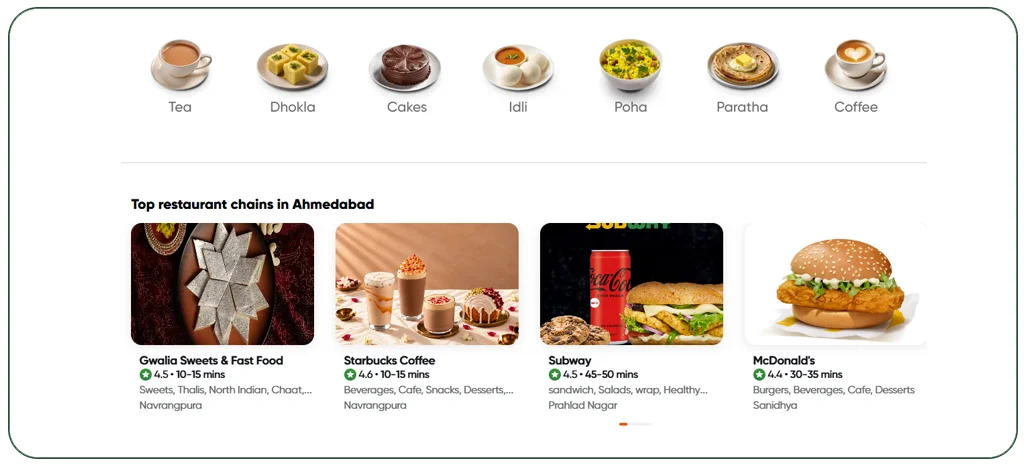
Promotional information helps businesses understand how restaurants and food delivery platforms present discounts, special deals, and meal combinations. It also allows market researchers to study how promotional strategies vary across cuisines, restaurants, and locations.
Swiggy offers scraping describes the process of organizing promotional information from relevant platform listings through permitted data access. The objective is to structure offer-related information rather than simply record an advertised discount.
Important promotional fields can include:
- Restaurant or merchant identifier.
- Food item or eligible menu category.
- Original displayed price, where available.
- Promotional selling price.
- Displayed discount percentage.
- Minimum order requirements.
- Coupon or offer conditions.
- Applicable dates and eligibility restrictions.
- Collection timestamp.
A critical consideration is the difference between an advertised offer and the final amount paid by a customer. Taxes, delivery fees, platform charges, membership benefits, and coupon eligibility can influence the checkout amount.
For example, a displayed discount on a restaurant meal should not automatically be interpreted as the customer's final savings. The offer may have minimum-order conditions or other restrictions.
What can promotional datasets help businesses measure?
| Analytical parameter | What it reveals |
|---|---|
| Offer frequency | How often promotions are displayed |
| Discount distribution | Differences in advertised discount levels |
| Cuisine-level offers | Promotional activity by cuisine |
| Restaurant participation | Number of participating restaurants |
| Offer duration | How long a promotion remains available |
| Minimum-order conditions | Eligibility requirements |
| Menu price movement | Changes in displayed item prices |
These measurements can help restaurant groups understand promotional positioning and evaluate their own marketing strategies.
For market researchers, promotional information can also provide insight into how different restaurant categories compete for customer attention.
However, historical comparisons require consistent records. An offer observed on one date should not be assumed to remain active later. Each promotional observation should retain its collection date, source, and eligibility conditions.
Looking to organize authorized restaurant and promotional information into structured datasets? Real Data API can help businesses plan food data collection and integration workflows around their research requirements!
Get Insights Now!How Can Businesses Extract and Analyze Discount Information?
Discount analysis requires businesses to separate regular prices, promotional prices, coupon benefits, and conditional offers. Without this separation, analytical reports can overstate savings or compare unrelated promotional structures.
Extract Swiggy discount data is a research requirement for organizations examining restaurant promotions and displayed price changes through authorized sources.
A useful discount analysis workflow includes the following steps.
Step 1: Define the research scope
Identify the restaurants, locations, cuisine categories, and promotional fields required for the project. A focused collection scope improves relevance and makes validation easier.
Step 2: Capture authorized source information
Use permitted partner integrations, licensed data providers, or approved exports. Maintain source identifiers so every record can be traced to its origin.
Step 3: Separate price components
Store the regular listed price, displayed promotional price, coupon conditions, and additional charges separately. Do not combine them into a single price field.
Step 4: Standardize promotional records
Normalize currencies, dates, discount formats, and eligibility descriptions. This makes different promotional records easier to compare.
Step 5: Validate the collected information
Check for missing prices, expired offers, duplicate entries, and inconsistent promotional conditions.
Step 6: Develop analytical reports
Use the validated dataset to examine promotional frequency, category-level discount patterns, restaurant participation, and price changes.
A basic discount calculation is:
Discount % = Original Price - Offer Price / Original Price x 100
This calculation is meaningful only when both prices refer to the same item, portion, and applicable conditions.
Which business metrics should be monitored?
| Metric | Measurement purpose |
|---|---|
| Average displayed discount | Promotional positioning |
| Median menu price | Typical item pricing |
| Offer participation | Restaurant promotional coverage |
| Offer duration | Promotional consistency |
| Price change frequency | Menu pricing activity |
| Data freshness | Timeliness of collected records |
Businesses should also maintain a distinction between item-level discounts and order-level benefits. A coupon applied to an entire basket should not be incorrectly attributed to every individual menu item.
These controls improve the reliability of restaurant pricing research and help decision-makers understand promotional activity without confusing advertised savings with actual transaction outcomes.
How Does Food Product Information Improve Business Intelligence?
Food product information is useful across grocery retail, food delivery, nutrition applications, restaurant management, and consumer research. Businesses can combine product descriptions, ingredient information, nutritional attributes, and category classifications to build more useful digital services.
Swiggy Food Data Scraping is a search term associated with collecting and structuring restaurant and menu information. Businesses researching this area should prioritize approved data sources and authorized collection methods.
The wider food data ecosystem also includes dedicated nutritional databases and product information APIs.
One established example is USDA FoodData Central. Its API supports food searches and detailed food-record retrieval. The USDA also provides data downloads in CSV and JSON formats. Its published API documentation specifies a default limit of 1,000 requests per hour per IP address for registered API access.
This type of information can support several applications.
- 1. Nutrition applications
Developers can use nutritional records to display calories, macronutrients, and other available nutrient values. These records can help users understand food composition, provided the food item and serving size are matched correctly.
- 2. Grocery e-commerce
Online retailers can organize food product descriptions, brands, categories, and ingredient information to improve catalog search and product discovery.
- 3. Restaurant menu management
Restaurant businesses can maintain structured menu records, standardize dish descriptions, and organize information for digital ordering systems.
- 4. Food market research
Researchers can analyze product categories, food descriptions, available nutritional attributes, and changes in licensed product catalogs.
- 5. Dietary and allergen applications
Verified ingredient and allergen information can support dietary filtering. However, incomplete product records should never be treated as proof that a food is allergen-free.
Which food data fields are important?
| Food information | Common applications |
|---|---|
| Food name | Search and identification |
| Brand | Product comparison |
| Ingredients | Product transparency |
| Calories | Nutrition applications |
| Protein | Nutritional analysis |
| Carbohydrates | Dietary information |
| Fat | Nutritional reporting |
| Allergens | Dietary safety |
| Serving size | Accurate nutrient comparison |
| Product identifier | Catalog matching |
A major challenge is that nutritional information is not always directly comparable across products. One product may report values per 100 grams, while another uses a serving-size measurement.
Businesses should standardize units and preserve the original source values. They should also maintain the data source and update date to help users understand where the information originated.
For food retailers and application developers, combining product identification with standardized nutritional information creates a more useful foundation for search, discovery, and analytical services.
What Role Do APIs Play in Food Data Integration?
APIs allow applications to communicate with external databases and services through defined requests and responses. They help businesses retrieve information without manually transferring every record between systems.
The Swiggy API keyword is relevant to searches about platform integrations, restaurant information, and digital food services. However, businesses should not assume that a publicly documented, unrestricted Swiggy API exists for extracting restaurant listings, menu prices, or competitor offers. Access should be confirmed through Swiggy's official partner or commercial channels.
A food API generally works through the following process:
- An application sends a request to an authorized API endpoint.
- The service checks the request and authentication credentials.
- The API retrieves matching records from its database.
- The service returns structured information, often in JSON format.
- The application processes and displays the returned data.
What are the main components of a food API?
| Component | Function |
|---|---|
| Endpoint | Defines the requested resource |
| API key | Identifies and authenticates an application |
| Request parameters | Specify search terms or filters |
| Response | Returns the requested information |
| JSON structure | Organizes returned data |
| Rate limits | Control request frequency |
| Documentation | Explains available fields and usage |
USDA FoodData Central provides a practical example of this structure. Its API includes a food-search endpoint and endpoints for retrieving individual or multiple food records. API users must include a data.gov key in requests and protect that key from public exposure.
What should businesses evaluate before selecting an API?
- Data coverage: Does the provider include the required food products and attributes?
- Accuracy: Are nutritional values and product identifiers supported by reliable sources?
- Update frequency: How frequently are records refreshed?
- Integration: Can the API work with existing applications and databases?
- Scalability: Can the service support the expected number of requests?
- Security: Are authentication and data protection mechanisms available?
- Licensing: Are commercial use and redistribution permitted?
API integration also requires ongoing maintenance. Providers may update endpoints, change response fields, introduce new authentication requirements, or revise request limits.
Businesses should therefore monitor API documentation and maintain error-handling procedures.
The right API strategy combines reliable source data, secure access, standardized responses, and clear commercial usage rights.
Why Choose Real Data API?
Real Data API helps businesses plan data collection and integration workflows that support food industry research, digital applications, and market intelligence. The focus is on organizing relevant information into structured datasets that businesses can use across their analytics and operational systems.
A properly designed Swiggy Food Dataset can support restaurant and menu research when the information is obtained through authorized sources and suitable commercial permissions.
What makes a reliable food data solution valuable?
- 1. Structured data delivery
Businesses need standardized records containing restaurant names, food categories, product descriptions, ingredients, prices, and other relevant attributes.
- 2. Customized data requirements
Different industries require different food information. Grocery retailers may prioritize product identifiers and nutritional values, while restaurant businesses may focus on menus, cuisines, and displayed prices.
- 3. Data validation and consistency
Duplicate detection, missing-field checks, standardized units, and product matching improve the usability of food information.
- 4. Integration-ready formats
Structured JSON, CSV, and API-based delivery can simplify integration with applications, databases, and business intelligence systems.
- 5. Scalable research workflows
Businesses can organize data collection around selected categories, source availability, update schedules, and reporting requirements.
For organizations following the Complete Guide to Food API in 2026, the important consideration is choosing a data solution that combines reliable information, transparent sourcing, secure access, and practical integration capabilities.
Real Data API focuses on helping businesses turn structured food information into useful business intelligence through customized data solutions.
Conclusion
Food APIs are becoming important tools for businesses that need reliable product information, nutritional details, restaurant menus, and market intelligence. From grocery e-commerce and nutrition applications to restaurant discovery and food delivery research, structured information supports better digital experiences and business decisions.
The Complete Guide to Food API in 2026 highlights how API integration, authorized data collection, standardized datasets, and data validation contribute to effective food information management.
Businesses should prioritize accurate sources, secure integrations, and consistent data structures when developing their food data strategies.
Ready to improve your food data capabilities? Connect with Real Data API to explore customized food datasets, API integration, and data collection solutions that support your business intelligence requirements!
FAQs
1. What is a food API?
A food API provides structured food information, including product descriptions, ingredients, nutritional values, and categories, helping applications retrieve and integrate food records efficiently.
2. How does a Swiggy Scraper work?
A Swiggy Scraper organizes restaurant and menu information through authorized data access methods, helping researchers analyze listings, food categories, and promotional information.
3. What information can a Swiggy web data scraper collect?
A Swiggy web data scraper can organize permitted restaurant names, menu descriptions, cuisine categories, and displayed prices from approved data sources.
4. Is Swiggy web scraping useful for market research?
Swiggy web scraping can support restaurant research, menu comparisons, and pricing analysis when conducted through authorized sources and compliant collection methods.
5. Can Real Data API support promotional research?
Yes. Swiggy offers scraping requirements can be addressed through authorized promotional datasets, helping businesses organize discount information and evaluate restaurant marketing strategies. Verified Sources and Further Reading USDA FoodData Central API Guide – API endpoints, authentication, data access, and request limits. USDA FoodData Central FAQs – Food data availability, downloads, and nutritional information. Swiggy Annual Report FY2024–25 – Food delivery operations and business performance. Swiggy FY2025–26 Financial Performance – FY2026 food delivery GOV, orders, and operating metrics. Swiggy Annual Report FY2023–24 – Historical business performance. Swiggy Terms and Conditions – Platform access restrictions and automated collection policies.
Latest posts
Real-time Black Friday Deals Monitoring 2026 - How to Identify Price Drops, Flash Sales, and Winning Promotions
India Year-End Sale 2026 - How Amazon, Flipkart & Meesho Product Data Helps Brands Optimize Promotions and Maximize Sales
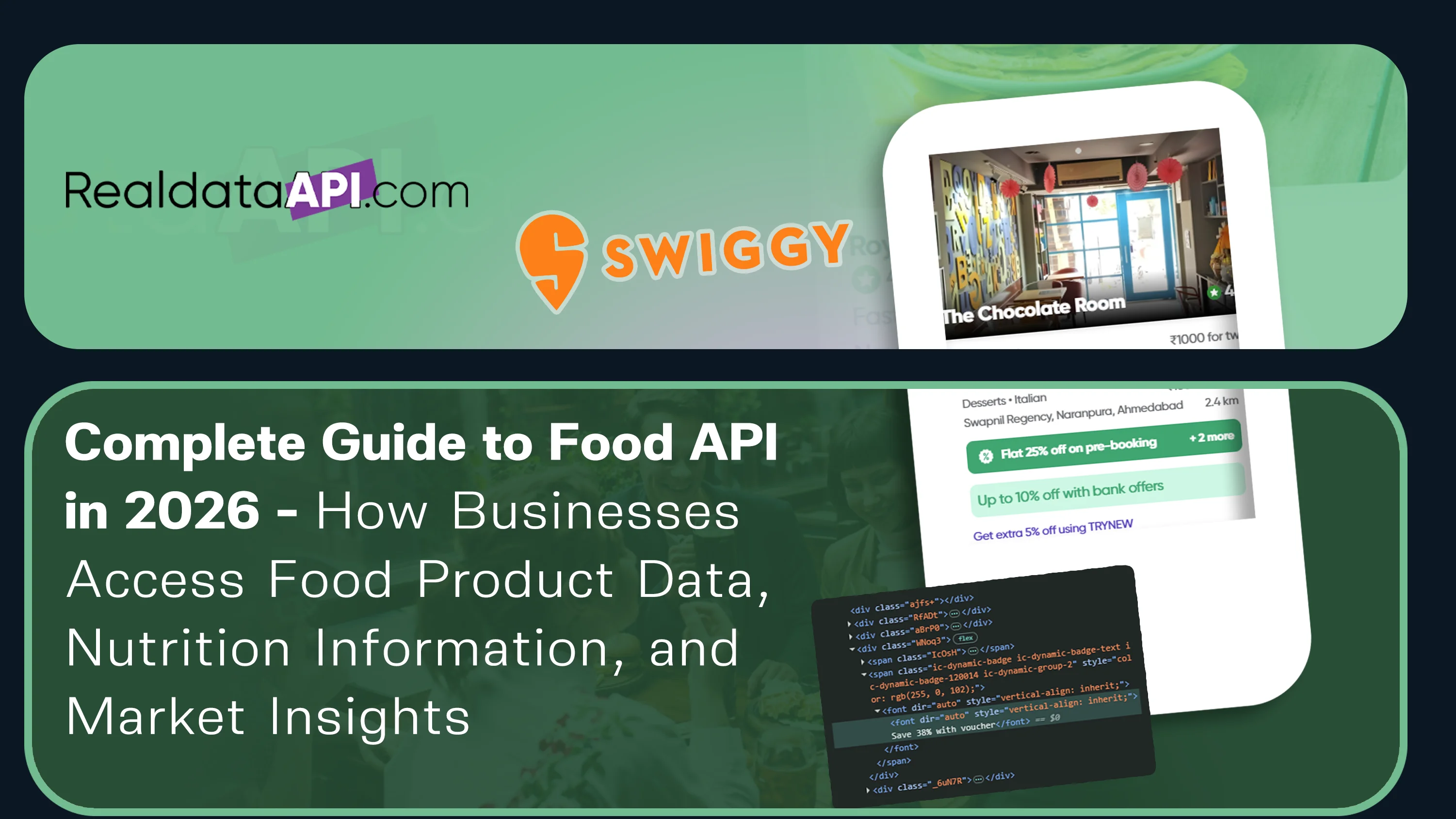
Complete Guide to Food API in 2026 - How Businesses Access Food Product Data, Nutrition Information, and Market Insights

Expedia Transforming Travel Analytics in 2026 - Analyzing Hotel Rates, Airline Fares, and Global Travel Market Trends



.png)


