.gif)
.gif)
Quick Summary
- Expedia Transforming Travel Analytics in 2026 explores how hotel pricing, airline fare movements, booking activity, and destination demand can help travel businesses understand a rapidly changing global market.
- Structured travel intelligence supports competitor benchmarking, pricing decisions, and demand analysis. Any automated collection of Expedia data must respect Expedia’s terms and use only authorized access, such as approved feeds, licensed datasets, or written permission.
Introduction
Travel analytics helps businesses understand how accommodation prices, airline fares, booking volumes, and destination demand change over time. Expedia Transforming Travel Analytics in 2026 is an important topic for travel agencies, hotel groups, market researchers, and technology providers because the travel market is growing while customer expectations and pricing conditions continue to evolve. Reliable data can help businesses compare market movements, recognize demand patterns, and make better-informed commercial decisions.
Expedia Group is a major online travel company whose reported results provide useful context for understanding the scale of the digital travel market. In its 2025 full-year results, the company reported gross bookings of approximately $119.6 billion, up 8% from 2024, and 415.4 million booked room nights, also up 8%. These figures demonstrate why accommodation activity and booking trends are important measures for travel-market analysis.
An Expedia Scraper may be discussed as a technical approach to collecting travel information, but automated access to Expedia’s services is restricted by its published terms unless express prior permission is obtained. Businesses should therefore use authorized APIs, approved partner integrations, licensed data providers, or written permission rather than assume that public visibility grants scraping rights.
For travel businesses, the objective is not simply to gather more information. It is to build a consistent, legally sourced dataset that makes rates, availability, booking conditions, and market changes easier to compare.
How Can Authorized Data Interfaces Improve Travel-Market Monitoring?
An Expedia scraper API is often used as a search phrase by organizations exploring structured travel-data access. In a compliant data strategy, however, the priority should be an authorized interface or licensed source that permits the intended collection and reuse. A well-designed data pipeline can standardize hotel information, fare observations, destination details, and timestamps so analysts can compare records across reporting periods.
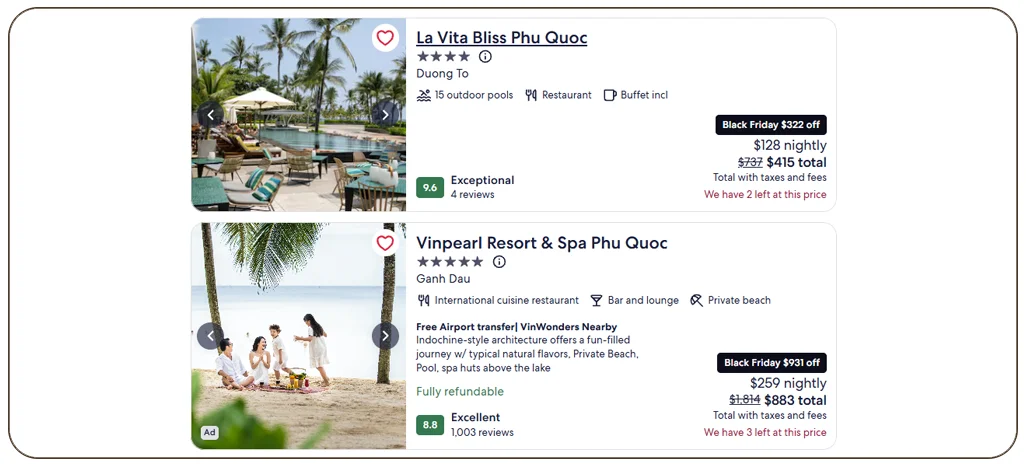
Travel companies need consistent fields. Hotel observations may include property name, destination, room category, check-in date, check-out date, occupancy, displayed rate, currency, taxes, cancellation conditions, and availability status. Airline observations may include origin, destination, departure date, return date, carrier, cabin class, fare family, baggage conditions, and total displayed price. Without these fields, two apparently similar offers may not be comparable.
The scale of Expedia Group’s business illustrates why lodging information is commercially significant. Its 2025 annual results recorded 415.4 million booked room nights and $119.59 billion in gross bookings. The company also reported approximately 3.6 million lodging properties available across its marketplace at year-end 2025. These are company-reported operating figures, not an independent estimate of the entire hotel market.
| Expedia Group measure | 2024 | 2025 | Reported change |
|---|---|---|---|
| Gross bookings | $110.921 billion | $119.590 billion | +8% |
| Booked room nights | 383.9 million | 415.4 million | +8% |
| Revenue | $13.691 billion | $14.733 billion | +8% |
Source: Expedia Group full-year 2025 results. Values are company-reported; gross bookings are not the same as revenue.
For business users, the practical lesson is to define data requirements before building a collection workflow. Agree on permitted sources, field definitions, update frequency, storage rules, and intended use. Then validate records for missing values, duplicate properties, inconsistent currencies, and changes in source structure. This approach creates a more dependable foundation for pricing research than collecting isolated snapshots without context.
What Can Hotel-Rate Comparisons Reveal About Accommodation Demand?
Businesses that want to Scrape Expedia hotel information should first establish whether they have explicit authorization to collect and reuse the relevant content. Expedia’s published terms prohibit automated access, monitoring, or copying through robots, spiders, and scrapers without express written prior permission. A compliant research program should use approved data access or other licensed sources and should not bypass access controls.
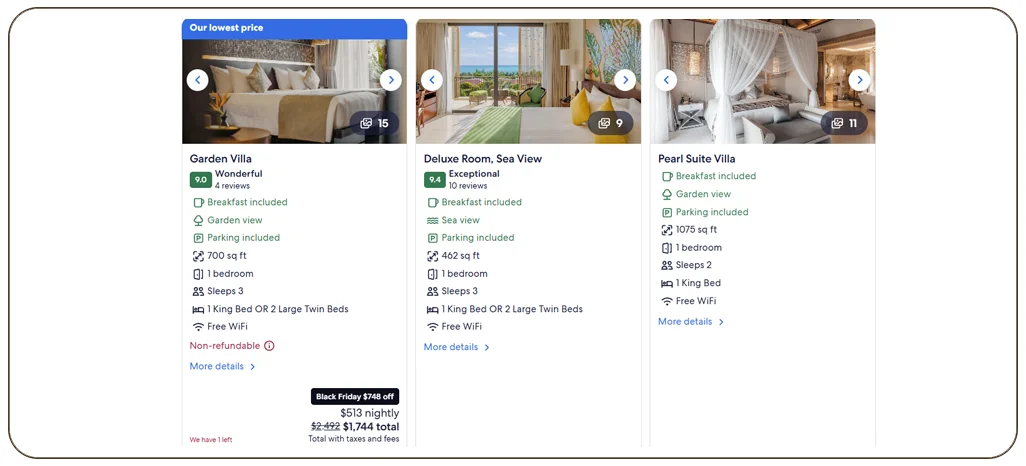
Hotel-rate analysis can still be designed around authorized data. Analysts can compare room prices by destination, property category, booking lead time, stay duration, cancellation policy, and occupancy conditions. The key is to compare equivalent products. A refundable room with breakfast included should not be treated as identical to a non-refundable room without meals. Likewise, taxes, resort fees, currency conversion, and guest counts can materially affect the final payable amount.
Global tourism figures provide context for interpreting these comparisons. UN Tourism estimated 1.465 billion international tourist arrivals in 2024, close to the 2019 level of 1.469 billion. Its January 2026 factsheet estimated 1.523 billion arrivals in 2025, a provisional increase of 4% over 2024. This recovery and growth create a strong reason for travel businesses to monitor destination-level demand rather than rely on a single global average.
| Year | International tourist arrivals worldwide |
|---|---|
| 2020 | 409 million |
| 2021 | 462 million |
| 2022 | 979 million |
| 2023 | 1.322 billion |
| 2024 | 1.465 billion |
| 2025 | 1.523 billion (provisional) |
Source: UN Tourism, International Tourism 2025 factsheet, January 2026. Figures are rounded.
A useful accommodation dataset should preserve observation dates and stay dates separately. That distinction helps analysts identify whether a price changed because the market moved or because the booking window became shorter. It also helps distinguish seasonal effects from temporary promotions and changes in room availability.
How Does Travel Data Collection Support Competitive Market Research?
Expedia travel data web scraping is a commonly searched phrase for researching online travel information, but the collection method must be permitted by the source. Where Expedia access is not expressly authorized, businesses can build comparable market intelligence from licensed travel datasets, partner feeds, public statistical releases, and other sources whose terms allow the intended use.
Travel research becomes more useful when data from different sources is normalized. A hotel record from one provider may describe a property by brand name, while another may use its local trading name. A flight record may display a base fare, while a different source presents a total price that includes taxes and fees. A consistent schema should therefore standardize property identifiers, destination codes, currencies, date formats, fare conditions, and price components.
The European Union provides a useful example of why regional demand should be examined separately. Eurostat reported that tourist accommodation establishments in the EU recorded more than 3 billion nights in 2024, a 2.2% increase compared with 2023. International guest nights increased by 4.9%, while domestic guest nights declined slightly by 0.1%. These differences show why a single overall growth figure may conceal important shifts in the mix of travelers.
For travel agencies and hospitality companies, a practical analysis can answer questions such as:
- Which destinations are experiencing stronger accommodation demand?
- How do rates vary between weekdays, weekends, and seasonal periods?
- Are international guest trends diverging from domestic travel patterns?
- Which hotel categories show the largest changes in displayed prices?
- How do cancellation terms and included services affect the true value of an offer?
The next step is to turn observations into decision-ready indicators. Average displayed rate, median rate, price range, availability share, and rate movement by booking window can help teams identify patterns. These indicators should be calculated only from comparable, timestamped records and should clearly state the source coverage.
Build a more consistent travel-research workflow with authorized data sources, structured fields, and dependable validation processes.
Get Insights Now!Which Signals Help Businesses Understand Changes in Global Travel Demand?
An Expedia web data scraper may be part of a permitted data-collection project only where the relevant access has been expressly authorized. Expedia’s terms specifically restrict automated copying and monitoring without prior written permission. For organizations without that permission, the safer route is to use approved partner data, licensed market datasets, or public statistical sources that allow reuse.
Travel-market analysis should combine booking indicators with wider economic and industry measures. Expedia Group’s reported performance offers one company-level signal: in the third quarter of 2026, gross bookings reached $34.008 billion, up 11% year over year, while booked room nights increased 7% to 115.7 million. Lodging gross bookings rose 10% in the quarter. These results describe Expedia Group’s own business and should not be interpreted as the growth rate of the entire travel industry.
Airline performance provides another important perspective. The International Air Transport Association reported that global passenger demand, measured in revenue passenger kilometers, increased 5.3% in 2025 compared with 2024. International passenger demand rose 7.1%, and the full-year passenger load factor reached a record 83.6%. These measures help explain changes in travel capacity and demand, although they are not direct measures of ticket prices.
| Indicator | Latest verified period | Reported result |
|---|---|---|
| Expedia Group gross bookings | Q3 2026 | $34.008 billion |
| Expedia Group booked room nights | Q3 2026 | 115.7 million |
| Expedia Group lodging gross bookings | Q3 2026 | +10% year over year |
| Global airline passenger demand | Full-year 2025 | +5.3% year over year |
| International airline passenger demand | Full-year 2025 | +7.1% year over year |
Sources: Expedia Group Q3 2026 results and IATA full-year 2025 passenger-market performance.
Combining these indicators helps analysts separate company performance from broader market conditions. For example, an increase in hotel bookings may coincide with stronger destination arrivals, but the relationship should be tested using matching dates and geographic coverage. Businesses should avoid treating correlation as proof that one factor caused another.
For pricing teams, the most actionable output is a regularly refreshed dashboard showing the movement of comparable rates, flight fares, room availability, and demand indicators. It should identify the source, timestamp, geography, and methodology behind every metric.
How Can Structured Travel Information Improve Pricing Decisions?
Expedia Travel Data Scraping is a term used in discussions about extracting online travel information. Any such activity involving Expedia’s services requires express prior written permission under the company’s published terms. When access is authorized, structured data can support market research by making observations easier to organize, validate, and compare. Without that authorization, teams should use other licensed or openly reusable sources.
A strong travel dataset should do more than store a price and a hotel name. It should capture the conditions that explain the price. For accommodation, this may include the room type, number of guests, dates of stay, meal inclusion, cancellation terms, taxes, fees, and currency. For air travel, useful attributes include the route, departure date, carrier, cabin, fare conditions, baggage allowance, stopovers, and total payable fare.
These details are essential because headline prices can be misleading. Two hotel offers may differ in refundability or included services. Two flight offers may have different baggage allowances, change fees, or connection times. A comparison that ignores these attributes can produce incorrect conclusions and lead to poor pricing decisions.
A practical workflow can include the following steps:
- Define the research question: Specify whether the goal is competitor benchmarking, destination research, fare analysis, hotel-rate tracking, or demand forecasting.
- Confirm source permissions: Document the approved access method, reuse rights, and any restrictions on retention or redistribution.
- Standardize the schema: Use consistent identifiers, currencies, dates, destination codes, and product attributes.
- Validate each observation: Check for duplicates, missing values, unusual price changes, and mismatched product conditions.
- Retain historical snapshots: Preserve timestamps so analysts can distinguish genuine market movement from changes in the booking window.
- Report comparable metrics: Calculate averages, medians, ranges, and percentage changes only where records are sufficiently comparable.
Historical context is also important. UN Tourism’s figures show how international arrivals moved from 409 million in 2020 to 1.465 billion in 2024, then to a provisional 1.523 billion in 2025. This sharp recovery means that analysts should interpret recent price and availability changes against the unusual disruption and rebound of the previous years, rather than assume that every year follows a stable pattern.
A well-governed dataset can help a travel business identify where further investigation is needed. It cannot guarantee a particular commercial result, but it can make pricing reviews more transparent and decisions more evidence-based.
What Role Does Mobile Travel Research Play in Understanding Customer Behavior?
Expedia Mobile App Scraping is another search phrase associated with collecting travel information from mobile interfaces. Automated collection from Expedia’s app or services is subject to the company’s restrictions on automated access, and should not be undertaken without express prior written permission. Organizations can instead seek authorized integrations or use licensed mobile-market research sources.
Mobile research is relevant because travelers increasingly interact with travel brands through digital channels, and the booking journey can involve several stages. A traveler may compare destinations on a phone, review accommodation options later on a desktop, and complete a booking through an app. Understanding this journey requires more than a list of displayed prices. It requires appropriately sourced information about customer preferences, booking conditions, device experiences, and conversion behavior.
Expedia Group’s 2025 Traveler Value Index offers an example of research into traveler preferences. The company states that the study surveyed 11,000 respondents across 11 global markets and examined traveler plans, booking values, and influences on decision-making. It provides a useful research reference for understanding consumer priorities, although it is a survey rather than a dataset of individual app sessions or transaction-level behavior.
For travel businesses, mobile-focused research can investigate questions such as:
- Which trip-planning stages are commonly completed on mobile devices?
- How do travelers evaluate total trip cost and booking flexibility?
- Which information helps users compare hotels or flights?
- How do loyalty benefits, cancellation terms, and reviews influence selection?
- Are customer priorities different across markets or travel categories?
To answer these questions responsibly, teams should use consent-based analytics, aggregated research, licensed datasets, and approved platform reporting. Personal information should be handled in accordance with applicable privacy requirements, and individual-level behavior should not be inferred from unrelated market statistics.
Expedia Transforming Travel Analytics in 2026 also highlights the importance of combining digital-channel research with market-level indicators. A mobile interface can reveal how offers are presented, while public tourism statistics and licensed market data provide context about destination demand. Used together, these sources can help companies understand both the traveler experience and the wider commercial environment.
Why Choose Real Data API for Travel-Market Intelligence?
Travel businesses need structured, reliable, and consistently maintained information to evaluate market conditions. Expedia Travel Dataset is a useful target phrase for organizations researching accommodation and travel-market information, but any dataset containing Expedia-originated information must be obtained through authorized access and used according to its applicable license.
Real Data API can support travel intelligence initiatives by helping businesses plan structured data workflows around their research requirements. A well-designed project should begin with clear source permissions, required fields, geographic coverage, update frequency, and output formats. This reduces the risk of building a dataset that is difficult to compare or unsuitable for its intended business use.
A reliable travel-data workflow should prioritize:
- Structured data delivery: Organize approved hotel, flight, destination, and travel-market information into consistent formats.
- Data validation: Check records for missing fields, duplicates, inconsistent currencies, and formatting errors.
- Historical analysis: Maintain timestamped records to identify changes across reporting periods.
- Market coverage: Define destinations, travel categories, and date ranges according to the research objective.
- Business-ready outputs: Prepare datasets that can be used for dashboards, market research, competitor analysis, and internal reporting.
Expedia Transforming Travel Analytics in 2026 also reinforces the need to distinguish company-specific performance from wider industry trends. Expedia Group financial results, international tourist arrivals, airline passenger demand, and traveler surveys measure different things. Combining them requires clear definitions and careful interpretation.
Real Data API can help organizations plan a data solution around authorized sources and practical analysis needs, with emphasis on data quality, consistency, and transparent methodology.
Conclusion
Travel analytics is becoming increasingly important as accommodation demand, airline capacity, booking activity, and traveler preferences continue to evolve. Expedia Transforming Travel Analytics in 2026 demonstrates why travel businesses need more than isolated price observations: they need structured information, historical context, and comparable market indicators.
Expedia Group’s reported 2025 growth and third-quarter 2026 results provide company-level evidence of continued booking activity, while UN Tourism and IATA statistics offer a wider view of international tourism and airline demand. Together, these sources show why travel businesses should analyze lodging, air travel, and destination trends as related but distinct parts of the market.
The most effective approach combines authorized data access, consistent data schemas, historical tracking, and careful validation. Businesses should always confirm permission before collecting information from Expedia’s websites or mobile services, since the company’s terms restrict automated access without express written prior permission.
Ready to strengthen your travel-market research? Contact Real Data API to discuss an authorized, structured data solution for hotel pricing analysis, airline fare research, and global travel intelligence!
FAQs
1. What does Expedia Transforming Travel Analytics in 2026 mean?
It describes how travel businesses can analyze accommodation rates, airline fares, booking activity, and destination demand to understand market movements and support informed commercial decisions.
2. What is an Expedia Scraper used for?
The term describes software intended to collect travel information. Expedia restricts automated access without express written prior permission, so businesses should use authorized data channels.
3. What is an Expedia scraper API?
It refers to an automated data-access interface. Any interface used to collect Expedia information must be officially authorized and comply with applicable terms and permissions.
4. Can businesses Scrape Expedia hotel prices?
Only with appropriate authorization. Expedia’s terms restrict automated copying and monitoring without express written prior permission; licensed datasets and approved integrations are alternatives.
5. How can Real Data API support travel analytics?
Real Data API can help businesses plan structured data workflows using authorized sources, consistent fields, validation processes, and historical records for travel-market research and analysis. Sources and Research References The following primary and official sources support the factual figures and access-policy statements used in this article: Expedia Group – Q3 2026 Results – gross bookings, revenue, booked room nights, and lodging performance. SEC+1 Expedia Group – Q4 and Full-Year 2025 Results – annual gross bookings, revenue, and booked room nights. SEC Expedia Group – 2025 Annual Report – lodging marketplace and service-type revenue details. EBS Public Now UN Tourism – International Tourism 2025 Factsheet – international tourist arrivals from 2020 to 2025. Pre-Web UNWTO UN Tourism – World Tourism Barometer – international tourism recovery and 2024 arrivals. UN Tourism Eurostat – EU Tourism Tops 3 Billion Nights in 2024 – accommodation nights and international versus domestic guest trends. Eurostat IATA – Strong 2025 Passenger Demand – airline passenger demand, capacity, and load factor. IATA Expedia Group – 2025 Traveler Value Index – traveler research methodology and survey coverage. Expedia Group Expedia – Terms of Service – restrictions on automated access and copying. expedia Expedia Group – Terms of Use – restrictions on automated access without prior written permission. Expedia Group
Latest posts
Real-time Black Friday Deals Monitoring 2026 - How to Identify Price Drops, Flash Sales, and Winning Promotions
India Year-End Sale 2026 - How Amazon, Flipkart & Meesho Product Data Helps Brands Optimize Promotions and Maximize Sales
Complete Guide to Food API in 2026 - How Businesses Access Food Product Data, Nutrition Information, and Market Insights
Expedia Transforming Travel Analytics in 2026 - Analyzing Hotel Rates, Airline Fares, and Global Travel Market Trends



.png)


