Introduction
Brands can understand customer sentiment, product strengths, complaints, and competitive positioning by analyzing structured review and rating data at scale. Extract Flipkart product review data for brand analysis helps businesses turn customer feedback into measurable insights for product development, marketing, reputation management, and competitive research.
Customer reviews contain valuable signals. Ratings show overall satisfaction. Review text explains why customers like or dislike a product. Review volume can indicate engagement. Changes in sentiment can reveal emerging product issues.
The Flipkart Product and Review Datasets can bring these signals together in a structured format for analysis, dashboards, and business intelligence workflows.
Why does review data matter?
Consider this illustrative example:
| Year | Illustrative Reviews Analyzed | Average Rating Index | Main Business Focus |
|---|---|---|---|
| 2020 | 100K | 100 | Basic review tracking |
| 2021 | 180K | 102 | Rating analysis |
| 2022 | 300K | 105 | Product feedback |
| 2023 | 500K | 107 | Sentiment analysis |
| 2024 | 800K | 109 | Brand benchmarking |
| 2025 | 1.3M | 111 | Competitive intelligence |
| 2026 | 2M+ | 114 | Automated review intelligence |
These figures are hypothetical planning examples, not reported Flipkart statistics.
The target audience includes consumer brands, manufacturers, retailers, e-commerce teams, product managers, market researchers, agencies, and customer experience teams.
The key problem is simple: manually reading thousands of reviews takes time and makes it difficult to identify patterns.
A structured review dataset solves this problem.
Businesses can analyze reviews by product, category, rating, date, brand, and sentiment. They can identify recurring complaints and compare customer perception across competing products.
The result is a clearer view of what customers actually experience after purchasing a product.
How Can Customer Reviews Reveal Consumer Sentiment?
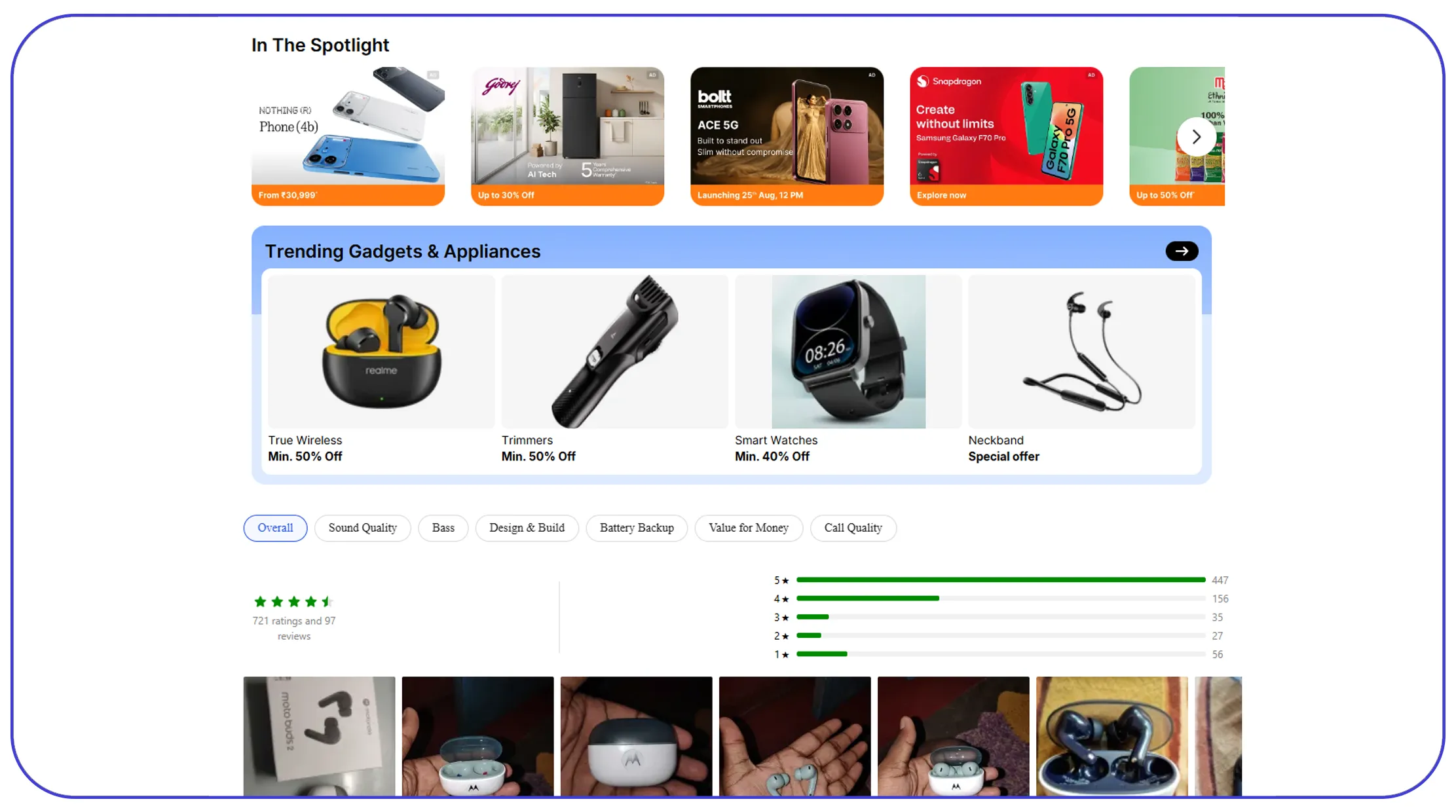
Scrape Flipkart customer reviews for sentiment analysis to identify common customer opinions and recurring product experiences.
Reviews contain both positive and negative signals. Customers may praise product quality, battery life, design, delivery, value, or ease of use. They may also mention defects, poor packaging, missing features, pricing concerns, or performance problems.
Analyzing these comments at scale can help brands identify recurring themes.
A useful review dataset may include:
- Product name.
- Brand.
- Rating.
- Review title.
- Review text.
- Review date.
- Verified purchase indicator, where available.
- Product category.
- Helpful votes, where available.
- Collection timestamp.
Businesses can then classify reviews into sentiment groups.
| Year | Illustrative Reviews | Positive | Neutral | Negative |
|---|---|---|---|---|
| 2020 | 100K | 68% | 18% | 14% |
| 2021 | 180K | 69% | 17% | 14% |
| 2022 | 300K | 71% | 16% | 13% |
| 2023 | 500K | 72% | 16% | 12% |
| 2024 | 800K | 74% | 15% | 11% |
| 2025 | 1.3M | 75% | 14% | 11% |
| 2026 | 2M+ | 77% | 13% | 10% |
The percentages above are hypothetical examples.
Sentiment analysis becomes more useful when businesses connect it with ratings.
A product with a 4.5 rating and recurring complaints about durability may need a different response from a product with a 4.5 rating and complaints focused mainly on delivery.
This is why review text matters.
Brands can create topic categories such as quality, price, usability, design, packaging, performance, and customer service.
They can then measure how often each topic appears.
A sudden increase in negative comments around one feature can signal a product issue.
A rise in positive comments around another feature can help marketing teams understand which benefits resonate with customers.
The goal is not simply to count positive and negative reviews. The goal is to understand why customers feel a certain way.
How Can Businesses Collect Review Data at Scale?
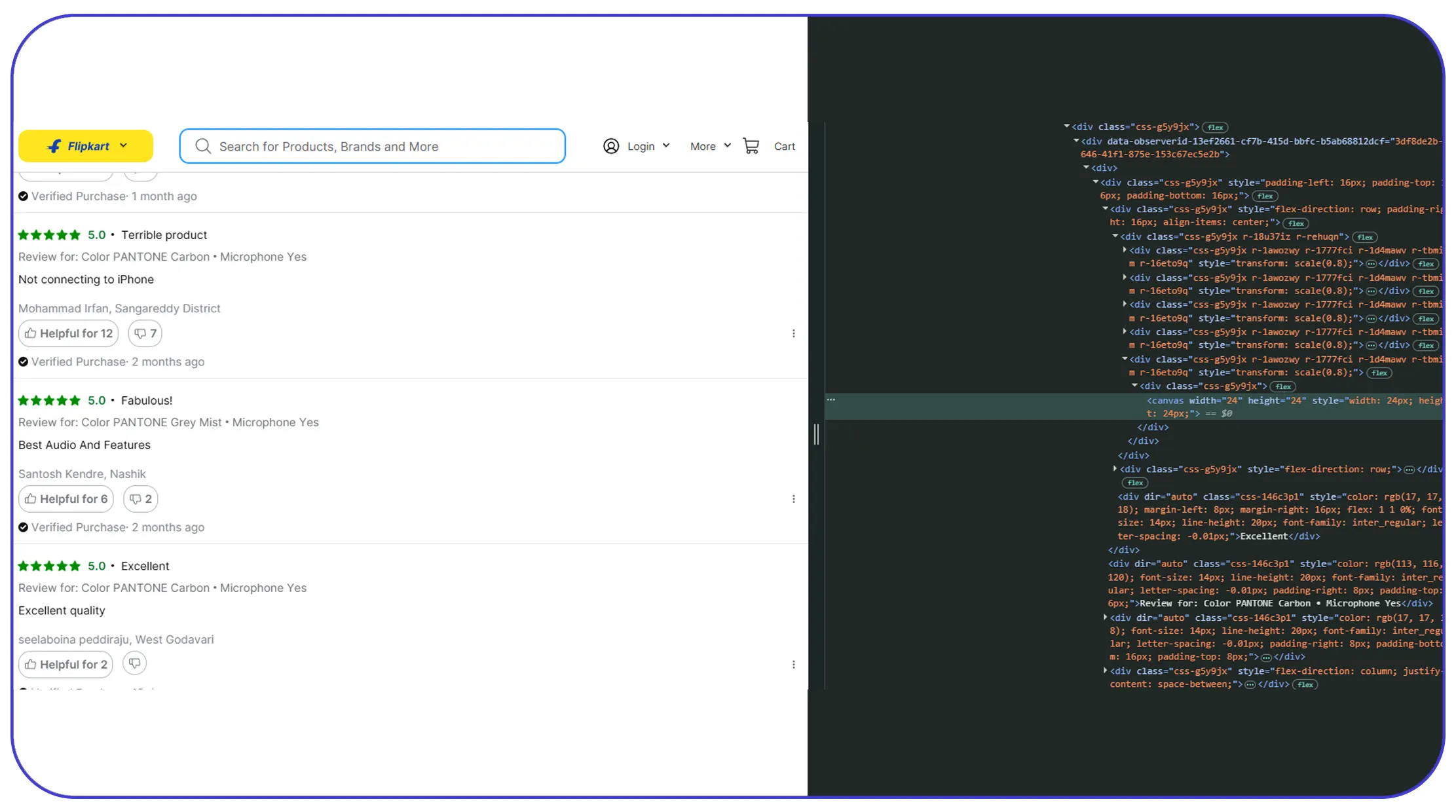
Web Scraping Flipkart review data can help businesses create larger datasets for structured analysis instead of relying on manual review collection.
Manual research may work for a few products. It becomes difficult when a brand has hundreds of products or wants to monitor multiple competitors.
Automated workflows can collect selected fields at scheduled intervals.
A typical process includes:
- Identify products and categories.
- Define required review fields.
- Collect review records.
- Normalize the data.
- Remove duplicates.
- Store historical records.
- Run sentiment and topic analysis.
- Generate reports.
The collection frequency depends on the business objective.
A brand reputation team may need frequent monitoring. A quarterly research project may require less frequent collection.
| Year | Illustrative Products Monitored | Review Records | Collection Focus |
|---|---|---|---|
| 2020 | 1,000 | 100K | Basic feedback |
| 2021 | 1,800 | 180K | Product ratings |
| 2022 | 3,000 | 300K | Customer sentiment |
| 2023 | 5,000 | 500K | Brand monitoring |
| 2024 | 8,000 | 800K | Competitor research |
| 2025 | 13,000 | 1.3M | Large-scale analytics |
| 2026 | 20,000+ | 2M+ | Automated intelligence |
These figures are illustrative.
Historical collection creates another advantage.
Brands can compare customer sentiment across different time periods.
For example, a product might have strong reviews immediately after launch but receive more negative feedback later. That could indicate quality issues, changing expectations, or increased competition.
Businesses can also compare new and old reviews.
This allows product teams to determine whether changes to packaging, features, or quality are improving customer satisfaction.
Automation also reduces repetitive manual work.
Instead of opening product pages and copying review information, teams can work with structured datasets.
Data should still be collected responsibly. Businesses should consider applicable laws, platform terms, access permissions, and privacy requirements when designing any data collection workflow.
How Can Reviews Strengthen Competitive Intelligence?
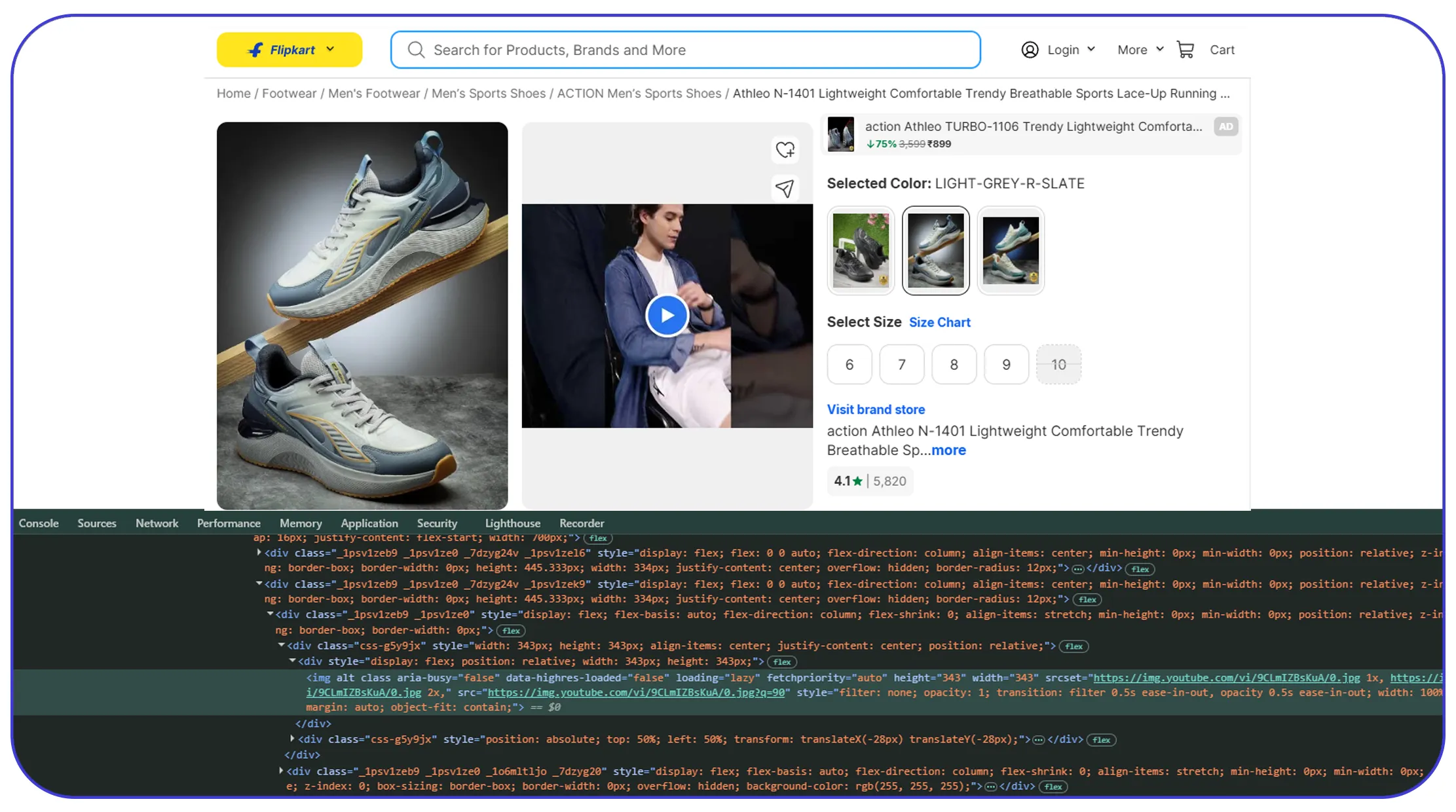
Flipkart review data scraping for competitive intelligence allows brands to compare how customers perceive their products against competing products.
Competitor analysis often focuses on price and product specifications. Reviews add another dimension.
They reveal customer experiences.
For example, a competitor may have a similar price but receive stronger comments about product durability. Another competitor may have lower ratings but receive praise for value.
These insights can help brands identify competitive strengths and weaknesses.
A structured comparison can include:
- Average rating.
- Review count.
- Positive sentiment.
- Negative sentiment.
- Common complaints.
- Frequently praised features.
- Price range.
- Product category.
- Review growth.
| Year | Illustrative Brands Compared | Reviews Compared | Main Insight |
|---|---|---|---|
| 2020 | 50 | 100K | Basic benchmarking |
| 2021 | 75 | 180K | Rating comparison |
| 2022 | 120 | 300K | Sentiment comparison |
| 2023 | 200 | 500K | Product benchmarking |
| 2024 | 350 | 800K | Feature analysis |
| 2025 | 500 | 1.3M | Competitive intelligence |
| 2026 | 750+ | 2M+ | Automated benchmarking |
These are hypothetical figures.
A brand can create a competitive sentiment score based on its chosen methodology.
For example:
Sentiment Gap = Brand Sentiment Score − Competitor Sentiment Score
A positive gap may indicate stronger customer perception. A negative gap can highlight areas for improvement.
The metric should not be viewed in isolation.
Review volume matters. A product with 50 reviews may have a 4.8 rating, while another product with 50,000 reviews may have a 4.5 rating.
The larger dataset may provide a more stable signal.
Brands should also compare reviews by product category.
Customer expectations differ between categories.
For electronics, consumers may focus on performance and durability. For fashion, they may discuss fit, material, and appearance.
Category-specific analysis produces better insights than using one universal sentiment model.
Competitive review intelligence can therefore support product development, positioning, marketing, and customer experience strategies.
How Can an API Streamline Review Data Workflows?
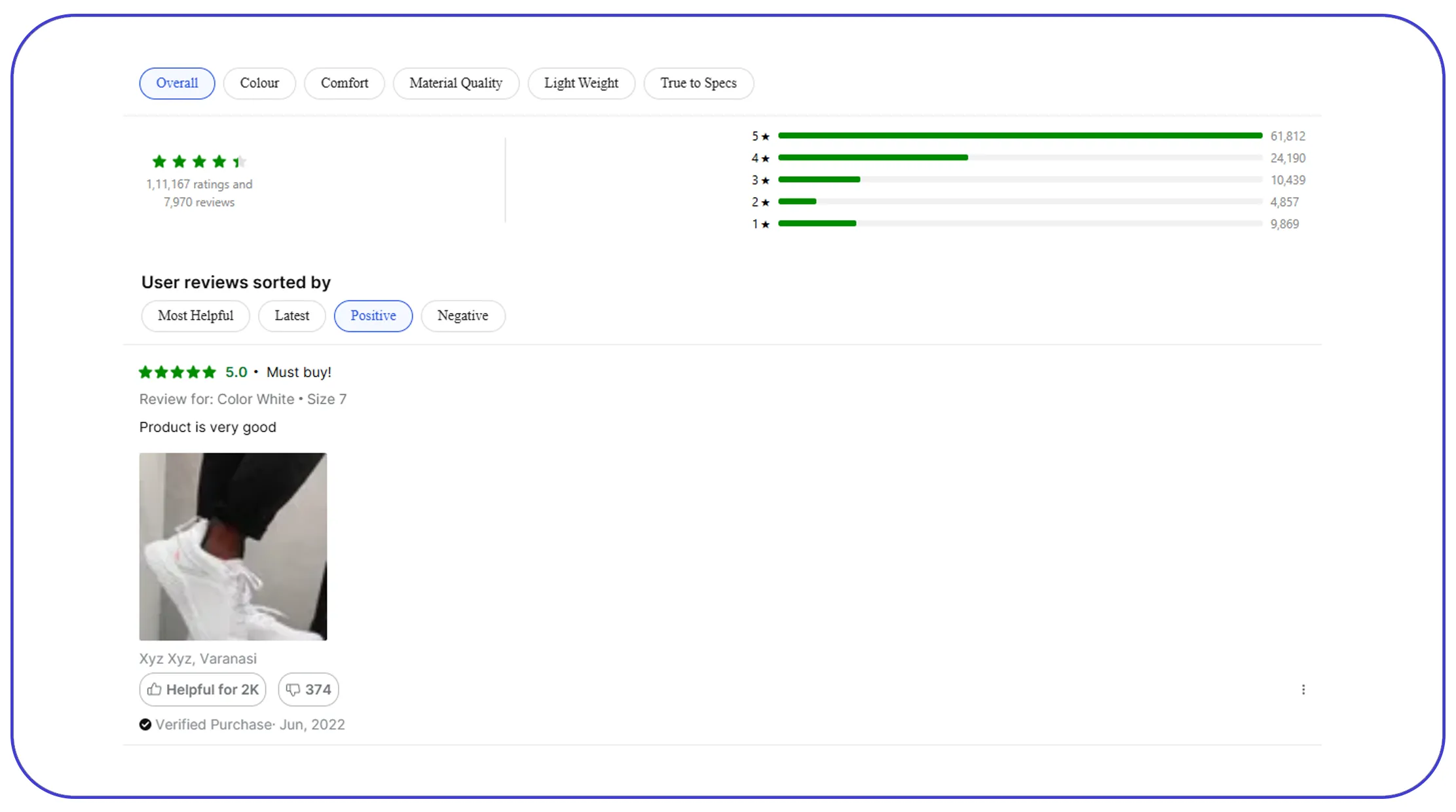
A Flipkart Scraping API can connect product and review data with internal applications, dashboards, databases, and analytics systems. Businesses can use structured outputs to automate recurring data workflows.
When teams Extract Flipkart product review data for brand analysis, an API-based approach can make it easier to deliver structured records into existing systems.
A typical architecture may include:
- Data collection.
- Data validation.
- Data normalization.
- Historical storage.
- Sentiment processing.
- Dashboard integration.
- Automated reporting.
An API can be especially useful for businesses that need regular updates.
Instead of manually downloading new review records, applications can consume structured data according to defined requirements.
| Year | Illustrative Records | Integration Model |
|---|---|---|
| 2020 | 50K | Manual files |
| 2021 | 100K | Scheduled exports |
| 2022 | 250K | Database integration |
| 2023 | 500K | API workflows |
| 2024 | 1M | Automated dashboards |
| 2025 | 2M | Scalable pipelines |
| 2026 | 5M+ | Enterprise workflows |
These figures are hypothetical.
API workflows also support faster analysis.
A brand can feed new review records into a sentiment model. It can then update a dashboard automatically.
For example, the dashboard could display:
- Current average rating.
- Rating change.
- Positive sentiment percentage.
- Negative sentiment percentage.
- Most common complaints.
- Most praised features.
- Competitor sentiment.
- Review volume growth.
This turns review collection into a continuous intelligence workflow.
Businesses should also define their data schema before implementation.
A clear schema prevents inconsistent records and makes downstream analysis easier.
Scalability matters as well.
A workflow that handles 10,000 reviews per month may need significant changes when the volume reaches millions.
A scalable architecture should therefore support increased products, competitors, review volume, and collection frequency.
How Can a Review Scraper Improve Product Monitoring?
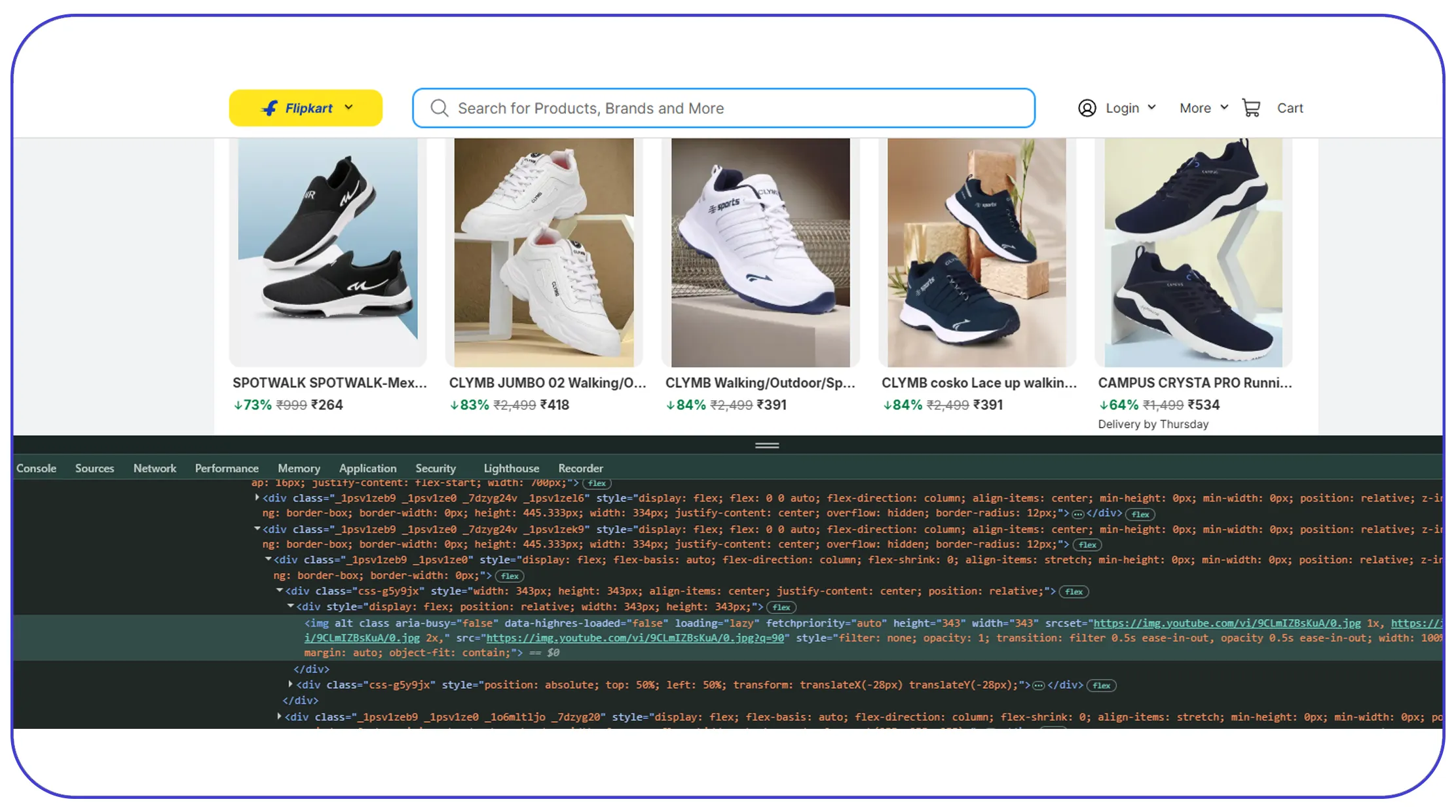
A Flipkart Reviews Scraper can help brands monitor customer feedback across multiple products and time periods.
Product monitoring is useful after launch.
A new product may initially receive feedback about packaging, setup, performance, or product quality. As more customers use it, new issues may appear.
Continuous review monitoring helps product teams identify these patterns.
A review monitoring system can track:
- Rating changes.
- Review volume.
- Sentiment changes.
- Complaint frequency.
- Feature mentions.
- Competitor comparisons.
- Product-specific issues.
| Year | Illustrative Products | Reviews Monitored | Monitoring Objective |
|---|---|---|---|
| 2020 | 500 | 50K | Product feedback |
| 2021 | 1,000 | 100K | Rating tracking |
| 2022 | 2,000 | 220K | Complaint detection |
| 2023 | 3,500 | 400K | Product benchmarking |
| 2024 | 6,000 | 700K | Brand monitoring |
| 2025 | 10,000 | 1.2M | Automated insights |
| 2026 | 15,000+ | 2M+ | Continuous monitoring |
These values are illustrative.
Brands can create alerts for specific conditions.
For example:
Alert when negative review share increases by 10%.
Or:
Alert when average product rating falls below 4.0.
Or:
Alert when complaints about a specific feature increase significantly.
These alerts can reduce the time between customer feedback and business response.
Product teams can investigate the issue. Marketing teams can adjust messaging. Customer support teams can prepare responses.
The dataset can also support product comparisons.
Suppose two competing products have similar prices. One has more complaints about battery performance while the other has complaints about packaging.
The brand can use these differences to refine its product positioning.
Historical review monitoring is especially valuable.
It shows whether changes actually improve customer perception.
For example, if a product receives repeated complaints about durability and the manufacturer changes its materials, the business can track whether durability-related complaints decrease afterward.
This turns customer feedback into measurable product intelligence.
How Can Sentiment Analysis Turn Reviews Into Actionable Insights?
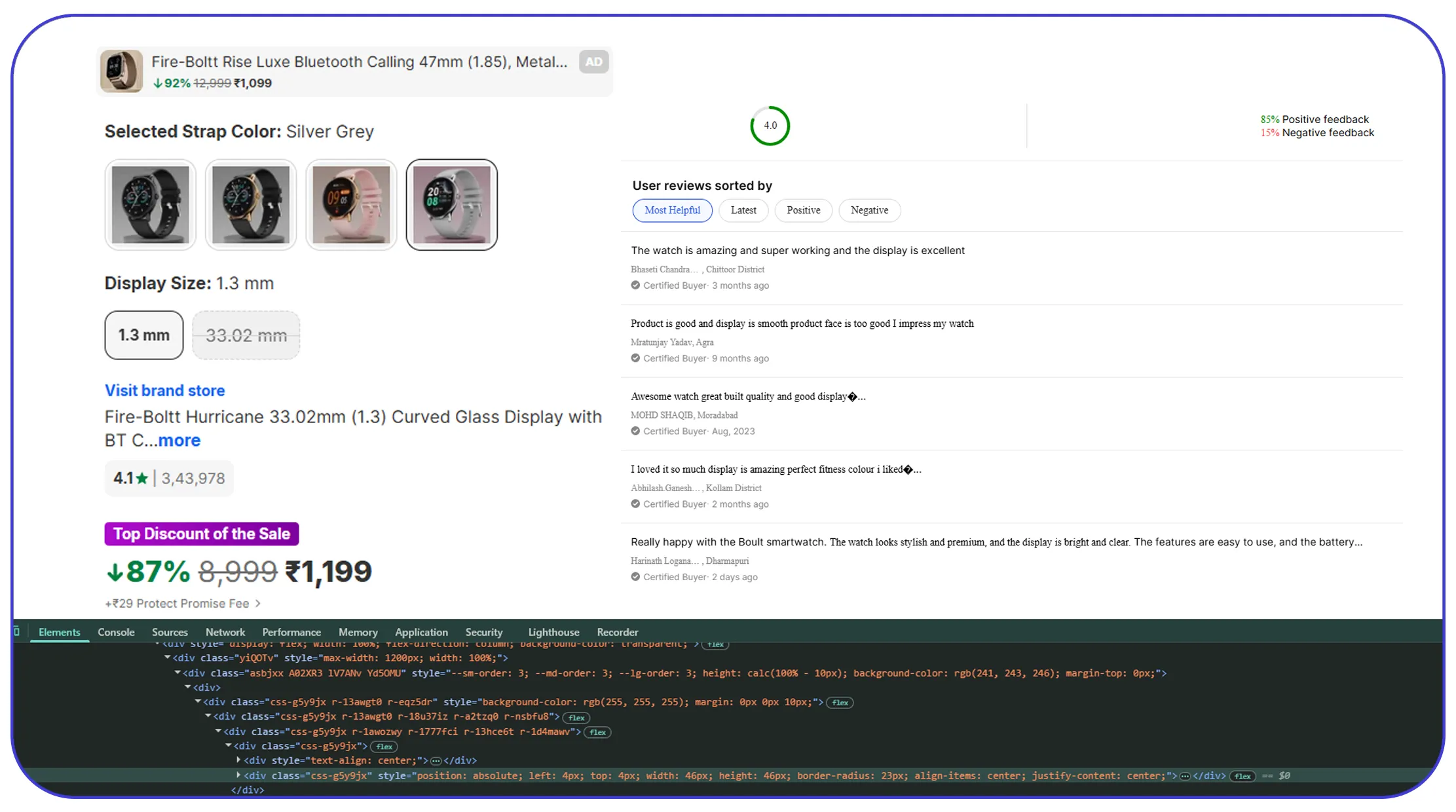
Sentiment Analysis can transform large volumes of review text into structured signals.
Reading every review manually is difficult at scale. Sentiment models can classify text into categories such as positive, neutral, and negative.
However, sentiment alone is not enough.
Brands should also use topic analysis.
For example, a review could be positive overall but complain about delivery. Another review could be negative because of product quality.
A topic-based model can identify these differences.
Useful categories include:
- Product quality.
- Price.
- Design.
- Performance.
- Durability.
- Packaging.
- Delivery.
- Usability.
- Customer service.
- Features.
| Year | Illustrative Reviews | Sentiment Analysis | Topic Analysis |
|---|---|---|---|
| 2020 | 100K | Basic | Limited |
| 2021 | 180K | Positive/negative | Basic |
| 2022 | 300K | Multi-class | Growing |
| 2023 | 500K | Automated | Detailed |
| 2024 | 800K | Advanced | Product-level |
| 2025 | 1.3M | Continuous | Competitor-level |
| 2026 | 2M+ | Automated | Real-time intelligence |
These figures are illustrative.
A brand can calculate sentiment by product.
For example:
Positive Sentiment Rate = Positive Reviews ÷ Total Analyzed Reviews × 100
The same calculation can be applied to categories, brands, or time periods.
Businesses can also measure sentiment changes.
If negative sentiment rises from 12% to 20%, the increase deserves investigation.
The next step is to identify the reason.
If most negative comments mention one feature, the product team has a clear starting point.
Sentiment analysis can also support competitive benchmarking.
Brands can compare sentiment across similar products.
However, automated sentiment models should be validated. Sarcasm, mixed opinions, regional language, and context can affect classification accuracy.
Human review remains useful for important findings.
The strongest workflow combines automation with quality checks.
When structured review data, ratings, product information, and sentiment are analyzed together, businesses gain a much clearer understanding of customer perception.
Why Choose Real Data API?
Real Data API helps businesses transform online product and customer feedback into structured datasets for analytics and business intelligence. Extract Flipkart product review data for brand analysis can support sentiment tracking, product benchmarking, competitive research, and customer experience analysis.
A scalable review intelligence workflow can help teams:
- Collect structured review records.
- Monitor ratings over time.
- Analyze customer sentiment.
- Identify recurring complaints.
- Track competitor feedback.
- Build historical datasets.
- Integrate data with analytics systems.
The goal is not simply to collect more reviews.
The goal is to make customer feedback easier to analyze and connect it to business decisions.
Brands can use structured insights to improve products, refine positioning, identify customer pain points, and understand competitive strengths.
A well-designed workflow also reduces repetitive manual research.
Conclusion
Customer reviews provide direct insight into how buyers experience products. Ratings show satisfaction. Review text reveals reasons. Review volume shows engagement. Historical analysis reveals changes.
Extract Flipkart product review data for brand analysis can help brands combine these signals into a structured intelligence workflow.
Businesses can use review data for sentiment analysis, product improvement, competitor benchmarking, reputation monitoring, customer experience research, and marketing strategy.
The best approach starts with a clear business objective. Define the products and competitors. Select the required review fields. Establish a collection schedule. Store historical records. Then apply sentiment and topic analysis.
Businesses should also follow applicable laws, privacy requirements, platform terms, and data-access permissions when collecting and processing review information.
Contact Real Data API today to discuss your product review data requirements and build a scalable solution for customer sentiment, competitive intelligence, and brand analysis!
Latest posts
Extract Flipkart Product Review Data For Brand Analysis - How To Track Customer Sentiment, Ratings, And Product Performance?
How To Track Prices, Products, And Consumer Demand When Scrape China's Social Commerce Market Using Pinduoduo Data?
How to Track Ratings, Prices, and Consumer Preferences When Scrape CellarTracker wine data to identify wine trends?
How to Scrape DAZN streaming data for sports viewing trends to Identify Popular Sports, Events, and Viewer Preferences?







.png)