Introduction
Businesses can improve real-time price monitoring and inventory intelligence by extract grocery product and price data from Mathem API. Automated data collection provides accurate product, pricing, and availability insights, helping retailers, brands, and market analysts make faster, data-driven decisions while reducing manual effort.
Industry Insight: According to industry estimates, over 75% of grocery retailers are expected to invest in automated pricing and inventory intelligence platforms by 2026 as competition in online grocery shopping continues to accelerate.
If you are a grocery retailer, FMCG brand, pricing analyst, or market research company looking to solve the challenge of delayed pricing updates and inventory visibility, automated grocery data extraction offers a scalable solution. The MatHem Quick Commerce Scraping API enables organizations to access structured grocery product information, promotional pricing, stock availability, product categories, and assortment updates from publicly available listings. Instead of manually collecting thousands of product records every day, businesses can automate data collection and integrate real-time insights into pricing dashboards, business intelligence platforms, and forecasting systems. This results in faster competitive analysis, better inventory planning, and improved customer experiences while supporting smarter retail strategies.
How Can Businesses Build Accurate Product Catalog Intelligence?
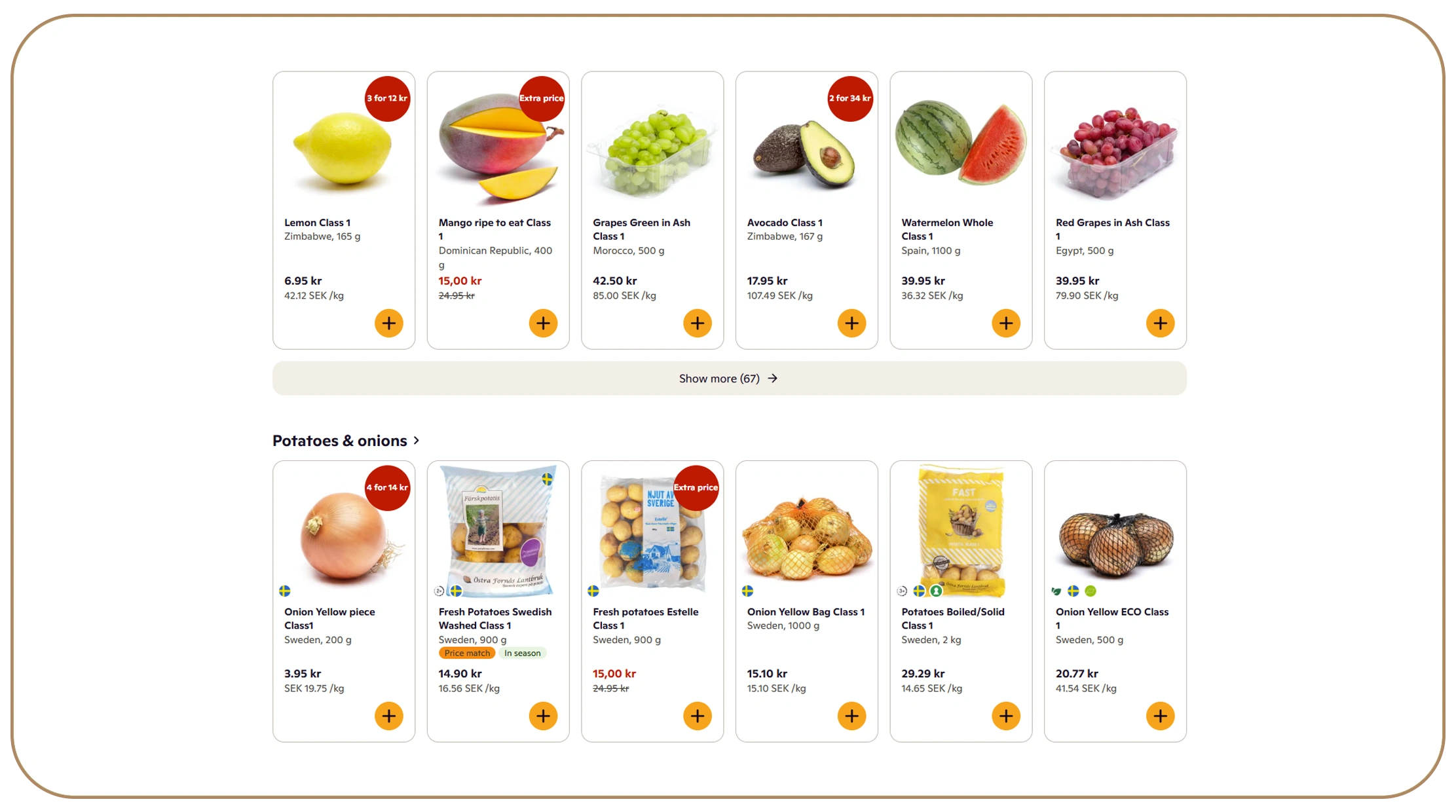
Maintaining an accurate and up-to-date grocery product catalog is essential for retailers competing in today's digital marketplace. Product assortments, prices, package sizes, and promotional offers change frequently, making manual monitoring inefficient and prone to errors. Automated data collection helps organizations maintain consistent visibility into product information while improving operational efficiency.
One effective solution is to scrape grocery product listings using Mathem API. This approach enables businesses to automatically collect publicly available product names, brands, categories, package sizes, nutritional information, prices, promotional labels, images, and availability. Structured product data allows retailers and brands to compare assortments, evaluate category performance, and identify newly launched products without manual effort.
For grocery retailers and consumer packaged goods (CPG) manufacturers, automated catalog intelligence supports better merchandising decisions and improves shelf visibility across digital channels. Pricing analysts can identify promotional trends, while market researchers gain insights into changing consumer preferences and competitive positioning.
Key Benefits
- Improve product catalog accuracy
- Monitor new product launches
- Track pricing and promotions
- Compare competitor assortments
- Reduce manual data collection
- Support inventory planning
Grocery Product Catalog Trends (2020-2026)
| Year | Average Online Grocery Products Tracked | Businesses Using Automated Catalog Monitoring |
|---|---|---|
| 2020 | 32,000 | 41% |
| 2021 | 39,000 | 48% |
| 2022 | 47,000 | 56% |
| 2023 | 58,000 | 65% |
| 2024 | 70,000 | 73% |
| 2025* | 84,000 | 80% |
| 2026* | 98,000 | 87% |
*Projected industry estimates.
Accurate product catalog intelligence also enables AI-powered recommendation engines, category optimization, and assortment planning. Historical product records allow analysts to identify seasonal demand patterns, evaluate pricing strategies, and improve procurement decisions. As online grocery marketplaces continue expanding, automated catalog monitoring becomes an essential capability for organizations seeking reliable retail intelligence and sustainable competitive advantage.
Why Is Competitive Retail Intelligence Critical for Grocery Businesses?
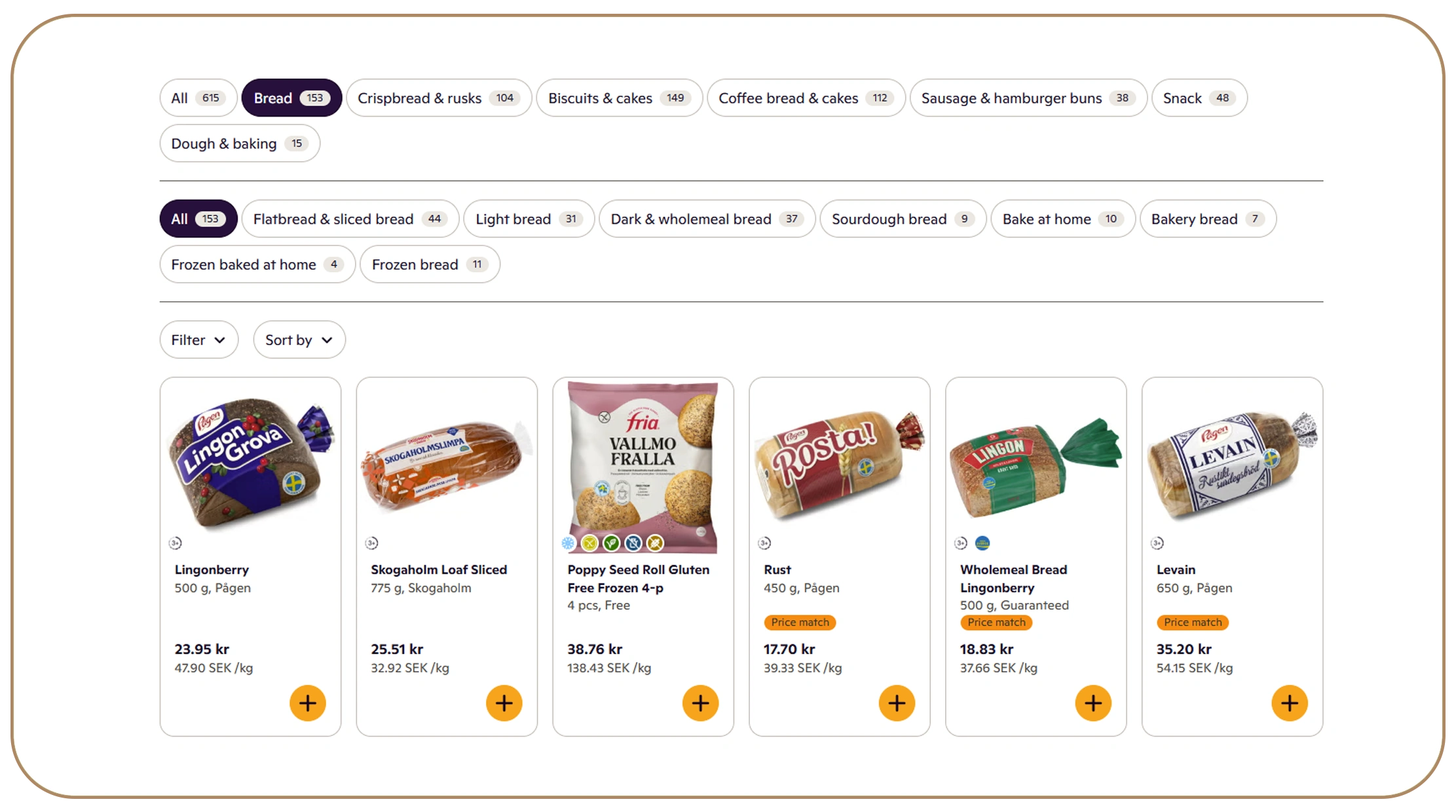
Retail competition has become increasingly dynamic as grocery platforms update prices, promotions, and product availability multiple times throughout the day. Businesses that rely on outdated information risk losing customers, reducing profitability, and making ineffective pricing decisions. Access to timely market intelligence enables organizations to respond quickly to changing conditions and maintain a competitive position.
Many retailers now depend on web scraping Mathem Supermarket product data intelligence to collect structured information from publicly available grocery listings. Automated data collection provides continuous visibility into product pricing, discount campaigns, inventory changes, brand assortment, and category performance. Instead of manually reviewing thousands of listings, businesses receive organized datasets that support strategic planning and operational efficiency.
Competitive retail intelligence supports several business functions, including:
- Dynamic pricing optimization
- Competitor price comparison
- Promotion monitoring
- Product assortment benchmarking
- Category performance analysis
- Demand forecasting
- Supplier negotiations
- Consumer trend analysis
Grocery Retail Intelligence Adoption (2020-2026)
| Year | Retailers Using Competitive Intelligence | Estimated Grocery Analytics Market |
|---|---|---|
| 2020 | 38% | $2.9 Billion |
| 2021 | 46% | $3.6 Billion |
| 2022 | 55% | $4.4 Billion |
| 2023 | 64% | $5.5 Billion |
| 2024 | 72% | $6.8 Billion |
| 2025* | 80% | $8.2 Billion |
| 2026* | 87% | $9.9 Billion |
*Projected industry estimates.
Modern retail intelligence also helps businesses identify regional pricing differences, monitor private-label competition, evaluate promotional effectiveness, and improve inventory planning. By integrating structured grocery data into business intelligence dashboards, retailers and brands gain faster access to actionable insights that improve decision-making across pricing, merchandising, procurement, and customer engagement. Continuous monitoring allows organizations to stay ahead of competitors while delivering greater value to consumers in an increasingly competitive grocery market.
How Can Retailers Monitor Grocery Catalog Changes More Efficiently?
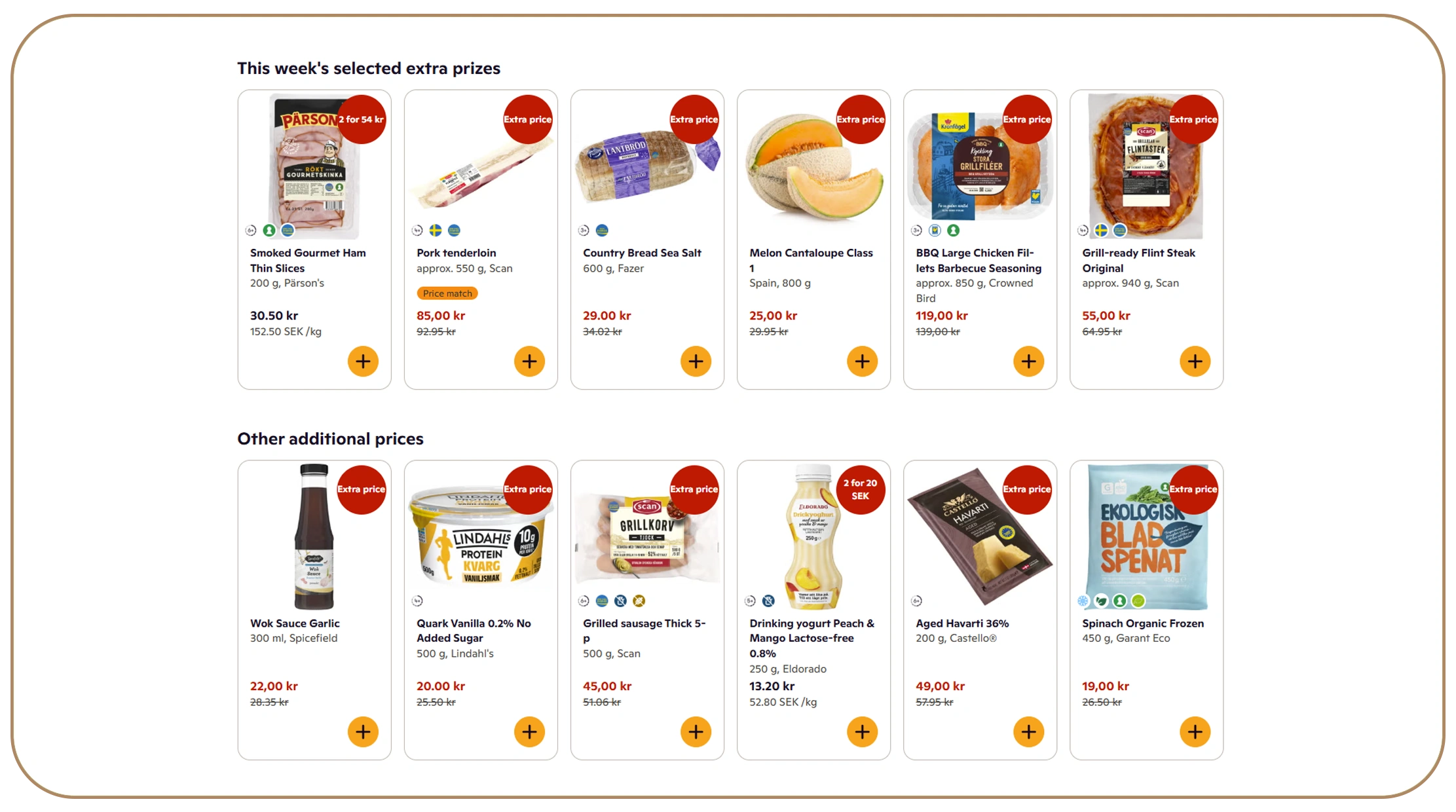
Grocery catalogs change constantly as retailers introduce new products, update prices, launch promotions, and adjust inventory levels. Monitoring these changes manually is time-consuming and often leads to outdated insights. Automated data extraction enables businesses to capture product updates in near real time, ensuring they always have accurate information for pricing, merchandising, and competitive analysis.
An effective solution is using a Mathem Grocery catalog product data scraper to collect publicly available product information automatically. The scraper gathers details such as product names, brands, SKUs, package sizes, categories, nutritional information, regular prices, discounted prices, stock availability, and promotional labels. This structured information helps retailers maintain an up-to-date product catalog while supporting faster business decisions.
For category managers, continuous catalog monitoring reveals assortment changes and identifies new or discontinued products. Pricing teams can compare products across categories, while suppliers can analyze product placement and promotional frequency. Market researchers also benefit from historical product records that reveal seasonal buying patterns and consumer demand trends.
Business Advantages
- Detect new product launches quickly
- Track assortment expansion
- Monitor price and promotion updates
- Analyze category performance
- Improve supplier collaboration
- Support merchandising strategies
Grocery Catalog Monitoring Statistics (2020-2026)
| Year | Products Updated Daily | Retailers Using Automated Catalog Monitoring |
|---|---|---|
| 2020 | 12,000 | 40% |
| 2021 | 16,000 | 47% |
| 2022 | 21,000 | 55% |
| 2023 | 28,000 | 64% |
| 2024 | 36,000 | 72% |
| 2025* | 46,000 | 80% |
| 2026* | 58,000 | 87% |
*Projected industry estimates.
Historical catalog data also enables predictive analytics by revealing long-term pricing trends, assortment growth, and promotional cycles. Businesses can identify high-performing product categories, anticipate seasonal demand, and improve inventory planning. As online grocery shopping continues to expand, automated catalog monitoring provides the reliable data foundation needed for smarter retail strategies and better customer experiences.
Why Does High-Quality Grocery Data Improve Business Intelligence?
Reliable business intelligence depends on accurate, structured, and consistent data. Grocery retailers generate massive amounts of product information every day, making organized datasets essential for meaningful analysis. Instead of processing scattered records manually, businesses use centralized datasets to monitor pricing, inventory, promotions, and assortment performance across thousands of products.
A comprehensive Grocery Dataset typically includes product names, categories, brands, package sizes, nutritional information, regular prices, promotional prices, stock status, images, timestamps, and product identifiers. Organizing this information into structured formats allows organizations to build dashboards, generate reports, and train AI models for forecasting and recommendation systems.
Retailers, brands, and research organizations use grocery datasets for:
- Dynamic pricing analysis
- Market trend identification
- Consumer demand forecasting
- Inventory optimization
- Promotion effectiveness measurement
- Category management
- Competitive benchmarking
- AI and machine learning applications
Growth of Grocery Data Analytics (2020-2026)
| Year | Structured Grocery Records Processed | Enterprise Adoption |
|---|---|---|
| 2020 | 14 Billion | 43% |
| 2021 | 18 Billion | 50% |
| 2022 | 24 Billion | 58% |
| 2023 | 31 Billion | 66% |
| 2024 | 40 Billion | 74% |
| 2025* | 51 Billion | 82% |
| 2026* | 65 Billion | 89% |
*Projected industry estimates.
Structured datasets improve collaboration across pricing, merchandising, procurement, and marketing teams by providing a single source of reliable information. Organizations can combine grocery data with sales, customer, and inventory systems to gain a comprehensive view of retail performance. This enables executives to make faster, evidence-based decisions while improving operational efficiency and customer satisfaction. As grocery retail becomes increasingly data-driven, maintaining high-quality datasets is essential for achieving long-term competitive advantage and supporting scalable business growth.
What Business Problems Can Grocery Data APIs Solve?
Businesses need accurate grocery data to respond quickly to changing prices, promotions, and consumer demand. Manual data collection is slow and often results in incomplete or outdated information. Automated grocery APIs solve this challenge by collecting structured data continuously, allowing retailers and brands to make faster and more informed decisions.
Many organizations evaluate the Top Grocery Scraping API Use Cases before implementing a retail intelligence strategy. These APIs provide consistent access to publicly available grocery product information, enabling companies to automate repetitive tasks while improving the quality of business insights.
Common applications include:
- Real-time competitor price monitoring
- Product assortment comparison
- Promotion and discount tracking
- Inventory intelligence
- Category performance analysis
- Consumer trend monitoring
- Demand forecasting
- Brand visibility measurement
- Supplier benchmarking
- Market research and analytics
Businesses also integrate grocery APIs with ERP systems, CRM platforms, pricing engines, and business intelligence tools. This creates a centralized ecosystem where pricing teams, merchandising managers, procurement specialists, and executives work from the same reliable data.
Grocery API Adoption (2020-2026)
| Year | Retailers Using Grocery APIs | Estimated Retail Data Market |
|---|---|---|
| 2020 | 35% | $2.7 Billion |
| 2021 | 43% | $3.4 Billion |
| 2022 | 52% | $4.3 Billion |
| 2023 | 61% | $5.5 Billion |
| 2024 | 70% | $6.9 Billion |
| 2025* | 79% | $8.4 Billion |
| 2026* | 86% | $10.1 Billion |
*Projected industry estimates.
As grocery retailers continue investing in digital transformation, automated APIs become increasingly valuable for improving operational efficiency and supporting AI-powered analytics. Organizations gain deeper visibility into pricing trends, assortment changes, and customer preferences, enabling proactive decision-making instead of reactive responses. Reliable grocery APIs reduce manual effort, improve reporting accuracy, and create a strong foundation for long-term retail growth.
How Can Businesses Visualize Grocery Operations More Effectively?

Collecting grocery data is only the first step. Businesses also need intuitive dashboards that transform raw information into meaningful insights. Interactive reporting platforms allow decision-makers to monitor pricing, promotions, inventory levels, and assortment changes from a single interface, making it easier to identify trends and respond quickly to market shifts.
A well-designed Grocery Delivery Dashboard combines real-time product information with historical analytics to provide complete visibility across grocery operations. Pricing managers can compare competitors, inventory planners can monitor stock movements, and executives can evaluate key performance indicators through customized reports.
Modern dashboards typically include:
- Real-time pricing updates
- Inventory availability tracking
- Promotion monitoring
- Category performance analytics
- Product assortment comparisons
- Geographic pricing insights
- Demand forecasting metrics
- Executive KPI reporting
Interactive dashboards also simplify collaboration between pricing, merchandising, procurement, and marketing teams. Instead of working with disconnected spreadsheets, every department accesses the same centralized source of information, improving accuracy and operational efficiency.
Dashboard Adoption Trends (2020-2026)
| Year | Retailers Using Grocery Dashboards | Average Reporting Time Saved |
|---|---|---|
| 2020 | 39% | 8 Hours/Week |
| 2021 | 47% | 11 Hours/Week |
| 2022 | 56% | 15 Hours/Week |
| 2023 | 65% | 19 Hours/Week |
| 2024 | 73% | 23 Hours/Week |
| 2025* | 81% | 28 Hours/Week |
| 2026* | 88% | 34 Hours/Week |
*Projected industry estimates.
By combining automated data collection with intelligent dashboards, businesses gain continuous visibility into grocery market performance. Teams can identify pricing opportunities, evaluate promotional campaigns, forecast inventory requirements, and improve customer experiences with confidence. As the grocery industry becomes more data-centric, dashboard-driven analytics will continue to play a critical role in supporting faster decisions, stronger competitiveness, and sustainable business growth.
Why Choose Real Data API?
Businesses need more than raw grocery data—they need accurate, scalable, and actionable intelligence that supports strategic decision-making. Real Data API helps retailers, CPG brands, pricing analysts, market research firms, and quick commerce platforms extract grocery product and price data from Mathem API efficiently through automated, enterprise-grade data solutions. Our APIs collect publicly available grocery product information, pricing, promotions, inventory status, category updates, and assortment changes in structured formats that integrate seamlessly with analytics platforms and business intelligence tools.
Our scalable infrastructure is designed to support high-volume data collection with reliable performance and flexible delivery options, including JSON, CSV, and custom formats. Whether your goal is competitive price monitoring, inventory optimization, demand forecasting, or assortment analysis, Real Data API delivers fresh and dependable grocery data that enables faster and smarter business decisions.
Why Businesses Choose Real Data API
- Enterprise-grade grocery data collection
- Real-time product and pricing updates
- Structured and high-quality datasets
- Flexible API integration and custom workflows
- Scalable cloud-based infrastructure
- Reliable data delivery and technical support
- Solutions tailored for retail analytics and AI applications
With Real Data API, businesses reduce manual effort, improve pricing accuracy, strengthen competitive intelligence, and gain the insights needed to stay ahead in the rapidly evolving grocery retail market.
Conclusion
Modern grocery retail demands accurate, real-time visibility into product catalogs, prices, promotions, and inventory. Businesses that extract grocery product and price data from Mathem API can automate data collection, improve competitive intelligence, and make faster, data-driven decisions. From monitoring pricing strategies to optimizing inventory planning and analyzing market trends, structured grocery data provides the foundation for smarter retail operations and sustainable growth.
As online grocery shopping continues to expand, investing in automated data solutions helps organizations improve operational efficiency, enhance customer experiences, and respond proactively to changing market conditions. Real Data API empowers businesses with scalable grocery data services that transform publicly available information into meaningful business intelligence.
Ready to strengthen your grocery analytics and retail intelligence? Contact Real Data API today to extract grocery product and price data from Mathem API and unlock real-time pricing, inventory, and product insights that drive smarter decisions and long-term business success!
Latest posts
How to Scrape Public Posts and Trends Using Truth Social API to Overcome Real-Time Social Media Monitoring Challenges?
Scrape grocery prices using Biedronka API to Overcome Grocery Pricing, Promotion Tracking, and Market Analysis Challenges
Why Businesses scrape Rozetka product listings data via API to Track Inventory, Pricing, and Marketplace Trends?
How to Scrape TikTok creator profile data using RetrieveTik API for Influencer Analytics and Marketing Intelligence?







.png)