Introduction
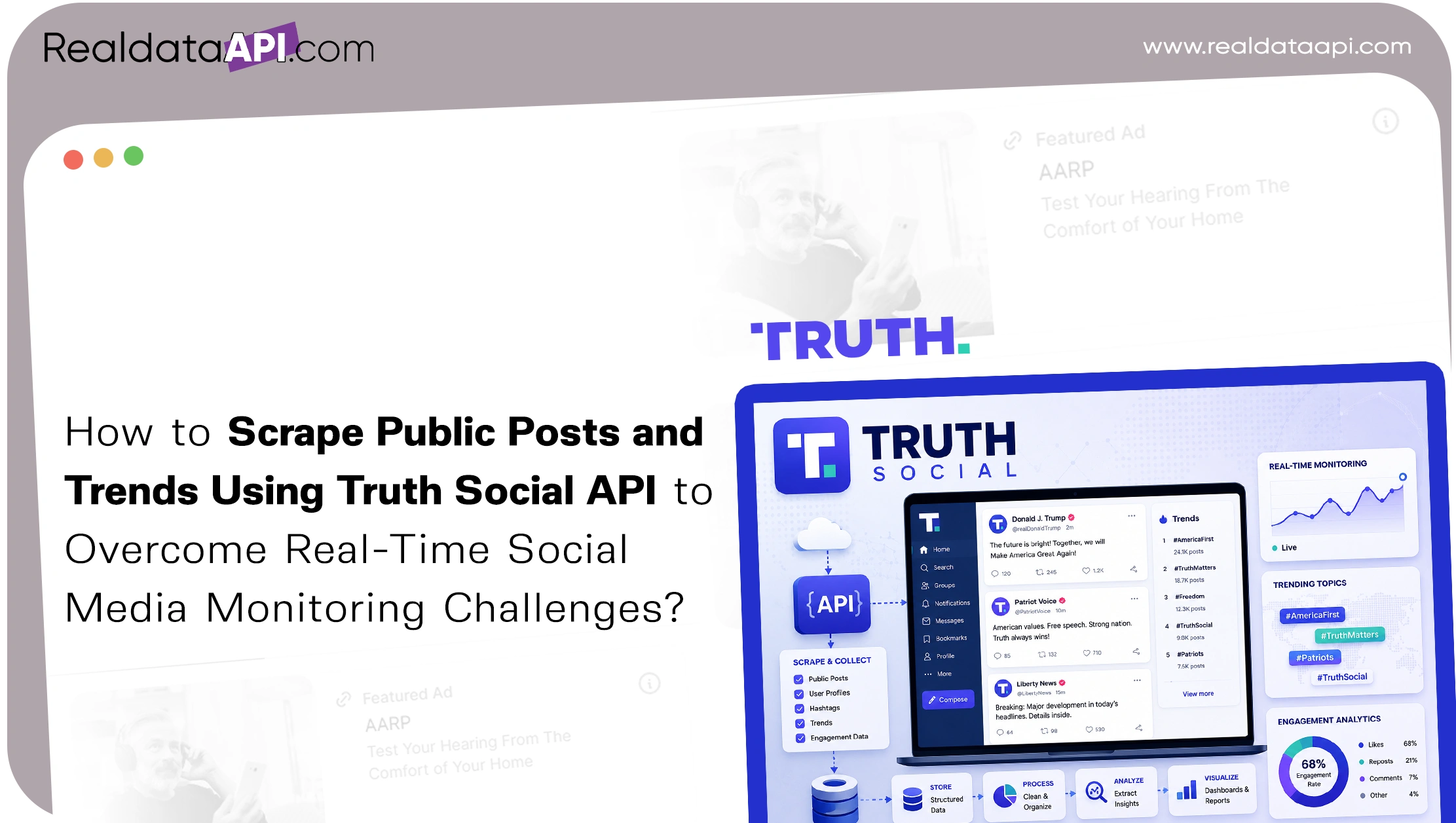
Businesses need real-time social media insights to make faster and smarter decisions. The best way to achieve this is to Scrape public posts and trends using Truth Social API for timely access to public conversations, engagement metrics, and trending topics. Using the Truth Social API, organizations can automate data collection, monitor brand reputation, identify emerging trends, and improve competitive intelligence without relying on manual tracking.
Industry Insight: According to Statista, global social media users surpassed 5 billion in 2024 and are projected to continue growing through 2026. Organizations increasingly rely on automated data collection to monitor conversations, detect trends, and make data-driven decisions across multiple platforms.
Whether you are a marketing agency, media intelligence provider, political analyst, financial researcher, or enterprise brand, real-time access to public social conversations enables faster decision-making. Instead of manually reviewing thousands of posts every day, automated APIs transform public social content into structured datasets for dashboards, sentiment analysis, campaign optimization, and predictive analytics.
The following guide explains how organizations can build scalable social media monitoring solutions while leveraging public data responsibly for business intelligence, trend forecasting, and competitive research.
How Can Businesses Measure Public Engagement More Effectively?
Organizations generate thousands of customer interactions every minute across social platforms. Measuring those interactions accurately helps businesses understand audience interests, campaign performance, and public perception. Modern APIs simplify this process by collecting engagement data continuously instead of relying on manual observation.
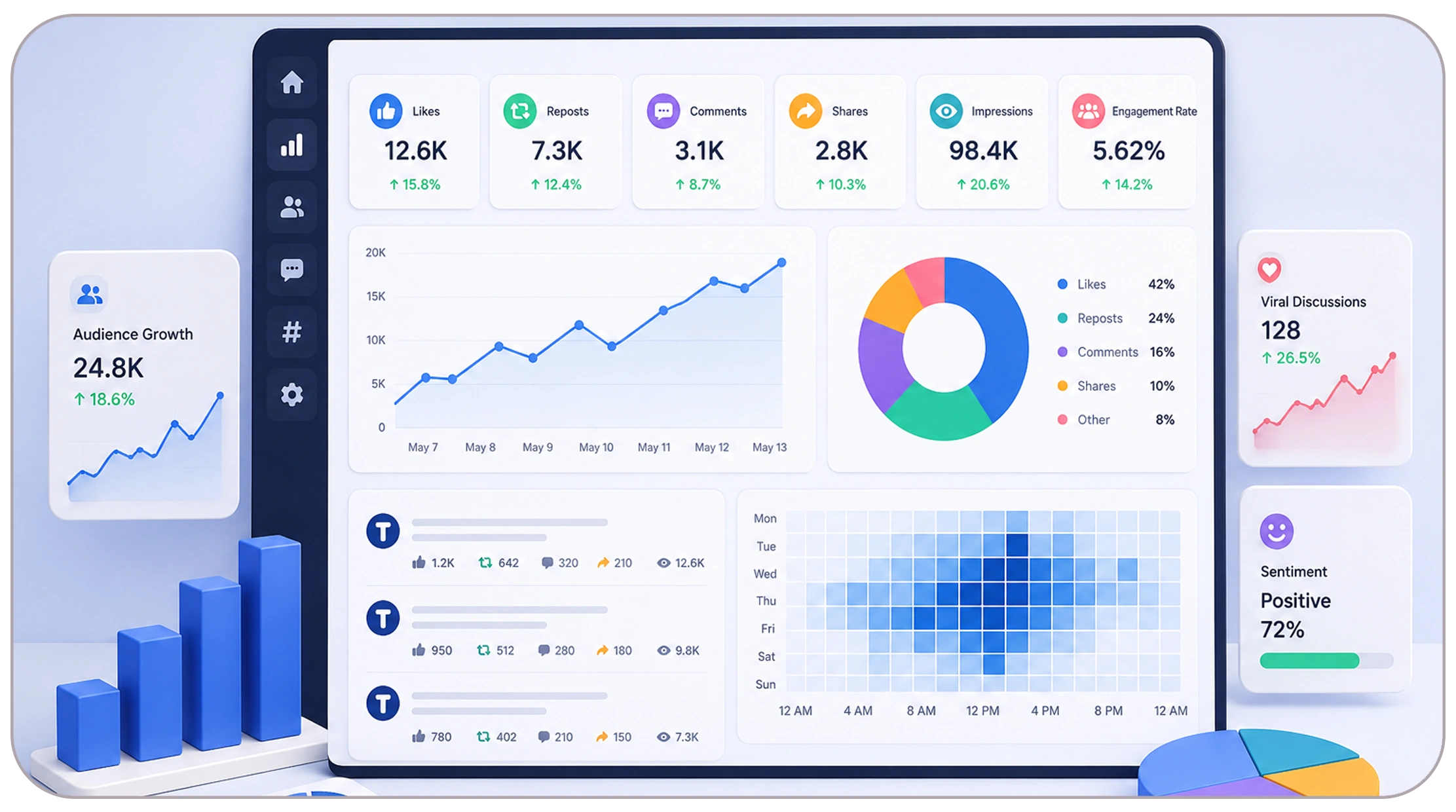
One of the most valuable capabilities is to Extract engagement metrics on public Truth Social posts. Engagement metrics such as likes, reposts, comments, shares, impressions, and interaction rates provide measurable indicators of how audiences respond to specific topics or brands. These metrics help marketing teams evaluate campaign success and identify high-performing content.
Businesses also compare engagement across different time periods to identify seasonal patterns and emerging public interests.
Benefits of Engagement Analytics
- Measure campaign effectiveness
- Track audience growth
- Identify viral discussions
- Monitor public sentiment shifts
- Benchmark competitors
- Improve content strategies
Industry Statistics (2020-2026)
| Year | Organizations Using Social Analytics | Average Engagement Data Processed Daily |
|---|---|---|
| 2020 | 45% | 1.8 Million Events |
| 2021 | 52% | 2.6 Million Events |
| 2022 | 60% | 3.7 Million Events |
| 2023 | 68% | 5.2 Million Events |
| 2024 | 74% | 6.9 Million Events |
| 2025* | 80% | 8.4 Million Events |
| 2026* | 86% | 10+ Million Events |
*Projected industry estimates.
Engagement data also enables machine learning models to predict which topics are gaining traction before they become mainstream. Retailers can monitor product discussions, financial institutions can observe market sentiment, media companies can identify breaking conversations, and public sector organizations can evaluate citizen engagement.
Instead of reacting after trends emerge, businesses can act proactively by integrating engagement analytics into operational dashboards. This improves campaign planning, customer outreach, and executive reporting while supporting faster business decisions.
Why Is Real-Time Intelligence Essential for Competitive Decision-Making?
Markets change every hour. Consumer preferences evolve rapidly, and public conversations often influence purchasing decisions, political discussions, and brand perception. Organizations that capture these changes early gain a competitive advantage.
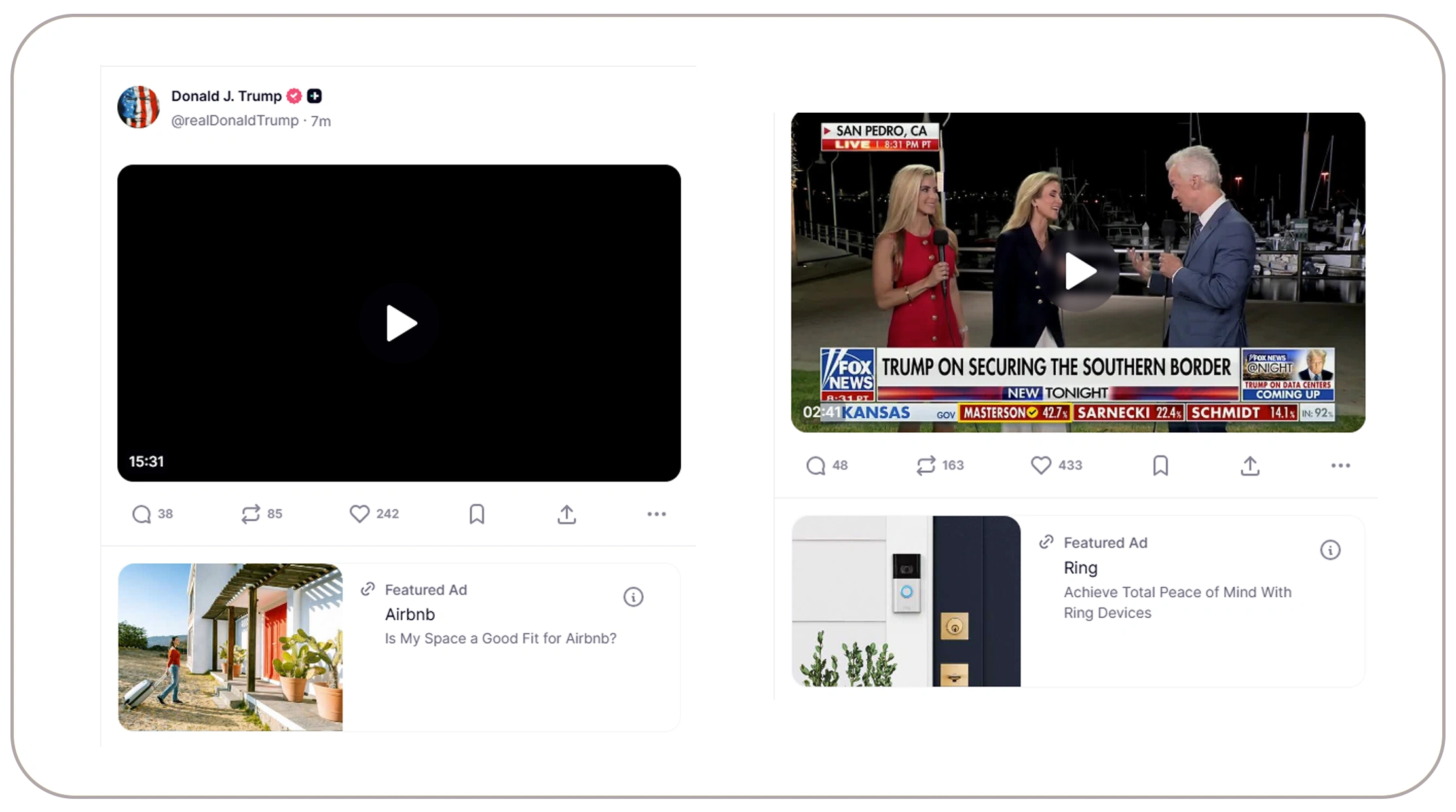
Modern enterprises increasingly rely on Social media intelligence using Truth Social API to monitor conversations as they happen. Automated intelligence platforms collect public discussions, identify trending keywords, detect influential accounts, and organize large volumes of social data into actionable insights.
Rather than reviewing posts manually, organizations receive structured information that integrates with business intelligence tools, CRM platforms, and predictive analytics systems.
Key Business Applications
- Brand reputation monitoring
- Competitor benchmarking
- Crisis detection
- Market research
- Political campaign analysis
- Consumer behavior analysis
- Investment research
- Trend forecasting
Social Intelligence Adoption (2020-2026)
| Year | Businesses Using Social Intelligence | Estimated Annual Market Value |
|---|---|---|
| 2020 | 39% | $3.8 Billion |
| 2021 | 46% | $4.6 Billion |
| 2022 | 54% | $5.7 Billion |
| 2023 | 63% | $6.9 Billion |
| 2024 | 71% | $8.4 Billion |
| 2025* | 78% | $9.8 Billion |
| 2026* | 84% | $11.6 Billion |
*Projected industry estimates.
Social intelligence platforms also help organizations identify misinformation, monitor campaign performance, and understand audience reactions to products or public announcements. Analysts can compare engagement across industries, regions, and time periods to uncover valuable business opportunities.
For marketing teams, these insights support better audience segmentation and personalized campaigns. Financial analysts can observe discussions that may influence investment sentiment. Government agencies can monitor public communication trends during emergencies. Researchers can analyze evolving online conversations to support academic or policy studies.
By transforming public social activity into structured intelligence, organizations improve decision-making, reduce response times, and gain deeper visibility into changing market dynamics. Continuous monitoring ensures businesses remain informed, agile, and prepared to respond to emerging opportunities before competitors do.
How Can Organizations Capture Live Conversations Without Missing Critical Updates?

Real-time social monitoring helps organizations react quickly to breaking news, customer feedback, and emerging market trends. Instead of collecting information hours or days later, businesses benefit from continuous access to public conversations as they happen. This allows analysts to identify opportunities, respond to issues faster, and make informed decisions based on current discussions.
One of the most effective ways to achieve this is through Web scraping Truth Social posts in real time. Automated collection systems continuously gather publicly available posts, hashtags, keywords, profile activity, timestamps, and engagement signals. The collected information can then be processed into dashboards, reports, alerts, and AI-driven analytics.
Real-time collection supports numerous industries, including:
- Brand reputation management
- Financial market research
- Political campaign monitoring
- Media and journalism
- Public sentiment analysis
- Crisis communication
- Consumer behavior research
- Competitive intelligence
Organizations can configure monitoring systems to track specific keywords, public figures, industries, or geographic regions. Instead of reviewing thousands of posts manually, intelligent automation highlights the most relevant conversations and trending topics.
Real-Time Monitoring Growth (2020-2026)
| Year | Businesses Using Real-Time Monitoring | Average Data Refresh Time |
|---|---|---|
| 2020 | 37% | Every 60 Minutes |
| 2021 | 45% | Every 30 Minutes |
| 2022 | 54% | Every 15 Minutes |
| 2023 | 63% | Every 10 Minutes |
| 2024 | 71% | Every 5 Minutes |
| 2025* | 79% | Every 2 Minutes |
| 2026* | 86% | Near Real-Time |
*Projected industry estimates.
Real-time monitoring also improves customer service. Brands can detect complaints as soon as they appear, allowing support teams to respond before issues escalate. Marketing teams can capitalize on trending topics while they are still relevant, increasing campaign visibility and audience engagement.
Businesses that monitor conversations continuously are better positioned to anticipate market changes, measure campaign effectiveness, and respond confidently to evolving public discussions.
What Makes High-Quality Social Data Valuable for Analytics?

Reliable analytics begin with reliable data. A structured dataset enables organizations to transform millions of public conversations into meaningful business insights. Instead of processing scattered posts individually, companies organize information into standardized formats that support reporting, visualization, and predictive analysis.
A comprehensive Social Media Dataset typically includes public post content, publication time, engagement metrics, hashtags, mentions, media references, profile information, topic categories, and sentiment indicators. This structured approach makes it easier to compare conversations across different time periods and identify emerging patterns.
High-quality datasets are commonly used for:
- AI and machine learning models
- Customer sentiment analysis
- Market research
- Trend forecasting
- Competitive benchmarking
- Academic research
- Political and public opinion studies
- Business intelligence dashboards
Organizations also combine social datasets with CRM, sales, advertising, and customer support data to gain a complete view of customer behavior and market dynamics.
Growth of Structured Social Data (2020-2026)
| Year | Estimated Structured Social Data Generated | Enterprise Adoption |
|---|---|---|
| 2020 | 18 PB | 42% |
| 2021 | 24 PB | 49% |
| 2022 | 31 PB | 57% |
| 2023 | 40 PB | 66% |
| 2024 | 52 PB | 73% |
| 2025* | 66 PB | 81% |
| 2026* | 84 PB | 88% |
*PB = Petabytes. Values are illustrative industry estimates.
Well-organized datasets improve reporting accuracy and reduce the time required for data preparation. Analysts can quickly identify trending discussions, compare engagement across campaigns, evaluate audience interests, and generate executive reports without manually cleaning raw information.
For organizations adopting AI, structured datasets are especially valuable. They provide consistent training data for natural language processing, sentiment detection, topic modeling, and predictive analytics. As social conversations continue to grow, maintaining a scalable and organized data foundation becomes essential for delivering reliable insights and supporting long-term business strategy.
Which Business Problems Can Social Media Scraping APIs Solve?
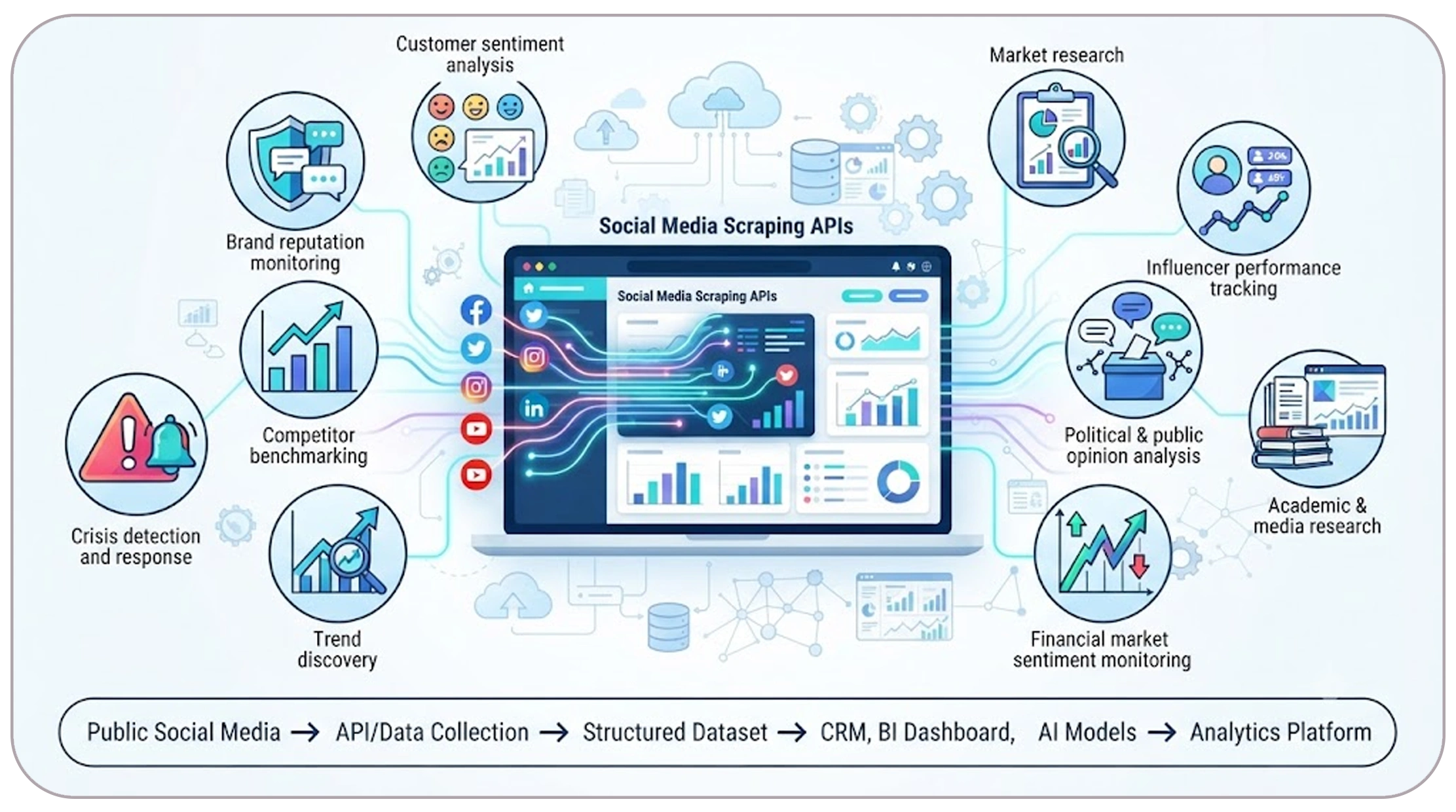
Organizations across industries rely on automated data collection to transform public conversations into business intelligence. Instead of manually reviewing thousands of posts every day, APIs collect structured public information that supports faster analysis and informed decision-making. Choosing the right solution depends on business goals, data volume, and reporting requirements.
Many enterprises evaluate Top Social Media Scraping API Use Cases before implementing a social data strategy. These APIs help automate repetitive tasks while delivering consistent, high-quality datasets for analytics platforms, AI models, and business dashboards.
Common business use cases include:
- Brand reputation monitoring
- Competitor benchmarking
- Trend discovery
- Customer sentiment analysis
- Crisis detection and response
- Market research
- Influencer performance tracking
- Political and public opinion analysis
- Financial market sentiment monitoring
- Academic and media research
Automation also reduces operational costs by eliminating manual data collection. Businesses receive structured datasets that integrate seamlessly with CRM systems, visualization tools, and business intelligence platforms.
Industry Adoption by Use Case (2020-2026)
| Year | Marketing & Brand Monitoring | Market Research | AI & Analytics | Media Monitoring |
|---|---|---|---|---|
| 2020 | 44% | 38% | 27% | 35% |
| 2021 | 50% | 43% | 34% | 41% |
| 2022 | 58% | 49% | 42% | 48% |
| 2023 | 66% | 57% | 51% | 56% |
| 2024 | 73% | 65% | 60% | 63% |
| 2025* | 80% | 72% | 69% | 71% |
| 2026* | 87% | 79% | 77% | 78% |
*Projected industry estimates.
As AI adoption grows, organizations increasingly combine social media data with customer records, sales trends, and website analytics to create a unified view of market behavior. Marketing teams identify content opportunities, customer support teams detect recurring issues, and executives use real-time dashboards to guide strategic decisions.
Selecting an API that offers scalable collection, structured outputs, and reliable performance ensures organizations can adapt to growing data volumes while maintaining consistent analytical accuracy.
How Can Scalable API Solutions Future-Proof Social Media Analytics?

The volume of public social content continues to grow every year. Organizations need scalable infrastructure that collects, processes, and delivers reliable data without compromising performance. A modern API should support continuous monitoring, structured outputs, flexible integrations, and enterprise-grade scalability.
A robust Social Media Data Scraping API enables businesses to automate public data collection across multiple workflows. Instead of building complex scraping infrastructure from scratch, organizations can connect directly to data pipelines that feed dashboards, AI models, reporting tools, and business intelligence platforms.
Key capabilities include:
- Real-time public post collection
- Automated trend detection
- Structured JSON or CSV outputs
- Keyword and hashtag monitoring
- Engagement metric collection
- Historical data retrieval
- API integration with BI platforms
- Scalable cloud-based architecture
These features reduce development time while improving data consistency and operational efficiency. Organizations can focus on analyzing insights rather than maintaining complex collection systems.
Enterprise API Adoption Trends (2020-2026)
| Year | Organizations Using Social Data APIs | Average Daily Records Processed |
|---|---|---|
| 2020 | 40% | 2 Million |
| 2021 | 47% | 3 Million |
| 2022 | 55% | 4.5 Million |
| 2023 | 64% | 6.2 Million |
| 2024 | 72% | 8.1 Million |
| 2025* | 80% | 10.4 Million |
| 2026* | 88% | 13 Million+ |
*Projected industry estimates.
Modern API solutions also support compliance-focused data collection by accessing publicly available information responsibly and organizing it into standardized formats for analysis. This enables organizations to maintain consistent reporting practices while meeting internal governance requirements.
Whether supporting marketing teams, research organizations, financial analysts, or media companies, scalable APIs provide the flexibility needed to handle increasing data volumes and evolving analytical demands. By investing in reliable automation today, businesses build a stronger foundation for AI-driven insights, predictive analytics, and long-term competitive intelligence.
Why Choose Real Data API?
Organizations need more than raw data—they need reliable, structured, and scalable data solutions that power business decisions. At Real Data API, we help businesses Scrape public posts and trends using Truth Social API through secure, customizable, and enterprise-ready data services. Our solutions enable organizations to collect publicly available social media data efficiently, transform it into structured datasets, and integrate it seamlessly into analytics platforms, AI models, and business intelligence tools.
Whether you are a marketing agency, financial institution, media company, research organization, or enterprise brand, our APIs are designed to support high-volume data collection with speed and accuracy. We provide flexible delivery formats such as JSON and CSV, real-time and scheduled data extraction, historical data access, and seamless integration with cloud platforms and reporting dashboards.
Why Businesses Trust Real Data API
- Enterprise-grade and scalable API infrastructure
- Real-time public social data collection
- High-quality, structured datasets
- Flexible API integrations and custom workflows
- Reliable data delivery in multiple formats
- Dedicated technical support and customization
- Solutions built for analytics, AI, and business intelligence
With Real Data API, organizations can reduce manual effort, accelerate research, improve market visibility, and gain actionable insights from public social conversations to support smarter, data-driven decisions.
Conclusion
Real-time social media intelligence has become an essential component of modern business strategy. Organizations that Scrape public posts and trends using Truth Social API gain timely access to valuable public conversations, engagement metrics, and emerging trends that support faster and more informed decision-making. From brand monitoring and competitive intelligence to market research and AI-driven analytics, structured social media data empowers businesses to understand audience behavior, identify opportunities, and respond proactively to changing market conditions.
By implementing scalable data collection solutions, organizations can automate monitoring, improve operational efficiency, and transform millions of public interactions into meaningful business insights. As the volume of online conversations continues to grow, investing in reliable social media data infrastructure ensures long-term success and a stronger competitive advantage.
Ready to unlock actionable social media intelligence? Contact Real Data API today to build a customized solution that helps your business collect, analyze, and leverage public social media data at scale for smarter, faster, and more confident decision-making!
Latest posts
How Uber Eats API Helps Businesses Overcome Restaurant, Menu, and Pricing Data Challenges
How Myntra API Solves Fashion Retail Challenges with Fashion Product, Price, Brand, and Category Data
How Nykaa Fashion Dataset Solves Product, Price, Brand, and Fashion Market Trend Tracking Challenges

Harrods UK: The World's Leading Luxury Department Store - A Complete Guide to Harrods Data Scraping, API Access, and Datasets






.png)