.gif)
.jpg)
Quick Summary
- Travel businesses can use KAYAK API integration for flight search to compare available airfares, explore routes, evaluate airline options, and improve flight discovery.
- Structured travel data collected through a Kayak Scraper helps businesses analyze fare movements, identify booking opportunities, and understand traveler preferences.
- Combining flight search, price insights, and historical market information supports better travel planning and more informed business decisions.
Introduction
Travel businesses need accurate airfare information to help customers compare flight options, discover competitive prices, and make informed booking decisions. KAYAK API integration for flight search enables approved travel partners to connect flight discovery and comparison capabilities with their websites and applications. It can support flexible searches, multiple airline options, fare comparisons, and travel booking journeys through an integrated experience.
KAYAK, owned by Booking Holdings, operates a travel search platform covering flights, hotels, rental cars, and other travel services. Its official developer documentation lists Flights Search API, Flights Price Insights API, Hotels Search API, and other travel-related interfaces. Access is provided through its partner process rather than being an unrestricted public API.
A Kayak Scraper is another approach businesses may evaluate when they need permitted collection of publicly accessible travel information for research and analysis. However, scraping and official API integration are different approaches. Businesses must consider applicable permissions, contractual requirements, website terms, and data protection obligations before collecting information.
For online travel agencies, flight comparison platforms, tour operators, and travel technology providers, the objective is to build a dependable information workflow. It should help travelers compare relevant itineraries while enabling businesses to understand airfare trends, route demand, and changing market conditions.
How Can Hotel and Flight Search Work Together?
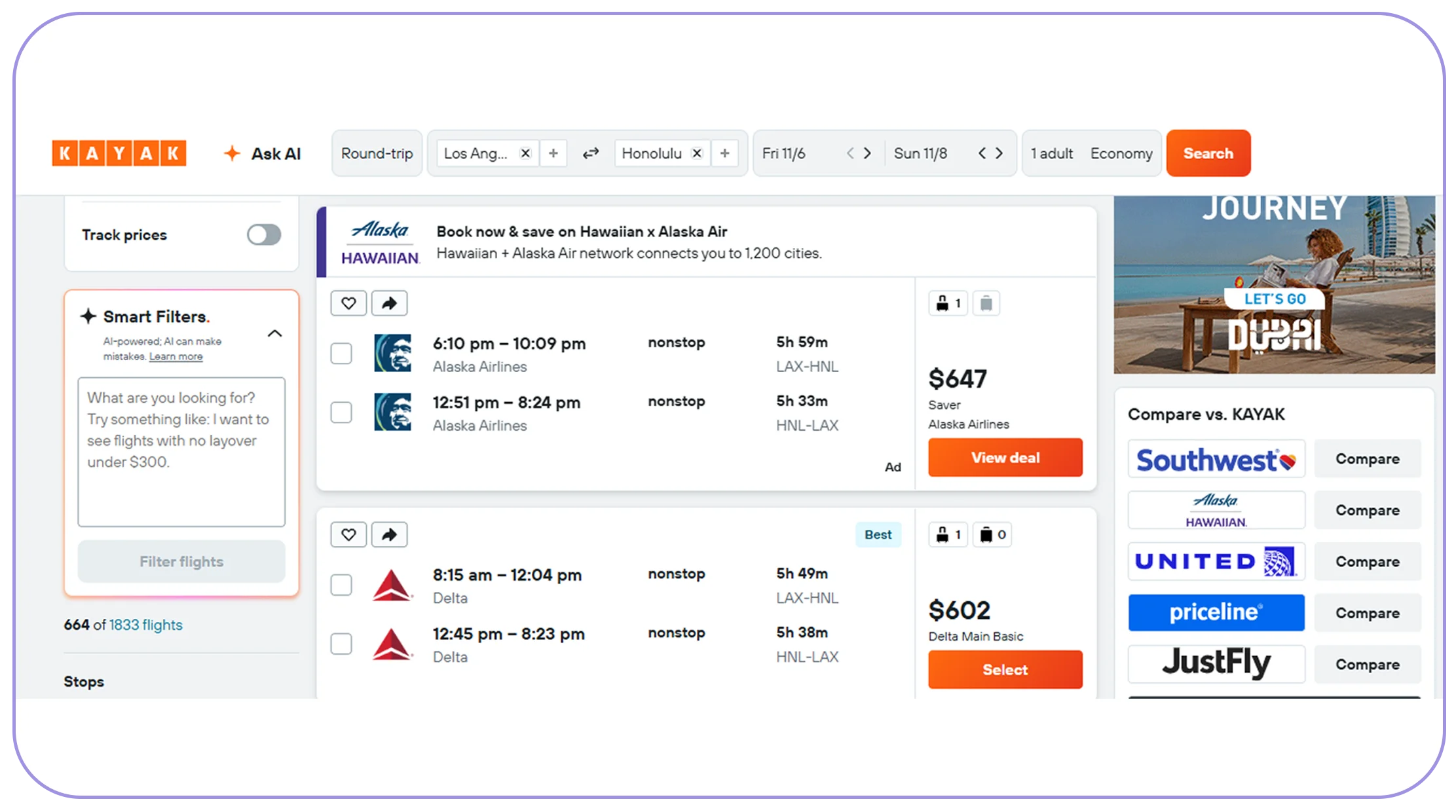
Travelers frequently plan complete journeys rather than purchasing individual travel services in isolation. A flight search experience becomes more useful when customers can also explore accommodation options, compare trip costs, and evaluate travel dates.
KAYAK hotel search API integration can help travel businesses extend their platforms beyond airfare discovery. KAYAK's developer documentation lists a Hotels Search API alongside its flight search capabilities, while its affiliate platform presents flights, hotels, and rental cars as available integration categories.
A combined travel search experience can support several business requirements:
- Flight discovery based on departure and destination airports.
- Hotel searches based on destination and travel dates.
- Comparison of accommodation options.
- Coordination of flight and hotel search journeys.
- Referral and booking opportunities through approved partner arrangements.
For example, a traveler searching for a flight to London may also want to compare accommodation near the city center. A travel platform can use separate search experiences to help the customer explore both requirements.
The integration should maintain consistent destination identifiers, travel dates, currencies, and localization settings. Otherwise, customers may encounter mismatched information between flight and hotel results.
Travel businesses should also distinguish between search integration and package booking. Access to flight and hotel search results does not automatically provide a complete package-booking or ticketing system. The available booking handoff, commercial model, and transaction responsibilities depend on the partner agreement and API product.
Business recommendation: Begin with the most frequently used travel search journey. Add complementary services after validating search performance, data consistency, and customer engagement.
How Can Travel Companies Add Flight Search to Their Websites?
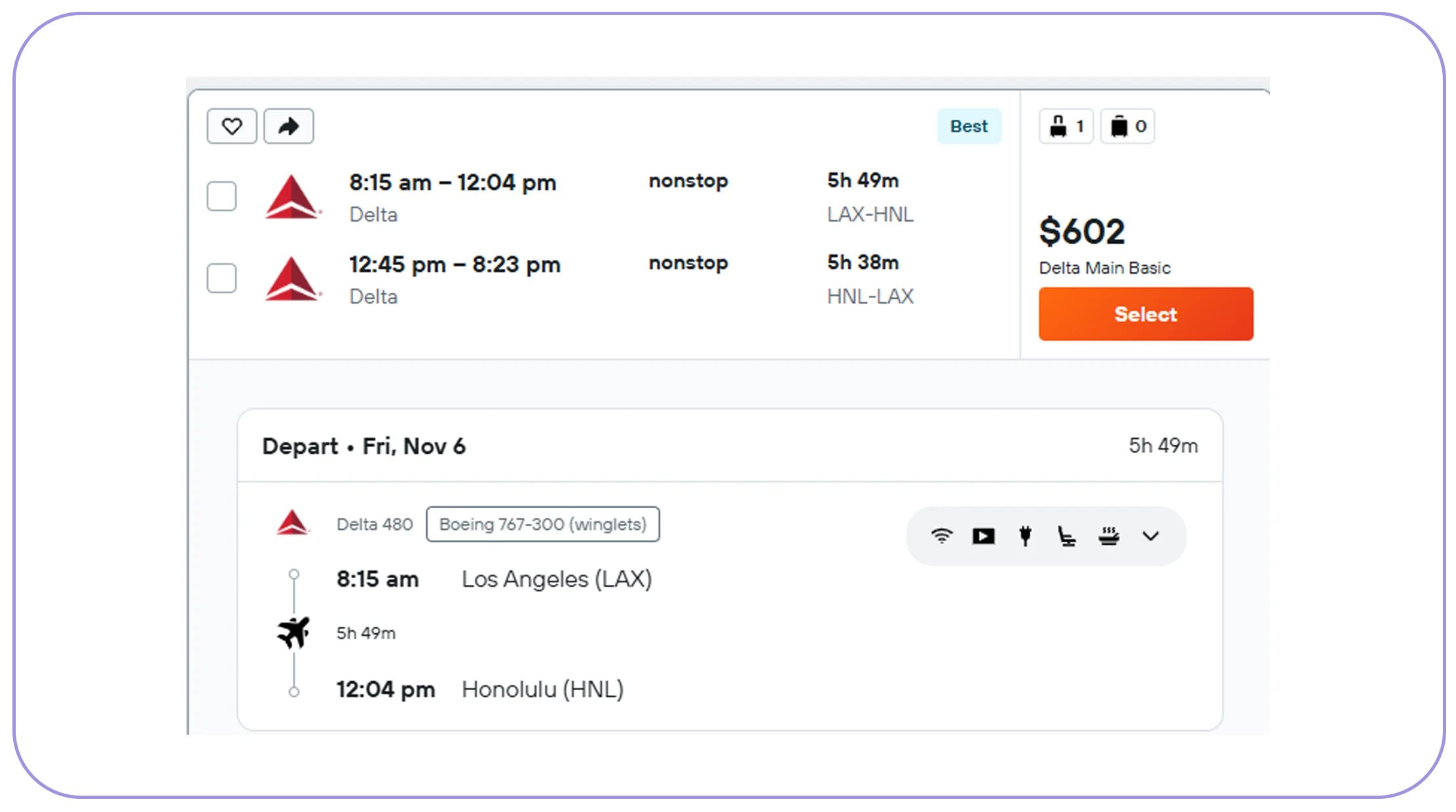
A travel website needs a dependable search interface that allows customers to enter their travel requirements and explore relevant flight options. API integration helps connect the website's search interface with an external travel search platform.
To integrate the KAYAK API into a travel website, businesses should first identify their intended use case and apply through the official KAYAK partner process. KAYAK provides a sandbox option for prototyping, followed by production access after approval of the proposed affiliate integration.
A practical implementation process includes:
Step 1: Define the search requirements
Determine whether the website needs one-way, round-trip, or multi-city searches. Define passenger categories, travel dates, cabin preferences, and airport selection requirements.
Step 2: Apply for API access
Submit the business details, website information, and proposed integration use case through KAYAK's partner application process.
Step 3: Test the sandbox environment
If sandbox access is approved, use the provided test credentials to prototype search workflows and understand the available response structures.
Step 4: Develop the search interface
Create search forms for departure locations, destinations, dates, and passenger information. Connect the interface to the appropriate API endpoints.
Step 5: Organize and display results
Structure the returned flight information into readable results containing relevant itinerary details, prices, stops, and available booking options.
Step 6: Validate and launch
Test error handling, response times, currency formatting, search parameters, and booking handoffs before production deployment.
The official KAYAK Flights API describes a two-step search process: quick initial results followed by more comprehensive results and updates as the search completes. This is important when designing the user interface because the application should handle progressive result updates instead of assuming every result is available immediately.
For developers, the key consideration is to keep the integration modular. Separate the search interface, API communication, result processing, caching, and analytics components. This makes the platform easier to maintain as business requirements change.
How Can Travel Data Improve Market Intelligence?
Travel businesses need more than current airfare results to understand their competitive position. They also need information about price movements, popular routes, travel dates, and customer search preferences.
The KAYAK Travel Data API for market intelligence offers capabilities that can support this research. KAYAK's official travel data documentation describes its Flights Price Insights API, which uses traveler data to provide price insights, flexible destination searches, calendar-based price trends, and filtering options.
These capabilities can help travel companies investigate several business questions:
- Which departure and destination combinations have competitive fares?
- How do observed prices differ across travel dates?
- Which routes show significant fare fluctuations?
- How do nonstop and connecting itineraries compare?
- Which travel periods offer lower observed prices?
- How should flight recommendations be organized for different customer requirements?
Travel data becomes more useful when combined with historical observations and internal business information.
For example, an online travel agency can compare its own search activity with available market price insights to understand which routes deserve additional research. A corporate travel platform can analyze route-level pricing patterns to support travel budget planning.
However, businesses must understand the difference between market observations and actual completed bookings. Search prices do not automatically represent ticket sales, confirmed passenger demand, or guaranteed future fares.
What aviation statistics reveal about airfare comparison opportunities
The International Air Transport Association (IATA) publishes global passenger traffic statistics measured through revenue passenger kilometers (RPK). These figures help explain changes in the wider aviation market.
The following table summarizes annual global passenger traffic growth, with 2026 identified as a forecast.
| Year | Global passenger traffic growth |
|---|---|
| 2020 | -65.8% |
| 2021 | +21.8% |
| 2022 | +64.9% |
| 2023 | +36.9% |
| 2024 | +10.4% |
| 2025 | +5.3% |
| 2026 | +2.1% forecast |
Sources: IATA global air transport outlook and annual passenger market reports. Historical figures may be revised; 2026 is a forecast, not a completed-year result.
These figures demonstrate how dramatically air travel demand changed during the pandemic and subsequent recovery. The 2026 outlook also indicates slower expected growth than in the immediate recovery years.
For travel businesses, such changes reinforce the importance of flexible market monitoring. Historical demand statistics provide context, while current fare observations help businesses evaluate specific routes and travel dates.
Want to turn travel search information into actionable market insights? Explore travel data research and integration solutions from Real Data API.
Get Insights Now!How Can Businesses Monitor Flight Prices and Availability?
Airfare monitoring is important because flight prices and availability can change between the initial search and the final booking. Travelers want to compare options without relying on outdated information.
KAYAK API real-time flight pricing capabilities are designed to provide current pricing and availability information through the approved flight search integration. KAYAK describes its Flights API as supporting real-time fares, upfront fee and baggage information, fare-family comparisons, and a two-step search process.
A structured monitoring workflow should capture the following information where available and permitted:
| Data field | Purpose |
|---|---|
| Origin airport | Identify departure location |
| Destination airport | Identify arrival location |
| Departure date | Compare travel periods |
| Return date | Support round-trip analysis |
| Airline | Compare carrier options |
| Flight duration | Evaluate journey convenience |
| Number of stops | Compare itinerary structure |
| Fare amount | Evaluate observed ticket prices |
| Currency | Standardize financial comparisons |
| Baggage information | Understand included allowances |
| Search timestamp | Establish when the fare was observed |
| Booking link | Support the next booking step |
Businesses should store search timestamps because airfare observations need context. A price recorded yesterday should not automatically be presented as a current offer.
A useful monitoring system can compare successive observations for the same route, travel date, passenger configuration, and fare conditions. This helps prevent inaccurate comparisons between different ticket products.
It is also important to distinguish base fares from total prices. Baggage charges, taxes, seat selection, payment fees, and other conditions can affect the final amount paid.
For example, two itineraries may display similar initial prices but offer different baggage allowances or connection durations. Comparing the full itinerary helps customers evaluate value rather than selecting an option based on price alone.
Businesses should also design their systems to handle failed searches, unavailable routes, changing offers, and delayed responses. Clear error messages and refreshed search results improve reliability.
What Technical Capabilities Should Businesses Evaluate?
Choosing an API is not simply about obtaining flight results. Travel businesses must evaluate integration flexibility, response structures, search coverage, data consistency, and operational requirements.
The Kayak API documentation identifies several travel-related products, including flight search, hotel search, price insights, autocomplete, and static data feeds. The exact capabilities differ between products, so businesses should select endpoints based on their requirements rather than assuming every product provides identical information.
Important technical considerations include:
Search flexibility: The flight search product describes one-way, round-trip, and multi-city searches, flexible dates, nearby airports, and different passenger types.
Result quality: Businesses should evaluate itinerary details, airline information, layovers, fare conditions, and available booking options.
Progressive responses: The documented two-step process should be reflected in the application architecture so initial results and subsequent updates can be handled properly.
Data normalization: Airports, airlines, currencies, dates, and itinerary details should be represented consistently across the platform.
Caching and refresh policies: Search results should be cached only when permitted and according to applicable freshness requirements. Prices should be refreshed before they are presented as current.
Error handling: The integration should account for timeouts, incomplete searches, unavailable routes, invalid parameters, and authentication failures.
Security: API credentials should be stored securely on the server rather than exposed in browser-side code. Access should be restricted to the services that need it.
A practical architecture can separate the frontend search experience from the backend integration layer. The backend manages credentials, communicates with the API, validates responses, and delivers normalized results to the frontend.
This approach makes it easier to change search components, introduce additional travel products, and maintain consistent reporting without rebuilding the entire application.
How Can Travel Businesses Use Automated Data Collection for Research?
Travel businesses often need historical and current travel information to understand route-level pricing patterns, airline competition, and changes in travel availability. Automated data collection can help organize this information into datasets that support research and business intelligence.
Kayak travel data scraping is an approach that businesses may investigate when they need permitted collection of publicly accessible travel information for analysis. It should not be confused with an official API connection or an authorized KAYAK data feed.
Before implementing a collection workflow, businesses should review applicable website terms, permissions, technical restrictions, and privacy requirements. Where an approved API or partner data feed provides the required information, it is generally preferable to use that authorized access method.
A structured travel data collection workflow can include:
- Route identification: Define the airports, destinations, and travel periods that require monitoring.
- Data field selection: Identify relevant airfare, airline, itinerary, and availability fields.
- Collection planning: Establish permitted sources and appropriate collection schedules.
- Data validation: Check missing values, duplicate records, inconsistent currencies, and incorrect airport mappings.
- Historical storage: Preserve timestamped observations for trend analysis.
- Dataset delivery: Organize validated information for databases, dashboards, and reporting systems.
Businesses can use the resulting datasets to examine route-level pricing patterns, compare travel periods, and investigate changes in available flight options.
Historical records are particularly valuable because they help analysts distinguish isolated price movements from recurring patterns. However, historical search observations should not be treated as guaranteed future prices.
The most effective approach combines authorized travel data access, reliable collection practices, and internal business reporting. This allows travel companies to build a stronger foundation for market research without confusing collected observations with confirmed bookings.
Why Choose Real Data API?
Real Data API helps businesses explore structured data solutions that support market research, competitive analysis, and business intelligence.
For travel companies, useful data solutions should focus on accurate information, consistent formatting, appropriate source permissions, and practical delivery methods.
Key considerations include:
- Structured travel information: Organize airline, route, fare, and itinerary records into usable datasets.
- Data quality: Apply validation processes to reduce duplicate, incomplete, and inconsistent records.
- Market research support: Organize historical observations to help businesses investigate travel market changes.
- Flexible delivery: Prepare information in formats suitable for databases, analytics tools, and reporting systems.
- Business-focused insights: Connect collected information with pricing research, route analysis, and travel planning requirements.
A Kayak Travel Dataset can support travel market research when the information has been obtained through appropriate, authorized sources. Businesses can use structured datasets to investigate airfare trends, compare routes, and understand the competitive travel landscape.
Real Data API focuses on helping organizations transform relevant data into organized information that supports better business decisions.
Conclusion
Flight search integration can help travel businesses improve airfare comparisons, organize itinerary information, and create more useful booking experiences. Access to relevant pricing, airline, route, and availability information also supports market research and competitive analysis.
KAYAK API integration for flight search provides approved partners with access to travel search capabilities that can be incorporated into websites and applications. Its flight search and price insights products offer useful features for businesses looking to improve flight discovery and understand airfare trends.
However, successful integration requires more than connecting an API. Businesses should plan their search architecture, validate returned information, manage data freshness, protect credentials, and understand the permissions associated with their chosen data sources.
For travel agencies, flight comparison platforms, online travel companies, and travel technology providers, a well-planned data strategy can create more informed search experiences and stronger market intelligence.
Looking to strengthen your travel data capabilities? Contact Real Data API to explore structured travel data collection, airfare monitoring, and travel market intelligence solutions for your business!
FAQs
1. How does flight search integration benefit travel businesses?
KAYAK API integration for flight search helps approved travel partners display flight options, compare itineraries, and provide customers with relevant airfare information through integrated search experiences.
2. What is automated travel data collection?
A Kayak Scraper refers to an automated collection approach for permitted publicly accessible travel information, helping researchers organize flight listings and analyze marketplace changes.
3. Can hotel searches be included in travel platforms?
KAYAK hotel search API integration enables approved partners to explore hotel search capabilities alongside flight discovery, supporting broader travel planning experiences.
4. How can developers connect flight search capabilities?
Businesses can integrate the KAYAK API into a travel website by applying for partner access, testing available sandbox functionality, and obtaining production approval.
5. How can travel data support business research?
The KAYAK Travel Data API for market intelligence provides travel price insights and route comparison capabilities. Real Data API can help businesses explore structured data solutions.
Latest posts

How to Use Amazon API integration for e-commerce analytics to Track Competitor Prices and Improve Product Performance

How IKEA API for retail market intelligence Helps Retailers Solve Product Data Inconsistency and Pricing Challenges

How Instagram API integration for business analytics Helps Brands Track Engagement and Measure Social Media Performance

How OTT Dataset Updates for Entertainment Analytics Help Streaming Platforms Fix Outdated Content Insights




.png)


