.gif)
.jpg)
Quick Summary
- Streaming platforms need current content, availability, and audience data to identify viewing trends and make informed programming decisions. OTT dataset updates for entertainment analytics help businesses maintain reliable and refreshed entertainment insights.
- Updated datasets help businesses monitor competing platforms, understand content performance, and reduce outdated reporting through OTT Data Scraping.
- Structured entertainment data supports better content acquisition, market research, and streaming strategy.
Introduction
The streaming entertainment industry changes rapidly as new shows launch, existing titles leave platforms, audience preferences shift, and subscription models evolve. Streaming businesses that rely on outdated information risk making poor content acquisition, licensing, and marketing decisions. OTT dataset updates for entertainment analytics help solve this problem by providing refreshed information about streaming catalogs, content availability, platform activity, and audience engagement.
For streaming platforms, production companies, digital entertainment businesses, and market research teams, reliable information is essential for understanding a competitive market. OTT Data Scraping can help collect publicly accessible information from streaming websites and other authorized sources, including titles, genres, release dates, languages, ratings, and availability details.
The importance of accurate information is evident in industry reporting. Netflix reported more than 94 billion hours of viewing during the first half of 2024. Nielsen also reported that streaming represented 44.8% of total US television usage in May 2025, surpassing broadcast and cable combined. These developments demonstrate why entertainment businesses need consistent, structured, and current information to evaluate market activity.
How Can Streaming Businesses Improve Market Research Accuracy?
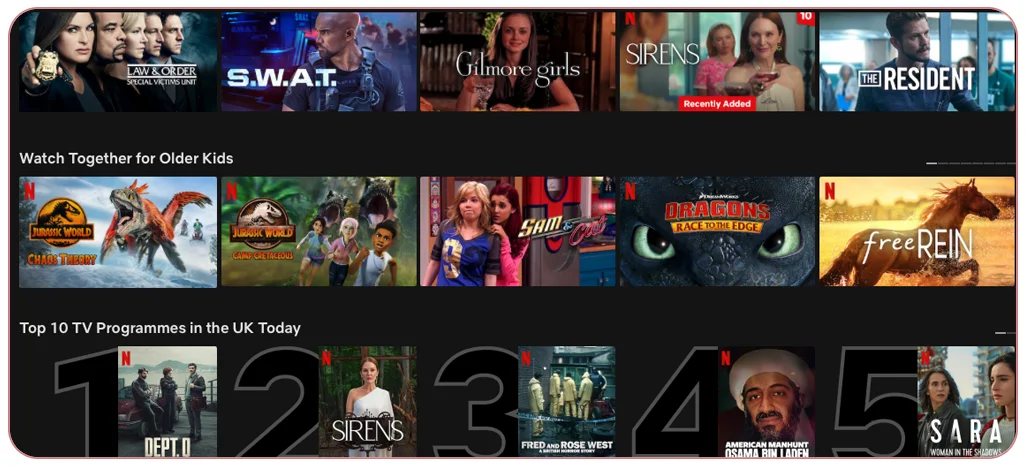
Streaming businesses need accurate catalog information to understand which titles are available, where they are distributed, and how entertainment libraries change across competing services. Outdated catalog records can lead to incorrect market comparisons, missed licensing opportunities, and unreliable content research.
A structured approach to Scrape OTT catalog data for streaming market research helps businesses collect relevant information such as movie titles, television series, genres, release dates, production countries, languages, and platform availability. These fields allow analysts to compare entertainment libraries across regions and streaming providers.
For example, a research team can compare the availability of international films across different platforms, identify catalog changes, and examine how frequently particular genres appear. Production companies can also use catalog information to understand the competitive environment before planning content investments.
Catalog information becomes more valuable when it is refreshed regularly. A title that was available last month may have expired from a platform, while a newly licensed series may have entered several regional libraries. Without updated records, analysts could mistakenly treat old availability information as current.
Businesses should maintain standardized records with platform names, geographic availability, content identifiers, update timestamps, and source references. These fields make historical comparisons easier and help analysts distinguish actual catalog changes from missing or inconsistent information.
The objective is not simply to collect more entertainment information. It is to create a dependable catalog intelligence system that supports research, acquisition planning, and competitive analysis.
Why Do Entertainment Businesses Need Better Trend Monitoring?
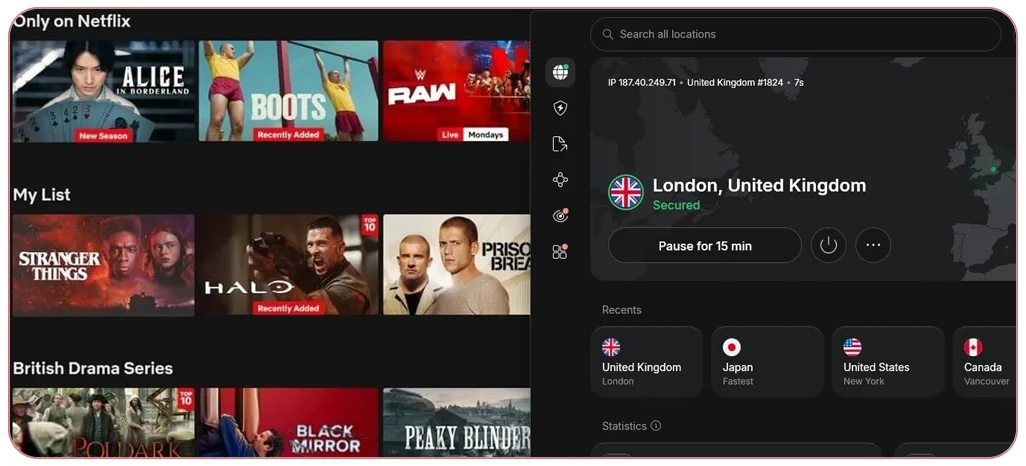
Entertainment preferences change with new releases, returning seasons, cultural events, and changing audience interests. A genre that attracts attention in one market may perform differently in another. Streaming businesses therefore need reliable information to understand these developments.
Using OTT content web scraping for streaming trend analysis helps researchers organize publicly available content information and identify changes in release schedules, genres, languages, and platform catalogs.
Netflix's engagement reporting demonstrates why content trends should be evaluated over time. Its second-half 2023 report recorded 90 billion hours watched, while its first-half 2024 report recorded more than 94 billion hours. These are separate six-month reporting periods, rather than directly comparable annual totals.
About Netflix+1
The following industry benchmarks illustrate how streaming activity and reporting evolved.
| Year | Verified industry benchmark | Research implication |
|---|---|---|
| 2020 | Nielsen identified a sharp increase in connected-TV usage during the pandemic period. | Monitor changes in viewing environments. |
| 2021 | Nielsen launched The Gauge in May 2021. | Track streaming alongside traditional television. |
| 2022 | Streaming usage increased more than 21% between May 2021 and May 2022. | Compare platform growth over time. |
| 2023 | Netflix reported 183 billion viewing hours for the year. | Evaluate engagement across content categories. |
| 2024 | Netflix reported more than 94 billion viewing hours in H1. | Monitor changes in content consumption. |
| 2025 | Netflix reported more than 95 billion hours in H1 and 96 billion in H2. | Compare successive reporting periods. |
| 2026 | Netflix reported more than 97 billion viewing hours in H1. | Continue monitoring changes in engagement. |
Sources: Nielsen and Netflix official reporting. These figures represent different measurement scopes and should not be interpreted as a single comparable industry-wide series.
For entertainment analysts, these benchmarks demonstrate the importance of maintaining historical datasets alongside current information. A useful trend-monitoring system should capture the observation date, reporting period, platform, market, and measurement definition.
Businesses should also distinguish between catalog popularity signals and actual audience engagement. A title appearing frequently in platform promotions does not necessarily mean it generates the highest viewing hours.
Combining consistent catalog records with credible engagement reports helps researchers develop more balanced market assessments.
How Can Structured Information Improve Platform Decisions?
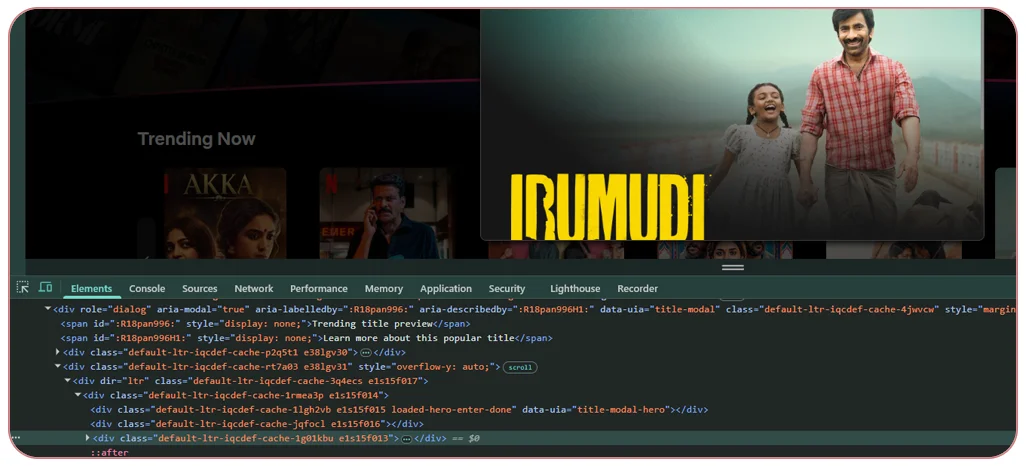
Streaming platforms manage extensive libraries containing films, episodic series, documentaries, animation, and regional productions. Managing this information across multiple services becomes difficult when records use different naming conventions, content categories, and release-date formats.
A structured process to Extract OTT datasets for streaming platform analytics helps entertainment businesses organize relevant information into consistent fields that support comparison and reporting.
A practical dataset can contain:
- Content identification: Title, unique content ID, content type, and series or season information.
- Release information: Original release date, platform launch date, and upcoming release schedules.
- Content classification: Genre, language, country of production, and age classification where publicly available.
- Availability information: Streaming platform, territory, subscription or access category, and observation date.
- Reference information: Source URL, collection timestamp, and last verification date.
Standardization is particularly important when the same movie appears under different localized titles. A reliable matching process should use multiple attributes rather than title text alone. Original titles, release years, production details, and available identifiers can help reduce duplicate records.
Netflix's 2023 engagement report covered more than 18,000 titles, representing 99% of viewing on its service for the first half of that year. Its reporting also included hours viewed, premiere dates, and global availability information.
This provides a useful example of how structured content information can support meaningful entertainment analysis.
For analytics teams, the next step is to connect catalog records with independently sourced performance indicators. This makes it easier to evaluate content categories, compare release periods, and identify gaps in available market information.
Build a more reliable entertainment intelligence workflow with structured, regularly refreshed OTT information.
Get Insights Now!What Makes Competitive Streaming Analysis More Reliable?
Streaming competition involves more than comparing the number of movies and shows available on different platforms. Businesses must understand catalog composition, regional availability, release activity, subscription models, and audience engagement.
A dependable OTT platform web data scraper for streaming analytics can help collect publicly accessible platform information in a consistent format, subject to website terms, applicable laws, and source permissions.
One important application is competitor catalog benchmarking. Analysts can compare how different services organize their content libraries, which genres are represented, and how regional catalogs differ.
For example, Ofcom's Media Nations 2025 report found that 68% of UK households received at least one subscription video-on-demand service in Q1 2025. Netflix was present in 59% of UK households, Amazon Prime Video in 46%, and Disney+ in 25%. These figures show that streaming services compete within an established subscription market, making accurate market monitoring important.
A useful competitive analysis framework should include the following measurements:
| Analysis area | Information to monitor | Business application |
|---|---|---|
| Catalog size | Available titles by platform | Compare content-library breadth |
| Genre distribution | Movies and series by genre | Identify catalog concentration |
| Regional coverage | Title availability by country | Study market differences |
| Release activity | New titles and season launches | Track content additions |
| Language distribution | Original and dubbed languages | Identify localization opportunities |
| Availability changes | New listings and removals | Monitor catalog movement |
Another important consideration is data freshness. A competitor report created several months earlier may not represent the current catalog. Businesses should therefore define update frequencies according to how quickly their target platforms change.
Daily monitoring may be appropriate for frequently changing fields, while less dynamic information can be refreshed on a different schedule. Each record should retain its collection timestamp so analysts can identify when information was last checked.
Reliable competitor intelligence depends on consistent measurement, transparent sourcing, and accurate historical records rather than assumptions about platform performance.
How Can Automated Collection Reduce Data Management Challenges?
Manual entertainment research becomes difficult when analysts need to monitor several streaming services, multiple countries, and thousands of content records. Repeated manual checks can also introduce inconsistent naming, missing fields, and outdated information.
An OTT Scraping API can support an automated data collection workflow by allowing authorized information to be retrieved and delivered in structured formats.
The main benefit is workflow consistency. Instead of collecting information separately for every research project, businesses can define reusable collection rules and data structures.
A practical automated workflow includes five stages:
- Source identification: Identify relevant streaming websites, public catalog pages, and permitted data sources.
- Field configuration: Define required attributes such as title, genre, language, release date, and platform.
- Data collection: Retrieve information from authorized sources according to the required schedule.
- Data validation: Check missing values, duplicate records, inconsistent formats, and unexpected changes.
- Dataset delivery: Send standardized records to databases, analytics environments, or reporting systems.
Automation does not automatically guarantee accuracy. Websites can change their structures, content pages may become unavailable, and different platforms may describe the same title differently. Monitoring, validation, and exception handling remain necessary.
Entertainment businesses should also maintain historical snapshots. These records help distinguish a newly added title from an existing title whose metadata has simply changed.
For example, a change in a movie's displayed language or genre should not automatically be interpreted as a new content addition. A comparison between the previous record and the latest observation can identify the actual modification.
A well-designed API workflow should therefore support clear field definitions, source tracking, timestamps, error reporting, and repeatable extraction rules.
Real Data API can be considered for building structured data workflows that help businesses organize entertainment information for ongoing analysis.
Which Data Quality Measures Should Entertainment Analysts Follow?
Collecting large quantities of entertainment information is not enough. Businesses also need to verify that records are complete, consistent, and suitable for their intended research.
Well-maintained OTT Datasets should follow defined quality standards so analysts can use them confidently across research, reporting, and strategic planning.
The first requirement is completeness. Essential fields such as title, platform, content type, and observation date should be checked before records enter an analytics database. Missing values should be identified rather than automatically replaced with assumptions.
The second requirement is consistency. Different platforms may use different date formats, genre labels, and localized title conventions. Standardization makes comparisons more meaningful and reduces duplicate records.
The third requirement is traceability. Every collected record should retain its source and collection timestamp. This allows analysts to review where information originated and when it was last observed.
A practical quality-control framework includes:
| Quality measure | Validation method | Expected benefit |
|---|---|---|
| Completeness | Check mandatory fields | Fewer incomplete records |
| Consistency | Standardize formats and categories | Easier cross-platform comparisons |
| Uniqueness | Match titles using multiple attributes | Reduced duplication |
| Freshness | Check last-updated timestamps | Better visibility into outdated records |
| Accuracy | Compare with the original source | More dependable reporting |
| Traceability | Retain source references | Easier verification |
Businesses should also separate observed facts from calculated metrics. For instance, a catalog record can establish that a title was listed on a particular date, but it cannot independently establish how many people watched it.
Audience engagement figures should come from appropriate measurement sources, with their methodology and reporting periods clearly documented.
These practices help entertainment companies avoid misleading conclusions and build datasets that remain useful as catalogs, platforms, and audience preferences evolve.
Why Choose Real Data API?
Entertainment businesses need dependable data collection processes to make better decisions in a competitive streaming environment. Real Data API supports data-driven workflows that help businesses collect, organize, and analyze information from relevant digital sources.
OTT Data Scraping Helps Streaming Market Intelligence by making it easier to monitor streaming catalogs, identify content changes, compare platform information, and organize entertainment market research.
Key benefits include:
- Structured information: Organize content titles, genres, release dates, languages, and platform details into consistent datasets.
- Competitive research: Compare publicly available catalog information across streaming services and regions.
- Regular data updates: Maintain refreshed records according to business requirements and source availability.
- Improved data quality: Apply validation, standardization, and duplicate detection to collected records.
- Scalable workflows: Support larger research requirements through repeatable collection and processing workflows.
- Actionable insights: Prepare structured information for business intelligence tools, dashboards, and analytical reporting.
With Real Data API, entertainment businesses can develop more organized data collection processes and make informed decisions using reliable, traceable information.
Conclusion
Streaming platforms operate in an environment where content availability, audience interests, and competitive positioning continue to evolve. Depending on outdated catalog information can create inaccurate market comparisons, missed content opportunities, and unreliable business reporting.
OTT dataset updates for entertainment analytics provide a practical foundation for monitoring content libraries, understanding catalog changes, researching entertainment trends, and improving competitive intelligence.
Businesses should prioritize regularly refreshed information, standardized metadata, source verification, and historical tracking. Combining these practices with credible audience engagement reports can help entertainment companies make more informed content and market decisions.
Ready to improve your entertainment data intelligence? Connect with Real Data API to explore structured data collection solutions and build a more reliable foundation for streaming market research!
FAQs
1. Why are OTT dataset updates important for entertainment businesses?
OTT dataset updates for entertainment analytics help businesses monitor changing catalogs, identify new releases, compare platforms, and maintain accurate information for research and strategic decision-making.
2. How does OTT Data Scraping support streaming analytics?
OTT Data Scraping collects publicly accessible platform information, including titles, genres, release dates, languages, and availability, helping analysts organize information for competitive research and reporting.
3. What information can businesses collect for streaming market research?
Scrape OTT catalog data for streaming market research to examine titles, genres, release dates, platform availability, languages, and regional catalog differences using authorized information sources.
4. Can automated collection help identify entertainment trends?
OTT content web scraping for streaming trend analysis helps researchers monitor catalog changes, release patterns, genre distribution, and regional content availability across selected streaming services.
5. How can Real Data API support entertainment analytics?
Businesses can Extract OTT datasets for streaming platform analytics to organize content information, compare catalogs, monitor changes, and support structured entertainment market research.
Latest posts

How to Use Amazon API integration for e-commerce analytics to Track Competitor Prices and Improve Product Performance
How IKEA API for retail market intelligence Helps Retailers Solve Product Data Inconsistency and Pricing Challenges
How Instagram API integration for business analytics Helps Brands Track Engagement and Measure Social Media Performance
How OTT Dataset Updates for Entertainment Analytics Help Streaming Platforms Fix Outdated Content Insights



.png)


