.gif)
.jpg)


Quick Summary
- live betting data extraction helps sportsbooks monitor competitor odds, identify pricing movements, and maintain accurate market information.
- Scrape Live Betting Data to collect structured sports event details, bookmaker prices, market changes, and historical odds for competitive analysis.
- Reliable data collection and validation help sportsbook operators improve pricing visibility, reduce manual monitoring, and make informed operational decisions.
Introduction
Sportsbook operators need accurate and timely competitor information to understand changing betting markets and maintain consistent pricing strategies. live betting data extraction enables businesses to collect real-time odds, bookmaker prices, event information, market movements, and match updates from accessible sports data sources. This information helps pricing teams compare market positions, investigate unusual fluctuations, and improve the quality of their operational reports.
As sports betting markets become increasingly data-driven, manually checking multiple bookmaker platforms can create operational challenges. Odds can change during matches, markets may temporarily suspend, and different providers may publish updates at different intervals. Without a consistent collection process, sportsbook teams may work with outdated information or incomplete market comparisons.
A structured approach to Scrape Live Betting Data helps businesses organize information across sports, competitions, events, bookmakers, and betting markets. Historical observations also allow analysts to investigate how prices changed before, during, and after sporting events.
For sportsbook operators, sports analytics companies, data providers, and market research teams, reliable data infrastructure is essential. The objective is to improve market visibility, support pricing accuracy, and establish dependable data workflows while respecting source permissions and applicable gambling regulations.
How Does Competitor Price Monitoring Improve Market Accuracy?
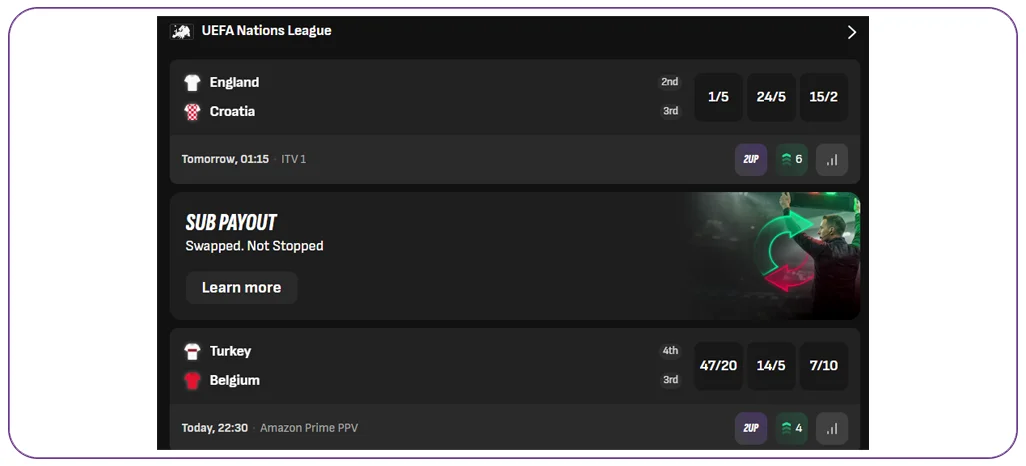
Sportsbook pricing teams need a clear view of how different operators publish and adjust their odds. Comparing market prices across bookmakers helps identify pricing differences, observe market movements, and evaluate whether an operator's displayed prices remain competitive.
live sports odds data collection provides structured information about available markets, event identifiers, bookmaker names, odds values, and timestamps. These fields allow analysts to compare prices for equivalent sporting events instead of relying on manual observations.
For meaningful comparisons, businesses should standardize odds formats. Decimal, fractional, and American odds represent prices differently, so converting them into a consistent format is important. Analysts should also distinguish between pre-match and in-play markets because their operating conditions differ.
What should businesses monitor?
- Opening odds and subsequent price movements.
- Current bookmaker prices for comparable markets.
- Event status and market suspension indicators.
- Timestamp differences between competing sources.
- Changes in available betting markets.
- Historical odds for performance analysis.
Historical records are particularly valuable because a single odds snapshot cannot explain how a price developed. A sequence of timestamped observations provides a more useful picture of market movement.
The Odds API documents historical odds availability beginning June 6, 2020, with snapshots at 10-minute intervals initially and five-minute intervals from September 2022. Additional markets, including player props and period markets, became available historically from May 3, 2023. These are provider-specific historical data capabilities, not universal update standards. Source: The Odds API historical documentation.
How Can Sports Event Information Improve Data Consistency?
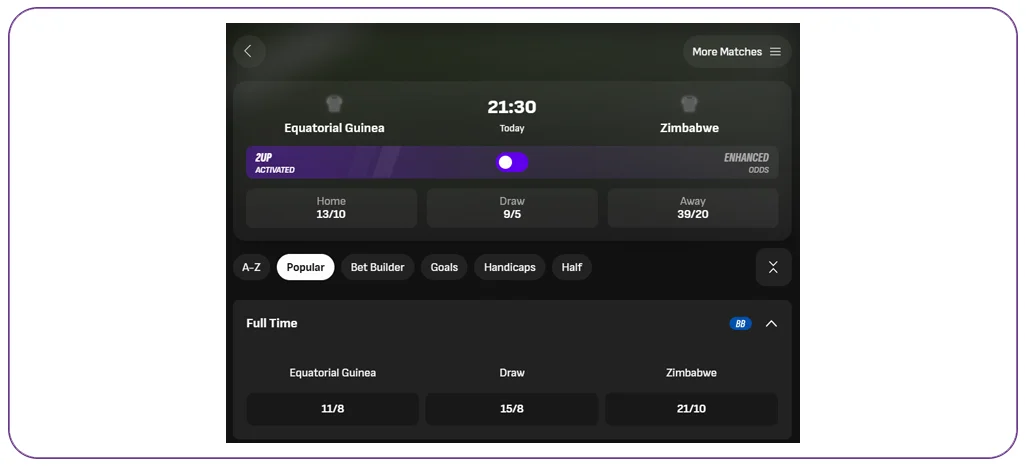
Odds without accurate event information can create misleading comparisons. Two records may contain similar team names but refer to different competitions, match dates, or event stages. Sportsbook analysts therefore need reliable event identifiers and supporting information to match market observations correctly.
Businesses that scrape sports event data can organize information around individual fixtures and their associated markets. Depending on source availability, useful attributes include:
- Sport and competition names.
- Home and away participants.
- Event identification numbers.
- Scheduled start times.
- Live event status.
- Match scores and periods.
- Market identifiers.
- Bookmaker information.
Event matching is particularly important when monitoring several bookmakers. Different providers may abbreviate team names, use different competition labels, or represent event times in different time zones.
A standardized event dataset can help resolve these inconsistencies. Businesses should create matching rules based on stable event identifiers wherever possible, supported by participant names, competition details, and scheduled start times.
What does recent market activity tell data teams?
The UK Gambling Commission provides a useful example of why sports betting information needs regular analysis.
| Reporting period | Online real-event betting GGY | Reported movement |
|---|---|---|
| Q3 2023–24 | Comparison baseline | Previous-year period |
| Q3 2024–25 | £647 million | Increased 38% year-on-year |
| Q3 2025–26 | £530 million | Decreased 18% year-on-year |
| Q4 2025–26 | £600 million | Increased 1% year-on-year |
Source: UK Gambling Commission market overview, May 2026 and February 2026 report.
These figures represent UK online real-event betting Gross Gambling Yield, not bookmaker odds or individual event prices. They demonstrate why analysts should interpret market information within its correct reporting context.
Consistent event identification and timestamp management make historical comparisons more reliable and reduce the risk of mixing unrelated sporting events.
How Can an Integrated Data Interface Simplify Odds Monitoring?
Sportsbook operators often need information from multiple sports, competitions, bookmakers, and betting markets. Collecting these records individually can increase integration work and make data standardization more difficult.
A live sports odds API can provide a structured way to retrieve supported event and pricing information through defined endpoints. Depending on the provider, an interface may offer current odds, upcoming fixtures, bookmaker comparisons, market identifiers, event status, and historical observations.
An effective integration should account for several technical requirements.
Consistent response structures: JSON responses with predictable field names make it easier to connect odds information to databases and analytics applications.
Timestamp management: Each observation should retain its source timestamp and collection timestamp. This distinction helps identify delays between publication and retrieval.
Market identification: Moneyline, match-winner, spreads, totals, and player-specific markets should have clear identifiers.
Data validation: The system should check missing values, unexpected odds formats, duplicate records, and inconsistent event identifiers.
Source monitoring: Teams should monitor API response failures, rate limits, authentication errors, and changes in provider coverage.
The Odds API's documentation describes historical endpoints that return odds snapshots for specified sports, regions, markets, and timestamps. Its documentation also explains that historical snapshots represent the closest available snapshot at or before the requested time. Source: Historical odds API documentation.
This type of structured access can support market research, historical analysis, and sportsbook reporting. However, data freshness depends on the provider's coverage and publication frequency. An API response should not automatically be treated as an instantaneous representation of every bookmaker's current market.
Looking for structured sports data and reliable odds-monitoring infrastructure? Connect with Real Data API to explore customized data collection and integration solutions.
Get Insights Now!How Can Detailed Event Records Support Better Market Analysis?
Sportsbook analysts need more than team names and prices to understand market conditions. Additional event attributes provide context for comparing odds and identifying changes that may affect pricing operations.
Businesses that extract sports event information can organize match details, competition information, participant records, event schedules, scores, and status indicators into consistent datasets.
For live events, event status is especially important. A match may be active, interrupted, suspended, postponed, or completed. Treating all these conditions as equivalent can produce inaccurate comparisons.
For example, an analyst comparing two bookmakers must establish whether both prices relate to the same event state and market conditions. A price displayed before an event interruption may not be directly comparable with a price published after play resumes.
Which event attributes deserve priority?
| Attribute | Why it matters |
|---|---|
| Event ID | Connects records to the correct fixture |
| Competition | Separates different tournaments |
| Participants | Identifies the competing teams or players |
| Start time | Supports scheduling and time alignment |
| Event status | Distinguishes active and suspended events |
| Score | Adds context to in-play observations |
| Market ID | Identifies the specific betting market |
| Timestamp | Establishes when information was observed |
Businesses should also maintain a clear distinction between event-level and market-level information. Event details describe the sporting fixture, while market details describe the pricing opportunities associated with it.
A well-organized dataset makes it easier to investigate unusual price changes and identify whether differences result from event conditions, market availability, or source-update timing.
For data teams, this separation improves reporting quality and reduces the possibility of joining unrelated records.
How Can Browser-Based Collection Handle Complex Sports Data Sources?
Some sports data sources provide information through dynamic websites and browser-based applications. Their content may load after the initial page response, update through client-side requests, or change as users navigate between sports and competitions.
A Scraping Browser API can support browser-based data collection workflows where authorized access requires page rendering, navigation, or interaction with dynamic content.
This approach can be useful when relevant information is not conveniently available through a documented API.
Typical browser-based collection requirements include:
- Loading dynamic event pages.
- Navigating between supported sports categories.
- Reading visible event and market information.
- Capturing timestamped observations.
- Handling pagination and changing page structures.
- Detecting missing or incomplete content.
- Managing collection errors and retries.
However, browser-based collection is not automatically more reliable than direct API integration. Websites can change their layouts, introduce access restrictions, or update content asynchronously.
A robust workflow should identify the source of each collected field, record the collection time, validate extracted values, and detect structural changes before they affect downstream reporting.
What historical developments matter from 2020 to 2026?
The following timeline combines documented data availability milestones and official UK market reporting. It does not represent a universal betting-data update schedule.
| Year | Verified development | Relevance to data teams |
|---|---|---|
| 2020 | Historical odds snapshots became available from June 6 through The Odds API. | Established a historical comparison baseline. |
| 2021 | Historical snapshots remained part of the provider's documented archive. | Supported retrospective market research. |
| 2022 | Five-minute historical snapshots began in September. | Increased the granularity of available historical observations. |
| 2023 | Additional historical markets became available from May 3. | Expanded the types of markets available for historical analysis. |
| 2024 | UK Q3 online real-event betting GGY reached £647 million, up 38% year-on-year. | Demonstrated significant variation in reported market activity. |
| 2025 | UK Q3 online real-event betting GGY was £530 million, down 18% year-on-year. | Reinforced the need to distinguish market trends from individual odds changes. |
| 2026 | UK Q4 online real-event betting GGY reached £600 million, up 1% year-on-year. | Provided a newer reporting benchmark for market analysis. |
Sources: The Odds API historical data and UK Gambling Commission.
Browser-based extraction should complement, rather than replace, authorized structured data access wherever a suitable API is available.
How Can Scalable Data Infrastructure Improve Collection Efficiency?
Sportsbook data operations require infrastructure that can process information from multiple sources without compromising data quality. As the number of monitored sports, competitions, events, and markets increases, collection systems must handle larger volumes of structured information.
A Web Scraping API can help businesses build repeatable data collection workflows by connecting authorized sources with centralized databases and analytics applications.
The following capabilities are important when designing a scalable collection process.
Automated collection: Schedule data retrieval according to source availability and required monitoring intervals.
Structured output: Organize event details, odds values, bookmaker information, market identifiers, and timestamps into consistent formats.
Data validation: Apply checks to identify missing values, duplicate observations, invalid formats, and unexpected changes.
Historical storage: Preserve timestamped records to support price movement analysis and historical comparisons.
Monitoring and alerts: Track failed requests, source changes, incomplete responses, and unusual data patterns.
Integration flexibility: Support connections with reporting platforms, internal databases, and business intelligence tools.
What should a reliable data pipeline include?
| Pipeline component | Primary responsibility |
|---|---|
| Source connection | Access authorized data sources |
| Data extraction | Collect available sports information |
| Data normalization | Standardize names, formats, and identifiers |
| Validation layer | Detect incomplete or inconsistent records |
| Storage system | Maintain historical observations |
| Analytics layer | Generate market comparison reports |
| Monitoring system | Identify collection and processing failures |
Businesses should also establish source-specific collection intervals rather than assuming every provider updates at the same frequency.
For example, a data pipeline retrieving information every few seconds cannot guarantee that the underlying bookmaker has published a new price during every request. Collection frequency and source freshness are separate measurements.
A properly designed infrastructure therefore measures data latency, request success rates, record completeness, and timestamp consistency. These indicators help technical teams understand the actual performance of their collection processes.
Why Choose Real Data API?
Real Data API provides data collection and extraction solutions designed to help businesses access, organize, and process information from relevant online sources.
For sports analytics companies, sportsbook operators, and market research organizations, dependable data infrastructure can reduce manual collection work and improve information accessibility.
What advantages can businesses expect?
- Customized Data Collection
Develop collection workflows based on selected sports, competitions, events, bookmakers, and available market information.
- Structured Data Delivery
Organize collected information into formats suitable for databases, reporting platforms, and analytical applications.
- Data Quality Management
Apply validation, normalization, and duplicate-detection processes to improve consistency across collected records.
- Scalable Collection Infrastructure
Support growing data requirements through configurable collection and processing workflows.
- Historical Data Organization
Maintain timestamped records that help businesses compare market observations across different reporting periods.
- Flexible Integration
Connect collected information with existing business applications and analytical environments, subject to technical compatibility.
Through customized Web Scraping Services, businesses can establish data collection workflows that support competitor research, market monitoring, and sports information analysis.
The focus is on dependable information access, structured delivery, and data quality rather than unsupported promises of guaranteed real-time updates.
Conclusion
Accurate competitor analysis requires consistent sports information, reliable timestamps, structured odds records, and effective data validation. Sportsbook operators need to understand not only how prices differ across bookmakers but also when those prices were observed and which event conditions applied.
Implementing live betting data extraction can help businesses organize market observations, compare bookmaker prices, examine historical movements, and improve the quality of pricing intelligence.
Real Data API helps businesses develop customized data collection workflows that support structured information access, historical analysis, and scalable data processing.
Looking to improve sportsbook market intelligence with accurate and structured sports data? Connect with Real Data API to discuss your data extraction requirements and build a reliable collection solution!
FAQs
1. How does live odds monitoring help sportsbooks?
live betting data extraction helps sportsbooks compare competitor prices, identify market movements, monitor available odds, and maintain structured information for pricing analysis and operational reporting.
2. Can businesses collect information from multiple bookmakers?
Yes. Scrape Live Betting Data workflows can organize accessible bookmaker information, allowing analysts to compare supported markets while accounting for source coverage and update differences.
3. Why is historical pricing information important?
live sports odds data collection supports historical comparisons, helping analysts examine opening prices, subsequent movements, closing prices, and differences across bookmakers.
4. What information can sports event datasets contain?
Businesses that scrape sports event data can collect event identifiers, teams, competitions, schedules, scores, match status, and associated market information from authorized sources.
5. Can Real Data API support automated sports data integration?
Yes. Real Data API can help develop structured data collection and integration workflows using a live sports odds API, subject to source accessibility and technical requirements.
Latest posts

How to Identify Retail Pricing Trends and Improve Assortment Planning Using Biedronka API for product information

How to Track Competitor Odds and Improve Sportsbook Pricing Accuracy Through Live Betting Data Extraction

How KAYAK API Integration for Flight Search Helps Travel Businesses Compare Airfares and Find Better Deals

How to Use Amazon API integration for e-commerce analytics to Track Competitor Prices and Improve Product Performance




.png)


