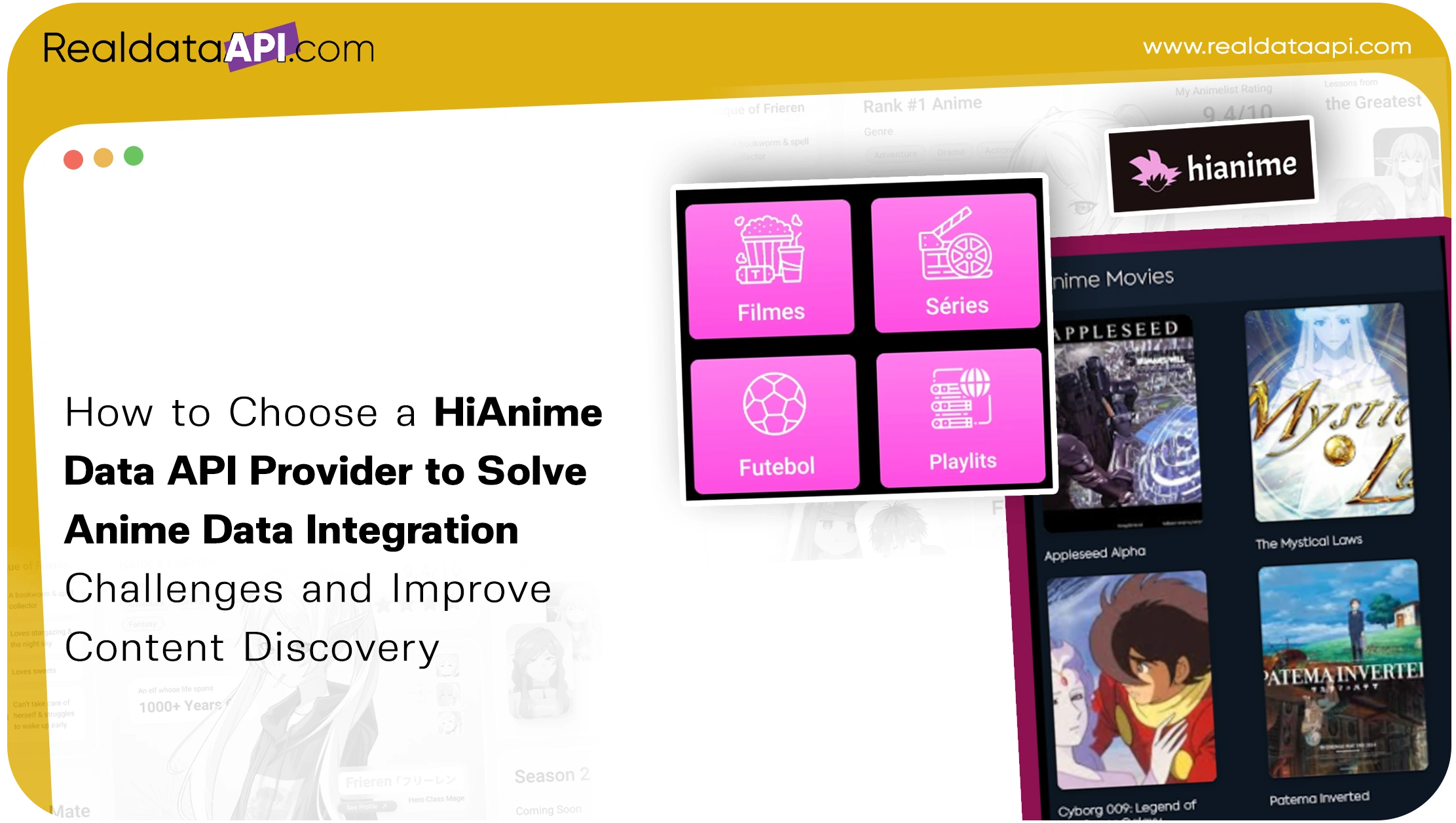
Introduction
Choosing the right anime data API provider helps businesses automate content collection, improve content discovery, and deliver real-time anime information to users. A scalable API provides structured access to anime titles, episodes, genres, ratings, release schedules, and metadata while eliminating manual data management.
Industry Insight: Industry estimates suggest the global anime market is expected to surpass $60 billion by 2030. Between 2020 and 2026, anime streaming platforms, recommendation engines, and entertainment apps increasingly adopted automated APIs to manage expanding content libraries and improve user engagement.
Target Audience: OTT platforms, anime streaming services, entertainment startups, app developers, AI companies, media analytics firms, and content aggregators.
Pain Point Solved: Manual anime catalog updates, inconsistent metadata, delayed episode information, and poor content discovery.
Selecting a reliable HiAnime Data API Provider enables organizations to automate the collection of anime titles, episode listings, genres, ratings, studios, release dates, subtitles, and language information. This reduces operational overhead while ensuring users receive accurate and up-to-date content.
Many businesses also rely on a Hianime Scraper to build recommendation engines, content catalogs, anime search platforms, analytics dashboards, and streaming applications. Structured anime datasets simplify integration, improve personalization, and support AI-powered content discovery across rapidly growing entertainment platforms.
How Can Businesses Collect Complete Anime Catalog Information?
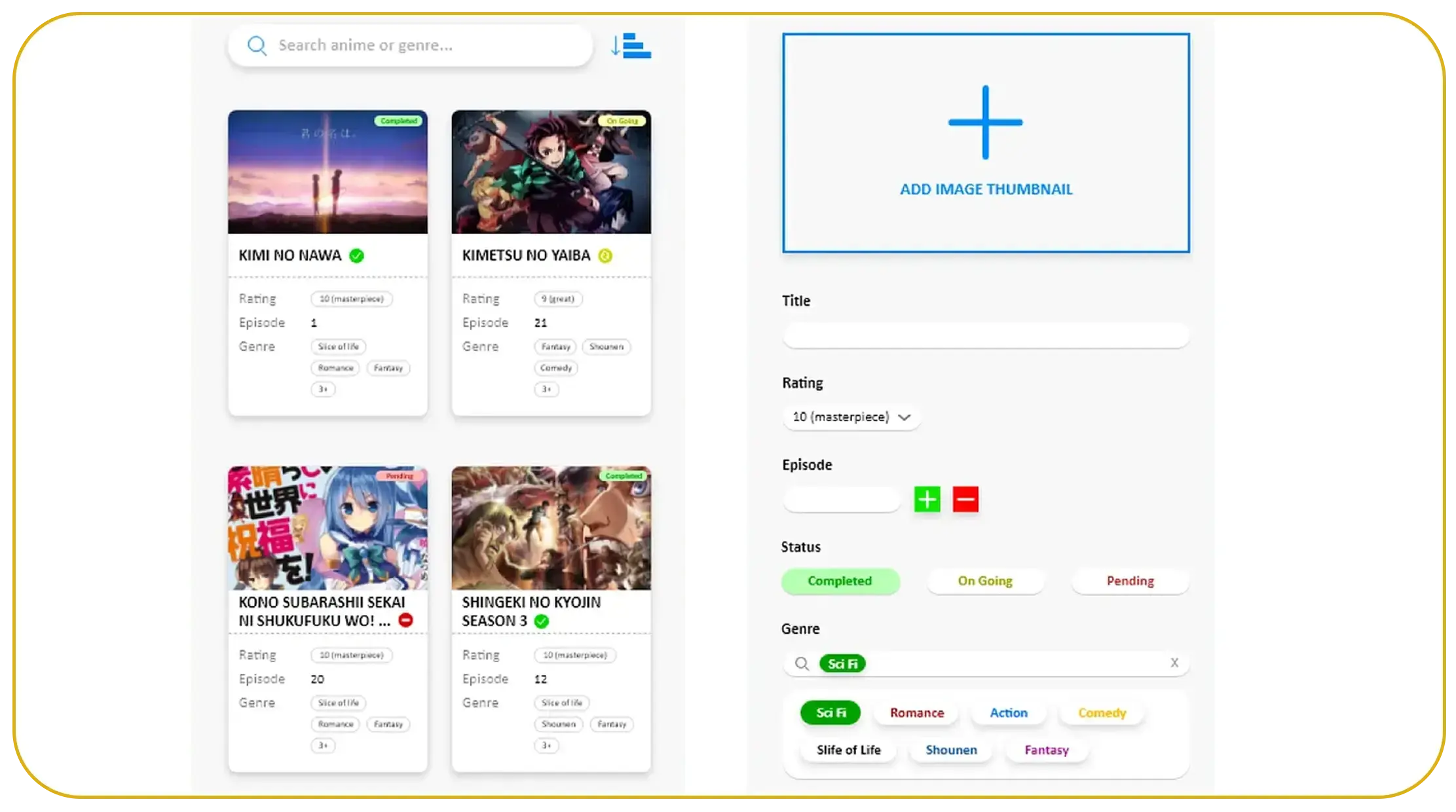
Anime platforms require comprehensive content catalogs to attract and retain viewers. Users expect accurate information about titles, episodes, genres, release schedules, studios, ratings, and available languages. Manually collecting and maintaining this information becomes increasingly difficult as anime libraries continue to expand.
One effective solution is HiAnime title and episode data extraction, which automates the collection of structured anime information from online sources. APIs provide access to anime titles, episode numbers, season details, genres, descriptions, studios, release dates, subtitles, and available language options.
Automated catalog collection supports many business applications:
- Anime streaming platforms
- Anime discovery applications
- Recommendation engines
- Entertainment websites
- Anime databases
- Media analytics dashboards
- Mobile applications
- AI-powered search platforms
For example, an anime streaming service can automatically display newly released episodes, while a recommendation engine can suggest similar series based on genres, ratings, and studios. Entertainment publishers can also monitor seasonal anime releases to keep their platforms updated.
Automation reduces manual effort and ensures consistent data quality while keeping content catalogs synchronized with newly released episodes and titles.
Anime Content Growth (2020-2026)
| Year | Anime Titles Available | Episodes Indexed | Platforms Using Automated Data Collection |
|---|---|---|---|
| 2020 | 14,200 | 420,000 | 24% |
| 2021 | 15,800 | 470,000 | 34% |
| 2022 | 17,600 | 530,000 | 46% |
| 2023 | 19,900 | 610,000 | 59% |
| 2024 | 22,300 | 700,000 | 72% |
| 2025* | 24,900 | 795,000 | 84% |
| 2026* | 27,600 | 900,000 | 91% |
*Projected industry estimates.
Organizations that automate anime catalog collection improve user satisfaction, accelerate content updates, and create richer discovery experiences powered by reliable and structured data.
How Can Streaming Platforms Keep Anime Data Up to Date?

Anime streaming platforms receive frequent updates, including new episodes, seasonal releases, rating changes, language additions, and metadata improvements. Manual updates often result in incomplete catalogs and outdated information, reducing user engagement and search accuracy.
A scalable web scraping HiAnime data using API solution continuously collects updated anime information, ensuring applications always display the latest content. Developers can automatically retrieve episode releases, title updates, genre changes, ratings, studios, streaming availability, and multilingual metadata in structured formats.
Real-time synchronization enables businesses to:
- Publish newly released episodes
- Update anime ratings automatically
- Track seasonal anime launches
- Monitor content availability
- Improve recommendation engines
- Enhance search functionality
- Support multilingual platforms
- Generate entertainment analytics
For instance, a streaming platform can instantly notify users when a new episode becomes available. An anime discovery application can feature trending series based on current ratings, while analytics companies can monitor genre popularity throughout different seasons.
Adoption of Automated Anime Data Platforms (2020-2026)
| Year | Streaming Platforms Using APIs | Daily Metadata Updates | Improvement in User Engagement |
|---|---|---|---|
| 2020 | 22% | 160,000 | 18% |
| 2021 | 31% | 240,000 | 27% |
| 2022 | 44% | 360,000 | 39% |
| 2023 | 58% | 540,000 | 52% |
| 2024 | 72% | 790,000 | 65% |
| 2025* | 84% | 1.10 Million | 78% |
| 2026* | 92% | 1.48 Million | 88% |
*Projected industry estimates.
Businesses that automate anime data synchronization improve content accuracy, reduce operational costs, and deliver better viewing experiences. Continuous updates ensure streaming platforms remain current while supporting personalized recommendations, advanced analytics, and long-term audience engagement.
How Can Businesses Deliver Accurate Anime Metadata in Real Time?
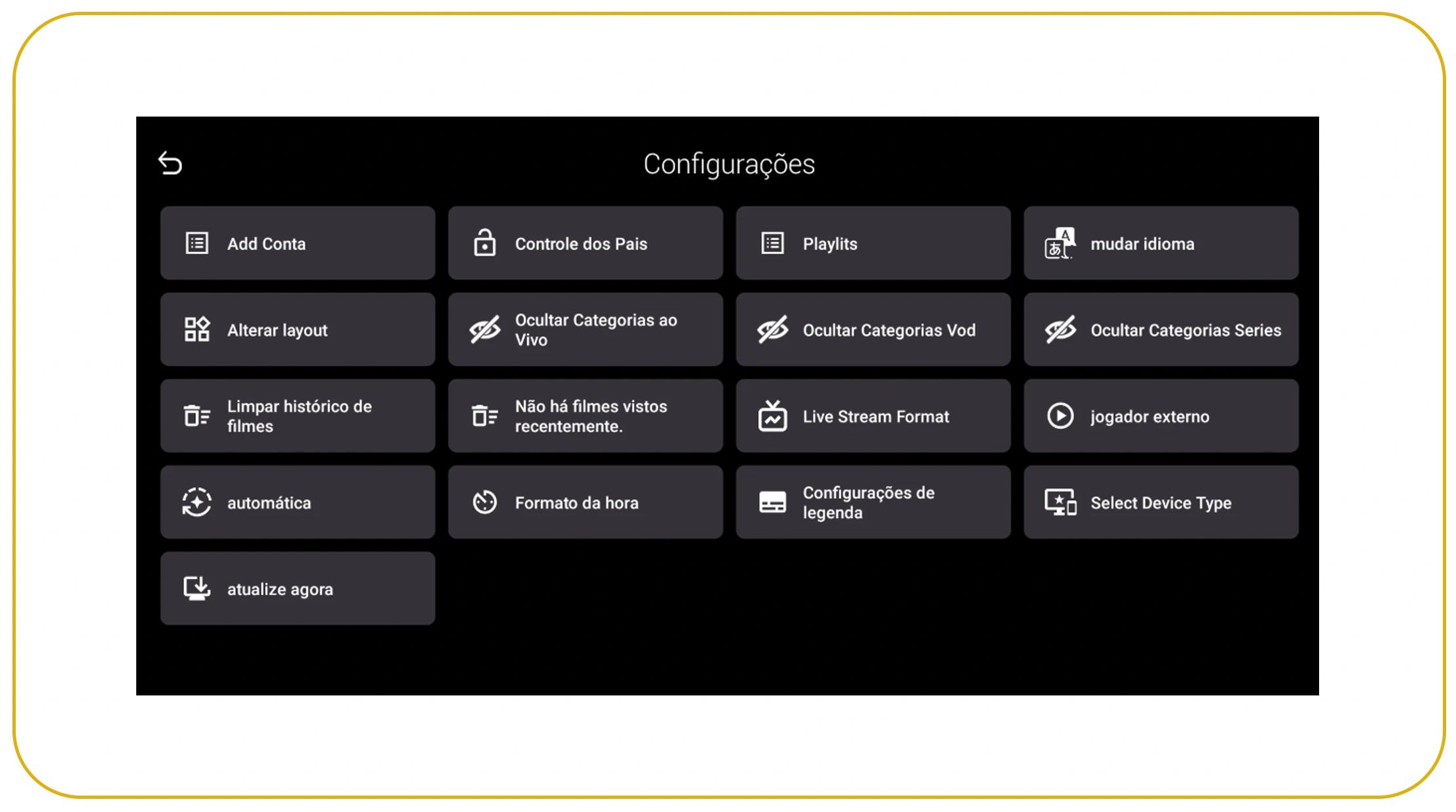
Anime viewers expect complete and up-to-date information before deciding what to watch. They look for genres, studios, voice actors, episode durations, release schedules, ratings, and descriptions. Missing or outdated metadata can reduce user engagement and make content discovery difficult. Automated APIs solve this challenge by continuously synchronizing metadata from trusted sources.
A Real-time HiAnime metadata api scraping solution enables businesses to collect structured information for every anime title and episode. This includes genres, release dates, production studios, episode counts, ratings, content descriptions, subtitles, languages, and artwork metadata. Developers can integrate this information directly into streaming platforms, recommendation engines, mobile applications, and entertainment dashboards.
Real-time metadata supports several business objectives:
- Improve anime search accuracy
- Power personalized recommendations
- Display newly released episodes
- Monitor content popularity
- Organize titles by genre
- Build AI-powered discovery tools
- Track seasonal anime releases
- Enhance multilingual experiences
For example, an anime streaming platform can automatically recommend similar shows based on genres and viewer preferences. Analytics companies can evaluate seasonal viewing patterns, while media publishers can generate trending anime reports using current metadata.
Automation eliminates repetitive manual updates and ensures every title reflects the latest information, providing a consistent experience for users across web and mobile platforms.
Growth of Anime Metadata Management (2020-2026)
| Year | Anime Titles with Rich Metadata | Businesses Using Metadata APIs | Average Metadata Fields per Title |
|---|---|---|---|
| 2020 | 13,800 | 23% | 18 |
| 2021 | 15,400 | 33% | 23 |
| 2022 | 17,300 | 45% | 29 |
| 2023 | 19,700 | 59% | 35 |
| 2024 | 22,200 | 72% | 42 |
| 2025* | 24,800 | 84% | 49 |
| 2026* | 27,500 | 91% | 57 |
*Projected industry estimates.
Businesses that automate metadata collection improve content quality, simplify catalog management, and deliver richer entertainment experiences that increase user satisfaction and retention.
How Can OTT Platforms Scale Content Aggregation Efficiently?

OTT platforms compete by offering extensive content libraries, personalized experiences, and timely updates. Managing thousands of anime titles manually becomes increasingly difficult as catalogs grow. Automated APIs simplify this process by continuously collecting and organizing streaming data.
A modern OTT Data Scraping API allows businesses to automate the extraction of anime titles, episode information, genres, ratings, streaming availability, production studios, release schedules, and language options. Structured datasets can be integrated directly into content management systems, recommendation engines, business intelligence platforms, and AI applications.
Businesses use automated OTT data to:
- Expand streaming catalogs
- Improve content recommendations
- Analyze viewing trends
- Monitor competitor libraries
- Support multilingual audiences
- Automate catalog updates
- Build entertainment dashboards
- Generate audience insights
For example, an OTT startup can automatically populate its anime catalog with newly released titles. Media companies can compare seasonal content availability across multiple platforms, while AI developers can create intelligent recommendation systems using structured streaming metadata.
OTT Content Automation Trends (2020-2026)
| Year | OTT Platforms Using Automated APIs | Titles Updated Daily | Reduction in Manual Operations |
|---|---|---|---|
| 2020 | 24% | 75,000 | 19% |
| 2021 | 34% | 118,000 | 28% |
| 2022 | 47% | 185,000 | 40% |
| 2023 | 61% | 275,000 | 53% |
| 2024 | 74% | 395,000 | 66% |
| 2025* | 86% | 545,000 | 79% |
| 2026* | 92% | 720,000 | 88% |
*Projected industry estimates.
Organizations that automate OTT content aggregation improve operational efficiency, maintain accurate libraries, and deliver better user experiences. Reliable streaming data enables faster content updates, stronger personalization, and more informed business decisions in the growing digital entertainment market.
How Can Entertainment Businesses Build Better Data Platforms?
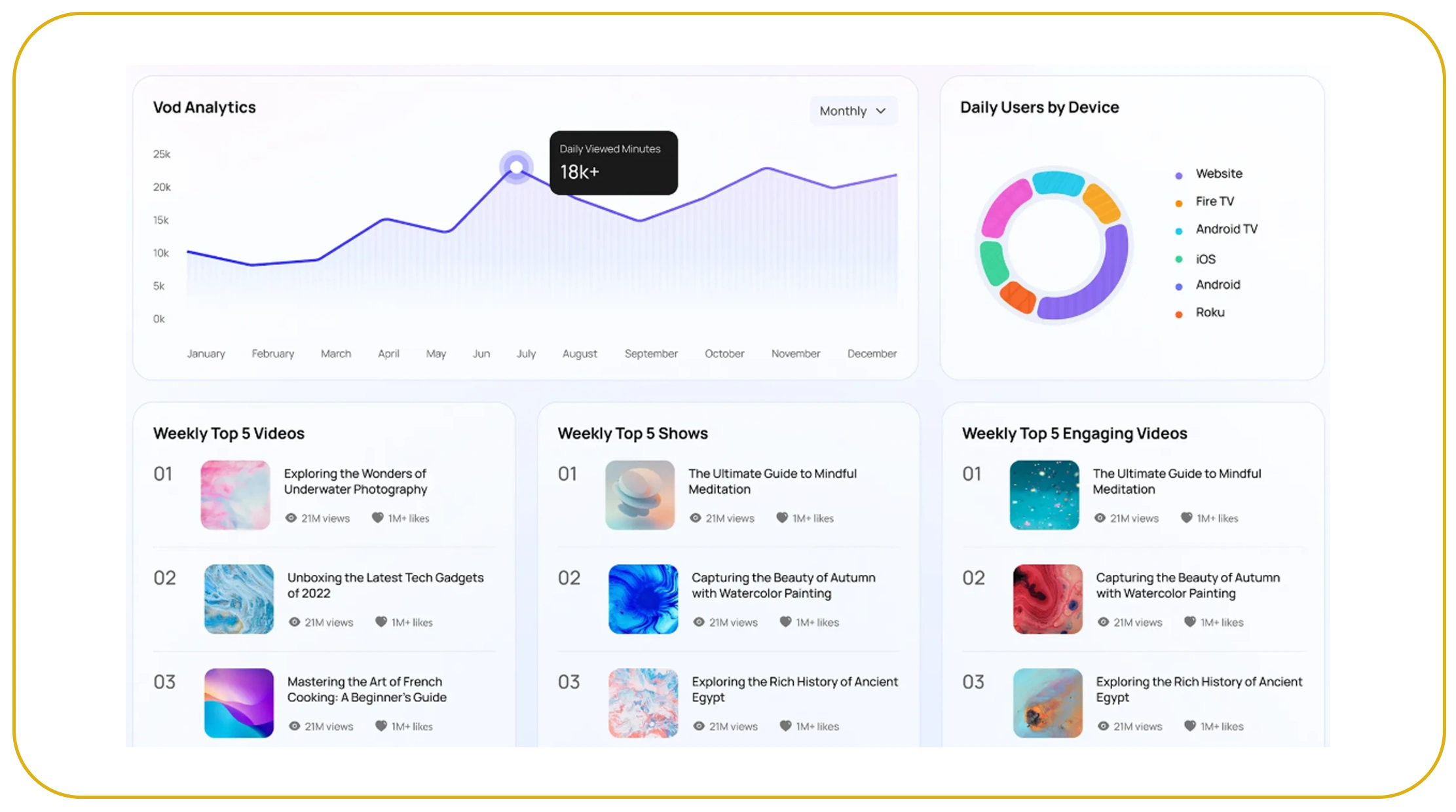
Modern entertainment platforms rely on accurate, structured, and continuously updated datasets to deliver engaging user experiences. Whether the goal is to power recommendation engines, streaming applications, analytics dashboards, or content discovery platforms, high-quality anime data is essential. Manual collection often leads to outdated information and inconsistent catalogs.
A comprehensive OTT Dataset enables businesses to organize anime titles, episode information, genres, ratings, studios, release schedules, subtitles, languages, artwork, and other metadata into a centralized repository. This structured approach supports AI, business intelligence, and advanced search capabilities while reducing operational complexity.
Businesses use centralized entertainment datasets to:
- Build anime discovery platforms
- Create recommendation engines
- Monitor seasonal releases
- Analyze viewing trends
- Improve content categorization
- Support multilingual streaming
- Generate business intelligence reports
- Power AI-driven content recommendations
For example, an entertainment startup can build a searchable anime database with thousands of titles, while media research companies can analyze genre popularity and release trends. Streaming platforms can also use centralized datasets to synchronize multiple content catalogs efficiently.
OTT Dataset Growth (2020-2026)
| Year | Structured Anime Records | OTT Platforms Using Centralized Datasets | Monthly Content Updates |
|---|---|---|---|
| 2020 | 420,000 | 26% | 48,000 |
| 2021 | 480,000 | 36% | 63,000 |
| 2022 | 560,000 | 48% | 82,000 |
| 2023 | 650,000 | 61% | 108,000 |
| 2024 | 760,000 | 74% | 138,000 |
| 2025* | 880,000 | 86% | 172,000 |
| 2026* | 1,020,000 | 92% | 214,000 |
*Projected industry estimates.
Organizations that invest in centralized OTT datasets improve data quality, simplify catalog management, and accelerate the development of scalable entertainment applications.
How Can APIs Simplify Anime Data Integration?
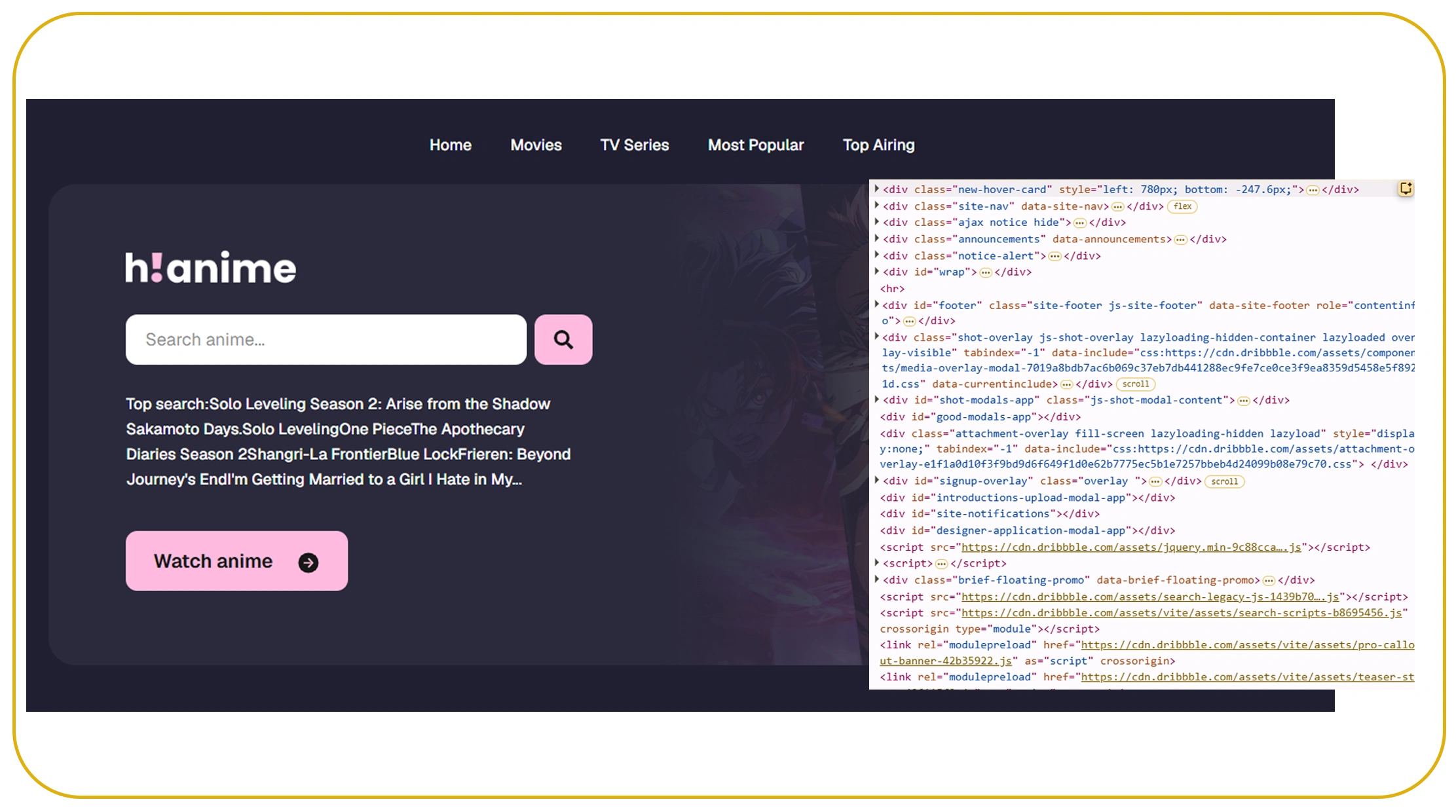
As entertainment platforms expand, integrating accurate anime information becomes increasingly important. Developers need APIs that provide structured data while minimizing engineering effort. Automated APIs eliminate repetitive manual updates and make it easier to build scalable applications with reliable content.
A modern Web Scraping API delivers structured anime information including titles, episode details, genres, ratings, studios, release dates, languages, artwork, and streaming metadata. Developers can integrate this data directly into websites, mobile apps, AI recommendation engines, and analytics platforms.
Key advantages include:
- Automated anime catalog synchronization
- Real-time episode updates
- Rich metadata collection
- Faster application development
- AI-ready structured datasets
- Easy API integration
- Scalable cloud infrastructure
- Reliable content delivery
For example, developers can build intelligent recommendation engines that automatically update with new anime releases. Entertainment companies can monitor content trends, while media research firms can generate detailed reports using continuously refreshed anime datasets.
API Adoption Across Entertainment Platforms (2020-2026)
| Year | Companies Using Content APIs | Daily API Requests | Average Development Time Saved |
|---|---|---|---|
| 2020 | 25% | 180,000 | 17% |
| 2021 | 35% | 265,000 | 25% |
| 2022 | 47% | 410,000 | 37% |
| 2023 | 61% | 630,000 | 50% |
| 2024 | 74% | 920,000 | 64% |
| 2025* | 86% | 1.28 Million | 78% |
| 2026* | 93% | 1.75 Million | 88% |
*Projected industry estimates.
Automated APIs accelerate platform development while ensuring users always receive current and accurate anime information. Businesses benefit from improved scalability, stronger personalization, and lower maintenance costs.
Why Choose Real Data API?
Real Data API provides enterprise-grade anime and entertainment data solutions that help businesses automate content collection, enrich metadata, and build engaging digital experiences. Whether you operate a streaming platform, entertainment website, recommendation engine, analytics solution, or AI application, our APIs deliver structured and continuously updated anime datasets.
As a trusted HiAnime Data API Provider, Real Data API enables organizations to collect anime titles, episode information, genres, ratings, studios, release schedules, subtitles, languages, artwork, and streaming metadata through scalable APIs that integrate seamlessly into existing systems.
Why businesses choose Real Data API:
- Real-time anime data updates
- Comprehensive episode and title information
- Enterprise-grade API performance
- Structured JSON and CSV outputs
- Rich metadata collection
- Easy integration with AI and BI platforms
- Scalable cloud infrastructure
- Reliable technical support
- Flexible enterprise data delivery
Our solutions help entertainment companies reduce manual effort, improve catalog accuracy, accelerate application development, and deliver outstanding user experiences through reliable anime data.
Conclusion
Anime platforms require accurate, scalable, and continuously updated data to keep users engaged and improve content discovery. Manual catalog management is time-consuming and often leads to outdated information, inconsistent metadata, and poor search experiences. Automated APIs solve these challenges by providing structured anime data that supports streaming services, recommendation engines, analytics platforms, and AI-powered applications.
Choosing the right HiAnime Data API Provider enables organizations to automate content management, enrich metadata, improve recommendations, and scale entertainment platforms with confidence. As anime audiences continue to grow worldwide, reliable API-driven data solutions will remain essential for delivering personalized, engaging, and data-driven viewing experiences.
Ready to enhance your entertainment platform? Partner with Real Data API, your trusted HiAnime Data API Provider, to access real-time anime titles, episode data, metadata, and scalable APIs that power smarter content discovery and exceptional user experiences!
Latest posts
How to Scrape TikTok creator profile data using RetrieveTik API for Influencer Analytics and Marketing Intelligence?

How to Choose a HiAnime Data API Provider to Solve Anime Data Integration Challenges and Improve Content Discovery

How to scrape Falabella product data via API for Real-Time Price Monitoring and Competitive Retail Intelligence

MediaMarkt API and Web Scraping Guide - How to Solve Real-Time Price Tracking and Product Monitoring Challenges?







.png)