.gif)
.jpg)
Quick Summary
- Discover how the Rome2Rio Travel Data Scraping API for route comparison helps businesses address inaccurate fare estimates, compare transportation options, and improve route recommendations.
- Understand how route costs, travel times, and transportation availability support better travel pricing decisions using a Rome2Rio Scraper.
- Explore data collection, validation, and analysis strategies for building reliable travel comparison platforms.
Introduction
Inaccurate travel fare estimates can lead to poor booking decisions, customer dissatisfaction, and lost conversion opportunities. Travel comparison platforms need reliable information about transportation costs, routes, schedules, and available connections to deliver useful recommendations. The Rome2Rio Travel Data Scraping API for route comparison can support travel intelligence workflows by helping businesses collect and structure publicly accessible route information for analysis.
Rome2Rio global travel data web scraping is particularly relevant to travel agencies, online travel platforms, mobility applications, and fare comparison businesses that need to evaluate journeys involving multiple transportation modes. However, collected estimates must be validated against their source, timestamp, currency, travel date, and applicable booking conditions. A route estimate should never be treated as a guaranteed ticket price.
This article explains how businesses can improve travel fare accuracy through structured data collection, price validation, route analysis, and ongoing monitoring.
How Can Businesses Collect Reliable Route Cost Information?
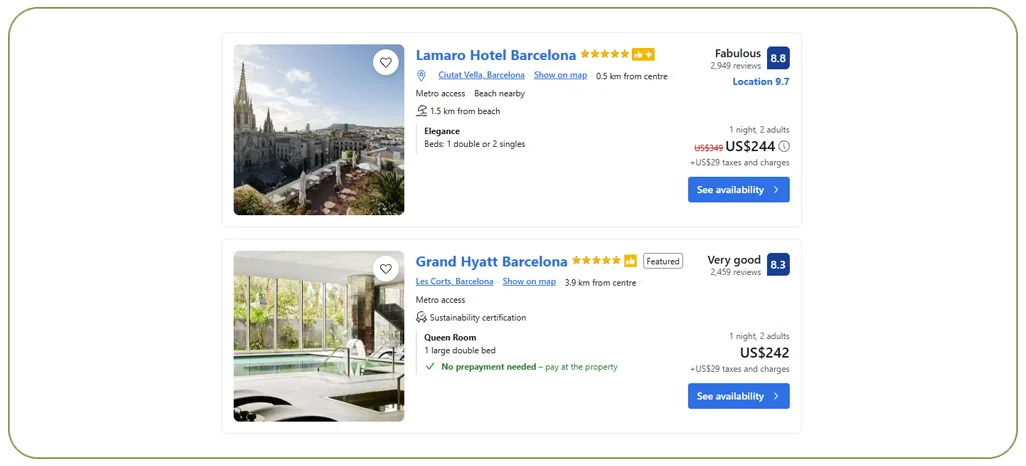
Travel businesses need consistent route-level information to identify why estimated fares differ from actual booking prices. A useful collection process should capture the departure and arrival locations, transportation mode, travel date, estimated fare, currency, journey duration, and booking provider.
The Extract Rome2Rio travel cost comparison data approach should begin with authorized data access rather than uncontrolled website extraction. Rome2Rio's published pricing explanation states that its estimates can depend on ticketing-provider partnerships, historical route information, and comparable services when route-specific historical information is unavailable. It also explains that prices can change with availability and seasonality.
For travel comparison businesses, this distinction matters. An estimated price and a live bookable fare are not necessarily the same. A reliable dataset should therefore preserve the original price type and its source instead of presenting every amount as a confirmed ticket price.
Important data fields to capture:
- Origin and destination, including location identifiers.
- Transport mode, such as bus, train, flight, ferry, or driving.
- Estimated fare and currency.
- Price range, where an exact figure is unavailable.
- Departure date and time, where supplied.
- Journey duration and number of transfers.
- Provider name and source reference.
- Collection timestamp and last verification status.
How should fare data be validated?
Businesses should compare route estimates with authorized ticket-provider information for the same journey, date, passenger conditions, and currency. Differences should be classified as availability changes, seasonal variation, booking fees, or outdated estimates.
A practical validation process also identifies missing prices, inconsistent currencies, duplicate routes, and unusually large fare changes before information reaches a customer-facing platform.
Why Does Travel Pricing Information Change Frequently?
Travel prices are not fixed values. They can change according to booking availability, seasonality, service schedules, and transport-provider pricing policies. Consequently, a fare collected at one point in time may not represent the price available when a customer completes a booking.
The Real-time travel pricing intelligence data strategy helps businesses distinguish between estimated costs, recently verified fares, and historical observations. These categories should remain separate in the database because they serve different business purposes.
Rome2Rio confirms that its prices may fluctuate with availability and seasonality. When an exact figure is unavailable, it may display a price range instead.
Historical travel statistics also demonstrate why businesses must consider changing travel demand. According to Eurostat, EU airports handled approximately 277 million air passengers in 2020, compared with approximately 1.05 billion in 2024. This substantial change illustrates the disruption and subsequent recovery in passenger transport demand, although passenger volumes should not be mistaken for direct fare movements.
What should a travel pricing monitoring system track?

| Monitoring parameter | Why it matters |
|---|---|
| Fare amount | Identifies the displayed journey cost |
| Currency | Prevents incorrect price comparisons |
| Availability status | Separates available services from unavailable options |
| Travel date | Helps identify date-specific differences |
| Transport operator | Supports provider-level comparisons |
| Collection timestamp | Shows how recent the information is |
| Price type | Distinguishes estimates from confirmed fares |
Businesses should establish refresh schedules according to the volatility of each transport category and the availability of authorized data sources. They should also maintain historical snapshots to identify changes rather than overwriting previous observations.
For example, flight fares may require more frequent verification than a broad historical road-distance reference. However, refresh frequency should be determined by observed changes and source permissions, not an assumed universal update interval.
How Can Businesses Build More Accurate Route Comparisons?
A route comparison system should evaluate more than the lowest displayed fare. It should consider total journey cost, travel duration, transfers, departure schedules, transport availability, and the reliability of the underlying information.
The Rome2Rio global route data API concept is useful for organizing multimodal journey information into a common structure. Businesses should distinguish between an officially licensed integration, an authorized third-party data feed, and information collected through other permitted sources. These are not interchangeable methods.
One important compliance consideration is that Rome2Rio's published Terms of Use prohibit automated scraping and copying of its service without authorization. Businesses should obtain the necessary permission or use an approved commercial integration before collecting or redistributing its data.
What makes a route comparison accurate?
- Location matching: Standardize departure and arrival locations to avoid comparing different stations, airports, or terminals.
- Transport identification: Separate flights, trains, buses, ferries, taxis, and road journeys.
- Fare normalization: Convert currencies using a documented exchange-rate source and timestamp.
- Journey validation: Check that the departure date, schedule, and available connection match the requested journey.
- Total-cost calculation: Include applicable booking charges, transfers, and other disclosed expenses where reliable information is available.
- Source verification: Retain the original provider and retrieval timestamp for every observation.
Which route attributes should be compared?
| Attribute | Business value |
|---|---|
| Estimated ticket cost | Initial price comparison |
| Verified ticket price | More dependable booking guidance |
| Total journey duration | Helps identify time-efficient routes |
| Transfer count | Shows journey complexity |
| Transport mode | Enables multimodal comparisons |
| Availability | Helps identify bookable options |
| Additional charges | Improves total-cost transparency |
For example, a journey with a lower initial ticket price may involve additional transfers or separate transport expenses. Comparing the complete journey rather than just the first displayed fare gives customers a more meaningful basis for choosing a route.
How Can Structured Travel Information Improve Business Decisions?
Travel comparison platforms, booking websites, mobility applications, and travel agencies need organized information to make route recommendations understandable and consistent.
High-quality Travel Datasets can bring together route identifiers, transportation modes, fare estimates, journey durations, operator details, currency information, and source timestamps. A consistent structure also makes it easier to identify missing information and compare observations across different providers.
The importance of reliable transport information is evident in official passenger statistics. Eurostat reported that EU air passenger numbers increased from 816 million in 2022 to 973 million in 2023, followed by approximately 1.1 billion in 2024. These figures demonstrate substantial changes in travel activity during the recovery period. They are passenger-volume statistics, not evidence of corresponding fare increases.
Verified air passenger statistics: 2020–2026
The following table presents available EU air passenger figures. The 2026 annual total is not yet available as a completed-year statistic.
| Year | EU air passengers | Data status |
|---|---|---|
| 2020 | 277 million | Reported annual figure |
| 2021 | 374 million | Reported annual figure |
| 2022 | 816 million | Reported annual figure |
| 2023 | 973 million | Reported annual figure |
| 2024 | Approximately 1.1 billion | Reported annual figure |
| 2025 | Not included | No verified annual figure used here |
| 2026 | Not included | Incomplete year |
Sources: Eurostat's air passenger transport statistics and annual passenger reports.
What information should a business dataset contain?
| Data category | Recommended fields |
|---|---|
| Route information | Origin, destination, route ID |
| Transport details | Mode, operator, connections |
| Pricing | Amount, currency, price type |
| Scheduling | Departure, arrival, journey date |
| Availability | Availability status, verification time |
| Data quality | Source, timestamp, validation status |
Businesses can use these datasets to identify routes with inconsistent estimates, evaluate transportation alternatives, and monitor how journey costs vary between providers. Historical records are especially useful because they show how displayed estimates change over time.
Want to build a more dependable travel comparison database? Explore structured travel data solutions that support accurate route analysis and pricing intelligence.
Get Insights Now!How Does Data Analysis Help Identify Costly Travel Routes?
Collecting travel information is only the first step. Businesses must also analyze the information to understand why prices differ, which routes provide better value, and where estimates require additional verification.
Transportation Data Analysis Powered by Rome2Rio API can support this process when businesses have authorized access to relevant journey information. The objective is to transform individual route observations into comparable business intelligence.
For meaningful analysis, businesses should create separate records for estimated fares, confirmed provider prices, historical observations, and unavailable prices. Combining these categories into one price field can create misleading comparisons.
Important analytical methods
- Price variance analysis: Compare two or more observations for the same route and travel conditions.
- Historical comparison: Examine previous fare observations to identify changes over time.
- Mode comparison: Evaluate different transport methods using consistent cost and journey-duration criteria.
- Route segmentation: Group routes by country, city pair, transport category, or distance.
- Data completeness checks: Identify missing fares, currencies, operator names, and timestamps.
- Outlier detection: Flag unusual price differences for manual or automated verification.
How can businesses use historical information?
A historical database should retain the date on which information was collected, the date for which the journey applies, and the original source. These distinctions help analysts avoid treating an old observation as a current fare.
For example, a travel platform can compare the latest authorized provider price with its previous observation for the same journey. If the amount differs significantly, the system can request another verification before updating its customer-facing results.
This process is useful for travel agencies, online booking platforms, fare comparison websites, and mobility businesses that depend on reliable journey information.
A well-maintained analytical system can also reveal recurring data-quality problems, including inconsistent location names, duplicate connections, missing transport operators, and differences between estimated and bookable prices.
How Can Businesses Maintain Reliable Travel Information Over Time?
Travel information needs continuous quality management. A dataset that was accurate when first collected may become outdated as transport operators change schedules, availability, and pricing.
Rome2Rio travel Data Scraping is a phrase associated with automated travel information collection, but businesses must distinguish technical collection capabilities from legal permission. Rome2Rio's published Terms of Use prohibit automated scraping unless specifically authorized. An approved integration or properly licensed source should therefore be the starting point for any commercial data workflow.
A practical data-quality workflow
| Stage | Business activity | Expected outcome |
|---|---|---|
| 1. Source selection | Identify authorized data providers | Compliant data access |
| 2. Data collection | Retrieve permitted route information | Structured observations |
| 3. Standardization | Normalize locations, currencies, and modes | Consistent records |
| 4. Validation | Check dates, prices, and availability | Fewer incorrect entries |
| 5. Historical storage | Preserve timestamped observations | Traceable price changes |
| 6. Refresh | Recheck information according to source rules | More current records |
| 7. Reporting | Generate comparison reports | Actionable travel intelligence |
What should businesses do when a fare cannot be verified?
A platform should avoid displaying an unverified estimate as a confirmed price. Instead, it can label the information as an estimate, show a price range where supported, or direct customers to the relevant provider for confirmation.
Rome2Rio itself explains that it may use similar-service pricing to determine a range when historical information for a particular route is unavailable. This makes clear why businesses should preserve price provenance rather than assuming every route estimate comes from a live ticket inventory.
How does a quality-controlled dataset support customers?
A reliable information workflow helps customers understand the difference between the cheapest estimated journey and the most suitable available journey. It also allows businesses to communicate whether prices have been verified and when the information was last checked.
The most useful travel comparison systems combine authorized source information, consistent data structures, historical records, and transparent price labels. This approach supports better decisions without promising that every estimate will match the final checkout amount.
Improve the quality of your travel intelligence with structured data collection, route validation, and reliable pricing analysis.
Why Choose Real Data API?
Real Data API helps businesses approach travel data projects with a focus on structured information, data consistency, and actionable insights. Travel platforms need more than a collection of fares. They need organized information that can be checked, compared, maintained, and used in business applications.
Choosing a suitable data solution can help businesses:
- Organize route and transportation information into structured datasets.
- Standardize prices, currencies, locations, and transport categories.
- Identify incomplete or inconsistent travel records.
- Maintain historical observations for comparison and analysis.
- Build workflows for validating estimated and provider-confirmed fares.
- Support travel intelligence, market research, and competitive analysis.
The Rome2Rio Travel Data Scraping API for route comparison should be implemented only through an authorized data-access arrangement. Businesses should confirm source permissions, commercial usage rights, refresh limits, and redistribution conditions before deployment.
For travel agencies, comparison websites, and mobility platforms, a dependable data workflow can make route information easier to analyze and present to customers.
Conclusion
Inaccurate travel fare estimates can affect customer trust, booking decisions, and the overall performance of travel comparison platforms. Businesses can address these challenges by collecting authorized route information, standardizing pricing fields, validating provider data, and maintaining timestamped historical records.
The Rome2Rio Travel Data Scraping API for route comparison represents an important travel intelligence use case for businesses that want to analyze multimodal transportation options, compare journey costs, and improve route recommendations. However, accurate comparisons require clear distinctions between estimated fares, verified prices, and actual booking availability.
With Real Data API, businesses can explore structured data solutions that support travel research, route intelligence, and pricing analysis.
Ready to improve your travel data strategy? Contact Real Data API today to explore reliable data collection and analysis solutions for smarter route comparisons!
FAQs
1. How does the Rome2Rio Scraper help compare travel fares?
A Rome2Rio Scraper describes an automated collection approach. Commercial collection requires authorization, while structured data helps compare permitted route, transport, and pricing information.
2. Can businesses use Rome2Rio global travel data web scraping?
Rome2Rio global travel data web scraping requires appropriate permission. Businesses should review Rome2Rio's terms and obtain authorization before collecting or redistributing its information commercially.
3. How can businesses Extract Rome2Rio travel cost comparison data?
To Extract Rome2Rio travel cost comparison data, businesses should use authorized sources, standardize currencies, preserve timestamps, and distinguish estimated prices from confirmed booking fares.
4. Why is Real-time travel pricing intelligence data important?
Real-time travel pricing intelligence data helps businesses monitor changing fares, identify availability differences, validate estimates, and provide customers with more transparent travel comparison information.
5. How does the Rome2Rio Travel Data Scraping API for route comparison improve decisions?
The Rome2Rio Travel Data Scraping API for route comparison supports structured route analysis, transportation comparisons, and pricing research when businesses have appropriate data-access permissions.
Latest posts
Hotel & Restaurant Supplier Data from Google Maps, Zomato, Swiggy and FoSCoS
How to Overcome Inaccurate Travel Fare Estimates with Rome2Rio Travel Data Scraping API for Route Comparison
How to Solve Inaccurate Wine Matching with Vivino API for wine recommendation data

How to Solve Anime Streaming Metadata Issues with HiAnime API integration



.png)


