.gif)
.jpg)
Quick Summary
- Learn how the Vivino API for wine recommendation data supports structured wine discovery, product matching, and personalized recommendation workflows.
- Understand how wine names, vintages, grape varieties, regions, and consumer ratings influence matching accuracy through Vivino liquor data scraping.
- Explore data validation, review analysis, and product standardization strategies to reduce mismatched wine records and improve customer experiences.
Introduction
Inaccurate wine matching can lead to irrelevant recommendations, incorrect product comparisons, and poor customer experiences on wine e-commerce platforms. Businesses can address these problems by organizing wine attributes, validating product identities, and analyzing consumer preferences. The Vivino API for wine recommendation data is a relevant data-integration use case for businesses developing wine discovery and recommendation solutions.
Vivino liquor data scraping is another search term associated with collecting wine-related product information, but businesses must distinguish authorized data access from automated extraction. Vivino's current Terms of Service prohibit scraping, crawlers, and bots unless expressly authorized by Vivino. Therefore, commercial projects should obtain permission or use an approved data-access arrangement before collecting or redistributing platform information.
Wine matching requires more than comparing product names. Two bottles may share a grape variety or producer but differ in vintage, region, appellation, bottle size, or style. A reliable recommendation workflow must identify these differences before suggesting similar products.
This article explains how wine retailers, marketplace operators, recommendation platforms, and data analysts can improve product matching through structured wine information, data validation, review analysis, and ongoing quality checks.
How Can Businesses Connect Wine Records More Accurately?
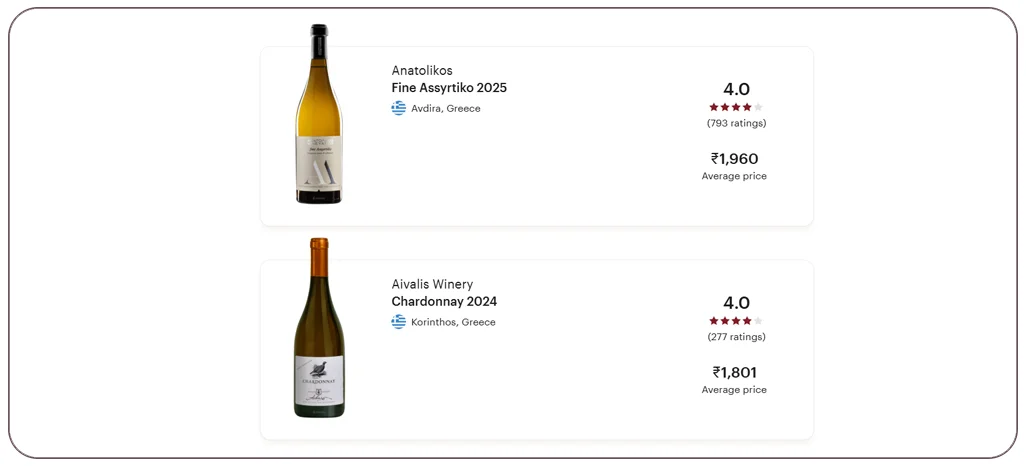
Wine recommendation systems depend on accurate product identification. When businesses combine wine information from different catalogs, the same bottle may appear under different spellings, abbreviated producer names, or inconsistent vintage descriptions. These differences can create duplicate records and incorrect product matches.
A properly planned Vivino API integration should establish a consistent data structure before recommendation algorithms use the information. Businesses should first confirm whether they have an approved commercial integration or licensed source. The integration should then map available fields into the business's own product database.
Which product attributes should businesses standardize?
| Attribute | Purpose |
|---|---|
| Wine name | Identifies the product |
| Producer or winery | Distinguishes producers |
| Vintage | Separates production years |
| Grape variety | Supports taste and style matching |
| Wine region | Identifies geographical origin |
| Appellation | Adds regional classification |
| Wine type | Separates red, white, rosé, and sparkling |
| Bottle size | Prevents packaging mismatches |
| Product identifier | Supports duplicate detection |
Businesses should use stable product identifiers wherever available. When identifiers are unavailable, they can combine normalized producer names, wine names, vintage, region, and bottle size to create a matching key.
The matching process should also retain the original source values. This makes it easier to investigate incorrect records without losing the information supplied by the original provider.
How Can Businesses Identify and Correct Incorrect Wine Details?
Product information often contains inconsistencies that affect recommendation quality. A wine may have multiple spellings, different translations, missing vintage information, or incomplete producer details. Matching products using names alone can therefore produce incorrect results.
The extract Vivino wine details workflow should focus on collecting permitted product attributes and validating them against trusted catalog information. Businesses should not assume that similar names represent identical bottles.
What validation methods improve product accuracy?
- Name normalization: Standardize capitalization, spacing, punctuation, and common abbreviations without removing meaningful distinctions.
- Producer verification: Check the winery or producer before treating two records as identical.
- Vintage validation: Keep different production years separate when the vintage is known.
- Region matching: Validate country, region, and appellation information.
- Bottle-size comparison: Distinguish standard bottles from magnums and other formats.
- Duplicate detection: Identify repeated records using product identifiers and multiple attributes.
- Confidence scoring: Assign stronger matching confidence when several independent attributes agree.
Example of a product validation structure
| Field | Record A | Record B | Matching decision |
|---|---|---|---|
| Producer | Same | Same | Match |
| Wine name | Same | Same | Match |
| Vintage | 2020 | 2021 | Keep separate |
| Region | Same | Same | Match |
| Bottle size | 750 ml | 750 ml | Match |
The table illustrates a matching rule, not a real Vivino product record. Even when two wines share a producer and name, different vintages should not automatically be merged.
A useful system should send uncertain matches for additional verification rather than forcing them into an existing product record. This prevents incorrect recommendations from spreading across multiple applications.
How Can Customer Ratings Improve Wine Recommendations?
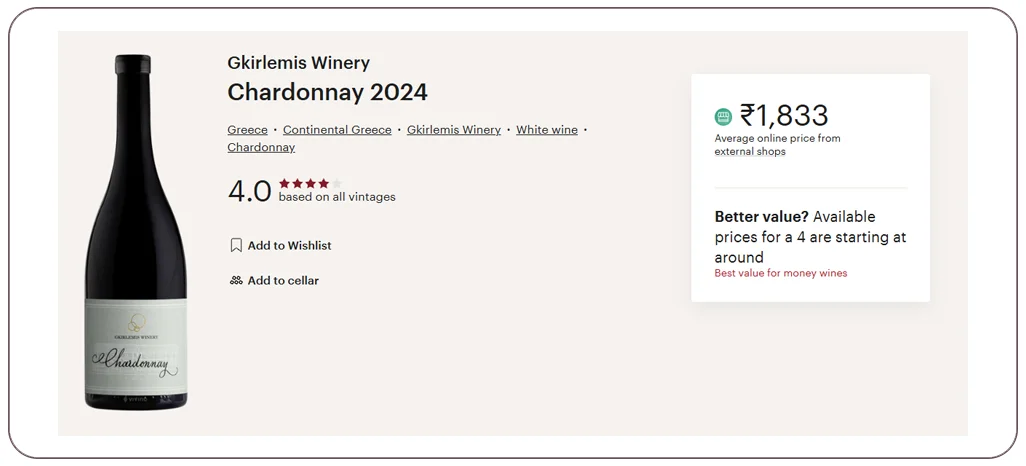
Product attributes explain what a wine is, while consumer feedback can provide additional information about how people perceive it. Ratings and written reviews can help recommendation platforms understand consumer preferences and identify products that may appeal to similar audiences.
The Vivino wine reviews API is a relevant integration concept for businesses exploring authorized access to review-related information. However, access to user-generated reviews, ratings, and other platform content must follow the applicable licensing and permission requirements.
Vivino describes its platform as a community built around wine ratings and reviews from consumers. Its official About page currently reports more than 78 million users, over 3.53 billion scanned labels, and more than 20.5 million wines. These are Vivino's own published platform figures, not independent measurements of recommendation accuracy.
How can review information support matching?
- Preference identification: Understand whether customers prefer particular wine styles or grape varieties.
- Rating comparisons: Compare available rating information while considering the number of reviews.
- Review themes: Organize permitted review text around attributes such as acidity, fruit character, body, and finish.
- Product similarity: Identify wines sharing relevant characteristics rather than relying on brand names alone.
- Recommendation transparency: Explain why a particular product was suggested.
A high average rating alone should not determine a recommendation. Review volume, product identity, vintage, regional characteristics, and customer preferences should also be considered.
Want to improve wine product matching and recommendation quality? Explore structured wine data solutions that support reliable catalog analysis and product intelligence.
Get Insights Now!How Can Businesses Monitor Changes in the Wine Marketplace?
Wine marketplaces contain products from different producers, countries, regions, and price categories. Their catalogs can change as merchants introduce new bottles, update product descriptions, or adjust availability. Businesses need consistent product information to understand these changes and maintain accurate recommendations.
Real-time wine marketplace data can help businesses monitor authorized product listings, compare available attributes, and identify changes in catalog information. Useful monitoring fields include product names, producers, wine categories, vintages, prices, bottle sizes, and availability.
What do global wine market statistics reveal?
The International Organisation of Vine and Wine (OIV) publishes annual statistics on wine production, consumption, and international trade. Its reported consumption figures show that global wine consumption has changed considerably over recent years.
Global wine consumption, 2020–2026
Million hectolitres (mhl); 2026 annual figure not yet available.
| Year | Global consumption | Data status |
|---|---|---|
| 2020 | 231.9 mhl | Reported |
| 2021 | 235.0 mhl | Reported |
| 2022 | 229.9 mhl | Reported |
| 2023 | 221.5 mhl | Reported |
| 2024 | 214.1 mhl | Reported |
| 2025 | 208.0 mhl | OIV estimate |
| 2026 | Not available | Year incomplete |
These figures provide market context, not direct evidence of changes in Vivino listings or customer recommendation behavior.
How can businesses apply these insights?
- Monitor product availability through authorized retailer sources.
- Compare wine prices using consistent bottle sizes and currencies.
- Identify newly listed products and discontinued catalog entries.
- Maintain historical product records for market research.
- Separate changes in market demand from changes in individual product ratings.
These practices help wine marketplaces maintain better product visibility and improve the relevance of their recommendation systems.
How Can Businesses Organize Wine Pricing Information?
Wine prices can vary according to producer, vintage, region, bottle size, merchant, and market. A product comparison system that ignores these differences can incorrectly identify two bottles as equivalent or recommend a product outside the customer's intended budget.
A Vivino Liquor Price Dataset can be treated as a structured data requirement for businesses researching wine pricing and product comparisons. It should contain clearly defined product attributes and price provenance rather than treating every displayed price as universally comparable.
Which pricing attributes should be included?
| Data field | Business application |
|---|---|
| Product name | Identifies the wine |
| Producer | Supports product verification |
| Vintage | Separates different production years |
| Bottle size | Makes price comparisons consistent |
| Merchant | Identifies the selling source |
| Listed price | Records the observed amount |
| Currency | Supports accurate conversion |
| Collection date | Establishes data freshness |
| Availability | Indicates whether the listing is available |
How can price mismatches be prevented?
Businesses should first establish product identity and then compare prices. Comparing two listings before verifying their vintage, bottle size, and producer can create misleading results.
For example, the same wine offered in different bottle formats should not be treated as a direct price match without normalizing the quantity. Similarly, a vintage difference should remain visible because it may represent a different product record.
A practical pricing workflow includes:
- Standardizing currencies and measurement units.
- Recording the merchant and original listing.
- Separating current prices from historical observations.
- Checking whether taxes and delivery charges are included.
- Identifying duplicate listings.
- Flagging unusual price differences for verification.
Businesses should also preserve the original listed price alongside any converted value. This creates an audit trail and helps analysts understand whether a price difference resulted from currency conversion, merchant changes, or product mismatching.
How Can Businesses Build Better Wine Data Infrastructure?
A reliable recommendation platform requires more than product records. It needs a data infrastructure that can manage product identity, consumer preferences, price information, and catalog changes without introducing duplicate or conflicting information.
Liquor Datasets can support broader product intelligence projects when they are organized around clear data definitions, authorized sources, and consistent validation procedures.
What should a reliable wine data pipeline include?
| Pipeline stage | Recommended activity | Business benefit |
|---|---|---|
| Source identification | Select permitted data providers | Better source transparency |
| Data acquisition | Collect authorized records | Consistent information |
| Normalization | Standardize product attributes | Fewer naming conflicts |
| Entity matching | Compare producer, vintage, and region | Better product identity |
| Review analysis | Organize permitted consumer feedback | Improved preference insights |
| Quality checks | Flag incomplete or conflicting records | Higher data reliability |
| Storage | Maintain structured historical records | Easier analysis |
| Monitoring | Review source and catalog changes | Better data freshness |
Which technical practices should businesses prioritize?
- Schema management: Maintain consistent field definitions across product catalogs.
- Entity resolution: Use multiple attributes to identify the same wine correctly.
- Data provenance: Record where each field originated and when it was collected.
- Version control: Preserve historical changes rather than overwriting important records.
- Quality monitoring: Identify missing values, duplicate products, and conflicting attributes.
- Access management: Respect licensing terms, privacy requirements, and permitted usage.
Recommendation systems should also distinguish between product similarity and personal preference. Two wines may share a region and grape variety without necessarily matching an individual customer's taste.
A more effective system combines verified product attributes with permitted preference signals. It can then explain recommendations through understandable characteristics instead of relying entirely on a numerical similarity score.
For wine retailers and online marketplaces, this infrastructure can support product discovery, catalog enrichment, comparison tools, and more consistent customer experiences.
Why Choose Real Data API?
Real Data API focuses on helping businesses turn complex product information into structured, usable datasets. For wine retailers, e-commerce platforms, and market research companies, data quality is essential for accurate product discovery and recommendation workflows.
A suitable Liquor Data Scraping solution should prioritize authorized data sources, consistent product attributes, and reliable validation rather than simply collecting large volumes of information.
What makes a reliable data partner important?
- Structured data delivery: Organize wine attributes into consistent formats for business applications.
- Product catalog enrichment: Improve product records with verified information from permitted sources.
- Data standardization: Maintain consistent naming, vintage, region, and product classifications.
- Data quality checks: Identify duplicate records, missing fields, and conflicting information.
- Market intelligence: Support product comparisons and wine category research.
- Scalable workflows: Build data pipelines that accommodate expanding product catalogs.
Real Data API can help businesses explore data collection, enrichment, and validation requirements for their wine intelligence projects.
For commercial projects involving Vivino, businesses should confirm the availability of an approved integration or written authorization before accessing platform information. Vivino's official terms explain these restrictions.
Conclusion
Inaccurate wine matching can affect product discovery, customer satisfaction, and recommendation performance. Businesses can address these challenges by standardizing wine attributes, validating producer and vintage information, analyzing permitted consumer feedback, and maintaining consistent product identifiers.
The Vivino API for wine recommendation data is a relevant use case for businesses developing wine discovery and personalized recommendation solutions. However, successful implementation depends on authorized data access, reliable product matching, and ongoing quality checks.
A structured data strategy can help wine retailers, marketplaces, and recommendation platforms deliver more relevant product suggestions and improve catalog consistency.
Ready to improve your wine recommendation strategy? Contact Real Data API today to explore structured data collection, product enrichment, and wine intelligence solutions for your business!
FAQs
1. How can the Vivino API for wine recommendation data improve matching accuracy?
The Vivino API for wine recommendation data supports structured product matching by organizing wine attributes, validating product identities, and helping businesses develop more relevant recommendation workflows.
2. Is Vivino liquor data scraping permitted for commercial use?
Vivino liquor data scraping requires express authorization under Vivino's terms. Businesses should obtain written permission or use an approved commercial integration before collecting platform information.
3. Why is Vivino API integration important for wine platforms?
Vivino API integration can support structured wine discovery and product matching when authorized data access is available and product attributes are properly standardized.
4. Which attributes help extract Vivino wine details accurately?
To extract Vivino wine details, businesses should validate producer names, wine varieties, vintages, regions, appellations, bottle sizes, and available product identifiers.
5. How can Vivino wine reviews API support recommendations?
A Vivino wine reviews API integration, where authorized, can help businesses analyze consumer feedback, identify preference patterns, and develop more relevant wine discovery experiences.
Latest posts
Hotel & Restaurant Supplier Data from Google Maps, Zomato, Swiggy and FoSCoS
How to Overcome Inaccurate Travel Fare Estimates with Rome2Rio Travel Data Scraping API for Route Comparison
How to Solve Inaccurate Wine Matching with Vivino API for wine recommendation data

How to Solve Anime Streaming Metadata Issues with HiAnime API integration


.png)


