.gif)
.jpg)
Quick Summary
- Discover how HiAnime API integration helps streaming platforms address missing metadata, duplicate titles, and inconsistent episode records through structured anime information.
- Understand how anime titles, genres, release dates, seasons, and episode information contribute to accurate content organization using a Hianime Scraper.
- Explore metadata validation, schedule monitoring, and catalog standardization strategies to improve anime discovery and streaming experiences.
Introduction
Anime streaming platforms often struggle with incomplete episode information, inconsistent titles, missing release dates, and duplicate content records. These problems can affect search accuracy, content discovery, and catalog management. HiAnime API integration is a data-integration use case for businesses exploring structured anime metadata and content organization.
A reliable anime data workflow should standardize titles, genres, seasons, episode numbers, release dates, and language information before displaying records to users. Businesses considering a Hianime Scraper must also verify whether automated access is authorized and whether the source permits commercial collection, storage, and redistribution. An unofficial website or endpoint should never be assumed to provide a supported commercial API.
This blog explains how anime platforms, OTT businesses, entertainment applications, and content aggregators can address metadata inconsistencies through structured data collection, validation, and catalog management.
How Can Businesses Improve Anime Catalog Accuracy?
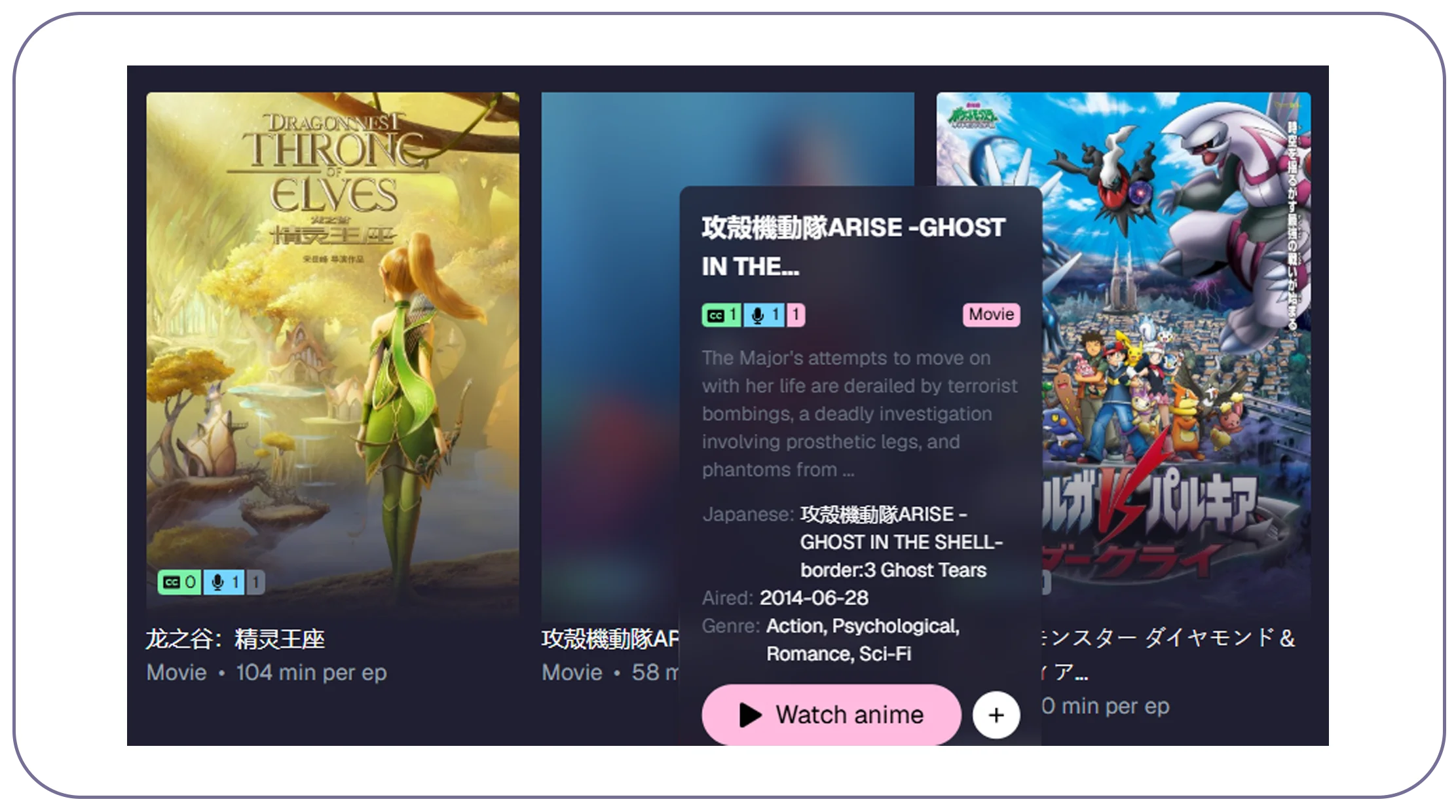
Anime catalog accuracy begins with collecting consistent information and matching each title to the correct content record. Streaming platforms often manage multiple versions of the same anime, including television seasons, movies, specials, OVAs, and recap episodes. Without a standardized structure, these records can appear as duplicates or become disconnected from their parent series.
The extract HiAnime anime details process should prioritize authorized data sources and a well-defined metadata schema. Businesses should identify which fields are necessary for their applications and verify whether the source permits collection and commercial use.
A properly designed HiAnime API integration workflow should organize information into reusable fields instead of storing everything in unstructured descriptions.
Which anime attributes should businesses collect?
| Metadata field | Business purpose |
|---|---|
| Anime title | Identifies the content |
| Alternative titles | Supports multilingual discovery |
| Anime ID | Maintains unique records |
| Genre | Enables category-based search |
| Synopsis | Provides content descriptions |
| Release year | Supports chronological organization |
| Season information | Connects related installments |
| Content type | Separates movies, series, and specials |
| Language | Supports localization |
| Status | Identifies ongoing or completed titles |
Businesses should maintain original source values alongside normalized information. This helps analysts investigate discrepancies when different providers use alternative spellings or title formats.
For example, Japanese titles, English translations, and romanized names may refer to the same anime. A matching system should connect these names to one verified content identity rather than creating three independent records.
How Can Streaming Platforms Maintain Accurate Release Schedules?
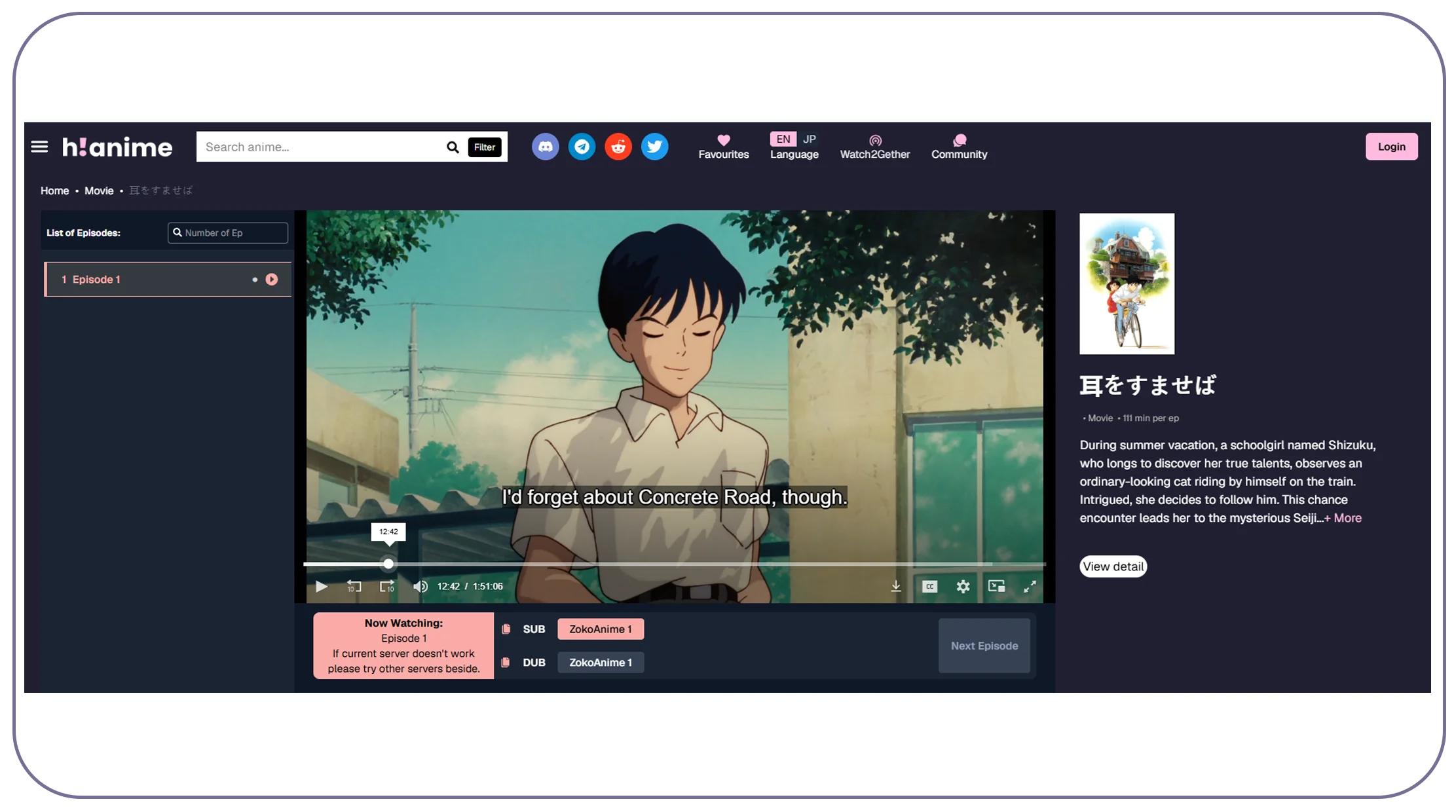
Release schedule inconsistencies can affect episode availability indicators, notification systems, and content discovery pages. A platform may display an incorrect release date when it combines information from different time zones, sources, or publishing schedules.
The scrape HiAnime schedule data workflow should be designed around authorized sources that provide reliable schedule information. Businesses should record the original release date, time zone, source timestamp, and schedule status separately.
What information should a schedule monitoring system contain?
- Anime title and unique content identifier.
- Season and episode reference.
- Original scheduled release date.
- Release time and applicable time zone.
- Source publication timestamp.
- Schedule status, where available.
- Last verification timestamp.
- Delay or postponement information, when confirmed.
How can businesses prevent schedule-related errors?
- Standardize time zones: Store timestamps in a consistent format, such as UTC, while retaining the original local release time.
- Separate planned and actual releases: A scheduled episode should not automatically be marked as released.
- Validate source changes: Compare new information against previously stored records before updating customer-facing schedules.
- Maintain historical records: Preserve previous dates and status changes to help investigate discrepancies.
- Monitor missing information: Flag episodes without confirmed release dates instead of assigning estimated dates.
These practices are especially useful for platforms serving international audiences. An episode released on one calendar date in Japan may appear on a different calendar date in another region because of time-zone differences.
A schedule management system should therefore distinguish the original broadcast time from the local availability time on the streaming platform.
How Can Businesses Organize Episodes and Seasons Correctly?
Episode metadata plays an important role in content navigation. Incorrect numbering, missing season references, and duplicate episode records can make it difficult for viewers to continue watching a series.
HiAnime episode data scraping is a data collection concept that requires appropriate source authorization. Businesses should establish clear rules for identifying episodes and connecting them with their parent anime records.
Which episode-level fields are important?
| Field | Description |
|---|---|
| Anime ID | Parent content identifier |
| Season ID | Connects an episode to its season |
| Episode ID | Unique episode reference |
| Episode number | Identifies viewing order |
| Episode title | Displays episode information |
| Release date | Records the original release date |
| Duration | Stores episode runtime when verified |
| Content type | Distinguishes regular episodes and specials |
| Language | Identifies the available language |
| Availability | Records platform-specific access status |
A well-designed HiAnime API integration strategy should distinguish between episode numbering and chronological viewing order. Some anime franchises include movies, specials, and side stories that do not follow ordinary television episode numbering.
Businesses should also avoid assuming that episode numbers remain identical across every regional release or distributor. Source-specific identifiers and release references can help preserve these differences.
What validation rules should be applied?
- Check whether each episode has a valid parent anime identifier.
- Identify duplicate episode numbers within the same season.
- Compare episode titles against approved metadata sources.
- Validate runtime values when reliable information is available.
- Keep special episodes separate from standard installments.
- Flag missing or conflicting release dates.
For recommendation platforms, correct episode relationships also improve content grouping. Users can discover related seasons and specials without encountering disconnected or duplicated records.
Looking to improve anime catalog organization? Explore structured entertainment data solutions that support metadata validation, episode management, and content discovery.
Get Insights Now!How Can Streaming Platforms Keep Content Information Updated?
Anime catalogs change as new productions are released, existing series receive additional seasons, and distribution platforms update their content libraries. If metadata is not reviewed regularly, a platform may continue displaying outdated descriptions, incorrect episode counts, or obsolete release information.
Real-time HiAnime metadata updates should be treated as a data freshness requirement rather than an assumption that every source provides instant updates. Businesses need to establish refresh intervals based on source availability, licensing conditions, and the importance of each metadata field.
What should businesses monitor?
| Monitoring area | Information to verify |
|---|---|
| New anime listings | Newly added titles |
| Release schedules | Confirmed dates and delays |
| Episode records | New episodes and numbering |
| Series status | Ongoing or completed status |
| Descriptions | Updated summaries |
| Genres | Classification changes |
| Language details | Available audio and subtitles |
| Availability | Platform-specific catalog status |
What does anime market growth indicate for content platforms?
The Association of Japanese Animations (AJA) publishes annual research on the Japanese animation industry. Its broad anime industry market estimates show substantial growth between 2020 and 2024. This market measure includes multiple business categories and should not be confused with streaming revenue alone.
Broad market estimate; trillion Japanese yen. Annual figures are not streaming-only.
| Year | Market size | Data status |
|---|---|---|
| 2020 | ¥2.4199 trillion | Reported |
| 2021 | ¥2.7422 trillion | Reported |
| 2022 | ¥2.9277 trillion | Reported |
| 2023 | ¥3.3465 trillion | Reported |
| 2024 | ¥3.8407 trillion | Reported |
| 2025 | Not included | No verified annual figure used |
| 2026 | Not included | No completed annual figure |
日本動画協会+2
The figures demonstrate the expanding commercial importance of anime content. For streaming businesses, maintaining accurate content information is therefore an important part of catalog management, localization, and discovery.
A practical monitoring workflow should prioritize frequently changing fields, preserve historical values, and flag conflicting updates for verification.
How Can OTT Businesses Build Better Entertainment Data Workflows?
OTT platforms require structured information to manage content libraries, improve search experiences, and organize entertainment catalogs. Anime is one content category within the broader OTT ecosystem, but its metadata requirements can be particularly detailed because of multiple seasons, specials, alternative titles, and language versions.
OTT Data Scraping describes a data collection approach used in entertainment intelligence projects. However, businesses must use authorized sources and respect copyright, platform terms, and licensing restrictions. Automated collection does not automatically grant permission to reproduce descriptions, artwork, videos, or other protected material.
Which data fields support OTT catalog management?
| Category | Recommended information |
|---|---|
| Content identity | Title, content ID, alternative names |
| Classification | Genre, format, content category |
| Production | Studio, production year, country |
| Series structure | Seasons, episodes, specials |
| Localization | Language and subtitle information |
| Scheduling | Release date and broadcast status |
| Availability | Licensed platform and territory |
| Content description | Approved synopsis and metadata |
A suitable HiAnime API integration project should also consider how information moves between different business systems.
How can OTT platforms improve their data workflows?
Catalog standardization: Establish common field definitions for anime titles, seasons, and episodes.
Metadata enrichment: Add verified descriptions, classifications, and production details from permitted sources.
Duplicate management: Use stable identifiers and matching rules to prevent repeated content records.
Localization: Maintain separate language fields for original titles, translated titles, audio, and subtitles.
Quality monitoring: Check missing attributes and conflicting values before publishing catalog updates.
Historical tracking: Preserve previous metadata versions to support auditing and troubleshooting.
These processes can help OTT businesses maintain consistent information across websites, mobile applications, recommendation engines, and internal catalog management systems.
They can also make it easier to expand into new markets because standardized metadata is simpler to translate, categorize, and reuse.
What Should Businesses Look for in an Anime Data Solution?
Selecting an appropriate data solution requires more than checking the number of available anime records. Businesses should evaluate data accuracy, source permissions, field coverage, update frequency, delivery formats, and technical compatibility.
A suitable HiAnime Data API Provider should be evaluated against the specific needs of the business rather than assumed to provide official access to HiAnime. Publicly documented official commercial API documentation and access terms should be verified before making any integration or procurement decision.
What should a business evaluate before implementation?
| Evaluation factor | What to check |
|---|---|
| Data coverage | Titles, genres, seasons, and episodes |
| Source authorization | Permission for collection and commercial use |
| Data accuracy | Validation and duplicate detection |
| Update frequency | Available refresh schedules |
| API documentation | Endpoints, authentication, and limits |
| Delivery format | JSON, CSV, or other supported formats |
| Scalability | Ability to handle growing catalogs |
| Data security | Access controls and secure transfers |
| Support | Technical documentation and issue resolution |
Which implementation practices are recommended?
- Define the metadata fields required by the application.
- Confirm source permissions and commercial usage rights.
- Establish unique identifiers for anime, seasons, and episodes.
- Create validation rules for titles, dates, and episode numbers.
- Test the integration using authorized sample records.
- Monitor incomplete and conflicting metadata.
- Maintain logs for updates and failed requests.
Businesses should also design their systems to work with multiple authorized data providers. Depending on a single source can create operational problems if its coverage changes or access becomes unavailable.
A flexible data architecture allows platforms to compare permitted information, maintain consistent internal records, and replace individual sources without rebuilding their entire catalog system.
For streaming businesses, the ultimate goal should be dependable metadata that improves navigation and content discovery rather than simply increasing the volume of collected records.
Why Choose Real Data API?
Real Data API helps businesses explore structured data collection and enrichment solutions for entertainment and digital content projects. For anime streaming platforms, reliable metadata is essential for managing growing catalogs and improving content discovery.
A suitable OTT Scraping API solution should focus on structured records, consistent metadata, and dependable data validation using authorized sources.
What benefits should businesses prioritize?
- Structured data delivery: Organize anime titles, genres, episodes, and seasons.
- Catalog enrichment: Improve incomplete content records using permitted information sources.
- Metadata standardization: Maintain consistent naming and classification formats.
- Data validation: Identify duplicates, missing fields, and conflicting information.
- Flexible integration: Support business applications through compatible data formats.
- Scalable workflows: Manage expanding entertainment catalogs efficiently.
For businesses exploring HiAnime API integration, Real Data API can help assess data requirements, source permissions, metadata structures, and suitable collection workflows.
The objective is to build a reliable foundation for entertainment intelligence, catalog management, and better content discovery.
Conclusion
Anime streaming metadata issues can affect content discovery, episode navigation, search accuracy, and overall user experience. Businesses can overcome these challenges by standardizing anime records, validating episode information, monitoring release schedules, and maintaining consistent content identifiers.
HiAnime API integration represents a relevant use case for businesses seeking better anime metadata organization and structured entertainment information. However, commercial implementation should always rely on authorized data sources and clearly defined usage permissions.
A well-designed metadata workflow helps streaming platforms manage growing catalogs, improve information consistency, and create better discovery experiences.
Ready to improve your anime data management strategy? Contact Real Data API today to explore structured entertainment data collection, metadata enrichment, and scalable integration solutions for your business!
FAQs
1. How does HiAnime API integration help streaming platforms?
HiAnime API integration can support structured anime catalog management, metadata organization, and episode discovery when businesses have authorized access to suitable data sources.
2. Is a Hianime Scraper suitable for commercial projects?
A Hianime Scraper requires careful review of website permissions, copyright restrictions, and commercial usage rights before businesses collect or redistribute information.
3. How can businesses extract HiAnime anime details accurately?
To extract HiAnime anime details, businesses should validate anime titles, genres, release dates, production information, and unique identifiers against authorized sources.
4. Why should businesses scrape HiAnime schedule data?
Businesses exploring how to scrape HiAnime schedule data should prioritize authorized sources, consistent time zones, release-date verification, and historical schedule tracking.
5. How can Real Data API support HiAnime episode data scraping?
HiAnime episode data scraping projects can benefit from structured episode records, duplicate detection, season mapping, and metadata validation using properly authorized information sources.
Latest posts
Hotel & Restaurant Supplier Data from Google Maps, Zomato, Swiggy and FoSCoS

How to Overcome Inaccurate Travel Fare Estimates with Rome2Rio Travel Data Scraping API for Route Comparison

How to Solve Inaccurate Wine Matching with Vivino API for wine recommendation data

How to Solve Anime Streaming Metadata Issues with HiAnime API integration




.png)


