.gif)
.jpg)
Introduction
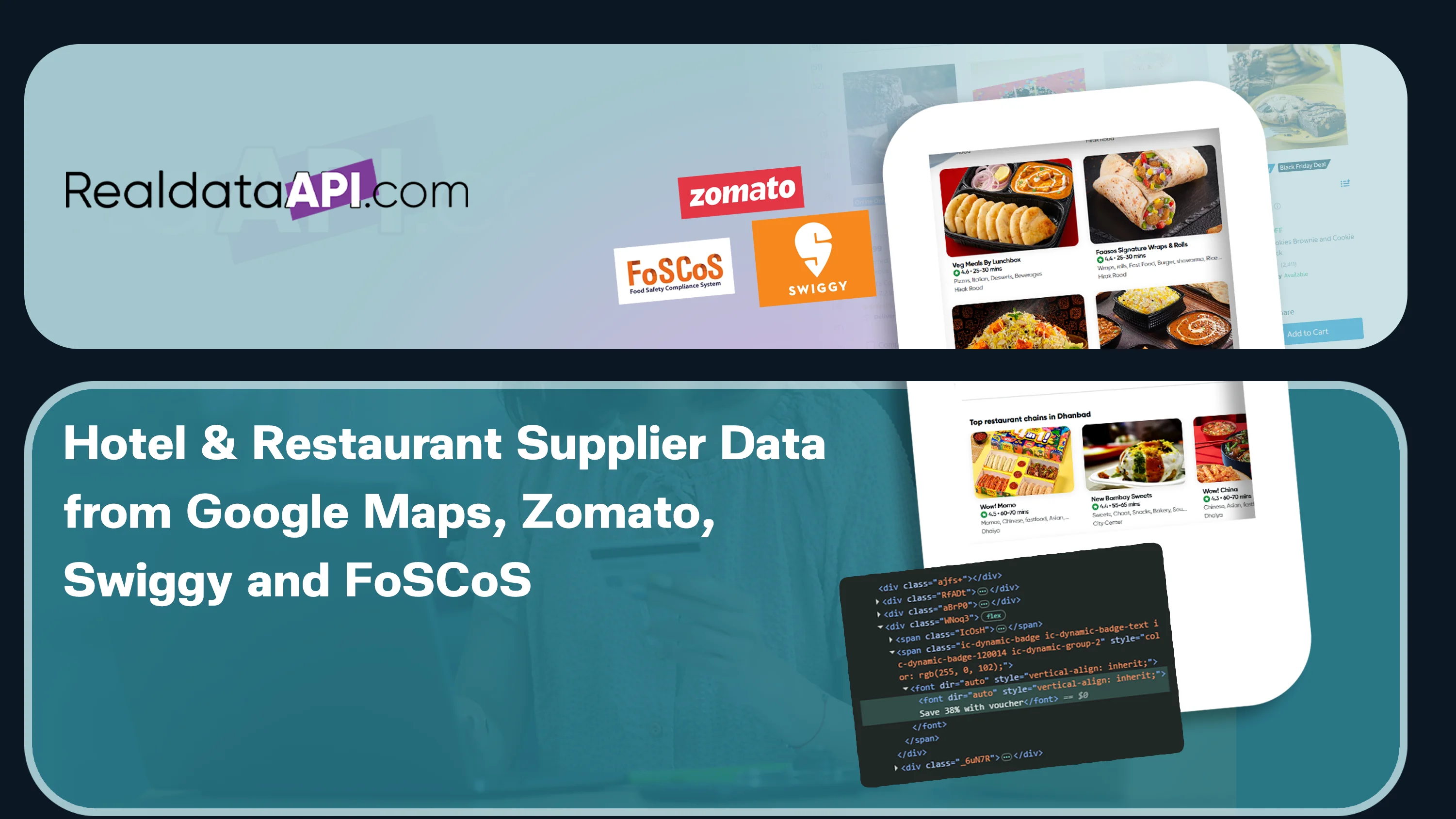
If you sell to hotels and restaurants, you already know the problem. Food suppliers, packaging companies, kitchen-equipment makers, cleaning-chemical firms, POS providers and fintech teams all target the same group of buyers, often called HoReCa (hotels, restaurants and catering). Yet no single, reliable, up-to-date list of these businesses exists. Directories are outdated, purchased lists are full of closed outlets and manual research does not scale. For businesses building a prospect database, HoReCa data scraping India can provide a practical way to identify potential buyers by combining several public sources: Google Maps, Zomato, Swiggy and, where relevant, FoSCoS.
This article explains how multi-source HoReCa data scraping works, what each source contributes, how records are matched and merged, and how sales and marketing teams can use the resulting hotel and restaurant leads to plan more focused outreach.
What is HoReCa Supplier Data?
HoReCa supplier data is a structured list of businesses that buy food, beverages, equipment and services. Useful restaurant supplier data includes the business name, type, address, location, contact details where public, cuisine or service type, size indicators, online presence and licence information.
The goal is not to scrape personal data of individuals. The goal is to build a business directory that helps suppliers identify and prioritise prospects.
What Each Source Adds
Google Maps gives wide coverage of businesses of all sizes, with address, coordinates, category, phone number and website where listed, opening hours, ratings and review counts. Google Maps scraping can help identify hotels, cafes, restaurants, caterers, bakeries and small eateries that may not be listed on delivery apps.
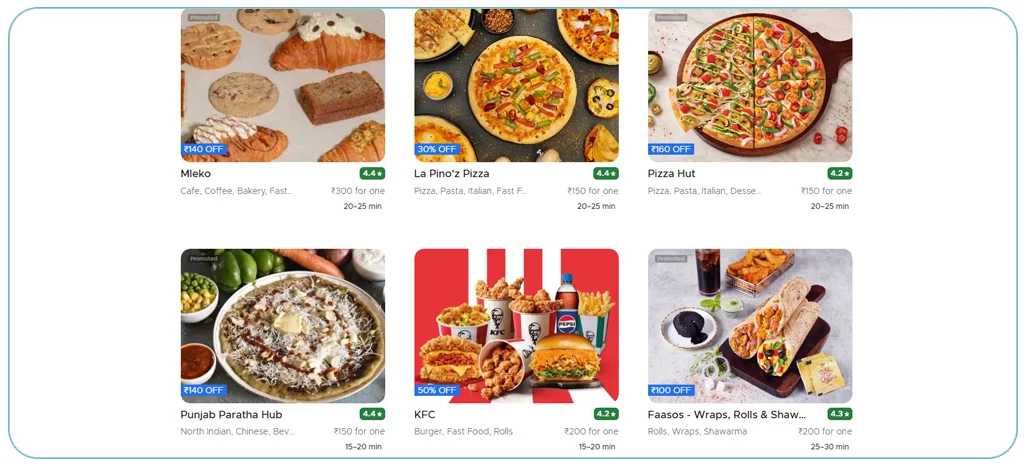
Zomato adds restaurant details such as cuisines, price-for-two band, ratings, review volume, dine-in or delivery status and sometimes menus and photos. Zomato data extraction can also help identify whether an outlet is part of a chain.
Swiggy shows delivery-oriented outlets, cuisines, ratings and menu information. Swiggy data extraction is useful for identifying cloud kitchens and delivery-first brands, which may not appear as traditional restaurants on maps.
FoSCoS is the Food Safety and Compliance System used for food business licences and registrations in India. Public FoSCoS licence data, where displayed, can help verify that a business is a registered food operator and can add licence category and validity details. Availability and format of data on this portal need to be checked in a pilot, and any use must follow its terms and applicable laws.
Why Combine Sources?
Each source has gaps. Google Maps may not show cuisine details. Zomato and Swiggy may miss hotels and caterers. Licence portals do not show ratings or menus. Combining these sources through a consistent Zomato Swiggy data extraction workflow, alongside map listings and available licence records, gives you a richer record and helps cross-check whether a business is still operating.
Combining sources also lets you segment your list in ways that matter to sellers:
- Chain vs independent restaurants
- Premium vs budget price band
- Dine-in vs cloud kitchen
- Cuisine type, which drives ingredient and equipment needs
- Licensed vs unlicensed or unverified operators
Data Fields In The Final Database
- Unified business ID
- Business name and brand name
- Business type: hotel, restaurant, cafe, bakery, caterer, cloud kitchen or other
- Full address, locality, city, state and pincode
- Latitude and longitude
- Phone number and website, where publicly listed
- Cuisine types and price-for-two band
- Ratings and review counts by source
- Dine-in and delivery flags
- Chain or independent flag and number of outlets
- Licence category and status where available
- Source URLs and last-updated date
How The Multi-Source Scraping Workflow Works
- Define the target. Choose the cities, localities and business types. For example, restaurants and cafes in Pune, or hotels across a state.
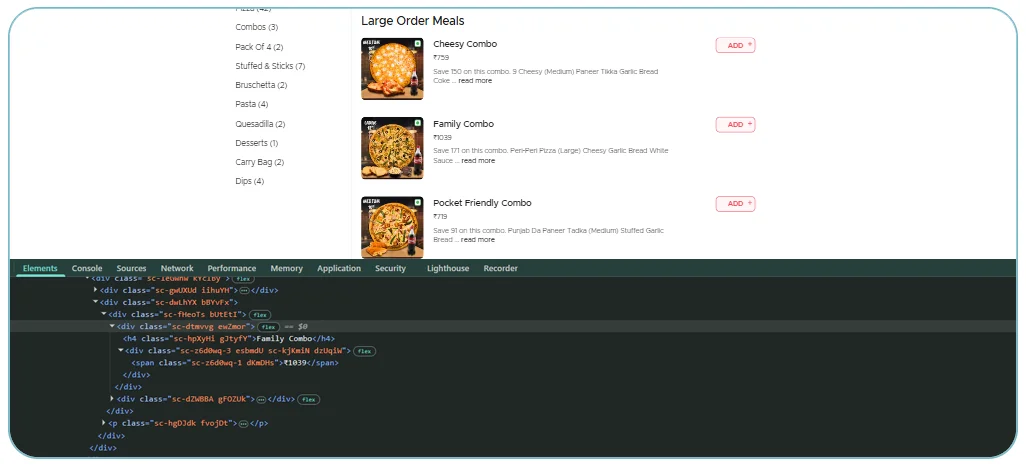
- Collect from each source separately. Each platform needs its own scraper, supported by suitable web scraping services, tuned to its structure and rate limits.
- Normalise fields. Names, addresses, phone formats and categories are cleaned and mapped to a common set of fields.
- Match records across sources. The same restaurant may appear on all four sources. Matching uses name similarity, address similarity, geographic distance and phone numbers.
- Merge into a master record. When sources disagree, rules decide which value to trust. For instance, coordinates from Google, cuisine from Zomato.
- Score confidence. Each record receives a score based on the number of confirming sources.
- Remove closed or duplicate entries. Status flags and last-review dates help filter out inactive outlets.
- Deliver and refresh. The database is delivered as files or via API and refreshed regularly.
The Matching Challenge
Record matching is the hardest and most valuable step. Problems include different spellings (Shree vs Sri), abbreviations (Rd vs Road), missing house numbers, outlets in the same building and brand names that appear with and without locality suffixes. A good matching process combines text similarity with distance, and sends borderline cases to review rather than guessing.
Technical And Practical Challenges
- Anti-scraping measures: all major platforms limit automated traffic, so collection must be paced and monitored.
- Dynamic pages: results load through scripts and require browser-level scraping.
- Search limits: Google Maps shows limited results per query, so large cities need grid-based searching.
- Contact data quality: phone numbers may be missing or outdated. Treat contact data as a starting point, not a guarantee.
- Legal and ethical considerations: use only business information, avoid personal data and follow marketing and privacy laws when contacting businesses.
Use Cases
- Food and beverage suppliers: find restaurants by cuisine and size for targeted outreach.
- Kitchen-equipment and packaging companies: identify new outlets and expanding chains.
- Fintech, POS and delivery-tech vendors: prospect restaurants that lack digital ordering or payments.
- Franchise and real-estate teams: analyse competitor density and white-space areas.
- Market researchers: estimate the size and structure of the HoReCa market by city.
Example: A Frozen-Food Supplier
A frozen-food supplier wants to reach mid-size restaurants and cloud kitchens in five cities. The database is built from the four sources, filtered to outlets with delivery presence, price bands between mid and premium, and cuisines that use frozen items such as snacks and appetisers. The sales team receives a ranked list with addresses, phone numbers and notes on whether each outlet is part of a chain. Outreach becomes targeted instead of random.
Delivery Formats And Refresh
The final database can be delivered as CSV or Excel, as JSON via API or loaded into a CRM. Because restaurants open and close frequently, a quarterly refresh is common, and monthly refresh suits fast-moving cities.
Why Choose Real Data API for HoReCa Data Scraping
Real Data API builds scrapers for each source, normalises the data and applies matching and de-duplication so you receive one clean record per business. This approach supports HoReCa data scraping India projects by bringing relevant business details into a consistent dataset. We can run a pilot for one city to show coverage, accuracy and the number of verified records before you commit to a bigger project.
Conclusion
HoReCa data scraping that combines Google Maps, Zomato, Swiggy and FoSCoS produces a richer and more reliable supplier database than any single source. With careful matching, clear confidence scores and regular refreshes, sales teams can target the right restaurants and hotels with confidence.
Need a database of hotel and restaurant leads? Real Data API can scope a pilot for your cities and business types.
FAQs
1. Can you include email addresses?
Only publicly listed business emails, often found on websites. Many records will not have one.
2. How accurate is the final database?
Accuracy improves when multiple sources confirm a record. The confidence score shows which records are strongest.
3. Do you cover small towns?
Yes, though coverage depends on how many businesses are listed on the platforms in that area.
4. Is FoSCoS data always available?
Availability and format vary, so it is assessed in a pilot. When it is not accessible, the other sources still produce a useful database.
5. Can the data be loaded into my CRM?
Yes. Files can be formatted for common CRM imports, or an API can be used.
Latest posts
Hotel & Restaurant Supplier Data from Google Maps, Zomato, Swiggy and FoSCoS
How to Overcome Inaccurate Travel Fare Estimates with Rome2Rio Travel Data Scraping API for Route Comparison
How to Solve Inaccurate Wine Matching with Vivino API for wine recommendation data
How to Solve Anime Streaming Metadata Issues with HiAnime API integration



.png)


