Introduction
The grocery industry has become increasingly competitive as retailers update prices, launch promotions, and adjust product assortments more frequently than ever before. Consumers compare prices across multiple supermarkets before making purchasing decisions, making accurate and timely pricing intelligence essential for business success.
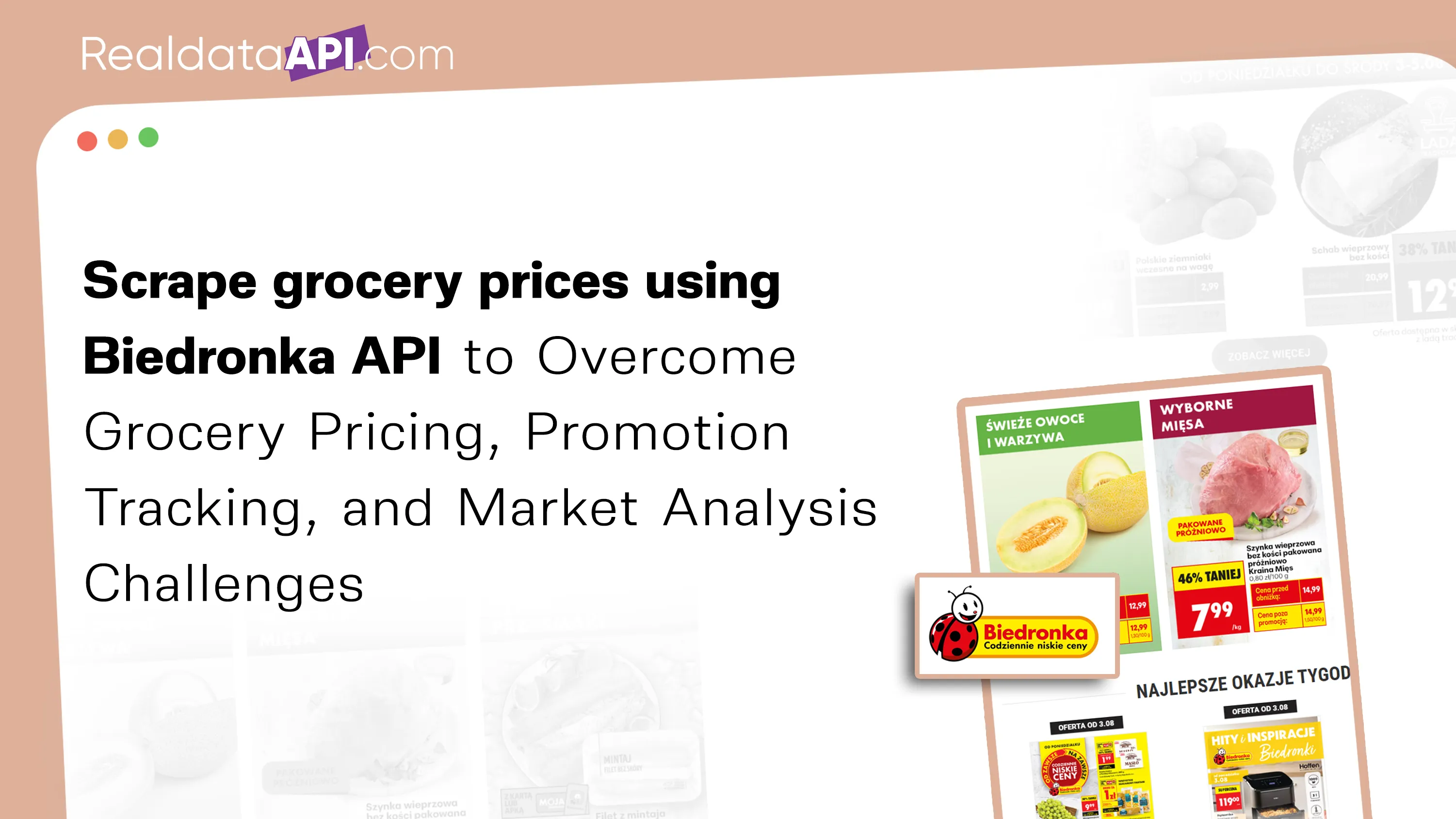
Organizations that Scrape grocery prices using Biedronka API gain instant access to structured grocery pricing data, promotional offers, product availability, and category-level insights from one of Poland's leading supermarket chains. Automated data collection eliminates manual monitoring while improving pricing visibility and competitive intelligence.
Using a modern Biedronka Grocery Scraping API, retailers and FMCG brands can continuously monitor product prices, discounts, stock status, and assortment changes across thousands of grocery products. These insights support pricing optimization, promotion analysis, inventory planning, and strategic decision-making.
This guide explains how automated grocery price intelligence helps businesses overcome pricing challenges, strengthen promotional analysis, and improve retail market competitiveness through reliable, data-driven insights.
How Can Businesses Monitor Grocery Prices and Promotions More Efficiently?
Businesses can automate grocery price tracking by using APIs and data extraction solutions that collect real-time product prices, promotions, and availability. This enables retailers, FMCG brands, manufacturers, and market researchers to make faster pricing decisions, monitor competitors, and improve market analysis.
Industry Insight: A hypothetical European grocery analytics study estimates that by 2026, over 80% of enterprise grocery retailers will rely on automated pricing intelligence to monitor daily price changes, promotional campaigns, and competitor strategies across digital grocery platforms.
How Can Businesses Improve Retail Pricing Decisions with Automated Product Data?
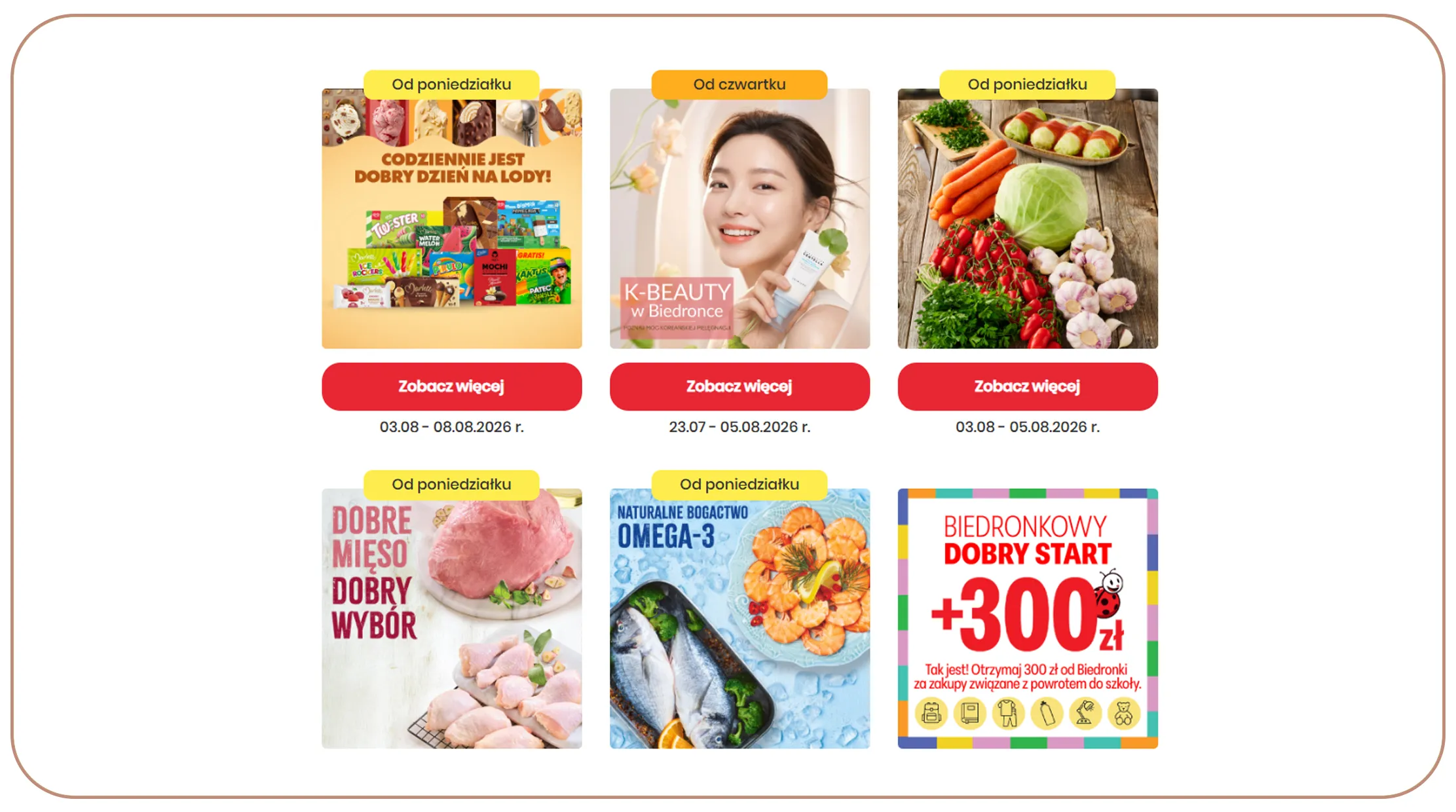
Retail pricing decisions depend on timely access to accurate market information. Grocery prices often change several times a day due to promotions, seasonal demand, supplier costs, and competitor actions. Manual monitoring is inefficient and cannot provide the speed required in today's competitive grocery environment.
Retail pricing analytics via Biedronka product data scraper enables businesses to collect publicly available product pricing, promotional offers, category information, product availability, and assortment data automatically. This structured intelligence helps retailers compare pricing across product categories, monitor promotional effectiveness, and identify market trends before competitors.
Automated pricing analytics also supports category managers by highlighting pricing inconsistencies, identifying promotional opportunities, and improving assortment planning. Businesses can optimize pricing strategies using reliable data rather than assumptions.
Key Benefits
- Track grocery prices automatically
- Compare pricing across categories
- Monitor promotional campaigns
- Improve pricing consistency
- Support faster pricing decisions
- Reduce manual monitoring efforts
- Strengthen retail competitiveness
Retail Pricing Analytics Trends (2020-2026)
| Year | Products Monitored | Daily Price Updates | Pricing Accuracy (%) | Businesses Using Automated Analytics (%) |
|---|---|---|---|---|
| 2020 | 85,000 | 55,000 | 89 | 32 |
| 2021 | 110,000 | 72,000 | 91 | 39 |
| 2022 | 145,000 | 95,000 | 93 | 48 |
| 2023 | 190,000 | 128,000 | 95 | 58 |
| 2024 | 245,000 | 168,000 | 97 | 68 |
| 2025* | 315,000 | 220,000 | 98 | 76 |
| 2026* | 400,000 | 285,000 | 99 | 84 |
*Projected values.
Automated retail pricing analytics provides the visibility businesses need to respond quickly to changing market conditions while improving profitability and customer value.
How Can Grocery Price Analysis Improve Competitive Intelligence?
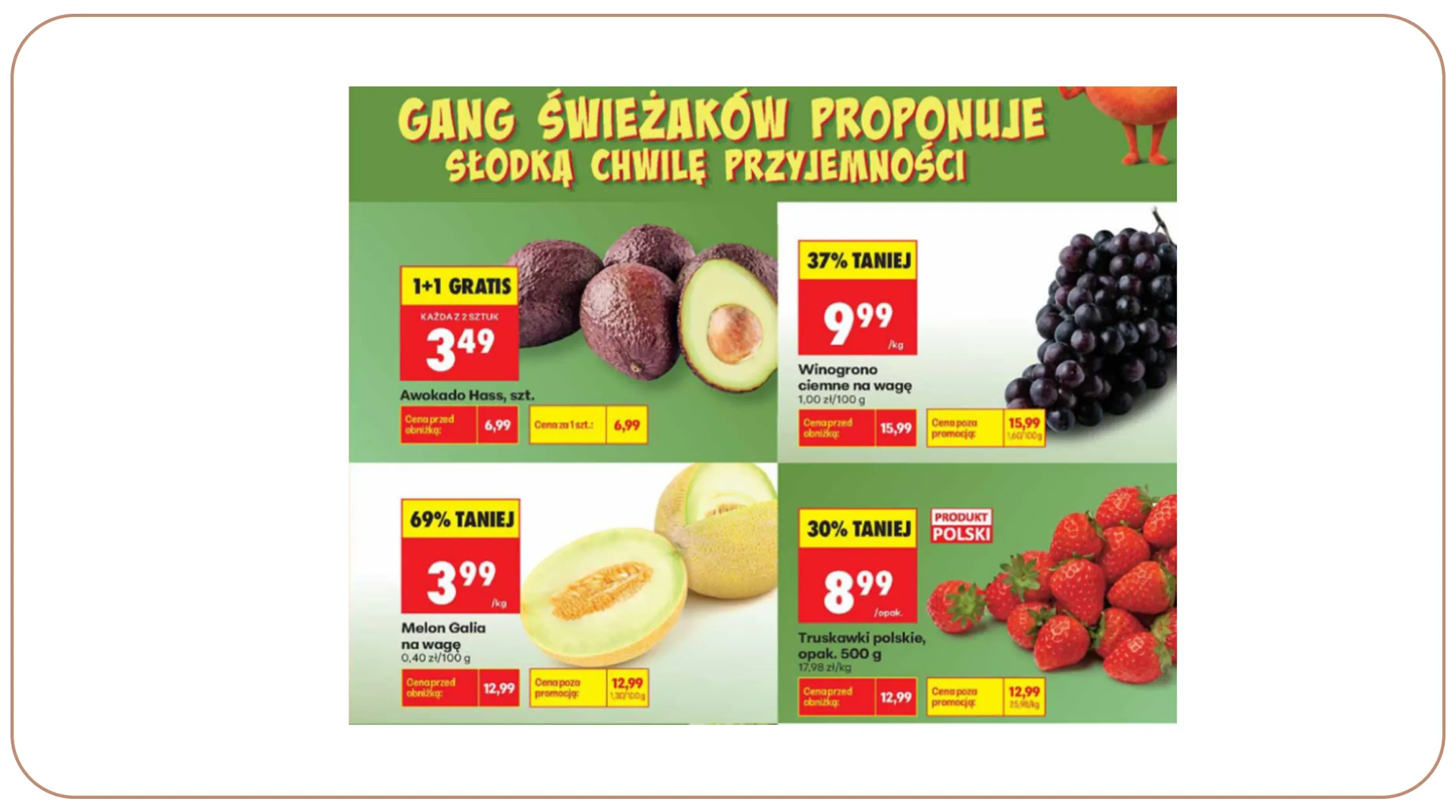
Understanding competitor pricing requires more than collecting product prices. Businesses need continuous visibility into promotions, discounts, product availability, and pricing trends across thousands of SKUs. Biedronka data scraping for grocery price analysis enables organizations to gather structured pricing intelligence that supports informed commercial decisions.
Automated grocery price analysis captures product prices, promotional offers, category performance, and historical pricing movements from digital grocery platforms. These insights help pricing teams identify competitor strategies, benchmark product categories, evaluate promotional effectiveness, and optimize retail pricing models.
Continuous price analysis also enables businesses to monitor seasonal pricing trends, detect unusual price fluctuations, and evaluate customer value propositions across competing grocery retailers. This comprehensive visibility strengthens competitive intelligence and supports more effective pricing strategies.
Key Benefits
- Benchmark competitor prices
- Analyze promotional performance
- Monitor category pricing trends
- Detect pricing changes quickly
- Improve pricing strategies
- Support market expansion decisions
- Enhance competitive intelligence
Grocery Price Analysis Trends (2020-2026)
| Year | Products Analyzed | Promotions Tracked | Retail Categories Covered | Insight Accuracy (%) |
|---|---|---|---|---|
| 2020 | 95,000 | 12,500 | 48 | 88 |
| 2021 | 124,000 | 16,800 | 56 | 90 |
| 2022 | 162,000 | 22,400 | 65 | 93 |
| 2023 | 210,000 | 29,300 | 76 | 95 |
| 2024 | 272,000 | 37,600 | 88 | 97 |
| 2025* | 345,000 | 47,800 | 101 | 98 |
| 2026* | 430,000 | 60,500 | 118 | 99 |
*Projected values.
Businesses that continuously analyze grocery pricing gain a stronger understanding of market dynamics, allowing them to optimize pricing, strengthen promotions, and improve profitability in an increasingly competitive retail environment.
How Can Grocery Retailers Perform Better Market Comparisons?
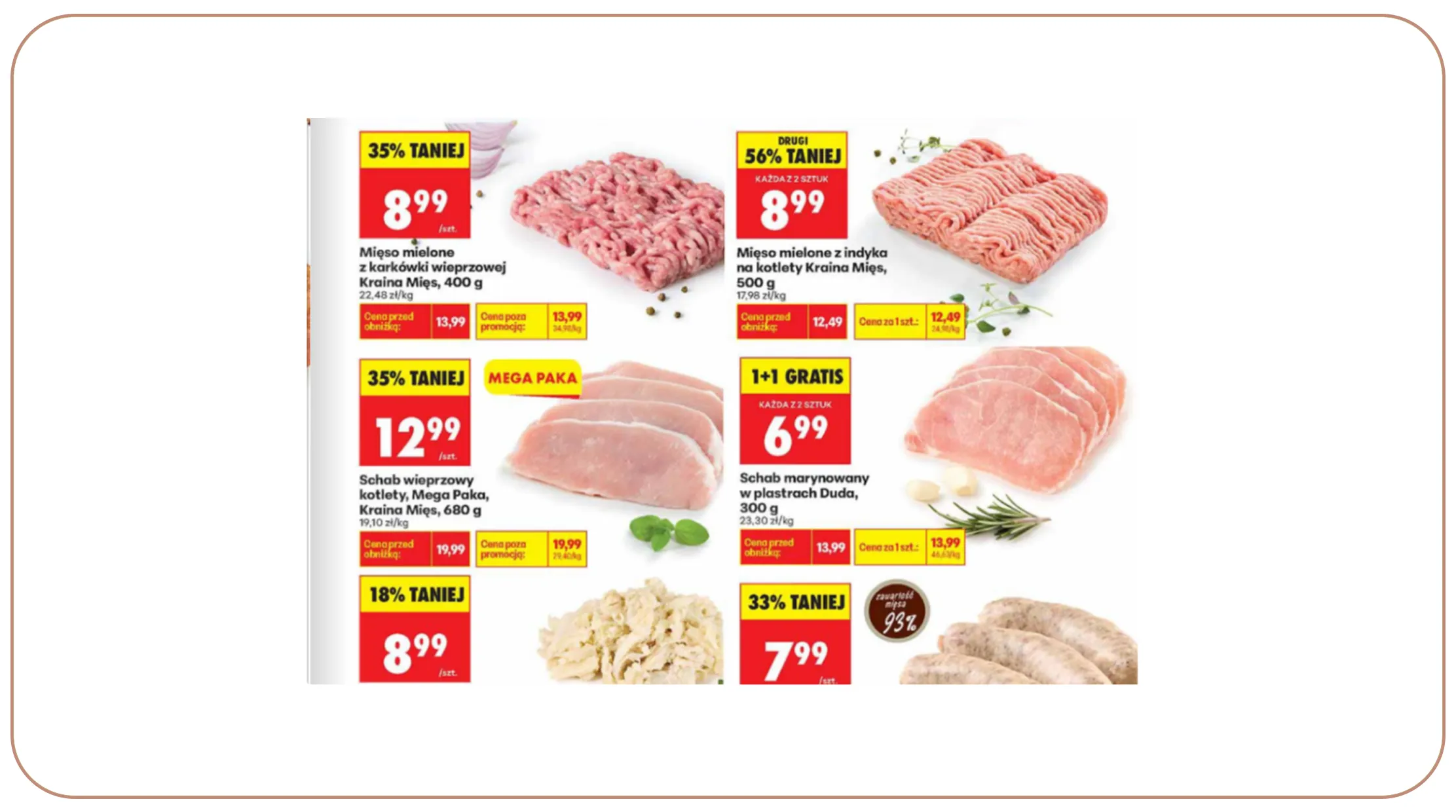
Accurate supermarket price comparisons require more than occasional price checks. Retailers, FMCG brands, and market researchers need continuous access to pricing, promotions, stock availability, and category trends to understand how the market is evolving. Biedronka API for grocery Supermarket Price analysis provides structured, up-to-date grocery intelligence that supports strategic pricing and competitive benchmarking.
By automating data collection, businesses can monitor thousands of SKUs across multiple grocery categories, compare historical price movements, evaluate promotional campaigns, and identify changes in consumer purchasing trends. These insights help pricing managers optimize product pricing, improve promotional planning, and identify opportunities to increase profitability.
Market comparison also supports supplier negotiations, category planning, and demand forecasting by providing reliable evidence of pricing behavior across leading grocery retailers. Instead of relying on manual observations, organizations gain comprehensive, data-driven visibility into supermarket performance.
Key Benefits
- Compare supermarket pricing accurately
- Monitor category-level pricing trends
- Track promotional effectiveness
- Support pricing optimization
- Improve supplier negotiations
- Strengthen competitive benchmarking
- Enable faster strategic decisions
Supermarket Price Analysis Trends (2020-2026)
| Year | SKUs Analyzed | Daily Price Records | Categories Covered | Market Comparison Accuracy (%) |
|---|---|---|---|---|
| 2020 | 105,000 | 72,000 | 52 | 89 |
| 2021 | 136,000 | 95,000 | 61 | 91 |
| 2022 | 178,000 | 126,000 | 72 | 93 |
| 2023 | 230,000 | 168,000 | 84 | 95 |
| 2024 | 295,000 | 220,000 | 97 | 97 |
| 2025* | 372,000 | 286,000 | 111 | 98 |
| 2026* | 465,000 | 365,000 | 128 | 99 |
*Projected values.
Businesses using automated supermarket price analysis gain deeper market visibility, helping them respond quickly to pricing changes and improve long-term retail performance.
How Can a Grocery Data API Improve Pricing Intelligence?
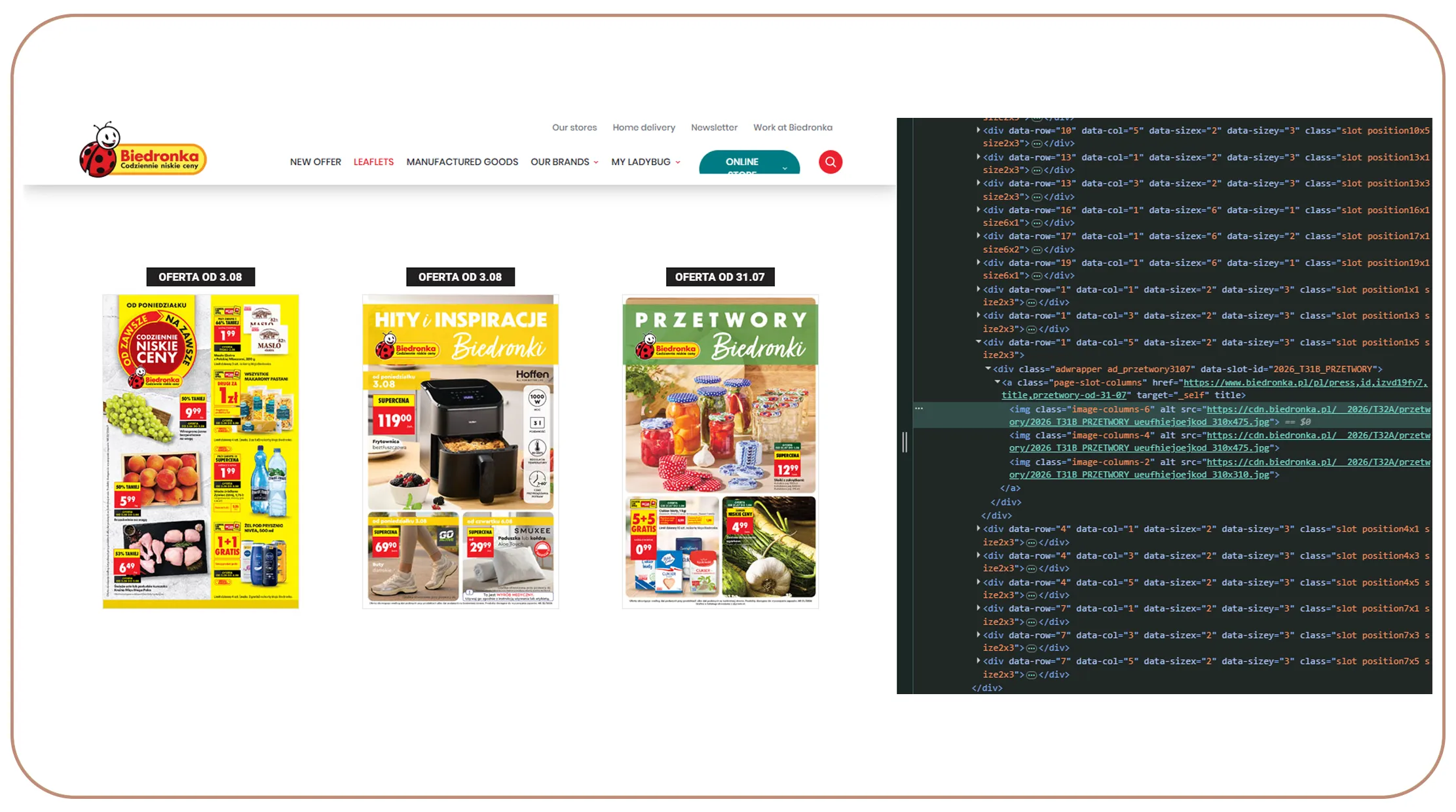
Modern grocery businesses require fast, reliable, and structured access to retail data. Manual data collection cannot keep pace with frequent product updates, price changes, and promotional campaigns. A Grocery Data Scraping API enables organizations to automate grocery data collection while improving the quality and speed of pricing intelligence.
An API collects publicly available information such as product names, prices, discounts, availability, package sizes, brands, categories, promotional labels, and stock status from grocery platforms. The collected data is delivered in structured formats that integrate easily with pricing dashboards, business intelligence tools, ERP systems, and analytics platforms.
Automated APIs reduce manual effort, improve data accuracy, and provide near real-time market visibility. Pricing teams can monitor market changes, evaluate competitor activity, identify pricing opportunities, and make informed commercial decisions based on continuously updated information.
Key Benefits
- Automate grocery data collection
- Access structured pricing data
- Improve reporting accuracy
- Integrate with analytics platforms
- Monitor prices in near real time
- Reduce manual operational costs
- Support faster business decisions
Grocery API Adoption Trends (2020-2026)
| Year | API Requests Processed (Millions) | Products Updated Daily | Data Accuracy (%) | Enterprise Adoption (%) |
|---|---|---|---|---|
| 2020 | 16 | 125,000 | 90 | 27 |
| 2021 | 24 | 165,000 | 92 | 35 |
| 2022 | 36 | 220,000 | 94 | 45 |
| 2023 | 52 | 295,000 | 96 | 56 |
| 2024 | 74 | 385,000 | 98 | 67 |
| 2025* | 102 | 495,000 | 99 | 76 |
| 2026* | 138 | 625,000 | 99.5 | 84 |
*Projected values.
A modern grocery data API empowers retailers and manufacturers with reliable market intelligence, enabling them to improve pricing strategies, strengthen competitive analysis, and respond rapidly to changing grocery market conditions.
How Can High-Quality Grocery Data Improve Retail Decision-Making?
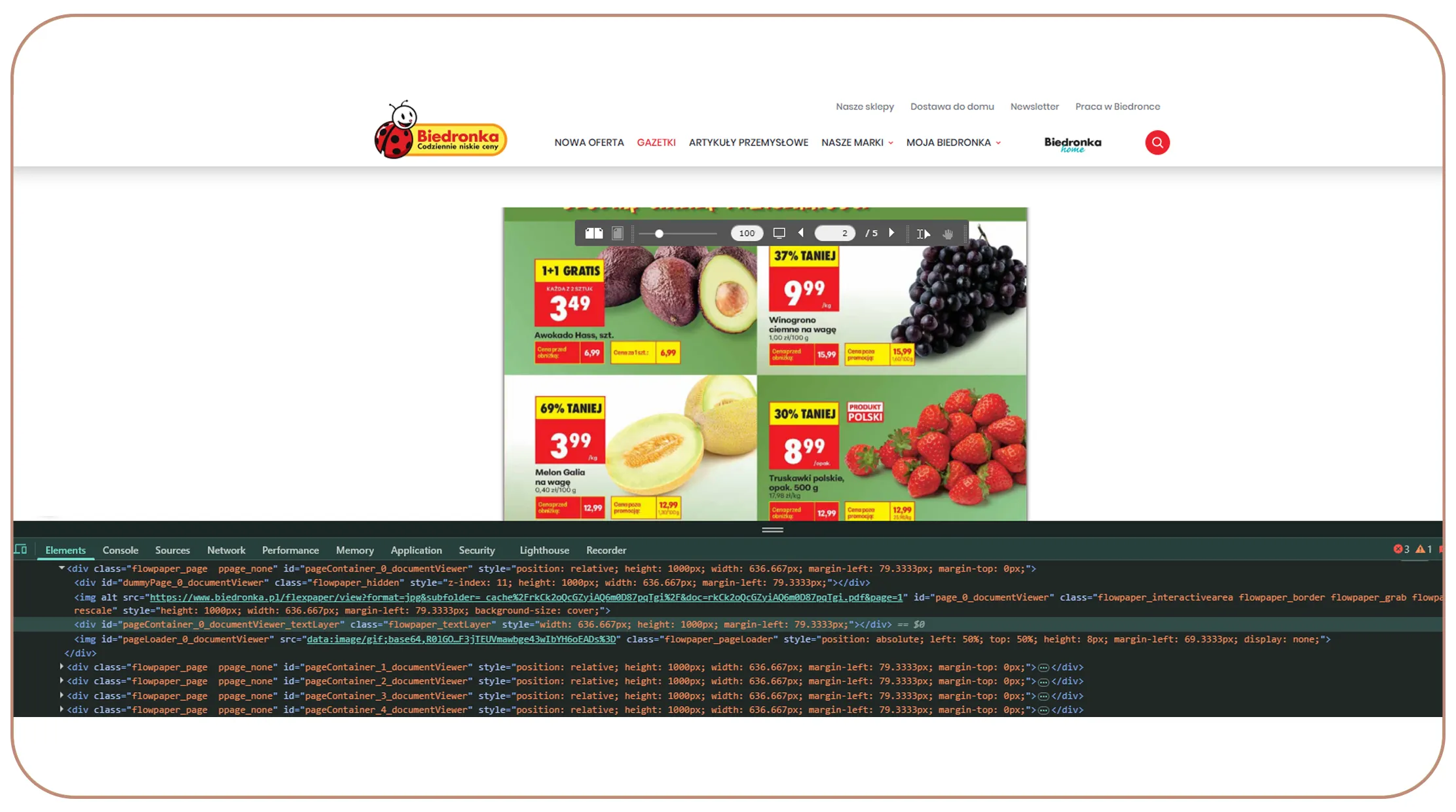
Accurate and structured retail data is the foundation of successful pricing, merchandising, and inventory strategies. Businesses that rely on incomplete or outdated information often struggle to respond to changing market conditions. A comprehensive Grocery Dataset provides retailers, FMCG brands, manufacturers, and market researchers with reliable information that supports better operational and strategic decisions.
A structured grocery dataset typically includes product names, brands, categories, package sizes, prices, promotional offers, stock availability, product descriptions, images, and historical pricing trends. When updated regularly, these datasets help organizations analyze pricing behavior, forecast demand, benchmark competitors, and optimize category performance.
Centralized datasets also improve collaboration across pricing, merchandising, supply chain, and marketing teams. Instead of working with fragmented information, decision-makers gain access to consistent, high-quality data that powers analytics platforms, dashboards, and business intelligence systems.
Key Benefits
- Build reliable pricing models
- Improve category management
- Support demand forecasting
- Benchmark competitor products
- Enhance promotional planning
- Reduce reporting inconsistencies
- Enable data-driven decision-making
Grocery Dataset Growth (2020-2026)
| Year | Products in Dataset | Daily Records Updated | Categories Covered | Dataset Accuracy (%) |
|---|---|---|---|---|
| 2020 | 160,000 | 140,000 | 58 | 91 |
| 2021 | 205,000 | 185,000 | 67 | 93 |
| 2022 | 265,000 | 245,000 | 79 | 95 |
| 2023 | 340,000 | 320,000 | 92 | 97 |
| 2024 | 435,000 | 410,000 | 108 | 98 |
| 2025* | 545,000 | 520,000 | 123 | 99 |
| 2026* | 680,000 | 650,000 | 142 | 99.5 |
*Projected values.
Businesses that invest in high-quality grocery datasets gain a stronger understanding of market dynamics and improve operational efficiency across every stage of the retail value chain.
How Can Grocery Data Support Multiple Business Functions?
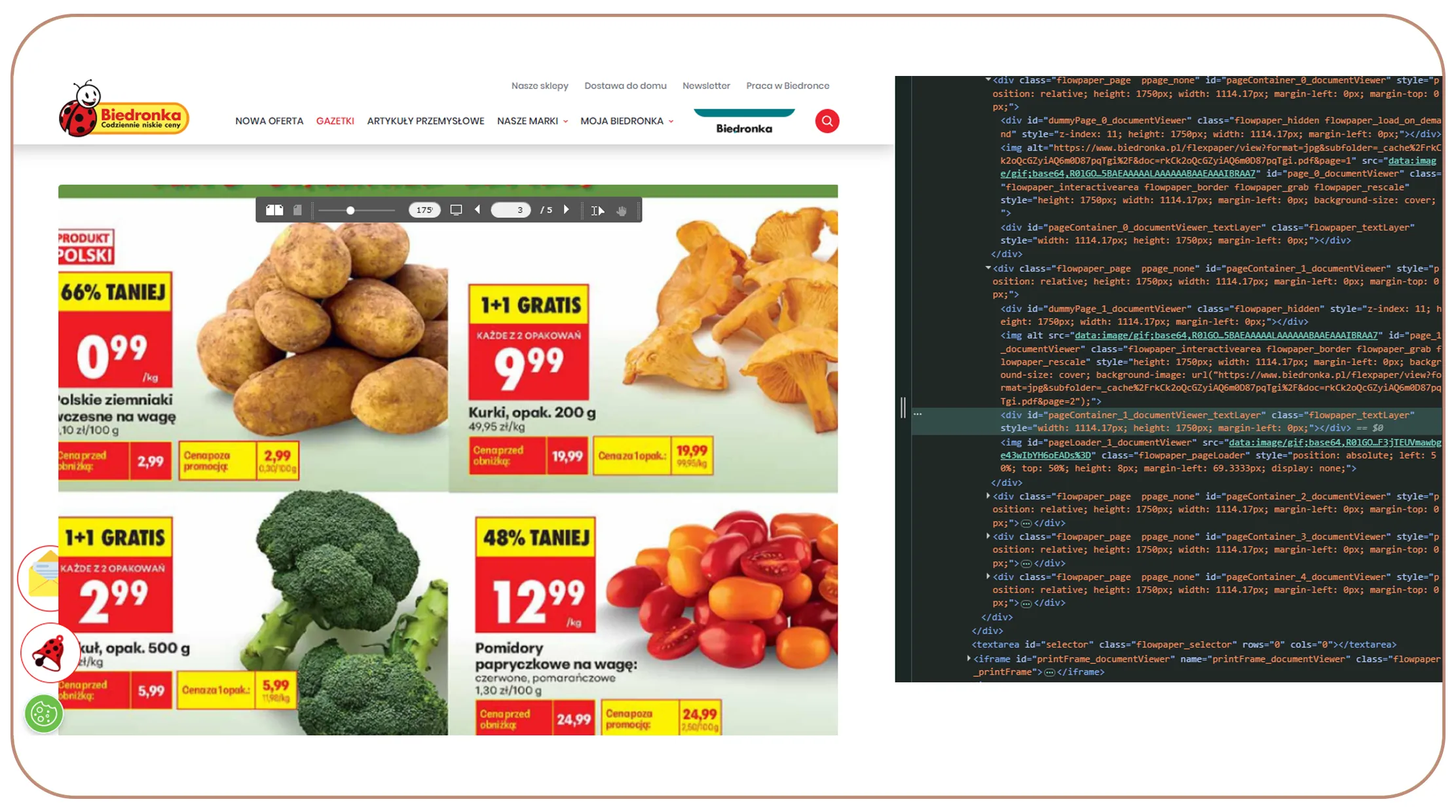
Retail data delivers value far beyond price monitoring. Grocery retailers, FMCG manufacturers, distributors, and market research firms use structured data to improve pricing, optimize inventory, monitor competitors, and strengthen customer experiences. Understanding the Top Grocery Scraping API Use Cases helps organizations maximize the return on their data investments.
Automated grocery APIs support dynamic pricing, assortment optimization, promotion tracking, inventory monitoring, competitive benchmarking, market expansion, demand forecasting, and business intelligence. These capabilities enable organizations to make proactive decisions based on continuously updated market information rather than historical reports.
Businesses also use grocery APIs to feed pricing dashboards, AI-driven forecasting tools, ERP systems, and retail analytics platforms. This creates a connected ecosystem where decision-makers can monitor changing market conditions and respond faster to customer demand.
Key Business Applications
- Dynamic grocery price monitoring
- Promotion and discount tracking
- Competitor benchmarking
- Inventory and availability monitoring
- Assortment optimization
- Market trend analysis
- AI-powered retail analytics
Grocery API Business Adoption (2020-2026)
| Year | Enterprise Users | Daily API Calls (Millions) | Business Functions Supported | Productivity Improvement (%) |
|---|---|---|---|---|
| 2020 | 320 | 4.8 | 6 | 16 |
| 2021 | 430 | 6.5 | 7 | 22 |
| 2022 | 570 | 8.9 | 8 | 29 |
| 2023 | 760 | 12.4 | 9 | 37 |
| 2024 | 980 | 16.8 | 10 | 45 |
| 2025* | 1,260 | 22.5 | 11 | 53 |
| 2026* | 1,620 | 29.8 | 12 | 61 |
*Projected values.
As grocery retail becomes increasingly data-driven, organizations that leverage automated grocery APIs can improve operational efficiency, strengthen competitive positioning, and make faster, more informed business decisions across every retail function.
Why Choose Real Data API?
Retailers, FMCG brands, manufacturers, distributors, and market research firms need timely, accurate, and scalable grocery intelligence to stay competitive in today's rapidly evolving retail landscape. Real Data API provides advanced solutions that help businesses Scrape grocery prices using Biedronka API and transform publicly available grocery data into actionable market intelligence.
Our platform automates the collection of grocery prices, promotions, product availability, categories, brands, package sizes, and assortment changes from leading grocery retailers. The collected data is delivered in structured formats through secure APIs, enabling seamless integration with pricing engines, BI dashboards, ERP platforms, and analytics systems.
Whether you need daily price updates, promotional tracking, competitor benchmarking, or historical pricing trends, Real Data API delivers reliable, enterprise-grade grocery intelligence that supports smarter business decisions.
Our Core Capabilities
- Real-time grocery price monitoring
- Promotion and discount tracking
- Product availability and assortment monitoring
- SKU-level grocery intelligence
- Historical pricing analysis
- Custom API integrations
- Automated data delivery
- Enterprise-ready retail analytics
Why Businesses Trust Real Data API
- Improve pricing accuracy with automated intelligence
- Benchmark competitors across grocery categories
- Reduce manual data collection efforts
- Monitor thousands of products efficiently
- Support demand forecasting and inventory planning
- Accelerate data-driven retail decisions
- Scale seamlessly as business requirements grow
Our flexible and scalable grocery intelligence solutions help organizations optimize pricing strategies, monitor market trends, and strengthen their competitive advantage with high-quality retail data.
Conclusion
The grocery retail industry is becoming increasingly competitive as prices, promotions, and product assortments change more frequently than ever. Businesses that Scrape grocery prices using Biedronka API gain timely access to structured grocery intelligence that supports accurate pricing decisions, competitive benchmarking, promotional analysis, and market research.
Real Data API empowers retailers, FMCG brands, manufacturers, and analysts with reliable grocery datasets, automated monitoring, and scalable API solutions designed for enterprise use. Our platform helps organizations reduce manual effort, improve operational efficiency, and respond quickly to changing market conditions using accurate and continuously updated retail data.
Whether your goal is to monitor competitor pricing, optimize promotional strategies, improve category management, or expand into new grocery markets, Real Data API provides the technology and expertise to help you achieve measurable business results.
Ready to unlock real-time grocery intelligence and strengthen your competitive advantage? Contact Real Data API today to discover how our grocery data solutions can help you automate price monitoring, improve market analysis, and make smarter retail decisions with confidence!
Latest posts
How to Scrape Public Posts and Trends Using Truth Social API to Overcome Real-Time Social Media Monitoring Challenges?
Scrape grocery prices using Biedronka API to Overcome Grocery Pricing, Promotion Tracking, and Market Analysis Challenges
Why Businesses scrape Rozetka product listings data via API to Track Inventory, Pricing, and Marketplace Trends?
How to Scrape TikTok creator profile data using RetrieveTik API for Influencer Analytics and Marketing Intelligence?







.png)