Introduction
The online grocery industry has evolved significantly over the past few years, driven by growing consumer demand for convenience, faster deliveries, and competitive pricing. As grocery platforms continue to expand their digital footprints, businesses are increasingly relying on data-driven strategies to remain competitive in a rapidly changing marketplace. Retailers, brands, manufacturers, and market researchers now require accurate pricing intelligence to understand market dynamics and optimize decision-making.
One of the most effective ways to achieve this is through real-time grocery price monitoring across Blinkit BigBasket and Amazon Fresh. By continuously tracking product prices, discounts, availability, and promotional campaigns, organizations can gain valuable insights into competitor strategies and customer preferences. Real-time monitoring enables businesses to respond quickly to pricing fluctuations, identify emerging trends, and maintain market competitiveness.
Companies are also investing in solutions that help Track Amazon Fresh Grocery and Pricing Trends to better understand category performance and consumer buying patterns. From daily essentials to premium grocery products, accurate marketplace data helps organizations develop smarter pricing models, improve inventory planning, and uncover growth opportunities.
As the grocery eCommerce sector continues to expand through 2026, reliable data collection and competitive intelligence will play an increasingly important role in shaping successful business strategies.
The Growing Importance of Pricing Intelligence
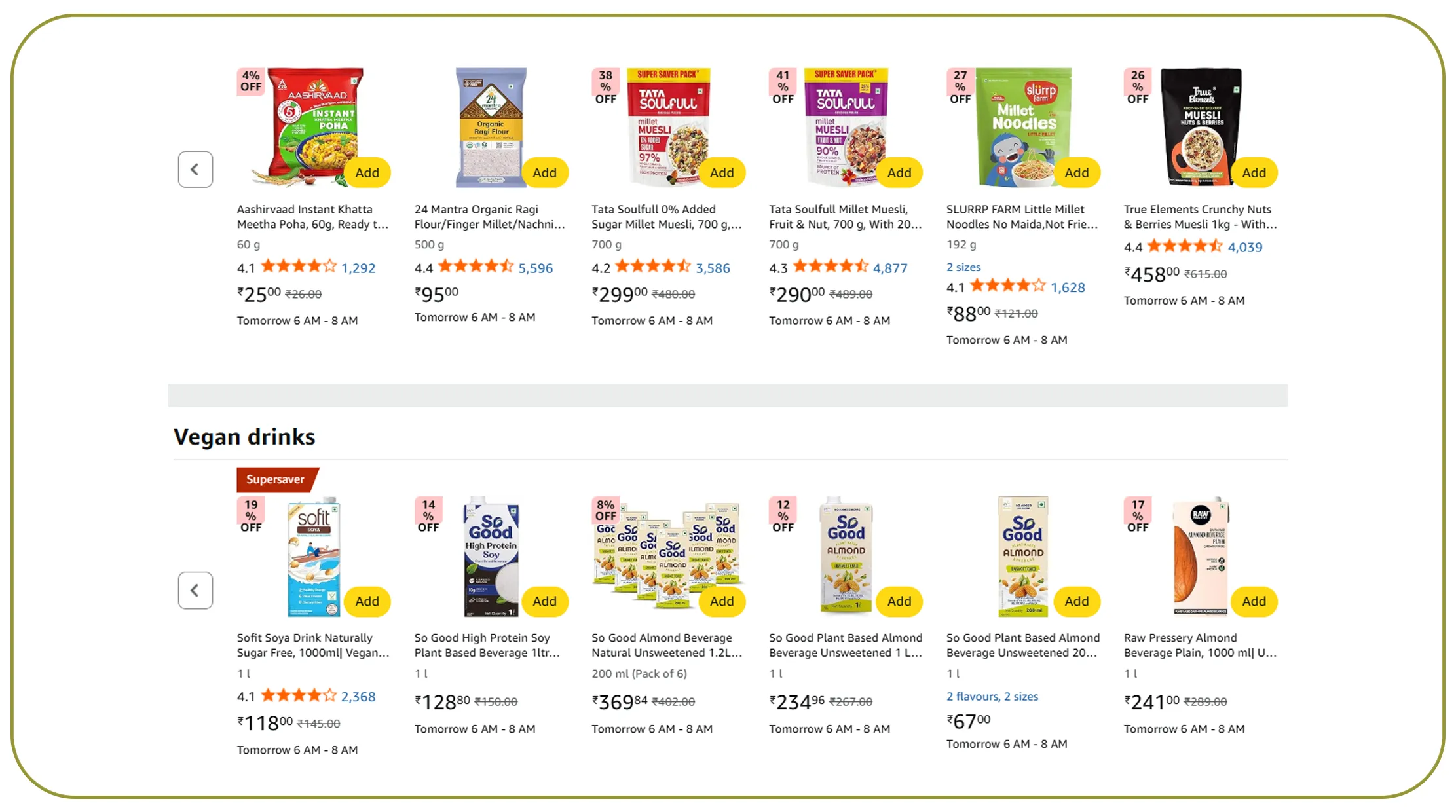
The grocery eCommerce industry has become increasingly competitive as platforms compete for customer loyalty through pricing strategies, discounts, and promotional campaigns. Businesses require continuous access to marketplace information to evaluate performance and respond to changing market conditions.
Using Grocery price data scraping across Blinkit BigBasket and Amazon Fresh, Blinkit Product Data Scraper, organizations can collect structured product information across multiple grocery platforms. This enables businesses to compare prices, identify category-level trends, and track inventory availability in real time.
Grocery eCommerce Market Evolution (2020–2026)
| Year | Market Trend | Business Impact |
|---|---|---|
| 2020 | Rapid online grocery adoption | Increased digital competition |
| 2021 | Expansion of delivery networks | Higher demand for analytics |
| 2022 | Growth of quick commerce | Real-time monitoring required |
| 2023 | Dynamic pricing adoption | Competitive intelligence essential |
| 2024 | AI-driven pricing strategies | Automated insights needed |
| 2025 | Hyper-personalized promotions | Advanced market tracking |
| 2026 | Fully data-driven grocery ecosystems | Continuous monitoring critical |
Businesses benefit from pricing intelligence by monitoring competitor price changes, tracking promotional campaigns, comparing regional pricing variations, analyzing consumer purchasing behavior, and supporting dynamic pricing decisions.
Understanding Consumer Demand Through Delivery Data
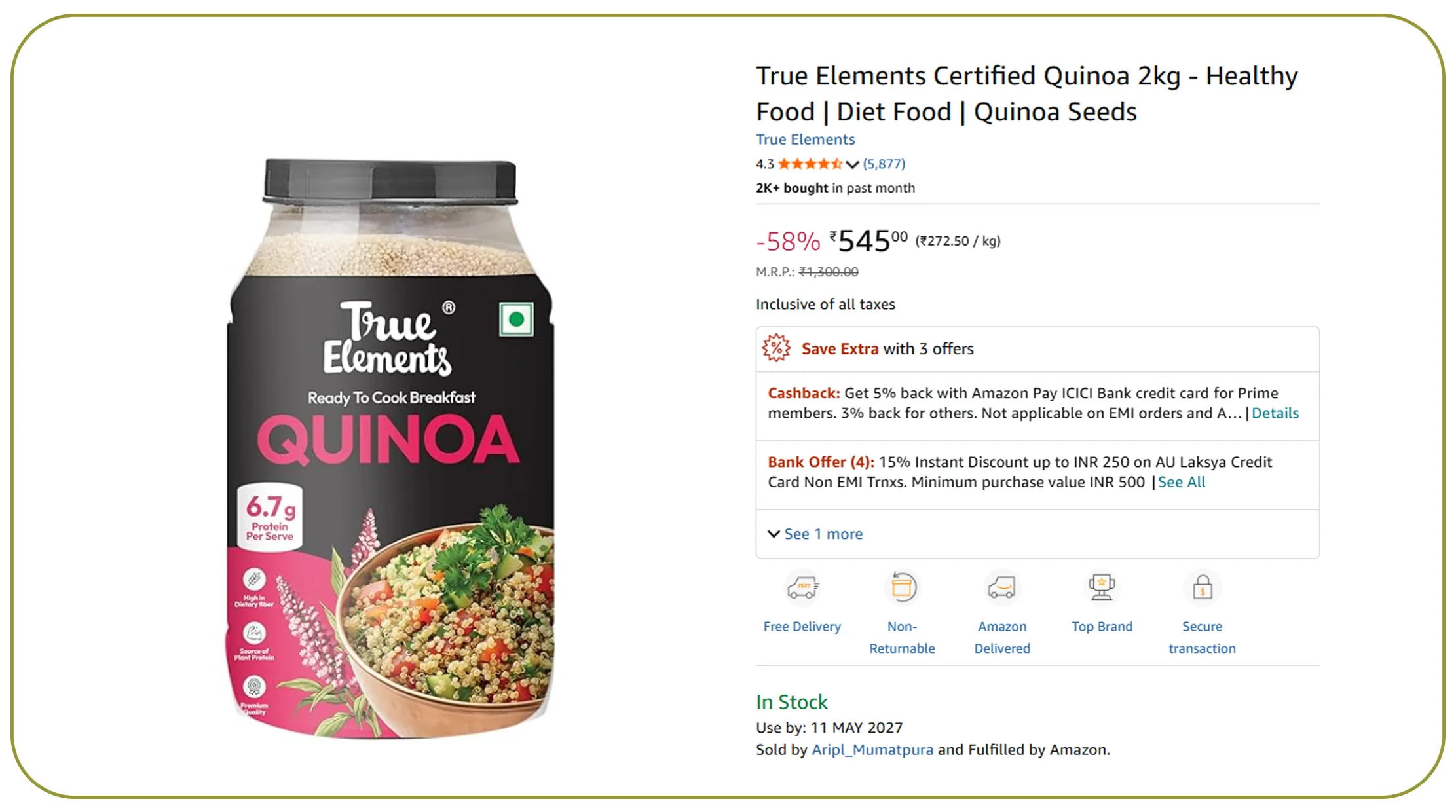
Modern grocery platforms generate vast amounts of data related to products, pricing, customer preferences, and delivery operations. Businesses that can effectively analyze this information gain a significant competitive advantage.
Many organizations utilize amazon fresh grocery delivery scraping services to gather accurate and structured datasets that reveal market trends and product demand patterns. Access to this information helps retailers and brands understand which categories are growing and where pricing opportunities exist.
Consumer Behavior Trends (2020–2026)
| Category | 2020 | 2023 | 2026 Projection |
|---|---|---|---|
| Fresh Produce | High | Very High | Extremely High |
| Dairy Products | Moderate | High | High |
| Packaged Foods | High | Very High | Very High |
| Organic Products | Moderate | High | Very High |
| Household Essentials | High | High | High |
Businesses can use delivery data to identify high-demand products, forecast inventory requirements, understand seasonal purchasing patterns, evaluate category performance, and improve customer targeting strategies.
Leveraging Data for Economic and Pricing Analysis
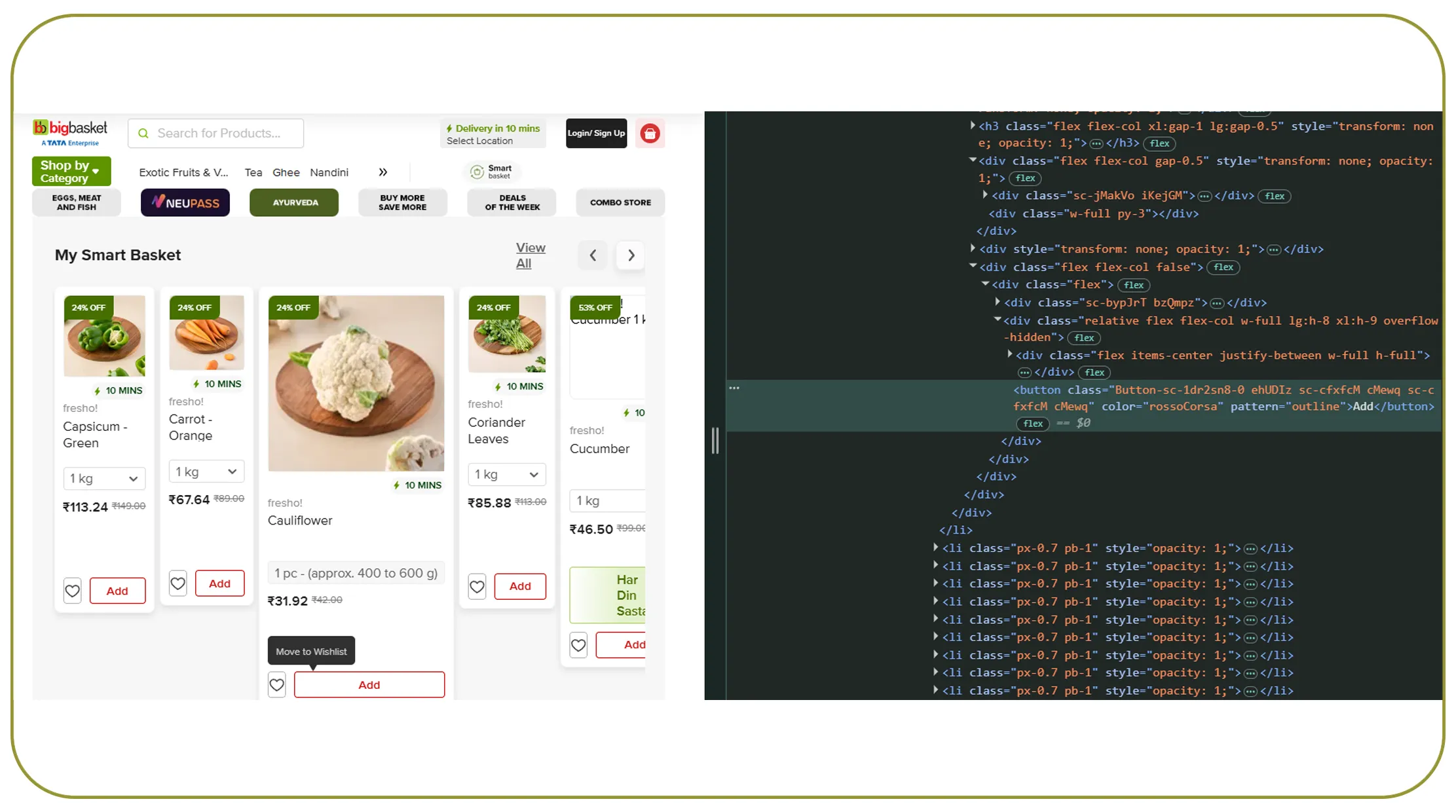
Price fluctuations across grocery marketplaces provide valuable indicators of consumer demand, inflation trends, and competitive market activity. Organizations often use pricing intelligence to evaluate broader economic conditions while improving retail strategies.
Through web scraping amazon fresh grocery delivery data, Web Scraping Blinkit Pricing Data for Inflation and Cost Analysis, businesses can access historical and real-time information that supports pricing research and economic analysis.
Average Grocery Price Trend Analysis (2020–2026)
| Year | Average Price Index |
|---|---|
| 2020 | 100 |
| 2021 | 106 |
| 2022 | 114 |
| 2023 | 121 |
| 2024 | 127 |
| 2025 | 133 |
| 2026 | 140 |
Key benefits of pricing analysis include tracking inflation-related changes, measuring category-level price growth, monitoring competitor pricing adjustments, identifying promotional effectiveness, and supporting strategic planning.
Building Comprehensive Marketplace Visibility
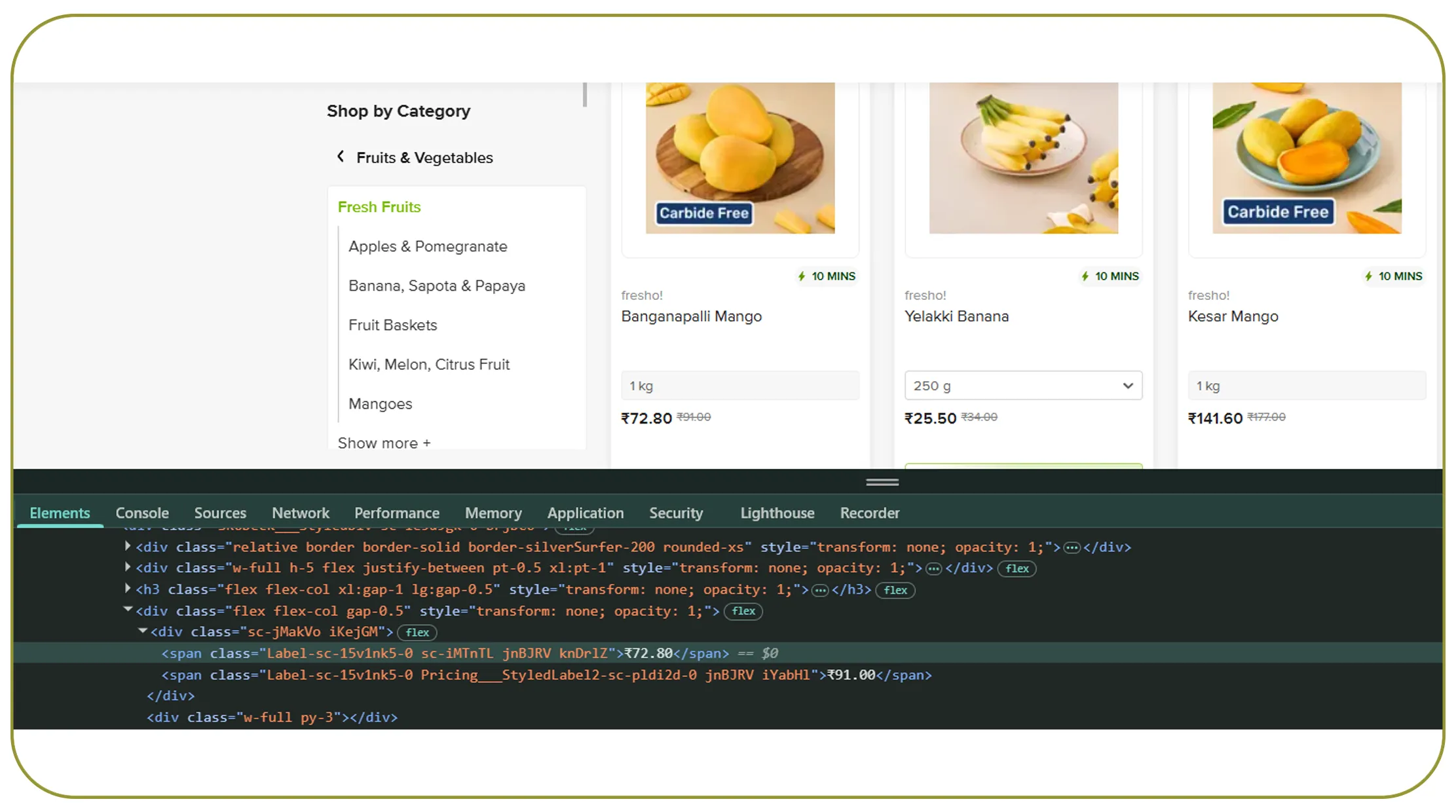
As online grocery competition intensifies, businesses require detailed visibility into product listings, pricing structures, stock availability, and promotional strategies across multiple platforms. Access to reliable marketplace intelligence helps retailers, brands, and manufacturers understand competitive positioning and respond quickly to market shifts.
Organizations increasingly rely on big basket grocery delivery data scraping to gather structured information about product assortments, category performance, and pricing trends. This data supports a wide range of business functions, including inventory planning, competitor benchmarking, and demand forecasting.
Marketplace Expansion Trends (2020–2026)
| Year | Grocery Platform Growth | Data Demand |
|---|---|---|
| 2020 | Rapid online adoption | Moderate |
| 2021 | Expansion of service areas | High |
| 2022 | Increased product assortment | High |
| 2023 | Greater customer acquisition | Very High |
| 2024 | AI-powered personalization | Very High |
| 2025 | Omnichannel integration | Extremely High |
| 2026 | Advanced predictive commerce | Critical |
Businesses can leverage marketplace datasets to monitor product assortment changes, compare category-level pricing, analyze promotional campaigns, evaluate regional market differences, and improve assortment planning.
Strengthening Competitive Intelligence Strategies
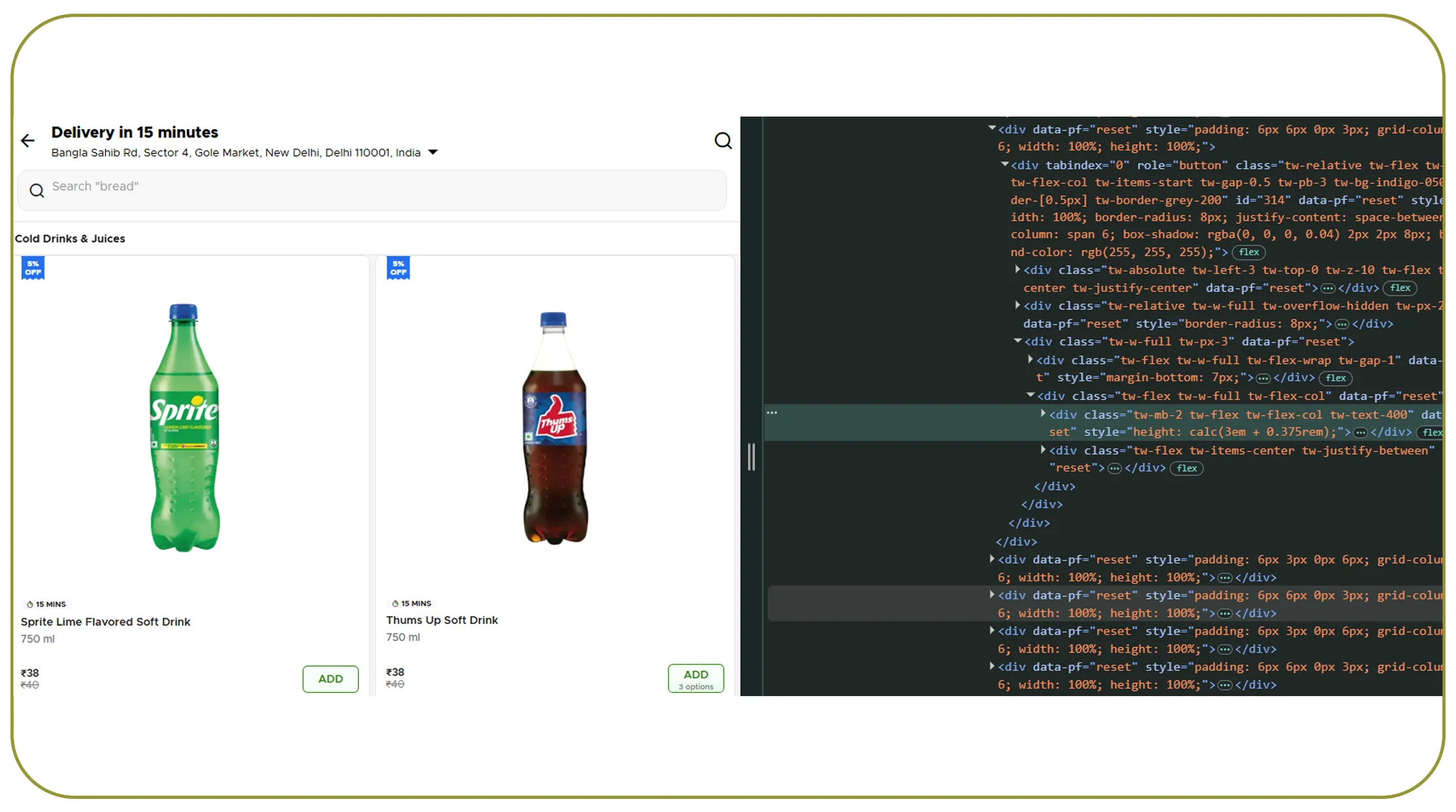
Competitive intelligence has become a critical component of modern retail operations. Grocery businesses need accurate information regarding pricing, promotions, inventory levels, and product performance to remain competitive in fast-moving markets.
Many organizations utilize big basket grocery delivery scraping services to build detailed intelligence systems capable of monitoring marketplace activity at scale. These solutions provide structured datasets that support decision-making across pricing, marketing, and supply chain operations.
Competitive Monitoring Priorities (2020–2026)
| Focus Area | Importance in 2020 | Importance in 2026 |
|---|---|---|
| Product Pricing | High | Critical |
| Inventory Tracking | Moderate | Very High |
| Promotions Analysis | High | Very High |
| Category Trends | Moderate | High |
| Customer Demand Insights | High | Critical |
Competitive intelligence helps businesses identify market opportunities, monitor competitor actions, improve promotional effectiveness, optimize pricing strategies, and enhance customer retention efforts.
Optimizing Product Discovery and Catalog Management
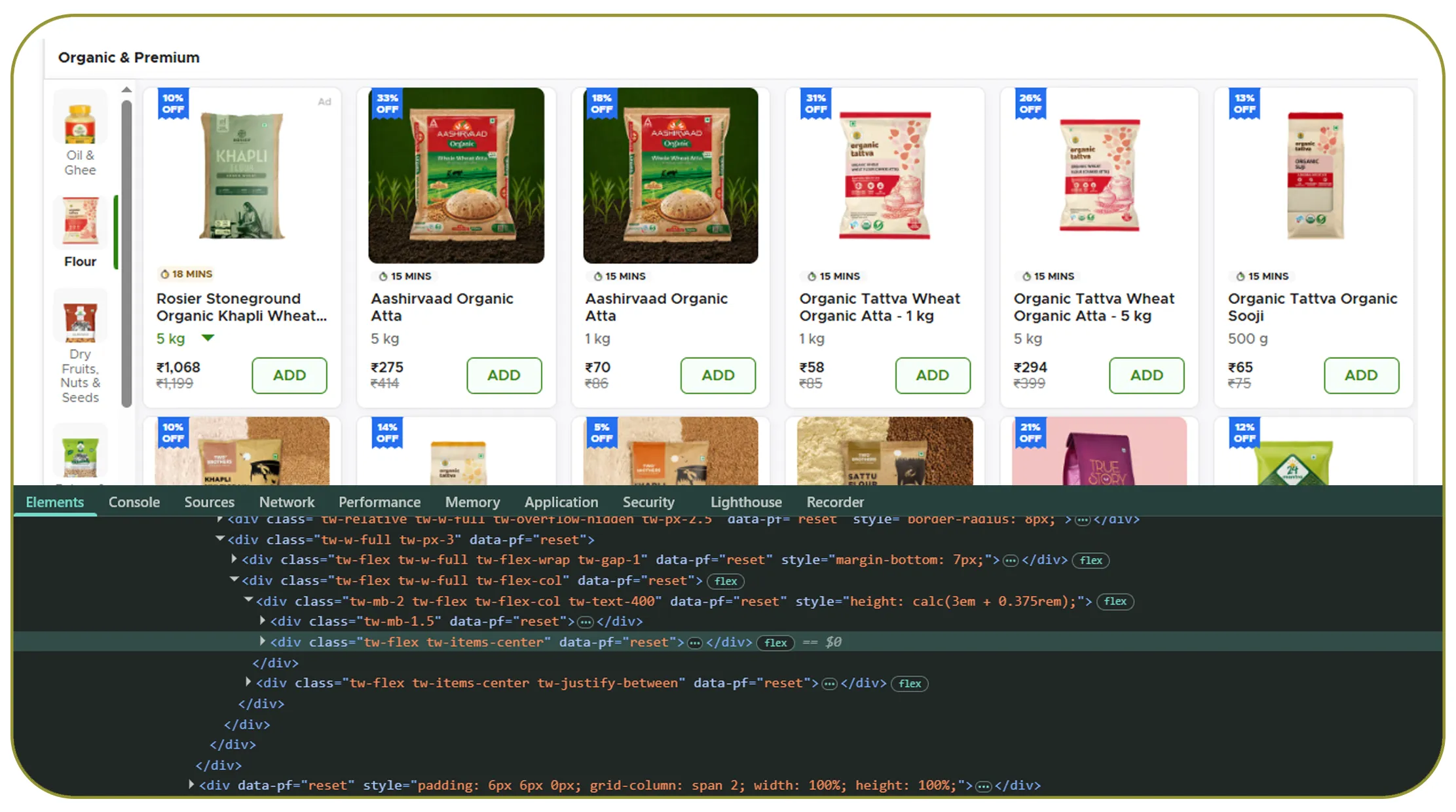
Product catalogs form the foundation of every grocery marketplace. Maintaining visibility into product listings, category structures, and assortment changes is essential for businesses seeking to improve merchandising strategies and understand market dynamics.
Through big basket product catalog scraping, organizations can collect detailed information about product names, descriptions, categories, brands, pricing, and availability. This structured data supports product research, assortment optimization, and market analysis initiatives.
Product Catalog Growth Trends (2020–2026)
| Year | Average Product Listings Growth |
|---|---|
| 2020 | 100% Baseline |
| 2021 | 118% |
| 2022 | 136% |
| 2023 | 152% |
| 2024 | 169% |
| 2025 | 185% |
| 2026 | 205% |
Benefits of catalog monitoring include tracking new product launches, identifying assortment gaps, monitoring brand performance, improving category management, and supporting competitive benchmarking.
Why Choose Real Data API?
Real Data API delivers scalable, reliable, and customized grocery marketplace data solutions for businesses seeking actionable market intelligence. Our advanced infrastructure helps organizations collect structured datasets from leading grocery and quick-commerce platforms, enabling faster and more accurate decision-making.
Whether you need pricing intelligence, inventory monitoring, product catalog data, or competitor analysis, Real Data API provides comprehensive solutions tailored to business requirements. Companies looking to extract blinkit grocery delivery API insights can leverage our robust data collection capabilities to access real-time information efficiently and at scale.
Key Advantages of Real Data API
- Real-time data delivery
- High-quality structured datasets
- Custom API integrations
- Scalable enterprise solutions
- Competitive pricing intelligence
- Product catalog monitoring
- Inventory and availability tracking
- Dedicated technical support
By transforming raw marketplace information into actionable business intelligence, Real Data API helps organizations improve strategic planning, optimize operations, and maintain a competitive advantage in rapidly evolving grocery markets.
Conclusion
The grocery eCommerce industry is becoming increasingly data-driven as retailers, brands, and manufacturers seek deeper visibility into pricing, inventory, product catalogs, and consumer behavior. Access to real-time marketplace intelligence allows organizations to respond quickly to market changes, optimize pricing strategies, and identify new growth opportunities.
From competitor benchmarking to product assortment analysis, reliable grocery data empowers businesses to make informed decisions and strengthen their market position. Solutions designed to Extract Grocery Prices from BigBasket API provide valuable insights that support pricing optimization, inventory planning, and long-term business growth.
As digital grocery platforms continue expanding through 2026 and beyond, businesses that leverage accurate and structured marketplace data will be better positioned to outperform competitors and adapt to changing consumer expectations.
Ready to unlock real-time grocery pricing intelligence and gain a competitive edge? Contact Real Data API today to access customized grocery data solutions tailored to your business needs!
Latest posts

How WhatsApp Scraper Helps Businesses Extract Public Business Profiles and Contact Data

How Businesses Use Instagram profile scraper to Track Profiles, Followers, Engagement, and Social Media Data
How Ixigo API Helps Businesses Solve Flight, Train, Hotel, Travel, and Pricing Data Challenges

How to Extract Restaurants, Menus, Prices, Ratings, and Business Data for Market Insights






.png)