
Introduction
E-commerce businesses need accurate product, pricing, seller, and customer-feedback data to make better decisions in increasingly competitive global markets. AliExpress data extraction for e-commerce businesses can help brands, retailers, resellers, analysts, and marketplace operators collect structured information from a large international retail marketplace and use it for product research, price benchmarking, assortment analysis, and competitor intelligence.
AliExpress was launched in 2010 and enables consumers to purchase directly from manufacturers and distributors around the world. Alibaba introduced its Choice service in March 2023, combining product selection, pricing, logistics, and customer-service improvements. Alibaba reported that AliExpress orders increased by more than 60% year over year in the quarter ended December 31, 2023, while Choice accounted for about half of AliExpress orders in January 2024.
An AliExpress Scraper can therefore be useful when businesses need a repeatable method for collecting product titles, prices, discounts, seller information, ratings, reviews, availability, specifications, and other publicly available marketplace attributes. The following research report combines verified industry and company statistics with practical data-analysis applications. Where AliExpress-specific figures are not publicly disclosed for a particular year, the tables explicitly state that limitation rather than presenting estimates as facts.
Why Has Marketplace Data Become More Important?
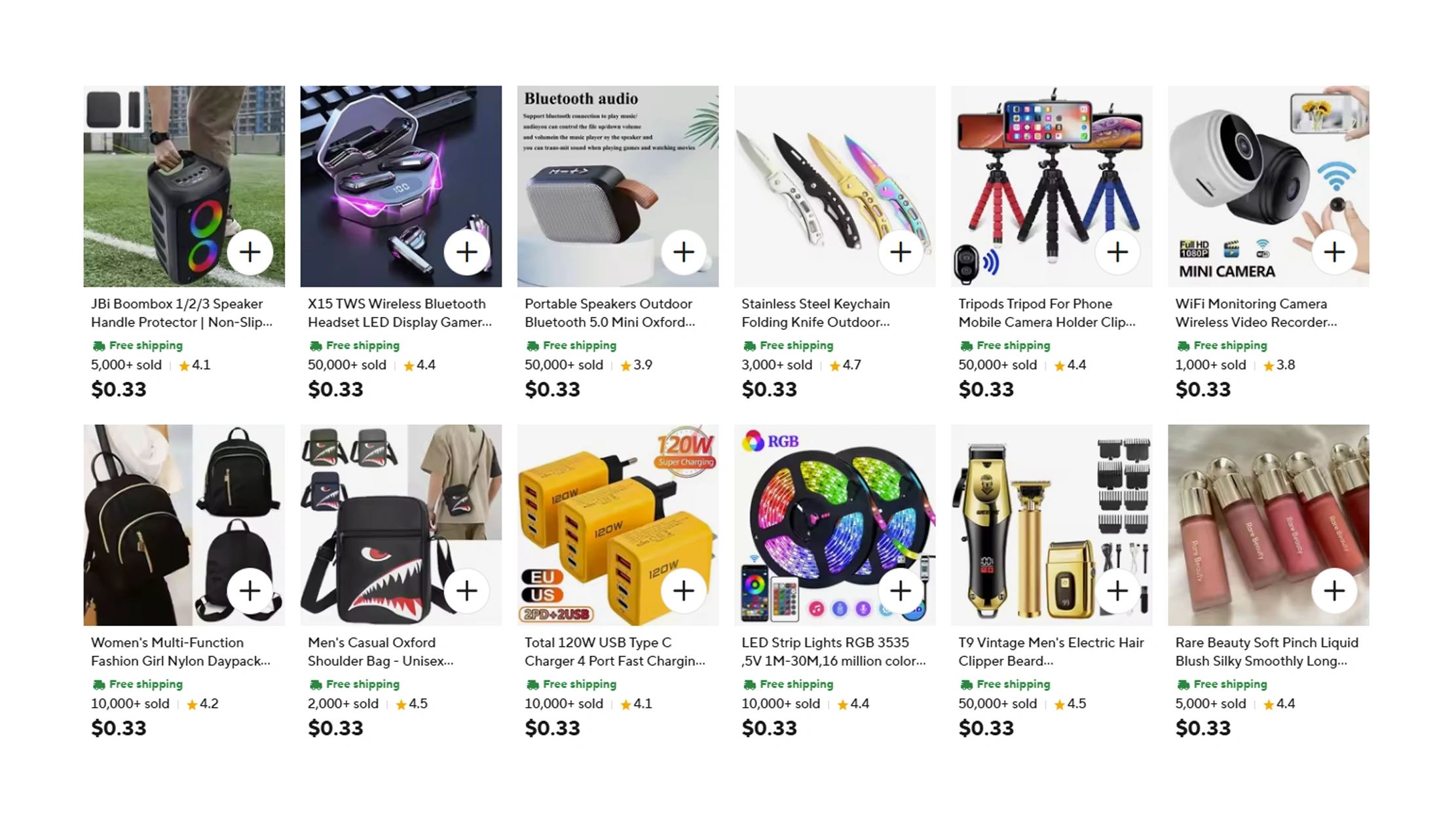
The broader e-commerce market has expanded significantly. UN Trade and Development reported that business e-commerce sales across 43 developed and developing economies reached approximately $27 trillion in 2022, around 25% above 2019 levels. More recent UNCTAD data shows that business e-commerce sales across 45 economies reached $28 trillion in 2024.
AliExpress operates within this broader transformation and has continued expanding its international commerce infrastructure. Alibaba reported that its international commerce retail business—which includes AliExpress, Trendyol, and Lazada—generated RMB 34.455 billion in fiscal 2021, RMB 42.668 billion in fiscal 2022, RMB 49.873 billion in fiscal 2023, and RMB 81.654 billion in fiscal 2024. These figures are for the combined international commerce retail business, not AliExpress alone.
| Year | Verified E-commerce / Alibaba Indicator | What It Shows |
|---|---|---|
| 2020 | Online retail sales share reached 19% globally* | Pandemic accelerated online shopping |
| 2021 | Alibaba International Commerce Retail revenue: RMB 34.455B | International marketplace expansion |
| 2022 | Business e-commerce sales: about $27T | Large-scale digital commerce |
| 2023 | Alibaba International Commerce Retail revenue: RMB 49.873B | Continued international growth |
| 2024 | Business e-commerce sales: $28T | Continued expansion |
| 2025 | Alibaba AIDC Q3 FY2025 revenue: RMB 37.76B | Strong international commerce growth |
| 2026 | No comparable finalized full-year AliExpress-only figure available | Avoiding unsupported estimates |
*UNCTAD reported that online retail sales' share of total retail sales increased from 16% to 19% in 2020. Alibaba International Commerce Retail figures include AliExpress, Trendyol and Lazada and therefore should not be interpreted as AliExpress-only revenue.
This distinction is important for research credibility. Marketplace-level data can be highly valuable even when platform-specific revenue or GMV figures are not publicly disclosed.
How Can Real-Time Product Data Improve E-commerce Decisions?
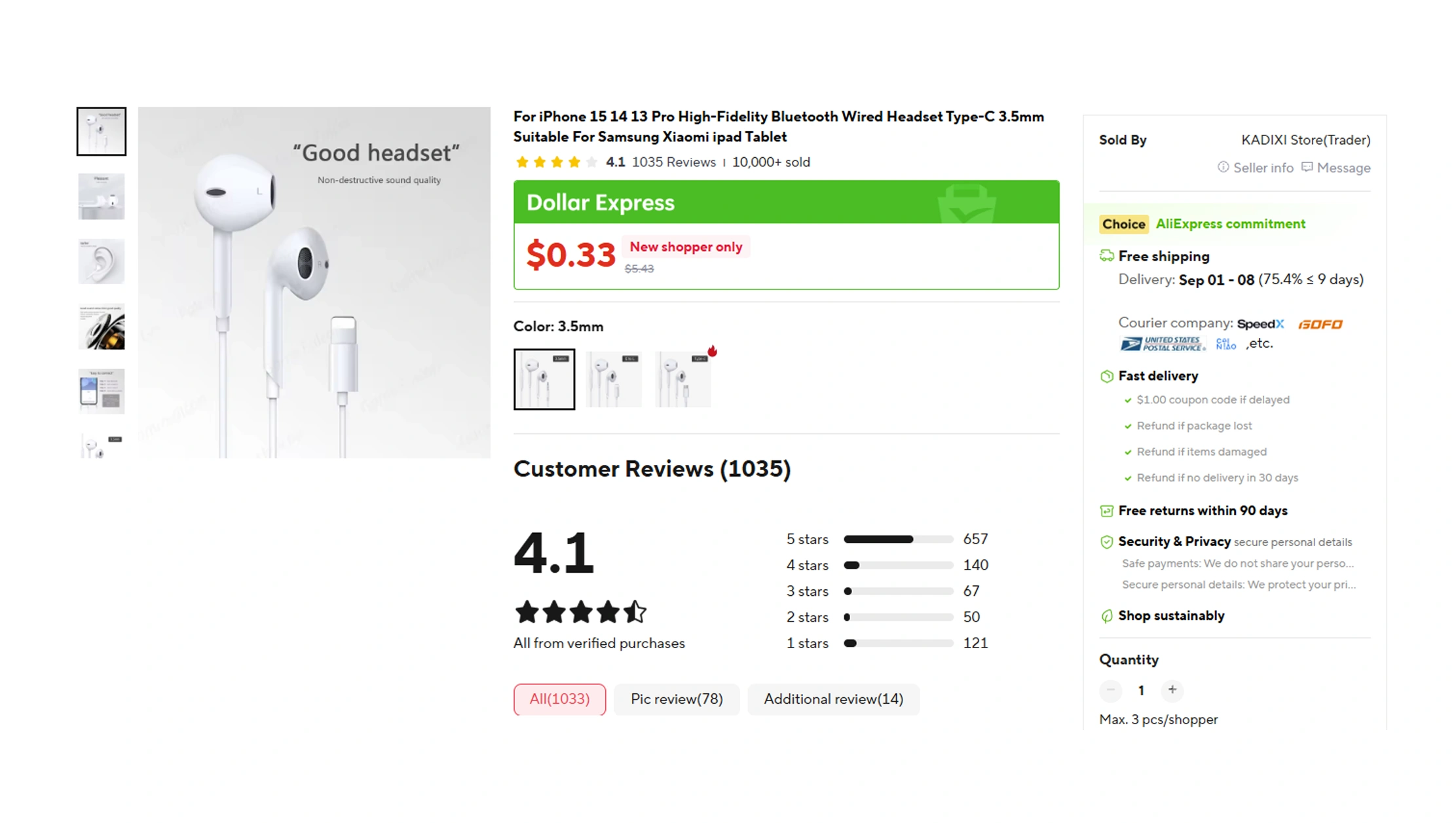
An AliExpress API for real-time product data can give e-commerce teams structured access to product observations that would otherwise require repeated manual research. Useful fields can include product title, category, brand, price, currency, discount, seller, product URL, availability, rating, review count, specifications, shipping information, and timestamp.
Real-time access is especially valuable in categories with frequent price and assortment changes. A retailer can monitor selected products, compare current prices with historical records, and identify new listings or significant changes. Product identifiers and normalized attributes also make it easier to determine whether two listings represent the same or comparable products.
AliExpress' scale makes product-level monitoring commercially relevant. Alibaba stated in 2022 that its international commerce retail businesses included AliExpress, Lazada, Trendyol, and Daraz and that the group had 305 million international annual active consumers across those international businesses.
| Year | Verified AliExpress / Alibaba International Data | Data-Collection Implication |
|---|---|---|
| 2020 | AliExpress-only consumer count not disclosed in cited source | Product-level monitoring can fill research gaps |
| 2021 | International commerce retail revenue: RMB 34.455B | Growing international commerce base |
| 2022 | 305M international annual active consumers across Alibaba's international consumer-facing businesses | Broad international audience |
| 2023 | International commerce retail revenue: RMB 49.873B | Expanding commercial activity |
| 2024 | International commerce retail revenue: RMB 81.654B | Strong segment growth |
| 2025 | AIDC quarterly revenue: RMB 37.76B in Dec. 2024 quarter | Continued international momentum |
| 2026 | AliExpress-only annual figure not available in cited public data | Use direct collected marketplace data |
The value of an API is not simply speed. Structured delivery allows product observations to feed pricing dashboards, catalog databases, research applications, and automated analytics. Businesses can establish collection schedules based on category volatility and strategic importance.
A well-designed pipeline should also preserve timestamps. Without historical timestamps, an e-commerce team cannot determine whether a price change is temporary or persistent.
What Can Product Listings Reveal About Market Opportunities?
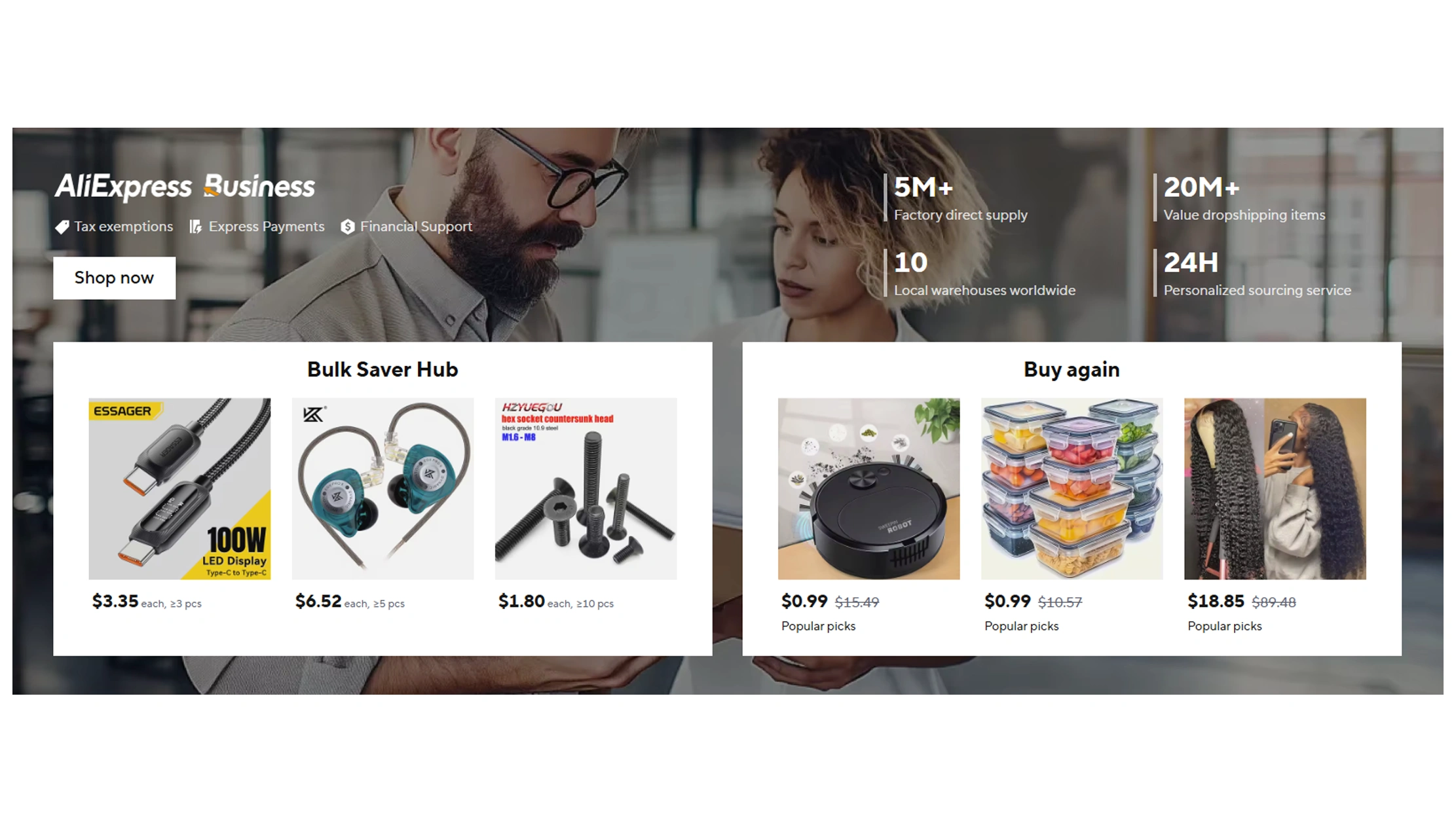
web scraping AliExpress product listings can help businesses understand product assortment at a granular level. Instead of analyzing only top-level categories, researchers can examine individual listings and compare titles, specifications, prices, seller characteristics, ratings, reviews, and availability.
This is particularly useful for product discovery. A retailer considering a new category can identify recurring product types, price ranges, product attributes, and seller concentrations. The resulting dataset can help determine whether a category is highly fragmented or dominated by a smaller group of sellers.
UNCTAD reported that business e-commerce sales across the economies covered by its database reached $28 trillion in 2024, demonstrating the scale of commercial activity taking place through digital ordering.
| Year | Verified E-commerce Indicator | Research Opportunity |
|---|---|---|
| 2020 | Online retail share: 19% of total retail sales | Identify pandemic-driven digital categories |
| 2021 | Online retail sales in seven major economies: about $2.9T | Compare category expansion |
| 2022 | Business e-commerce sales: about $27T | Analyze mature digital channels |
| 2023 | UNCTAD reports continued e-commerce growth | Expand historical datasets |
| 2024 | Business e-commerce sales: $28T | Study mature marketplace competition |
| 2025 | International trade exceeded $35T globally | Examine cross-border opportunity |
| 2026 | No finalized global e-commerce value in cited sources | Continue current-year monitoring |
UNCTAD's seven-country online retail series showed sales increasing from approximately $2 trillion in 2019 to $2.5 trillion in 2020 and $2.9 trillion in 2021.
For an e-commerce business, product-listing data can reveal gaps between what customers can purchase and what the business currently offers. Researchers can identify products with growing visibility, compare price bands, and detect new assortment additions.
The strongest approach combines listing data with historical snapshots. A single listing provides a point-in-time observation; repeated observations create a market timeline.
How Can Competitor Price Data Improve Pricing Strategy?
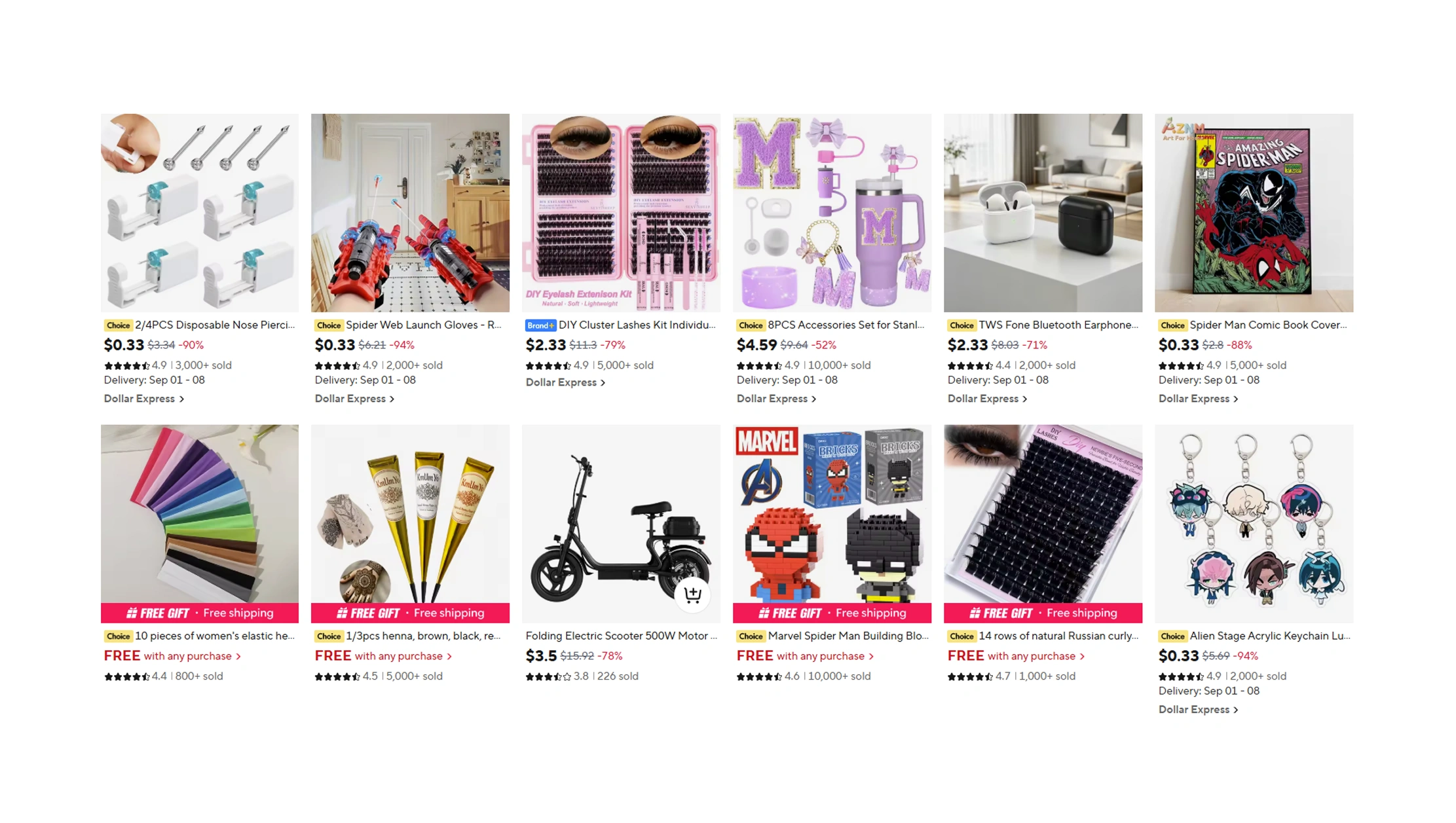
AliExpress competitor price data scraping can help retailers benchmark their own prices against comparable marketplace offers. Competitive pricing becomes more useful when the comparison includes product specifications, seller information, discounts, shipping conditions, ratings, and availability rather than price alone.
For example, a retailer should not automatically match the lowest listed price if that offer has materially different shipping terms, specifications, seller ratings, or availability. A structured dataset makes these distinctions easier to analyze.
Alibaba reported that AliExpress' Choice model helped drive more than 60% year-over-year order growth for AliExpress in the quarter ended December 31, 2023. Alibaba also reported that Choice represented about half of AliExpress' total orders in January 2024.
| Year | Verified AliExpress / E-commerce Indicator | Pricing Research Relevance |
|---|---|---|
| 2020 | Online retail share: 19% globally | Strong digital-shopping shift |
| 2021 | International commerce retail revenue: RMB 34.455B | Competitive international marketplace |
| 2022 | International commerce retail revenue: RMB 42.668B | Expanding transaction environment |
| 2023 | International commerce retail revenue: RMB 49.873B | Greater need for benchmarking |
| 2024 | International commerce retail revenue: RMB 81.654B | Larger international commerce operation |
| 2025 | AliExpress order growth exceeded 60% YoY in Q4 2023, reported in 2024 | Evidence of Choice-driven momentum |
| 2026 | No AliExpress-only annual pricing statistic publicly cited | Current price data can be collected directly |
The correct pricing workflow is to create comparable product groups and calculate metrics such as median competitor price, minimum observed price, price gap, discount depth, and price volatility.
Historical price observations are particularly useful. A competitor that briefly discounts a product presents a different situation from a competitor that consistently prices below the market.
Businesses can use these signals to prioritize products requiring review rather than automatically changing every price.
How Can Automated Product Collection Reduce Manual Research?
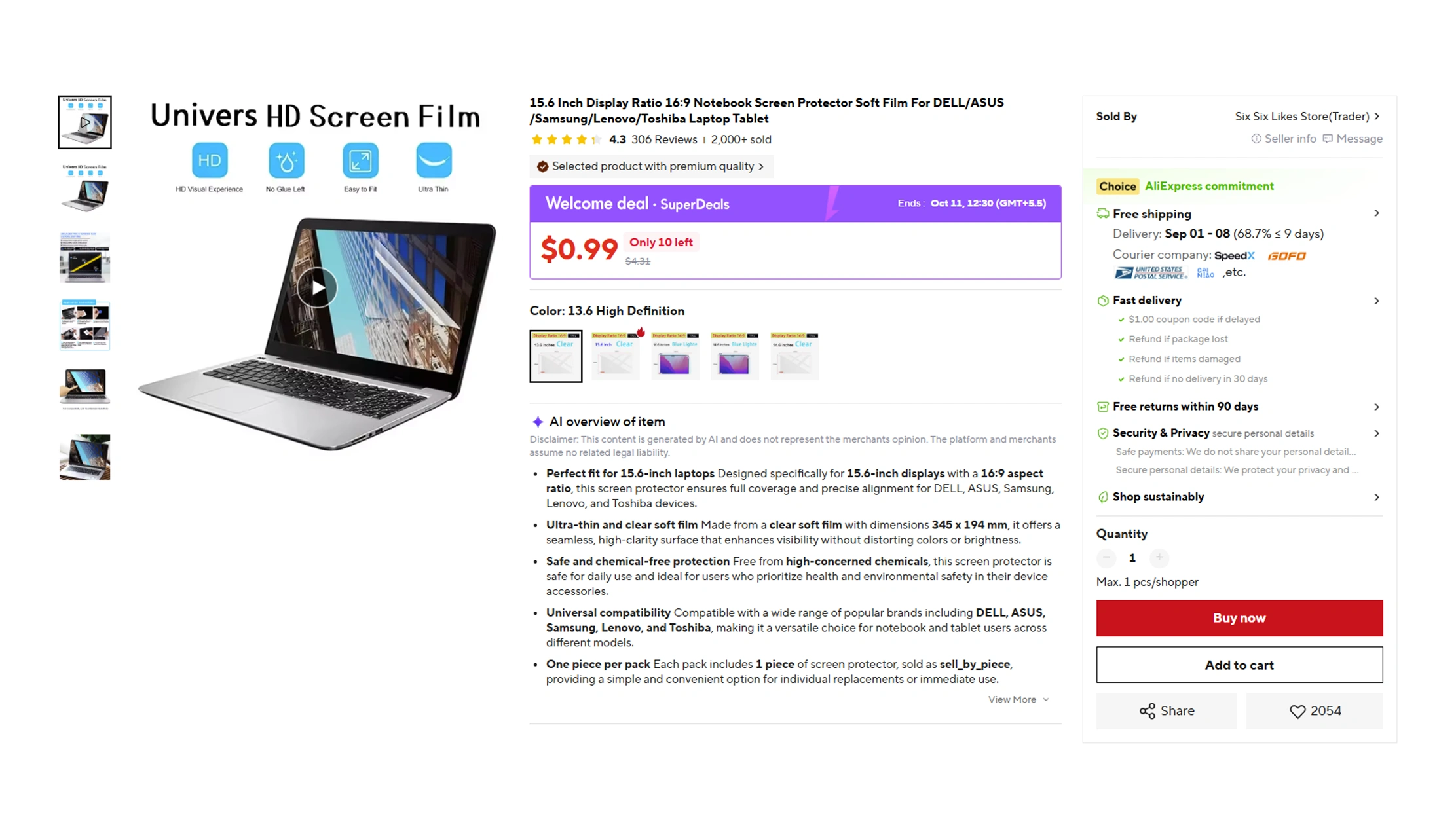
Businesses can scrape AliExpress product information automatically to reduce repetitive catalog research and create a continuously updated product intelligence layer. Automation is useful when product counts become too large for analysts to monitor manually.
A practical workflow begins with product discovery, followed by extraction of defined attributes. The next stages are normalization, validation, deduplication, historical storage, and delivery to an analytics system.
AliExpress' international footprint supports the need for scalable research. Alibaba describes AliExpress as a global retail e-commerce platform and states that the service is available in 16 languages. Alibaba also reported in 2024 that Choice had expanded across 215 countries and regions during its rollout.
| Year | Verified Platform Development | Automation Implication |
|---|---|---|
| 2020 | E-commerce adoption accelerated | Increased need for digital catalog research |
| 2021 | Online retail sales in seven major economies reached ~$2.9T | Larger digital marketplace opportunity |
| 2022 | Alibaba international commerce retail revenue: RMB 42.668B | More international commerce activity |
| 2023 | AliExpress launched Choice | New service attributes to monitor |
| 2024 | Choice available across 215 countries and regions during rollout | Broader geographic monitoring |
| 2025 | AIDC quarterly revenue reached RMB 37.76B in Dec. quarter | Continued international investment |
| 2026 | Current full-year AliExpress-only coverage unavailable | Automated collection can provide current observations |
Automation should not mean collecting every available field. Businesses should define a schema based on actual decisions. A pricing team may prioritize price, discount, seller, availability, and timestamp, while a product team may require specifications, category, images, ratings, and reviews.
Data quality is equally important. Automated systems should detect duplicate listings, missing fields, unexpected prices, and changes in page structure. Validation ensures that downstream analysis is based on consistent records.
How Can an API Create a Scalable E-commerce Intelligence Layer?
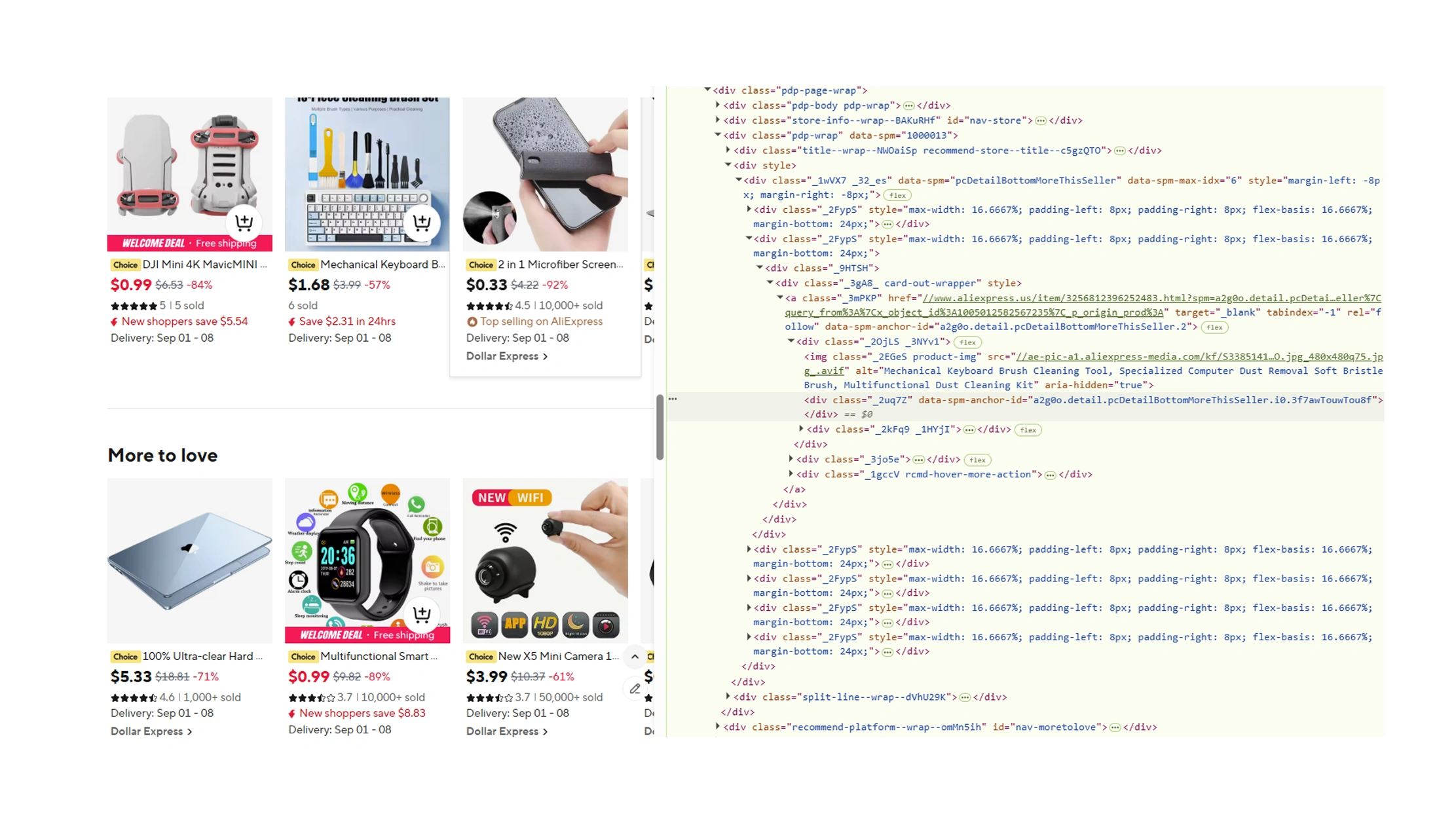
An Aliexpress Scraping API, AliExpress data extraction for e-commerce businesses solution can turn recurring marketplace collection into a reusable data service. Instead of building a separate extraction workflow for every research project, businesses can establish a standardized pipeline that delivers selected marketplace attributes to databases, dashboards, analytics platforms, or internal applications.
Alibaba's international commerce retail revenue increased from RMB 42.668 billion in fiscal 2022 to RMB 49.873 billion in fiscal 2023 and RMB 81.654 billion in fiscal 2024. The company states that this retail segment includes AliExpress, Trendyol, and Lazada.
| Fiscal Year | International Commerce Retail Revenue | Included Businesses |
|---|---|---|
| 2020 | Not separately disclosed in cited source | --- |
| 2021 | RMB 34.455B | AliExpress, Trendyol, Lazada |
| 2022 | RMB 42.668B | AliExpress, Trendyol, Lazada |
| 2023 | RMB 49.873B | AliExpress, Trendyol, Lazada |
| 2024 | RMB 81.654B | AliExpress, Trendyol, Lazada |
| 2025 | Segment comparison changed under Alibaba's reporting structure | Refer to current annual reports |
| 2026 | No finalized full-year figure available in cited sources | Current data collection required |
The table highlights why researchers should distinguish between AliExpress-specific data and Alibaba segment data. Public financial reports do not provide every operational metric at the individual-platform level.
A scraping API can fill the operational intelligence gap by delivering product-level observations. Businesses can use the output to calculate pricing metrics, identify new products, compare sellers, analyze reviews, and monitor assortment changes.
A scalable architecture should include request management, structured extraction, normalization, validation, historical storage, and API delivery. Businesses should also ensure that their collection practices comply with applicable laws, contractual requirements, and website terms.
How Can Product and Review Data Support Better Market Intelligence?
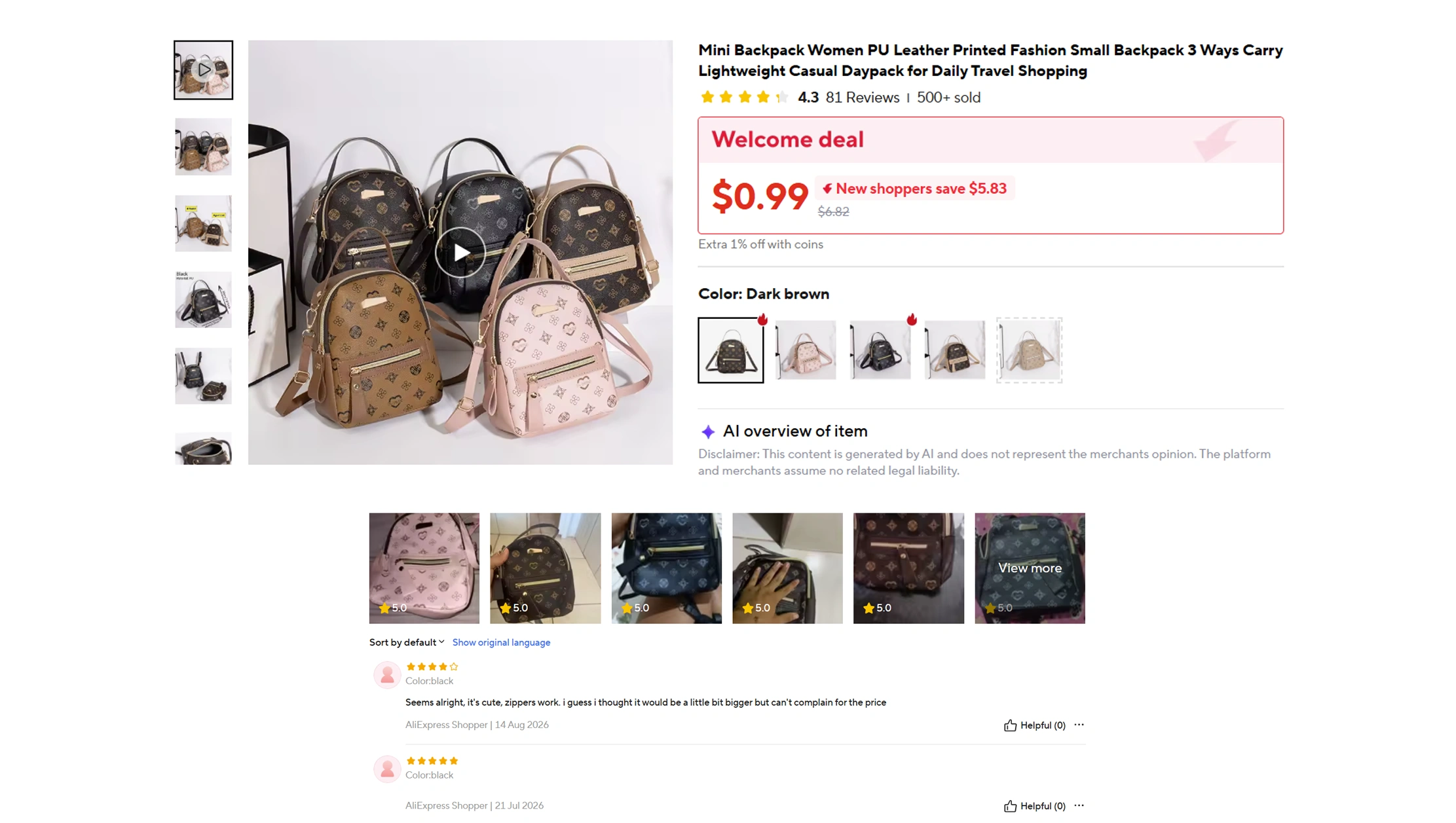
Ali Express Product and Review Datasets can combine catalog information with customer-feedback signals to create a broader view of marketplace competition. Product data shows what sellers offer, while review information can provide additional context about customer perceptions of quality, usability, fit, performance, value, or other product-specific attributes.
Reviews should not be treated as a direct measurement of demand. Review counts can vary because of product age, sales volume, platform behavior, and customer willingness to provide feedback. However, when reviews are analyzed alongside price, ratings, product specifications, and seller information, they can reveal useful patterns.
Alibaba reported that Choice improved user retention and purchase frequency and that nearly half of AliExpress orders were placed through Choice in January 2024.
| Year | Verified Market / Platform Signal | Dataset Application |
|---|---|---|
| 2020 | Online retail share reached 19% | Establish digital-commerce baseline |
| 2021 | Seven-country online retail sales: ~$2.9T | Analyze expanding online demand |
| 2022 | Business e-commerce sales: ~$27T | Broader marketplace research |
| 2023 | AliExpress Choice launched | Track service-related product signals |
| 2024 | Business e-commerce sales: $28T | Expand historical market analysis |
| 2025 | Global trade exceeded $35T | Cross-border opportunity analysis |
| 2026 | Current finalized global e-commerce figure unavailable | Maintain live dataset monitoring |
A review dataset can be classified into themes such as product quality, delivery, packaging, sizing, functionality, durability, or value where those themes are relevant. Sentiment analysis can then identify recurring positive and negative patterns.
For e-commerce businesses, the strongest result comes from joining review records to product and seller records. This enables questions such as whether lower-priced products receive materially different feedback, which sellers maintain strong ratings, and which product attributes appear repeatedly in positive reviews.
What Should E-commerce Businesses Measure From Marketplace Data?

Once product and competitor records have been standardized, businesses can create practical metrics rather than relying on raw listings.
Price intelligence can include median competitor price, lowest observed price, price gap, discount percentage, and price volatility.
Product intelligence can include new-product frequency, category growth, assortment depth, seller concentration, and product availability.
Seller intelligence can include seller count, rating distribution, review volume, and seller-level pricing behavior.
Customer intelligence can include average rating, review themes, sentiment, and recurring product complaints.
These metrics should be tracked over time. A single marketplace snapshot can identify current conditions, but historical observations provide the context needed to distinguish temporary events from persistent trends.
For example, a product that receives a short-term discount during a major shopping event should not automatically be treated as evidence of a permanent market-price reduction. Historical data can reveal whether the discount repeats, disappears, or becomes part of the seller's normal pricing strategy.
How Should a Reliable Marketplace Data Pipeline Be Designed?
A practical pipeline should begin with a business objective. Product research, competitor monitoring, price intelligence, assortment tracking, and review analytics require different schemas and collection frequencies.
The discovery layer identifies the products or categories that matter. The extraction layer collects defined attributes. Normalization standardizes currencies, categories, product names, seller information, and timestamps. Validation detects missing or anomalous records.
Historical storage is essential because competitive intelligence depends on change detection. Every observation should retain its collection time and relevant context.
The delivery layer can then expose the cleaned data through an API, database, dashboard, or structured file. This allows different teams to consume the same dataset without rebuilding the collection process.
Responsible data collection should also be part of the architecture. Businesses should evaluate applicable laws, contractual requirements, platform terms, access controls, request rates, and data-retention requirements before implementing automated marketplace collection.
Why Choose Real Data API?
Scrape AliExpress Data for Global E-Commerce Insights, AliExpress data extraction for e-commerce businesses can support product research, competitor benchmarking, pricing intelligence, seller monitoring, assortment analysis, and global marketplace research.
Real Data API can help businesses create structured workflows around the fields they actually need. Instead of manually reviewing marketplace pages, teams can work with organized product and competitive records that are easier to analyze and integrate.
The approach can also support historical datasets. Repeated collection makes it possible to compare current and previous observations, identify product changes, monitor pricing patterns, and analyze marketplace evolution.
For businesses operating across multiple categories or markets, scalability is particularly important. A pipeline can be configured around selected products, categories, sellers, countries, or monitoring frequencies rather than attempting to treat every marketplace record identically.
Real Data API can also provide an integration layer for dashboards, databases, analytics applications, and AI workflows. The objective is to make marketplace information reusable across the organization.
Conclusion
AliExpress data extraction for e-commerce businesses can help solve three major challenges: understanding product assortment, tracking competitive pricing, and turning customer and seller information into actionable intelligence. Verified Alibaba data shows that international commerce has become a significant part of its ecosystem, while UNCTAD data confirms the continued expansion of business e-commerce globally. Alibaba's international commerce retail revenue rose from RMB 34.455 billion in fiscal 2021 to RMB 81.654 billion in fiscal 2024, although these figures combine AliExpress with Trendyol and Lazada.
For e-commerce businesses, the most valuable approach is therefore not simply collecting a large volume of marketplace pages. It is creating a structured, timestamped dataset that connects products, prices, sellers, availability, ratings, and reviews.
Businesses can then use those records to identify pricing gaps, discover new products, compare sellers, monitor assortment changes, and understand customer feedback. APIs make the resulting intelligence easier to integrate into dashboards, research platforms, databases, and automated workflows.
The key is to distinguish verified market statistics from collected marketplace observations and to maintain transparent data definitions throughout the research process.
Contact Real Data API to build a scalable product, pricing, seller, and review data solution tailored to your business needs.
Latest posts
How Foodpanda Food Dataset Helps Businesses Track Restaurants, Menus, Prices, Ratings, and Food Delivery Trends?

How IKEA E-commerce Dataset Helps Businesses Solve Product, Pricing, Category, and Retail Trend Challenges?
How Target e-commerce dataset Helps Brands Track Products, Prices, Availability, and Retail Market Trends for Smarter Insights?

How Dior fashion dataset Helps Brands Track Luxury Products, Prices, Collections, and Fashion Trends for Smarter Insights?






.png)