
TL;DR
- Foodpanda food dataset helps businesses structure restaurant, menu, pricing, rating, and availability information for competitive and market analysis.
- Foodpanda food data scraping can support recurring monitoring of menu changes, price movements, restaurant coverage, ratings, and evolving delivery patterns.
- From 2020–2026, food delivery has increasingly shifted toward convenience, personalization, grocery delivery, and quick commerce, making structured marketplace data valuable for decision-making.
Introduction
Businesses operating in food delivery, restaurant analytics, consumer research, pricing intelligence, and quick commerce need more than isolated restaurant listings. They need structured information that shows what restaurants offer, how prices change, how customers rate them, what products are available, and how delivery behavior evolves.
A Foodpanda food dataset provides a structured foundation for analyzing these variables across selected markets, cities, categories, and time periods. Foodpanda is currently listed by Delivery Hero across markets including Bangladesh, Cambodia, Hong Kong, Laos, Malaysia, Myanmar, Pakistan, the Philippines, Singapore, and Taiwan. (Delivery Hero)
Meanwhile, Foodpanda food data scraping can be designed as a recurring process that captures publicly available restaurant and menu information and converts it into analysis-ready records.
The business value is particularly relevant as food delivery has moved beyond simple meal ordering. Foodpanda has expanded into groceries and quick commerce, while its parent company reported 11 million orders in a single day across its global operations in 2025. (Delivery Hero)
For restaurant groups, food brands, aggregators, market researchers, and pricing teams, the objective is therefore straightforward: convert changing marketplace information into comparable data that supports faster decisions.
How can businesses build a reliable view of restaurant competition?
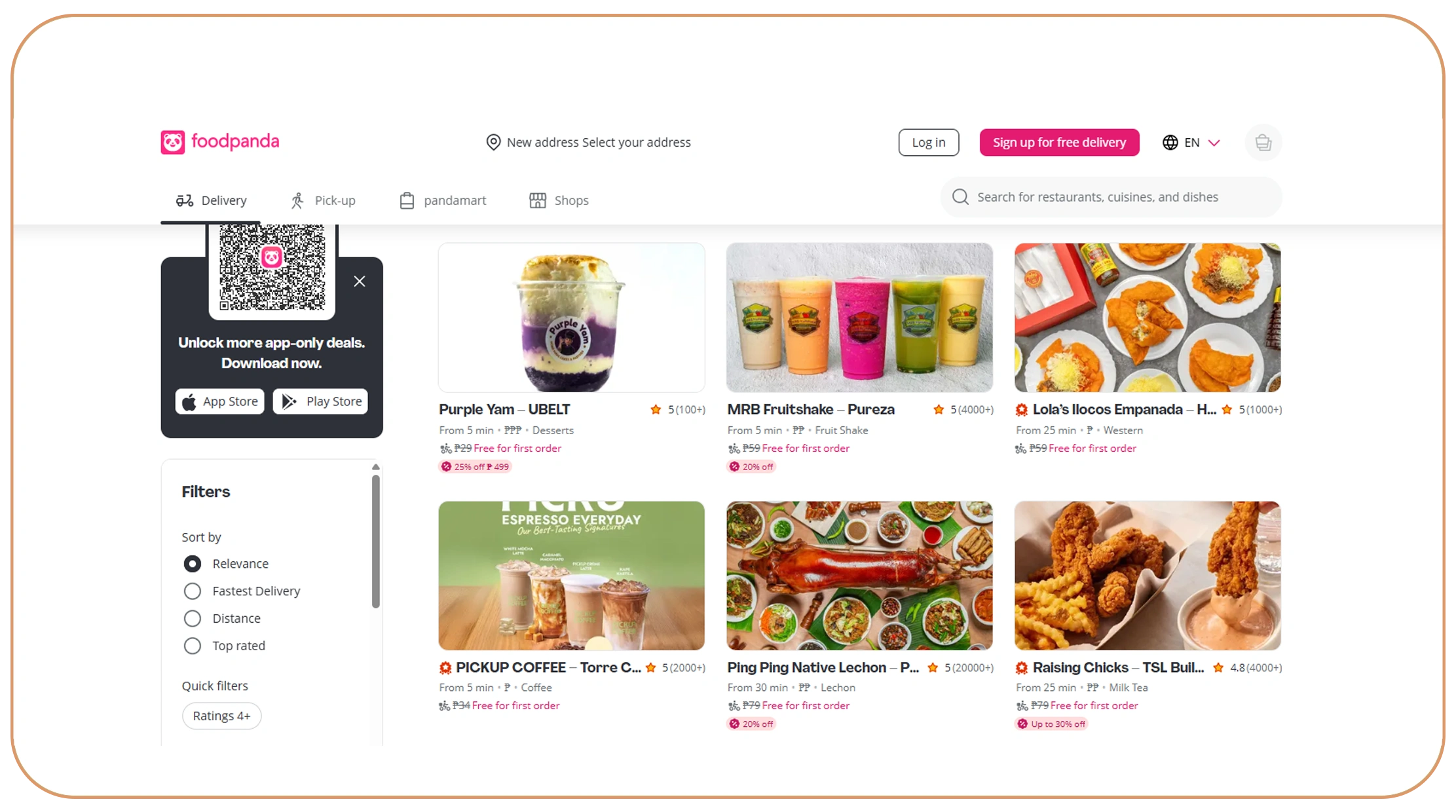
Foodpanda food data web scraping can help businesses create a structured view of restaurant competition by collecting selected attributes such as restaurant names, locations, cuisines, ratings, review counts, menus, prices, availability, delivery information, and category classifications.
The key advantage is consistency. Instead of manually checking hundreds of restaurant pages, businesses can create recurring datasets and compare the same fields over time.
This is particularly useful for restaurant chains entering new markets. A company can analyze the number of competitors within a cuisine category, compare average menu prices, identify highly rated restaurants, and observe which menu categories appear frequently.
What Changed Between 2020 and 2026?
The food delivery industry experienced a significant behavioral shift during the pandemic. Foodpanda's 2024 APAC insights noted that global food delivery market value tripled between 2017 and 2021, while food deliveries in Southeast Asia increased 64% from the beginning of the pandemic by 2021. (Panda Ads)
By 2024, the market had moved further toward convenience and rapid fulfillment. Foodpanda reported that consumers were increasingly purchasing both food and groceries through on-demand delivery services, while quick-commerce users worldwide were projected to rise from 511 million in 2023 to 788 million in 2027. (Panda Ads)
| Indicator | Reported Figure | Business Relevance |
|---|---|---|
| Food delivery market value growth | 3×, 2017–2021 | Demonstrates rapid digital adoption |
| Southeast Asia food delivery growth | 64% since pandemic start | Highlights regional demand |
| Global q-commerce users | 511M in 2023 | Indicates expanding digital convenience |
| Projected q-commerce users | 788M by 2027 | Supports future monitoring needs |
| Foodpanda meal-for-one restaurants | Nearly 20,000 in 2024 | Shows menu-format diversification |
Foodpanda also introduced its "meal for one" offering across seven markets in 2024, with close to 20,000 restaurants offering such options at launch. (foodpanda | food and more, delivered)
For businesses, this means restaurant monitoring should not focus only on restaurant names. Menu formats, price points, categories, ratings, and availability can all become competitive signals.
What makes recurring restaurant intelligence more useful than one-time research?
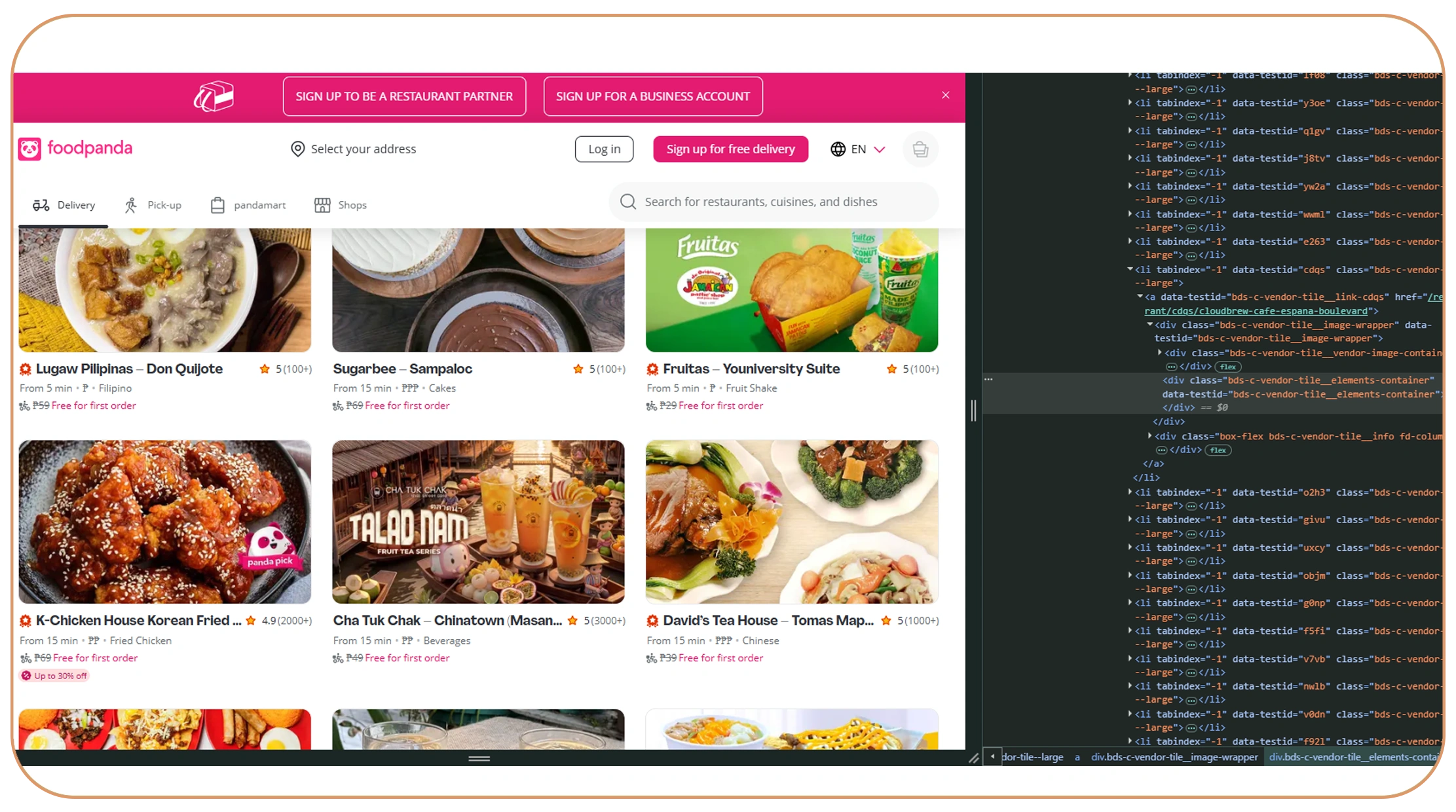
Foodpanda food data collection services can help companies move from occasional market research to structured monitoring.
A one-time dataset may answer questions such as:
- Which restaurants operate in a particular location?
- What cuisines are available?
- What are the listed prices?
- Which restaurants have higher ratings?
A recurring dataset can answer more valuable questions:
- Which restaurants changed their prices?
- Which menu items were added or removed?
- Which restaurants gained or lost ratings?
- Which cuisines are expanding?
- Which competitors changed promotional pricing?
- How has restaurant availability changed by location?
This distinction is important for pricing teams and category managers. A static report tells the business what the market looked like at one point. A time-series dataset shows how the market is moving.
2020–2026 Market Development
The period from 2020 onward demonstrates why recurring monitoring matters. Food delivery adoption accelerated during COVID-19, but consumer behavior did not simply return to pre-pandemic patterns.
Foodpanda reported in 2024 that its customers were spending more on on-demand delivery, with average food-delivery bill sizes 30% higher in 2023 than in 2021. (foodpanda | food and more, delivered)
Foodpanda's APAC insights also reported that customers averaged two items per food-delivery order and five items per q-commerce order, with those figures increasing from 2022 to 2023. (Panda Ads)
| Period | Key Development | Data Implication |
|---|---|---|
| 2020 | Delivery adoption accelerated | More restaurant coverage became relevant |
| 2021 | Food delivery remained elevated | Price and availability monitoring gained importance |
| 2022 | Digital ordering became routine | Historical comparisons became more useful |
| 2023 | Higher food-delivery bill sizes | Basket and pricing analysis became important |
| 2024 | Food + grocery convergence | Broader assortment monitoring required |
| 2025 | Quick commerce continued scaling | Restaurant and grocery datasets increasingly overlap |
| 2026 | Greater focus on efficiency and personalization | Recurring, granular datasets support decision-making |
A well-designed collection workflow should therefore preserve historical snapshots rather than continuously overwriting old values.
How can menu-level information improve pricing and assortment analysis?
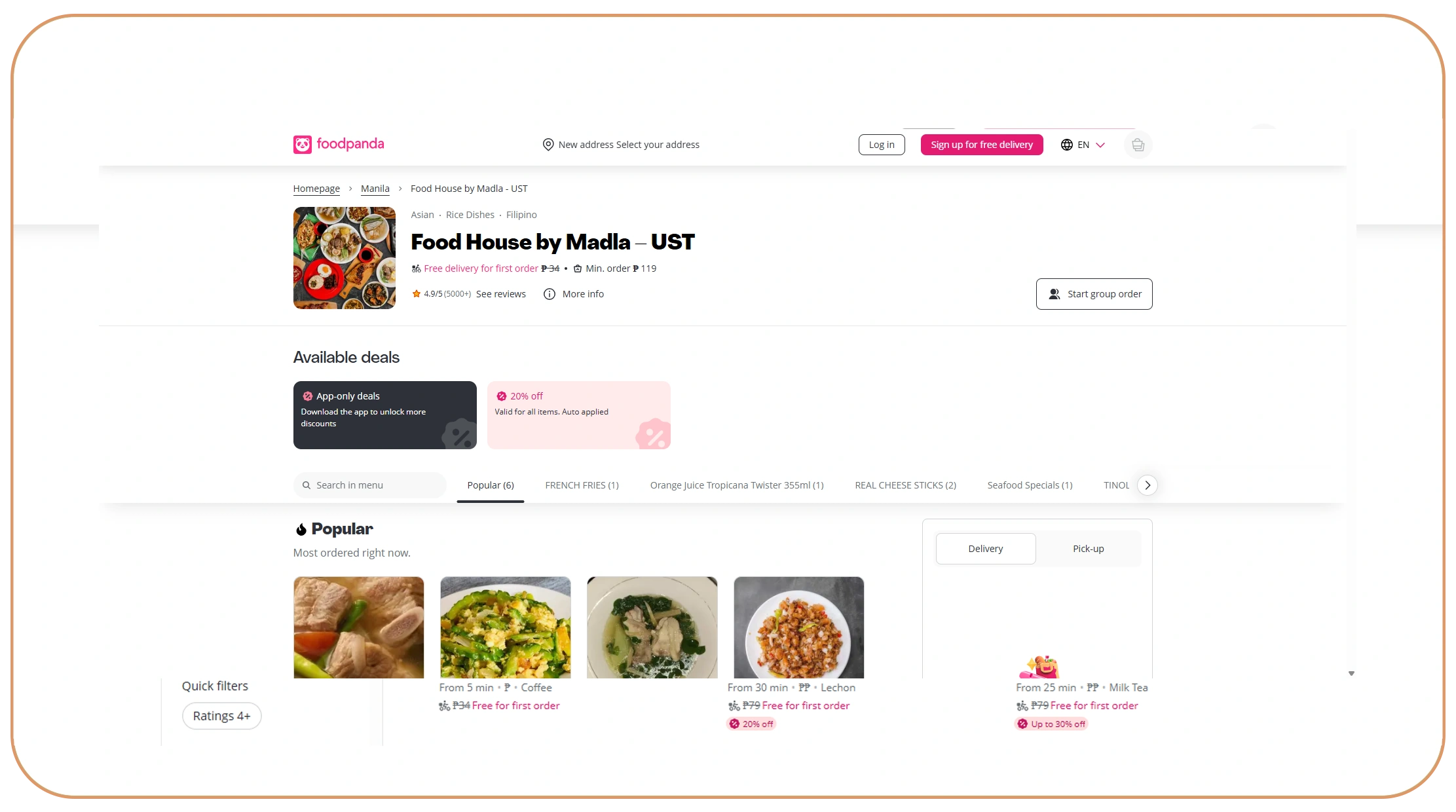
Businesses that want to extract Foodpanda menu data can use structured menu records to examine product-level pricing, categories, descriptions, pack sizes, meal combinations, discounts, and availability where publicly displayed.
Menu intelligence is especially useful for restaurants and consumer brands because competitors frequently change individual products without changing their overall positioning.
For example, a restaurant might retain the same cuisine and brand identity while changing:
- Main-course prices
- Combo prices
- Portion sizes
- Add-on prices
- Beverage options
- Vegetarian selections
- Promotional bundles
- Bestseller positioning
- Availability
A product-level dataset allows these changes to be measured instead of relying on manual observation.
Why Menu Monitoring Became More Important From 2020–2026
Food delivery increasingly became an everyday purchasing channel. Foodpanda's 2024 reporting highlighted growing demand for convenience and on-demand consumption across food and quick commerce. (Panda Ads)
At the same time, restaurant businesses have experimented with formats designed for different customer needs. Foodpanda's meal-for-one launch is one example of menu assortment adapting to solo consumers and lower-value individual orders. (foodpanda | food and more, delivered)
| Menu Attribute | What Businesses Can Analyze |
|---|---|
| Item name | Product assortment |
| Category | Cuisine and category mix |
| Listed price | Price benchmarking |
| Discount | Promotional intensity |
| Description | Product positioning |
| Add-ons | Upselling strategy |
| Availability | Assortment continuity |
| Rating/review association | Customer response |
| Restaurant location | Geographic differences |
Turn changing menus into structured competitive intelligence with scalable food delivery data collection!
Get Insights Now!How can businesses monitor restaurant changes as they happen?
Real-time Foodpanda restaurant data can support use cases where businesses need frequently refreshed information rather than quarterly or monthly snapshots.
Restaurant availability can change because of operating hours, location, demand, staffing, inventory, temporary closures, platform onboarding, or changes in delivery coverage.
For a restaurant chain, monitoring these signals can help answer operational questions such as:
- Is the restaurant visible in the target delivery zone?
- Has its menu changed?
- Are popular items unavailable?
- Have prices moved?
- Has its rating changed?
- Has delivery availability changed?
- Are competitors appearing in the same location?
What Does the 2020–2026 Trend Indicate?
The delivery ecosystem has expanded beyond restaurant meals. Delivery Hero states that its businesses cover restaurants, grocery stores, shops, and quick-commerce operations, while its platform technology and logistics infrastructure support fast delivery across multiple markets. (Delivery Hero)
Foodpanda itself currently combines food, grocery, and essentials delivery across its operating markets. (Delivery Hero)
In 2025, Delivery Hero reported completing 11 million orders globally in a single day, equivalent to an average of 127 orders per second across 24 hours. (Delivery Hero)
| Monitoring Frequency | Suitable Use Case |
|---|---|
| Daily | Menu and pricing intelligence |
| Several times daily | Availability and operational monitoring |
| Weekly | Competitive benchmarking |
| Monthly | Market-share and assortment analysis |
| Quarterly | Strategic market research |
The correct refresh rate depends on the business problem. A pricing team may need frequent snapshots, while a market research team may only require weekly or monthly collection.
What role does automation play in large-scale marketplace monitoring?
A Foodpanda Scraper can automate the process of collecting selected publicly available information and transforming it into structured records.
For large datasets, automation is important because manually checking thousands of restaurants and menu items creates several problems:
- High labor requirements
- Inconsistent collection
- Slow updates
- Human transcription errors
- Difficulty maintaining historical records
- Limited scalability across cities
An automated workflow can instead be organized around a defined schema.
Example Data Structure
| Data Layer | Example Fields |
|---|---|
| Restaurant | Name, location, cuisine |
| Marketplace | Restaurant URL, listing status |
| Menu | Item, category, description |
| Pricing | Current price, promotional price |
| Ratings | Rating, review count |
| Availability | Available/unavailable |
| Geography | City, area, delivery zone |
| Timestamp | Collection date and time |
2020–2026 Technology Shift
Between 2020 and 2026, the requirement has increasingly moved from simply obtaining data to maintaining usable historical intelligence. Businesses now need datasets that can feed dashboards, databases, pricing systems, research platforms, and analytics workflows.
This makes data quality as important as collection volume. A scalable system should normalize restaurant names, standardize currencies where appropriate, retain timestamps, identify duplicate listings, validate fields, and preserve historical snapshots.
Delivery Hero's current operations demonstrate the scale of the wider delivery ecosystem. In 2025, the company reported more than 940,000 active restaurants and vendors globally, while foodpanda remains its dedicated brand across multiple Asian markets. (Delivery Hero)
For enterprise buyers, the practical objective is not merely "more records." It is consistent, comparable, timestamped records that can support business decisions.
How does grocery monitoring extend food delivery intelligence?
Foodpanda Grocery Data Scraping can extend restaurant-focused analysis into grocery, convenience, and quick-commerce intelligence.
This is increasingly relevant because food-delivery platforms have evolved into broader local-commerce ecosystems. Foodpanda describes its offering as covering food, groceries, and essentials, while Delivery Hero identifies quick commerce as a major part of its broader delivery strategy. (Delivery Hero)
For retailers, FMCG brands, grocery businesses, and consumer researchers, useful fields can include:
- Grocery product name
- Brand
- Category
- Pack size
- Listed price
- Discount
- Availability
- Store or fulfillment location
- Product URL
- Delivery information
- Timestamp
What Changed Between 2020 and 2026?
The pandemic accelerated digital purchasing, but the longer-term development has been the convergence of food delivery, grocery delivery, and quick commerce.
Foodpanda's 2024 APAC insights projected Asia's quick-commerce market revenue at US$96.20 billion for 2024 and US$155.80 billion by 2029. The same source reported that average q-commerce order item counts increased 52.2% from 2022 to 2023. (Panda Ads)
| Metric | Reported Figure |
|---|---|
| Asia q-commerce revenue, 2024 | US$96.20B |
| Projected Asia q-commerce revenue, 2029 | US$155.80B |
| Global q-commerce users, 2023 | 511M |
| Projected global q-commerce users, 2027 | 788M |
| Increase in q-commerce items/order, 2022–2023 | 52.2% |
For businesses, the implication is clear: marketplace monitoring can no longer be restricted to restaurant menus when the same digital ecosystem increasingly connects consumers with groceries and everyday products.
Why Choose Real Data API?
Businesses need marketplaces that are structured, scalable, consistent, and usable, rather than raw information that requires extensive manual processing.
Real Data API can support data projects by helping organizations design workflows around their specific requirements, including:
- Restaurant and menu datasets
- Product and grocery datasets
- Price monitoring
- Rating and review tracking
- Availability monitoring
- Location-based collection
- Historical snapshots
- Structured API-ready outputs
- Data normalization and validation
- Recurring collection schedules
A practical implementation should begin with the business question rather than the scraper itself.
For example:
- Pricing team: Which competitors changed prices this week?
- Restaurant group: Which competing restaurants operate within selected delivery zones?
- Market researcher: How has cuisine availability changed between cities?
- FMCG team: How are grocery prices and availability changing across digital channels?
- Analytics team: Can marketplace data be integrated into an existing BI workflow?
The answer determines the fields, collection frequency, geography, historical depth, and delivery format required.
Foodpanda's market footprint also changes over time. For example, Delivery Hero announced that foodpanda would stop operating in Thailand in May 2025, while continuing to focus on other APAC markets. (Delivery Hero) This illustrates why datasets should include timestamps and market identifiers rather than treating marketplace coverage as static.
Conclusion
A structured Foodpanda food dataset can help businesses move from manually checking restaurant pages to systematically analyzing restaurants, menus, prices, ratings, availability, and broader food-delivery trends.
From 2020 to 2026, digital food delivery has evolved from a restaurant-ordering channel into a broader local-commerce ecosystem involving groceries, quick commerce, personalized offerings, and increasingly data-driven operations. Foodpanda's own reporting highlights growing on-demand consumption, while Delivery Hero's scale demonstrates the volume and complexity of the wider market. (Panda Ads)
For businesses, the opportunity is to build a repeatable data pipeline that captures the information most relevant to their objectives, preserves historical changes, and turns marketplace observations into measurable insights.
Need structured restaurant, menu, pricing, rating, or grocery intelligence? Partner with Real Data API to build a scalable food delivery data solution tailored to your business needs!
FAQs
What is Foodpanda food data web scraping used for?
Foodpanda food data web scraping can collect publicly available restaurant, menu, pricing, rating, and availability information for competitive research, market analysis, benchmarking, and monitoring.
Why use Foodpanda food data collection services?
Foodpanda food data collection services help businesses automate recurring marketplace monitoring, standardize fields, maintain historical records, and reduce the manual effort required for large-scale research.
How can businesses extract Foodpanda menu data?
Businesses can extract Foodpanda menu data by defining required fields such as item names, categories, prices, descriptions, availability, and restaurant identifiers, then organizing records for analysis.
Why monitor real-time Foodpanda restaurant data?
Real-time Foodpanda restaurant data helps businesses identify changes in restaurant availability, menu assortment, pricing, ratings, and delivery coverage when faster market visibility is required.
What can a Foodpanda Scraper collect?
A Foodpanda Scraper can be configured to collect selected publicly available restaurant, menu, price, rating, availability, and location fields. Real Data API can help structure the resulting data for analysis.
Latest posts
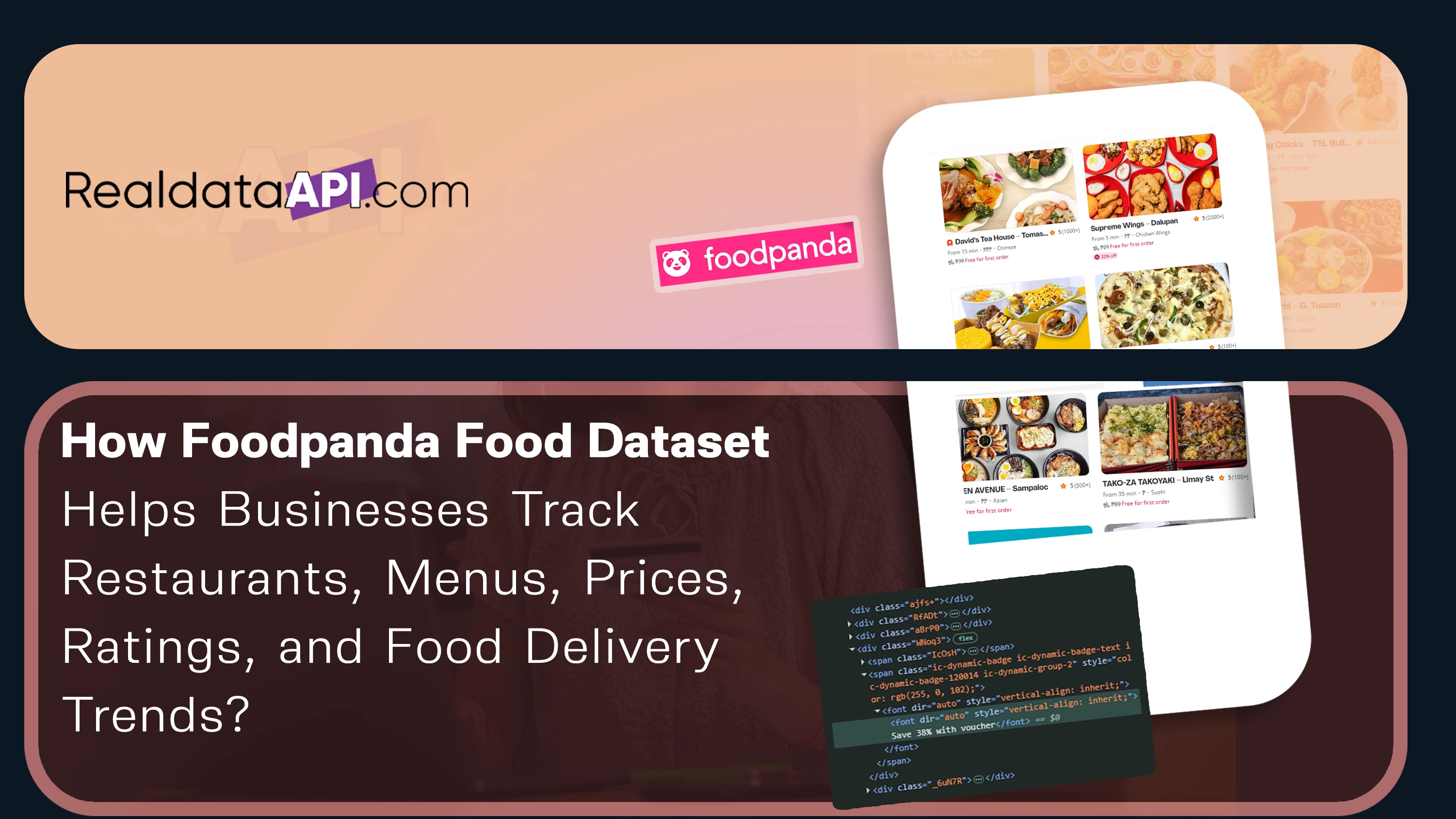
How Foodpanda Food Dataset Helps Businesses Track Restaurants, Menus, Prices, Ratings, and Food Delivery Trends?
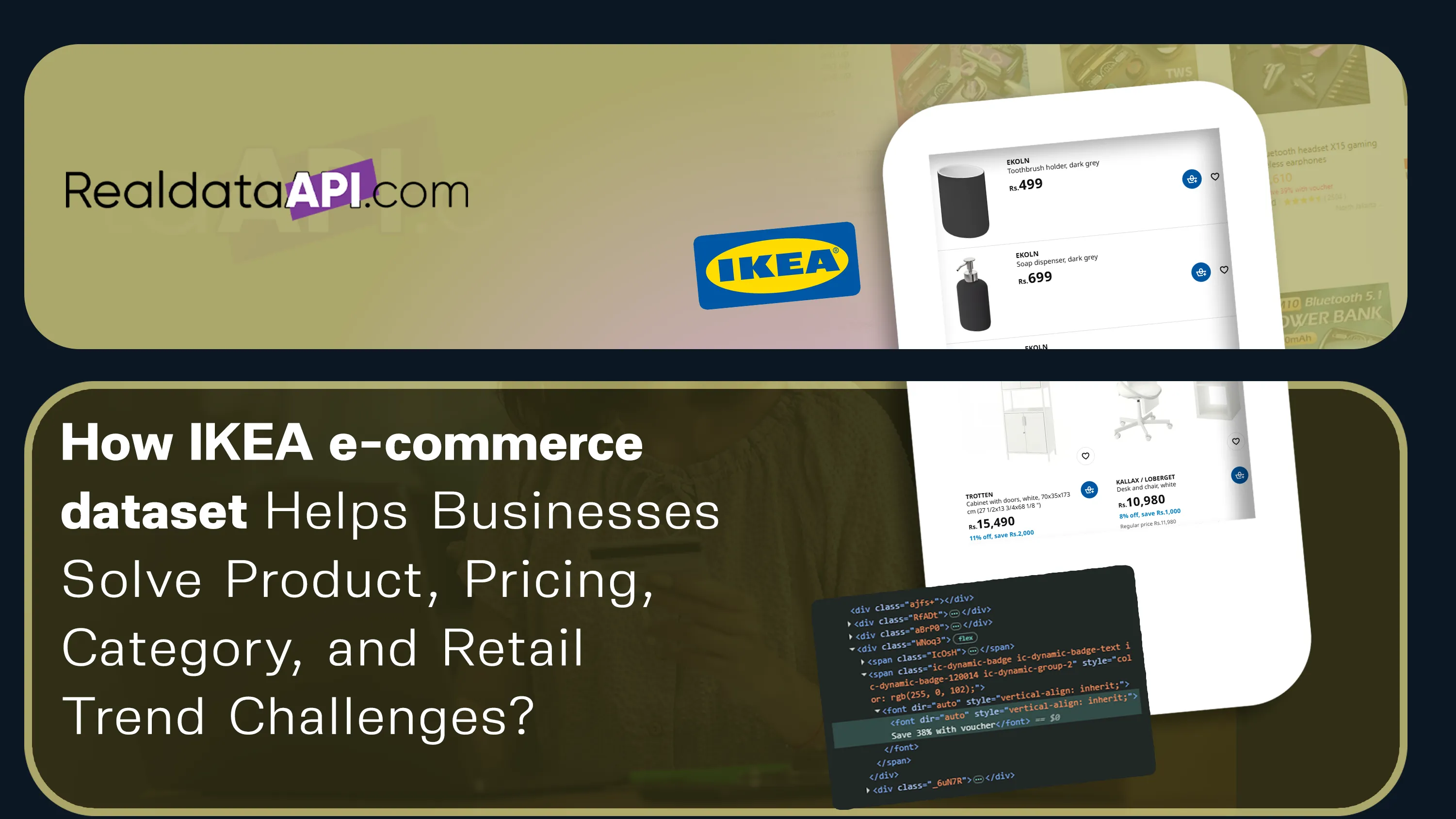
How IKEA E-commerce Dataset Helps Businesses Solve Product, Pricing, Category, and Retail Trend Challenges?
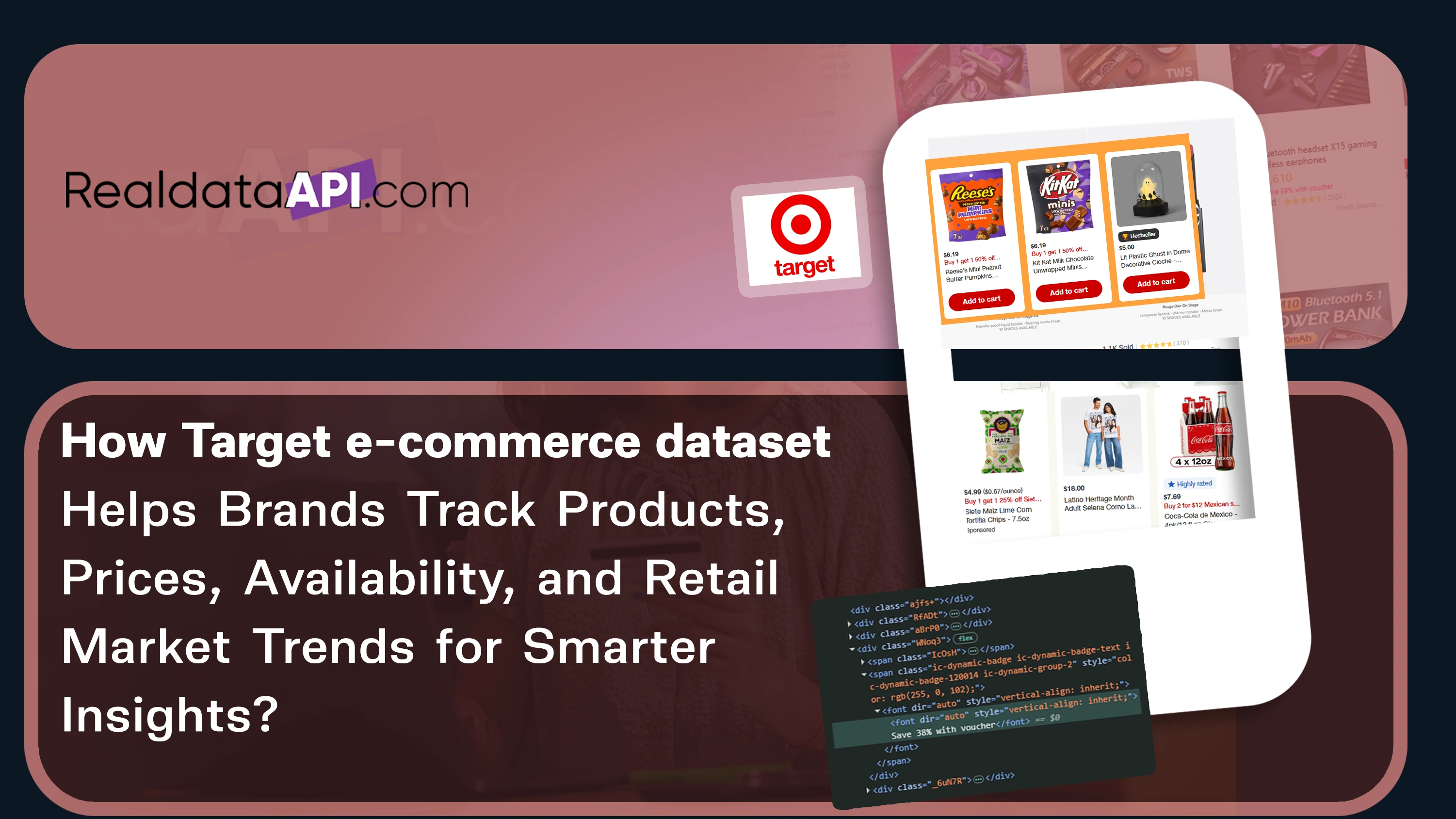
How Target e-commerce dataset Helps Brands Track Products, Prices, Availability, and Retail Market Trends for Smarter Insights?

How Dior fashion dataset Helps Brands Track Luxury Products, Prices, Collections, and Fashion Trends for Smarter Insights?






.png)