.gif)
.gif)
Quick Summary
- Learn how retailers can use Cashback Rate Tracking for Black Friday 2026 to monitor competitor cashback incentives, identify uncompetitive rewards, and make better promotional decisions during the holiday shopping season.
- Understand how Web Scraping Services support structured data collection, historical comparisons, and mobile monitoring to help brands detect changing offers and maintain accurate promotional information.
- Discover how Real Data API can support data-driven campaign planning, competitive analysis, and more informed cashback strategies.
Introduction
Black Friday is a high-pressure sales period when retailers compete through discounts, loyalty rewards, and cashback incentives. Cashback Rate Tracking for Black Friday 2026 helps brands compare promotional offers across competing retailers, identify changes in reward rates, and make informed decisions about campaign positioning. Instead of relying on occasional manual checks, businesses can collect structured information from relevant retail websites and applications to understand how cashback incentives change before and during major shopping events.
For e-commerce managers, pricing teams, affiliate marketers, and retail analysts, the challenge is not simply finding the highest advertised reward. They must determine whether an offer is current, which products or categories qualify, whether minimum-spend conditions apply, and whether the reward is available to every customer or only selected members. These details influence the actual value of an offer.
Web Scraping Services can help businesses collect publicly accessible promotional information at scale, subject to website terms, access restrictions, and applicable laws. When the collected information is standardized and validated, teams can compare offers more consistently, identify gaps in their promotional strategy, and make decisions based on observable market activity.
Why do cashback incentives matter during major retail promotions?
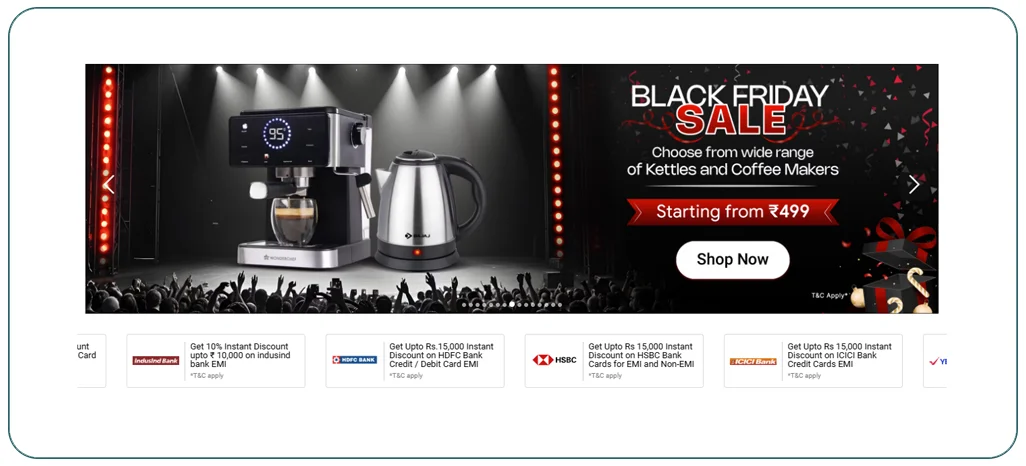
Cashback incentives influence how shoppers compare competing offers. A retailer may advertise a product discount, while another retailer offers a smaller discount combined with a cashback reward. Comparing only the displayed product price can therefore overlook an important part of the promotional proposition.
Black Friday cashback offers need to be assessed alongside product prices, coupon conditions, loyalty benefits, and eligibility rules. Retailers should record the advertised reward percentage, maximum cashback amount, qualifying products, minimum purchase value, payment restrictions, and campaign dates. These fields help analysts distinguish between a headline reward and the amount a customer may actually qualify to receive.
The commercial importance of this comparison is growing alongside online shopping. Adobe Analytics reported that U.S. Black Friday online spending reached $9 billion in 2020, $8.9 billion in 2021, $9.12 billion in 2022, $9.8 billion in 2023, $10.8 billion in 2024, and $11.8 billion in 2025. Its September 2026 forecast estimates $12.9 billion for Black Friday 2026. The 2026 figure is a forecast, not a completed sales result.
| Year | U.S. Black Friday online spending | Data status |
|---|---|---|
| 2020 | $9.0 billion | Actual |
| 2021 | $8.9 billion | Actual |
| 2022 | $9.12 billion | Actual |
| 2023 | $9.8 billion | Actual |
| 2024 | $10.8 billion | Actual |
| 2025 | $11.8 billion | Actual |
| 2026 | $12.9 billion | Adobe forecast |
Source: Adobe Analytics figures, as compiled in the historical series and Adobe's 2026 holiday forecast. Values represent U.S. online spending, not cashback payouts.
For retail decision-makers, the practical lesson is to monitor cashback as one part of the complete offer. Historical sales growth does not prove that cashback alone drives purchases, but it demonstrates why competitive promotional intelligence matters during this high-volume shopping period.
How can retailers identify changes in competing rewards?
Competitor promotions can change several times during a major shopping event. A retailer might increase a reward for a limited period, restrict it to selected product categories, or introduce a special payment-method condition. A comparison collected several days earlier may no longer describe the live offer.
A consistent cashback deals tracking process helps pricing and marketing teams compare the same fields across retailers and dates. It should capture the retailer, product or category, displayed cashback percentage, maximum reward, minimum order value, coupon requirements, eligible payment methods, membership conditions, start date, end date, and source page.
The distinction between advertised and effective rewards is important. For example, a promotion may display a percentage but cap the total reward at a fixed amount. Another may require a minimum purchase or exclude sale products. Analysts should preserve these conditions rather than reducing every offer to one percentage.
A useful workflow includes:
- Baseline collection: Record competitor offers before the promotional period begins.
- Scheduled checks: Revisit selected pages at defined intervals and during important campaign windows.
- Change detection: Compare new observations with previous records to identify rate changes, expired offers, and revised conditions.
- Validation: Confirm that the source page still displays the offer and record the time of collection.
- Business review: Send material changes to pricing and campaign teams for assessment.
This process helps businesses avoid reacting to incomplete information. It also supports a historical record of how competitors changed their incentives throughout the campaign. Teams can then compare promotional timing, category coverage, and reward conditions rather than relying on isolated screenshots or manually maintained spreadsheets.
What makes promotional information reliable and timely?
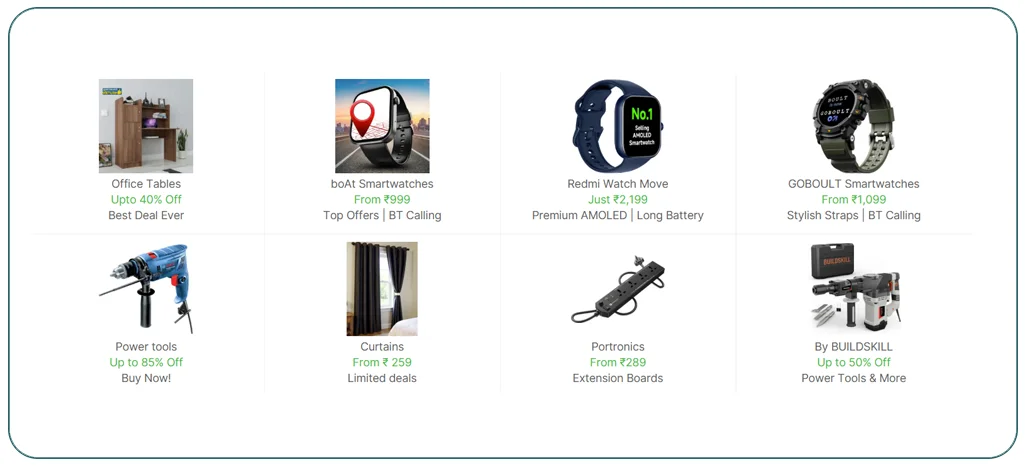
A cashback rate is useful only when its associated conditions are accurate. Retail websites may display different offers on product pages, promotional landing pages, loyalty portals, and checkout screens. Some rewards may also depend on a customer account, a coupon, or a specific payment method. Businesses should therefore treat collection and validation as separate steps.
Real-time cashback data extraction can help reduce the delay between a promotional change appearing online and an analyst seeing it. In practice, the appropriate collection frequency depends on how often the source changes, the importance of the offer, and the website's permitted access methods. Not every page needs continuous monitoring.
A dependable data pipeline should include:
- Source identification: Select relevant competitor websites and publicly accessible promotional pages.
- Field extraction: Capture reward rates, conditions, product identifiers, dates, and source URLs.
- Normalization: Convert inconsistent formats into comparable fields, such as percentages, currency amounts, and date formats.
- Validation: Check required fields, unexpected values, missing conditions, and duplicate records.
- Change history: Preserve previous observations so analysts can identify when and how an offer changed.
- Exception handling: Flag unavailable pages, blocked requests, and uncertain information rather than treating them as zero-value offers.
Data freshness should be visible in dashboards. A record collected several hours ago should not appear identical to a newly verified offer. A timestamp, source status, and last-successful-check field help users judge whether information is current enough for a pricing decision.
This is especially important when promotional terms are conditional. If a cashback rate is visible but its eligibility rules cannot be confirmed, the record should be marked for review. Reliable intelligence means communicating uncertainty rather than presenting every extracted value as definitive.
Build a clearer view of competitor promotions before your next major retail campaign!
Get Insights Now!How can an API make cashback intelligence easier to use?
Collecting promotional information is only the first step. Businesses also need to move that information into pricing systems, business intelligence platforms, campaign dashboards, and internal reporting workflows. A structured cashback data API can help make this information available to those systems in a consistent format.
An API-based delivery process can provide fields such as retailer name, product identifier, cashback rate, reward cap, eligibility conditions, offer dates, source URL, and collection timestamp. Teams can then connect the data with their own product catalogues and competitor-monitoring tools. This reduces the need to repeatedly transfer information between separate spreadsheets and applications.
A useful implementation should address several practical requirements:
- Consistent schemas: Define standard field names and formats for reward percentages, currency values, and dates.
- Product matching: Use product identifiers, brand names, model numbers, and other attributes to compare equivalent items.
- Update schedules: Set collection intervals based on campaign intensity and source behaviour.
- Data quality checks: Validate missing values, unexpected rate changes, duplicated offers, and expired dates.
- Traceability: Retain source references and timestamps so analysts can investigate a result.
- Access controls: Apply appropriate authentication, permissions, and usage limits to internal data services.
Retailers should also distinguish between a data feed and a business decision. An API can deliver structured observations, but pricing teams still need rules for deciding whether to match, improve, or ignore a competitor's reward. A competitor may offer a higher cashback percentage but impose a lower maximum payout or stricter eligibility conditions. Comparing the complete terms helps prevent misleading conclusions.
The best implementation connects verified promotional observations with clear business rules. This allows campaign managers to review competitive changes without assuming that every higher advertised rate requires an immediate response.
Why should brands monitor mobile shopping promotions?
Mobile shopping is an important part of the holiday retail journey. Promotional information may appear in retailer applications, mobile websites, loyalty interfaces, and campaign notifications. A business that checks only desktop pages may miss differences in how an offer is presented or which conditions are visible in a mobile experience.
Mobile App Scraping can support the collection of publicly accessible information from mobile application environments where access is permitted. It can help businesses examine promotional listings, product details, displayed rewards, and changes in campaign messaging. Collection methods must respect platform rules, privacy requirements, technical restrictions, and applicable laws. Private account information and restricted customer data should not be collected without proper authorization.
The shift towards mobile makes this channel relevant to campaign planning. Adobe's 2026 forecast estimates that mobile devices will account for 63% of U.S. online spending on Thanksgiving, compared with 61.6% in 2025. Adobe also forecasts a 57.4% mobile share across the full 2026 holiday season. These are forecast figures, not final observed results.
Retail teams can use mobile observations to answer practical questions:
- Are the advertised reward rates consistent across desktop and mobile?
- Does the mobile promotion show the same minimum-spend requirement?
- Are app-exclusive rewards clearly identified?
- Do offer dates and coupon conditions match the retailer's other channels?
- Does the mobile product listing provide enough information to compare the total offer?
A cross-channel comparison can reveal inconsistencies that affect campaign decisions. For example, a mobile-exclusive promotion should not be treated as a universally available competitor offer. The source channel and eligibility conditions must remain attached to each observation.
Mobile monitoring should complement, not replace, website monitoring. Together, these sources provide a broader view of how retailers communicate promotional incentives across digital shopping touchpoints.
How can historical comparisons improve promotional planning?
A single competitor observation shows what an offer looks like at one moment. Historical records reveal how promotional strategies develop over time. Retail analysts can compare when competitors introduce cashback, whether reward levels change closer to Black Friday, which product categories receive additional incentives, and how long promotions remain available.
Market Research becomes more useful when promotional observations are connected with product categories, historical prices, campaign dates, and publicly available sales trends. This helps decision-makers separate a temporary competitor action from a recurring promotional pattern.
For example, Adobe's historical data shows U.S. Black Friday online spending increasing from $9 billion in 2020 to $11.8 billion in 2025. Adobe's 2026 forecast places the event at $12.9 billion. The figures describe overall online spending and should not be interpreted as evidence that cashback caused the growth.
Retailers can translate historical observations into practical planning questions:
- Timing: When do major competitors begin publishing their promotional rewards?
- Category focus: Which product groups receive the most visible cashback incentives?
- Offer structure: Are competitors using uncapped percentages, fixed rewards, or minimum-spend conditions?
- Duration: Are rewards available throughout the event or only during short promotional windows?
- Channel differences: Do app, desktop, and loyalty-member offers differ?
- Competitive response: Which changes are significant enough to warrant a campaign review?
A useful analysis should separate actual observations from estimates and forecasts. It should also retain the date, source, and conditions behind every historical record. This prevents analysts from comparing a current public offer with an old or incomplete promotion as if both were equally reliable.
The resulting insight is not simply a ranking of cashback percentages. It is a clearer picture of competitor behaviour that can inform campaign calendars, promotional budgets, product priorities, and customer-value strategies.
Why Choose Real Data API?
Retail businesses need promotional information that is structured, traceable, and suitable for analysis. Real Data API can support data collection workflows that help teams organize competitor offers, compare promotional conditions, and maintain historical records for campaign planning.
A well-designed solution can combine source monitoring, data normalization, validation, and scheduled delivery. Businesses can use these structured records in internal dashboards and reporting systems instead of relying entirely on manual research.
An AI Chatbot can also help teams explore collected information through natural-language questions, such as which competitors changed a reward or which categories have the most active promotions. Its answers should be grounded in verified records, with source dates and conditions available for review.
For dependable results, organizations should define their target sources, permitted collection methods, required fields, update frequency, and data-quality standards before implementation. This makes the output more useful to pricing, marketing, and e-commerce teams.
Conclusion
Competitive cashback monitoring is most useful when brands can compare complete promotional terms, identify changes quickly, and connect verified information with campaign decisions. Retailers should look beyond headline percentages and assess reward caps, product eligibility, minimum spending, payment conditions, and offer validity.
For Cashback Rate Tracking for Black Friday 2026, the priority should be a reliable process that combines historical records, current competitor observations, mobile and website monitoring, and structured data delivery. Businesses that maintain accurate promotional intelligence can make more informed decisions about campaign positioning and customer incentives.
Real Data API can help businesses develop data collection and monitoring workflows that support competitive analysis and seasonal planning.
Ready to improve your promotional intelligence? Contact Real Data API to discuss a data collection solution aligned with your retail monitoring requirements!
FAQs
1. Why is cashback monitoring important for Black Friday 2026?
It helps retailers compare competitor rewards, identify changing promotional conditions, and evaluate whether their incentives remain competitive throughout the shopping season.
2. How can Web Scraping Services support promotional analysis?
They collect publicly accessible offer details from relevant retail sources, helping businesses organize reward rates, eligibility conditions, campaign dates, and historical changes.
3. Which details should retailers compare in Black Friday cashback offers?
Retailers should compare advertised percentages, maximum rewards, minimum spending, eligible products, payment restrictions, coupon requirements, and promotional validity dates.
4. How does cashback deals tracking help e-commerce teams?
It provides historical and current competitor observations, allowing pricing and marketing teams to review promotional changes and plan campaign responses using structured information.
5. What is the benefit of real-time cashback data extraction?
It reduces the delay between a published promotional change and its detection, helping teams review relevant offers using updated records and source timestamps.
Latest posts
Cashback Rate Tracking for Black Friday 2026: Monitor Competitor Offers & Optimize Promotional Strategies
Skyscanner Flight Price Scraping: Daily Fare Data for European and US Cities
How to Scrape Specific Supermarkets on Instashop: Store-Level Product Data

Luxury Fashion Competitor Data Scraping: Farfetch & Level Shoes Prices, Availability and Catalogue Matching



.png)


