Quick Summary
- ecommerce scraping API for real-time product data enables brands, retailers, and analysts to monitor changing prices, inventory, product listings, and competitor activity with greater speed and consistency.
- E-Commerce Data Scraping converts online store information into structured datasets that support pricing intelligence, availability monitoring, market research, and competitive decision-making.
- Automated collection helps businesses replace fragmented manual checks with scalable workflows and timely product intelligence.
Introduction
ecommerce scraping API for real-time product data helps businesses monitor rapidly changing online catalogs, prices, stock levels, promotions, and competitor movements without depending on slow manual research. For e-commerce brands and retailers, the core challenge is not simply collecting product information; it is getting accurate information frequently enough to make decisions while the market is still changing.
Online stores can update prices multiple times a day, introduce new products, remove unavailable SKUs, change discounts, or modify product attributes. A delayed dataset can therefore create a misleading view of the market. Automated collection provides a more consistent way to observe these changes and transform them into structured information for analytics, dashboards, alerts, and operational workflows.
The buyer persona for this solution includes e-commerce managers, pricing teams, category managers, marketplace operators, competitive intelligence professionals, and data analysts. Their common pain point is fragmented market visibility. They may know what a competitor is selling today but lack a dependable historical view of how prices, availability, and assortment changed over time.
The practical answer is to create a repeatable data pipeline that captures relevant product attributes at scheduled intervals, validates the information, normalizes formats, and delivers the resulting records to business systems. This approach supports faster decisions while reducing repetitive research work.
How Can Businesses Build a More Reliable Product Monitoring Workflow?
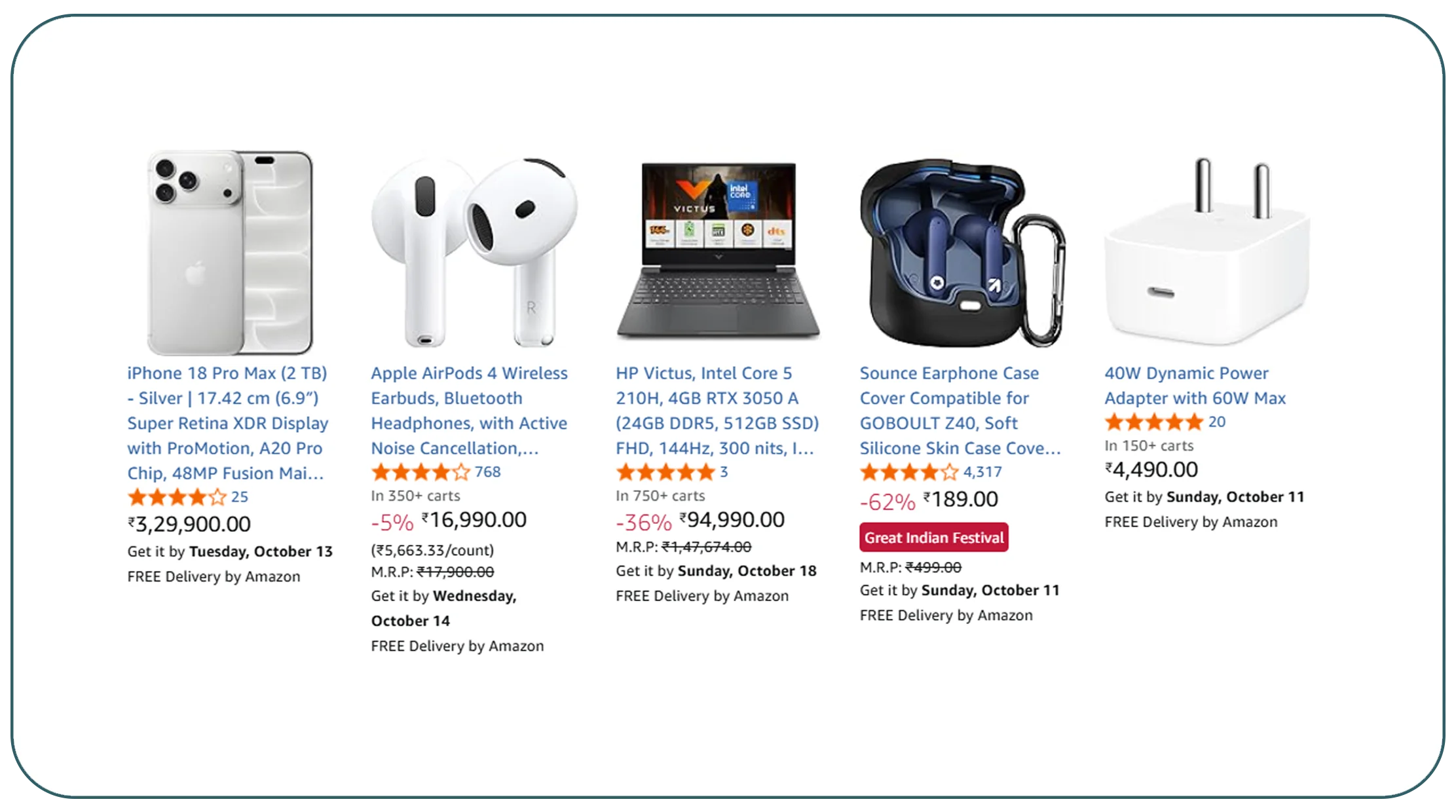
A real-time ecommerce data collection API creates an automated connection between online product information and downstream business intelligence workflows. Instead of repeatedly checking individual product pages, teams can establish scheduled collection processes for selected websites, categories, SKUs, locations, or marketplaces.
The value comes from consistency. A monitoring workflow can capture product name, SKU, brand, category, current price, previous price, discount, stock status, seller information, product URL, ratings, and other accessible attributes. These records can then be standardized so that information from different websites becomes easier to compare.
For example, consider a retailer tracking 10,000 competing products. A manual team may struggle to review every listing every day. An automated workflow can prioritize high-value SKUs, collect information at defined intervals, flag meaningful changes, and send structured records to an analytics environment.
Monitoring framework
| Data point | Business use | Monitoring frequency |
|---|---|---|
| Product price | Pricing decisions | Hourly/Daily |
| Stock status | Availability intelligence | Hourly |
| Discount | Promotion monitoring | Daily |
| Product title | Catalog tracking | Daily |
| SKU | Product matching | Daily |
| Seller information | Marketplace analysis | Daily/Weekly |
What changed between 2020 and 2026?
From 2020 onward, e-commerce accelerated the need for automated product intelligence. During 2020–2021, businesses increasingly depended on online channels as consumer purchasing behavior shifted. Between 2022 and 2023, competitive pricing and digital shelf visibility became more important as retailers expanded their online assortments. During 2024–2025, businesses increasingly connected product data collection with dashboards, automated alerts, and analytics systems. By 2026, the focus has moved beyond simply collecting records toward creating continuously refreshed intelligence pipelines that support pricing, availability, assortment, and competitor decisions.
The key insight is that data collection becomes more valuable when it is designed around a business decision rather than treated as an isolated scraping task.
Why Does Structured Product Intelligence Matter for Market Research?
An ecommerce product data API for market research helps research teams transform scattered online product information into comparable datasets. This is particularly useful when businesses need to understand assortment depth, category positioning, price ranges, product launches, promotions, and changes in consumer-facing catalogs.
Market researchers often face a data freshness problem. A spreadsheet created several weeks ago may no longer represent the current competitive landscape. New products may have appeared, prices may have changed, and previously available products may have disappeared.
A structured API-driven workflow can support research across multiple dimensions.
Market research dimensions
| Research area | Useful data | Business question |
|---|---|---|
| Assortment | Product names, categories, SKUs | What products are competitors selling? |
| Pricing | Current and historical prices | Where are price gaps appearing? |
| Promotions | Discounts and offers | Which products receive promotional support? |
| Brands | Brand and manufacturer fields | Which brands dominate a category? |
| Reviews | Ratings and review counts | How is customer response changing? |
| Availability | Stock indicators | Which products are consistently available? |
2020–2026 evolution
In 2020, market research teams often relied heavily on manually collected web information and static reports. During 2021–2022, rapid digital commerce growth increased the need for broader competitive datasets. From 2023 onward, businesses increasingly connected product information with business intelligence platforms and automated reporting. In 2024–2025, historical comparisons became more valuable because teams wanted to identify pricing and assortment patterns instead of viewing isolated snapshots. By 2026, product research increasingly depends on structured, repeatable, machine-readable information that can feed analytics and AI-assisted decision workflows.
For research teams, the strongest use case is not collecting everything available. It is defining the precise fields needed to answer a commercial question and maintaining those fields consistently over time.
How Can Retailers Detect Product Availability Changes Faster?
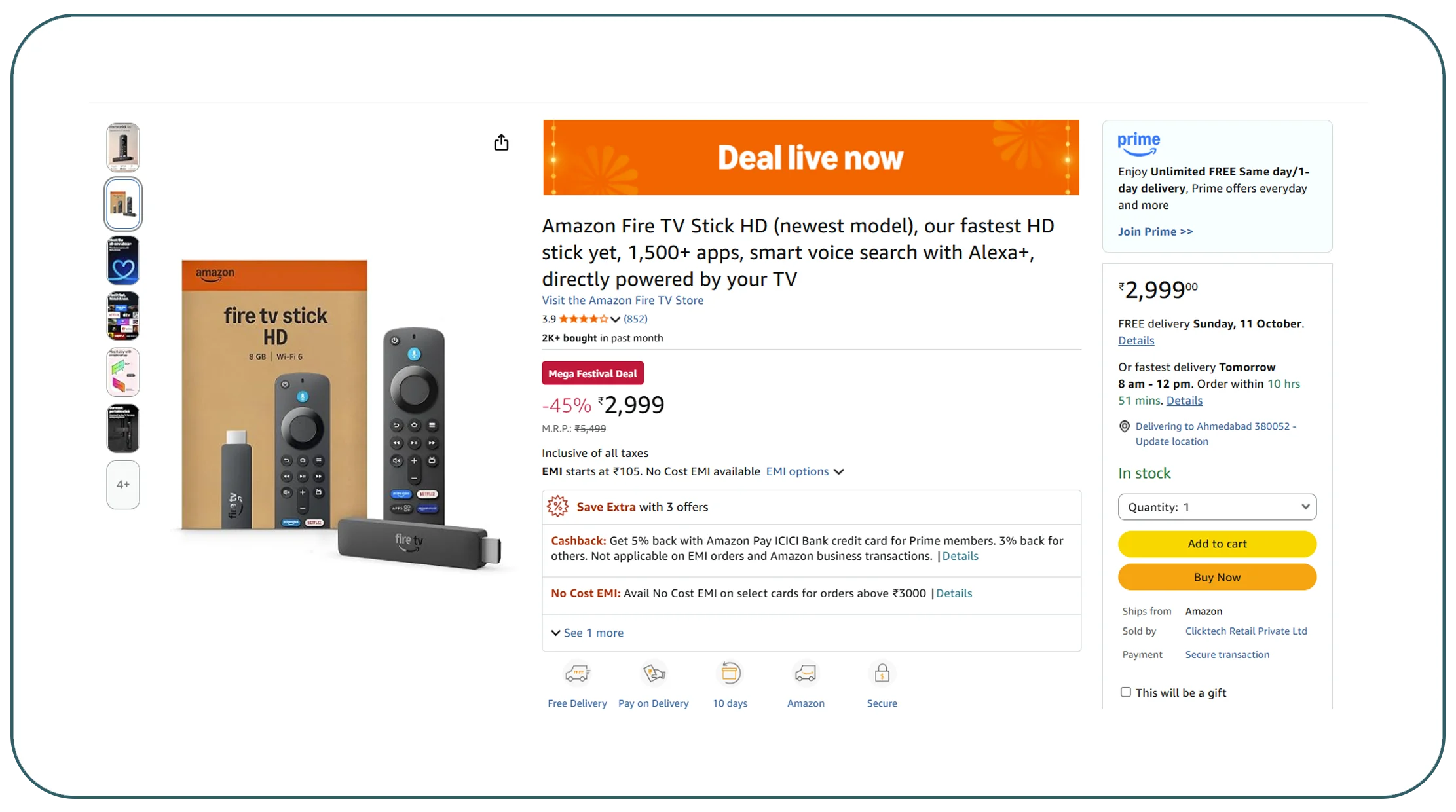
An ecommerce scraping API for product availability tracking allows retailers and brands to monitor whether products are available, unavailable, discontinued, or potentially constrained across selected online channels.
Availability can directly affect sales opportunities. If a high-demand product repeatedly goes out of stock on a competitor website, that information may reveal an opportunity for another retailer. Similarly, repeated stockouts across a business's own channels can indicate supply-chain, fulfillment, or forecasting issues.
A practical availability-monitoring workflow should distinguish between several states rather than using only a simple yes/no field.
Example availability model
| Status | Interpretation | Potential action |
|---|---|---|
| In stock | Product can be purchased | Continue monitoring |
| Out of stock | Listing remains but cannot be purchased | Trigger alert |
| Limited availability | Quantity or delivery may be constrained | Investigate demand |
| Discontinued | Product appears permanently removed | Review assortment |
| Not listed | Product cannot currently be found | Verify catalog status |
What has changed from 2020 to 2026?
During 2020–2021, product availability became especially important as online demand patterns changed quickly. In 2022, retailers increasingly needed systematic monitoring as customers became accustomed to digital purchasing. From 2023–2024, businesses began combining availability information with price, promotion, and assortment signals. During 2025–2026, the emphasis shifted toward automated alerts and historical availability analysis, allowing teams to identify recurring stockouts and changes rather than reacting to individual incidents.
Turn changing availability into actionable retail intelligence with a structured, automated monitoring workflow!
Get Insights Now!For best results, businesses should monitor the products that matter most commercially rather than attempting to capture every available listing. Priority SKUs can be selected according to sales volume, category importance, competitive relevance, or customer demand.
How Can Pricing Teams Understand Competitor Movements?
An ecommerce scraping API for competitor price analysis gives pricing teams structured information for comparing products and identifying meaningful price movements across online competitors.
Competitive pricing is rarely about finding the lowest price once. Teams need to understand price position over time. A competitor may reduce a product's price temporarily during a promotion, permanently reposition the item, or adjust pricing according to market conditions.
A useful price intelligence workflow should therefore capture both current and historical observations.
Example pricing dataset
| Field | Example purpose |
|---|---|
| Product ID | Match the same product |
| Product name | Identify listing |
| Current price | Calculate price position |
| Previous price | Detect movement |
| Discount | Measure promotion |
| Seller | Compare marketplace offers |
| Timestamp | Establish historical context |
| Product URL | Verify source |
A simple price index can also help teams compare their position against selected competitors:
Price Index = Your Product Price ÷ Competitor Reference Price × 100
An index above 100 indicates that the monitored product is priced higher than the selected reference point, while an index below 100 indicates a lower price.
2020–2026 progression
In 2020, many pricing teams still depended on periodic manual checks and static competitor reports. During 2021–2022, increased online competition made more frequent monitoring valuable. From 2023 onward, businesses increasingly used historical observations to identify recurring price patterns and promotional cycles. During 2024–2025, pricing intelligence became more integrated with dashboards and automated alerts. In 2026, the emphasis is increasingly on timely, structured signals that can support dynamic decision-making rather than simply producing another spreadsheet.
The important lesson is that pricing data becomes strategically useful when it is connected to product matching, timestamps, historical records, and clear business rules.
What Makes an Automated Product Data Pipeline Scalable?
An E-Commerce Data Scraping can simplify the technical process of collecting information from multiple online sources and delivering structured product records to downstream applications.
Scalability depends on more than the number of pages collected. A production-ready workflow needs scheduling, error handling, data validation, normalization, monitoring, and delivery mechanisms. It should also accommodate website structure changes and differences in product attributes between sources.
A typical architecture can include:
Source websites → Collection layer → Parsing → Validation → Normalization → Storage → Analytics → Alerts
Each stage serves a different purpose.
Key scalability requirements
| Requirement | Why it matters |
|---|---|
| Scheduling | Keeps datasets refreshed |
| Parsing | Extracts relevant fields |
| Validation | Reduces inaccurate records |
| Normalization | Makes sources comparable |
| Deduplication | Prevents repeated records |
| Storage | Maintains historical observations |
| Monitoring | Detects pipeline failures |
| API delivery | Supports downstream applications |
Development from 2020 to 2026
Between 2020 and 2021, many organizations expanded automated collection as online commerce became a central business channel. During 2022–2023, larger product catalogs created stronger requirements for scalable infrastructure and reliable data pipelines. In 2024, organizations increasingly connected collected data with cloud storage, BI tools, and internal applications. During 2025–2026, automation increasingly became part of broader data and AI workflows, where structured product information could be analyzed continuously.
For technical teams, scalability should therefore be measured across collection volume, refresh frequency, source diversity, data quality, and downstream usability. A pipeline that collects millions of records but cannot maintain data quality is not genuinely scalable.
How Can Historical Product Data Improve Strategic Decisions?
E-Commerce Datasets provide a historical foundation for understanding how online product markets change. A single product snapshot can tell a business what is happening now; a longitudinal dataset can help explain what changed, when it changed, and how frequently the change occurs.
Historical product information can support pricing research, assortment analysis, competitor benchmarking, promotion tracking, availability studies, and demand-related investigations.
For example, a retailer could compare weekly observations to determine whether a competitor's price reduction was a temporary promotion or part of a longer-term pricing strategy. A brand could study how often its products disappear from important online channels. A marketplace operator could examine changes in seller participation across categories.
Historical analysis framework
| Metric | Historical question |
|---|---|
| Average price | How has pricing changed? |
| Minimum price | When did aggressive discounting occur? |
| Stock rate | How consistently was the item available? |
| Assortment count | Is the category expanding? |
| Discount frequency | How often are promotions occurring? |
| Seller count | Is marketplace competition increasing? |
2020–2026 perspective
From 2020–2021, many companies focused on establishing digital product visibility. During 2022–2023, historical comparisons became more useful for tracking competitive changes. In 2024, organizations increasingly connected historical records to dashboards and business reporting. During 2025, automated analytical workflows made it easier to identify anomalies and recurring patterns. By 2026, historical product data has become particularly valuable for organizations seeking machine-readable evidence for analytics, forecasting, competitive research, and AI-supported decision-making.
The strategic advantage is simple: businesses can move from asking "What is the price today?" to asking "How has the price changed, what triggered the change, and what should we do next?"
For organizations already collecting online product information, maintaining historical snapshots can significantly increase the long-term value of the dataset.
Why Choose Real Data API?
Real Data API is designed for businesses that need structured web information for analytics, monitoring, and automated workflows. The emphasis should be on converting complex online information into usable datasets rather than simply collecting large volumes of pages.
A dependable data partner can help businesses address several practical requirements:
- Scalable collection: Support product monitoring across large catalogs and multiple sources.
- Structured output: Organize product attributes into consistent fields.
- Data validation: Identify missing, inconsistent, or unexpected values.
- Historical tracking: Preserve observations for trend analysis.
- Flexible delivery: Make structured information available for analytics and internal workflows.
- Business-focused extraction: Prioritize fields according to pricing, assortment, availability, or competitive intelligence requirements.
Another important consideration is integration. Businesses should be able to connect collected information with databases, dashboards, analytics platforms, or internal applications without creating an unnecessarily complicated technical workflow.
For teams evaluating providers, the best questions are practical: How frequently can the data be refreshed? Which product attributes can be captured? How are changes validated? Can historical records be maintained? How easily can the resulting data enter existing analytics workflows?
These questions help separate a basic collection process from a business-ready data infrastructure.
How Does Web Scraping API Support Product Intelligence?
A Web Scraping API can act as the technical layer that connects online sources with structured business datasets. It can reduce the complexity involved in repeatedly requesting, processing, and organizing web information for analytical use cases.
For e-commerce organizations, the important objective is not scraping for its own sake. The objective is creating dependable information that answers specific commercial questions.
A product intelligence workflow can therefore be designed around:
- Define the business question — pricing, availability, assortment, seller monitoring, or market research.
- Select relevant sources — prioritize websites and marketplaces that influence the decision.
- Define required attributes — capture only fields that contribute to the analysis.
- Set refresh intervals — align collection frequency with how quickly the market changes.
- Validate records — check missing fields, unexpected values, and duplicates.
- Maintain history — preserve timestamps for meaningful comparisons.
- Connect analytics — deliver structured information to dashboards, databases, or internal applications.
- Create alerts — notify teams when commercially important changes occur.
This approach makes data collection measurable. Teams can evaluate freshness, coverage, accuracy, processing time, and business impact rather than focusing only on the number of records collected.
Conclusion
ecommerce scraping API for real-time product data gives e-commerce businesses a practical way to keep pace with constantly changing online markets. By automating the collection of prices, inventory signals, product attributes, promotions, and competitor information, organizations can replace fragmented manual monitoring with a repeatable intelligence workflow.
The strongest strategy is to connect collection frequency with business importance. High-value products may require frequent monitoring, while broader assortment research can use less frequent schedules. Historical records should also be preserved because they transform isolated observations into measurable market trends.
Businesses that combine structured collection, validation, historical storage, and analytics can respond faster to pricing changes, availability issues, assortment movements, and competitive opportunities.
Want to turn constantly changing e-commerce product information into actionable business intelligence? Connect with Real Data API to build a scalable product data collection and monitoring workflow tailored to your business needs!
FAQs
1. What can businesses monitor using an ecommerce scraping API for real-time product data?
Businesses can monitor product prices, availability, discounts, SKUs, product attributes, sellers, ratings, and catalog changes to support pricing, assortment, competitive intelligence, and retail analytics.
2. Why is E-Commerce Data Scraping useful for pricing teams?
It provides structured competitor product information that pricing teams can compare over time, helping identify price gaps, promotions, recurring changes, and broader competitive positioning.
3. How does a real-time ecommerce data collection API improve monitoring?
It automates recurring collection, reduces repetitive manual checks, supports scheduled refreshes, and creates structured observations that teams can analyze for timely product intelligence.
4. Can an ecommerce product data API for market research support historical analysis?
Yes. Maintaining timestamped product records enables researchers to compare assortment, pricing, availability, promotions, and other observable attributes across different periods.
5. Why should businesses use Real Data API for product intelligence?
Real Data API can support structured, scalable collection workflows designed around product monitoring, competitive research, pricing intelligence, historical analysis, and integration with downstream business systems.
Latest posts
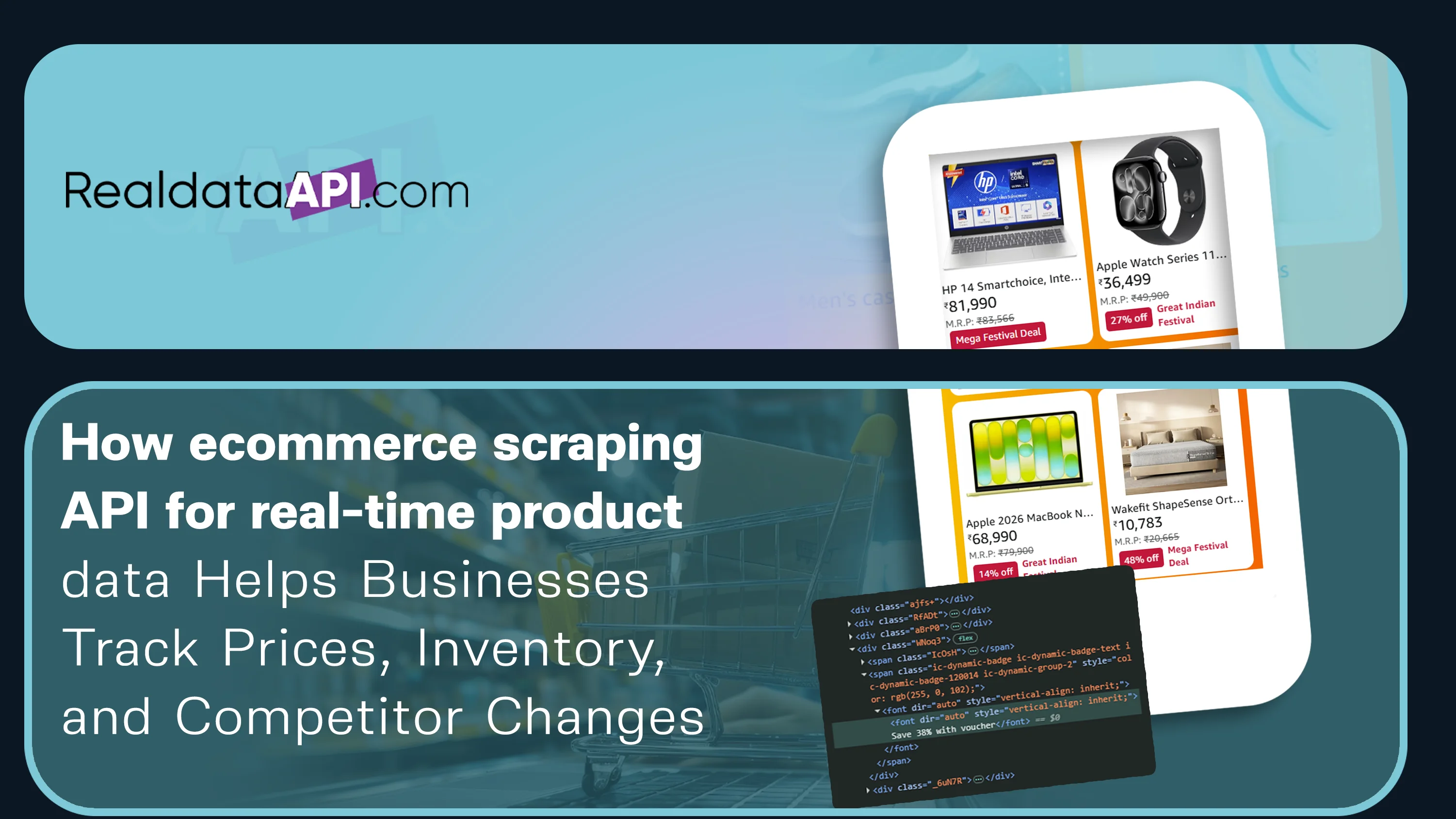
How ecommerce scraping API for real-time product data Helps Businesses Track Prices, Inventory, and Competitor Changes
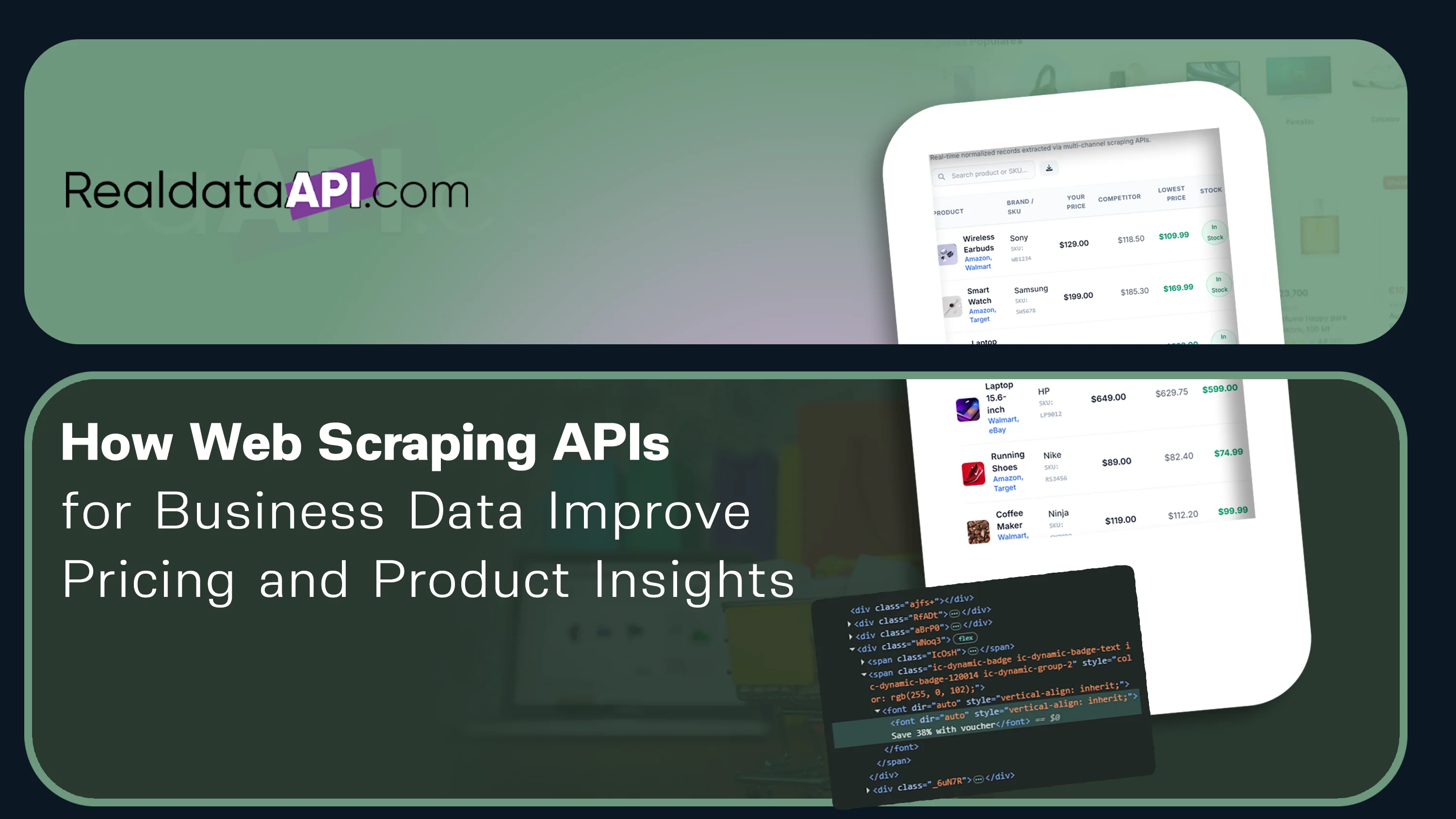
How Web Scraping APIs for Business Data Improve Pricing and Product Insights
How Extracting Bilibili API Data for Social Media Analytics Helps Brands Track Content, Engagement, and Audience Trends

How Prom.ua scraper Helps Businesses Collect Marketplace Data for Competitive Pricing and Product Intelligence






.png)