
Introduction
Retailers operate in an e-commerce environment where product prices, availability, promotions, reviews, and assortment can change continuously. Walmart's extensive online marketplace creates a valuable source of competitive information for brands seeking to understand pricing behavior, product positioning, category movements, and customer engagement. However, collecting this information manually at scale can be time-consuming and difficult to maintain consistently. Businesses increasingly use automated data collection frameworks to turn marketplace observations into structured datasets for analysis.
Real Data API enables retailers to extract Walmart product data in real-time and transform frequently changing marketplace information into actionable business intelligence. A scalable Walmart Product Data Scraper can capture product attributes, pricing, availability, ratings, reviews, seller information, promotions, and category details according to defined monitoring requirements. When these records are collected repeatedly, businesses can build historical datasets that support competitive benchmarking, price intelligence, assortment planning, and market research. This report examines how retailers can use structured Walmart marketplace data across six strategic areas while highlighting illustrative 2020-2026 trends and business applications.
1. Building a Scalable Data Foundation for Retail Intelligence
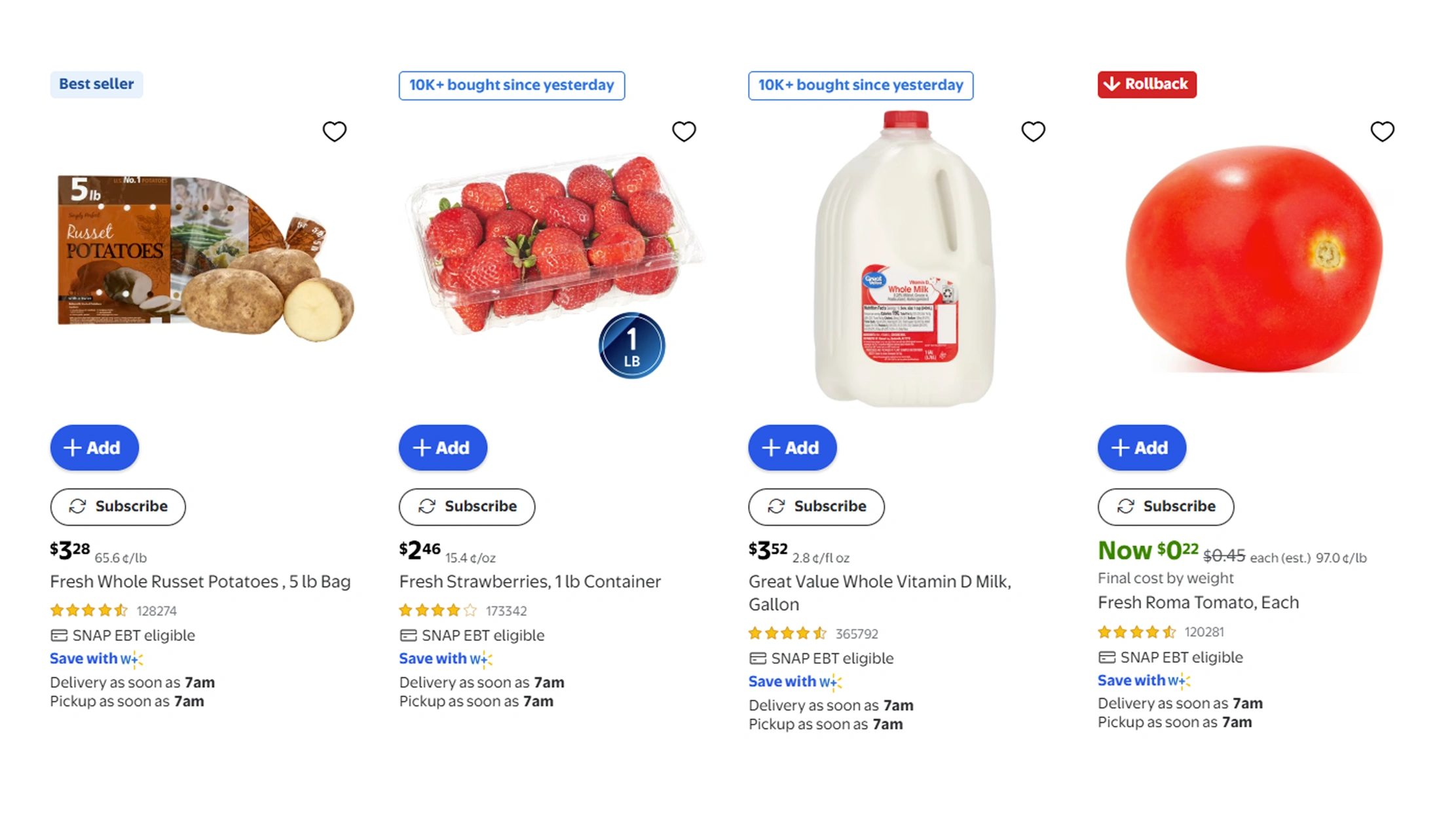
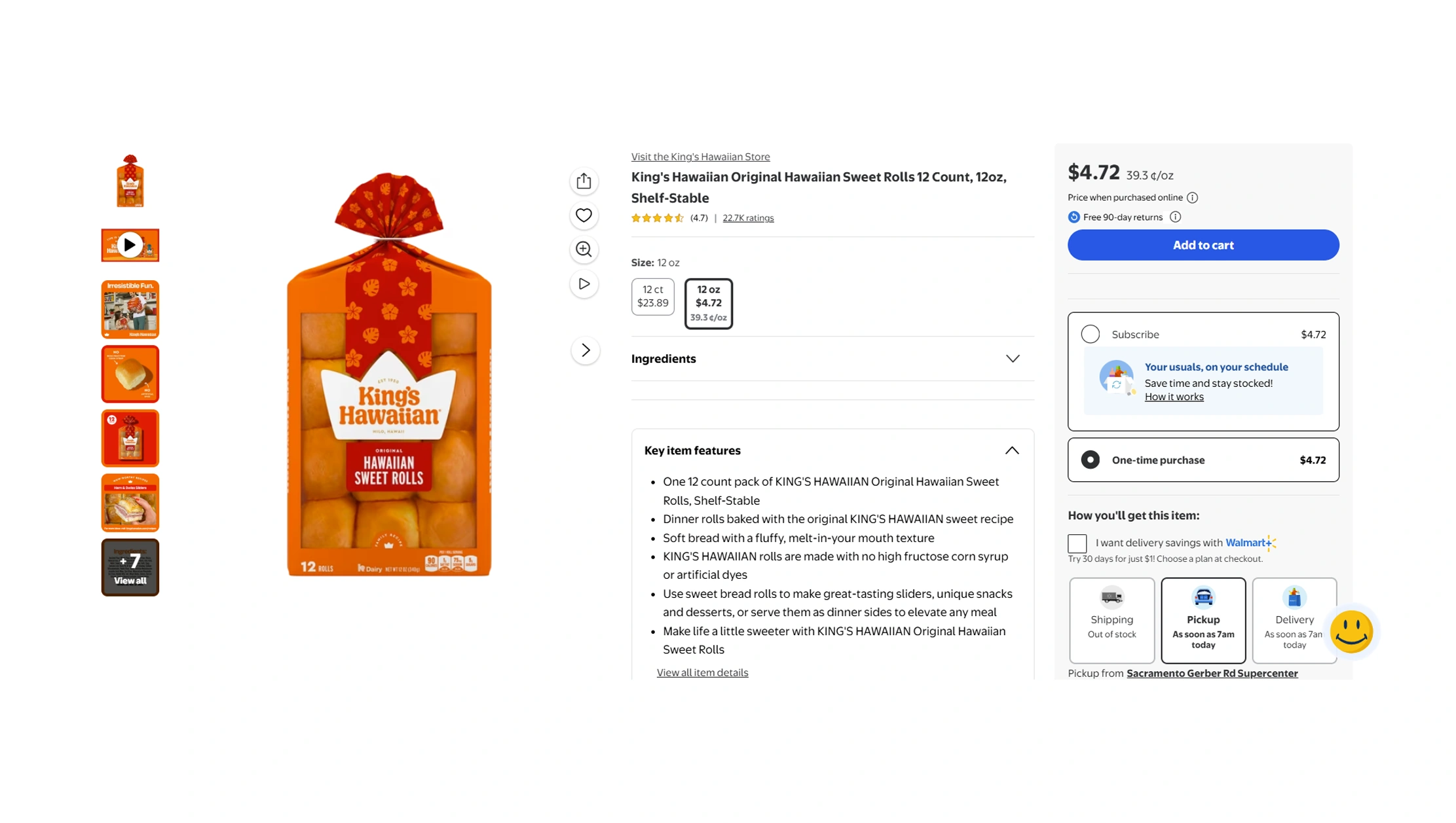
A scalable Walmart product data scraper API for businesses can provide retailers with a structured mechanism for collecting marketplace information across large product catalogs. Instead of relying on individual manual searches, businesses can automate recurring collection and organize information into consistent records. Typical attributes include product names, SKUs, brands, categories, prices, discounts, ratings, reviews, availability, sellers, and product URLs. This creates a reusable data layer that can feed analytics platforms, dashboards, databases, and pricing systems.
From 2020 onward, the importance of automated e-commerce data increased as retailers expanded digital channels and competed more actively on online marketplaces. The table below provides an illustrative maturity index, not audited Walmart statistics, showing how a retailer could measure the growth of automated marketplace monitoring from 2020 to 2026.
| Year | Illustrative Monitoring Maturity Index | Example Data Refresh Capability |
|---|---|---|
| 2020 | 35 | Weekly |
| 2021 | 43 | 3-5 times weekly |
| 2022 | 51 | Daily |
| 2023 | 62 | Multiple times daily |
| 2024 | 71 | Scheduled frequent refreshes |
| 2025 | 82 | Near-real-time workflows |
| 2026 | 90 | Real-time-oriented pipelines |
The practical value comes from consistency. A retailer can define which categories require frequent monitoring and which products can be refreshed less often. API-based delivery also makes it possible to integrate marketplace observations into internal systems without repeatedly rebuilding extraction processes. This architecture supports scalable competitive intelligence while reducing repetitive data gathering. For organizations managing thousands of products, the result is a more reliable foundation for pricing, assortment, inventory, and market analysis.
2. Turning Marketplace Observations into Competitive Benchmarks
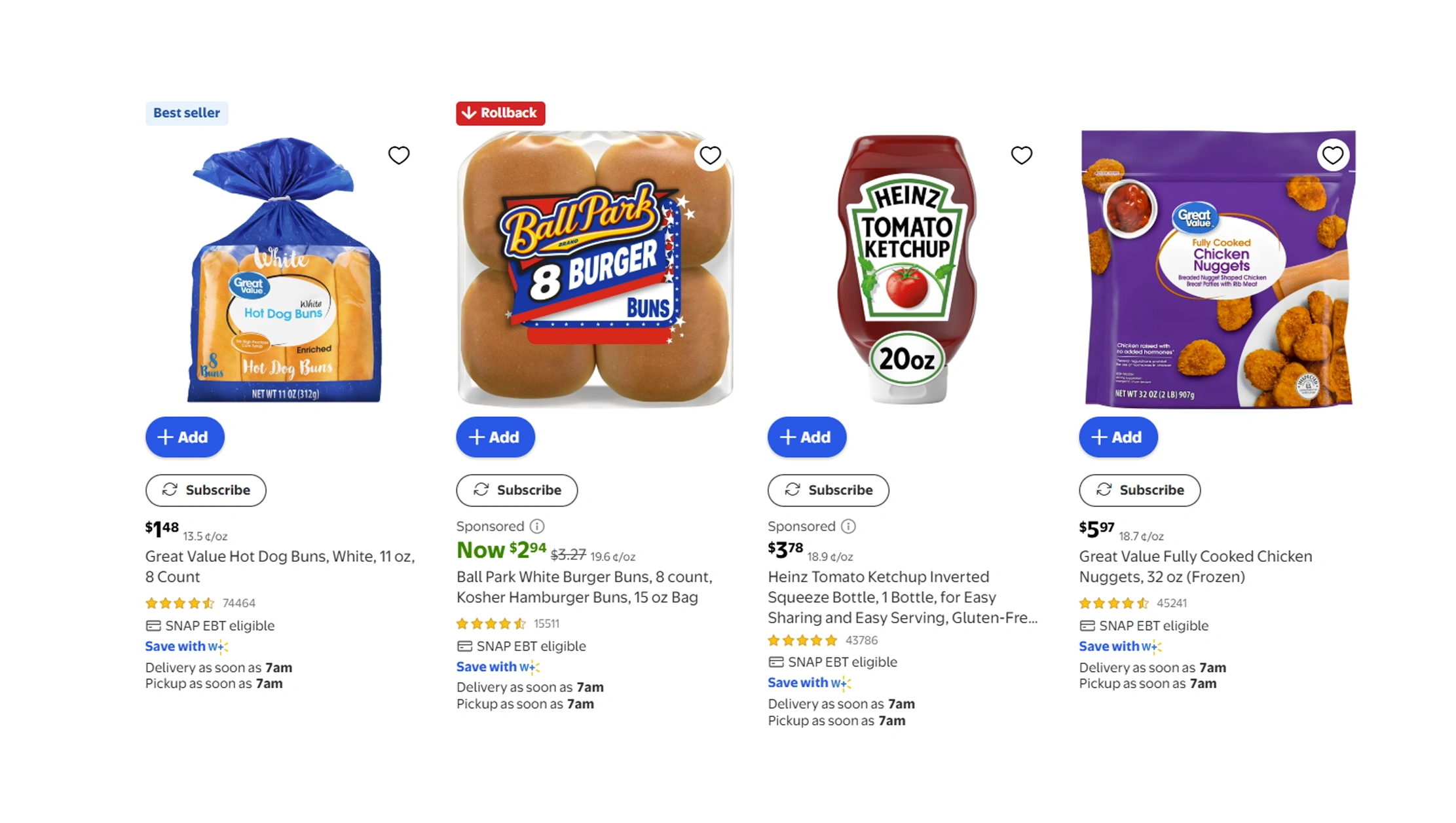
Retailers need to understand not only their own products but also how competing products are positioned. Walmart product data scraping for competitive analysis enables businesses to compare competitor products using standardized attributes. Product prices, discounts, ratings, reviews, availability, brands, sellers, and category placements can be evaluated together to identify meaningful differences. This allows commercial teams to distinguish between isolated changes and broader marketplace movements.
A historical competitive-analysis framework can also track how monitoring capabilities evolve. The following table provides an illustrative example of how a retailer might measure competitive coverage and benchmarking effectiveness between 2020 and 2026.
| Year | Illustrative Competitor SKU Coverage | Benchmarking Frequency |
|---|---|---|
| 2020 | 2,000 | Weekly |
| 2021 | 4,000 | Weekly |
| 2022 | 7,500 | Daily |
| 2023 | 12,000 | Daily |
| 2024 | 18,000 | Multiple weekly cycles |
| 2025 | 25,000 | Multiple daily cycles |
| 2026 | 32,000 | Real-time-oriented monitoring |
These figures are illustrative planning examples rather than Walmart marketplace measurements. In practice, businesses can calculate competitive coverage based on the number of monitored SKUs, categories, brands, or sellers.
The analysis can identify products where competitors consistently undercut market prices, products receiving unusually high review growth, categories with expanding assortment, and products experiencing frequent availability changes. Retailers can use these insights to refine pricing strategies, evaluate new product opportunities, and prioritize promotional investments. When historical records are retained, analysts can also investigate how competitor behavior changes around holidays, promotions, product launches, or shifts in demand.
3. Keeping Product Intelligence Current as Marketplace Conditions Change
Retail pricing and availability can change rapidly, making data freshness an important consideration for commercial teams. Businesses that scrape Walmart product data in real-time can establish monitoring workflows around priority products, categories, and competitors. Rather than collecting the entire marketplace at identical intervals, retailers can use different refresh frequencies according to product importance and market volatility.
An illustrative monitoring framework could look like this:
| Year | Illustrative Priority SKU Refresh Target | Primary Business Use |
|---|---|---|
| 2020 | Weekly | Market research |
| 2021 | 2-3 times weekly | Price comparison |
| 2022 | Daily | Competitive monitoring |
| 2023 | Several times daily | Dynamic pricing intelligence |
| 2024 | Hourly for priority products | Promotion monitoring |
| 2025 | High-frequency scheduled collection | Real-time-oriented decisions |
| 2026 | Event-driven or near-real-time workflows | Rapid marketplace response |
These are illustrative operating targets, not claims about Walmart's actual refresh schedule.
Real-time-oriented collection is particularly useful for high-priority products where price or stock changes can materially affect business decisions. Retailers can capture price changes, discount movements, stock transitions, product availability, and other marketplace signals. The resulting stream can be validated and stored so analysts can compare current observations with previous snapshots.
Fresh data is also valuable for promotional intelligence. A competitor may introduce a discount, change a product bundle, or temporarily become unavailable. A timely monitoring system can surface those changes faster than periodic manual research. The goal is not necessarily to collect every product every second, but to establish an intelligent refresh strategy that matches business priorities and creates an efficient balance between data freshness, scale, and analytical value.
4. Creating a Complete View of the Online Assortment

A retailer's product strategy depends heavily on understanding what is available in the market. Walmart product listing data extraction provides a structured way to examine marketplace assortment across categories, brands, sellers, and product types. Beyond price, retailers can evaluate product titles, descriptions, specifications, ratings, reviews, images, availability, seller information, and promotional details.
An illustrative assortment-monitoring progression can demonstrate how organizations might expand their analytical coverage over time:
| Year | Illustrative Categories Monitored | Example Assortment Use |
|---|---|---|
| 2020 | 10 | Basic category research |
| 2021 | 20 | Competitor assortment comparison |
| 2022 | 35 | SKU gap identification |
| 2023 | 50 | Brand benchmarking |
| 2024 | 75 | Category intelligence |
| 2025 | 100 | Large-scale assortment analysis |
| 2026 | 125 | Continuous assortment monitoring |
These figures are illustrative examples for planning and should not be interpreted as Walmart category counts.
Structured listing information allows businesses to identify products entering or leaving a category, compare assortment depth, identify brands gaining visibility, and find gaps that could represent commercial opportunities. Product-level information can also support taxonomy normalization, allowing retailers to compare similar products despite differences in naming conventions.
Assortment intelligence becomes even more valuable when combined with pricing and availability data. For example, a retailer may identify a competitor adding multiple products to a fast-growing category while maintaining aggressive pricing. This combined signal could prompt additional research, product expansion, or promotional planning. Historical listing records also allow teams to measure assortment changes over time instead of relying on the current marketplace view alone.
5. Integrating Marketplace Data Into Automated Business Workflows
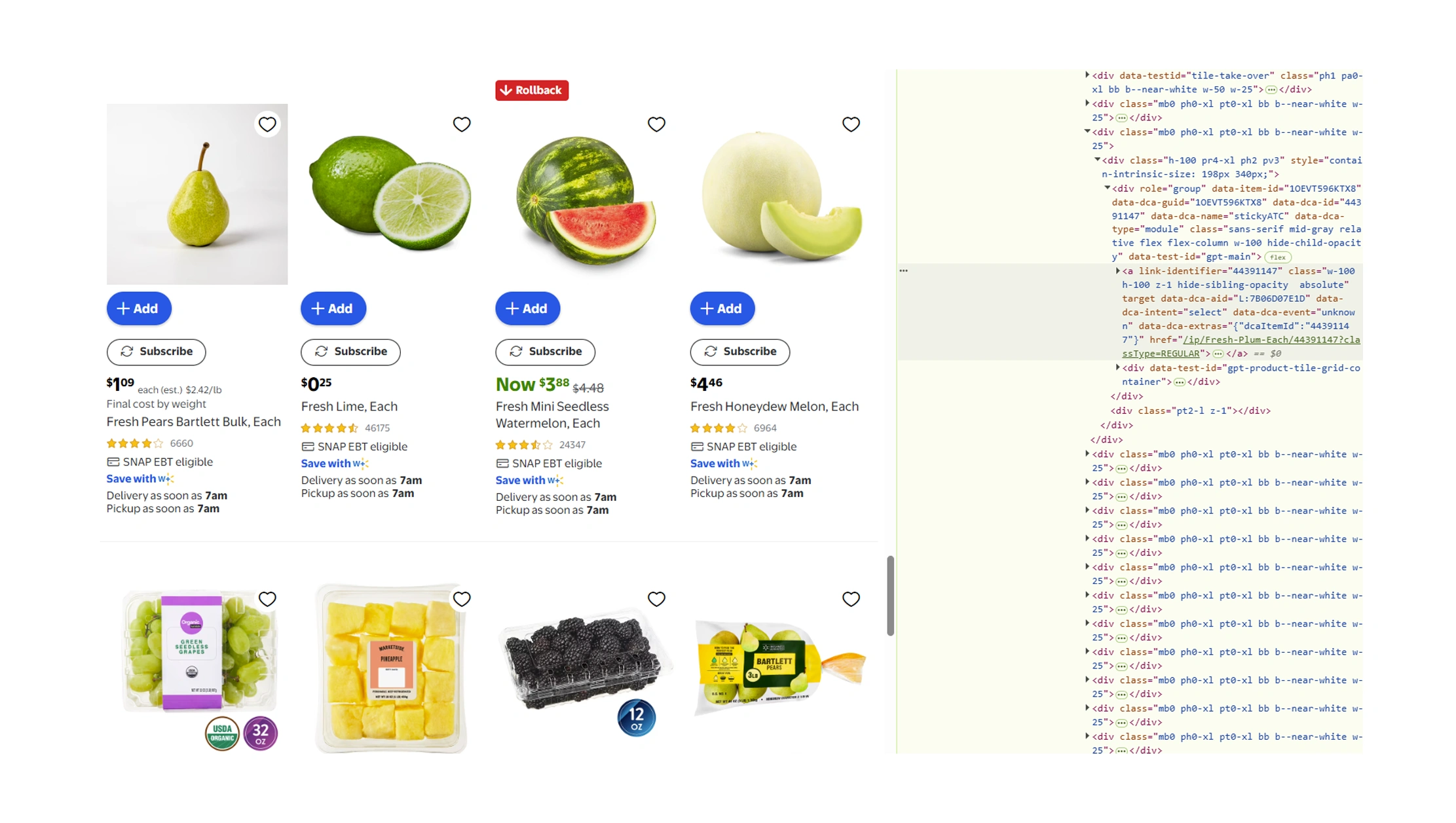
A Walmart Scraping API can help retailers move from isolated datasets toward reusable data infrastructure. API-based delivery makes structured product information available to downstream systems, including pricing engines, business intelligence platforms, databases, reporting environments, and analytical applications. This reduces the need for teams to repeatedly export and manually process marketplace information.
A representative API adoption framework could track the number of business workflows connected to marketplace intelligence:
| Year | Illustrative Connected Workflows | Example Application |
|---|---|---|
| 2020 | 2 | Manual reporting support |
| 2021 | 4 | Pricing analysis |
| 2022 | 7 | Competitive dashboards |
| 2023 | 11 | Assortment monitoring |
| 2024 | 16 | Automated reporting |
| 2025 | 22 | Pricing and inventory workflows |
| 2026 | 30 | Integrated retail intelligence |
Again, these figures are illustrative rather than measured Walmart API adoption statistics.
An API-centered architecture can separate data collection from data consumption. The collection layer gathers marketplace information, while processing pipelines normalize fields, validate records, and prepare datasets for business use. The delivery layer can then provide structured outputs according to the client's requirements.
This approach can improve operational efficiency because different teams can consume the same standardized dataset. Pricing teams can focus on competitor prices, merchandising teams can analyze assortment, and research teams can evaluate category movements without maintaining separate collection processes. Automated workflows can also trigger alerts when defined thresholds are reached, such as significant price changes, stock movements, or newly observed products.
For large retailers, this architecture creates a foundation for continuously improving marketplace intelligence while keeping data accessible to multiple business functions.
6. Connecting Historical Records With Real-Time Decision-Making

An integrated Walmart API can become part of a broader marketplace intelligence architecture when current observations are combined with historical datasets. Businesses can extract Walmart product data in real-time for current monitoring while retaining previous observations for trend analysis. This combination allows retailers to understand both what is happening now and how current conditions compare with earlier marketplace behavior.
The following illustrative framework shows how historical data volume might be organized for a growing monitoring program:
| Year | Illustrative Historical Snapshots | Potential Analytical Focus |
|---|---|---|
| 2020 | 100K | Baseline pricing |
| 2021 | 250K | Competitor comparison |
| 2022 | 500K | Assortment changes |
| 2023 | 900K | Promotion analysis |
| 2024 | 1.5M | Product performance |
| 2025 | 2.3M | Trend intelligence |
| 2026 | 3.2M | Real-time decision support |
These numbers are illustrative examples showing how snapshot volumes could grow with monitoring scope; they are not Walmart marketplace statistics.
Historical records can support price elasticity studies, promotional analysis, availability trends, assortment evolution, and competitor benchmarking. Current observations add another dimension by showing whether a historical pattern is continuing or changing. For example, if a competitor repeatedly reduces prices during a particular period, a retailer can compare the current observation with historical behavior before deciding how to respond.
This combination also supports more advanced analytics. Businesses can segment products by price movement, availability stability, review growth, and competitive intensity. They can identify products requiring closer monitoring and reduce unnecessary collection for low-priority items. The result is a more efficient marketplace intelligence framework where data freshness and historical context work together.
Why Choose Real Data API?
Real Data API provides a structured approach for businesses seeking scalable marketplace intelligence and automated product data collection. Its framework can be configured around specific categories, products, competitors, fields, refresh frequencies, and delivery requirements. This flexibility helps retailers avoid collecting unnecessary information while focusing resources on commercially important datasets.
With Walmart Product and Review Datasets, businesses can analyze product attributes alongside customer-facing signals such as ratings and reviews. Combining these datasets with pricing and availability information can provide a broader understanding of product positioning and marketplace performance. Historical storage further enables businesses to identify trends rather than analyzing only the latest snapshot.
Real Data API also supports workflows where businesses extract Walmart product data in real-time, enabling current marketplace observations to move into analytical environments. Structured data delivery can support dashboards, reporting systems, pricing workflows, competitive intelligence applications, and market research processes.
The key advantage is the ability to create a repeatable data pipeline rather than conducting disconnected manual searches. Retailers can define monitoring priorities, automate recurring collection, standardize records, and use the resulting information across multiple commercial functions. This can improve research efficiency while creating a stronger foundation for data-driven pricing and assortment decisions.
Conclusion
Walmart's online marketplace contains extensive product, pricing, availability, review, seller, and assortment signals that can support modern retail intelligence. However, the commercial value of these signals depends on collecting them consistently, structuring them accurately, and making them available at the right level of freshness. A scalable data collection framework can help retailers move beyond occasional marketplace checks toward continuous competitive and assortment monitoring.
The ability to extract Walmart product data in real-time can help businesses identify important pricing changes, availability movements, new listings, promotional activity, and competitor behavior. When current observations are combined with historical records, retailers gain a stronger foundation for understanding marketplace trends and making informed decisions.
Real Data API can help businesses design scalable product data pipelines tailored to their monitoring requirements, categories, and analytical workflows. From competitive pricing to assortment intelligence, structured marketplace data can support multiple commercial functions.
Connect with Real Data API to build a scalable data extraction and analytics solution tailored to your business!
Latest posts
How Foodpanda Food Dataset Helps Businesses Track Restaurants, Menus, Prices, Ratings, and Food Delivery Trends?
How IKEA E-commerce Dataset Helps Businesses Solve Product, Pricing, Category, and Retail Trend Challenges?
How Target e-commerce dataset Helps Brands Track Products, Prices, Availability, and Retail Market Trends for Smarter Insights?

How Dior fashion dataset Helps Brands Track Luxury Products, Prices, Collections, and Fashion Trends for Smarter Insights?






.png)



