.gif)
.gif)
Quick Summary
- Explore how AI-powered travel platforms use structured travel information to generate personalized itineraries, compare booking options, and reduce inaccurate recommendations with How AI Trip Planners Use Travel Data APIs (2026).
- Understand how automated data collection, API integrations, and real-time validation through Travel Data Scraping help travel businesses manage changing prices, schedules, and availability.
- Discover practical ways to improve travel planning accuracy, customer experiences, and booking confidence through reliable travel intelligence.
Introduction
AI-powered travel planners can reduce booking errors and improve travel recommendations by connecting artificial intelligence systems with reliable flight, hotel, transportation, and destination information. How AI Trip Planners Use Travel Data APIs (2026) explains how travel businesses can combine intelligent recommendations with structured, frequently refreshed travel information to deliver more accurate planning experiences.
Modern travelers expect more than basic destination suggestions. They want personalized itineraries, competitive airfare options, suitable accommodation, accurate schedules, and relevant activities within their budgets. However, AI systems cannot consistently deliver these results using outdated or incomplete information.
For travel agencies, online travel agencies (OTAs), booking platforms, and travel technology companies, this creates an important operational challenge. A recommendation may sound convincing but still contain an outdated hotel rate, an unavailable flight, an incorrect connection, or an activity that does not match the traveler's dates.
Travel Data Scraping helps businesses collect and organize relevant information from permitted online sources. When combined with authorized travel APIs, data validation, and AI-powered recommendation engines, this information can support more dependable travel planning.
The objective is not simply to make AI generate itineraries faster. It is to ensure that recommendations are grounded in current, relevant, and verifiable travel information.
How Can Travel Businesses Prepare Reliable Information for AI Recommendations?
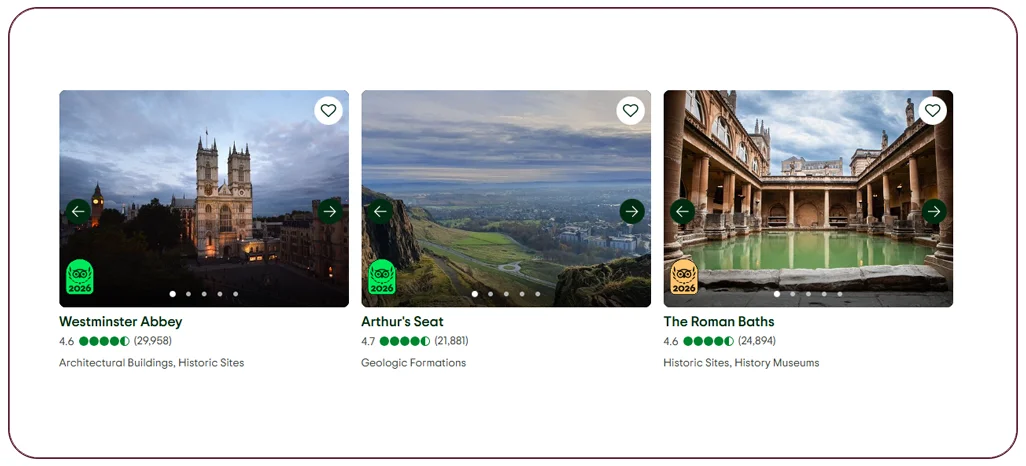
AI trip planners depend on structured information to understand travel options and generate useful recommendations. If the underlying information contains duplicate hotel records, inconsistent destination names, outdated prices, or incomplete flight details, the resulting itinerary may become unreliable.
scrape travel data for AI workflows help businesses collect relevant information from permitted travel websites, booking platforms, and other accessible sources. The collected information can then be standardized and connected to AI applications.
A useful travel information structure should include:
- Destination names and geographic identifiers.
- Airport codes and flight route information.
- Departure and arrival dates and times.
- Airline names and fare conditions.
- Hotel names, addresses, and accommodation categories.
- Room types, occupancy, and cancellation conditions.
- Local attractions and activity descriptions.
- Transportation options and journey durations.
- Source URLs and observation timestamps.
Why does the growth of international tourism matter?
The recovery of international tourism demonstrates why travel platforms need reliable and scalable information systems.
UN Tourism reported the following international tourist arrival figures:
| Year | International tourist arrivals |
|---|---|
| 2020 | 409 million |
| 2021 | 462 million |
| 2022 | 979 million |
| 2023 | 1.322 billion |
| 2024 | 1.465 billion |
| 2025 | 1.523 billion |
| 2026 | Full-year figure not yet available |
Source: UN Tourism, International Tourism 2025 Barometer, January 2026. Figures for 2025 are provisional. The 2026 full-year result is not yet available as of November 23, 2026.
The figures show the substantial recovery in international travel after the pandemic disruption. This growing volume of travel activity increases the importance of organizing accurate information across destinations, booking channels, and travel categories.
Businesses should also distinguish between static and dynamic information. Destination descriptions and hotel addresses may change infrequently, while flight fares, room rates, and availability can change much more rapidly.
Separating these information types allows AI systems to retrieve relatively stable destination information while checking time-sensitive booking details through appropriate live sources.
A structured data foundation therefore helps reduce inconsistencies before information reaches the recommendation engine.
How Can Automated Data Collection Reduce Errors in Travel Planning?
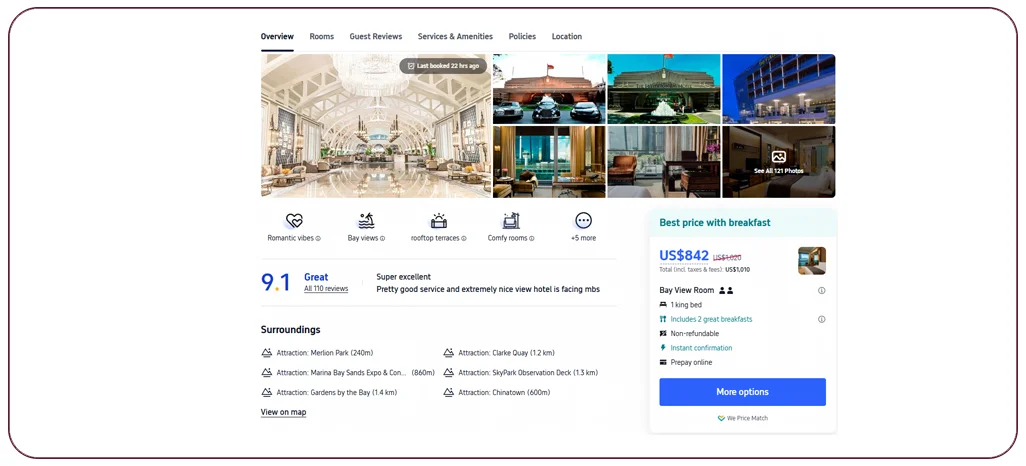
Travel information changes frequently. Airline schedules can be revised, hotel rates can fluctuate, and accommodation availability can change between a traveler's initial search and booking confirmation.
A travel web data scraper helps travel technology companies collect relevant information from multiple permitted online sources and organize it into consistent records.
For AI trip planners, this process can improve the information available for itinerary generation and recommendation systems.
Consider the following operational applications:
- Flight information validation: Collect flight numbers, departure times, arrival times, airline information, and connection details.
- Hotel information management: Organize property names, room categories, addresses, amenities, and published rates.
- Destination information enrichment: Collect attraction descriptions, geographical details, and relevant visitor information.
- Transportation comparisons: Organize available transport options and journey information.
- Duplicate identification: Detect repeated hotel, attraction, and transportation records.
- Data freshness monitoring: Record when information was collected and when it was last verified.
Automated collection should not be confused with booking confirmation. A scraped listing may provide useful research information, but the actual booking source must confirm the selected price, availability, and applicable conditions.
Expedia Group's Rapid Lodging API illustrates this distinction. Its documented workflow includes property information, shopping for available rooms and rates, and checking the selected price before booking.
Travel businesses should use similar validation principles when designing AI-powered booking experiences.
How Can API Integrations Improve Flight and Hotel Recommendation Accuracy?
AI trip planners need access to more than general travel descriptions. They require structured information that can be retrieved, compared, and validated during different stages of trip planning.
A travel web scraping API can provide structured travel information from permitted sources and make relevant records available to applications through defined interfaces.
How AI Trip Planners Use Travel Data APIs (2026) becomes particularly important when businesses connect recommendation engines with flight search, hotel inventory, pricing, and booking systems.
Which travel API integrations are important?
| Integration | Information provided | Business application |
|---|---|---|
| Flight search API | Routes, schedules, fares | Flight recommendations |
| Hotel API | Properties, room rates, availability | Accommodation selection |
| Destination API | Location and attraction information | Itinerary personalization |
| Maps API | Geographic and route information | Travel route planning |
| Weather API | Weather conditions and forecasts | Activity recommendations |
| Currency API | Exchange-rate information | Travel budget calculations |
| Booking API | Reservation and confirmation information | Booking workflows |
For example, Expedia Group's Rapid Shopping API documents access to live rates and availability for accommodations, including promotional information, refundability, cancellation penalties, and price breakdowns. Its documentation also describes price verification before booking.
Airline distribution is another important consideration. The International Air Transport Association's New Distribution Capability (NDC) standard supports API-based communication between airlines and travel sellers for shopping, offers, orders, payments, and servicing.
How does this reduce booking errors?
- Validate the selected flight against current airline or distribution-system information.
- Check hotel rates again before reservation.
- Verify travel dates, passenger counts, and room occupancy.
- Display cancellation policies and additional charges.
- Preserve booking references and confirmation details.
An AI recommendation should never be treated as a confirmed reservation. The booking provider must return a successful confirmation.
Building an AI-powered travel platform? Connect your recommendation engine with structured travel information to improve itinerary accuracy and booking confidence!
Get Insights Now!How Can Updated Pricing Information Improve Travel Recommendations?
Travelers frequently compare multiple flights, accommodation options, and destinations before deciding where to book. An AI trip planner that recommends an option based on outdated pricing can create frustration and reduce customer confidence.
Access to real-time travel deals can help travel platforms identify relevant offers and present current pricing information obtained from authorized providers.
However, businesses should understand that real-time information depends on the source, API response, caching policy, and time of verification. No collected price should be presented as guaranteed until the relevant booking provider confirms it.
What pricing information should AI systems evaluate?
| Pricing factor | Why it matters |
|---|---|
| Base airfare | Establishes the advertised flight cost |
| Taxes and fees | Helps calculate the total payable amount |
| Baggage charges | Prevents misleading fare comparisons |
| Hotel room rate | Supports accommodation comparisons |
| Occupancy requirements | Ensures the rate matches the travelers |
| Cancellation conditions | Helps evaluate booking flexibility |
| Currency | Avoids incorrect budget comparisons |
| Price verification time | Communicates information freshness |
An AI trip planner can use these details to recommend options based on a traveler's total budget rather than simply selecting the cheapest displayed price.
For example, a flight with a lower base fare may involve additional baggage charges or less flexible conditions. A slightly more expensive option may offer better overall value.
Similarly, hotel recommendations should consider room occupancy, taxes, cancellation policies, and location rather than comparing room prices alone.
A useful recommendation engine should also explain why an option is being suggested. It can identify relevant factors such as travel duration, total cost, location, and flexibility.
This makes the recommendation more transparent and gives travelers greater control over their decisions.
How Can Scalable Data Collection Support Personalized Itineraries?
Personalized travel recommendations require an understanding of multiple factors, including destination preferences, travel dates, group size, budgets, accommodation requirements, and planned activities.
A Travel Scraping API can support this process by providing structured information that applications can use to enrich travel searches and destination recommendations.
How AI Trip Planners Use Travel Data APIs (2026) also highlights the importance of combining travel information with customer preferences rather than generating identical itineraries for every user.
What information supports itinerary personalization?
- Destination preferences and travel interests.
- Preferred departure and return dates.
- Number of travelers and room requirements.
- Accommodation budgets and preferred property categories.
- Preferred transportation methods.
- Attraction locations and opening information.
- Dietary and accessibility requirements, where voluntarily provided.
- Available activities and relevant travel experiences.
The business value of personalization is supported by consumer research.
Booking.com's 2025 Global AI Sentiment Report surveyed 37,325 respondents across 33 markets. It found that 89% wanted to use AI in future travel planning, while 67% had already used AI in some aspect of travel. The report also found that only 6% fully trusted AI.
These findings indicate both strong interest and a need to build trust.
How can travel businesses improve personalization?
| Personalization feature | Practical application |
|---|---|
| Budget-based recommendations | Filter options according to spending limits |
| Interest-based suggestions | Recommend relevant attractions |
| Travel-duration filters | Match activities to available time |
| Location-based planning | Reduce unnecessary travel between stops |
| Group-based recommendations | Consider passenger and room requirements |
| Flexible itinerary generation | Allow travelers to modify suggested activities |
Travel businesses should also avoid treating inferred preferences as confirmed requirements. Users should be able to review, modify, and approve itinerary details.
A strong personalization system combines structured travel information, user-selected preferences, and transparent recommendation logic.
How Can Organized Travel Information Improve AI Decision-Making?
AI applications require consistent information to identify relationships between destinations, transportation options, accommodation, and travel activities.
A collection of disconnected travel records can create problems when different sources use different destination names, date formats, currencies, and property identifiers.
Structured Travel Datasets help businesses maintain organized information that can be used across recommendation engines, analytics platforms, and travel applications.
What should a travel intelligence dataset contain?
| Dataset category | Important fields |
|---|---|
| Airline dataset | Airline, route, flight number, schedule |
| Flight pricing dataset | Fare, currency, taxes, baggage |
| Hotel dataset | Property name, location, category |
| Accommodation dataset | Room type, occupancy, rate |
| Destination dataset | Country, city, coordinates |
| Attraction dataset | Name, category, location |
| Transportation dataset | Mode, route, duration |
| Availability dataset | Status, observation timestamp |
| Booking dataset | Reservation reference, confirmation status |
How can data validation improve AI output?
A dependable data pipeline should include several validation stages:
- Schema validation: Check that collected information follows the expected data structure.
- Entity matching: Identify duplicate destinations, properties, and transportation records.
- Timestamp validation: Identify information that has not been refreshed within the required period.
- Currency normalization: Maintain consistent currency codes and conversion timestamps.
- Missing-field detection: Flag incomplete records before they enter recommendation workflows.
- Source verification: Preserve the original source and distinguish observed information from confirmed booking data.
Travel platforms should also monitor API response failures, missing records, rate limits, and changes in source structures.
Another important practice is separating recommendation data from transactional data. Destination descriptions can support itinerary generation, but booking systems should independently verify prices, availability, and reservation conditions.
This separation helps prevent an AI model from presenting an attractive recommendation as a guaranteed travel booking.
The result is a more dependable information foundation for AI-powered travel applications.
Why Choose Real Data API?
Travel technology businesses need structured, dependable information to build better recommendation engines and improve booking experiences. Real Data API focuses on data collection and extraction solutions that help organizations organize publicly accessible information for business intelligence and application development.
What advantages can travel businesses gain?
- 1. Customized Travel Information Collection
Collect relevant flight, hotel, destination, and travel-related information according to project requirements and permitted source availability.
- 2. Structured Data Delivery
Organize collected information into consistent formats that support travel applications, analytics systems, and AI recommendation workflows.
- 3. Data Cleaning and Validation
Standardize destination names, product attributes, pricing fields, and other information. Identify incomplete or duplicate records before delivery.
- 4. Flexible Integration Options
Prepare structured information for suitable CSV, JSON, Excel, or API-based workflows, depending on project requirements.
- 5. Scalable Collection Processes
Support monitoring requirements across multiple travel categories, sources, and destinations.
- 6. Competitive Intelligence Support
Use Market Research to examine destination information, travel offerings, pricing patterns, and competitor activity.
How AI Trip Planners Use Travel Data APIs (2026) demonstrates why structured data is important for travel technology companies looking to improve recommendation quality and booking workflows.
Real Data API can help businesses discuss customized collection requirements, dataset structures, and delivery schedules according to their applications.
Conclusion
AI trip planners can deliver better travel recommendations when their underlying information is accurate, structured, and regularly verified. Flight schedules, hotel rates, room availability, destination information, and booking conditions all influence the quality of an itinerary.
How AI Trip Planners Use Travel Data APIs (2026) shows how travel businesses can combine AI recommendation engines with reliable data sources to reduce information errors, improve personalization, and support more confident booking decisions.
For OTAs, travel agencies, booking platforms, and travel technology companies, investing in structured travel information can create a stronger foundation for intelligent travel experiences.
Want to build smarter AI-powered travel planning solutions? Contact Real Data API to discuss customized travel data collection, structured datasets, and API integration requirements for your business!
FAQs
1. How AI Trip Planners Use Travel Data APIs (2026) to improve recommendations?
They connect AI systems with structured flight, hotel, and destination information, helping applications generate relevant itineraries and verify important booking details before reservation.
2. Why is Travel Data Scraping important for travel platforms?
Travel Data Scraping helps businesses collect and organize publicly accessible travel information, supporting destination research, price comparisons, itinerary planning, and competitive intelligence.
3. How does scrape travel data for AI improve personalization?
It provides structured destination, accommodation, and transportation information that AI applications can combine with traveler preferences to generate more relevant itinerary suggestions.
4. What does a travel web data scraper collect?
A travel web data scraper can collect permitted information about flights, hotels, destinations, attractions, advertised prices, and availability indicators for travel analysis and recommendations.
5. Why should businesses integrate a travel web scraping API?
A travel web scraping API makes structured travel information accessible to applications, supporting automated collection, data integration, recommendation workflows, and more consistent reporting. Sources and factual references The following sources support the travel statistics, consumer research, and API capabilities discussed in this article. UN Tourism – International Tourism 2025 Barometer – International tourist arrivals and recovery statistics from 2020–2025. UN Tourism – International Tourism Recovery in 2024 – Global tourism recovery and 2024 arrival figures. Booking.com – Global AI Sentiment Report 2025 – Survey of 37,325 respondents across 33 markets covering AI adoption, trust, and travel planning. Expedia Group – Rapid Lodging API – Property information, room shopping, pricing, availability, and booking workflows. Expedia Group – Shopping API – Accommodation rates, availability, promotions, and cancellation information. IATA – New Distribution Capability – Airline distribution standards and API-based offer and order processes. IATA – NDC Fact Sheet – Technical context for airline shopping, orders, payments, and servicing.
Latest posts
Quick Commerce Data Scraping - Tracking Blinkit, Zepto and Instamart During New Year 2026

Cashback Rate Tracking for Black Friday 2026: Monitor Competitor Offers & Optimize Promotional Strategies
Skyscanner Flight Price Scraping: Daily Fare Data for European and US Cities
How to Scrape Specific Supermarkets on Instashop: Store-Level Product Data




.png)


