Introduction
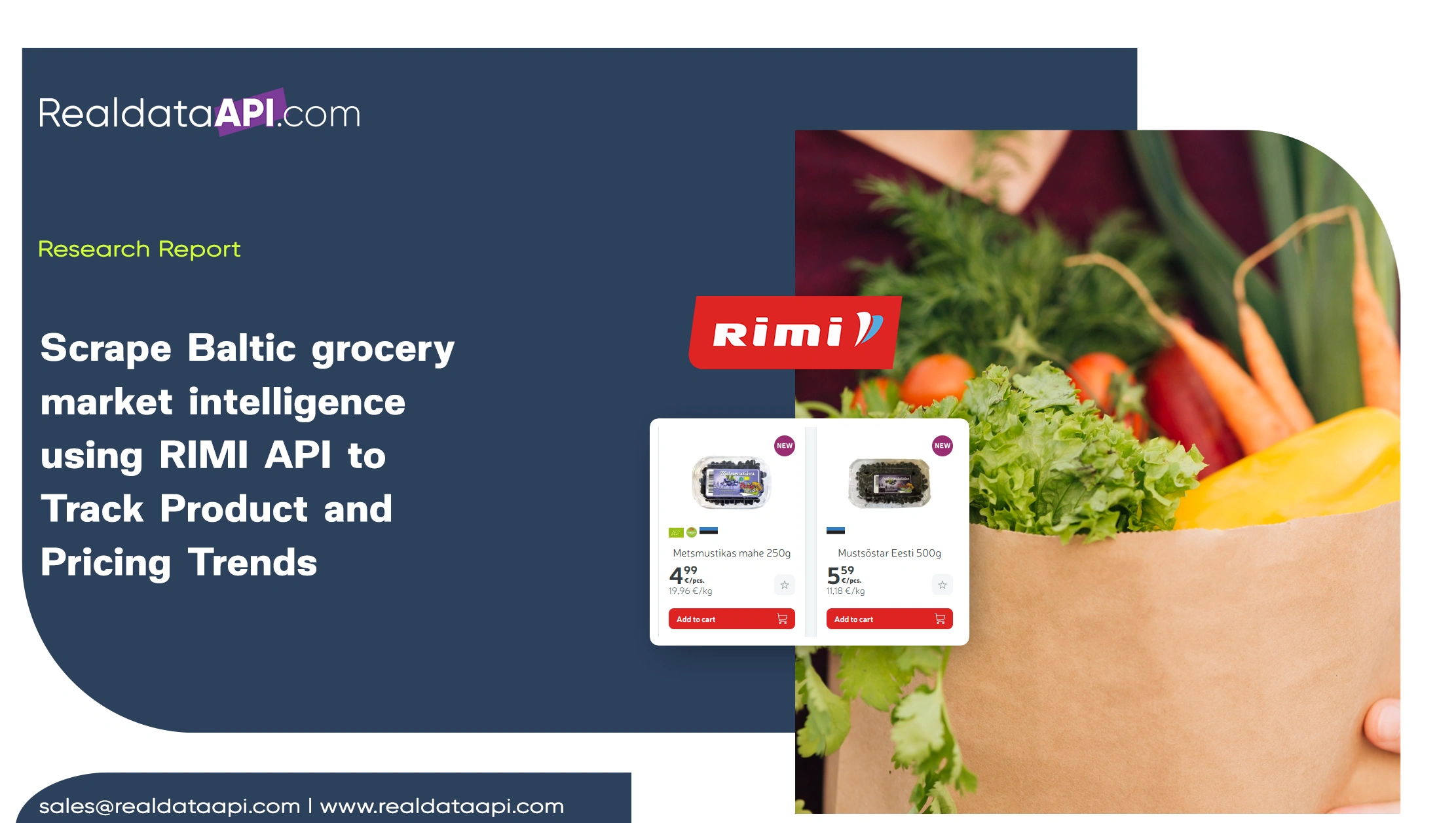
Businesses can improve pricing strategies, monitor competitors, and optimize product assortments by Scrape Baltic grocery market intelligence using RIMI API. Automated grocery data collection delivers real-time insights into product listings, pricing, promotions, inventory, and consumer trends, helping retailers, FMCG brands, and market researchers make faster, data-driven decisions.
Industry Insight (2026): Industry estimates indicate that more than 72% of grocery retailers now rely on automated retail intelligence to improve pricing accuracy, promotion planning, and inventory optimization. As digital grocery shopping continues to grow across the Baltic region, access to real-time data has become a major competitive advantage.
The grocery retail industry is becoming increasingly data-driven. Consumers expect competitive prices, consistent product availability, and personalized promotions. At the same time, retailers must continuously monitor competitors, changing inventory, and evolving shopping behavior. Manual data collection is no longer sufficient to manage these dynamic market conditions.
Organizations can Scrape Baltic grocery market intelligence using RIMI API to automate the collection of grocery product listings, pricing, promotions, inventory availability, categories, and brand information. Combined with Rimi Delivery API, businesses gain access to structured datasets that support pricing intelligence, assortment optimization, competitor monitoring, demand forecasting, and retail analytics.
This research report is designed for grocery retailers, FMCG manufacturers, distributors, pricing analysts, eCommerce businesses, and market research firms looking to solve the challenge of manual retail monitoring. It explains how automated grocery data extraction supports informed decision-making, operational efficiency, and sustainable growth across the Baltic grocery market.
Why Is Automated Product Monitoring Essential for Grocery Retail?
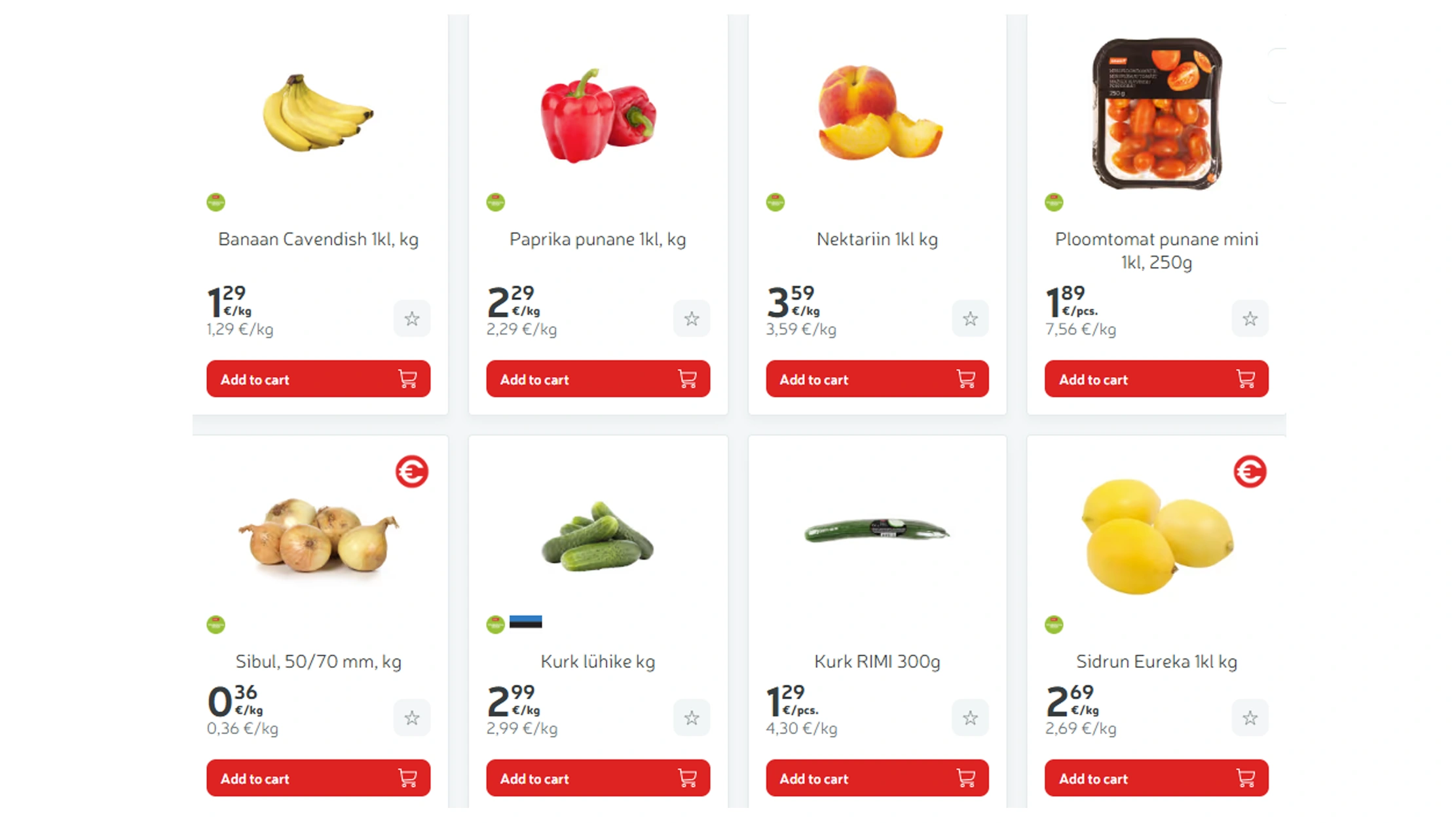
Modern grocery retailers manage thousands of products across multiple categories. Prices, promotions, and stock levels change frequently throughout the day. Manual tracking is time-consuming and often produces outdated information. Automated monitoring enables businesses to maintain accurate and current retail intelligence.
Organizations can implement Web scraping grocery product listings data from RIMI to collect detailed product information, pricing, availability, package sizes, brands, categories, and promotional offers from publicly available listings. These datasets provide valuable insights for pricing teams, category managers, and market researchers.
Benefits of Automated Product Monitoring
Businesses can collect:
- Product names
- Product categories
- Brand information
- Package sizes
- Product images
- Pricing details
- Promotional offers
- Stock availability
- Product descriptions
- Product identifiers
Automation improves consistency while reducing operational costs and manual effort.
Business Benefits
Organizations can:
- Monitor competitor product assortments.
- Improve category management.
- Detect pricing changes quickly.
- Optimize promotional planning.
- Support inventory decisions.
- Build retail intelligence dashboards.
These capabilities help retailers respond faster to market changes and improve overall business performance.
Baltic Grocery Market Statistics (2020-2026)
| Year | Retailers Using Automated Product Monitoring | Grocery Product Catalog Growth |
|---|---|---|
| 2020 | 30% | 14% |
| 2021 | 37% | 18% |
| 2022 | 45% | 23% |
| 2023 | 54% | 29% |
| 2024 | 63% | 35% |
| 2025 | 71% | 40% |
| 2026 | 79% | 46% |
As grocery product catalogs continue expanding, automated monitoring provides businesses with timely access to structured information. Retailers can improve pricing strategies, optimize assortments, and identify emerging market opportunities while minimizing manual data collection.
How Can Real-Time Pricing Intelligence Improve Competitive Strategy?
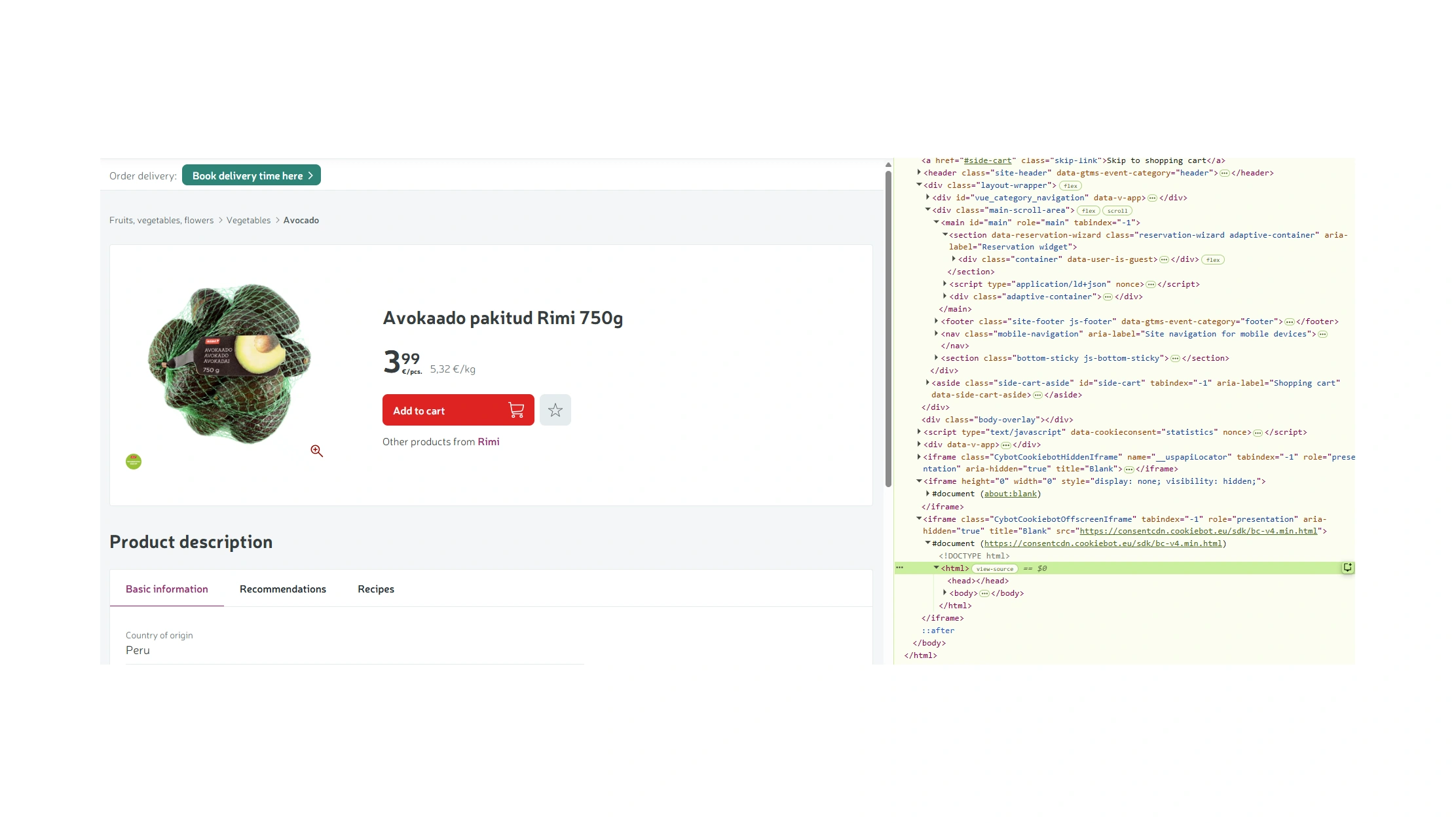
Pricing remains one of the most influential factors affecting grocery purchasing decisions. Even small price changes can shift consumer demand and impact market share. Businesses that monitor pricing in real time are better equipped to respond to competitor activity and changing customer expectations.
Using Real-time grocery supermarket price via RIMI API, organizations can continuously collect updated pricing information for grocery products across multiple categories. This enables pricing analysts and category managers to evaluate market trends, compare competitor prices, and optimize promotional strategies.
Why Real-Time Pricing Matters
Businesses can monitor:
- Daily price changes
- Promotional discounts
- Bundle offers
- Seasonal pricing
- Category-level pricing
- Brand comparisons
Continuous monitoring supports proactive pricing decisions instead of reactive adjustments.
Key Business Benefits
Organizations can:
- Optimize dynamic pricing.
- Improve promotional planning.
- Monitor competitor activities.
- Strengthen category management.
- Increase pricing accuracy.
- Support revenue growth.
Access to reliable pricing intelligence also improves demand forecasting and inventory planning.
Typical Pricing Intelligence Workflow
- Data extraction.
- Data validation.
- Price normalization.
- Competitive comparison.
- Dashboard reporting.
- Strategic decision-making.
Grocery Pricing Analytics Trends (2020-2026)
| Year | Retailers Using Real-Time Pricing Analytics | Pricing Decision Accuracy |
|---|---|---|
| 2020 | 28% | 66% |
| 2021 | 35% | 70% |
| 2022 | 44% | 74% |
| 2023 | 53% | 79% |
| 2024 | 62% | 83% |
| 2025 | 71% | 87% |
| 2026 | 80% | 91% |
As grocery competition intensifies throughout the Baltic region, businesses increasingly rely on real-time pricing intelligence to improve profitability and customer satisfaction. Automated pricing data enables organizations to react quickly to market changes, identify pricing opportunities, and build more effective retail strategies backed by accurate, up-to-date information.
How Can Regional Market Intelligence Improve Grocery Business Decisions?
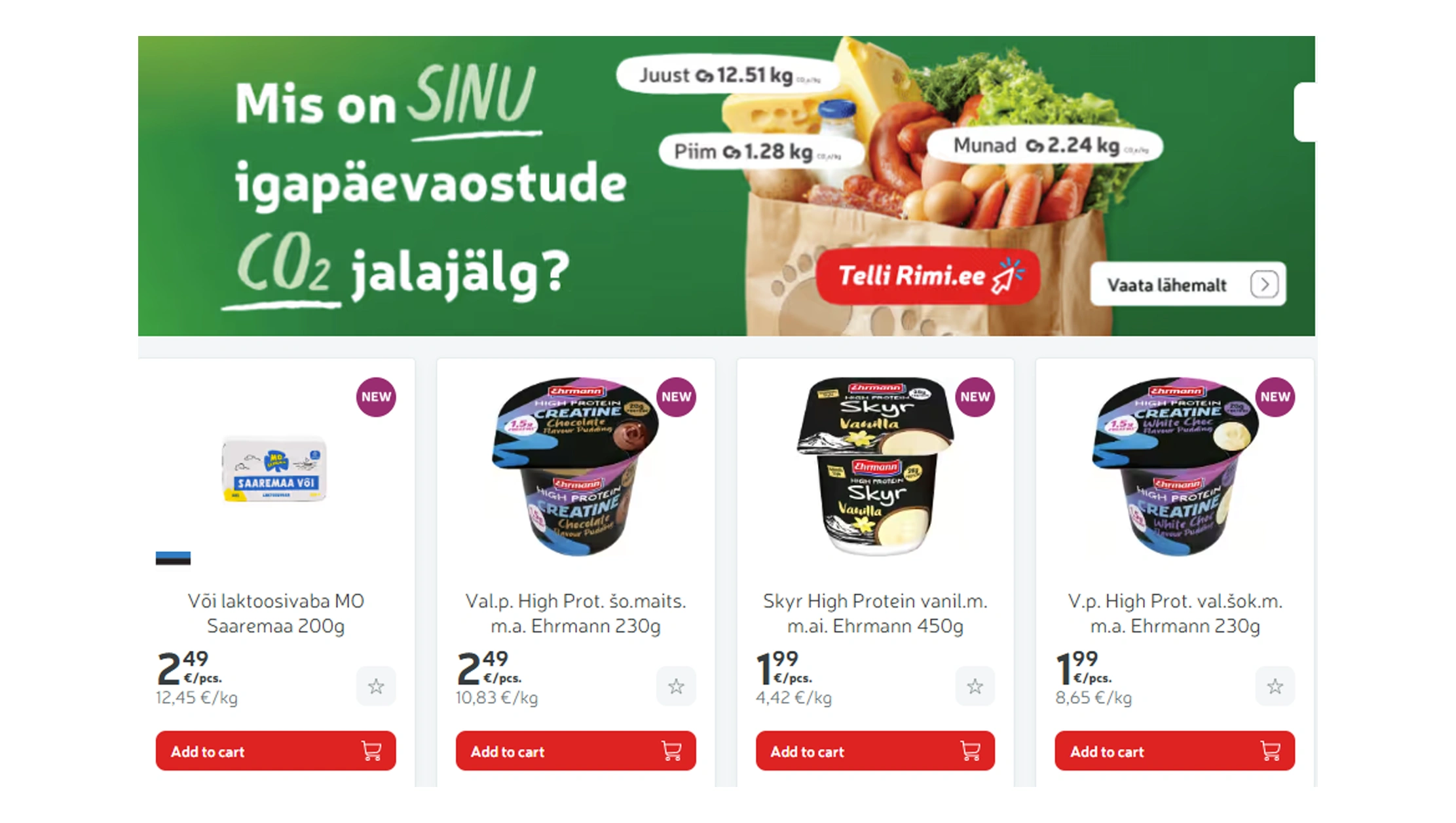
The Baltic grocery market is highly competitive. Retailers, FMCG brands, distributors, and market researchers need reliable information to understand regional pricing, consumer demand, product availability, and promotional activity. Manual monitoring across multiple locations is inefficient and often produces incomplete insights. Automated data collection solves this challenge by delivering structured market intelligence at scale.
Businesses can leverage RIMI Grocery data scraping for Baltic markets to monitor product assortments, regional price differences, promotional campaigns, inventory availability, and category performance across Lithuania, Latvia, and Estonia. These insights help organizations compare regional trends, evaluate competitor strategies, and identify emerging growth opportunities.
Why Regional Intelligence Matters
Organizations can monitor:
- Regional pricing differences
- Product assortment changes
- Promotional frequency
- Seasonal demand
- Brand performance
- Inventory availability
- Category growth
- Consumer buying trends
Access to regional insights helps businesses respond faster to local market conditions and customer preferences.
Business Benefits
Organizations can:
- Compare pricing across Baltic markets.
- Improve regional assortment planning.
- Monitor competitor expansion.
- Optimize promotional strategies.
- Forecast local demand.
- Support market entry decisions.
These capabilities reduce uncertainty while helping businesses allocate resources more effectively across multiple markets.
Baltic Retail Intelligence Statistics (2020-2026)
| Year | Businesses Using Regional Retail Analytics | Regional Forecast Accuracy |
|---|---|---|
| 2020 | 29% | 64% |
| 2021 | 36% | 69% |
| 2022 | 45% | 73% |
| 2023 | 55% | 78% |
| 2024 | 64% | 83% |
| 2025 | 73% | 87% |
| 2026 | 81% | 91% |
As grocery retail competition continues to increase across the Baltic region, regional market intelligence enables businesses to make informed expansion, pricing, and merchandising decisions. Automated data collection provides consistent visibility into market changes while supporting long-term retail growth strategies.
How Can API-Based Data Delivery Accelerate Retail Analytics?
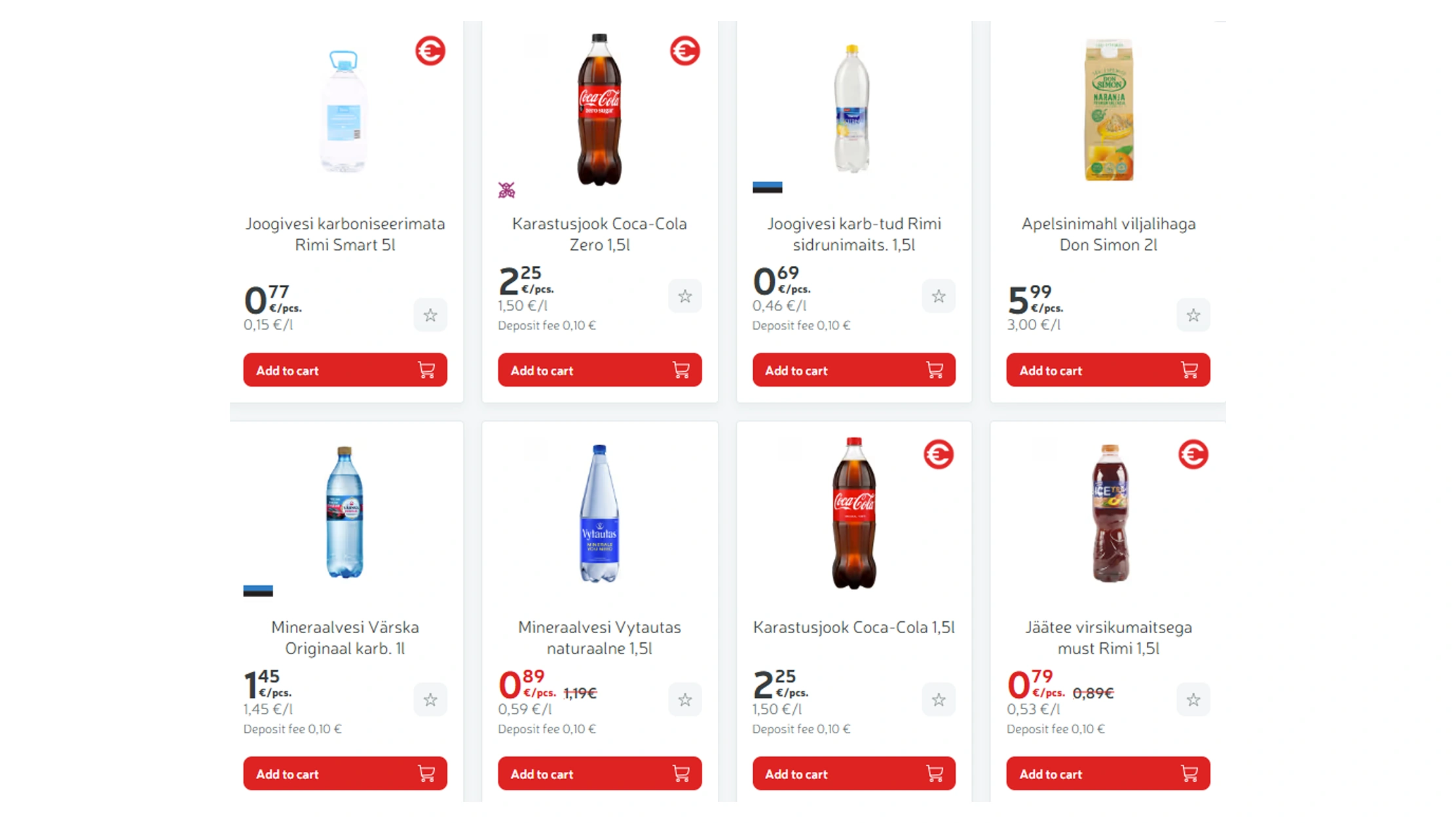
Modern retail organizations require fast, reliable, and structured data to support pricing optimization, inventory planning, and competitive intelligence. Manual exports and spreadsheets slow decision-making and introduce unnecessary errors. API-driven data delivery provides a scalable solution for accessing updated grocery information whenever it is needed.
A Grocery Data Scraping API allows businesses to automate the collection and delivery of grocery product information, pricing, promotions, stock availability, categories, and brand data in structured formats. This approach simplifies integration with analytics platforms, ERP systems, CRM software, and business intelligence dashboards.
Why API-Based Delivery Matters
Organizations can:
- Automate grocery data collection.
- Access standardized datasets.
- Integrate with internal systems.
- Improve reporting speed.
- Reduce manual processing.
- Scale data operations efficiently.
API-first workflows also improve collaboration between analytics, merchandising, pricing, and executive teams by ensuring everyone works with the same trusted information.
Business Advantages
Key benefits include:
- Faster data integration.
- Better reporting accuracy.
- Improved scalability.
- Automated updates.
- Lower operational costs.
- Support for AI-driven analytics.
These capabilities create a strong foundation for modern retail intelligence initiatives.
API Adoption Trends (2020-2026)
| Year | Retailers Using Data APIs | Reporting Efficiency Improvement |
|---|---|---|
| 2020 | 31% | 17% |
| 2021 | 39% | 21% |
| 2022 | 47% | 26% |
| 2023 | 56% | 31% |
| 2024 | 65% | 36% |
| 2025 | 74% | 42% |
| 2026 | 82% | 48% |
As digital grocery retail becomes increasingly data-driven, API-powered data delivery helps organizations simplify operations and improve business performance. Automated integration ensures decision-makers always have access to accurate, timely, and structured grocery intelligence that supports pricing strategies, inventory optimization, and long-term competitive success.
How Can Price Intelligence Drive Better Retail Performance?
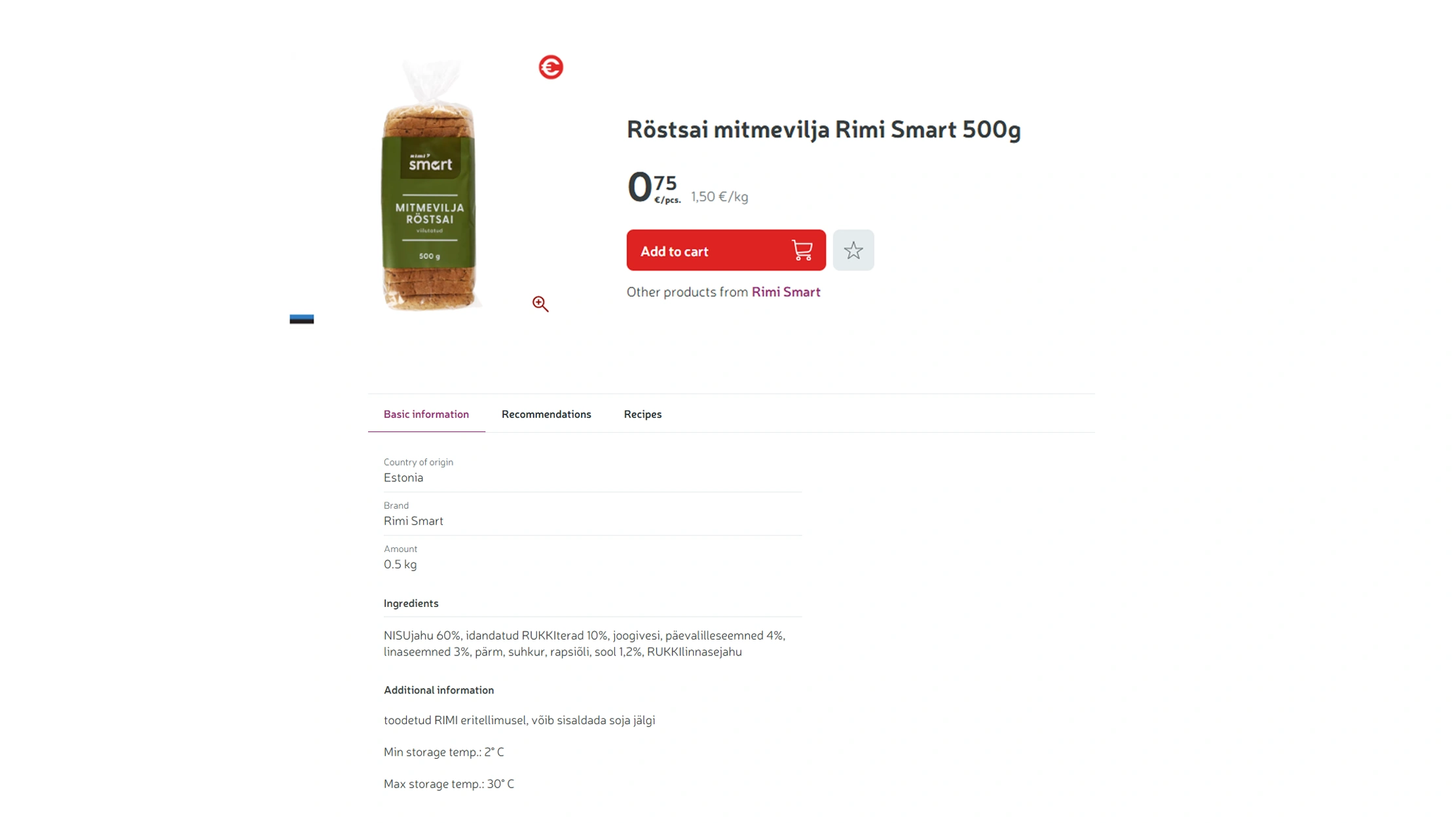
Price intelligence is one of the most valuable assets for grocery retailers and FMCG brands. Consumers compare prices across multiple stores before making purchasing decisions, making it essential for businesses to monitor pricing changes continuously. Automated price monitoring helps organizations react faster to market movements while improving profitability and customer satisfaction.
Businesses can implement Web Scraping Rimi API Grocery Prices in the Baltics to collect publicly available pricing data, promotional offers, discounts, product availability, and category-level information. These insights help retailers benchmark competitors, refine pricing strategies, and identify promotional opportunities across Baltic grocery markets.
Why Price Intelligence Matters
Organizations can monitor:
- Daily product price changes
- Promotional campaigns
- Seasonal discounts
- Brand pricing
- Private-label pricing
- Category-level pricing
- Product availability
- Regional price variations
Continuous monitoring enables businesses to identify pricing trends before they significantly impact sales or market share.
Business Benefits
Organizations can:
- Improve dynamic pricing strategies.
- Detect competitor price changes.
- Optimize promotional campaigns.
- Increase pricing accuracy.
- Strengthen category management.
- Improve profit margins.
These capabilities help businesses maintain competitiveness while delivering greater value to customers.
Grocery Pricing Statistics (2020-2026)
| Year | Retailers Using Automated Price Intelligence | Pricing Optimization Improvement |
|---|---|---|
| 2020 | 32% | 18% |
| 2021 | 40% | 22% |
| 2022 | 49% | 27% |
| 2023 | 58% | 32% |
| 2024 | 67% | 37% |
| 2025 | 75% | 43% |
| 2026 | 83% | 49% |
As grocery retail competition intensifies, automated pricing intelligence provides organizations with the visibility needed to optimize pricing strategies, respond to competitor activity, and improve long-term profitability through data-driven decision-making.
Why Is a Structured Grocery Database Critical for Retail Analytics?
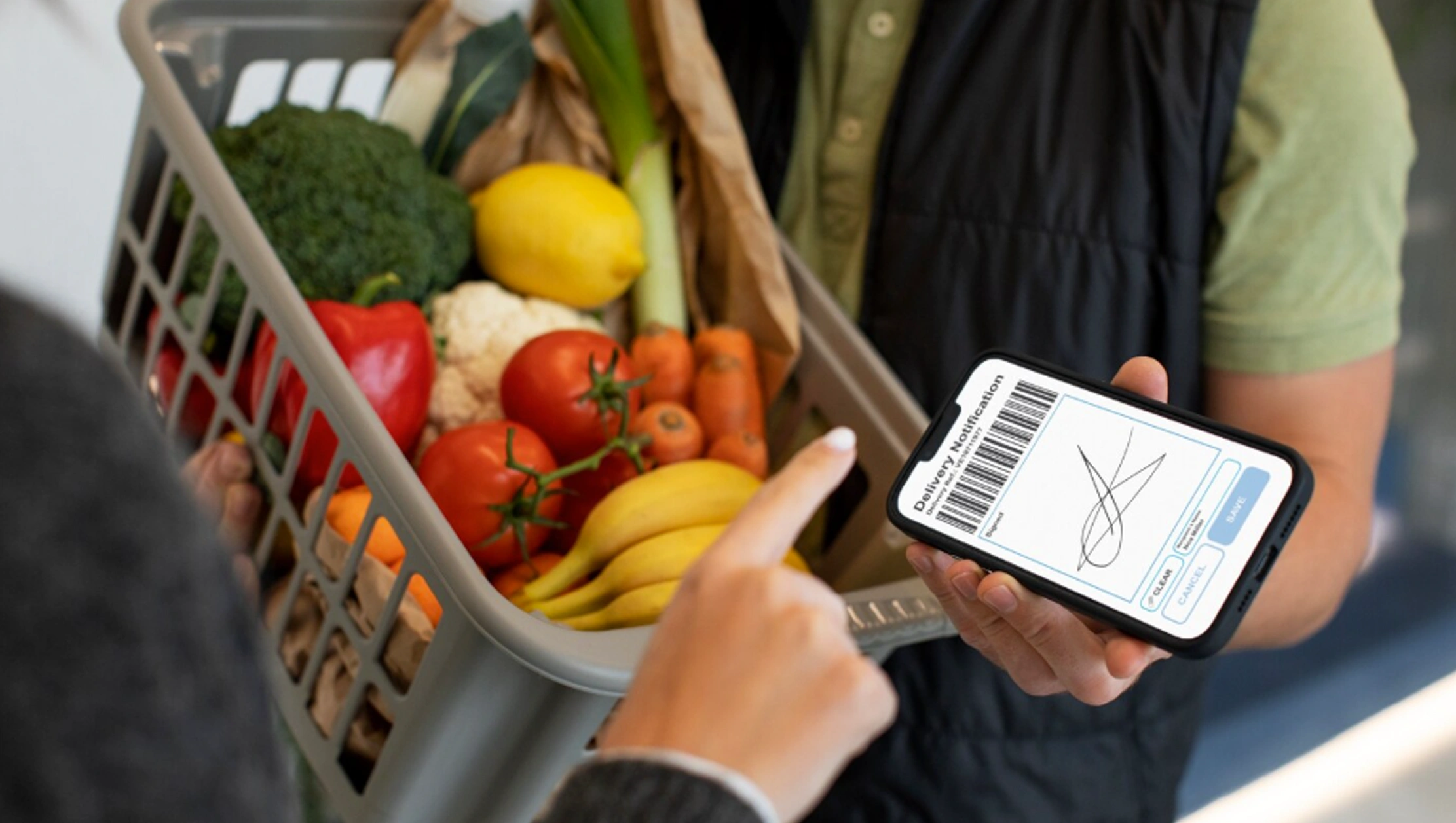
Retail analytics depends on high-quality, standardized information. Raw data collected from multiple grocery sources often contains inconsistencies that reduce reporting accuracy and delay decision-making. A centralized Grocery Dataset provides businesses with reliable, structured information for pricing analysis, assortment optimization, inventory planning, and market research.
A complete grocery dataset typically includes product names, pricing, brands, package sizes, nutritional information, promotions, inventory availability, categories, and historical trends. Centralizing this information enables retailers and analysts to build reliable dashboards, forecasting models, and executive reports.
What Does a Grocery Dataset Include?
Organizations can collect:
- Product listings
- Brand information
- Product categories
- Package sizes
- Product prices
- Promotional offers
- Stock availability
- Historical pricing
- Product attributes
- Category performance
These datasets provide a single source of truth for retail decision-makers.
Business Benefits
Businesses can:
- Improve reporting accuracy.
- Accelerate market research.
- Support AI and machine learning.
- Optimize category management.
- Improve demand forecasting.
- Enhance executive reporting.
Structured datasets also simplify integration with ERP systems, CRM platforms, business intelligence tools, and data warehouses.
Retail Data Adoption (2020-2026)
| Year | Organizations Using Structured Retail Data | Analytics Efficiency Improvement |
|---|---|---|
| 2020 | 34% | 18% |
| 2021 | 42% | 22% |
| 2022 | 50% | 27% |
| 2023 | 59% | 33% |
| 2024 | 68% | 38% |
| 2025 | 76% | 43% |
| 2026 | 84% | 49% |
As grocery businesses continue investing in digital transformation, structured datasets provide the foundation for advanced analytics and better decision-making. Organizations that centralize grocery information gain faster insights, improve operational efficiency, and strengthen their competitive position.
Real Data API helps retailers, FMCG brands, distributors, pricing analysts, and market research firms automate grocery market intelligence through scalable and reliable data extraction solutions. Our services are designed to simplify retail analytics while delivering accurate and structured datasets for business growth.
Businesses can Scrape Baltic grocery market intelligence using RIMI API to collect publicly available product listings, prices, promotions, inventory availability, brand information, and category-level insights. Our solutions integrate seamlessly with analytics platforms, ERP systems, CRM software, pricing engines, and business intelligence dashboards, enabling organizations to make faster and more informed decisions.
Why Businesses Choose Real Data API
- Enterprise-grade grocery data extraction
- Real-time and historical retail datasets
- Automated data collection workflows
- Structured API-ready delivery
- Flexible integration options
- High data accuracy and quality
- Secure and scalable infrastructure
- Dedicated technical support
Whether your goal is competitive price monitoring, assortment optimization, inventory planning, or market research, Real Data API provides dependable grocery intelligence that supports smarter retail strategies.
Conclusion
The Baltic grocery market continues to evolve as retailers compete on pricing, promotions, product availability, and customer experience. Businesses that rely on manual monitoring often struggle to keep pace with these rapid changes. Automated data extraction provides a scalable way to collect reliable grocery intelligence, enabling organizations to improve pricing decisions, optimize assortments, monitor competitors, and strengthen market analysis.
Organizations that Scrape Baltic grocery market intelligence using RIMI API gain access to structured, real-time retail insights that support better forecasting, faster decision-making, and long-term business growth. As digital grocery retail expands across the Baltic region, data-driven strategies will remain essential for maintaining a competitive advantage.
Ready to transform your grocery market intelligence? Contact Real Data API today to implement customized RIMI data scraping and API solutions that deliver accurate, real-time product, pricing, promotion, and inventory insights for your retail business!
Latest posts

How to Track Global Anime Viewing Trends via Crunchyroll Data Scraping for Smarter Audience Insights?
How to Scrape streaming content trends using HBO Max data for Smarter Content Strategy?
Traveloka Data Scraping For Travel Price Intelligence - How To Monitor Price Changes, Discounts, And Travel Demand
How Bolt Food Data Scraping for Food Delivery Market Trends Helps Businesses Overcome Delivery Market Intelligence Challenges?






.png)