Introduction
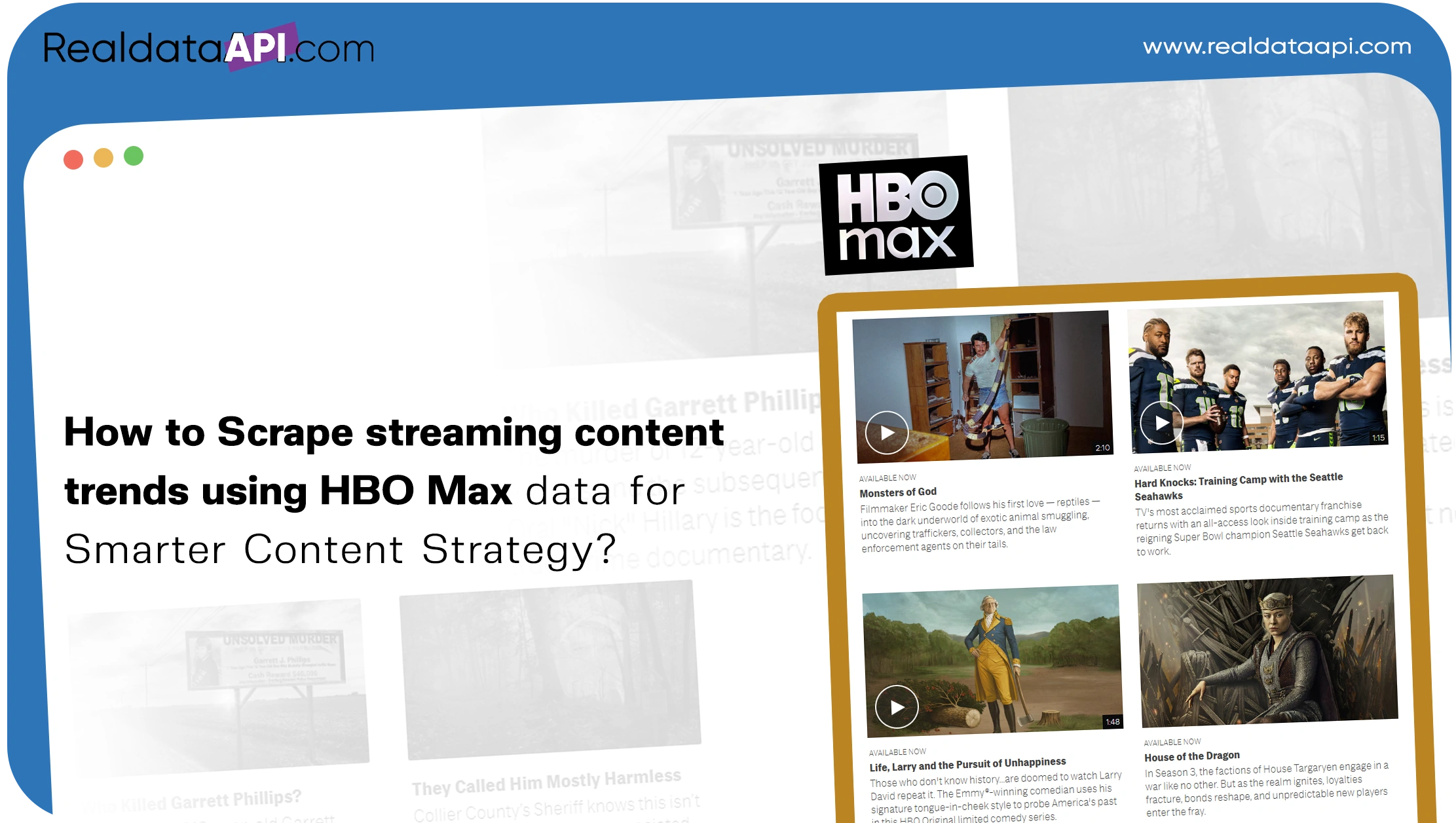
Scrape streaming content trends using HBO Max data to build structured content datasets for catalog monitoring, genre analysis, title research, availability tracking, and OTT market intelligence. Automated collection helps content teams replace repetitive manual research with organized data that supports faster decisions.
Industry context: Streaming services continue to expand their catalogs and compete for audience attention. The following figures are illustrative planning indices, not official HBO Max statistics.
| Year | Illustrative Streaming Data Demand Index | Illustrative Content Analysis Index |
|---|---|---|
| 2020 | 100 | 100 |
| 2021 | 114 | 117 |
| 2022 | 129 | 134 |
| 2023 | 146 | 152 |
| 2024 | 164 | 171 |
| 2025 | 185 | 193 |
| 2026 | 208 | 217 |
For streaming platforms, content researchers, media companies, and entertainment analysts, the challenge is not simply finding titles. The challenge is understanding how catalogs change and which content patterns matter.
An HBO Max API workflow can provide structured data for applications, dashboards, databases, and analytical systems. The resulting dataset can support content strategy, competitor research, title discovery, genre analysis, and historical trend monitoring.
A practical workflow includes:
- Identify target content fields.
- Collect relevant catalog information.
- Standardize title and genre data.
- Validate and organize records.
- Store historical snapshots.
- Analyze changes over time.
- Deliver the dataset to business systems.
How Can Businesses Build a Complete Streaming Catalog Dataset?
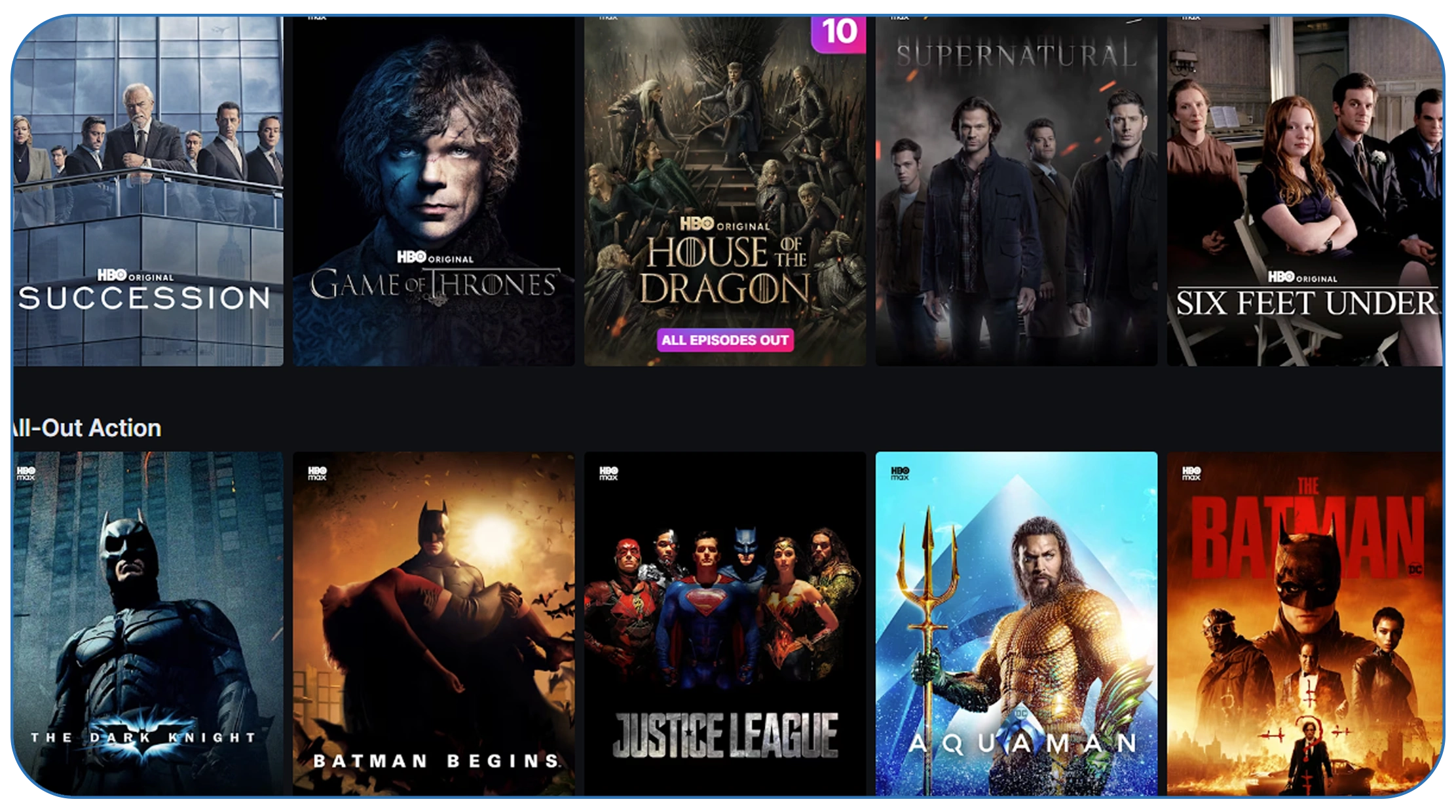
Streaming catalogs change frequently. New titles can appear while others become unavailable. Genres, ratings, release information, and other attributes can also differ across content records.
Extract HBO Max catalog data workflows can help businesses organize these details into structured datasets. A catalog dataset may contain title names, content types, genres, release years, ratings, descriptions, availability information, and other relevant attributes.
This information helps content teams understand what a streaming library contains at a particular point in time. Historical snapshots provide even more value. They allow analysts to compare catalog changes across weeks, months, or years.
How Could Streaming Data Requirements Grow From 2020 to 2026?
| Year | Catalog Monitoring Index | Content Research Index | Data Refresh Need |
|---|---|---|---|
| 2020 | 100 | 100 | 100 |
| 2021 | 111 | 115 | 113 |
| 2022 | 124 | 129 | 127 |
| 2023 | 139 | 144 | 142 |
| 2024 | 155 | 161 | 158 |
| 2025 | 173 | 180 | 176 |
| 2026 | 193 | 201 | 196 |
Illustrative indices for demonstrating data requirements.
A structured catalog can help businesses answer questions such as:
- How many movies are available?
- Which genres have the largest catalog share?
- Which titles were added recently?
- Which titles disappeared?
- How does the catalog change by year?
- Which content categories are expanding?
The dataset can support dashboards and reports. It can also feed recommendation systems and internal research tools.
The main advantage is consistency. A standardized catalog gives analysts a common structure for comparing content.
What Can Businesses Learn From Movies and Series Data?
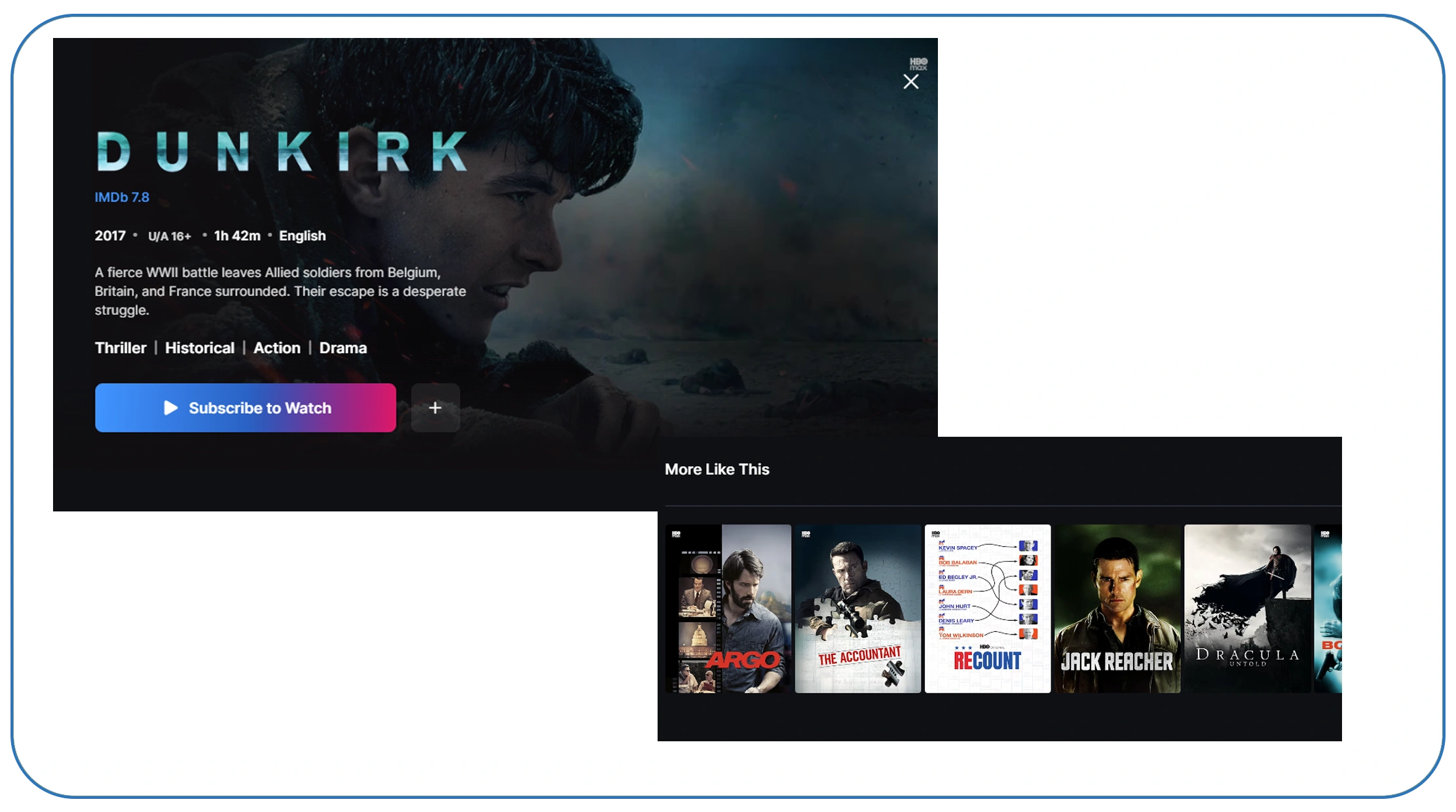
Movies and series serve different audience needs. Their release patterns, genres, runtimes, ratings, and availability can vary significantly. Businesses need structured data to compare these categories.
HBO Max movies and series data extraction can help teams separate and analyze content by type. Analysts can compare movies with series and identify differences in catalog size, genre distribution, release years, and audience signals.
For example, a media research team may want to know whether the catalog is becoming more focused on series. Another team may track how many titles belong to specific genres.
Which Content Metrics Can Teams Monitor?
| Metric | 2020 | 2021 | 2022 | 2023 | 2024 | 2025 | 2026 |
|---|---|---|---|---|---|---|---|
| Movie Research Index | 100 | 109 | 120 | 132 | 146 | 161 | 178 |
| Series Research Index | 100 | 113 | 126 | 140 | 156 | 174 | 193 |
| Genre Analysis Index | 100 | 111 | 124 | 138 | 153 | 171 | 190 |
| Availability Tracking Index | 100 | 115 | 129 | 144 | 160 | 179 | 199 |
Illustrative indices, not official HBO Max measurements.
A structured dataset allows businesses to group titles by:
- Movie or series.
- Genre.
- Release year.
- Rating.
- Language.
- Availability.
- Content category.
- Other relevant metadata.
This makes comparative analysis easier.
Content teams can also identify catalog gaps. If a particular genre has limited representation, that may create an opportunity for further research. If a genre expands rapidly, teams can monitor it as a potential content trend.
Historical records add another layer. They show whether these changes are temporary or part of a longer pattern.
How Can Streaming Data Help Measure OTT Content Trends?

OTT platforms compete for audience attention. Content teams need to understand what types of titles dominate catalogs and how content categories change.
OTT content analysis using HBO Max data scraping can help researchers organize large amounts of streaming information into analytical datasets. Teams can examine genre patterns, title availability, release years, ratings, and other content attributes.
The objective is not simply to collect titles. The objective is to understand the market.
What Could OTT Analysis Show From 2020 to 2026?
| Year | Content Analysis Index | Genre Trend Index | Catalog Change Index |
|---|---|---|---|
| 2020 | 100 | 100 | 100 |
| 2021 | 114 | 112 | 115 |
| 2022 | 130 | 126 | 132 |
| 2023 | 147 | 141 | 149 |
| 2024 | 165 | 158 | 168 |
| 2025 | 185 | 177 | 190 |
| 2026 | 207 | 198 | 214 |
Illustrative analytical indices.
A content analytics workflow can help answer:
- Which genres appear most often?
- Which genres are growing?
- Which release years dominate the catalog?
- How frequently does the catalog change?
- Which content types receive stronger attention?
- How does the content mix differ over time?
Researchers can then compare observations across historical snapshots.
This approach can help media businesses identify emerging patterns. Content acquisition teams can use the information to support research. Analysts can use it to compare catalogs. Marketers can examine category movements.
Data also becomes more useful when combined with other business information. For example, catalog changes can be compared with audience metrics, campaign activity, or search trends where appropriate.
The final goal is to turn content records into understandable market signals.
How Can Businesses Create a Reliable Streaming Dataset?

Web Scraping HBO Max Dataset workflows can help organizations create structured datasets for content research. A useful dataset should contain consistent fields and follow clear validation rules.
The collection process can include title discovery, attribute extraction, normalization, deduplication, validation, storage, and delivery.
For example, one title may appear with different formatting across datasets. Standardizing titles and categories makes comparison easier.
What Should a Streaming Dataset Include?
| Field | Example Purpose |
|---|---|
| Title | Identify content |
| Content Type | Separate movies and series |
| Genre | Analyze categories |
| Release Year | Study content age |
| Rating | Compare audience or content ratings |
| Availability | Track catalog presence |
| Description | Support content research |
| Historical Date | Track catalog changes |
The dataset can then be used for dashboards, research databases, analytical applications, or reports.
A historical dataset is especially valuable. Suppose a title appears in one snapshot but disappears in another. That difference becomes a measurable catalog event.
How Could Dataset Requirements Develop?
| Year | Dataset Scale Index | Historical Tracking Index | Data Quality Requirement |
|---|---|---|---|
| 2020 | 100 | 100 | 100 |
| 2021 | 112 | 115 | 110 |
| 2022 | 126 | 131 | 122 |
| 2023 | 142 | 148 | 136 |
| 2024 | 159 | 166 | 151 |
| 2025 | 178 | 186 | 168 |
| 2026 | 199 | 208 | 187 |
Illustrative planning indices.
Data quality should remain a priority. Duplicate titles, missing fields, inconsistent genres, and outdated records can affect analysis.
Businesses should therefore define their target fields before starting collection. This keeps the project focused and creates a dataset that analysts can actually use.
How Can Businesses Automate HBO Max Content Research?
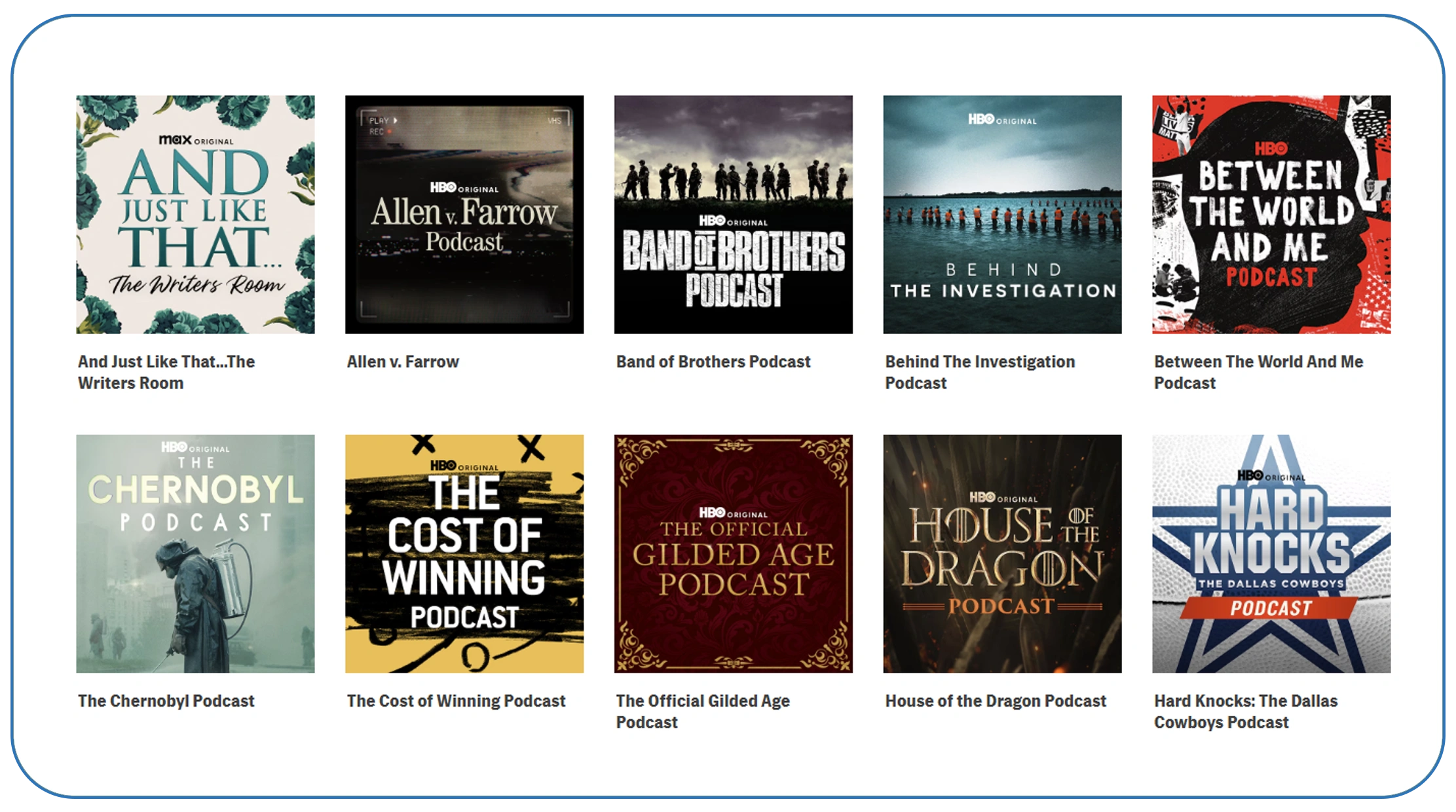
An HBO Scraper can support automated collection workflows for businesses that need recurring content information. Automation can reduce repetitive research and help maintain historical records.
Scrape streaming content trends using HBO Max data workflows can be designed around specific research goals. A business may want to monitor a small group of genres. Another may need broad catalog coverage.
The workflow can be adapted based on:
- Target content categories.
- Required metadata.
- Geographic coverage.
- Refresh frequency.
- Historical requirements.
- Delivery format.
- Storage requirements.
What Could Automation Deliver?
| Year | Automation Index | Content Monitoring Index | Historical Data Value |
|---|---|---|---|
| 2020 | 100 | 100 | 100 |
| 2021 | 115 | 111 | 114 |
| 2022 | 131 | 124 | 129 |
| 2023 | 148 | 139 | 145 |
| 2024 | 166 | 155 | 163 |
| 2025 | 185 | 173 | 182 |
| 2026 | 206 | 193 | 203 |
Illustrative indices.
An automated system can collect information at defined intervals. The resulting snapshots can then be compared.
This helps content teams identify additions and removals. It also supports trend reports and catalog comparisons.
For example, an analyst could compare the number of comedy titles across several years. A researcher could monitor the appearance of new release-year groups. A media company could study how the overall catalog mix changes.
Automation also improves repeatability. Once the workflow is configured, teams do not need to repeat the same manual research process every time they need an update.
How Can an API Turn Streaming Data Into Business Intelligence?
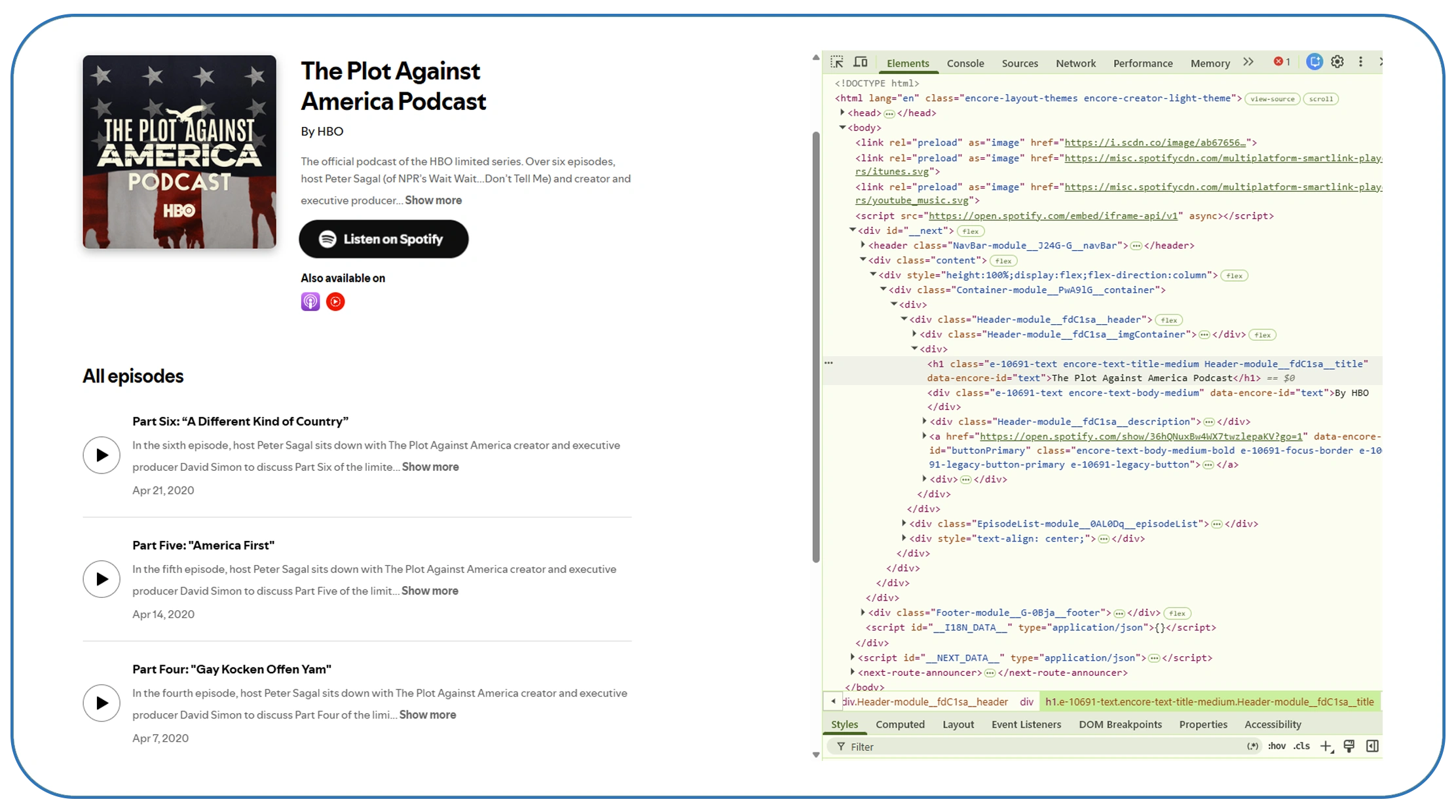
An OTT Data Scraping API can connect collected content information with databases, dashboards, research tools, and business applications.
API-based delivery makes structured data easier to integrate. A media analytics company can connect the dataset to an internal dashboard. A content research platform can use the data in its own application. A business intelligence team can store records for historical analysis.
What Could API-Based Streaming Data Usage Look Like?
| Year | API Integration Index | Automated Delivery Index | Analytics Usage Index |
|---|---|---|---|
| 2020 | 100 | 100 | 100 |
| 2021 | 113 | 115 | 112 |
| 2022 | 128 | 131 | 126 |
| 2023 | 144 | 147 | 141 |
| 2024 | 161 | 164 | 158 |
| 2025 | 181 | 184 | 177 |
| 2026 | 203 | 207 | 198 |
Illustrative indices.
A typical architecture can look like:
Content source → Data collection → Validation → Structured dataset → API → Database/Dashboard/Application
This approach separates data collection from data usage. Teams can update the dataset while multiple business systems consume structured information.
The API can also support recurring workflows. For example, a business could maintain regular catalog snapshots and use them to produce automated reports.
The most important factor is data design. Fields should be standardized before delivery. This improves consistency across historical records and downstream applications.
Why Choose Real Data API?
Scrape streaming content trends using HBO Max data with a structured data collection workflow designed around your content research requirements.
Real Data API can help businesses create scalable streaming data solutions for:
- Catalog monitoring.
- Movie and series research.
- Genre analysis.
- Content trend tracking.
- Historical dataset creation.
- OTT market research.
- API-based data delivery.
- Dashboard integration.
Every streaming analytics project has different requirements. Some businesses need catalog snapshots. Others need recurring updates and historical tracking. Some need a focused dataset. Others need broader coverage.
Real Data API can structure the workflow around these requirements.
The process can include data extraction, cleaning, normalization, validation, historical storage, and API delivery. This creates a consistent foundation for analytical workflows.
A reliable dataset also helps teams reduce repetitive manual research. Analysts can spend more time studying trends and less time copying information from individual pages.
For content strategy teams, the result can be a stronger understanding of catalog composition and market movements.
Conclusion
Scrape streaming content trends using HBO Max data to create structured datasets that help businesses monitor catalog changes, compare genres, analyze movies and series, and understand broader OTT content patterns.
Streaming content changes quickly. A one-time catalog snapshot cannot explain the full market. Historical records provide a stronger foundation. They show which titles appear, disappear, or remain available over time.
Automated data collection can also reduce repetitive research. Structured datasets can support dashboards, reports, market research, recommendation projects, content strategy, and competitive analysis.
Real Data API can help businesses build scalable streaming data workflows based on their required fields, refresh frequency, historical coverage, and delivery format.
The goal is not simply to collect more titles. The goal is to transform streaming content information into clear and useful intelligence.
Ready to turn streaming content data into actionable insights? Contact Real Data API for customized streaming data scraping, OTT data collection, Web Scraping, API integration, and real-time dataset solutions tailored to your business requirements!
Latest posts
How to Use a Meesho ecommerce scraper 2026 to Analyze Product Listings, Pricing, and Market Opportunities
How a Blinkit scraper for retail market research Helps Brands Track Competitor Pricing and Product Trends

Why Businesses Need a Flipkart India daily ecommerce dataset for market research for Smarter Retail Decisions
Grocery Data Scraping for Competitive Benchmarking - Key Strategies for Retail Success in 2027






.png)