Quick Summary
- Web scraping services for real-time market insights help businesses monitor competitor prices, product availability, customer preferences, and emerging market trends to make informed decisions.
- Web Scraping APIs for Business Data Improve Pricing by helping companies compare product prices, identify pricing gaps, and respond to market changes using structured information.
- Consistent market monitoring enables e-commerce retailers, brands, and enterprises to improve competitive analysis, identify opportunities, and develop data-driven strategies.
Introduction
Web scraping services for real-time market insights help businesses collect publicly accessible information from websites, marketplaces, and other online sources to monitor competitors, analyze pricing, and identify emerging demand. Instead of manually checking hundreds of product pages, companies can automate data collection and organize the results into usable datasets. This approach is particularly valuable for e-commerce managers, pricing analysts, market researchers, and business intelligence teams that need current information to make decisions.
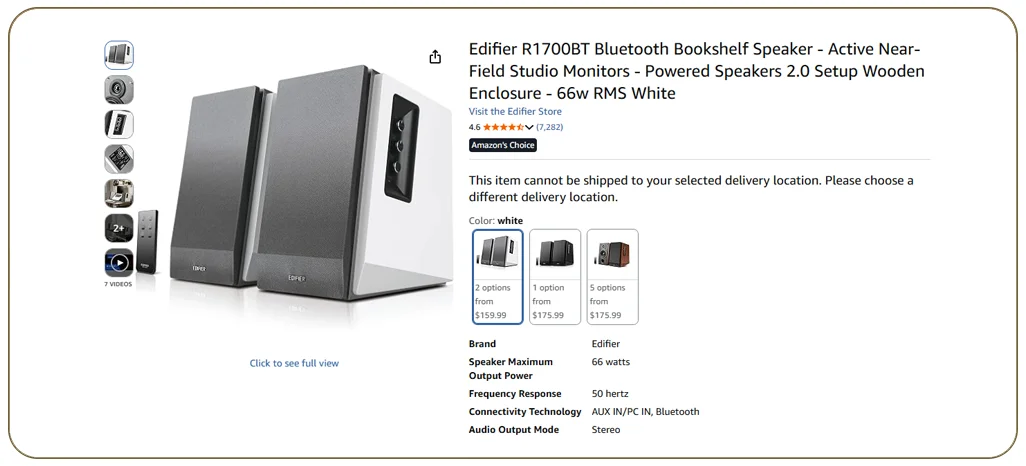
Web Scraping APIs for Business Data Improve Pricing by providing structured product information that teams can compare across competitors, categories, and locations. Depending on the source and collection frequency, businesses can monitor price changes, stock availability, product descriptions, promotions, and customer reviews. These signals help explain what competitors are doing and where market opportunities may exist.
The main benefit is not simply collecting more data. It is turning relevant data into practical decisions. A retailer might adjust prices after comparing similar products, while a consumer brand could identify growing demand for a product category by tracking assortment changes across online stores.
For reliable results, businesses need consistent data fields, validation rules, source monitoring, and appropriate collection intervals. They must also respect website terms, access restrictions, privacy requirements, and applicable laws. When these elements work together, web data becomes a repeatable input for pricing, product planning, and competitive strategy.
Which Market Signals Should Businesses Monitor at Scale?
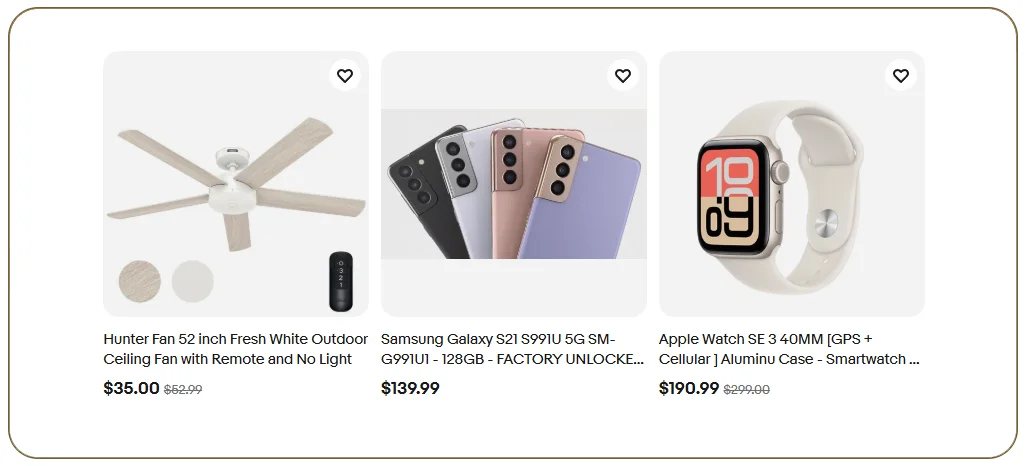
Large-scale web data extraction services help companies collect information across multiple websites and product categories without relying entirely on manual research. For retailers and consumer brands, the most useful signals include competitor prices, stock status, product launches, discounts, delivery estimates, product specifications, and customer feedback. Tracking these fields over time helps teams distinguish short-term fluctuations from broader changes in the market.
A practical monitoring plan starts with business questions. Pricing teams may need daily competitor comparisons, while market researchers may benefit from weekly product assortment reports. Operations teams might prioritize stock availability and delivery information. The collection schedule should match how quickly each signal changes and how costly an outdated decision could become.
Data quality is just as important as volume. Product names may differ between websites, currencies may vary, and promotional prices may be displayed differently from standard prices. Businesses should normalize currencies, standardize units, record collection timestamps, and match comparable products before calculating price differences.
What does the available evidence show?
The following table provides an operational framework for the 2020–2026 period. It is not a table of measured market growth; it identifies the questions businesses should answer when designing a monitoring program.
| Period | Business priority | Data to monitor | Actionable outcome |
|---|---|---|---|
| 2020–2021 | Digital channel visibility | Online assortment and listed prices | Establish baseline competitor coverage |
| 2022–2023 | Inflation and price changes | Price history and promotions | Review price positioning |
| 2024–2025 | Broader competitive monitoring | Availability, product attributes, and reviews | Improve assortment and competitor analysis |
| 2026 | More frequent decision support | Validated, timestamped updates and alerts | Prioritize changes that need attention |
These periods describe a planning framework, not verified industry statistics. Businesses should measure their own baseline using collection coverage, match accuracy, update latency, missing-field rates, and the percentage of records that lead to useful action.
A useful starting point is a pilot covering a representative group of products and competitors. Measure how often prices change, how many records match correctly, and whether the collected data changes a real business decision. Expand only when the pilot demonstrates clear value.
How Can Companies Turn Online Information into Better Business Decisions?
Businesses can scrape online data for business analytics by collecting product listings, competitor offers, customer reviews, category pages, and other relevant public information. The value comes from connecting those records to business questions rather than treating every collected field as equally important.
For example, an e-commerce analyst could compare a retailer's prices with equivalent competitor products, then segment the results by brand, product category, and location. A product manager could review customer feedback to identify repeated complaints or missing features. A market researcher could monitor new listings to understand which categories are expanding. Each use case requires a slightly different dataset, refresh schedule, and analysis method.
A reliable workflow includes five steps:
- Define the decision: Specify whether the objective is pricing, assortment planning, customer sentiment, or trend detection.
- Select relevant sources: Prioritize websites that provide comparable, useful information.
- Collect and standardize: Normalize product names, prices, currencies, units, and timestamps.
- Validate the results: Detect missing fields, duplicates, unusual values, and incorrect product matches.
- Connect insights to action: Deliver findings through dashboards, reports, alerts, or internal analytics tools.
What real-world figures demonstrate the value of online markets?
The U.S. Census Bureau reported that U.S. retail e-commerce sales reached an estimated $1.2337 trillion in 2025, increasing 5.4% from 2024. E-commerce accounted for 16.4% of total U.S. retail sales that year. These figures describe the scale of online retail—not the direct effect of scraping—but they illustrate why online product and pricing information matters to competitive analysis.
| Year | U.S. retail e-commerce indicator | How businesses can use the context |
|---|---|---|
| 2020 | Pandemic-era online shopping accelerated | Establish a baseline for changing product demand |
| 2021 | Online retail remained a major channel | Compare post-surge assortment and pricing |
| 2022 | Inflation and costs increased pricing pressure | Track price movements and promotion frequency |
| 2023 | Online sales continued to provide a competitive channel | Compare category-level positioning |
| 2024 | E-commerce represented 16.1% of U.S. retail sales | Expand monitoring where online competition is material |
| 2025 | Sales reached $1.2337 trillion, up 5.4% year over year | Prioritize relevant online categories and competitors |
| 2026 | Q2 sales were estimated at $340.2 billion, seasonally adjusted | Use current data to reassess monitoring coverage |
The 2020–2023 entries are contextual business priorities, not annual sales estimates. The 2024–2026 figures are based on official U.S. Census Bureau reporting. In Q2 2026, e-commerce sales grew 12.2% year over year on a seasonally adjusted basis.
For practical results, build a dashboard around a small number of metrics: competitor price index, percentage of products in stock, promotion frequency, product-match accuracy, and time between a source change and its detection. This helps teams connect data collection to measurable business outcomes.
Why Does Timely Data Matter for Enterprise Intelligence?
Real-time data extraction for enterprise intelligence helps organizations respond to market changes while those changes are still relevant. However, "real time" should be defined according to the business requirement. Some use cases need updates within minutes, while others work well with hourly or daily collection. The right interval depends on how quickly the information changes, source limitations, cost, and the consequences of acting on outdated data.
For instance, a retailer competing in a frequently changing category may need several price checks per day. A manufacturer tracking competitor product launches may only need a daily or weekly review. Collecting data too frequently can add cost and unnecessary load without improving decisions; collecting too slowly can miss meaningful changes.
Enterprise teams should also distinguish between data freshness and data accuracy. A record collected seconds ago can still be wrong if a page failed to load correctly, a discount was misread, or two different products were matched. Good intelligence combines timely collection with validation, historical context, and clear confidence rules.
Which indicators should enterprise teams measure?
| Indicator | What it measures | Why it matters |
|---|---|---|
| Update latency | Time between a source change and its capture | Shows whether monitoring is fast enough |
| Field completeness | Percentage of records with required fields | Reveals missing information |
| Match accuracy | Correctness of product-to-product comparisons | Reduces misleading competitor analysis |
| Change-detection rate | Meaningful changes identified by the system | Helps evaluate alert usefulness |
| Failed-request rate | Share of collection attempts that fail | Highlights source or pipeline instability |
| Actionable-alert rate | Alerts that lead to review or action | Connects monitoring with business value |
Consider a team monitoring 5,000 products. If a meaningful price change is captured but the wrong product variant is matched, the resulting alert can lead to an incorrect pricing decision. Product identifiers, brand, model, size, pack quantity, and variant attributes should therefore be compared before calculating price differences.
A strong enterprise process also records when each observation was collected and when it was processed. This allows analysts to investigate discrepancies and reproduce past reports. Access controls, retention policies, and documented collection rules help keep the workflow governable as the number of sources grows.
The practical goal is not to collect every possible signal instantly. It is to deliver reliable information quickly enough for the decision being made.
Make your next market decision with stronger data. Need to monitor competitors across multiple websites and product categories? Explore data collection options that fit your sources, update frequency, and reporting requirements. Start with a defined use case, validate the results, and expand after the workflow demonstrates value.
Get Insights Now!How Can Businesses Collect Data Across Multiple Sources?
A web scraping API for large-scale data collection can help businesses retrieve website information in a structured format that downstream applications can process. Instead of building a separate extraction workflow for every report, teams can integrate collection into pricing systems, business intelligence platforms, data warehouses, or internal applications.
The right setup depends on source complexity and required output. A small monitoring project may need only product URLs, prices, and timestamps. An enterprise program may require thousands of pages, multiple languages, variant matching, historical storage, error handling, and scheduled updates. Before choosing a solution, teams should define expected volume, required fields, delivery format, and acceptable latency.
A scalable workflow generally contains these components:
- Source management: Maintain a list of relevant websites, categories, and product pages.
- Collection orchestration: Schedule requests according to business priority and source requirements.
- Parsing and normalization: Convert retrieved content into consistent fields and formats.
- Validation: Check data types, required values, duplicates, and unusual changes.
- Storage and integration: Send validated records to databases, dashboards, or analytical tools.
- Monitoring: Track errors, source changes, delays, and data-quality issues.
How should a collection program scale from 2020 to 2026?
These milestones are recommended planning stages, not historical market statistics.
| Planning stage | Operational focus | Recommended practice |
|---|---|---|
| 2020–2021 baseline | Identify important online sources | Start with a small, representative dataset |
| 2022–2023 expansion | Add categories and comparison fields | Standardize identifiers and validation |
| 2024–2025 integration | Connect data with business reporting | Automate alerts and scheduled exports |
| 2026 optimization | Improve reliability and efficiency | Measure accuracy, latency, and cost per useful record |
The scale of e-commerce reinforces the need for dependable data infrastructure. According to the U.S. Census Bureau, seasonally adjusted U.S. retail e-commerce sales reached $340.2 billion in Q2 2026, up 12.2% from Q2 2025. This is a retail-sales measure, not a measure of API usage or scraping effectiveness.
Businesses should scale based on validated performance rather than page volume alone. A smaller, accurate dataset that supports a pricing decision can be more valuable than millions of inconsistent records. Run a pilot, test source stability, establish monitoring thresholds, and expand only when the data reliably supports the intended use case.
What Should Buyers Evaluate Before Choosing a Provider?
When evaluating Web Scraping Services, businesses should look beyond the headline number of pages or records a provider can collect. The important question is whether the service can supply the right information, at the right interval, in a format that fits existing workflows.
Start by defining the target sources and fields. Product-price monitoring might require the listed price, sale price, currency, availability, product variant, and collection timestamp. Review analysis might need review text, rating, date, and product association. The provider should demonstrate how it handles missing information, changed page structures, inconsistent formats, and product matching.
What criteria should buyers compare?
| Evaluation criterion | Questions to ask | Evidence to request |
|---|---|---|
| Source coverage | Can the provider support the required websites and regions? | A sample dataset from target sources |
| Data accuracy | How are prices, variants, and identifiers validated? | Match and completeness results |
| Refresh frequency | Can collection match the business's decision cycle? | A sample schedule and latency report |
| Scalability | Can volumes grow without compromising reliability? | A pilot under expected workloads |
| Integration | What output formats and delivery options are supported? | API documentation and example responses |
| Monitoring | How are failures and website changes detected? | Error reports and alert examples |
| Compliance | How are access rules, privacy, and restrictions handled? | Clear collection policies and responsibilities |
| Total cost | What affects the overall price? | A breakdown of volume, frequency, and support costs |
The best provider is not necessarily the one with the largest advertised capacity. It is the one that meets your data requirements consistently and provides transparent performance measures.
Buyers should also check how historical data is handled. If a price changes from ₹1,499 to ₹1,299, a current snapshot reveals the new price, but historical records help establish when the change occurred and whether it is part of a recurring promotion. Businesses should retain only the data they need and set retention rules appropriate to their legal and operational obligations.
Finally, run a proof of concept before committing to a broad rollout. Select representative sources, compare collected results with manual checks, calculate error rates, and ask analysts to use the output in a real workflow. Document the acceptance criteria in advance so that the final decision is based on evidence rather than assumptions.
How Can Teams Turn Collected Data into Action?
A Web Scraping API is most useful when its output connects directly to an operational decision. Collecting competitor prices, for example, is only the first step. The business must identify comparable products, calculate price gaps, consider inventory and margin requirements, and decide whether an adjustment is justified.
A simple process can turn raw records into actionable intelligence:
- Collect observations: Retrieve the required fields from selected sources.
- Normalize records: Standardize currencies, units, timestamps, and product identifiers.
- Compare like with like: Match the same model, size, pack, or variant before calculating differences.
- Apply business rules: Flag changes that cross a defined threshold or affect a priority product.
- Route alerts: Send meaningful findings to the team responsible for pricing, merchandising, or market research.
- Measure outcomes: Review whether the alert led to a useful action and whether the process improved decision quality.
Which metrics make the workflow measurable?
| Business use case | Useful metric | Example of an operational response |
|---|---|---|
| Competitor pricing | Price gap against matched products | Review products outside the target price range |
| Inventory monitoring | Share of monitored items listed as unavailable | Assess assortment or replenishment priorities |
| Promotion tracking | Frequency and duration of observed discounts | Compare promotional patterns across competitors |
| Product discovery | Number of relevant new listings detected | Evaluate emerging categories |
| Customer feedback | Repeated themes in public reviews | Investigate recurring product concerns |
| Market reporting | Time required to deliver a validated report | Improve reporting schedules and analyst workflows |
These metrics should be interpreted carefully. A competitor's lower price does not automatically mean your business should reduce its price. Profit margins, shipping costs, seller reputation, product differences, stock levels, and customer segments all affect the decision. Likewise, a product appearing frequently in search results does not by itself prove rising demand.
Teams should create rules that combine multiple signals. A price alert, for example, might trigger review only when the competing item is a verified match, the price difference exceeds a defined threshold, and the observation passes data-quality checks. This reduces unnecessary alerts and helps analysts focus on meaningful changes.
Mobile and app-based shopping also create additional monitoring needs. Mobile App Scraping may be relevant when a business needs to study publicly available product information displayed in app environments, but the technical approach must account for platform rules, access restrictions, privacy obligations, and applicable law. Not every app is accessible through ordinary website collection, and collection should never bypass access controls.
The most sustainable process combines automation with human review. Automation handles repeated collection and comparison; analysts interpret the context, assess trade-offs, and make decisions that align with business goals.
Why Choose Real Data API?
Businesses need a data partner that understands both collection requirements and the business questions behind them. Real Data API can be considered when evaluating a workflow for competitor monitoring, product intelligence, price comparison, and structured online data collection. The right fit should be established through a defined pilot and measurable acceptance criteria rather than broad promises.
Before proceeding, identify the sources that matter, the fields required for analysis, and how frequently the information must be updated. Then assess the resulting dataset for accuracy, completeness, product matching, and usefulness in existing tools.
A practical evaluation checklist includes:
- Relevant coverage: Confirm that the target sources and required data fields are supported.
- Structured output: Check whether the results can be integrated into your analytics environment.
- Quality controls: Validate records and define how missing or inconsistent data will be handled.
- Operational reliability: Agree on monitoring, error reporting, and expectations for refresh intervals.
- Business value: Determine whether the output reduces manual effort or improves a real decision.
- Responsible collection: Confirm that the proposed workflow respects applicable laws, website terms, privacy requirements, and access restrictions.
A short proof of concept helps establish whether the service fits your requirements before you expand to additional categories or sources. Define success in advance—for example, a required product-match accuracy, a maximum acceptable update delay, or a reduction in time spent preparing competitor reports.
The objective is to build a dependable information pipeline that supports better decisions, not simply to accumulate large volumes of data.
Conclusion
Web scraping services for real-time market insights can help businesses monitor competitor prices, understand product availability, follow market changes, and make better-informed decisions. The strongest results come from a clear business objective, reliable source coverage, standardized data, accurate product matching, and a process that turns findings into action.
Companies should begin with a focused use case, such as price benchmarking for a priority product category. They can then measure data quality, refresh performance, and the usefulness of the insights before expanding the program. Structured collection and responsible data practices help keep the workflow reliable as business needs grow.
Ready to make market intelligence more actionable? Contact Real Data API to discuss your data requirements, identify a suitable pilot, and explore a solution aligned with your competitor-monitoring and business analytics goals.
FAQs
1. How do businesses use web data to monitor competitors?
Web scraping services for real-time market insights help businesses track public product listings, prices, stock availability, and promotions, enabling structured comparisons and faster responses to relevant market changes.
2. Can web data collection help improve pricing?
Web Scraping APIs for Business Data Improve Pricing by organizing competitor prices and promotions into comparable datasets. Teams can evaluate price gaps while considering margins, product differences, and stock.
3. What should companies collect for analytics?
Large-scale web data extraction services can gather relevant product details, prices, reviews, and availability. Businesses should define required fields, validate results, and collect only data appropriate to their use case.
4. How can enterprises use frequent data updates?
Real-time data extraction for enterprise intelligence supports timely alerts and reporting. The appropriate update frequency depends on how quickly the monitored information changes and how quickly teams need to act.
5. How can Real Data API support business research?
Real Data API supports business research by providing structured data on product prices, availability, competitor activities, and market trends. These insights help businesses conduct competitive analysis, identify market opportunities, monitor pricing changes, and make informed, data-driven decisions.
Latest posts

How to Use a Meesho ecommerce scraper 2026 to Analyze Product Listings, Pricing, and Market Opportunities
How a Blinkit scraper for retail market research Helps Brands Track Competitor Pricing and Product Trends

Why Businesses Need a Flipkart India daily ecommerce dataset for market research for Smarter Retail Decisions
Grocery Data Scraping for Competitive Benchmarking - Key Strategies for Retail Success in 2027






.png)