Quick Summary
- A Meesho ecommerce scraper 2026 can help businesses organize authorized marketplace observations to examine product listings, displayed prices, promotional offers, and assortment changes.
- A Meesho API may support structured data workflows when an authorized interface provides the necessary fields and access permissions.
- Consistent data validation, historical comparisons, and credible industry statistics can help sellers and brands evaluate competition, identify market opportunities, and make informed decisions without confusing product listings with actual sales or consumer demand.
Introduction
India's ecommerce market presents opportunities for sellers, brands, manufacturers, and market researchers to understand product positioning and competition. A Meesho Scraper can be part of a structured research workflow that organizes authorized marketplace information into usable records. By examining product attributes, displayed prices, promotional messages, and listing changes, businesses can develop a clearer view of their selected categories. Reliable analysis depends on appropriate data access, consistent collection methods, accurate product matching, and transparent reporting of limitations.
The right approach begins with a defined research objective. A business might want to compare prices across equivalent products, investigate category assortment, or understand how displayed promotions change over time. These questions require different data fields and collection schedules. Companies should also distinguish listing information from verified transactions, actual inventory quantities, and consumer purchasing behaviour. This article explores six practical research applications, includes verified market context from 2020 to 2026, and explains how businesses can plan responsible data workflows with Real Data API.
Understanding Product Prices and Listing Changes
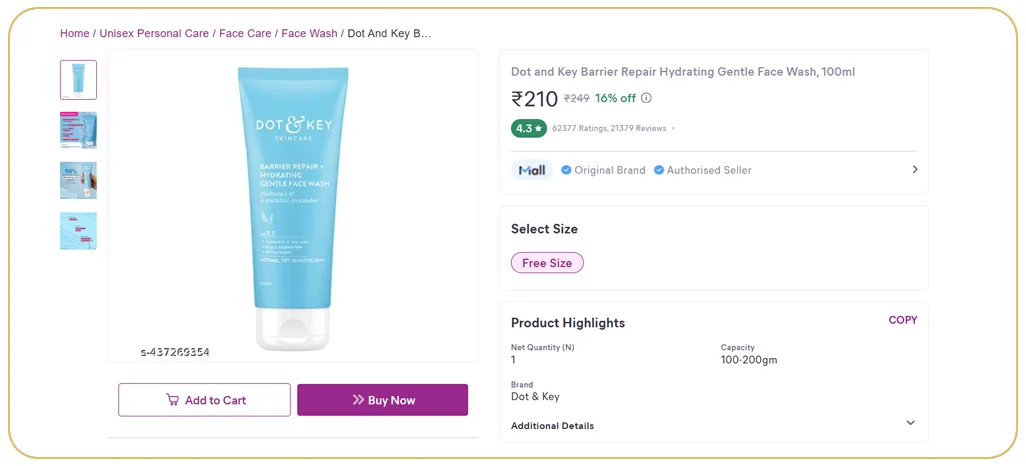
Meesho product price data extraction can help businesses organize observed product prices and attributes for comparison, provided the source and method are authorized. Useful fields may include product titles, brand names, category labels, model details, pack sizes, displayed prices, visible offers, and observation timestamps. The exact fields depend on the approved data source.
Price comparisons require careful product matching. Two products that look similar may differ in material, size, quantity, design, or specifications. Comparing headline prices without accounting for these differences can create misleading conclusions. For comparable products, businesses can calculate unit prices where appropriate and retain the original displayed price for auditing.
Recommended data fields
| Data field | Research application |
|---|---|
| Product identifier | Helps match the same item across observations. |
| Product title | Supports product-level searches and classification. |
| Category and brand | Enables comparisons within defined product groups. |
| Displayed price | Records the price observed at collection time. |
| Offer details | Captures discounts explicitly displayed by the source. |
| Timestamp | Establishes when the observation was recorded. |
| Collection status | Helps distinguish missing records from successful observations. |
For historical analysis, businesses should preserve actual records rather than estimate past prices from current listings. If an item disappears from a collected response, researchers should investigate whether the cause was a listing change, a collection issue, or a difference in scope.
The Meesho ecommerce scraper 2026 research approach should therefore emphasize repeatable measurement and verified observations rather than simply maximizing the number of records. Consistent product matching and documented limitations make comparisons more useful for pricing and merchandising teams.
Comparing Offers and Competitive Positioning
Businesses that scrape Meesho product details for price comparison need a consistent method for determining which products are genuinely comparable. Product names alone are not sufficient: attributes such as dimensions, material, colour, quantity, and model can affect the comparison.
A practical process begins by defining the product group and the comparison period. Analysts then match equivalent items, record displayed prices and explicitly stated discounts, and calculate differences using consistent units. Where products are not directly comparable, they should be grouped by relevant attributes rather than forced into the same comparison.
Metrics worth evaluating
- Observed price difference: the difference between recorded prices for comparable items.
- Unit price: the price per standardized unit, where reliable quantity information exists.
- Promotion frequency: how often a qualifying offer appears in the collected observations.
- Price-change frequency: how often recorded prices change between successful observations.
- Listing coverage: the number of distinct, validated products represented in the dataset.
These measures can help commercial teams investigate competitive positioning. However, a displayed price does not reveal a seller's acquisition cost, profit margin, or final transaction price. A visible discount also does not establish that every customer receives the same offer.
Researchers should retain timestamps and source references, where permitted, so that unusual changes can be checked. They should also document missing observations and avoid treating a product's absence from a response as definitive proof that it is unavailable.
The result is a more defensible comparison process: one that separates verified observations from assumptions and gives decision-makers a clearer understanding of what the data can—and cannot—demonstrate.
Interpreting Product Availability Signals
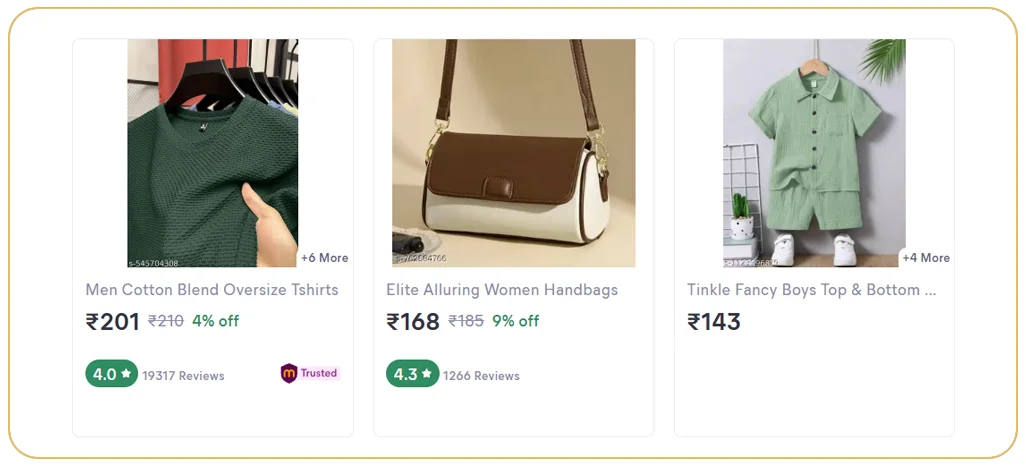
Real-time Meesho product availability tracking requires a clear definition of availability and a collection process that is authorized for the intended purpose. A product appearing in a listing does not necessarily establish that it can be purchased by every customer, at every location, or at the same price.
Availability can be influenced by factors such as listing status, seller activity, serviceability, and the information returned by the approved source. Researchers should record only the signals that are actually available and should avoid inferring inventory quantities from a simple listing-status field.
How to interpret observations
| Observation | What it may establish | What it does not establish |
|---|---|---|
| Product listing is visible | The product was represented in the observed source. | That a purchase will succeed. |
| Displayed price is present | A price was shown at the recorded time. | The final transaction price. |
| Listing status changes | The observed status differs between records. | The exact reason for the change. |
| Product is absent from a response | The record was not returned in that observation. | That the product is permanently discontinued. |
Repeated observations can help researchers identify changes in listing status, but the conclusions depend on collection frequency, coverage, and data quality. Analysts should preserve failed requests separately from valid observations so technical errors are not mistaken for marketplace changes.
Location-specific analysis should only be performed when the authorized data source supports the necessary location information and its use is permitted. Any report should explain the geographic scope and avoid implying that a small sample represents the entire marketplace.
Planning a product research project? Define your required fields, coverage, and update frequency before selecting an authorized data-access solution.
Get Insights Now!Integrating Data into a Pricing Workflow
A Meesho API for product price tracking may be suitable when an authorized interface offers the required product fields, update frequency, and commercial usage rights. Businesses should verify that the interface exists for their intended purpose rather than assume a public ecommerce website automatically provides an unrestricted product-data API.
A structured integration can help standardize records, validate fields, retain timestamps, and transfer permitted information into analytics systems. Before implementation, teams should define how they will handle missing values, duplicate products, unexpected price changes, and collection failures.
A practical integration workflow
- Define the objective: Determine which categories, products, and pricing questions the research must address.
- Verify access: Confirm the source, documentation, permissions, authentication requirements, and applicable usage limits.
- Standardize fields: Establish consistent formats for product identifiers, prices, categories, and timestamps.
- Validate records: Check for duplicates, missing attributes, and inconsistent product matches.
- Store observations: Retain historical records in accordance with authorized retention and usage requirements.
- Review findings: Generate reports with clear definitions, source dates, and coverage limitations.
Verified market context, 2020–2026
Meesho's official investor-relations disclosures provide a useful view of the platform's reported growth. Its prospectus reports the following figures for annual transacting users and placed orders.
| Period | Annual transacting users | Placed orders |
|---|---|---|
| FY2023 | 136.40 million | 1,024.34 million |
| FY2024 | 155.64 million | 1,341.94 million |
| FY2025 | 198.77 million | 1,834.40 million |
| Six months ended September 2024 | 175.09 million | 824.59 million |
| Six months ended September 2025 | 234.20 million | 1,261.14 million |
| Last twelve months ended June 30, 2026 | 274 million-plus users | 2.83 billion-plus orders |
Source: Meesho's official investor-relations website and prospectus. Figures refer to the reporting periods stated and should not be treated as daily product-level measurements.
These figures provide platform-level context, not evidence of individual product performance. A business still needs verified product observations to investigate category-level pricing and listing changes.
Choosing the Right Collection Approach
A Meesho Scraper is a broad term for a tool or process intended to gather information from marketplace pages. The term alone does not establish that a particular collection method is authorized, that an official interface is available, or that the resulting records are complete.
Before choosing a solution, businesses should assess the access method, the information it can lawfully provide, the frequency of collection, and the quality of the output. They should also confirm whether the data can be stored, analyzed, and reused for the proposed commercial purpose.
Evaluation checklist
| Evaluation area | Questions to ask |
|---|---|
| Authorization | Is the collection method permitted for this purpose? |
| Data coverage | Which product fields and categories are available? |
| Historical records | Are past observations available, or must a new baseline be built? |
| Accuracy | How are duplicates, missing values, and inconsistent attributes handled? |
| Update schedule | What collection frequency is supported and permitted? |
| Data security | How are credentials and stored records protected? |
| Reporting | Can the output be integrated into the business's analytics workflow? |
Building a trustworthy dataset
The best dataset is not necessarily the largest one. It is the dataset whose fields, scope, and limitations are understood. Product identifiers should be retained where permitted, and product-matching rules should be documented. If the source changes, researchers should record the change instead of silently treating the new format as equivalent to the old one.
Historical comparisons require particular care. Current product pages cannot establish what a price was in 2020 or 2022 unless historical evidence was captured or is available from a verifiable source.
A responsible approach therefore combines permitted data access, structured storage, and repeatable validation. This creates a stronger foundation for pricing reports, category comparisons, and product research without overstating what the records reveal.
Turning Marketplace Information into Market Intelligence
Meesho Data Scraping for Ecommerce Market Intelligence should begin with specific business questions rather than a general objective to collect as much information as possible. For example, a retailer might want to investigate the distribution of displayed prices in a category, the frequency of visible promotions, or changes in the range of listed products.
Once an authorized dataset is available, analysts can group comparable products, calculate descriptive statistics, and review changes across consistent observation periods. Median prices can help summarize a product group's observations, while price ranges can show variation. Counts of distinct validated listings can describe the collected assortment, provided the dataset's coverage is clearly stated.
A measurement framework
| Business question | Possible measure | Required caution |
|---|---|---|
| How do displayed prices differ? | Median observed price and price range | Match comparable products first. |
| How does assortment change? | Count of distinct validated listings | Collection coverage can affect counts. |
| How often do prices change? | Recorded price changes over time | Use consistent observation intervals. |
| How prominent are offers? | Count of explicitly observed promotions | Offers may have eligibility conditions. |
| Which categories warrant review? | Distribution of observed products and prices | Do not treat the sample as the whole market without evidence. |
A timeline for responsible analysis
Historical analysis covering 2020–2026 should distinguish platform-level metrics from product-level evidence. Meesho's official disclosures offer comparable annual figures for FY2023–FY2025, while its current investor-relations page reports more recent platform metrics. These are useful context, but they do not establish a historical series of product prices or availability.
For 2020–2022, businesses should use dated records or credible reports that explicitly cover those years. For 2023–2025, official filings can provide platform context, while contemporaneous product records are needed for detailed pricing comparisons. For 2026, researchers should clearly identify the reporting period and avoid mixing partial-year observations with full-year totals.
The final report should explain its data source, sample scope, observation dates, matching method, and limitations. With these safeguards, marketplace research can help commercial teams formulate better questions and make evidence-based decisions without presenting estimates or assumptions as verified facts.
Why Choose Real Data API?
Selecting a data partner involves checking source permissions, available fields, technical documentation, data quality, and suitability for the intended business objective. Real Data API can be considered when planning a structured data workflow, subject to verification of the service's actual capabilities and the permissions governing the source.
A Meesho Data Extraction For E-Commerce Businesses strategy should be built around measurable requirements, including the product categories to study, the attributes needed, the reporting schedule, and the historical coverage required. Businesses should confirm which of these requirements a proposed service can actually meet before implementation.
What to evaluate before choosing a solution
- Authorized access: Confirm that the collection method and intended commercial use are permitted.
- Relevant fields: Verify the availability of the required product attributes and pricing information.
- Data consistency: Check how missing values, duplicates, and changes in product identifiers are handled.
- Historical coverage: Establish whether historical observations are available or collection must begin prospectively.
- Integration: Ensure the output format suits the business's reporting and analytics tools.
- Documentation: Review technical guidance, service limitations, and support arrangements.
A Meesho ecommerce scraper 2026 project should not assume that every listing, historical price, or seller attribute is available. The actual scope must be established from verified service documentation and authorized access.
The priority is to create a reliable, auditable workflow that produces information relevant to the business's research questions.
Conclusion
Product listings and displayed prices can provide useful evidence for ecommerce research when observations are collected through authorized methods and interpreted carefully. Structured records help businesses compare equivalent products, examine visible promotions, and investigate changes in marketplace assortment over time.
A Meesho ecommerce scraper 2026 initiative should begin with clear objectives, an appropriate data source, documented permissions, and consistent validation rules. Historical analysis must rely on actual records, while platform-level statistics should be used only for the periods and metrics they genuinely describe.
Ready to strengthen your ecommerce research strategy? Contact Real Data API to discuss your data requirements, review suitable authorized access options, and plan a structured approach to product and pricing analysis.
FAQs
1. What is a Meesho ecommerce scraper?
A Meesho ecommerce scraper 2026 refers to a data collection approach for analyzing marketplace listings, subject to authorized access, applicable terms, and commercial data-use restrictions.
2. Is an official Meesho API available?
A Meesho API should be verified through official documentation or an authorized provider before implementation; confirm available endpoints, permitted fields, authentication requirements, and usage limits.
3. How can businesses compare product prices?
Meesho product price data extraction helps organize observed prices and product attributes, enabling comparisons between equivalent products when timestamps, specifications, and data quality are properly maintained.
4. Can businesses monitor product availability?
Real-time Meesho product availability tracking can help monitor observed listing-status changes through authorized sources, but missing records do not independently prove that products are unavailable.
5. How can businesses begin their research?
Businesses can evaluate Real Data API for suitable data workflows, verifying source permissions, supported fields, historical coverage, integration requirements, and service capabilities before selecting a solution.
Latest posts

How to Use a Meesho ecommerce scraper 2026 to Analyze Product Listings, Pricing, and Market Opportunities
How a Blinkit scraper for retail market research Helps Brands Track Competitor Pricing and Product Trends
Why Businesses Need a Flipkart India daily ecommerce dataset for market research for Smarter Retail Decisions
Grocery Data Scraping for Competitive Benchmarking - Key Strategies for Retail Success in 2027






.png)