Introduction
Travel businesses can monitor hotel and flight prices, discounts, availability, and demand by collecting structured travel marketplace data at regular intervals. Traveloka data scraping for travel price intelligence helps travel agencies, hotels, online travel businesses, and market researchers identify price movements and competitive opportunities.
Travel pricing changes frequently. Rates can vary by destination, travel date, room type, booking window, season, availability, promotions, and demand. Manual monitoring makes it difficult to track these changes across thousands of listings.
A Traveloka Data Scraping API can help businesses integrate structured travel information into analytics platforms, dashboards, databases, and internal applications, subject to applicable access methods, platform terms, and permissions.
What does travel price monitoring reveal?
The following table provides an illustrative example of how a travel business might expand its monitoring program between 2020 and 2026.
| Year | Illustrative Properties/Routes | Monthly Records | Primary Objective |
|---|---|---|---|
| 2020 | 1,000 | 10,000 | Basic price research |
| 2021 | 1,500 | 18,000 | Competitor comparison |
| 2022 | 3,000 | 35,000 | Hotel price monitoring |
| 2023 | 5,000 | 60,000 | Discount tracking |
| 2024 | 8,000 | 100,000 | Demand analysis |
| 2025 | 12,000 | 180,000 | Market intelligence |
| 2026 | 20,000+ | 300,000+ | Automated travel intelligence |
These are hypothetical planning figures. Actual volumes depend on destinations, properties, routes, collection frequency, and selected data fields.
The target audience includes travel agencies, hotels, tour operators, online travel companies, airlines, hospitality groups, pricing teams, and market researchers.
The main challenge is clear. Travel businesses need current competitive information, but manual research is slow and difficult to scale.
Structured historical data solves this problem.
How Can Flight Price Data Improve Travel Market Research?
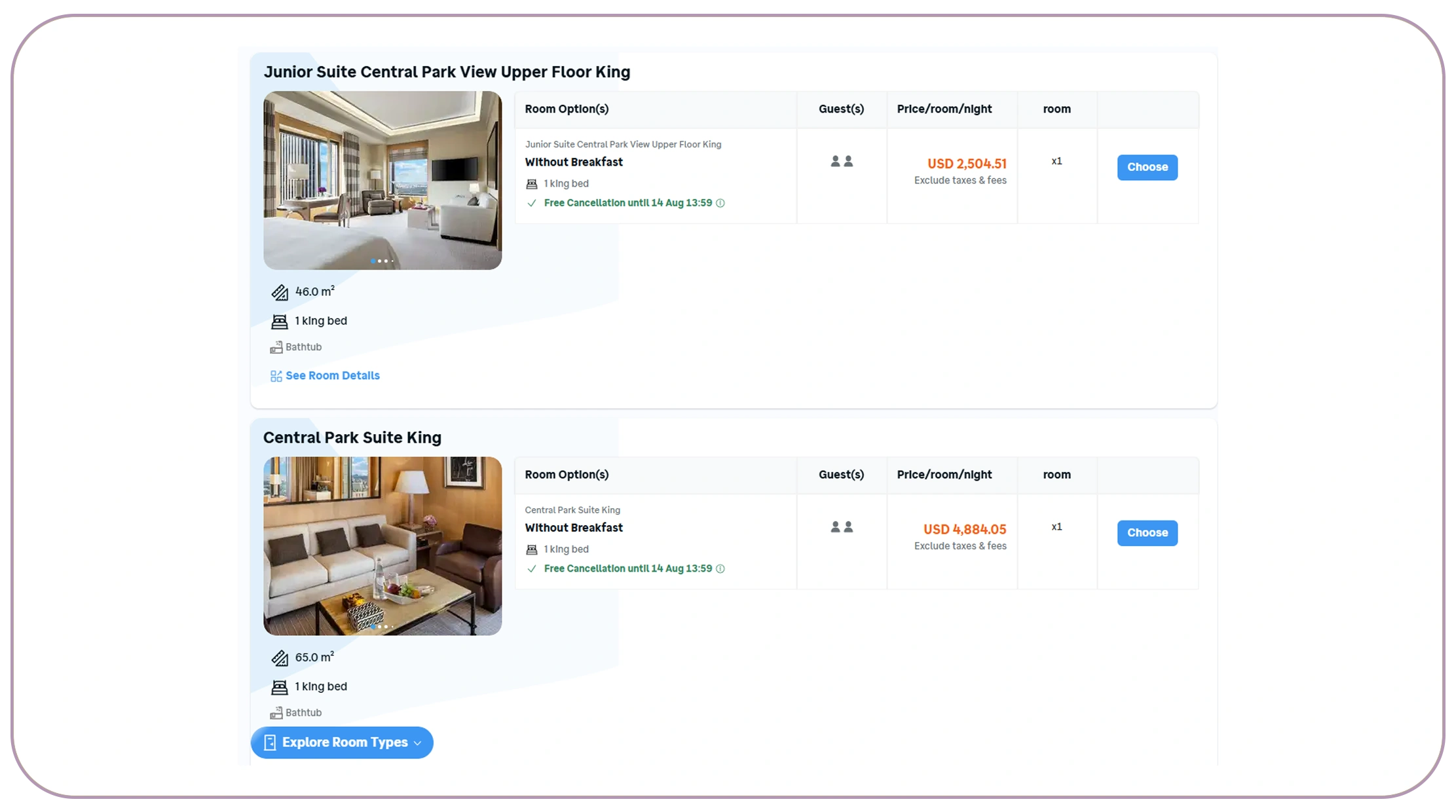
Scrape Traveloka flight price data for travel market research can help businesses understand how airfare changes across routes, dates, airlines, booking periods, and travel seasons.
Flight prices rarely remain constant. A route may have different prices depending on demand, departure date, availability, and promotional campaigns.
A structured dataset allows analysts to compare these changes.
Useful fields may include:
- Departure location.
- Destination.
- Travel date.
- Airline.
- Flight duration.
- Departure time.
- Arrival time.
- Fare.
- Cabin class.
- Availability.
- Collection timestamp.
Historical records create additional value.
Suppose an analyst collects prices for the same route every day. After several months, the dataset can show typical price ranges and periods when fares increase or decrease.
| Year | Illustrative Routes Monitored | Price Observations | Main Analysis |
|---|---|---|---|
| 2020 | 500 | 30K | Route comparison |
| 2021 | 700 | 45K | Fare monitoring |
| 2022 | 1,200 | 80K | Seasonal analysis |
| 2023 | 2,000 | 130K | Competitive pricing |
| 2024 | 3,500 | 220K | Demand patterns |
| 2025 | 5,000 | 350K | Dynamic price tracking |
| 2026 | 8,000+ | 600K+ | Automated intelligence |
These figures are illustrative.
Businesses can calculate price changes between collection periods.
Price Change % = ((Current Price − Previous Price) / Previous Price) × 100
This simple calculation can identify significant fare movements.
Travel companies can also segment results by destination, airline, travel date, or cabin class.
For example, analysts may discover that prices rise sharply within a specific booking window. They can then use that insight to improve recommendations or customer communication.
Historical flight data also helps identify seasonal patterns.
A destination may have higher fares during holidays but lower fares during off-peak periods. Businesses can use these patterns to support promotional planning.
The key benefit is consistency.
Instead of checking individual flights manually, analysts can compare thousands of observations through a structured dataset.
How Can Automated Collection Improve Travel Price Monitoring?
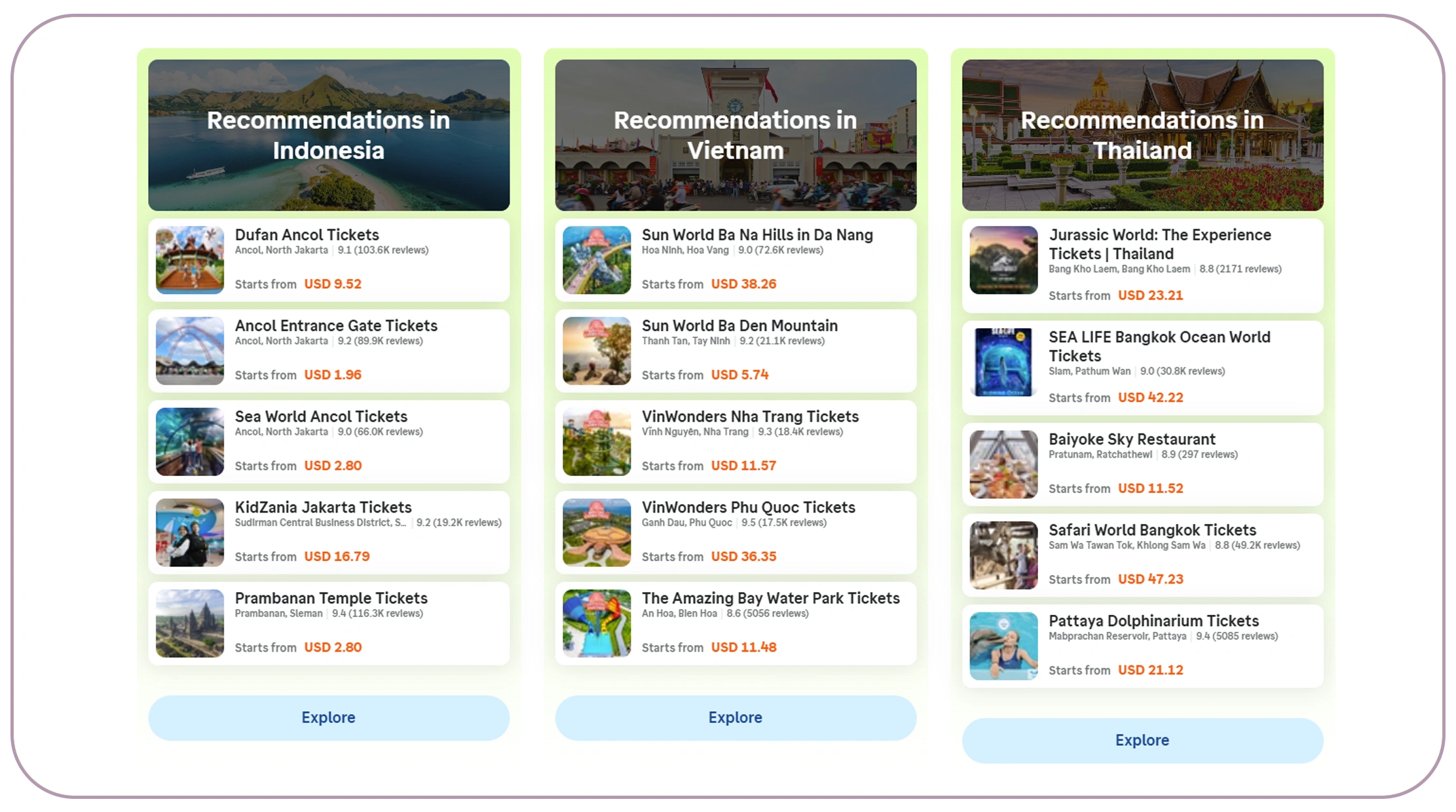
Automated Traveloka travel market data collection allows businesses to replace repetitive manual research with scheduled data workflows.
Travel companies often monitor multiple destinations and properties. Manually checking every listing takes significant time.
Automation can collect selected information at defined intervals.
A basic workflow can include:
- Select destinations, hotels, or routes.
- Define the required fields.
- Set the collection frequency.
- Collect and validate records.
- Store historical observations.
- Compare current and previous data.
- Generate reports or alerts.
The collection frequency should match the business need.
A hotel pricing team may need frequent updates during a major travel period. A market research team may only need daily or weekly information.
| Year | Illustrative Records Collected | Update Frequency | Business Goal |
|---|---|---|---|
| 2020 | 50K | Weekly | Research |
| 2021 | 100K | Weekly | Competitor tracking |
| 2022 | 250K | Daily | Price analysis |
| 2023 | 500K | Daily | Market monitoring |
| 2024 | 1M | Daily | Demand intelligence |
| 2025 | 2M | Several times daily | Dynamic pricing |
| 2026 | 5M+ | Priority-based | Automated intelligence |
These values are hypothetical.
Automation also improves consistency.
A scheduled process can collect information at similar intervals. This makes historical comparisons more reliable.
Businesses can also create alerts.
For example, a pricing team could receive an alert when a competitor's hotel rate falls by more than 15%. Another alert could identify a sudden change in flight prices.
This reduces the amount of information employees must review manually.
Automation can also support destination-level analysis.
Businesses can compare average hotel prices across cities. They can identify destinations where rates are increasing rapidly. They can compare travel periods to understand seasonal changes.
The result is a repeatable monitoring system.
Instead of asking employees to repeatedly search travel listings, businesses can create a structured workflow that continuously produces data for analysis.
How Can Hotel Availability and Pricing Data Support Better Decisions?
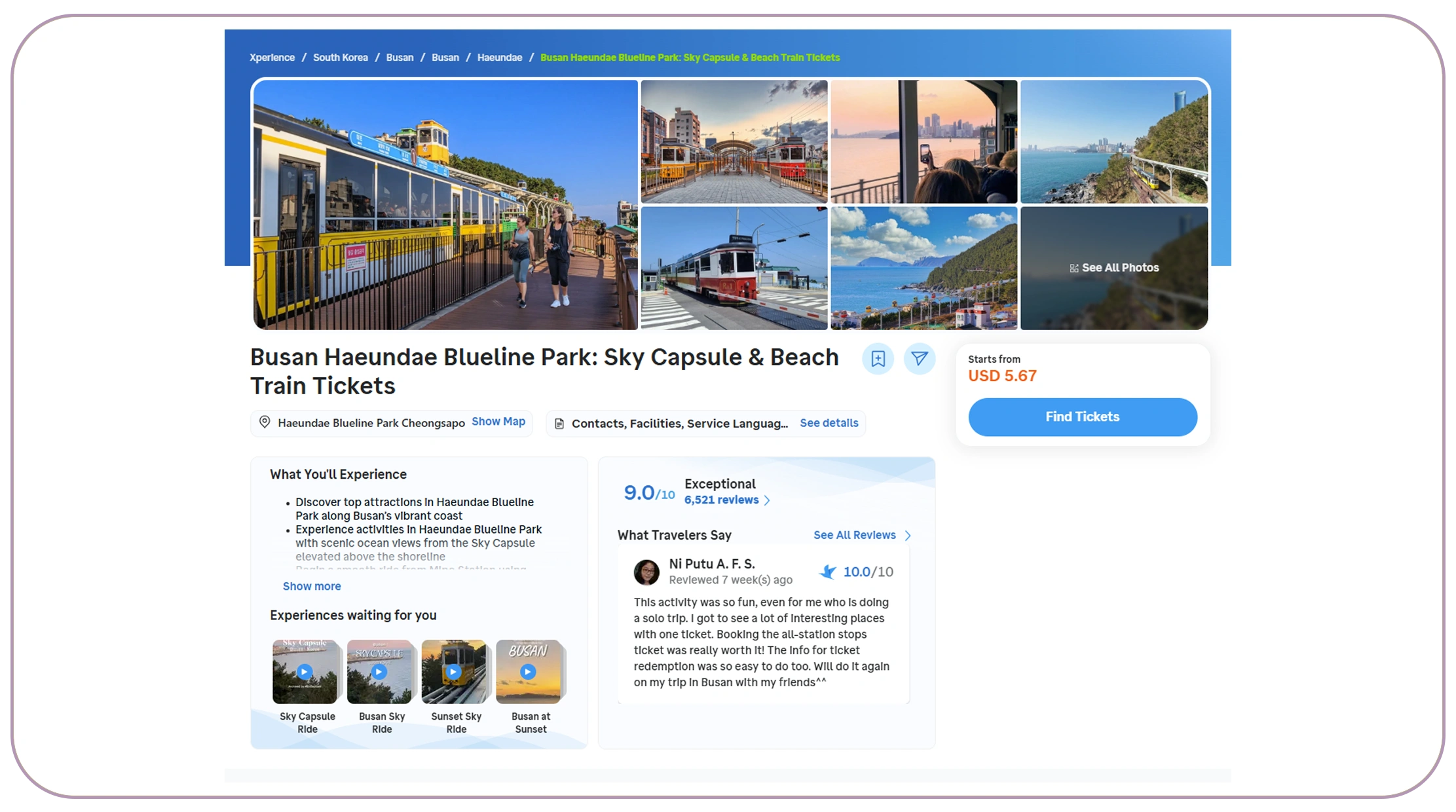
Extract Traveloka hotel availability and pricing data to understand how accommodation rates change with demand, dates, room types, and availability.
Hotel pricing is influenced by several factors.
A room can have a different price depending on the check-in date, length of stay, room category, cancellation policy, occupancy, and promotional offer.
A single price snapshot does not capture this complexity.
Historical data provides a better view.
Useful hotel fields may include:
- Hotel name.
- Location.
- Room type.
- Check-in date.
- Check-out date.
- Nightly price.
- Total stay price.
- Availability.
- Rating.
- Review count.
- Cancellation policy.
- Promotional discount.
- Collection timestamp.
Businesses can compare properties within the same destination.
For example, a hotel group can monitor competitors in a specific city and compare prices for identical travel dates.
| Year | Illustrative Hotels Tracked | Price Records | Availability Records |
|---|---|---|---|
| 2020 | 1,000 | 50K | 30K |
| 2021 | 1,500 | 75K | 45K |
| 2022 | 3,000 | 160K | 100K |
| 2023 | 5,000 | 300K | 180K |
| 2024 | 8,000 | 500K | 320K |
| 2025 | 12,000 | 800K | 550K |
| 2026 | 20,000+ | 1.5M+ | 1M+ |
These figures are hypothetical planning examples.
Availability data adds important context.
Suppose a hotel increases its price while available rooms become limited. The price increase may reflect stronger demand.
If many rooms remain available while prices decrease, the hotel may be responding to weaker demand or increased competition.
Businesses can therefore combine price and availability data.
This creates stronger intelligence than tracking prices alone.
Historical monitoring can also identify seasonal patterns.
A hotel may show consistently higher prices during weekends, holidays, conferences, or peak tourism periods.
Travel businesses can use these patterns to improve recommendations, promotional planning, and competitive benchmarking.
The same data can support revenue teams.
Instead of relying solely on internal booking information, teams can examine external market pricing to understand the competitive environment.
What Can a Travel Dataset Reveal About Pricing and Demand?
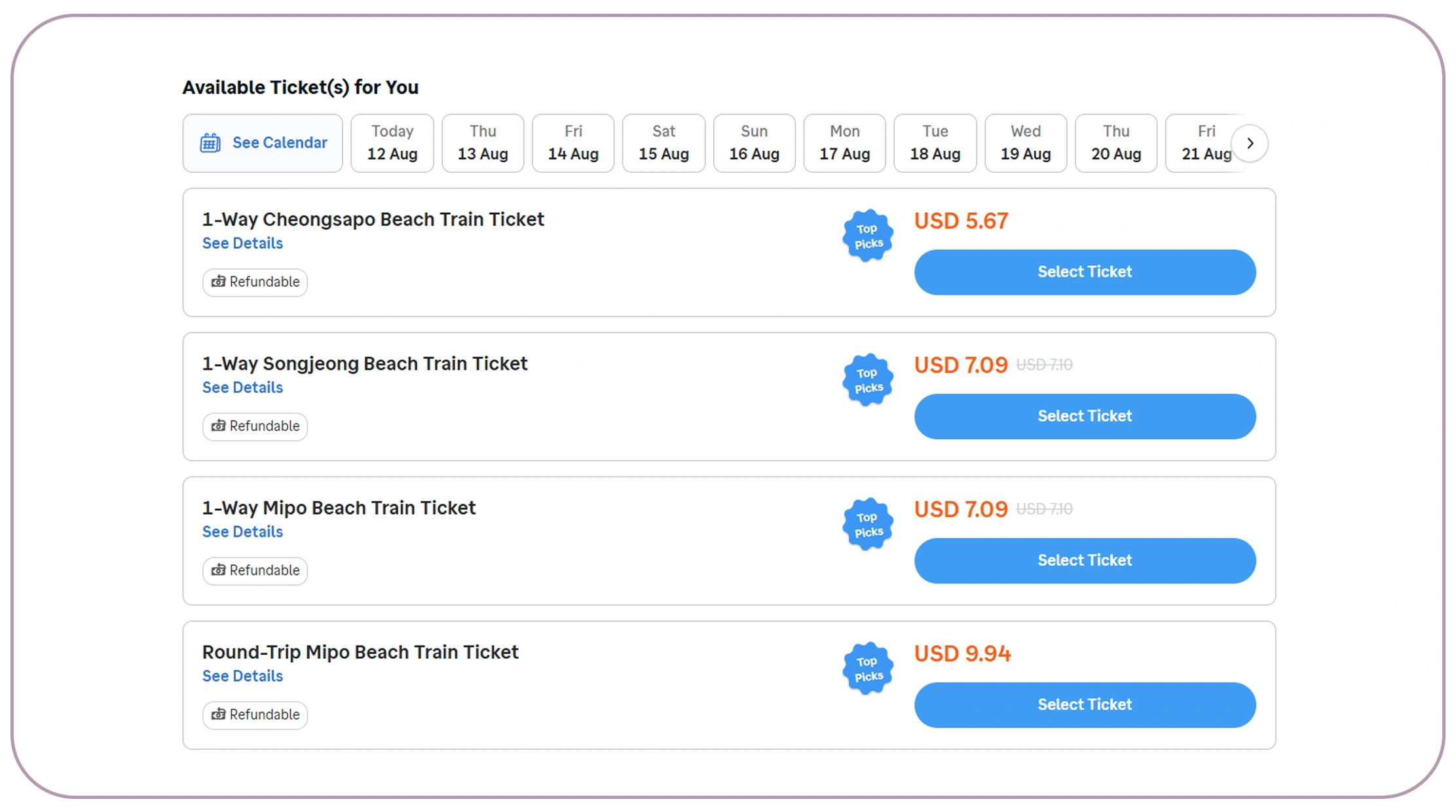
A Traveloka Travel Dataset can bring hotel, flight, pricing, availability, destination, and promotional information into one structured resource. When businesses use Traveloka data scraping for travel price intelligence, they can create historical records for deeper market analysis.
A travel dataset becomes more useful when every observation includes a timestamp.
This allows analysts to distinguish current information from historical information.
For example, a hotel may cost $80 today and $120 next month. Without historical records, the business cannot easily determine whether that increase is normal for the season.
A structured dataset can reveal these patterns.
| Year | Illustrative Dataset Records | Main Intelligence |
|---|---|---|
| 2020 | 100K | Basic market mapping |
| 2021 | 180K | Price comparisons |
| 2022 | 350K | Destination analysis |
| 2023 | 600K | Hotel benchmarking |
| 2024 | 1M | Demand analysis |
| 2025 | 1.8M | Competitive intelligence |
| 2026 | 3M+ | Predictive market analysis |
These numbers are illustrative.
A dataset can support several analytical models.
Price Trend Analysis
Businesses can calculate average prices by destination, property type, travel date, or season.
Discount Analysis
Teams can identify properties or routes with frequent promotional activity.
Availability Analysis
Businesses can compare price movements with available inventory.
Competitive Benchmarking
Hotels and travel companies can compare their prices with similar properties.
Destination Intelligence
Researchers can compare pricing patterns across cities and countries.
Historical data can also support trend indexes.
For example, a business could create a destination price index with 2020 as the baseline.
If the index rises from 100 to 130, the dataset indicates a 30% increase relative to the selected baseline.
The index itself would depend on the business methodology.
Data normalization is also important.
Hotel names, locations, room types, and airlines should follow consistent formats. Without normalization, duplicate records can distort analysis.
A high-quality travel dataset should therefore combine collection, validation, normalization, and historical storage.
The result is a reusable intelligence asset.
What Are the Most Useful Travel Data Scraping Applications?
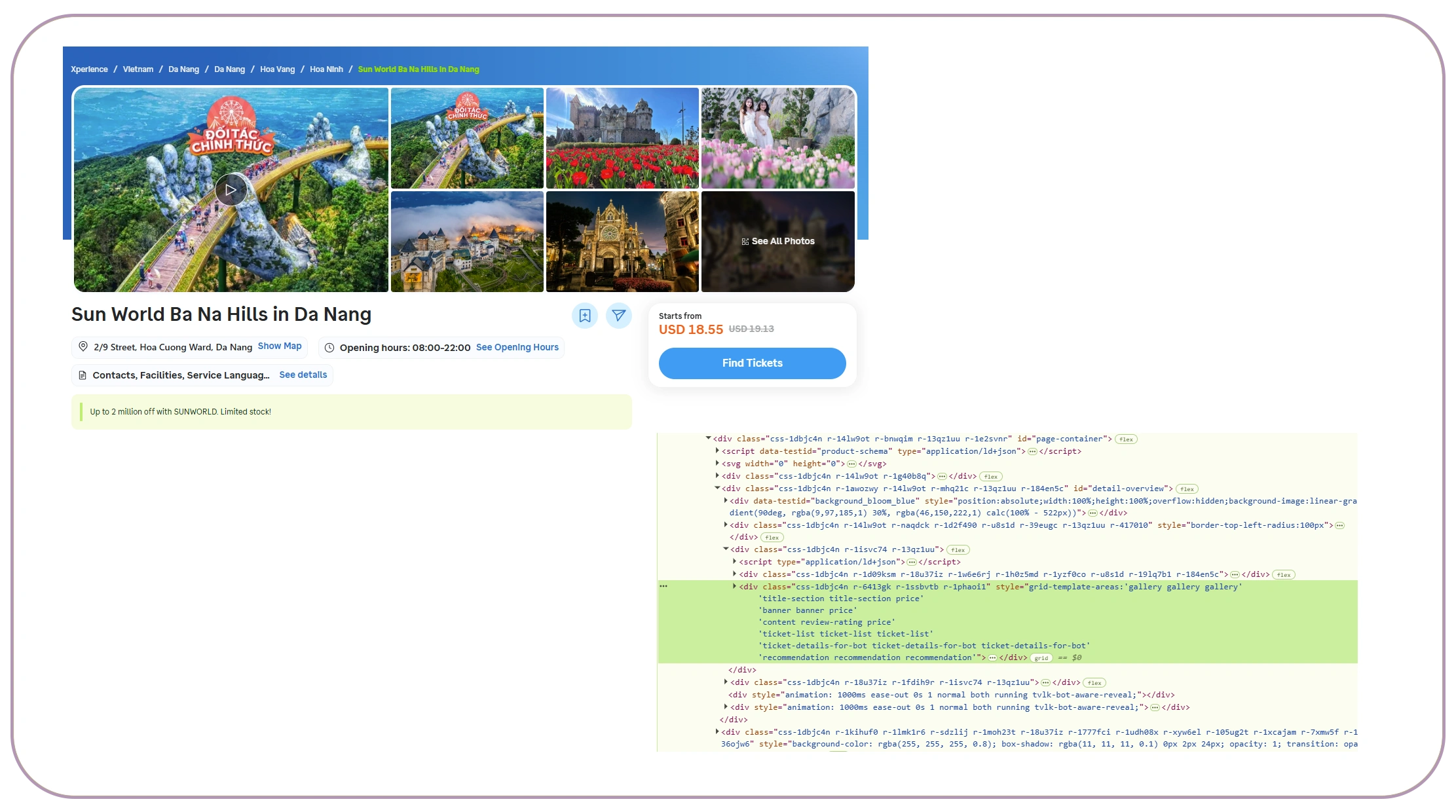
Travel Scraping API Use Cases extend well beyond simple hotel price tracking.
Travel agencies can use structured data to compare destinations. Hotels can monitor competitors. Market researchers can analyze demand. Travel applications can support price comparison and recommendation features.
Common applications include:
Hotel Competitive Pricing
Hotels can monitor similar properties and compare room rates.
Flight Fare Research
Travel businesses can analyze route-level pricing and fare changes.
Discount Monitoring
Companies can identify promotional campaigns and price reductions.
Destination Analysis
Researchers can compare average prices across destinations.
Seasonal Trend Analysis
Businesses can identify recurring high- and low-demand periods.
Product and Offer Comparison
Travel companies can compare room types, packages, cancellation policies, and other available attributes.
| Use Case | Required Data | Business Outcome |
|---|---|---|
| Hotel benchmarking | Hotel prices, rooms | Competitive pricing |
| Flight research | Routes, fares | Fare intelligence |
| Discount tracking | Original and sale prices | Promotion analysis |
| Destination research | Location and prices | Market selection |
| Seasonal analysis | Historical prices | Demand planning |
| Travel comparison | Multiple attributes | Better recommendations |
These examples show why travel data should be collected according to a specific business objective.
For example, a hotel may only need competitor rates within a 5-kilometer radius. A travel agency may need destination-wide data.
The scope affects both data volume and infrastructure requirements.
Businesses should therefore define their requirements before starting.
They should determine:
- Which destinations matter?
- Which properties or routes should be monitored?
- Which fields are required?
- How often should data be collected?
- How much historical data is needed?
- Where should the data be delivered?
A focused collection strategy reduces unnecessary data processing.
It also makes the resulting dataset easier to analyze.
When Should Businesses Use Web Scraping Services?

Web Scraping Services can be useful when businesses need scalable data collection but do not want to build and maintain the entire infrastructure internally.
Building a travel data system requires more than writing an extraction script.
Businesses may need scheduling, monitoring, data validation, storage, error handling, scaling, and ongoing maintenance.
A managed approach can reduce the operational workload.
The best choice depends on project requirements.
| Approach | Initial Effort | Maintenance | Customization | Scalability |
|---|---|---|---|---|
| Build internally | High | High | Very High | High |
| Buy software | Medium | Medium | Medium | Medium-High |
| Managed service | Low-Medium | Lower | High | High |
These ratings are general planning guidelines.
A managed service can be particularly useful for companies that need data from multiple travel websites or large numbers of destinations.
Businesses can focus on analysis while the technical workflow handles recurring collection.
However, service selection should consider important factors.
Look at data coverage. Check update frequency. Evaluate output formats. Review scalability. Understand support and maintenance arrangements.
Data quality is equally important.
A large dataset is not useful if records contain missing fields, duplicates, or inconsistent structures.
Businesses should therefore evaluate:
- Data accuracy.
- Update frequency.
- Historical coverage.
- Data consistency.
- Delivery options.
- Scalability.
- Reliability.
- Applicable usage permissions.
The goal is to build a data pipeline that supports business decisions without creating unnecessary technical overhead.
For travel companies, this can make competitive intelligence more accessible.
Why Choose Real Data API?
Real Data API helps businesses turn online travel information into structured data for analytics, research, and competitive intelligence. Traveloka data scraping for travel price intelligence can support hotel price monitoring, flight research, promotion tracking, availability analysis, and destination intelligence.
A strong data workflow should match the company's business objective.
Real Data API can help businesses design scalable data collection workflows around their requirements. The focus remains on useful information rather than unnecessary data volume.
Key benefits include:
- Automated collection workflows.
- Structured travel datasets.
- Historical data support.
- Scalable monitoring.
- Competitive price analysis.
- Hotel and flight research.
- Flexible data integration.
Businesses can use structured data to identify market changes faster and make better-informed pricing and planning decisions.
The goal is simple: collect the right travel data, organize it consistently, and make it available for analysis when the business needs it.
Conclusion
Travel prices change constantly. Hotel rates move with availability and demand. Flight fares change with routes, dates, and booking conditions. Discounts can appear and disappear quickly.
Traveloka data scraping for travel price intelligence can help businesses create a structured view of these changes. Historical price and availability data can support competitive benchmarking, market research, discount analysis, destination research, and demand planning.
The most effective approach starts with a clear business goal. Define the destinations, properties, routes, fields, collection frequency, and historical requirements. Then connect the resulting dataset to dashboards, analytics systems, or internal applications.
Businesses should also review applicable laws, platform terms, and data-access permissions before implementing any collection workflow.
Contact Real Data API today to discuss your travel data requirements and build a scalable solution for smarter price monitoring, competitive intelligence, and travel market analysis!
Latest posts
How to Use a Meesho ecommerce scraper 2026 to Analyze Product Listings, Pricing, and Market Opportunities
How a Blinkit scraper for retail market research Helps Brands Track Competitor Pricing and Product Trends
Why Businesses Need a Flipkart India daily ecommerce dataset for market research for Smarter Retail Decisions
Grocery Data Scraping for Competitive Benchmarking - Key Strategies for Retail Success in 2027






.png)