Introduction
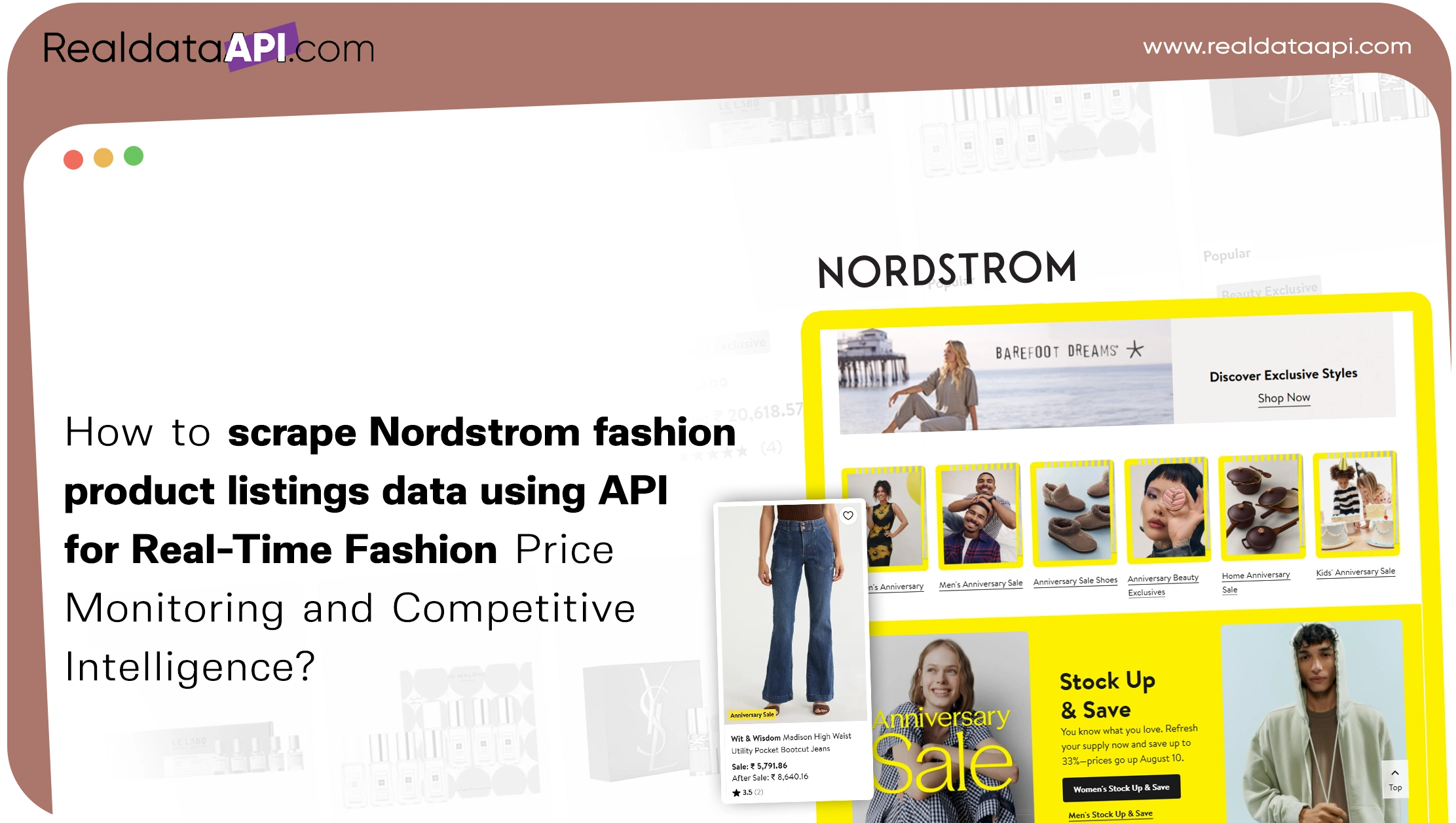
Businesses can scrape Nordstrom fashion product listings data using API to automate the collection of real-time prices, inventory, product details, ratings, sizes, colors, and promotional offers. This helps fashion retailers, brands, and market analysts optimize pricing, monitor competitors, and make faster, data-driven merchandising decisions.
Industry Insight: According to industry estimates, the global online fashion market is projected to exceed USD 1.2 trillion by 2026 , with more than 65% of fashion retailers adopting automated pricing and product intelligence tools to remain competitive in an increasingly dynamic marketplace.
Modern fashion retail moves quickly. New collections launch frequently, promotions change daily, and inventory fluctuates across categories and brands. Web Scraping Services provide an efficient way to automate data collection, replacing time-consuming manual tracking with structured, real-time insights that integrate directly into analytics platforms, pricing engines, and business intelligence dashboards.
Target Audience: Fashion retailers, apparel brands, pricing analysts, marketplace sellers, merchandising teams, and market research firms.
Pain Point Solved: Eliminate manual monitoring while gaining accurate, scalable, and real-time fashion marketplace intelligence for pricing optimization, inventory management, and competitive analysis.
How Can Retailers Track Thousands of Fashion Products Efficiently?
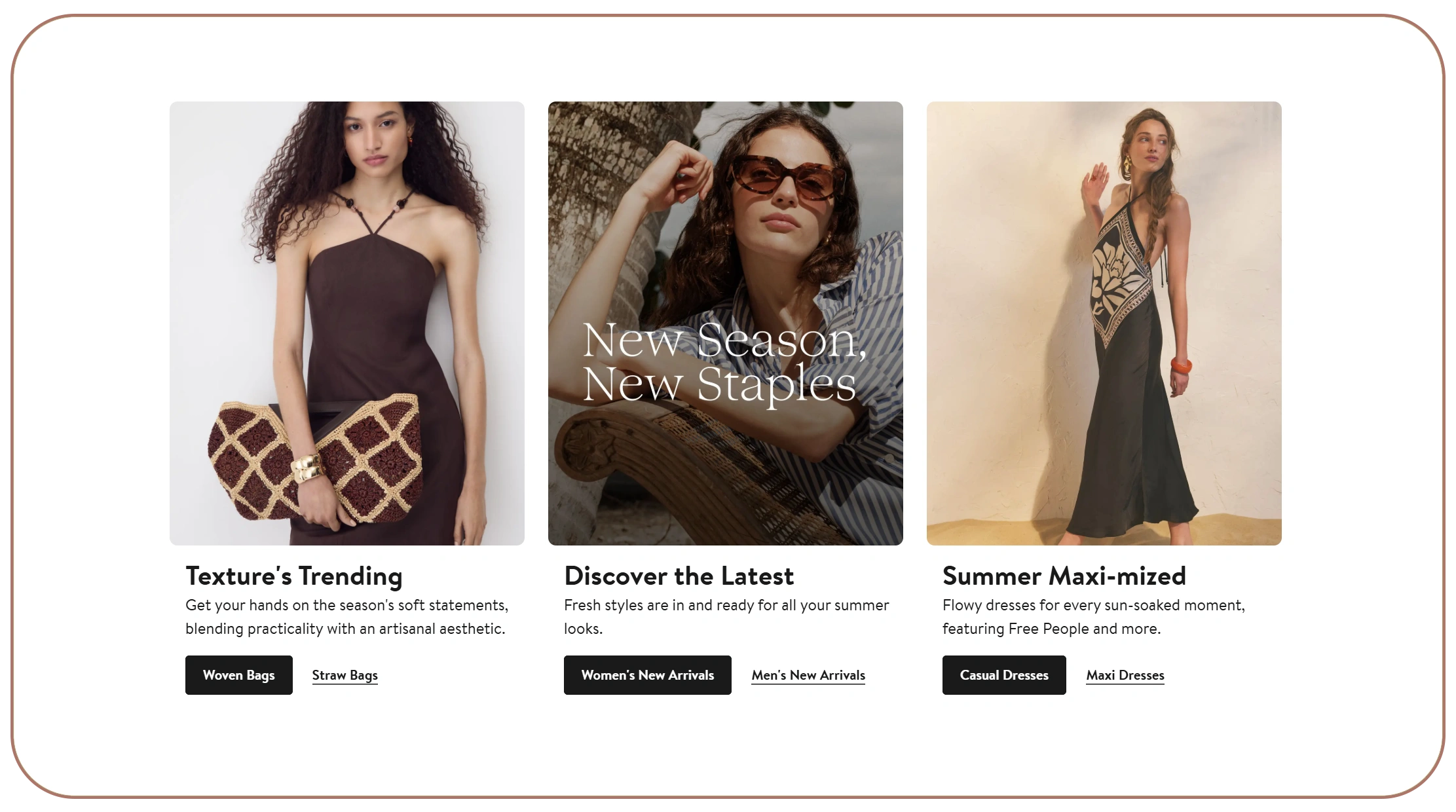
Fashion retailers manage thousands of apparel, footwear, accessories, and beauty products that change frequently. Monitoring every listing manually is inefficient and often results in missed pricing opportunities or outdated inventory information.
Using a Nordstrom clothing catalog data scraper , businesses can automate the collection of product titles, brands, categories, prices, colors, sizes, availability, descriptions, ratings, and promotional offers. This enables retailers to maintain an up-to-date view of the marketplace while improving merchandising and pricing decisions.
Key Business Benefits
- Monitor competitor pricing
- Track new arrivals
- Compare product assortments
- Detect promotional campaigns
- Analyze category performance
- Improve merchandising strategies
- Reduce manual monitoring
- Support dynamic pricing
Fashion Product Monitoring Trends (2020–2026)
| Year | Retailers Using Catalog Monitoring | Average Products Tracked |
|---|---|---|
| 2020 | 36% | 140,000 |
| 2021 | 44% | 230,000 |
| 2022 | 53% | 420,000 |
| 2023 | 63% | 760,000 |
| 2024 | 71% | 1.3 Million |
| 2025 | 79% | 2 Million |
| 2026* | 87% | 3 Million+ |
*Projected industry estimates.
Automated catalog monitoring also provides historical visibility into pricing trends and seasonal collections. Merchandising teams can compare fashion categories, identify fast-selling products, and evaluate how promotional campaigns affect customer demand.
Continuous product intelligence helps organizations react faster to market changes, ensuring competitive pricing and optimized inventory throughout the retail lifecycle.
Why Is SKU-Level Visibility Critical for Fashion Retail?
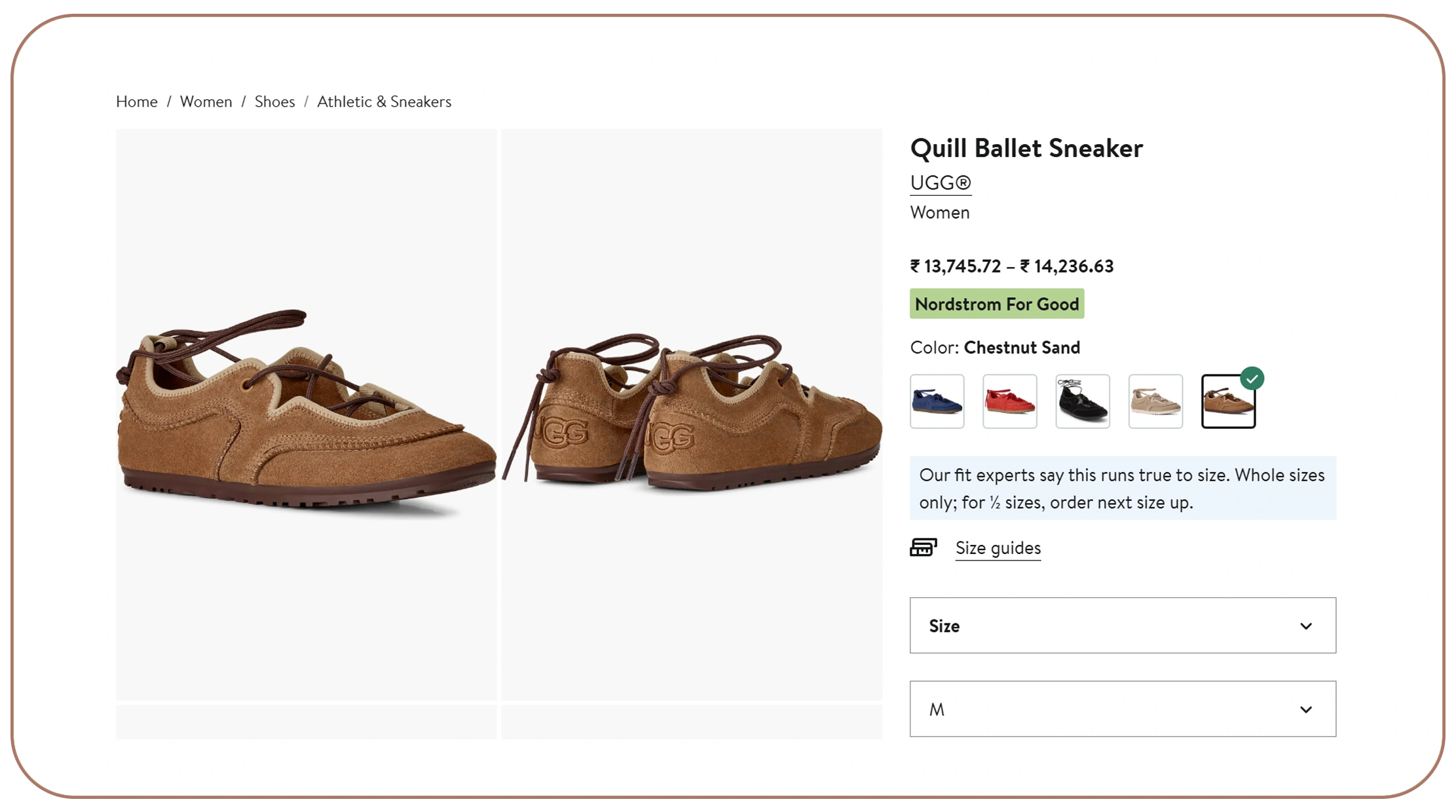
Fashion products often exist in multiple sizes, colors, materials, and seasonal variations. Each variation has its own Stock Keeping Unit (SKU), making SKU-level monitoring essential for accurate pricing, inventory management, and sales forecasting.
With Nordstrom SKU data extraction , businesses gain detailed visibility into every product variation across thousands of listings. This allows pricing analysts and inventory managers to identify stock shortages, monitor variant-level pricing, and compare competing brands more effectively.
Advantages of SKU Intelligence
- Monitor size availability
- Track color variations
- Compare product variants
- Identify inventory shortages
- Analyze pricing differences
- Detect discontinued products
- Improve assortment planning
- Support demand forecasting
SKU Analytics Growth (2020–2026)
| Metric | 2020 | 2022 | 2024 | 2026* |
|---|---|---|---|---|
| Average SKUs Monitored | 60,000 | 180,000 | 520,000 | 1.5 Million |
| Inventory Accuracy | 82% | 89% | 95% | 98% |
| Retailers Using SKU Analytics | 39% | 55% | 72% | 88% |
| Promotion Detection Speed | 24 Hours | 8 Hours | 2 Hours | Real-Time |
*Projected industry estimates.
SKU-level analytics enables retailers to optimize replenishment strategies, reduce stockouts, and improve customer satisfaction by ensuring popular sizes and colors remain available. Historical SKU data also supports long-term demand forecasting and seasonal planning.
As fashion retail continues to evolve, organizations that monitor products at the SKU level gain deeper insights into customer preferences, improve inventory utilization, and strengthen their competitive position through more informed merchandising and pricing decisions.
How Can Fashion Data Improve Competitive Retail Strategies?
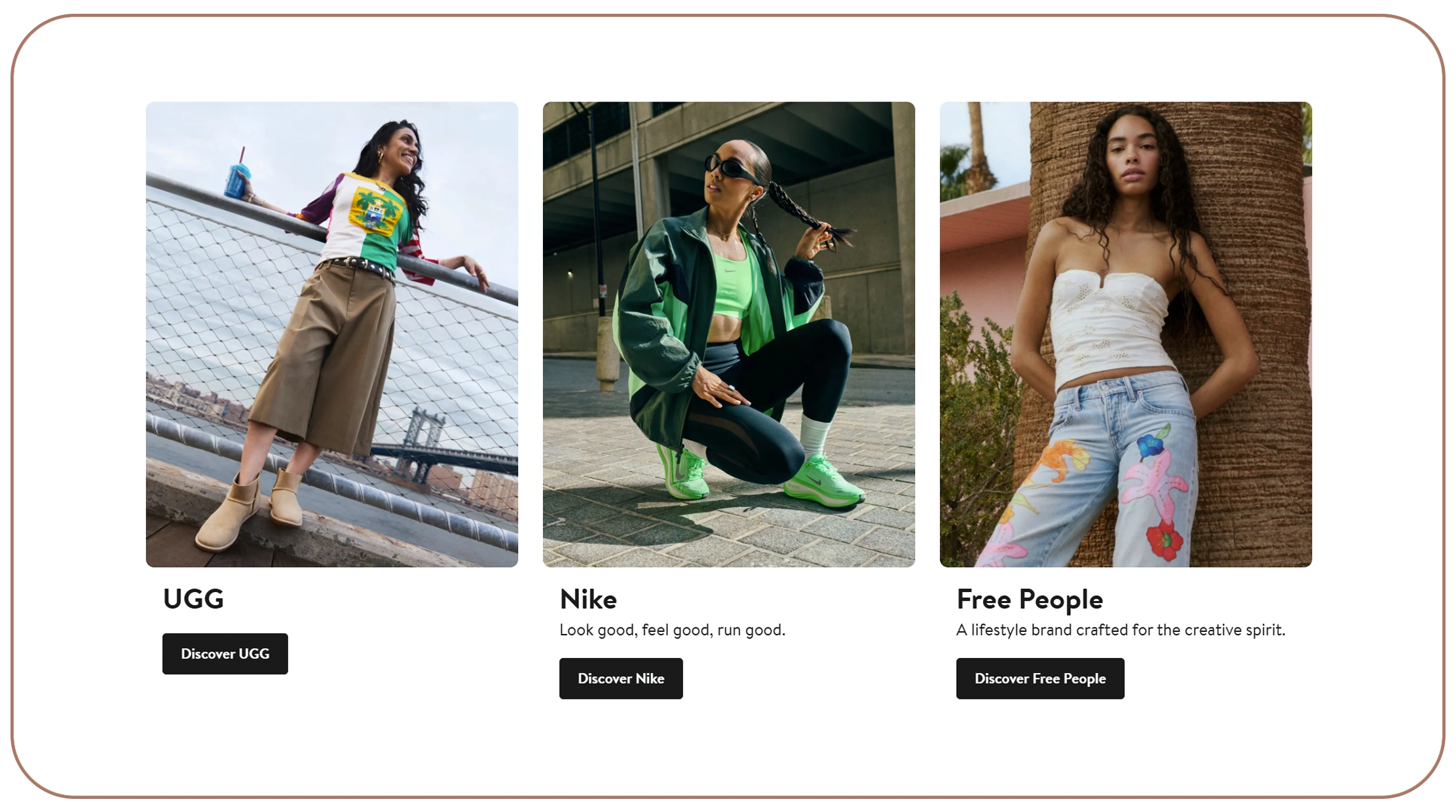
Fashion trends evolve rapidly, and retailers must respond quickly to changing customer preferences, seasonal collections, and competitor activities. Access to detailed fashion product information helps businesses optimize pricing, improve assortment planning, and launch targeted marketing campaigns based on real-time insights.
By leveraging Nordstrom Fashion Data scraping , organizations can automatically collect product titles, brand names, categories, prices, sizes, colors, product descriptions, ratings, reviews, promotional offers, and availability. This structured information enables retailers to monitor fashion trends and evaluate competitor strategies without manual effort.
Business Benefits of Fashion Intelligence
- Monitor seasonal collections
- Compare brand performance
- Track pricing trends
- Analyze customer reviews
- Detect promotional campaigns
- Identify emerging fashion trends
- Improve merchandising decisions
- Support inventory forecasting
Fashion data also enables marketing teams to understand customer preferences while helping merchandising teams optimize product assortments based on demand and competitor activity.
Fashion Analytics Trends (2020–2026)
| Year | Fashion Products Tracked | Daily Product Updates | Retailers Using Fashion Analytics |
|---|---|---|---|
| 2020 | 250,000 | 40,000 | 37% |
| 2021 | 390,000 | 72,000 | 46% |
| 2022 | 650,000 | 140,000 | 55% |
| 2023 | 1 Million | 280,000 | 64% |
| 2024 | 1.7 Million | 520,000 | 73% |
| 2025 | 2.5 Million | 920,000 | 81% |
| 2026* | 3.8 Million+ | 1.8 Million+ | 89% |
*Projected industry estimates.
Historical fashion datasets help retailers evaluate seasonal buying patterns, identify top-performing brands, and optimize future collections. Pricing teams benefit from continuous competitor monitoring, while executives gain actionable insights that support long-term business growth and strategic planning.
Why Do Retailers Need API-Driven Product Intelligence?
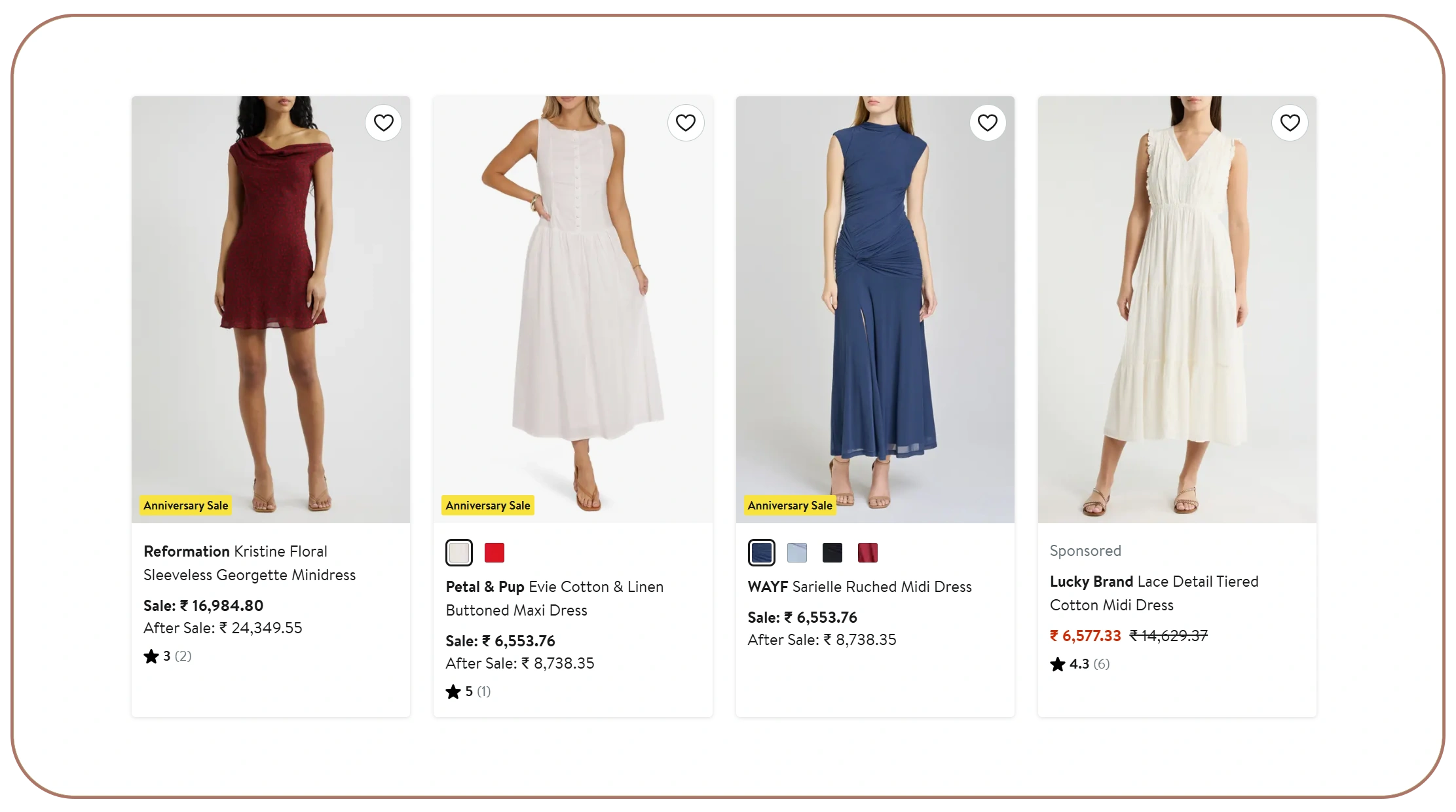
Manual data collection cannot keep pace with today's dynamic fashion marketplace. Product prices, availability, ratings, and promotional offers change continuously. Retailers need automated technology that delivers fresh, structured data without interruption.
A Web Scraping API enables organizations to automate product monitoring and integrate marketplace data directly into ERP systems, pricing engines, analytics dashboards, and AI-powered recommendation platforms. Continuous API access ensures that every pricing decision is based on the latest available information.
Key Capabilities of API Automation
- Real-time product monitoring
- Automated price tracking
- Inventory availability updates
- Historical pricing analysis
- Product catalog synchronization
- AI-ready structured datasets
- Business intelligence integration
- Enterprise scalability
These capabilities help organizations improve operational efficiency while reducing manual workload and increasing data accuracy.
API Adoption Trends (2020–2026)
| Metric | 2020 | 2022 | 2024 | 2026* |
|---|---|---|---|---|
| Retailers Using Product APIs | 33% | 51% | 70% | 88% |
| Average Daily Product Updates | 120,000 | 450,000 | 1.4 Million | 4 Million+ |
| Manual Reporting Time Saved | 27% | 48% | 66% | 82% |
| Faster Pricing Decisions | 21% | 41% | 60% | 77% |
*Projected industry estimates.
API-driven automation enables retailers to monitor thousands of products simultaneously while ensuring consistent, high-quality data. Historical API records support demand forecasting, promotion analysis, and pricing optimization across multiple product categories.
As digital fashion commerce continues to expand through 2026, businesses adopting automated API solutions gain faster access to market intelligence, improve customer experiences, and strengthen their competitive advantage through accurate, real-time retail data.
How Can Mobile Data Collection Improve Fashion Retail Decisions?
Consumers increasingly browse and purchase fashion products through mobile applications. Exclusive app promotions, early product launches, personalized recommendations, and inventory updates often appear in mobile apps before they are reflected on websites. Businesses need access to this data to maintain a competitive edge.
A Mobile App Scraping API enables retailers and market analysts to collect structured data from mobile commerce platforms, including product listings, pricing, discounts, inventory availability, ratings, reviews, and promotional campaigns. This helps organizations monitor customer-facing changes across both mobile and web channels while ensuring consistent market intelligence.
Key Benefits of Mobile Data Collection
- Monitor mobile-exclusive pricing
- Track app-based promotions
- Detect new product launches
- Compare website and app pricing
- Analyze inventory availability
- Follow customer ratings
- Improve omnichannel strategies
- Enhance competitive monitoring
By combining mobile and website intelligence, retailers gain a more complete understanding of customer experiences and competitor activities.
Mobile Commerce Monitoring Trends (2020–2026)
| Year | Retailers Monitoring Mobile Apps | Daily Product Updates | Mobile Commerce Share |
|---|---|---|---|
| 2020 | 29% | 35,000 | 42% |
| 2021 | 38% | 68,000 | 48% |
| 2022 | 47% | 130,000 | 55% |
| 2023 | 58% | 260,000 | 61% |
| 2024 | 68% | 500,000 | 67% |
| 2025 | 77% | 920,000 | 72% |
| 2026* | 86% | 1.8 Million+ | 76% |
*Projected industry estimates.
Retailers using mobile intelligence can identify pricing differences between channels, evaluate mobile-first promotions, and understand how customers interact with products across devices. These insights support better pricing strategies, campaign planning, and customer engagement while strengthening overall omnichannel performance.
How Can Large-Scale Crawling Support Enterprise Fashion Analytics?

Large fashion retailers and global brands manage millions of product pages across multiple categories, brands, and regional marketplaces. Collecting this volume of information requires a scalable infrastructure capable of processing large datasets efficiently and consistently.
Enterprise Web Crawling enables organizations to automate the discovery and collection of product information across extensive online catalogs. Instead of monitoring individual listings manually, businesses can continuously gather product details, prices, inventory status, specifications, images, ratings, reviews, and promotional updates at enterprise scale.
Advantages of Enterprise Crawling
- Monitor millions of product pages
- Capture frequent catalog updates
- Track competitor pricing at scale
- Build historical product databases
- Support AI and predictive analytics
- Improve inventory visibility
- Enable large-scale market research
- Reduce manual operational costs
Enterprise crawling solutions are designed to handle growing product catalogs while maintaining consistent data quality and reliability.
Enterprise Data Collection Trends (2020–2026)
| Metric | 2020 | 2022 | 2024 | 2026* |
|---|---|---|---|---|
| Average Products Crawled | 400,000 | 1.1 Million | 2.8 Million | 6 Million+ |
| Daily Data Records Processed | 180,000 | 650,000 | 2 Million | 5.5 Million+ |
| Enterprises Using Large-Scale Crawling | 34% | 52% | 71% | 89% |
| Operational Efficiency Improvement | 24% | 42% | 61% | 79% |
*Projected industry estimates.
Enterprise-scale crawling empowers retailers to maintain comprehensive product intelligence across vast catalogs while supporting pricing optimization, assortment planning, trend analysis, and competitive benchmarking. Historical datasets generated through continuous crawling also help businesses forecast demand, evaluate seasonal performance, and improve long-term merchandising strategies.
As fashion eCommerce continues to expand globally, enterprise crawling has become a critical capability for organizations seeking scalable, real-time insights that drive smarter decisions and sustainable competitive growth.
Why Choose Real Data API?
Real Data API empowers fashion retailers, brands, and market research firms with reliable, scalable, and real-time data extraction solutions designed for modern eCommerce. Whether you need to monitor competitor prices, analyze product assortments, track inventory availability, or identify emerging fashion trends, our platform delivers structured data that supports faster and more informed business decisions.
Businesses that scrape Nordstrom fashion product listings data using API with Real Data API gain access to continuously updated product information, including pricing, product descriptions, sizes, colors, availability, ratings, reviews, and promotional offers. Our APIs integrate seamlessly with business intelligence platforms, ERP systems, CRM software, pricing engines, and machine learning models, allowing organizations to transform raw marketplace data into actionable insights.
Why Businesses Choose Real Data API
- Real-time fashion product monitoring
- High-frequency price and inventory updates
- Structured JSON, CSV, and API data delivery
- Enterprise-grade scalability and reliability
- Historical pricing and trend analysis
- Automated catalog and SKU monitoring
- Easy integration with BI and analytics platforms
- Customizable extraction schedules
- Secure infrastructure with high data accuracy
- Dedicated technical support
With Real Data API, organizations reduce manual effort, improve operational efficiency, and gain continuous visibility into changing fashion markets. Our scalable solutions help businesses respond faster to competitor actions, optimize merchandising strategies, and strengthen their competitive position with accurate marketplace intelligence.
Conclusion
The fashion retail industry changes rapidly, making real-time product intelligence essential for staying competitive. Businesses that scrape Nordstrom fashion product listings data using API can automate the collection of pricing, inventory, product details, ratings, reviews, and promotional information to improve decision-making and eliminate time-consuming manual monitoring.
Throughout this guide, we explored how automated catalog monitoring, SKU-level tracking, fashion data analytics, mobile app intelligence, enterprise crawling, and scalable APIs help retailers optimize pricing, improve inventory management, identify fashion trends, and benchmark competitors. These capabilities enable organizations to react quickly to market changes while delivering better customer experiences and maximizing profitability.
As online fashion continues to grow, businesses that invest in automated data collection and analytics will be better positioned to anticipate customer demand, refine merchandising strategies, and maintain a sustainable competitive advantage. Reliable, real-time marketplace intelligence is no longer optional—it is a key driver of modern retail success.
Ready to transform your fashion retail strategy? Partner with Real Data API to scrape Nordstrom fashion product listings data using API, unlock real-time competitive intelligence, optimize pricing, and make smarter, data-driven decisions that accelerate business growth!
Latest posts
How to scrape Nordstrom fashion product listings data using API for Real-Time Fashion Price Monitoring and Competitive Intelligence?
How to Use API to Get Images from Google for AI-Powered Visual Search & Image Data Collection
How to Scrape Construction Activity Through RERA Registrations to Eliminate Delayed Project Intelligence
How to Scrape Rightmove API for Real Estate Businesses to Solve Property Data Gaps and Improve Market Intelligence






.png)