.gif)
.png)
Introduction
Health-tech startups, pharmacy apps, insurers and researchers often need a structured medicine database for India. The challenge is scale: the country has a very large number of brands, including many local and regional ones, and the same salt is sold under dozens of names. For teams building structured medicine catalogs, healthcare data scraping can support research into publicly displayed medicine attributes and pricing.
Likely sources
Online pharmacies such as 1mg, PharmEasy and Netmeds list large catalogues. Using several sources together gives better brand coverage than any one site. Before starting, a coverage estimate (unique brands per source and after de-duplication) should be agreed with the client. Related healthcare datasets can also help teams plan how structured healthcare information will be delivered and used.
Data attributes
- Brand name and product ID
- Generic / salt name and composition with strength
- Dosage form (tablet, syrup, injection, etc.) and pack size
- Manufacturer or marketer
- MRP and selling price
- Substitutes with the same composition
- Prescription-required flag
- Discontinued or unavailable status
Input parameters
A lookup API can accept a brand name, a generic or salt name, or a product ID and return the matching records. A one-time bulk export in CSV or Excel is useful for loading the full database into your own system. A configurable web scraping API can help route collected records into an application or data pipeline.
Pan-India vs pincode-level data
For a general reference database, pan-India data without pincode-specific availability is enough. If you later need stock and delivery by location, that can be added as a second phase. For projects that later need location-sensitive stock and delivery fields, approaches used for grocery and product availability data illustrate how availability can vary by store or postcode.
Quality and safety notes
- Normalise salt names and strengths so substitutes match correctly.
- Keep source and collection date for every record, because prices and availability change. To plan recurring catalog and price refreshes, see how schedule data collection workflows can capture product fields and historical pricing.
- This data supports product catalogues and comparison tools. It is not a substitute for clinical or pharmacist advice, and apps should say so.
How a medicine database is built
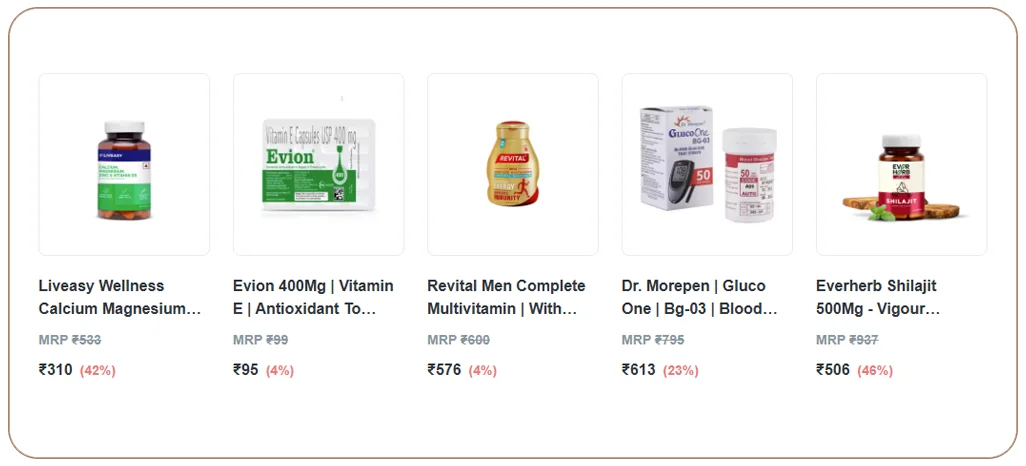
- Collect the brand list: category pages, alphabetical indexes and search results from each source give the first list of products.
- Open each product page to read composition, strength, pack size, manufacturer, MRP and substitutes.
- Normalise salts and strengths: names such as paracetamol 500 mg and acetaminophen 500 mg must resolve to one standard form. For adjacent medical-content use cases, structured drug information can include drug-related fields from public health content sources; this is distinct from pharmacy product catalog data.
- Link substitutes: products with the same salt and strength are grouped, so a substitute lookup works correctly.
- De-duplicate across sources: the same brand listed on 1mg, PharmEasy and Netmeds becomes one record with several source references.
- Deliver and refresh: a one-time export plus scheduled updates keep prices and availability current.
A sample schema for a medicine record
- Medicine ID and brand name
- Salt or generic name, with strength for each component
- Dosage form and pack size
- Manufacturer or marketer
- MRP and selling price, with the source and collection date
- Prescription flag and category, such as pain relief or diabetes care
- List of substitute IDs
- Status: available, out of stock or discontinued
Who uses medicine databases
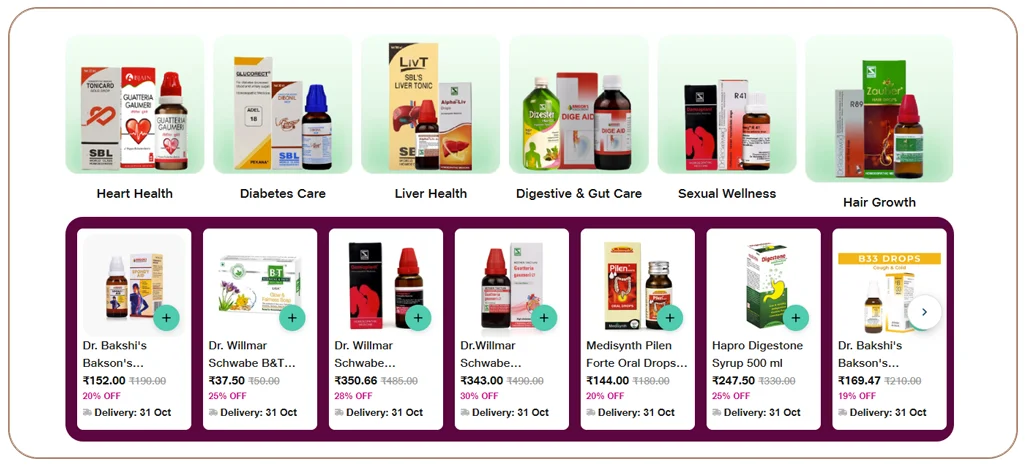
- Pharmacy and health apps that need search, substitute suggestions and price comparison
- Insurance and TPA companies that check MRP and generic equivalents. Teams researching medicine pricing can also review Real Data API's FAQ on drug price data and pharmacy data collection.
- Pharma marketers tracking competitor brands and pricing
- Researchers studying brand proliferation and price differences
Example: a substitute recommendation feature
A health app wants to show users lower-priced alternatives with the same salt and strength. With a normalised database, a search for a branded tablet instantly returns all matching brands, sorted by price per unit. The app can show the saving, while reminding users to ask a doctor or pharmacist before switching.
Why choose Real Data API for medicine data scraping
Real Data API builds the extraction, salt normalisation and de-duplication, and delivers a ready-to-load database or an API. A pilot with a few categories helps estimate the total brand count and the data quality before the full run. For a related example of healthcare-focused collection fields, explore capabilities.
FAQs
1. How many brands can be covered?
It depends on sources, and an estimate is usually given after a short pilot.
2. Can I get updates?
Yes, monthly or weekly refreshes can be scheduled.
3. Can the database include prescription and OTC flags?
Yes, where the source pages show them.
4. How are substitutes decided?
By matching salt and strength, and often dosage form. The database lists matches but does not give medical advice.
5. Can I look up a medicine by salt name through the API?
Yes. A lookup can accept a brand, a salt name or a product ID.
6. Is patient or user data collected?
No. Only public product information is collected, and no personal data is involved.
Conclusion
A pan-India medicine database built from 1mg, PharmEasy and Netmeds can power search, substitutes and price comparison in health-tech products. With careful salt normalisation, clear source tracking and regular refreshes, the data stays accurate enough for real applications.
Building a health-tech product? Real Data API can scope a medicine database for your needs. Explore healthcare data solutions to discuss a tailored dataset, delivery format, and refresh schedule.
Latest posts
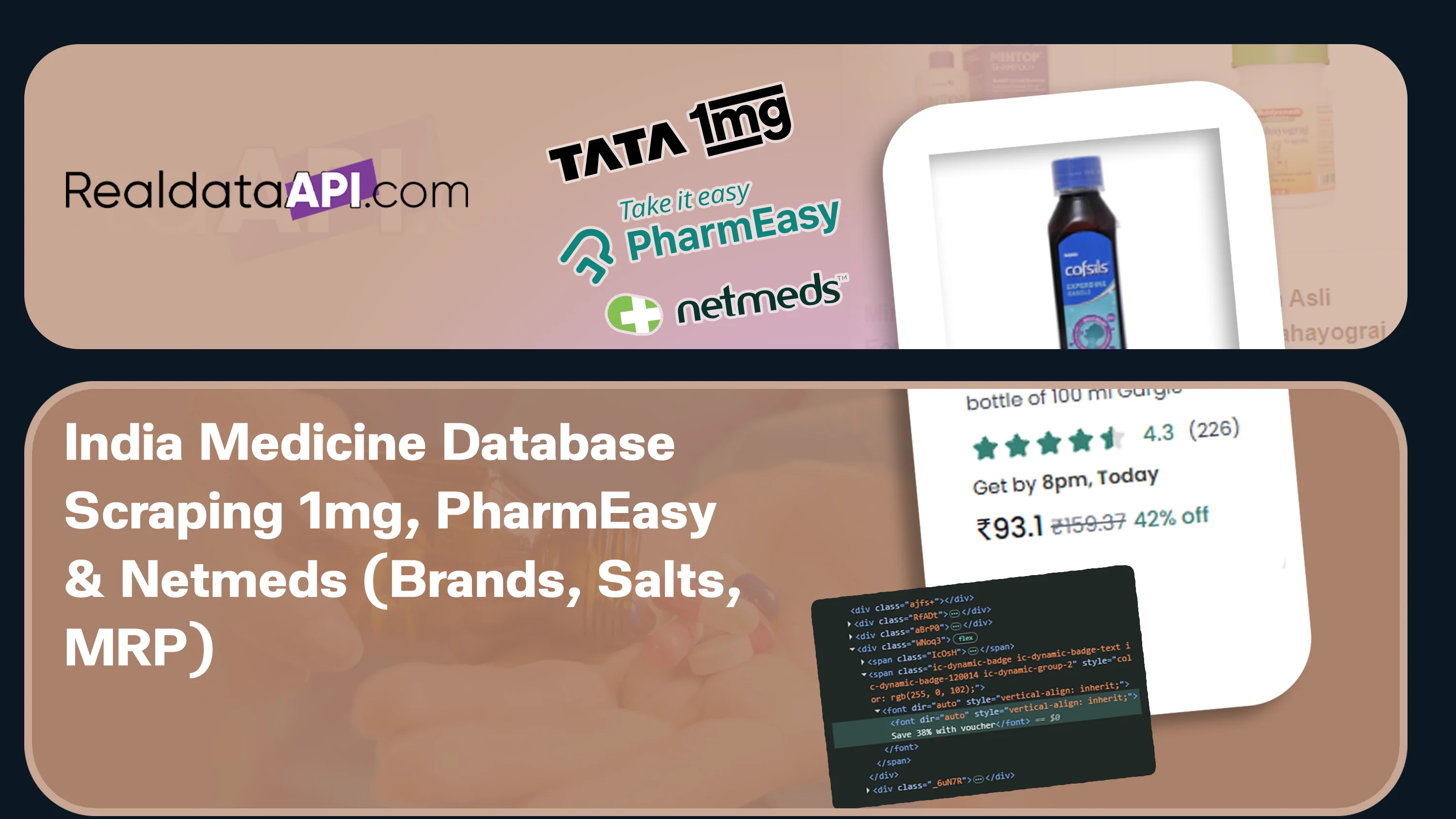
India Medicine Database Scraping: 1mg, PharmEasy & Netmeds (Brands, Salts, MRP)
Matrimony Site Data Scraping: Legal and Ethical Considerations

Flight Price Scraping for India and How Travel Aggregators Use It
Real Estate Data Scraping from Zillow, Realtor & Redfin for Niche Property Leads



.png)


