.gif)
.png)
Introduction
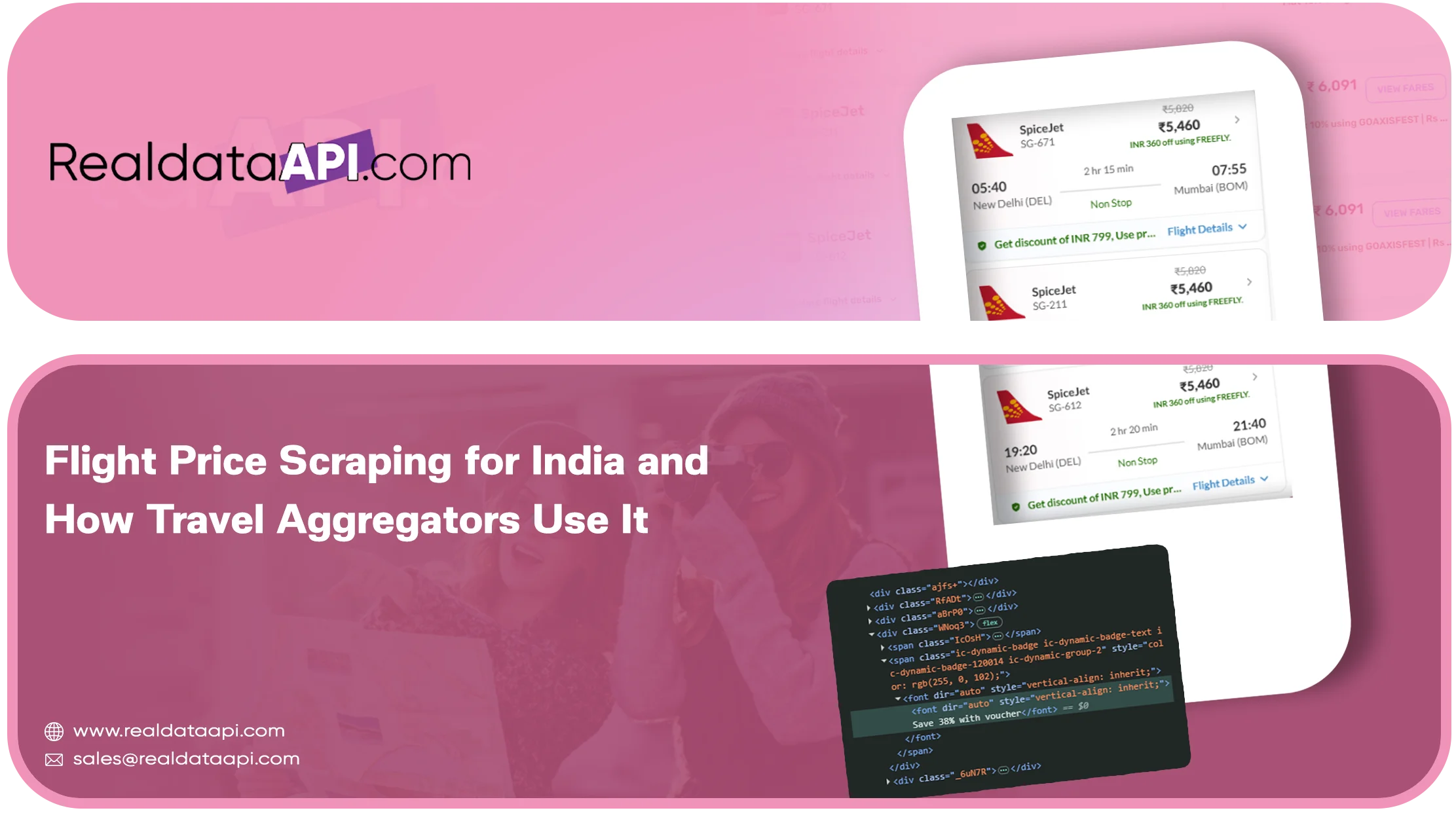
Airfares change many times a day. Travel agencies, comparison sites, corporate travel desks and analysts all depend on up-to-date fare data to price products and spot trends. For broader travel-market collection, explore the Travel Data Scraping, which covers flight and hotel pricing, availability and related travel fields.
What fare data includes
- Origin, destination, travel date and return date
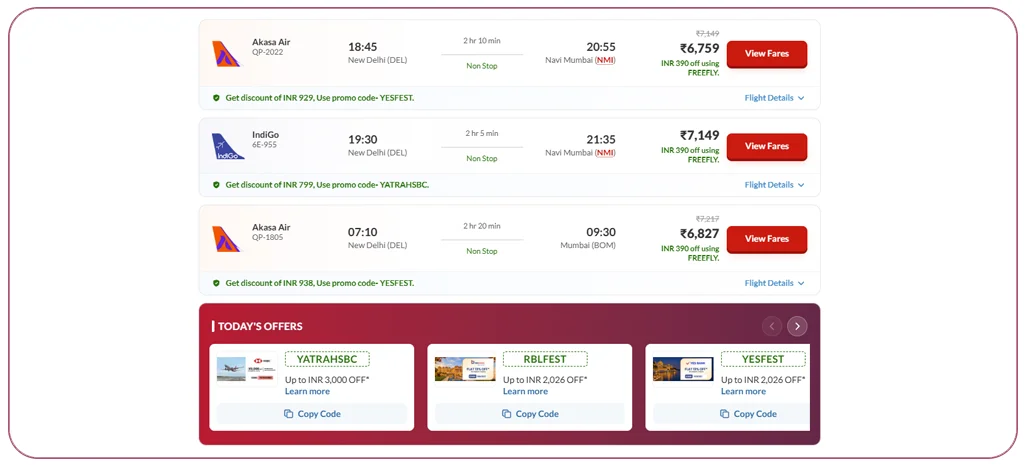
- Airline, flight number, departure and arrival times
- Fare class, base fare, taxes and total price
- Stops, layover duration and total journey time. A dedicated flight price data scraping solution can help structure route, airline, schedule and fare details for analysis.
- Baggage allowance and refund rules where shown
- Seat availability signals
How collection works
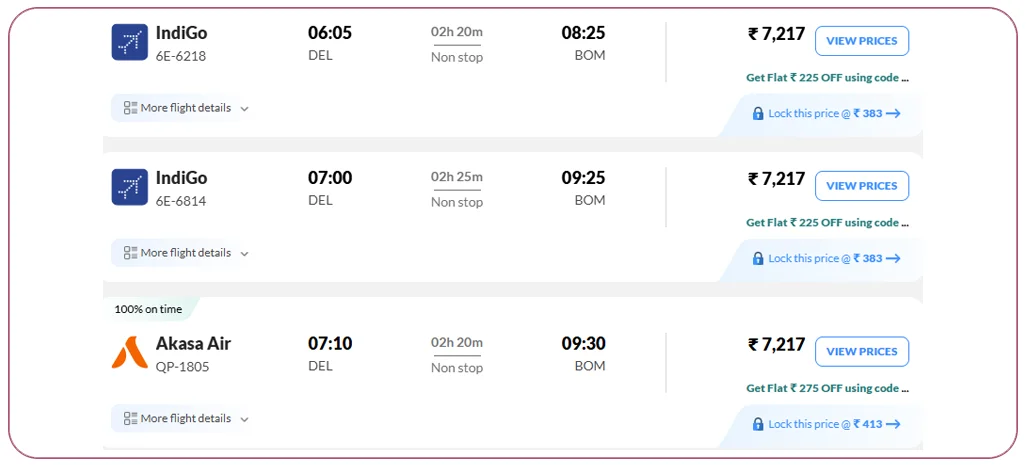
The scraper runs searches for chosen routes and date ranges on airline sites or travel portals, then stores the fares along with the time of the search. Repeating the same search over days shows how price changes as the travel date approaches.
Use cases
For multi-source fare comparisons and recurring snapshots, the Travel Scraping API supports scheduled collection and structured output.
- Price comparison: show the cheapest option across providers
- Fare alerts: notify users when prices drop
- Demand analysis: compare busy and quiet routes, weekdays and festivals
- Competitive pricing for travel agents who bundle flights and hotels
Challenges
Flight search pages are dynamic, use bot protection and limit repeated queries. Prices depend on search date, device and sometimes the session, so a consistent collection method is key. Large route lists need careful scheduling.
Designing a fare data collection plan
If you need to expand from flight fares into accommodation rates and related travel signals, see travel data scraping options.
Before scraping, decide four things: which routes, which travel dates, how far ahead and how often. A typical plan covers the top domestic routes for the next 60 to 90 days, collected a few times a day. For research, a smaller sample of routes collected daily is often enough to show clear patterns.
The fare data model
- Search metadata: search date and time, origin, destination, travel date and passengers
- Itinerary details: airline, flight numbers, departure and arrival times, stops and duration
- Price details: base fare, taxes, total price and currency
- Conditions: baggage, refundability and fare family where shown
- Source: the airline site or travel portal the fare came from. For route-level fare tracking, compare the required fields with the flight data scarping service before defining the data model.
Booking-window and demand analysis
When the same route is searched repeatedly, you can plot price against days to departure. This shows the point at which fares typically start to rise, how weekday and weekend departures differ and how festival periods change demand. Travel agents use this to decide when to buy and when to advise customers to book.
Example: a fare alert feature
A travel app wants to alert users when a Mumbai to Delhi fare falls below a set level. The app stores each fare snapshot, compares it with the recent average and sends an alert when the price drops sharply. Because every snapshot carries a time stamp, the app can also show users how the price has moved over the past week.
Why choose Real Data API for flight price data scraping
Real Data API designs scheduled collection for chosen routes, handles dynamic pages and delivers clean fare data as an API or file. You can begin with a small route list to test the process and then scale to a wider network. For an example of provider-specific flight and hotel data collection, see the EaseMyTrip API, which describes fare, schedule and availability fields.
FAQs
1. Can I get domestic and international routes?
Yes, based on the sources you choose.
2. How often should fares be collected?
For active pricing, several times a day. For research, daily is often enough.
3. Why do the same flight prices differ between searches?
Fares change as seats sell and as airlines update pricing, so every record stores the exact time of the search.
4. Can I get baggage and refund rules?
Where the page shows them, yes.
5. Can I track fares for specific airlines only?
Yes. The collection can be limited to chosen airlines, routes and dates. To discuss sources, route coverage and refresh frequency, review the Travel Scraping API and scope a pilot around your target routes.
6. How many routes can be tracked?
The number depends on the refresh frequency. Larger route lists or very frequent refreshes need more infrastructure and are planned during scoping.
Conclusion
Flight price data scraping gives travel companies and analysts a time-stamped record of fares, routes and airlines across India. With a clear collection plan and a clean data model, the data supports price comparison, fare alerts and demand analysis.
Need fare data? Share your routes and frequency with Real Data API.
Latest posts
India Medicine Database Scraping: 1mg, PharmEasy & Netmeds (Brands, Salts, MRP)
Matrimony Site Data Scraping: Legal and Ethical Considerations
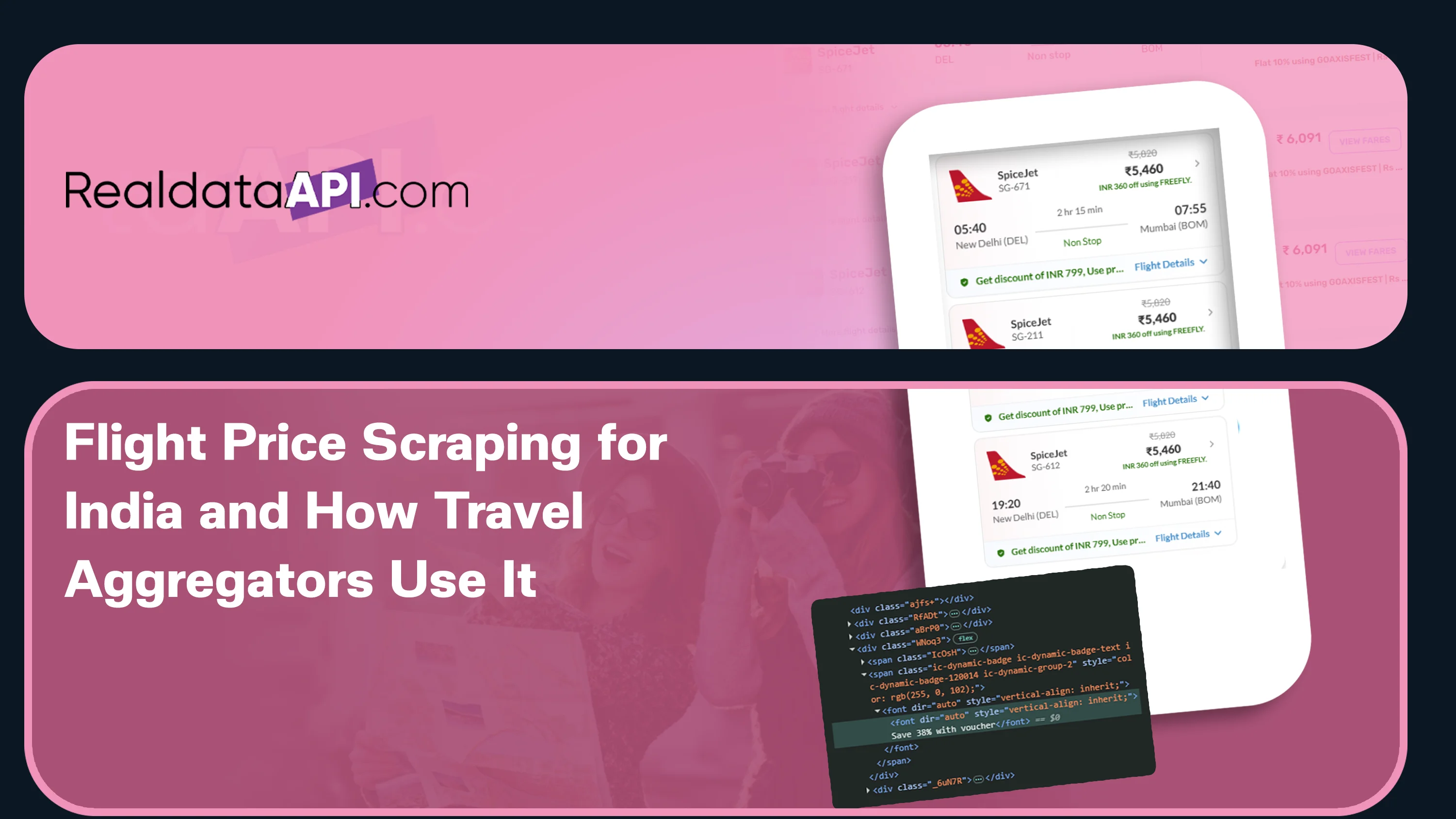
Flight Price Scraping for India and How Travel Aggregators Use It
Real Estate Data Scraping from Zillow, Realtor & Redfin for Niche Property Leads



.png)


