
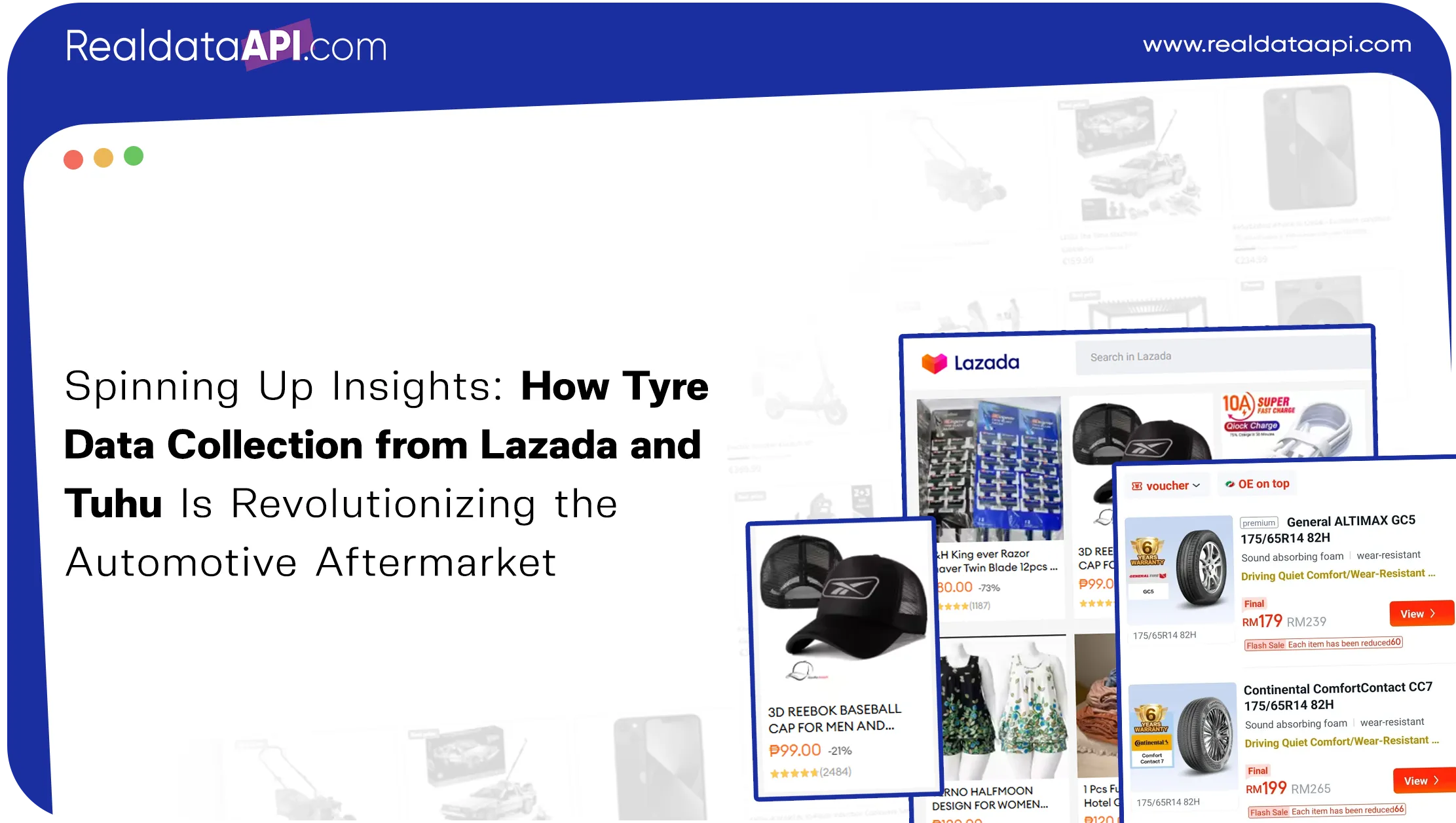
Introduction: The Road Less Scraped
The global tyre market is projected to exceed $300 billion by 2030, with Southeast Asia and China leading the charge in both production and consumption. Yet despite the sheer volume of tyre transactions happening every day online, most distributors, retailers, and fleet operators still make purchasing and stocking decisions based on gut instinct or outdated spreadsheets.
That gap between available data and actionable insight is closing — fast.
Two platforms sit at the center of this shift: Lazada, Southeast Asia's dominant e-commerce marketplace covering markets like Indonesia, Malaysia, Thailand, the Philippines, Vietnam, and Singapore; and Tuhu (途虎养车), China's largest dedicated automotive service and parts platform with over 5,000 physical workshop touchpoints and a massive online catalogue of tyres, lubricants, and accessories.
Together, these platforms contain millions of tyre listings, live pricing data, consumer reviews, fitment compatibility information, brand performance signals, and demand velocity metrics. Collecting, structuring, and analyzing this data isn't just an academic exercise — it's becoming a competitive necessity for anyone operating in the tyre supply chain.
This blog breaks down exactly what data you can collect, why each field matters, and how real businesses are using tyre data from Lazada and Tuhu to outperform competitors in Dynamic pricing, inventory, and product strategy.
What Makes Lazada and Tuhu Uniquely Valuable for Tyre Data?
Lazada: Southeast Asia's Price Discovery Engine
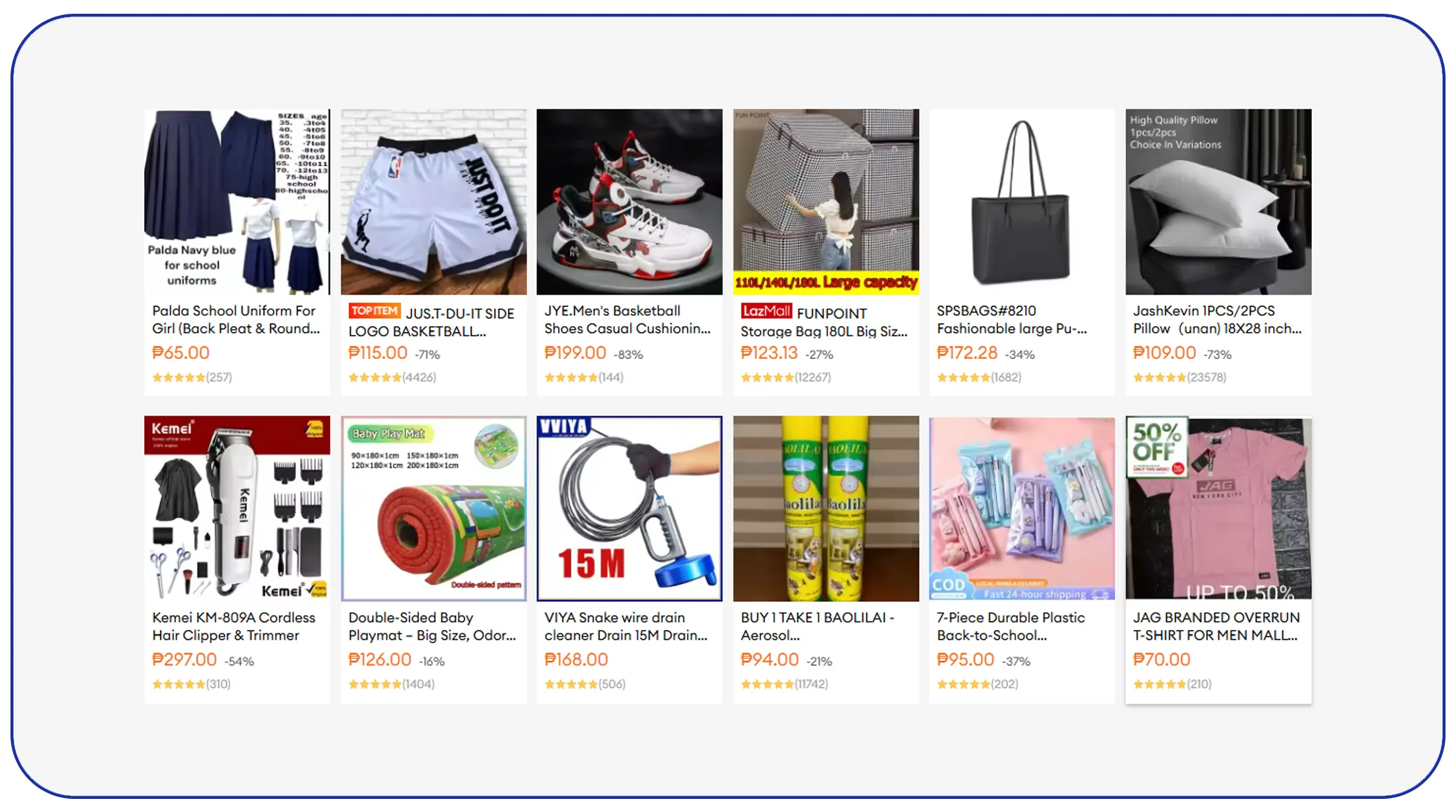
Lazada hosts thousands of tyre SKUs across brands like Michelin, Bridgestone, Goodyear, Continental, Pirelli, and a growing range of Chinese private-label manufacturers entering SEA markets. What makes Lazada particularly interesting for data collection is its layered seller ecosystem — official brand stores, authorized distributors, and independent third-party resellers often list the same SKU at vastly different prices.
Key data points available on Lazada tyre listings include:
- Product title and specifications (brand, model name, size: e.g., 205/55 R16 91V)
- List price vs. discounted price (promotional pricing, flash sale mechanics)
- Seller name, seller rating, and fulfilment type (LazMall vs. marketplace)
- Stock availability and "units sold" indicators
- Customer ratings and review count
- Shipping origin and estimated delivery windows
- Bundle options (e.g., tyre + installation service packages)
- Fitment compatibility tags (vehicle make/model suggestions)
The sheer breadth of sellers on Lazada Scraping API makes it the best-in-class source for price benchmarking and grey market monitoring across Southeast Asia.
Tuhu: China's Deep Automotive Data Layer
Tuhu is a fundamentally different type of platform. Unlike a general marketplace, Tuhu is purpose-built for automotive services — which means its data structure is richer and more technical than anything you'll find on Lazada. Tuhu's tyre pages contain:
- OE (Original Equipment) fitment data — exact tyre specs recommended per vehicle make, model, and year
- Installation pricing — the cost of mounting and balancing per tyre, per city
- In-store inventory signals — real-time stock availability at nearby Tuhu workshops
- Consumer review content — detailed text reviews often mentioning ride quality, noise levels, wet performance, and wear experience
- Brand-tier segmentation — premium, mid-range, and budget tiers clearly organized
- Promotional calendar data — Double 11, 618, and platform-specific campaigns
- Cross-sell associations — tyres frequently purchased alongside wheel alignment, TPMS sensors, or nitrogen inflation
For anyone serving the China market — whether as a brand, importer, or logistics provider — Tuhu is the single richest public-facing source of tyre market intelligence available.
The Core Data Collection Framework
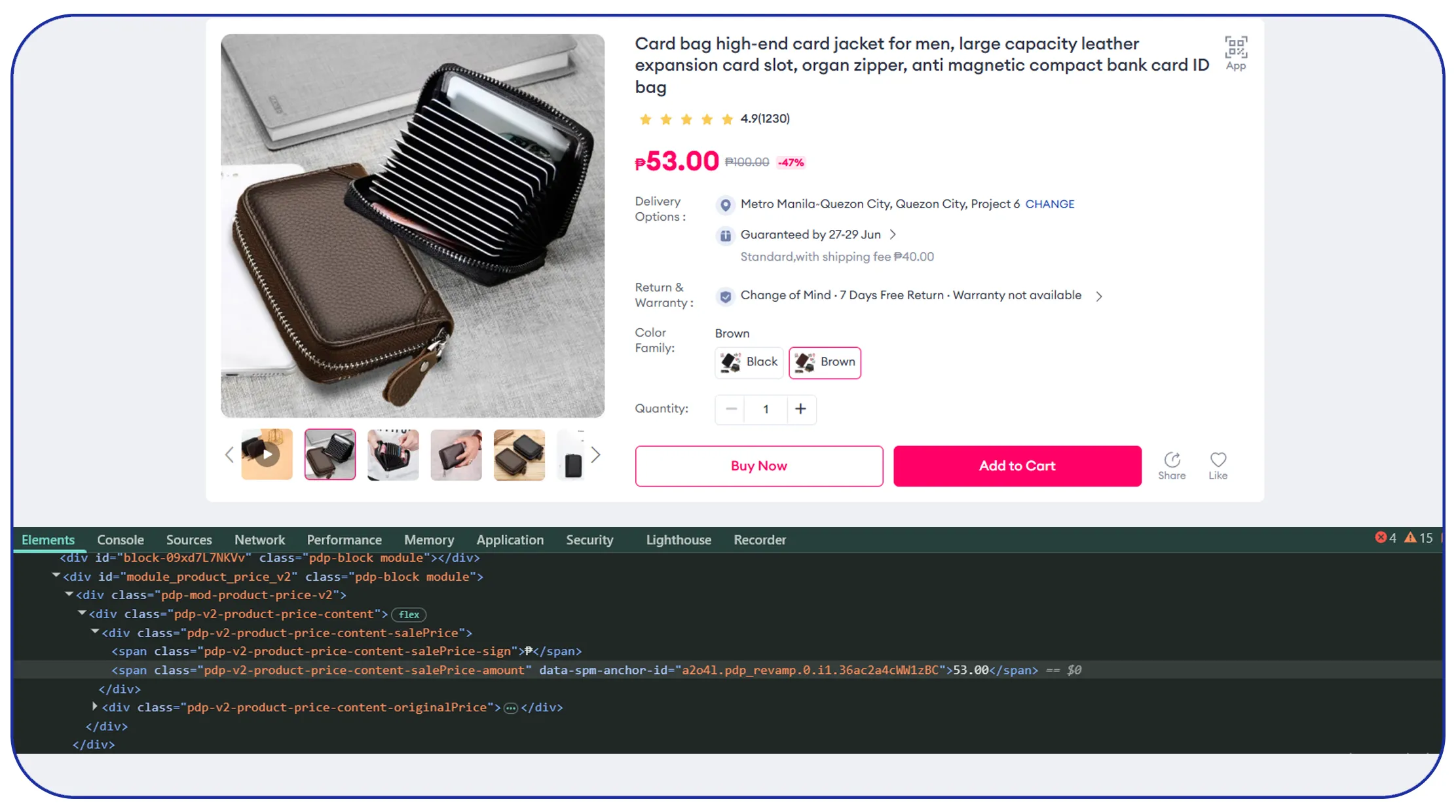
A robust tyre data pipeline from Lazada and Tuhu typically covers four layers:
Layer 1: Product Catalogue Data
This is the foundation — structured information about every tyre listed on the platform. Fields include SKU identifiers, brand, product line, size (width, aspect ratio, rim diameter), speed rating, load index, run-flat capability, season type (summer, winter, all-season), and silica or performance compound indicators.
Getting this right is non-trivial. Tyre naming conventions are inconsistent across sellers — "225/45R17 94W XL" may appear as "225/45/17 94W Extra Load" on another listing. A quality data pipeline normalizes these variants into a canonical schema.
Layer 2: Pricing and Promotional Data
Prices on both Lazada and Tuhu fluctuate daily. Promotional structures — percentage discounts, fixed cashback, bundle deals, platform vouchers — can reduce effective prices by 20–40% during peak sale periods. Capturing price at the right frequency (minimum daily, ideally 2–4x per day during major campaigns) is essential for meaningful trend analysis.
On Tuhu specifically, installation costs are variable by geography, which means effective total cost of ownership data requires correlating product price with service pricing at the city or district level.
Layer 3: Demand and Velocity Signals
Both platforms expose proxies for sales volume — review counts, "X sold in last 30 days" badges, bestseller rankings, and search result positioning. While these aren't exact sales figures, they function as high-quality demand proxies when tracked longitudinally.
On Lazada, trending products surface through category bestseller lists and LazMall curated pages. On Tuhu, demand signals appear through the platform's own recommendation engine, which surfaces popular fitment options by vehicle type.
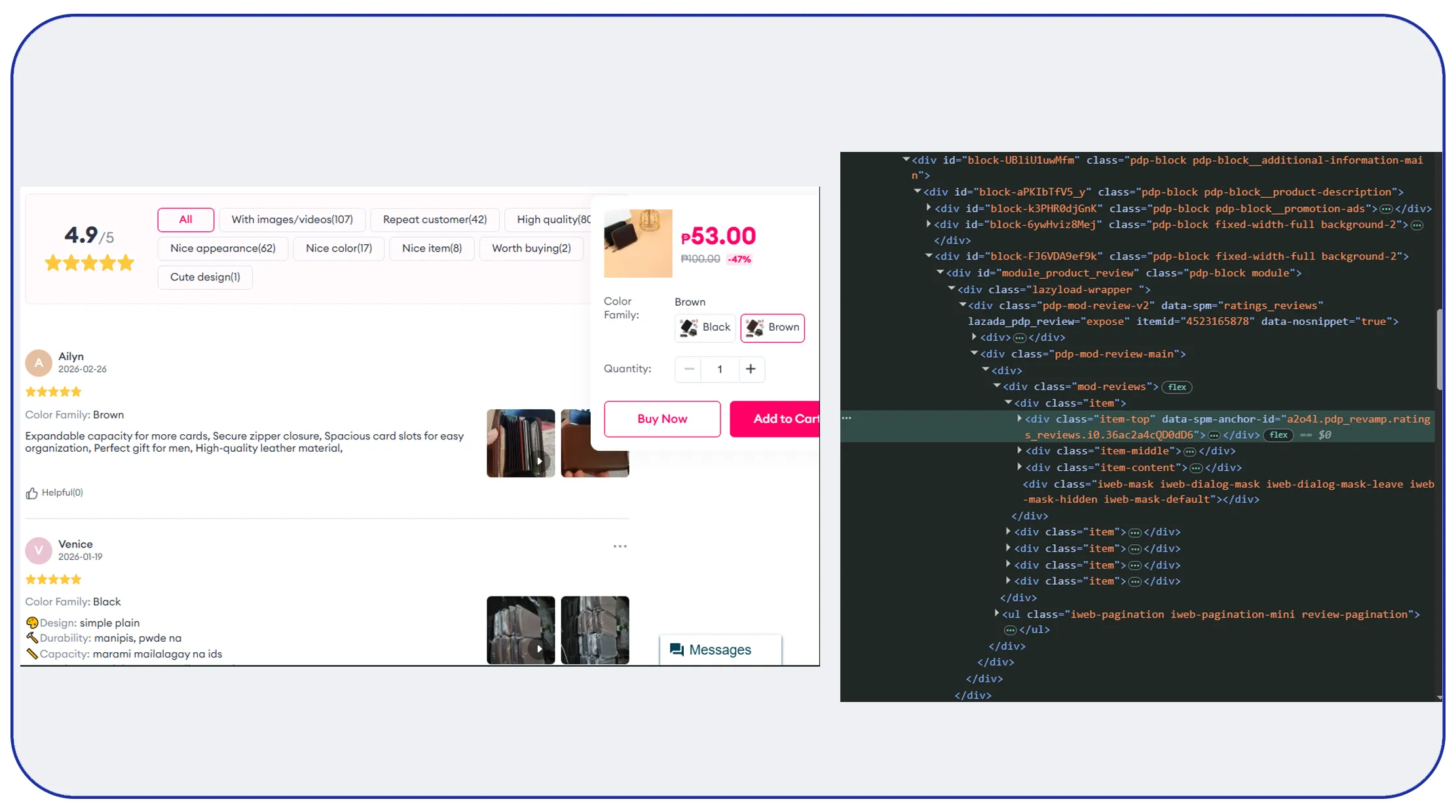
Layer 4: Review and Sentiment Data
Consumer Sentiment Analysis on tyre listings are uniquely informative because buyers are self-selected experts — someone who bought 205/55 R16 tyres for their Toyota Corolla and wrote a review after 6 months of driving has real, relevant performance data. Mining this text at scale reveals:
- Which brands dominate in specific size categories
- Common failure modes (premature wear, sidewall cracking, poor wet-weather grip)
- Price-performance perception by tier
- Installation experience satisfaction (relevant for Tuhu's O2O model)
Real-World Use Cases
Use Case 1: Dynamic Pricing Strategy for Tyre Distributors
A regional tyre distributor in Malaysia supplying both physical shops and an online storefront can use Lazada price data to monitor competitor pricing in real time. By tracking the 20 most common passenger car tyre sizes across five competing sellers daily, the distributor can identify when a competitor runs a flash sale, assess the depth and duration of the discount, and decide whether to match, beat, or hold price — and by how much.
This eliminates the lag of manual competitive price checks (which typically happen weekly or monthly) and allows the distributor to respond to market pricing within hours rather than days.
Use Case 2: Tyre Brand Market Share Analysis in China
A European tyre manufacturer wanting to understand its performance in China's mid-range segment can use Tuhu data to measure:
- Its share of listings in key size categories (e.g., 225/50 R17, the dominant size for mid-size sedans)
- Its review count relative to competitors like Giti, ZC Rubber, and Hankook in the same tier
- Its pricing position relative to domestic Chinese brands and Korean competitors
- Its presence or absence in Tuhu's curated "recommended for vehicle" results
This provides a clear competitive map without requiring costly primary research.
Use Case 3: Inventory Planning for E-Commerce Tyre Retailers
An e-commerce tyre retailer operating across Indonesia and Thailand can use Lazada demand signals — specifically velocity proxies and out-of-stock tracking — to improve inventory forecasting. When a specific size (e.g., 185/65 R14, common on compact city cars like the Honda Brio popular in Indonesia) consistently shows as out-of-stock across multiple sellers while maintaining high review velocity, that's a clear signal to increase stock.
Conversely, sizes with high inventory, low review velocity, and declining price suggest over-supply — a cue to run promotions or reduce reorder quantities.
Use Case 4: New Market Entry Assessment
A Chinese budget tyre brand looking to expand into Vietnam or the Philippines can use Lazada data to do Market Research and access readiness before investing in distributor relationships and warehouse stock. By analyzing existing listings in the target country — which sizes move, what price points work, which brands have established review bases — the brand can make a data-driven decision about which SKUs to launch first, what price to enter at, and which seller categories to target (LazMall for brand trust, or marketplace for price competition).
Use Case 5: Fleet Procurement Intelligence
A corporate fleet operator managing 500+ vehicles can use Tuhu data to benchmark service costs. Because Tuhu publishes tyre-plus-installation pricing by city, a fleet manager can compare the true cost of outfitting vehicles in Beijing versus Chengdu versus Shenzhen for the same tyre model — and use this data to negotiate bulk service contracts with Tuhu workshop partners.
Use Case 6: OEM and Vehicle Fitment Research
Automotive OEMs and their tier-1 suppliers monitor Tuhu's OE fitment data to understand what tyres Chinese consumers are fitting as replacements for factory-original equipment. If a model ships with Michelin Primacy but replacement data shows strong migration to Continental or domestic brands, that signals a price-performance gap that OEM teams need to address.
Challenges in Tyre Data Collection at Scale
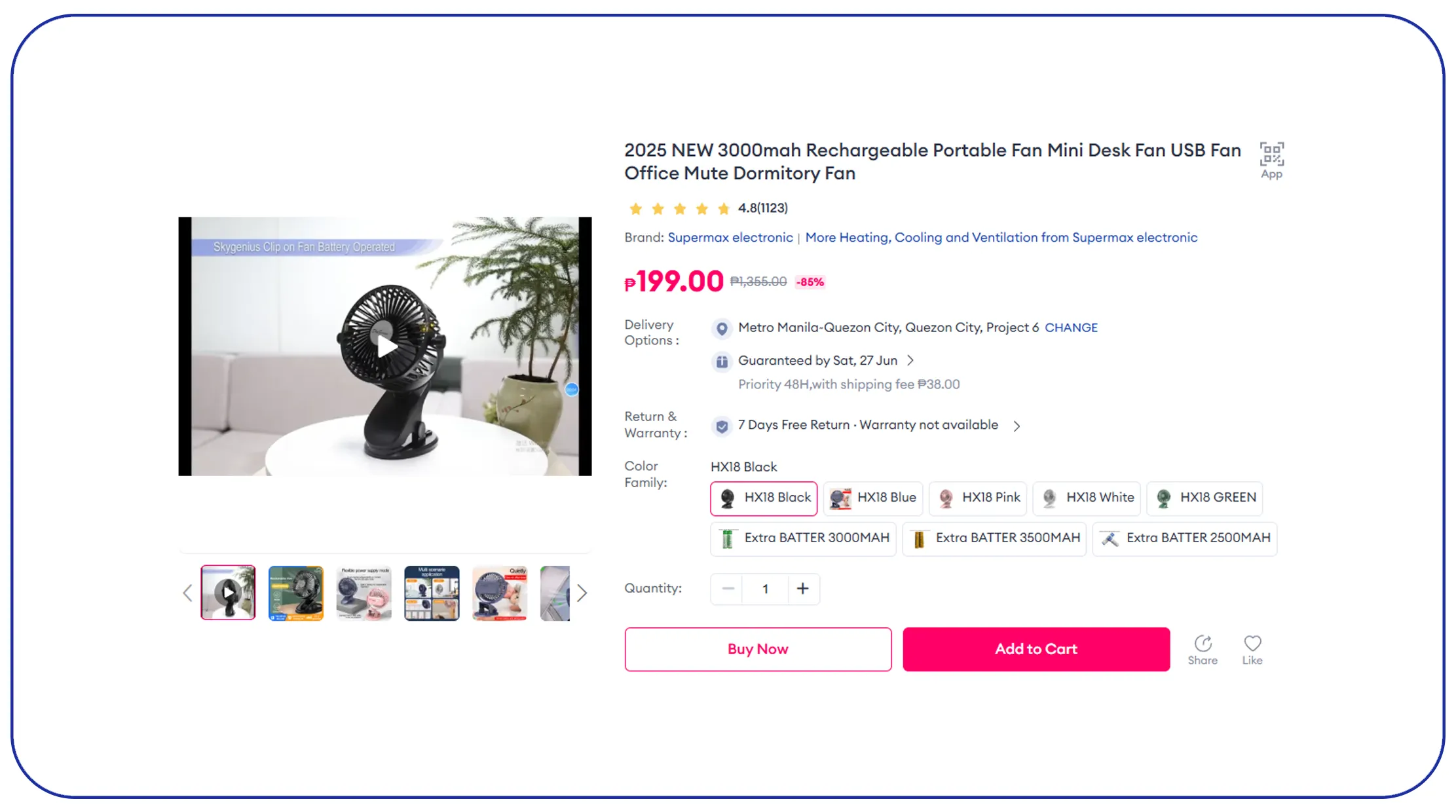
Collecting tyre data from Lazada Product and Review Datasets and Tuhu is not without friction. Several challenges make quality data harder to obtain without the right tooling:
Normalization complexity — As noted, tyre sizing and naming are inconsistently formatted across sellers. A reliable data pipeline needs standardized parsing logic for tyre size strings, speed ratings, and load indices.
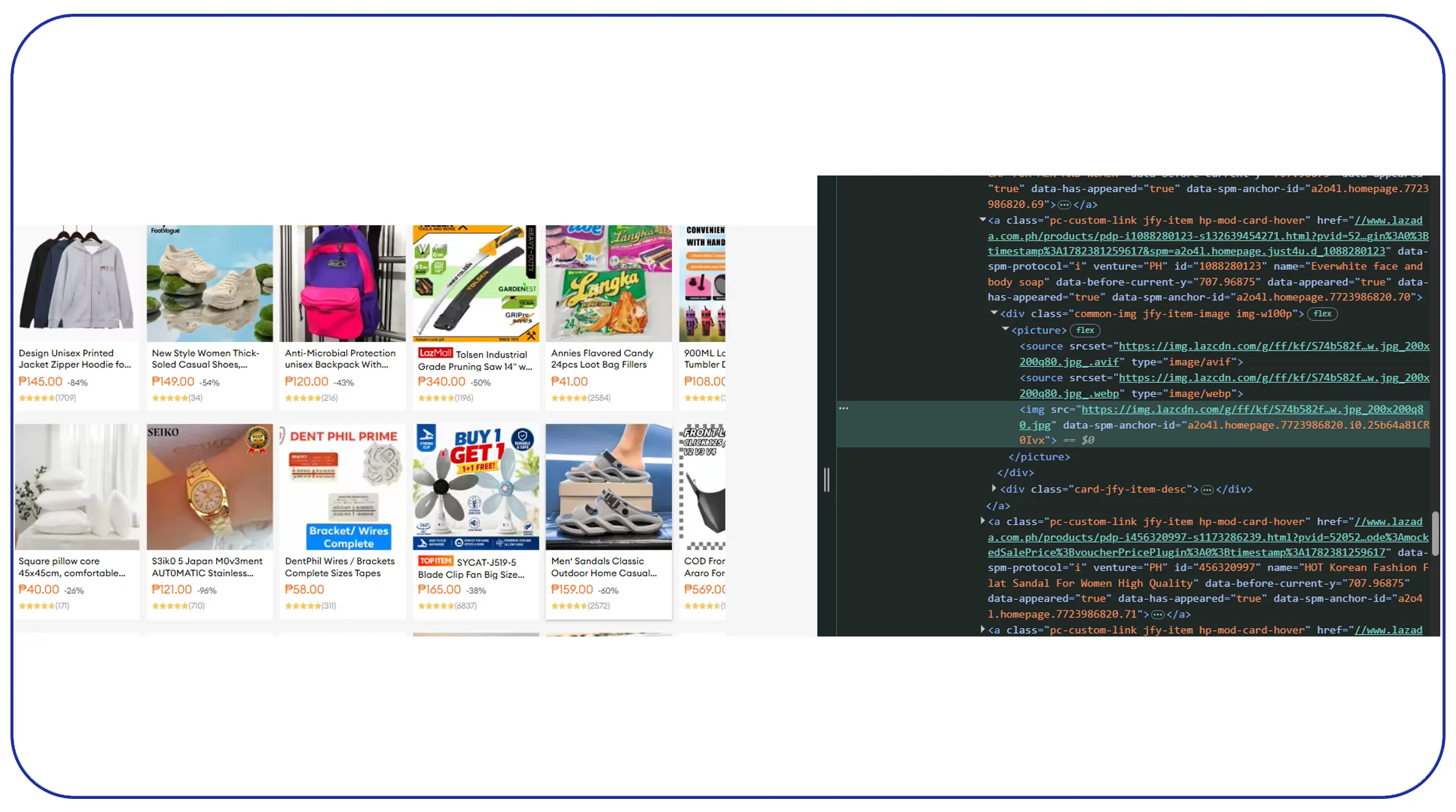
Dynamic rendering — Both platforms use JavaScript-rendered pages, meaning traditional static HTML scrapers fail to capture full product details. Modern data collection must handle client-side rendering gracefully.
Anti-bot protections — Lazada and Tuhu implement rate limiting, CAPTCHA challenges, and browser fingerprinting. Compliant data collection must respect platform terms of service and use appropriate access patterns.
Currency and market normalization — Lazada spans six currencies and multiple tax regimes. Meaningful cross-market analysis requires currency normalization and tax-adjusted pricing comparison.
Review language diversity — Lazada reviews span Bahasa Indonesia, Thai, Filipino, Vietnamese, and Malay. Sentiment analysis across these languages requires multilingual NLP pipelines.
Building vs. Buying: The Data Infrastructure Decision
Organizations entering this space face a classic build-versus-buy decision.
Building a custom tyre data pipeline means full control over data schema, collection frequency, and coverage — but requires significant engineering investment in crawler infrastructure, proxy management, anti-bot handling, data normalization, and storage. Maintenance overhead is substantial as platform structures change.
Using a third-party data provider offers faster time-to-value, pre-normalized schemas, and managed infrastructure — at the cost of less customization and dependence on vendor data quality.
For most tyre businesses without a dedicated data engineering team, starting with a structured API provider and building custom enrichment logic on top delivers the best return on investment.
Conclusion: The API That Powers It All
Tyre data from Lazada and Tuhu isn't a future-state ambition — it's available now, structured enough to power real decisions, and increasingly accessible through commercial data infrastructure.
For teams ready to integrate structured tyre data programmatically, Real Data API is the purpose-built solution that delivers exactly this. From live tyre catalogue extraction across Lazada's six Southeast Asian markets to deep product and pricing feeds from Tuhu's China-wide automotive platform, Real Data API provides a single, normalized endpoint for all your tyre market intelligence needs — no custom crawler infrastructure, no proxy management, no normalization headaches.
Whether you're benchmarking competitor pricing in real time, tracking demand velocity by tyre size, monitoring brand share shifts in the China market, or building a fleet procurement dashboard, Real Data API delivers clean, structured, and continuously refreshed data ready for direct integration into your analytics stack, pricing engine, or ERP system.
The tyre market moves fast. Prices change overnight, demand spikes before rainy seasons, and new brands are entering Southeast Asia every quarter. The businesses that win in this environment won't be the ones with the best instincts — they'll be the ones with the best data pipelines.
Real Data API gives you that edge. Start collecting. The road ahead belongs to those who see it clearly.
Latest posts

How Ixigo API Helps Businesses Solve Flight, Train, Hotel, Travel, and Pricing Data Challenges

How to Extract Restaurants, Menus, Prices, Ratings, and Business Data for Market Insights

How Brands Track Restaurant, Menu, Pricing, Rating, and Delivery Data for Competitive Intelligence

How Retailers Track Fashion Products, Prices, Brands, and Category Data for Competitive Intelligence Using AJIO API







.png)