
Introduction
Businesses can improve product discovery and competitor monitoring by continuously tracking product mentions, prices, reviews, engagement signals, and emerging consumer interests. Scrape Xiaohongshu product trends in real time helps brands turn fast-changing social commerce signals into structured intelligence for product, pricing, marketing, and competitive decisions.
Illustrative data point: A retailer monitoring 50,000 product signals every day would generate more than 18 million observations in one year. Manual tracking at this scale quickly becomes difficult.
Xiaohongshu has become an important discovery platform for consumers researching products, experiences, beauty, fashion, food, lifestyle products, and other categories. Trends can develop quickly. A product that receives limited attention today may become highly visible after a few influential posts.
The Xiaohongshu API can support structured data workflows where suitable access is available. Businesses can combine approved access methods with automated collection, validation, storage, and analytics.
The main challenges this approach addresses include:
- Slow product discovery.
- Delayed trend identification.
- Manual competitor monitoring.
- Inconsistent product information.
- Limited historical trend visibility.
- Difficulty tracking consumer interests.
- Slow assortment decisions.
- Fragmented market research.
For brands, retailers, e-commerce managers, agencies, and market researchers, structured Xiaohongshu information can provide a clearer view of what consumers are discussing, discovering, and responding to.
How Can Businesses Build a Reliable Xiaohongshu Data Workflow?
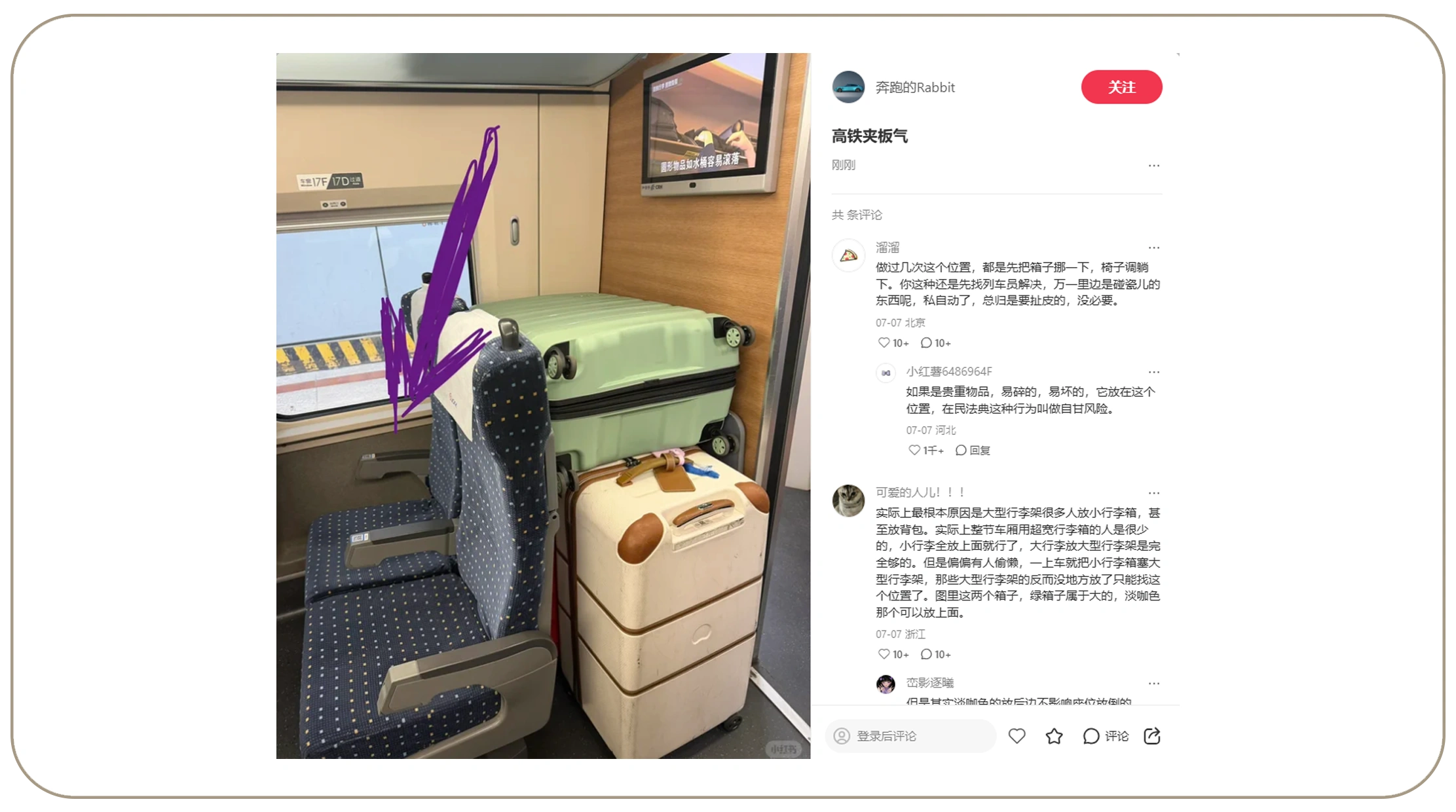
A reliable workflow starts with clearly defined data requirements. The Xiaohongshu data extraction guide approach should identify the exact information needed before collection begins.
Businesses may want product names, categories, prices, brands, post titles, hashtags, engagement signals, review information, creator details, timestamps, and product-related mentions. The fields depend on the business objective.
For product discovery, product names and categories matter most. For competitor monitoring, pricing and assortment fields become more important. For consumer research, engagement and content themes can provide additional context.
A simple workflow includes:
- Define target categories.
- Identify permitted public sources.
- Select required data fields.
- Collect structured records.
- Normalize product information.
- Remove duplicates.
- Add timestamps.
- Store historical observations.
- Analyze trends.
- Deliver results through dashboards or APIs.
Timestamping is important. It allows businesses to compare current signals with earlier observations.
What Data Can Be Organized?
- Product names.
- Product categories.
- Brand names.
- Prices where publicly available.
- Post information.
- Engagement signals.
- Hashtags.
- Creator information.
- Review signals.
- Collection timestamps.
Illustrative Monitoring Growth
| Year | Example Records Monitored* | Primary Goal |
|---|---|---|
| 2020 | 10,000 | Basic product research |
| 2021 | 25,000 | Trend identification |
| 2022 | 50,000 | Competitor tracking |
| 2023 | 100,000 | Product intelligence |
| 2024 | 250,000 | Historical monitoring |
| 2025* | 500,000 | Automated intelligence |
| 2026* | 1,000,000 | Continuous monitoring |
*Illustrative volumes, not official Xiaohongshu statistics.
The workflow should also include quality checks. Duplicate products can distort trend analysis. Missing prices can affect pricing comparisons. Different product names can make the same item appear as separate products.
Normalization helps solve these issues.
For example, "Vitamin C Serum 30ml," "Vitamin C Face Serum 30 ML," and "30ml Vitamin C Serum" may represent the same product. A normalized dataset can connect these records.
The result is a cleaner foundation for product discovery and competitive analysis.
How Can Brands Collect Public Product Signals for Trend Discovery?
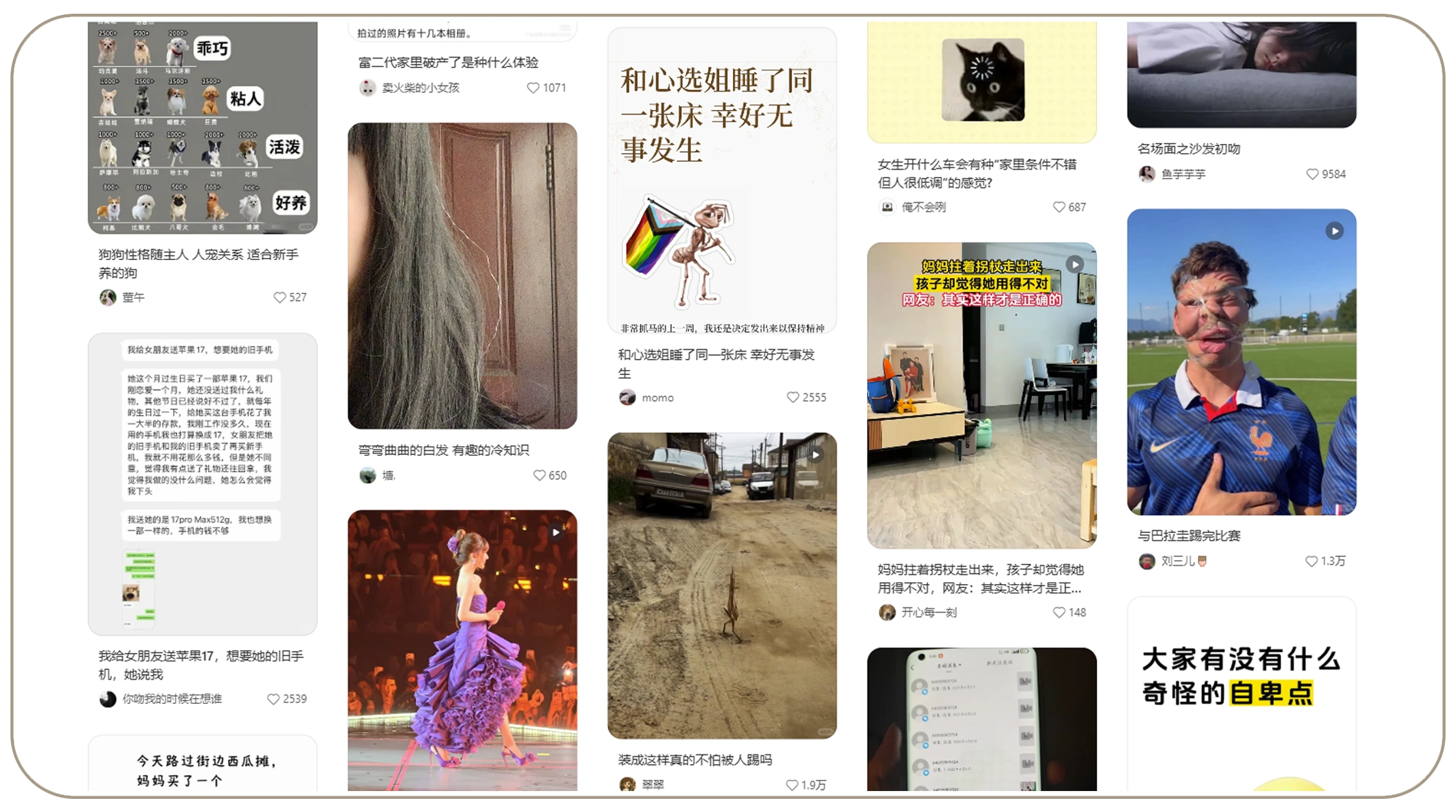
Brands can use permitted public information to identify emerging products, popular categories, and consumer interests. Businesses that extract public Xiaohongshu data can organize observable signals into structured datasets for research and analysis, subject to applicable platform rules and legal requirements.
Product discovery works best when businesses monitor several signals instead of relying on one metric.
For example, a sudden increase in mentions may indicate growing attention. Higher engagement can suggest stronger audience interest. Repeated appearances across different creators may indicate broader adoption.
Which Signals Matter Most?
- Product mentions.
- Content frequency.
- Engagement levels.
- Product categories.
- Hashtag frequency.
- Review activity.
- Creator activity.
- Price information where available.
- Changes over time.
Trend detection should also consider time. A product mentioned 500 times in one day may be experiencing a short viral spike. A product showing steady growth for three months may represent a stronger market opportunity.
Illustrative Trend Monitoring
| Year | Product Signals* | Analysis Focus |
|---|---|---|
| 2020 | 20,000 | Product mentions |
| 2021 | 40,000 | Category trends |
| 2022 | 80,000 | Engagement |
| 2023 | 150,000 | Creator influence |
| 2024 | 300,000 | Product discovery |
| 2025* | 600,000 | Competitive trends |
| 2026* | 1,200,000 | Real-time monitoring |
*Illustrative dataset volumes.
A useful approach is to calculate trend velocity.
Trend Velocity = Current Mentions − Previous Mentions
Businesses can also compare percentage growth between two periods. This helps identify products gaining attention faster than their category average.
Trend analysis can support several decisions:
- Which products should be researched?
- Which categories deserve expansion?
- Which products need competitive monitoring?
- Which products should receive marketing attention?
- Which consumer interests are emerging?
Businesses should avoid assuming that social attention always equals sales. Social signals show interest and visibility. Internal sales data, conversion data, and other market sources can provide additional evidence.
This distinction helps brands make more responsible decisions from social commerce intelligence.
How Can Automated Services Improve Product and Competitor Monitoring?
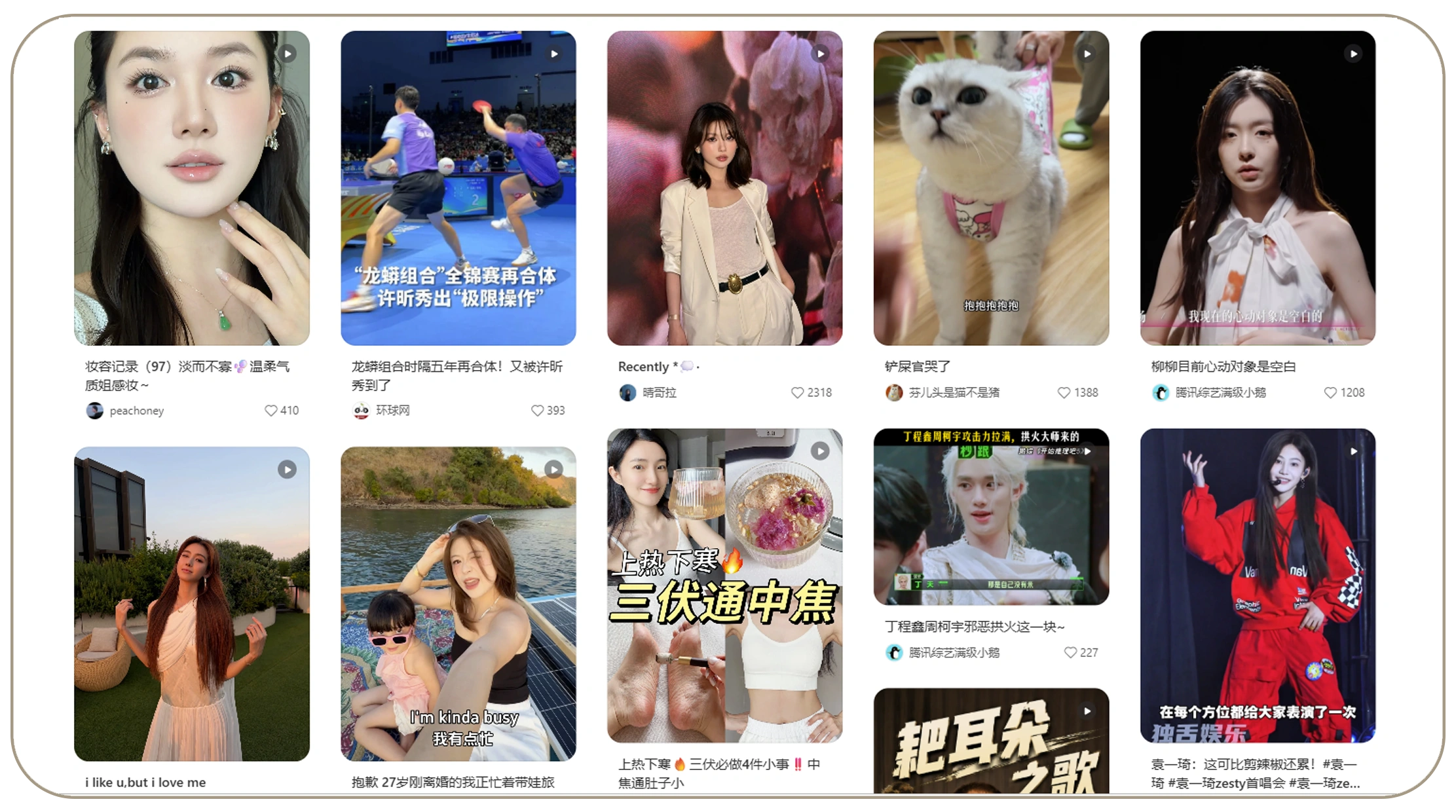
Manual monitoring becomes difficult as the number of products, categories, brands, and competitors increases. Xiaohongshu Data Collection Services can help businesses organize recurring data workflows instead of checking individual pages manually.
Automation provides consistency. A scheduled process can collect defined fields at regular intervals and attach timestamps to each record.
This makes it easier to compare today's data with previous observations.
For example, a beauty retailer can monitor:
- New product mentions.
- Competitor products.
- Pricing changes.
- Popular categories.
- Engagement signals.
- Product reviews.
- Promotional activity.
- Emerging brands.
What Does an Automated Workflow Include?
Discovery: Identify relevant product categories and competitors.
Collection: Gather permitted public information according to defined requirements.
Processing: Normalize product names, categories, and other fields.
Validation: Detect missing, duplicate, or inconsistent records.
Storage: Maintain historical observations.
Analysis: Calculate growth, frequency, and competitive changes.
Delivery: Send structured information to dashboards, databases, or APIs.
Illustrative Automation Scale
| Year | Example Sources* | Refresh Model |
|---|---|---|
| 2020 | 100 | Weekly |
| 2021 | 250 | Weekly |
| 2022 | 500 | Daily |
| 2023 | 1,000 | Daily |
| 2024 | 2,000 | Multiple times daily |
| 2025* | 4,000 | Scheduled |
| 2026* | 8,000 | Configurable |
*Illustrative monitoring scope.
Automation can also reduce research delays. If a competitor introduces a new product, the business can identify the change during its next scheduled collection rather than waiting for a manual review.
The system can also create alerts.
For example:
- New product detected.
- Price changed.
- Product category expanded.
- Engagement increased sharply.
- Competitor assortment changed.
- Product mentions accelerated.
This creates a more proactive research process.
Businesses should define refresh frequency based on their use case. Hourly monitoring may make sense for fast-moving categories. Daily or weekly collection may be sufficient for slower categories.
How Can an API Make Large-Scale E-Commerce Monitoring Easier?

An E-Commerce Data Scraping API can help connect structured marketplace and social commerce information with internal business systems.
An API-based workflow allows multiple teams to access standardized information without creating separate collection processes.
A pricing team may need product prices. A merchandising team may need assortment information. A marketing team may need trend signals. A research team may need historical records.
One centralized pipeline can support all of these needs.
What Can an API Workflow Deliver?
- Structured product records.
- Historical observations.
- Product categories.
- Pricing information where available.
- Engagement signals.
- Competitor records.
- Trend indicators.
- Timestamped data.
- Analytics-ready outputs.
Illustrative API Data Growth
| Year | Example Records* | Business Application |
|---|---|---|
| 2020 | 1 million | Product research |
| 2021 | 3 million | Competitor analysis |
| 2022 | 7 million | Trend monitoring |
| 2023 | 15 million | Dashboard reporting |
| 2024 | 25 million | Automated intelligence |
| 2025* | 40 million | Multi-team analytics |
| 2026* | 60 million | Enterprise monitoring |
*Illustrative record volumes.
An API can also reduce repetitive data handling. Instead of manually exporting spreadsheets, structured records can flow into databases, business intelligence platforms, or internal applications.
Data validation remains important. An API does not automatically guarantee data quality. Businesses need rules for missing values, duplicates, unexpected formats, and outdated records.
A scalable architecture should therefore include:
- Collection.
- Validation.
- Normalization.
- Storage.
- API delivery.
- Monitoring.
- Reporting.
This approach makes trend intelligence easier to integrate into existing workflows.
For larger businesses, API delivery also supports different use cases without requiring every department to manage its own extraction process.
How Can a Historical Dataset Improve Product Discovery?

A historical E-Commerce Dataset gives businesses more than a current snapshot. It shows how product visibility, pricing, assortment, and consumer interest change over time.
Historical records can reveal whether a trend is growing, stable, seasonal, or declining.
Suppose a skincare product receives 10,000 mentions this month. That number alone provides limited context. If the same product received 2,000 mentions three months earlier, the increase becomes much more meaningful.
What Can Historical Data Show?
- Emerging products.
- Declining products.
- Seasonal demand.
- New competitors.
- Category expansion.
- Pricing movements.
- Changes in consumer interests.
- Promotional periods.
- Product lifecycle patterns.
Illustrative Historical Coverage
| Year | Example Records* | Main Insight |
|---|---|---|
| 2020 | 500K | Baseline |
| 2021 | 1M | Category growth |
| 2022 | 2M | Product trends |
| 2023 | 5M | Competitor activity |
| 2024 | 10M | Consumer signals |
| 2025* | 20M | Trend acceleration |
| 2026* | 40M | Long-term intelligence |
*Illustrative figures.
Historical data also helps with product lifecycle analysis.
A common pattern can be:
Discovery → Growth → Peak Interest → Stabilization → Decline
Not every product follows this pattern. The dataset allows analysts to identify different trajectories.
Businesses can also compare categories. For example, beauty products may show stronger seasonal activity than household products. Fashion categories may respond more quickly to influencer-driven trends.
Historical datasets support better forecasting because they provide context.
They also help competitors understand market movement. If a competing brand continuously increases its product visibility, a retailer can investigate the category, content themes, and product positioning behind that growth.
The goal is not to predict the future with certainty. It is to provide evidence that improves planning.
How Can Market Research Teams Use Xiaohongshu Trend Data?

Market Research teams can use product and consumer signals to study categories, competitors, emerging brands, and changing customer interests.
A strong research workflow begins with a defined question.
For example:
- Which beauty products are gaining attention?
- Which brands appear frequently?
- Which categories are growing?
- Which competitors are introducing new products?
- Which products receive strong engagement?
- Which consumer interests are changing?
The dataset can then be structured around those questions.
What Research Metrics Can Be Compared?
- Product mention frequency.
- Engagement growth.
- Category growth.
- Brand visibility.
- Product pricing.
- Competitor assortment.
- Creator activity.
- Review signals.
- Trend velocity.
Illustrative Research Scope
| Year | Categories Studied* | Primary Research Goal |
|---|---|---|
| 2020 | 25 | Product discovery |
| 2021 | 40 | Category analysis |
| 2022 | 60 | Competitor tracking |
| 2023 | 85 | Consumer trends |
| 2024 | 120 | Product intelligence |
| 2025* | 160 | Market opportunities |
| 2026* | 220 | Continuous research |
*Illustrative research scope.
Market research teams can create competitive scorecards. A brand can be compared with competitors based on product visibility, assortment breadth, engagement signals, and pricing.
Trend analysis can also identify whitespace opportunities.
For example, if consumer interest in a specific product type rises while the number of competing products remains relatively low, the category may deserve further research.
Social commerce data should still be combined with other evidence. Xiaohongshu activity does not represent the entire consumer market. Search data, sales information, surveys, retailer data, and other sources can provide additional context.
This multi-source approach reduces the risk of making decisions from a single platform.
The result is a stronger research framework that connects consumer signals with competitive and product intelligence.
Why Choose Real Data API?
Real Data API helps businesses build structured data workflows for product discovery, competitor monitoring, market research, pricing analysis, and trend intelligence. Scrape Xiaohongshu product trends in real time workflows can be organized around collection, validation, normalization, historical storage, and API-ready delivery.
Key capabilities can include:
- Structured product datasets.
- Automated data collection.
- Historical tracking.
- Data normalization.
- Duplicate detection.
- Scheduled refreshes.
- Analytics-ready outputs.
- API integration.
- Scalable monitoring.
- Custom data fields.
The advantage of a structured workflow is consistency. Businesses can define exactly what they need to monitor and refresh the information according to their research requirements.
Product teams can identify emerging products. Marketing teams can monitor consumer interests. Competitive teams can track rival activity. Research teams can study category changes.
Historical storage adds another layer of value. Current information answers what is happening now. Historical information helps explain how the market reached that point.
Real Data API can help businesses turn fragmented marketplace signals into organized datasets that support business intelligence and decision-making.
All collection workflows should follow applicable laws, platform terms, access restrictions, privacy requirements, and permitted data-use practices.
Conclusion
Product discovery and competitor monitoring become difficult when consumer interests change faster than manual research processes can respond. Structured data collection provides a more consistent way to identify emerging products, monitor competitor activity, compare pricing signals, and understand category movements.
The 2020-2026 tables in this article use illustrative volumes to demonstrate how a monitoring program can scale over time. Actual data volume depends on the categories, sources, fields, refresh frequency, and business requirements.
For retailers, brands, e-commerce teams, agencies, and market researchers, historical and continuously refreshed product intelligence can support faster decisions and stronger competitive awareness.
By combining product signals, engagement information, pricing data, category trends, and historical observations, businesses can move from reactive research toward proactive market intelligence.
Scrape Xiaohongshu product trends in real time to build a stronger foundation for product discovery, competitor monitoring, assortment planning, and market research.
Ready to transform fast-moving Xiaohongshu signals into actionable product intelligence? Connect with Real Data API to build a scalable, structured, and analytics-ready data workflow!
Latest posts
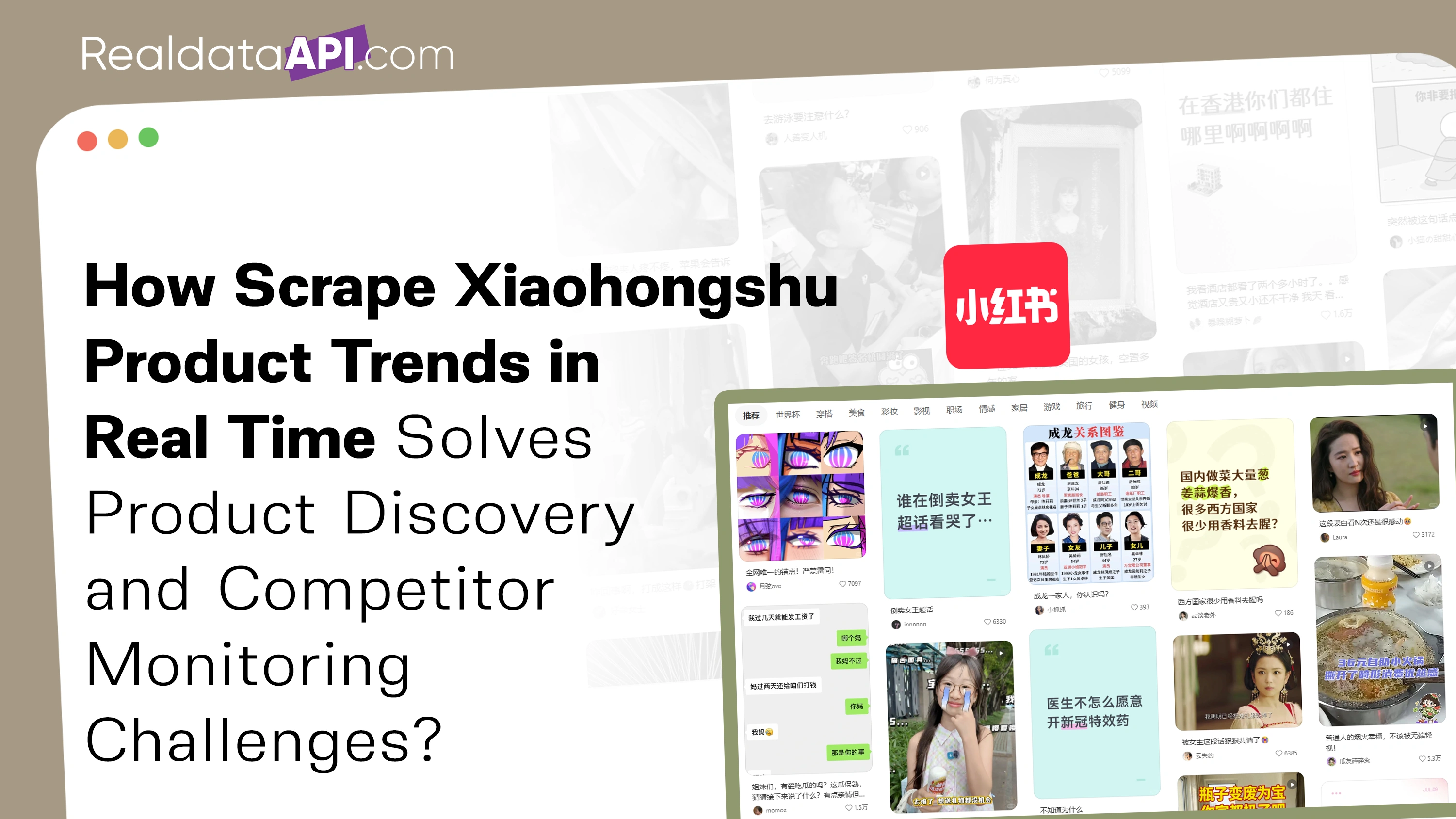
How Scrape Xiaohongshu Product Trends in Real Time Solves Product Discovery and Competitor Monitoring Challenges?
How to Scrape Taobao Product Data to Solve Pricing, Inventory, and Competitor Monitoring Challenges?
How to Extract grocery product listings Data from SPAR to Build Accurate Grocery Intelligence and Competitive Market Insights?
Scrape Douyin follower growth and engagement data to track influencer performance and trends






.png)