
Introduction
Businesses can automate property search, improve lead generation, and strengthen real estate analytics by using scrape MagicBricks Property Listings Data with a reliable MagicBricks Scraper. Automated data extraction provides real-time property listings, pricing, locations, amenities, builder details, and market trends that support faster, data-driven real estate decisions.
Industry Insight: According to industry estimates, more than 80% of property buyers begin their home search online, while the global real estate analytics market is projected to grow at over 13% CAGR through 2026. Access to accurate property listing data has become a competitive advantage for brokers, developers, investors, and PropTech companies.
This guide is designed for real estate agencies, property developers, PropTech startups, investors, market researchers, lead generation companies, and business intelligence teams that need scalable access to property listing data. Manual research across thousands of listings is time-consuming and often outdated. Automated property data extraction enables businesses to monitor pricing trends, analyze supply and demand, identify investment opportunities, and generate qualified leads from structured datasets.
By integrating automated data collection into their workflows, organizations reduce manual effort, improve reporting accuracy, and make better investment and marketing decisions based on real-time market intelligence.
How Can Businesses Analyze Real Estate Markets More Effectively?

Successful real estate investments depend on understanding local market conditions. Property prices, inventory levels, builder activity, and neighborhood demand change frequently. Manual market research often cannot keep up with these changes. Automated property intelligence helps businesses monitor the market continuously and identify opportunities faster.
Using Real estate market analysis using MagicBricks API, organizations can automatically collect valuable property information, including listing prices, property types, builder names, project details, square footage, amenities, property status, and geographic locations. These structured datasets support better investment planning and competitive market analysis.
Businesses can use automated market analysis to:
- Monitor residential and commercial property prices.
- Compare property values across cities and neighborhoods.
- Analyze new project launches.
- Identify high-growth investment locations.
- Track luxury and affordable housing segments.
- Benchmark competing builders and developers.
- Improve property valuation models.
Real estate agencies can also use historical listing information to identify pricing trends over time. Investors gain deeper insights into market cycles, while developers evaluate regional demand before launching new projects.
Real Estate Market Intelligence Growth (2020-2026)
| Year | Property Listings Analyzed | Cities Covered | Daily Listing Updates |
|---|---|---|---|
| 2020 | 1.8 Million | 95 | 180,000 |
| 2021 | 2.4 Million | 112 | 245,000 |
| 2022 | 3.3 Million | 128 | 335,000 |
| 2023 | 4.6 Million | 146 | 455,000 |
| 2024 | 6.1 Million | 165 | 595,000 |
| 2025* | 7.8 Million | 182 | 760,000 |
| 2026* | 9.5 Million | 200 | 940,000 |
*Projected industry estimates.
Automated market intelligence enables businesses to react quickly to changing market conditions. Property consultants identify emerging locations, investors compare regional growth potential, and developers evaluate pricing strategies using fresh and accurate market data. Organizations equipped with real-time analytics gain a significant competitive advantage in today's fast-moving real estate market.
How Can Housing Market Intelligence Improve Investment Decisions?
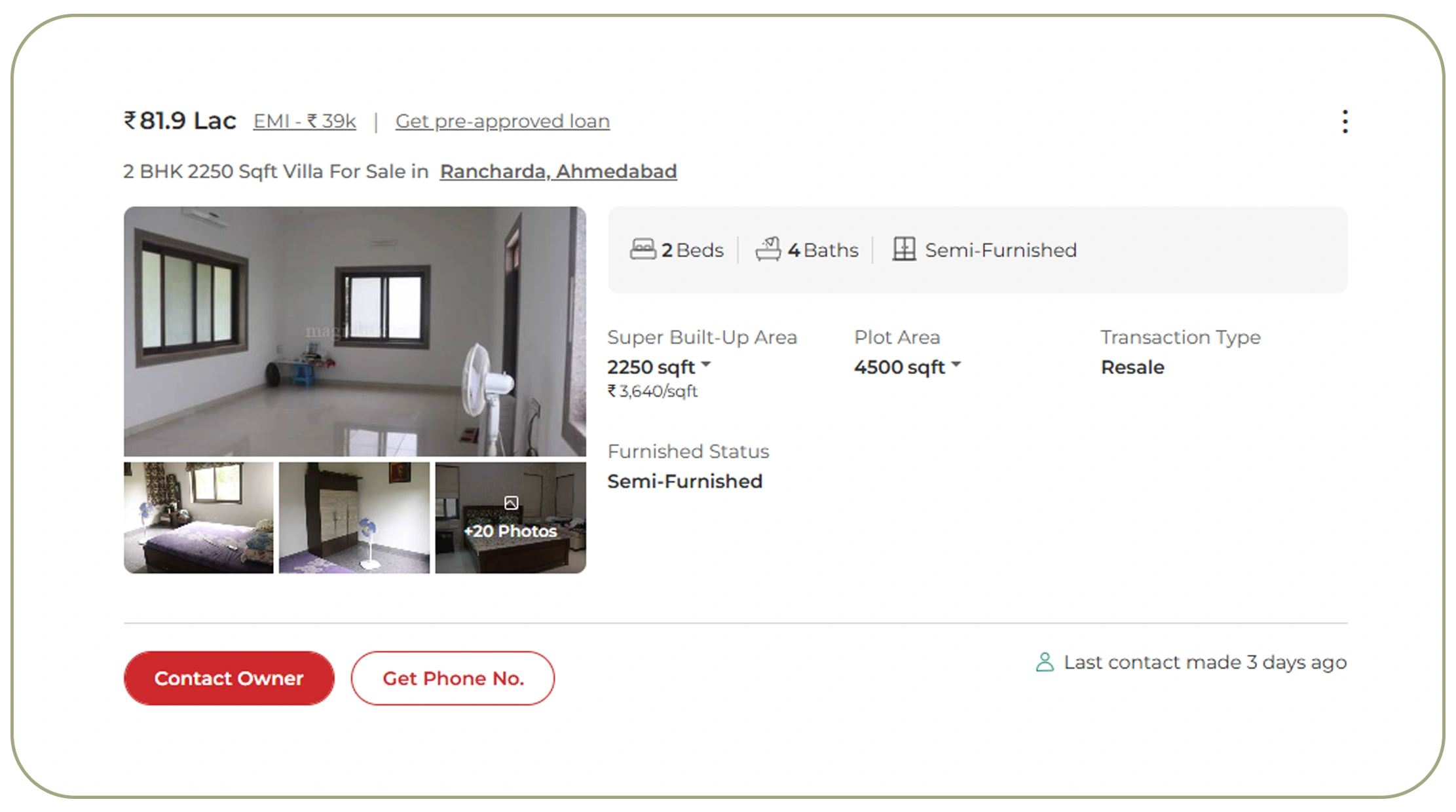
Every property investment depends on reliable market intelligence. Buyers, developers, brokers, and institutional investors need access to current pricing trends, inventory availability, and buyer demand before making strategic decisions. Automated housing intelligence provides continuous visibility into changing market conditions.
Using Housing market data intelligence via MagicBricks API, businesses can gather comprehensive information about property availability, residential projects, builder activity, apartment configurations, property pricing, rental listings, and neighborhood development. This information helps organizations understand market behavior and identify profitable investment opportunities.
Housing market intelligence supports multiple business objectives:
- Compare housing prices across locations.
- Identify emerging residential markets.
- Monitor rental price movements.
- Evaluate builder performance.
- Analyze housing inventory growth.
- Support investment feasibility studies.
- Improve lead qualification for sales teams.
Historical housing data also enables predictive analysis. Businesses can compare previous years' listing activity with current inventory to forecast demand, estimate pricing growth, and identify neighborhoods with strong appreciation potential.
Housing Market Intelligence Trends (2020-2026)
| Year | Housing Listings Monitored | Builders Tracked | Daily Property Updates |
|---|---|---|---|
| 2020 | 950,000 | 2,600 | 120,000 |
| 2021 | 1.3 Million | 3,150 | 170,000 |
| 2022 | 1.9 Million | 3,850 | 235,000 |
| 2023 | 2.7 Million | 4,600 | 315,000 |
| 2024 | 3.8 Million | 5,450 | 425,000 |
| 2025* | 5.0 Million | 6,300 | 560,000 |
| 2026* | 6.4 Million | 7,250 | 720,000 |
*Projected industry estimates.
Continuous housing intelligence enables organizations to reduce investment risks while improving decision-making. Real estate agencies can recommend properties based on current market conditions, investors can discover high-growth regions earlier, and developers can optimize project launches according to local demand. Access to reliable housing market intelligence has become essential for businesses seeking long-term success in the competitive real estate industry.
How Can Businesses Understand Property Demand and Supply Trends?
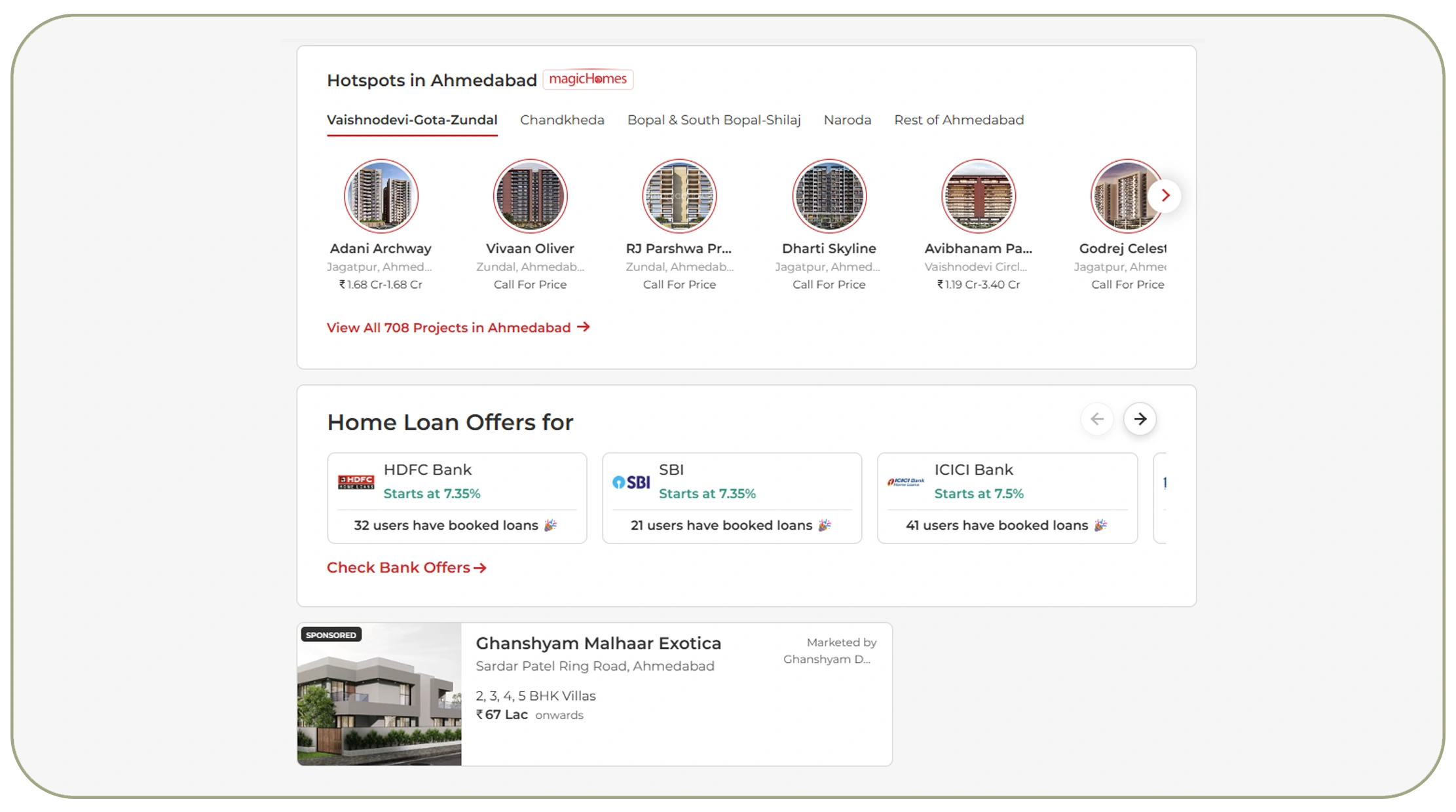
The real estate market changes continuously as new projects launch, buyer preferences evolve, and inventory levels fluctuate. Understanding demand and supply is essential for making informed investment, pricing, and marketing decisions. Manual tracking across thousands of listings is inefficient and often leads to outdated insights.
Using MagicBricks Real estate demand and supply analysis, businesses can monitor active property listings, newly added projects, sold-out developments, rental availability, and buyer demand across multiple cities. Automated data collection enables organizations to compare inventory levels with market demand and identify opportunities before competitors.
Demand and supply analysis helps businesses:
- Monitor newly listed residential and commercial properties.
- Compare available inventory across cities.
- Identify high-demand neighborhoods.
- Track project completion and occupancy trends.
- Analyze rental versus sale market activity.
- Evaluate builder performance and project availability.
- Improve pricing and investment strategies.
Historical data also supports predictive market analysis. Investors can identify markets with increasing buyer demand, while developers can assess future project viability based on inventory absorption rates. Real estate consultants can recommend suitable investment locations backed by reliable data.
Property Demand & Supply Trends (2020-2026)
| Year | Active Listings | Monthly New Listings | Estimated Demand Growth |
|---|---|---|---|
| 2020 | 2.1 Million | 145,000 | 6% |
| 2021 | 2.8 Million | 186,000 | 8% |
| 2022 | 3.6 Million | 242,000 | 10% |
| 2023 | 4.5 Million | 318,000 | 13% |
| 2024 | 5.7 Million | 402,000 | 15% |
| 2025* | 7.0 Million | 498,000 | 17% |
| 2026* | 8.4 Million | 615,000 | 19% |
*Projected industry estimates.
Organizations that continuously monitor demand and supply trends gain stronger market visibility. They can identify emerging investment hotspots, optimize inventory planning, and respond quickly to changing buyer preferences. Automated analytics also reduce decision-making risks by providing timely, structured market intelligence.
How Can APIs Simplify Large-Scale Property Data Collection?
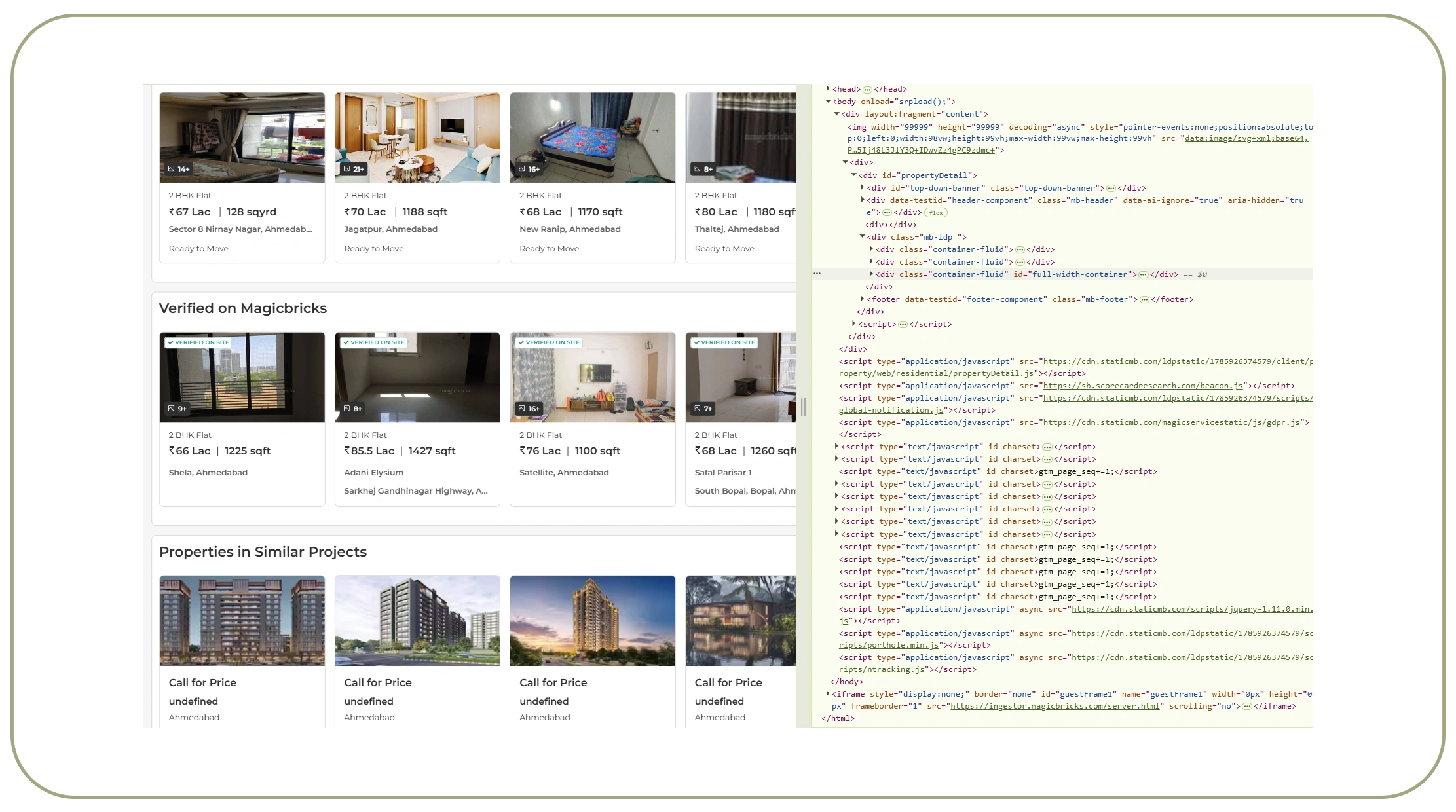
Collecting thousands of real estate listings manually requires significant time and resources. Property prices, project availability, amenities, and builder information change frequently, making manual monitoring impractical. API-driven automation enables businesses to gather accurate and up-to-date property information efficiently.
A MagicBricks Data Scraping API automates the extraction of real estate listings and delivers structured datasets that integrate directly into CRM platforms, business intelligence dashboards, valuation models, and analytics systems. Businesses receive fresh property information without maintaining complex scraping infrastructure.
API-driven property collection enables organizations to:
- Collect millions of property listings automatically.
- Monitor pricing changes in real time.
- Track newly launched residential and commercial projects.
- Capture builder details and project specifications.
- Monitor rental and resale property availability.
- Integrate structured data into analytics platforms.
- Reduce operational costs and manual research.
Automated APIs also improve collaboration across business teams. Sales teams receive updated listings, analysts gain fresh pricing data, marketing teams identify lead opportunities, and executives access real-time dashboards for strategic planning.
Property API Adoption Trends (2020-2026)
| Year | Businesses Using APIs | Daily API Requests | Automated Property Coverage |
|---|---|---|---|
| 2020 | 32% | 210,000 | 43% |
| 2021 | 40% | 305,000 | 52% |
| 2022 | 51% | 445,000 | 63% |
| 2023 | 63% | 635,000 | 74% |
| 2024 | 74% | 890,000 | 84% |
| 2025* | 83% | 1.22 Million | 91% |
| 2026* | 90% | 1.68 Million | 97% |
*Projected industry estimates.
API-based property data collection provides reliable, scalable, and consistent access to real estate information. Organizations can automate data workflows, improve reporting accuracy, and respond faster to market changes. As digital transformation continues across the real estate industry, API-powered data extraction has become an essential tool for agencies, developers, investors, and PropTech companies seeking long-term competitive advantages.
How Can Structured Property Data Improve Real Estate Decision-Making?
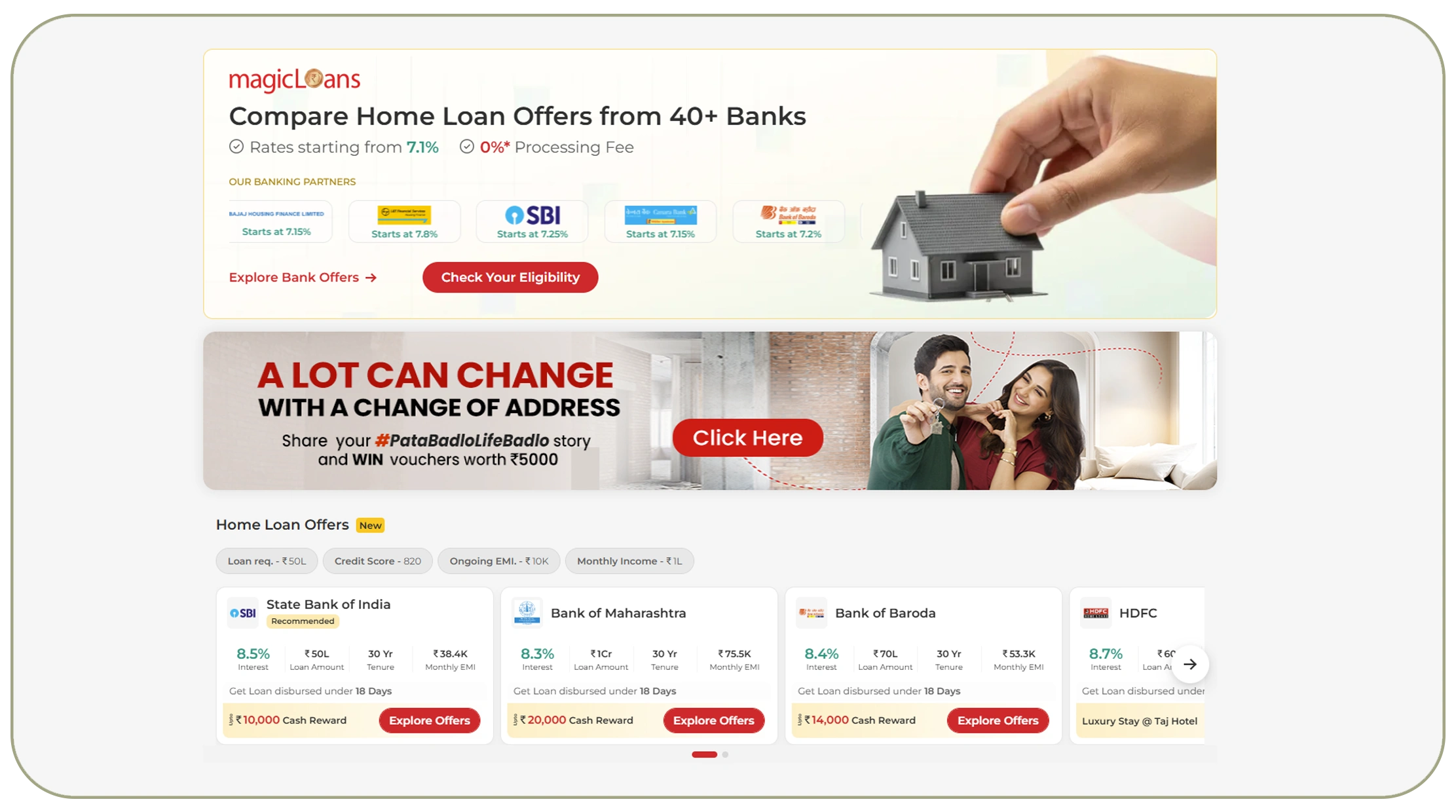
Real estate businesses generate enormous volumes of listing information every day. Without structured datasets, comparing properties, tracking market trends, and identifying investment opportunities becomes difficult. Organized property data allows businesses to make faster and more accurate decisions while improving operational efficiency.
A Magicbricks Real Estate Dataset provides standardized information on residential and commercial properties, including pricing, property type, location, builder details, amenities, carpet area, built-up area, furnishing status, project information, and listing dates. This structured data helps businesses integrate property information into CRM systems, business intelligence platforms, valuation models, and predictive analytics tools.
Organizations can leverage structured property datasets to:
- Compare property prices across cities and localities.
- Analyze builder and developer performance.
- Monitor rental and resale market trends.
- Identify emerging investment hotspots.
- Support AI-powered property recommendation engines.
- Improve customer targeting and lead qualification.
- Generate detailed real estate market reports.
Historical property datasets also enable long-term market forecasting. By comparing pricing trends, inventory growth, and buyer preferences over several years, businesses can anticipate market movements and optimize investment strategies.
Real Estate Dataset Growth (2020-2026)
| Year | Property Records | Cities Covered | Data Accuracy |
|---|---|---|---|
| 2020 | 4.2 Million | 95 | 91% |
| 2021 | 5.8 Million | 110 | 93% |
| 2022 | 7.6 Million | 126 | 95% |
| 2023 | 9.8 Million | 144 | 96% |
| 2024 | 12.5 Million | 162 | 97% |
| 2025* | 15.9 Million | 181 | 98% |
| 2026* | 19.8 Million | 200 | 99% |
*Projected industry estimates.
Well-structured property datasets reduce data inconsistencies and improve reporting quality. Investors gain clearer market visibility, developers evaluate project performance more effectively, and real estate agencies deliver personalized property recommendations backed by reliable market intelligence. Structured datasets have become an essential resource for organizations aiming to build data-driven real estate strategies.
What Are the Most Valuable Applications of Real Estate Data?
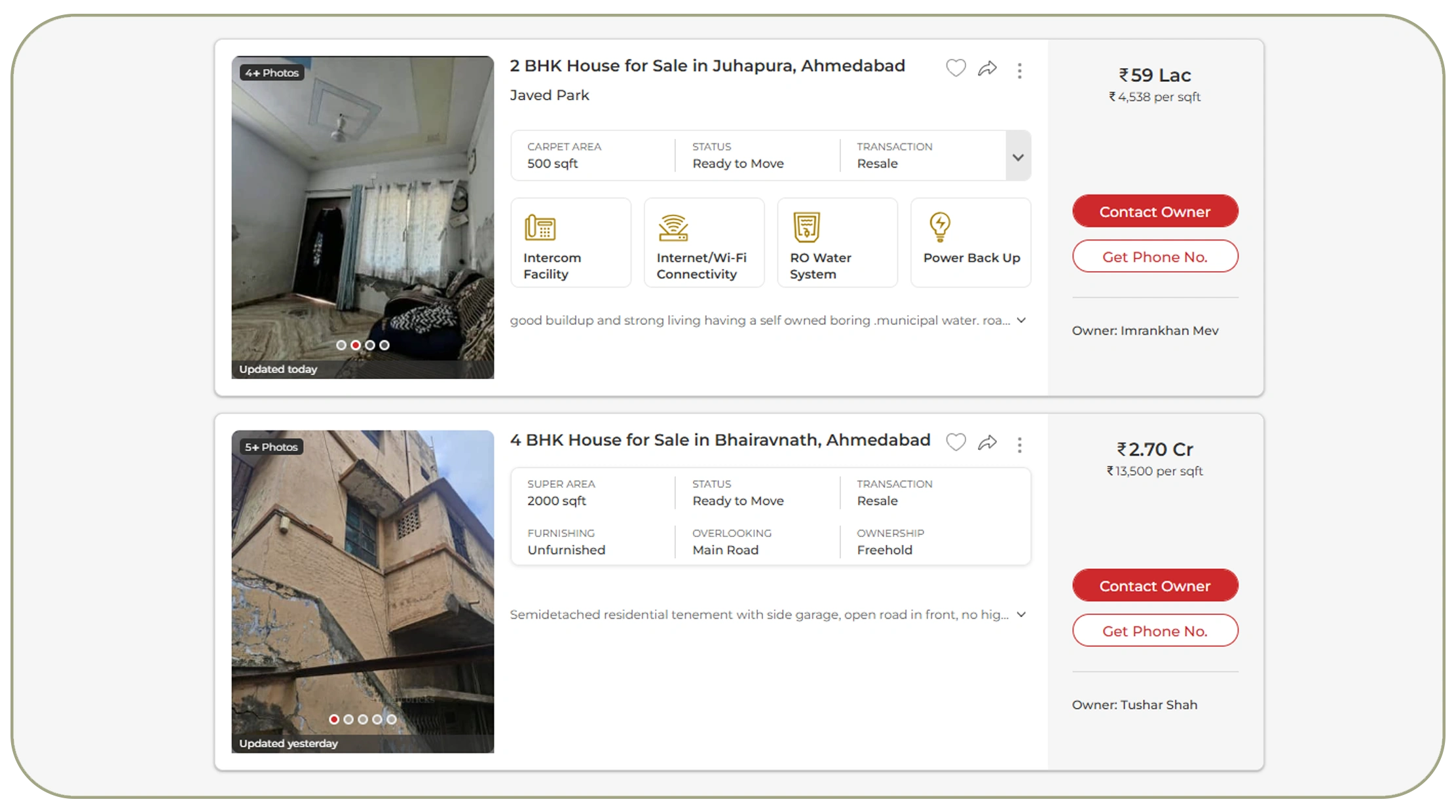
Real estate data is valuable across multiple industries beyond traditional property buying and selling. Investors, brokers, PropTech companies, banks, insurance providers, and market researchers all rely on accurate property information to improve decision-making and business performance. Leveraging Top Real Estate Scraping API Use Cases helps organizations transform raw listing data into actionable business insights.
Some of the most impactful applications include:
- Property Price Monitoring: Track pricing changes across residential and commercial properties.
- Lead Generation: Identify newly listed properties and connect with potential buyers and sellers.
- Investment Opportunity Analysis: Discover undervalued properties and high-growth neighborhoods.
- Competitor Benchmarking: Compare builder offerings, amenities, and pricing strategies.
- Rental Market Intelligence: Monitor rental prices, occupancy trends, and tenant demand.
- Mortgage and Risk Assessment: Support financial institutions with property valuation insights.
- Business Intelligence Dashboards: Integrate real estate data into reporting and analytics platforms.
- AI-Powered Property Recommendations: Deliver personalized property suggestions based on customer preferences.
Business Impact of Real Estate Intelligence (2020-2026)
| Year | Companies Using Property Intelligence | Pricing Accuracy Improvement | Lead Conversion Improvement |
|---|---|---|---|
| 2020 | 36% | 12% | 10% |
| 2021 | 44% | 16% | 14% |
| 2022 | 55% | 21% | 18% |
| 2023 | 67% | 26% | 23% |
| 2024 | 76% | 31% | 28% |
| 2025* | 85% | 36% | 33% |
| 2026* | 92% | 41% | 38% |
*Projected industry estimates.
Businesses that invest in automated real estate intelligence gain faster access to market insights, improve lead quality, and strengthen competitive positioning. Accurate property data enables better pricing strategies, smarter investment decisions, enhanced customer experiences, and more efficient business operations. As digital transformation continues to reshape the real estate industry, leveraging automated property intelligence has become a key driver of long-term growth and sustainable competitive advantage.
Why Choose Real Data API?
Choosing the right real estate data provider is essential for businesses that depend on accurate, timely, and scalable property intelligence. Real Data API helps real estate agencies, property developers, PropTech companies, investment firms, market researchers, brokers, and analytics providers automate property data collection with reliable and structured datasets.
With scrape MagicBricks Property Listings Data, businesses can collect comprehensive information, including property prices, locations, project details, builder information, amenities, property configurations, rental listings, resale properties, and market trends. Our automated solutions eliminate manual data collection while ensuring consistent, high-quality data for business intelligence and analytics.
Why Businesses Trust Real Data API
- Scalable property data extraction for residential and commercial listings.
- Real-time monitoring of pricing, availability, and new property launches.
- Structured datasets delivered in JSON, CSV, Excel, or API formats.
- Easy integration with CRM platforms, BI tools, and analytics systems.
- Automated scheduling for daily, weekly, or custom data updates.
- High data accuracy with reliable collection infrastructure.
- Flexible solutions tailored to specific business requirements.
- Dedicated technical support for smooth implementation and ongoing assistance.
Our advanced data extraction solutions enable businesses to automate market research, improve lead generation, analyze pricing trends, benchmark competitors, and optimize investment strategies. Whether you're building a property marketplace, valuation platform, investment dashboard, or real estate analytics solution, Real Data API delivers dependable property intelligence that supports faster and smarter decision-making.
Conclusion
The real estate industry relies on timely and accurate property information to stay competitive. Businesses that scrape MagicBricks Property Listings Data gain access to structured insights on property prices, project launches, builder activity, rental trends, and market demand. Automated property data collection enables organizations to monitor changing market conditions, identify investment opportunities, improve lead generation, and strengthen real estate analytics without the limitations of manual research.
As digital property marketplaces continue to expand, access to reliable real estate intelligence becomes increasingly important for agencies, developers, investors, and PropTech companies. Automated data extraction supports better forecasting, faster decision-making, and improved customer experiences by providing continuously updated property information.
Ready to transform your real estate data strategy? Contact Real Data API today to automate MagicBricks property data extraction and gain real-time market intelligence that powers smarter investments, stronger lead generation, and long-term business growth!
Latest posts
Scrape MagicBricks property listings to improve property search, lead generation, and real estate analytics.

How to Extract grocery product prices from Ocado to Solve Real-Time Price Monitoring and Competitive Pricing Challenges?

How to Scrape fantasy sports data using Dream11 API to Eliminate Manual Player Data Collection and Boost Analytics

How Web Scraping Sreality property listings data Helps Automate Property Listings, Market Intelligence, and Real Estate Investment Decisions?







.png)



