.gif)
.png)
Quick Summary
- Carrefour API solutions for retail data integration can help retailers and CPG teams connect structured retail information with analytics, reporting, and business-intelligence workflows.
- A Carrefour Now Scraper should be used only through an authorized and compliant data-collection approach, with clear fields, timestamps, validation, and documented data sources.
Introduction
Carrefour API solutions for retail data integration can improve business intelligence by making relevant retail information easier to structure, connect, analyze, and use across business systems. For retailers, FMCG brands, e-commerce companies, and market-research teams, the real value is not simply collecting more information; it is turning product, pricing, promotion, availability, and transaction-related data into decisions that can improve assortment planning, commercial performance, and operational visibility.
Carrefour is a particularly relevant case because the Group operates a large omnichannel retail network and has invested heavily in e-commerce, cloud technology, data platforms, and retail media. Carrefour reported 15,244 stores under its banners in more than 40 countries at the end of 2024, while its 2025 reporting described 10 billion transactions and 80 million customer households associated with its proprietary data assets.
A Carrefour Now Scraper can be discussed as a data-collection workflow for retail information, but businesses should distinguish between an authorized data-access solution and unauthorized automated extraction. The appropriate approach depends on the source, permissions, terms, technical access method, and intended use of the information.
The business-intelligence opportunity is therefore broader than scraping. It involves creating a reliable data pipeline in which information is collected through permitted sources, standardized, validated, integrated with internal systems, and converted into dashboards or analytical models.
How does structured retail information support better analysis?
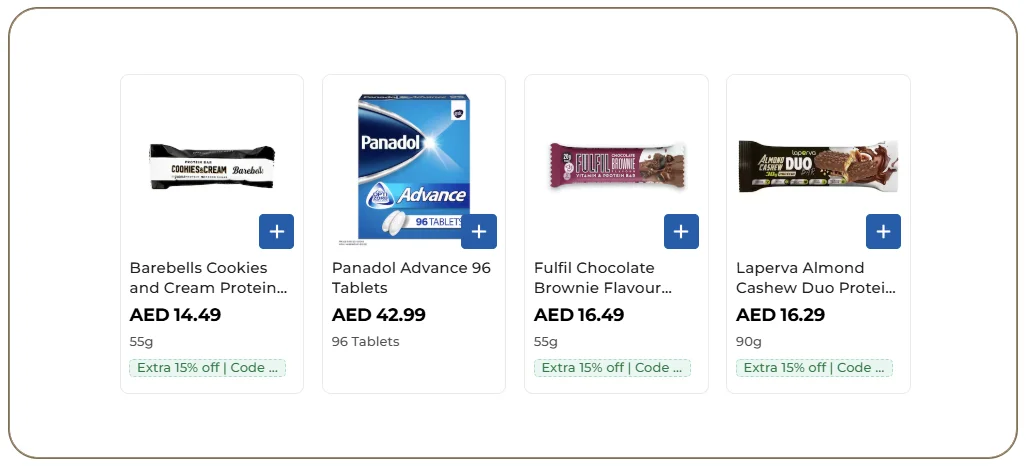
Carrefour API data extraction can support business intelligence when permitted data is delivered in a consistent structure that can be connected with a company's existing analytics environment. Carrefour itself describes its Data Hub as providing access to data through flat files and cloud-to-cloud solutions, including API-based data extraction for authorized users.
This is important because retail information often comes from multiple systems. Product catalogs, pricing records, promotional information, sales information, inventory signals, and customer-related metrics can have different structures. A standardized pipeline reduces the need for analysts to manually reconcile these datasets.
Verified retail-data milestones
| Year | Verified development or statistic | BI relevance |
|---|---|---|
| 2020 | Carrefour reported more than 70% growth in group e-commerce during 2020. | Demonstrated the increasing importance of digital retail data. |
| 2021 | Carrefour reported 20% growth in food e-commerce activity. | Reinforced the need for scalable digital-data infrastructure. |
| 2022 | Global e-commerce GMV reached €4.2 billion, up 26% year over year. | Provided a larger digital-commerce data environment for analysis. |
| 2023 | Carrefour reported €5.3 billion in global e-commerce GMV and 2,623 Drives. | Demonstrated continued expansion of omnichannel operations. |
| 2024 | Carrefour reported 15,244 stores under its banners worldwide. | Shows the scale at which standardized data can become valuable. |
| 2025 | Carrefour reported 21% growth in e-commerce GMV for the year. | Indicates continued relevance of digital retail analytics. |
| 2026 | Carrefour's current strategy places data and digital capabilities at the center of retail transformation. | Reinforces the strategic role of integrated data. |
These figures come from Carrefour's own annual reports, results releases, and strategy publications. They should not be interpreted as evidence that every retailer has access to the same datasets or that all public-facing information is available through an API.
What should a retail data pipeline capture?
A practical schema can include:
- Product name and identifier
- Brand
- Category and subcategory
- Listed price
- Promotional price, where applicable
- Promotion period
- Product availability
- Store or geographic identifier
- Collection timestamp
- Source reference
- Data-quality status
The timestamp is particularly important. A price without an observation date can become misleading when promotions or availability change.
How can promotional intelligence improve commercial decisions?
Businesses that scrape Carrefour promotions for retail analytics need more than a list of discounted products. The useful objective is to organize promotional observations so analysts can compare products, categories, brands, periods, and markets consistently.
Carrefour has publicly highlighted the importance of promotional activity in its commercial strategy. Its 2022 reporting noted that the Group strengthened promotional operations while responding to purchasing-power pressures. Carrefour's own retail-media strategy also connects marketing campaigns with measurement from visibility through sales transactions.
What can promotional data reveal?
| Analytical area | Useful observation | Potential business question |
|---|---|---|
| Discount depth | Difference between displayed regular and promotional prices | How aggressive is promotional pricing? |
| Product participation | Products appearing in promotional activity | Which categories receive promotional attention? |
| Brand participation | Brand-level promotional presence | How frequently are competing brands promoted? |
| Timing | Start and end dates where available | Are promotions concentrated around specific periods? |
| Category activity | Promotional records grouped by category | Which categories show the strongest promotional activity? |
The important point is to avoid treating every displayed discount as equivalent. A percentage discount, multi-buy offer, loyalty promotion, bundle, or conditional voucher can have different commercial meanings.
A structured dataset allows analysts to preserve the original promotion text while creating normalized fields for comparison. This helps business-intelligence teams build dashboards without losing the underlying context.
Why does historical comparison matter?
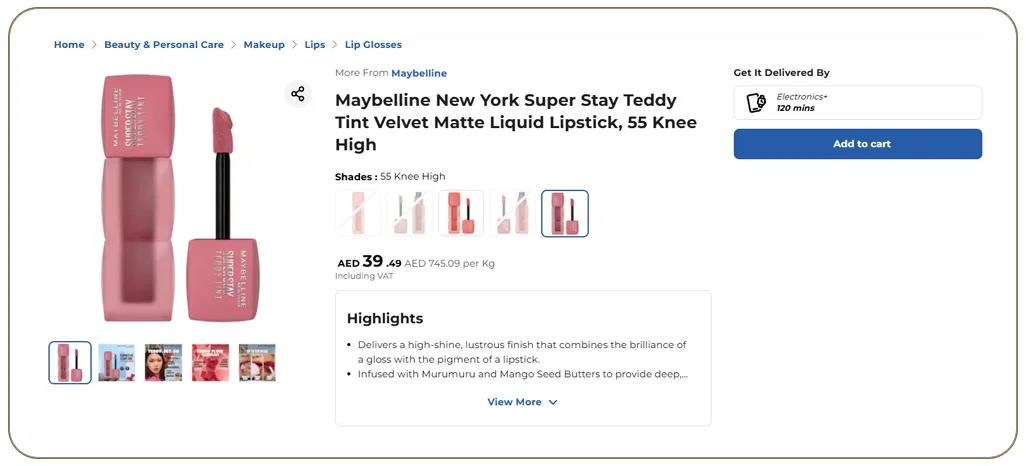
Promotional analysis becomes substantially more useful when observations are collected consistently over time. A single promotional snapshot can describe what was visible on one date, but repeated observations can reveal changes in promotional intensity and category activity.
For example, Carrefour reported that its own-brand products represented 38% of food sales in 2025, compared with 37% in 2024. That is an official sales figure and should not be confused with promotional share. However, it demonstrates why brand-level and category-level retail data can be strategically relevant to commercial analysis.
The strongest reporting therefore combines promotional observations with verified internal sales or market data rather than claiming that promotional visibility alone proves customer demand.
How does availability intelligence help retailers?
A Carrefour product availability data scraper can be useful for monitoring visible product availability when the underlying collection method is authorized and the source provides suitable access. Availability information can help teams understand whether products are consistently listed, temporarily unavailable, or absent from a particular retail environment.
For e-commerce teams, availability is particularly relevant because customers can encounter different shopping experiences depending on location, fulfillment method, store, and time.
Why should availability be timestamped?
Retail availability is dynamic. A product appearing today does not guarantee that it will appear tomorrow. Similarly, a missing listing does not necessarily prove that the product has been permanently discontinued.
| Data point | Why it matters |
|---|---|
| Product identifier | Prevents similarly named products from being treated as identical. |
| Store/location | Availability can vary geographically. |
| Status | Distinguishes available, unavailable, or unknown states where the source supports them. |
| Timestamp | Establishes when the observation was made. |
| Price | Allows availability and price changes to be analyzed together. |
| Source | Enables auditing and validation. |
What does the 2020–2026 timeline tell us?
The retail environment changed significantly during this period. Carrefour reported a more than 70% increase in e-commerce in 2020, followed by 20% food e-commerce growth in 2021. E-commerce GMV reached €4.2 billion in 2022 and €5.3 billion in 2023. In 2025, Carrefour reported another 21% increase in e-commerce GMV.
This progression shows why availability data can be more valuable when connected to broader omnichannel analysis. Carrefour's 2024 reporting described an omnichannel network combining physical stores, e-commerce, home delivery, and pickup services.
For business intelligence, the practical lesson is simple: availability should not be analyzed as an isolated field. It becomes more useful when connected with product category, location, pricing, promotion, and time. Get Insights Now!
How can retail information become actionable business intelligence?
To extract Carrefour retail data for business intelligence, companies need a workflow that moves beyond collection. The objective is to transform raw records into validated information, analytical metrics, dashboards, and decisions.
Carrefour's own digital strategy illustrates this broader approach. The company has described a data-centric approach covering e-commerce, retail media, traditional retail operations, pricing, assortment strategy, forecasting, logistics, and supply flows.
What does the workflow look like?
- Define the business question
Start with a decision rather than a dataset. The question could concern price monitoring, assortment, promotions, product availability, or competitive research. - Establish an authorized source
Determine whether the required information is available through an official API, licensed dataset, partner data service, cloud-to-cloud connection, or another permitted source. - Build a standardized schema
Normalize product identifiers, category structures, currencies, geographic fields, prices, and timestamps. - Validate the records
Check duplicates, missing values, unexpected price changes, unavailable fields, and inconsistent product mappings. - Connect the data to BI tools
Structured data can then be integrated into databases, data warehouses, dashboards, or analytical systems according to the organization's technology stack. - Create decision-focused metrics
Useful metrics might include price index, promotion frequency, assortment breadth, availability rate, category share, and price movement.
How has Carrefour's own digital development evolved?
| Period | Verified Carrefour development |
|---|---|
| 2020 | Carrefour accelerated digital commerce and reported more than 70% e-commerce growth. |
| 2021 | Carrefour launched Carrefour Links as its Data & Retail Media business and reported 20% food e-commerce growth. |
| 2022 | The Group introduced a €3 billion digital investment plan for 2022–2026 and reported €4.2 billion e-commerce GMV. |
| 2023 | E-commerce GMV reached €5.3 billion. |
| 2024 | Carrefour reported 15,244 stores under its banners. |
| 2025 | Carrefour reported 10 billion transactions and 80 million customer households for its proprietary data assets in its 2025 reporting. |
| 2026 | Carrefour's current strategy continues to emphasize digital, data, retail media, e-commerce, and AI. |
The figures demonstrate the scale of Carrefour's digital transformation, but they do not mean that an external company can automatically access Carrefour's internal transaction data. Access rights and data licensing remain separate questions.
What should businesses know about API-based retail data access?
A Carrefour API should not automatically be interpreted as an unrestricted public interface for extracting every Carrefour website or application field. Carrefour publicly offers data-access capabilities through Carrefour Links Data Hub, including raw-data access and API-based extraction options for its data ecosystem.
That distinction matters for businesses evaluating data vendors. An API solution should be assessed according to its actual authorization, documented fields, refresh frequency, geographic coverage, historical availability, and permitted use.
What should buyers ask a data provider?
| Requirement | Question |
|---|---|
| Authorization | Is the data source officially authorized or licensed? |
| Coverage | Which markets, stores, categories, and fields are included? |
| Freshness | How frequently is data refreshed? |
| Historical depth | How far back does the available dataset go? |
| Delivery method | Is data delivered through API, files, cloud connection, or another method? |
| Quality controls | How are duplicates, missing records, and changes handled? |
| Documentation | Are fields, formats, limits, and usage requirements documented? |
| Compliance | How are applicable privacy, contractual, copyright, and platform requirements addressed? |
Carrefour Links describes its Data Hub as providing access to extensive Carrefour data, including data from more than 40 geographic contexts. It also describes cloud-to-cloud solutions and API-based data extraction as part of its data-access capabilities.
For an enterprise buyer, this is a more useful model than treating data collection as a simple scraping exercise. The goal is a reliable connection between authorized retail information and the company's existing business-intelligence environment.
How can a grocery dataset support category and market analysis?
A Carrefour Grocery Dataset can help analysts organize grocery information into a consistent analytical layer when the underlying data is obtained through a permitted source.
A useful dataset should be designed around actual business questions. Product name alone is rarely enough. Analysts may need brand, category, subcategory, price, promotion status, availability, location, unit size, timestamp, and product identifiers.
What can grocery data help analyze?
| Use case | Relevant fields | Possible output |
|---|---|---|
| Price monitoring | Product, size, price, timestamp | Price-change dashboard |
| Assortment analysis | Product, category, brand | Category assortment report |
| Promotion monitoring | Regular price, promotional price, offer period | Promotion tracker |
| Availability analysis | Product, location, status, timestamp | Availability dashboard |
| Competitive research | Comparable products and prices | Benchmarking report |
| Category management | Product, category, brand, price | Category performance analysis |
Carrefour's scale makes structured data particularly relevant to business intelligence. In its 2024 Universal Registration Document, the Group reported 15,244 stores under its banners and described an omnichannel model combining physical retail and e-commerce.
The 2025 reporting also stated that Carrefour's proprietary data assets represented 10 billion transactions and 80 million customer households worldwide. These figures demonstrate the scale of the organization's data environment, but they are not a claim about the volume available to external buyers.
What should analysts avoid?
They should avoid assuming that a product's online presence represents total market demand. They should also avoid treating listed prices as realized transaction prices unless the source specifically supports that interpretation.
Similarly, a product being unavailable at one location and one point in time does not prove that it is discontinued nationally. Good business intelligence preserves these distinctions.
Why Choose Real Data API?
Real Data API can be considered when a business needs structured data workflows rather than manually maintained spreadsheets. The key value of a data service should be measured by data quality, source transparency, coverage, refresh requirements, technical delivery, and the ability to fit the customer's existing analytical environment.
Carrefour Grocery Data Scraping should always be approached with clear authorization and a defined research purpose. A responsible project begins by identifying the permitted source, required fields, geographic coverage, collection frequency, and intended use before technical implementation starts.
What makes a strong retail-data project?
- Clear scope: Define exactly which products, categories, markets, and fields are required.
- Consistent structure: Use standardized product, category, location, price, and timestamp fields.
- Data validation: Detect duplicates, missing records, and anomalous changes.
- Historical tracking: Preserve dated observations when trend analysis is required.
- Flexible delivery: Support the format or integration architecture required by the client.
- Transparent limitations: Document fields that are unavailable or cannot be verified.
- Compliance-first collection: Use official, licensed, or otherwise authorized data sources.
The strongest business-intelligence projects do not promise access to information that cannot legitimately be provided. They define the dataset first, establish the permitted source, and then build the technical workflow around those requirements.
Real Data API can therefore position its offering around structured retail data integration, data collection, API workflows, validation, and analytics-ready datasets rather than unsupported claims of unrestricted access.
Conclusion
Retail business intelligence becomes more valuable when product, pricing, promotion, availability, and other relevant information can move from disconnected sources into a structured analytical environment. Carrefour's own transformation illustrates the importance of this approach: the Group has expanded e-commerce, developed Carrefour Links, invested in digital infrastructure, and placed data at the center of its retail strategy.
Carrefour API solutions for retail data integration can therefore be valuable when the underlying data is legitimately accessible, well structured, properly documented, and connected to the business questions that decision-makers actually need to answer.
For retailers, FMCG manufacturers, e-commerce companies, market researchers, and analytics teams, the priority should be data that is accurate, traceable, timely, and suitable for integration. The right solution can turn retail information into dashboards, pricing intelligence, assortment analysis, promotional monitoring, and better-informed commercial decisions.
Ready to connect retail data with your business-intelligence workflow? Get in touch with Real Data API to discuss your data requirements, authorized sources, API integration needs, and analytics-ready dataset options!
Latest posts
A Complete Guide to Extract authorized Total Wine Scraper for Retail Data Analysis and Competitive Intelligence
How Noon API for e-commerce business analytics Enables Smarter Product Price Analysis and Price Tracking
MakeMyTrip API Integration for Travel Data Analytics - Solutions for Smarter Travel Insights
Keeta scraper for monitoring food marketplace trends - Identify Discount Changes and Emerging Customer Demand



.png)


