
Introduction
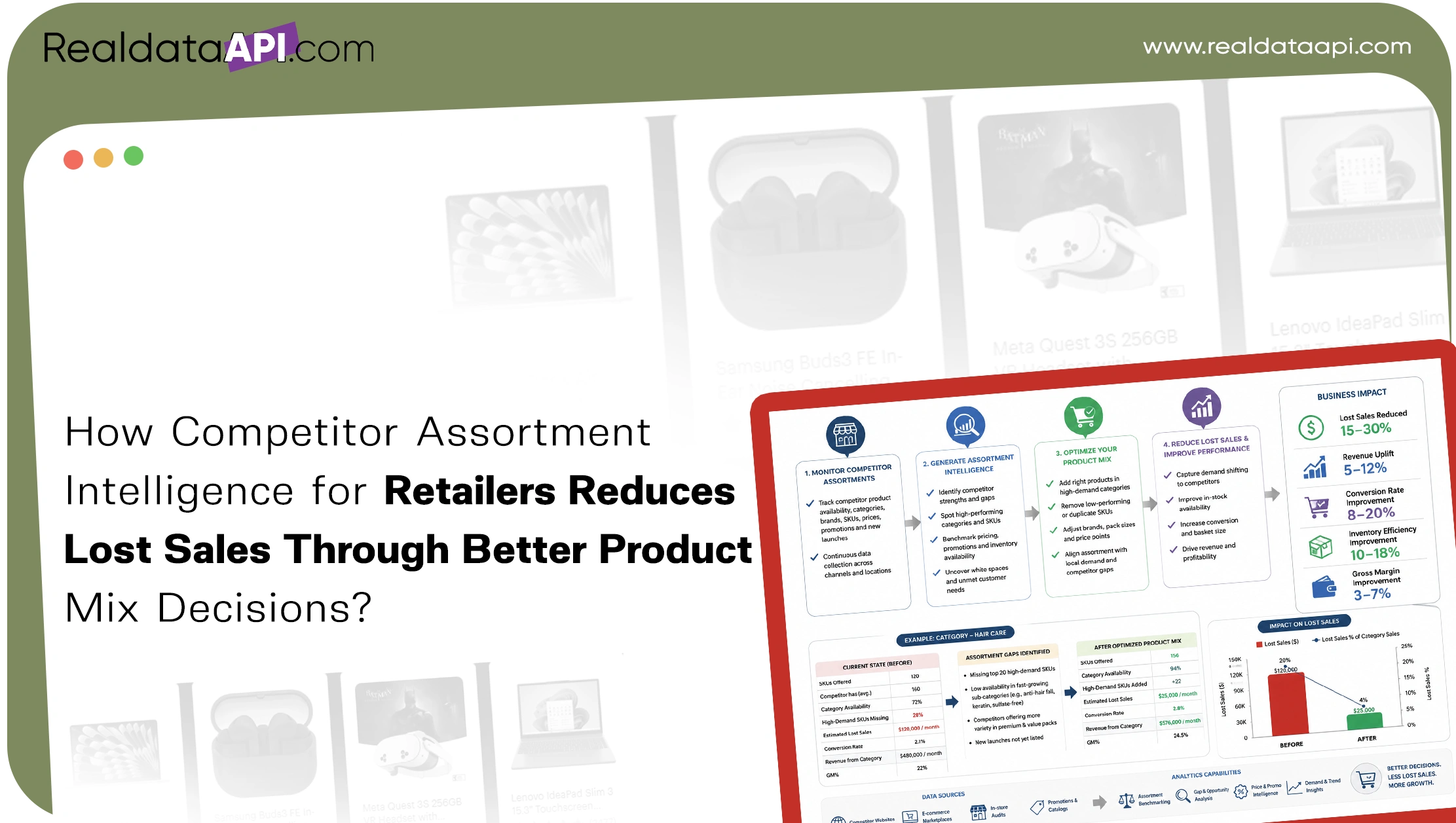
Retailers can reduce lost sales by continuously analyzing competitor assortments, identifying product gaps, and optimizing inventory based on market demand. competitor assortment intelligence for retailers enables businesses to make smarter assortment decisions, improve product availability, and increase customer satisfaction while maximizing revenue opportunities.
Industry Insight: Industry studies suggest that retailers lose 5–10% of potential revenue annually due to poor assortment planning, inventory mismatches, and unavailable products. Between 2020 and 2026, retailers increasingly adopted competitive intelligence tools to improve assortment optimization and category performance.
For retail category managers, merchandising leaders, eCommerce directors, and pricing teams struggling with assortment visibility and product mix optimization, competitive intelligence has become a strategic necessity. Combining assortment insights with Price Monitoring helps businesses understand not only what products competitors carry but also how they price them to attract customers.
As consumer expectations continue to evolve, retailers need real-time assortment intelligence to stay competitive and prevent revenue leakage caused by missing products or ineffective category planning.
Why Should Retailers Track Competitor Product Assortments?
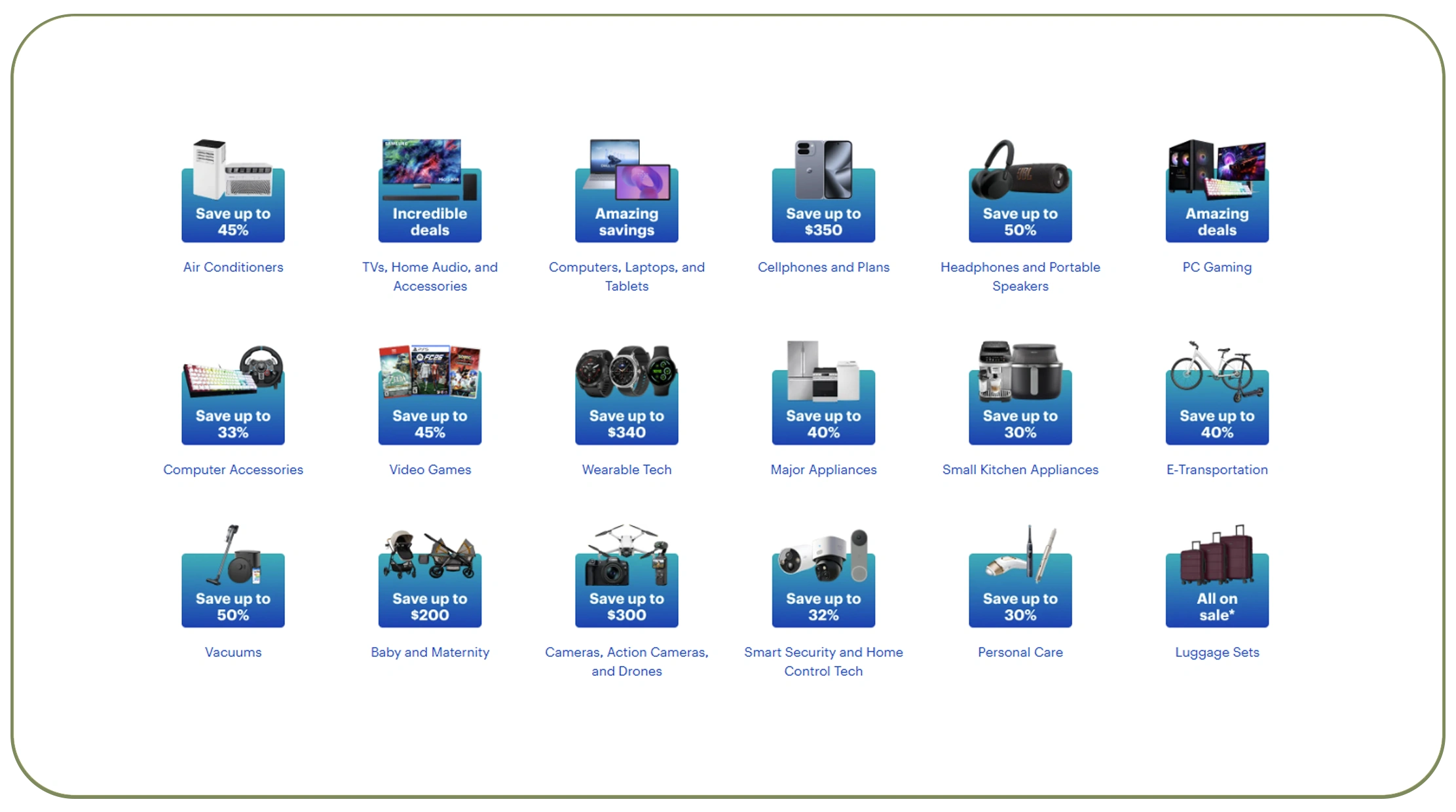
Understanding competitor assortments helps retailers identify opportunities that may otherwise remain hidden. Customers compare products across multiple stores before purchasing. If a retailer lacks key products, shoppers may switch to competitors.
Businesses that scrape competitor assortment data for retail market analysis gain visibility into category trends, SKU additions, discontinued products, and assortment shifts.
Benefits of Competitor Assortment Tracking
- Identify assortment gaps
- Improve category planning
- Discover emerging product trends
- Increase customer retention
- Reduce lost sales opportunities
Assortment Intelligence Adoption Trends (2020–2026)
| Year | Retailers Using Assortment Intelligence (%) | Revenue Improvement (%) |
|---|---|---|
| 2020 | 29 | 3.5 |
| 2021 | 35 | 4.2 |
| 2022 | 43 | 5.1 |
| 2023 | 51 | 6.3 |
| 2024 | 60 | 7.4 |
| 2025 | 69 | 8.5 |
| 2026 | 77 | 9.8 |
When retailers understand what competitors stock, they can adjust their product strategies more effectively and ensure they remain relevant to changing customer preferences.
How Can Retailers Build Better Product Mix Strategies?
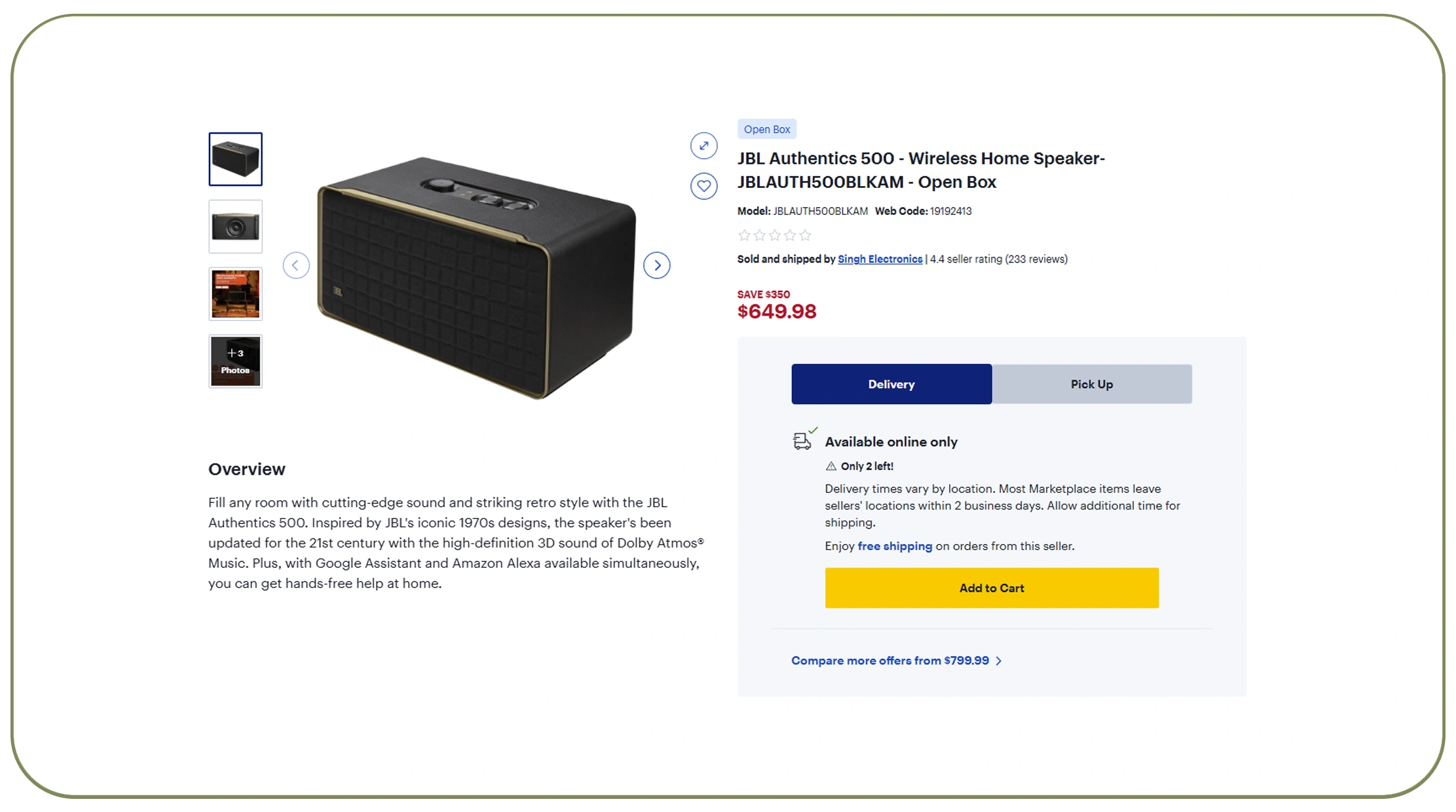
A successful assortment strategy requires complete visibility into category performance and product availability across competitors.
Businesses can extract retail assortment tracking dataset information to understand:
- Product launches
- Assortment expansions
- Category growth trends
- Seasonal inventory changes
- Market demand shifts
Key Components of Product Mix Optimization
- Category performance analysis
- Product lifecycle monitoring
- Competitive assortment evaluation
- Inventory allocation planning
- Customer demand forecasting
Product Mix Improvement Statistics (2020–2026)
| Year | Businesses Using Assortment Analytics (%) |
|---|---|
| 2020 | 31 |
| 2021 | 38 |
| 2022 | 46 |
| 2023 | 55 |
| 2024 | 64 |
| 2025 | 72 |
| 2026 | 80 |
Retailers that build data-driven product strategies can improve inventory productivity while reducing the likelihood of carrying underperforming products.
This creates a more balanced assortment that aligns with customer demand and market trends.
How Does Competitive Product Comparison Improve Decisions?
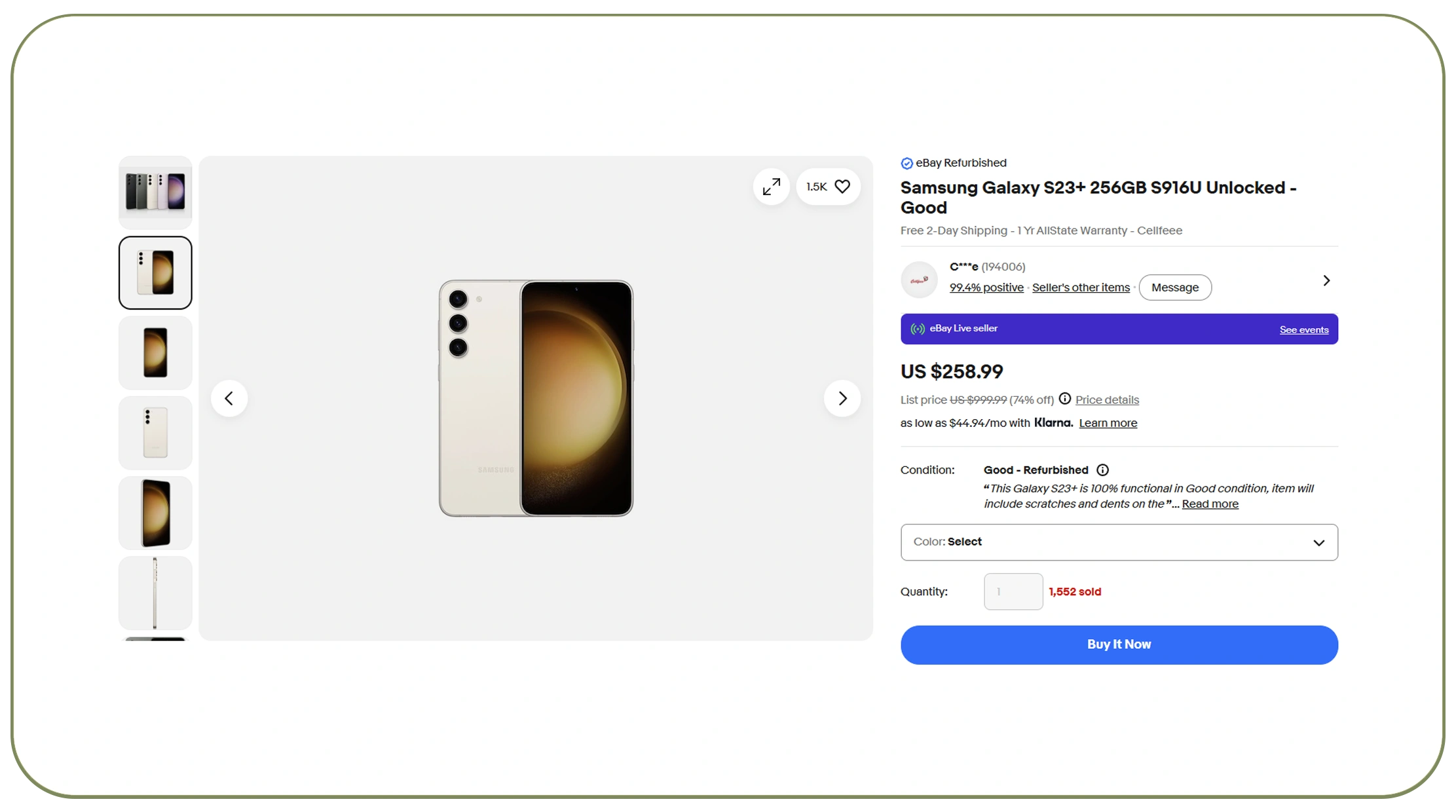
Retailers often struggle to determine whether their assortment matches market expectations. Competitor comparison solves this challenge.
Using Web Scraping retail assortment comparison data, businesses can compare products across retailers in real time.
Areas for Comparison
- Product availability
- Brand representation
- Category depth
- SKU counts
- New product introductions
Common Outcomes of Assortment Comparison
| Business Benefit | Improvement Range (%) |
|---|---|
| Product Availability | 15–25 |
| Category Coverage | 12–20 |
| Inventory Accuracy | 18–28 |
| Customer Retention | 10–18 |
| Revenue Growth | 8–15 |
Retailers can quickly identify assortment weaknesses and make strategic adjustments before competitors gain market share.
These insights help merchandising teams create stronger product portfolios that attract and retain customers.
How Can Benchmarking Reveal Hidden Revenue Opportunities?
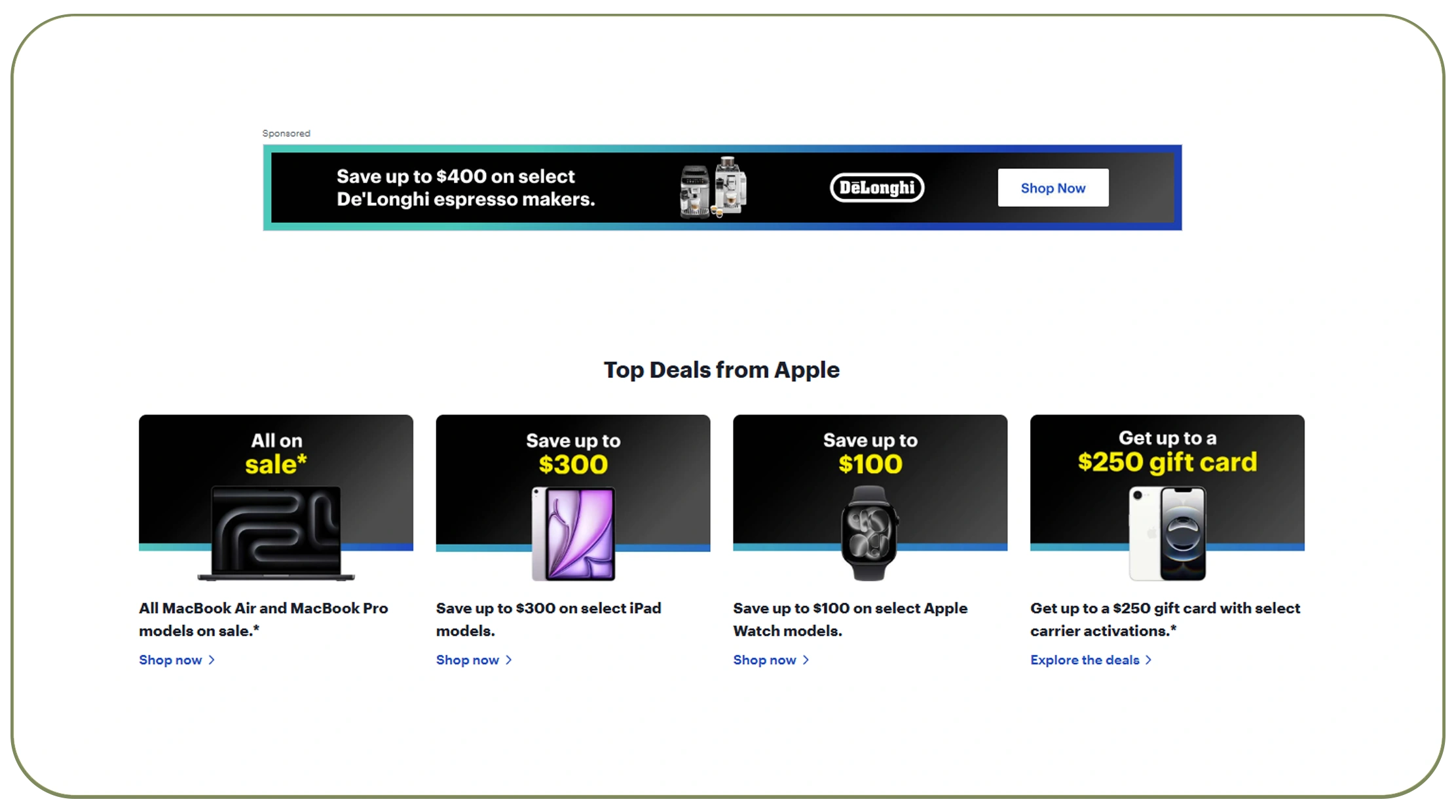
Retailers need more than product visibility. They need performance context.
Competitive Benchmarking allows businesses to evaluate their assortment against industry leaders and direct competitors.
What Can Benchmarking Measure?
- Category breadth
- SKU diversity
- Product availability
- Assortment depth
- Product launch frequency
Benchmarking Adoption Growth (2020–2026)
| Year | Retailers Using Benchmarking Tools (%) |
|---|---|
| 2020 | 26 |
| 2021 | 34 |
| 2022 | 42 |
| 2023 | 51 |
| 2024 | 61 |
| 2025 | 70 |
| 2026 | 79 |
Key Advantages
- Identify assortment gaps
- Improve category competitiveness
- Optimize inventory allocation
- Increase market responsiveness
- Support strategic planning
Benchmarking transforms raw assortment data into actionable business intelligence. Retailers can discover opportunities for expansion and improve product availability where it matters most.
How Does Automation Improve Assortment Intelligence?
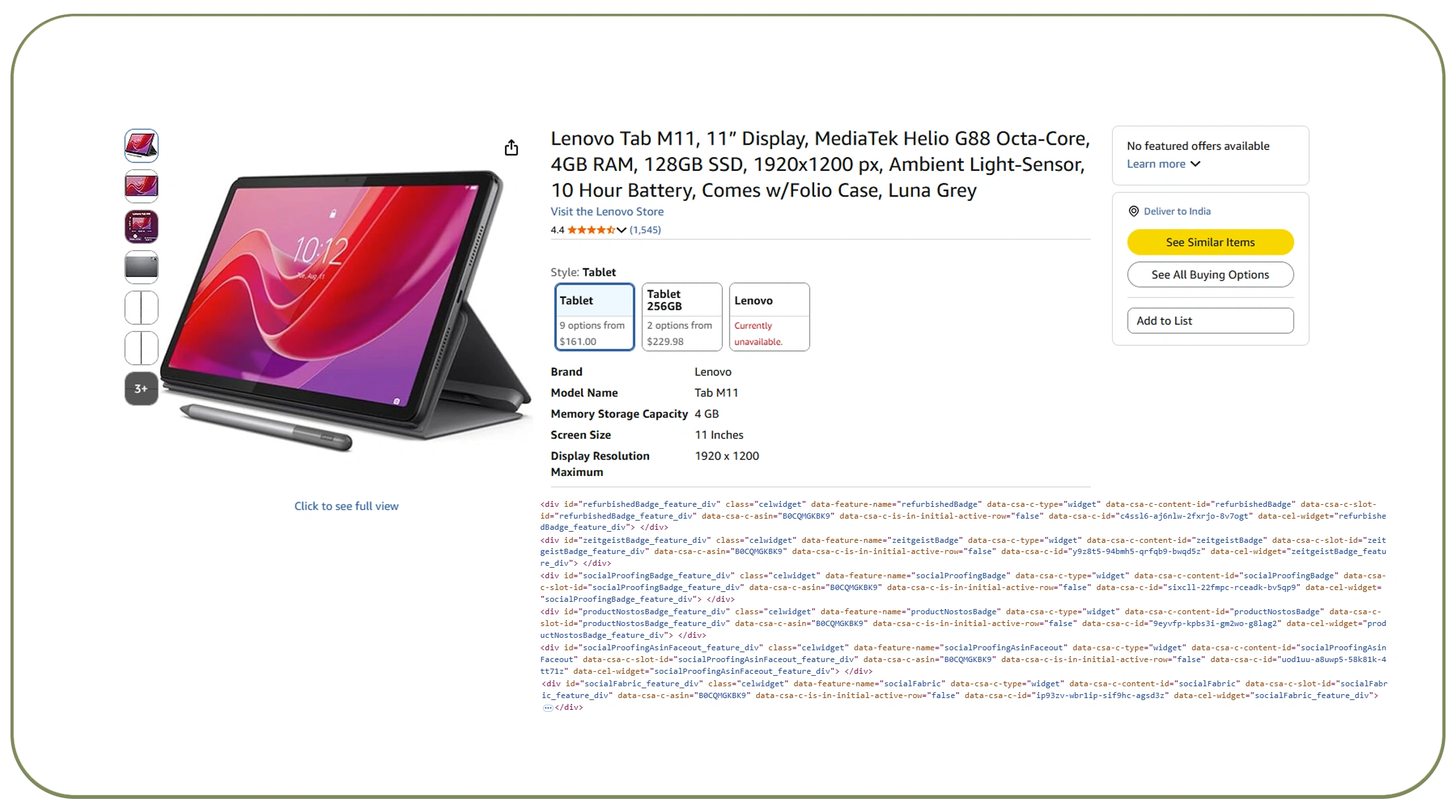
Manual assortment monitoring is difficult and time-consuming. Product catalogs change frequently, making continuous monitoring essential.
A modern Web Scraping API automates data collection and delivers updated assortment intelligence at scale.
Automated Intelligence Benefits
- Continuous monitoring
- Faster data collection
- Reduced manual effort
- Improved data accuracy
- Scalable competitive analysis
Automation Adoption Trends (2020–2026)
| Year | Retailers Using Automated Intelligence (%) |
|---|---|
| 2020 | 30 |
| 2021 | 37 |
| 2022 | 45 |
| 2023 | 54 |
| 2024 | 63 |
| 2025 | 72 |
| 2026 | 81 |
Automation allows businesses to track thousands of products across multiple competitors without increasing operational complexity.
The result is faster decision-making and stronger assortment management capabilities.
How Can Retailers Turn Data Into Competitive Advantage?

Collecting data is only the first step. Retailers must convert insights into strategic action.
Professional Web Scraping Services help businesses gather, process, and analyze large-scale assortment intelligence efficiently.
Strategic Applications
- Category management
- Inventory optimization
- New product planning
- Promotional strategy development
- Market expansion analysis
Competitive Intelligence Impact (2020–2026)
| Metric | 2020 | 2026 |
|---|---|---|
| Assortment Accuracy (%) | 68 | 89 |
| Inventory Efficiency (%) | 61 | 84 |
| Forecast Accuracy (%) | 64 | 87 |
| Customer Satisfaction (%) | 70 | 91 |
Retailers that transform assortment data into actionable strategies can improve customer experience, strengthen market positioning, and reduce revenue loss caused by poor product mix decisions.
Data-driven assortment planning helps businesses adapt quickly to changing market dynamics and consumer behavior.
Why Choose Real Data API?
Real Data API provides advanced retail intelligence solutions designed to help businesses improve assortment planning and reduce lost sales.
Through competitor assortment intelligence for retailers, organizations gain real-time visibility into product catalogs, category performance, assortment changes, and competitor strategies.
Combined with Price Monitoring, retailers can understand how product availability and pricing interact to influence customer purchasing decisions.
Why Retailers Choose Real Data API
- Real-time assortment monitoring
- Automated competitor tracking
- Scalable data extraction
- Comprehensive retail intelligence
- Category-level insights
- SKU-level visibility
- Custom dashboard integration
- Reliable enterprise-grade infrastructure
Business Outcomes
- Better product mix decisions
- Improved inventory planning
- Reduced lost sales
- Faster response to market changes
- Enhanced competitive positioning
Real Data API helps retailers transform raw retail data into actionable intelligence that drives measurable business growth.
Conclusion
Modern retail success depends on having the right products available at the right time. Businesses that leverage competitor assortment intelligence for retailers gain the visibility needed to identify assortment gaps, optimize product mixes, and improve customer satisfaction.
Between 2020 and 2026, competitive assortment analytics has evolved from a useful capability into a critical business requirement. Retailers that continuously monitor competitor assortments can make faster decisions, strengthen category performance, and reduce revenue loss caused by ineffective assortment strategies.
Ready to optimize your product mix and reduce lost sales? Contact Real Data API today to unlock real-time competitor assortment intelligence and transform your retail decision-making!
Latest posts
How Scrape Xiaohongshu Product Trends in Real Time Solves Product Discovery and Competitor Monitoring Challenges?
How to Scrape Taobao Product Data to Solve Pricing, Inventory, and Competitor Monitoring Challenges?
How to Extract grocery product listings Data from SPAR to Build Accurate Grocery Intelligence and Competitive Market Insights?
Scrape Douyin follower growth and engagement data to track influencer performance and trends







.png)