.gif)
.jpg)
Quick Summary
- ecommerce data scraping for market research enables businesses to monitor competitor pricing, product availability, customer demand, and changing shopping patterns across online marketplaces.
- An Ecommerce Scraping API helps collect and organize structured retail information for market analysis, pricing decisions, product planning, and identifying emerging opportunities.
Introduction
ecommerce data scraping for market research helps businesses transform publicly accessible online retail information into actionable market intelligence. Retailers, marketplace sellers, brands, and market research teams can analyze product prices, competitor assortments, availability, promotions, and category movements to understand how the market is changing.
An Ecommerce Scraping API makes this process more scalable by delivering structured product information from supported online sources. Instead of manually checking multiple websites, businesses can consolidate relevant information into datasets for comparison, reporting, and analysis.
The growing importance of online commerce makes this intelligence valuable. According to the U.S. Census Bureau, American retail e-commerce sales reached $1,233.7 billion in 2025, representing 16.4% of total retail sales. In the second quarter of 2026, e-commerce accounted for 17.1% of total U.S. retail sales. These figures demonstrate the increasing importance of digital channels in retail activity.
For businesses, the opportunity is not simply collecting more product information. It is identifying meaningful changes in consumer demand, competitor positioning, and product availability early enough to make informed decisions.
How Can Retailers Compare Product Prices Across Multiple Competitors?
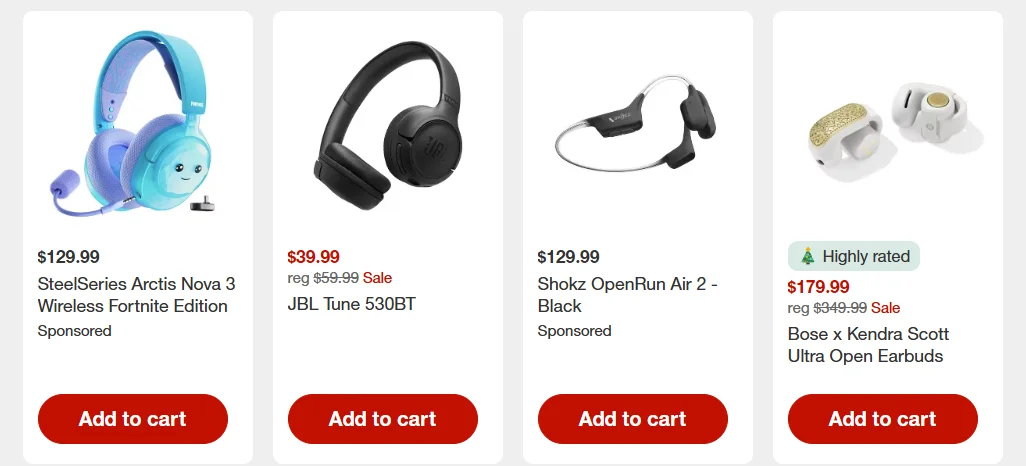
Understanding competitor pricing is essential for retailers that want to maintain attractive product offers without sacrificing profitability. Online marketplaces frequently display different prices for identical or comparable products because of seller competition, promotional campaigns, shipping charges, and product variations.
Businesses can scrape ecommerce prices for competitor analysis to collect product-level pricing information from multiple online stores. The collected information can include product names, brand names, model numbers, listed prices, discounted prices, shipping costs, seller details, and product URLs.
This information helps pricing teams identify products that are consistently priced below or above their own offerings. Retailers can also identify discount patterns, compare product positioning, and understand which competitors are targeting price-sensitive customers.
Historical market benchmarks (2020–2026)
The following table presents selected U.S. retail e-commerce sales benchmarks reported by the U.S. Census Bureau. These figures provide economic context for the growing importance of online retail, rather than measurements of individual product prices.
| Year | Reported e-commerce sales | Market observation |
|---|---|---|
| 2020 | $815.4 billion | Annual retail survey benchmark |
| 2021 | $870.8 billion | Quarterly survey estimate |
| 2022 | $1,034.1 billion | Revised annual estimate |
| 2023 | $1,118.7 billion | Annual estimate |
| 2024 | $1,192.6 billion | Annual estimate |
| 2025 | $1,233.7 billion | Annual estimate |
| 2026 | $340.2 billion | Q2 seasonally adjusted estimate |
Sources: U.S. Census Bureau annual and quarterly releases. The 2020 annual survey benchmark and quarterly estimates have different statistical bases; historical estimates are subject to revision. The 2026 figure represents Q2, not a full-year total.
For effective comparisons, businesses should standardize product identifiers, currencies, package sizes, and shipping conditions before evaluating prices. Comparing identical models is particularly important in electronics, appliances, beauty products, and consumer goods.
This approach helps retailers distinguish genuine competitive advantages from differences caused by product specifications or incomplete pricing information.
Why Should Businesses Monitor Changes in Competitor Pricing?
Competitor prices rarely remain constant. Retailers adjust their prices according to demand, inventory levels, seasonal promotions, supplier costs, and competitive pressure. A price comparison conducted only once may therefore provide an incomplete picture of market conditions.
ecommerce competitor price change analysis allows businesses to examine how product prices move over time. By collecting information at consistent intervals, analysts can identify price increases, reductions, promotional periods, and recurring discount patterns.
For example, a retailer can compare current product prices against historical observations to determine whether a competitor has introduced a discount or returned to its regular selling price. This information helps pricing managers evaluate their own promotional calendars and avoid unnecessary price reductions.
Useful metrics include:
- Average competitor price: Measures the average observed selling price for comparable products.
- Price movement percentage: Measures the percentage increase or decrease between two observations.
- Discount frequency: Identifies how frequently competitors offer promotional pricing.
- Price gap: Shows the difference between a retailer's price and competitor prices.
- Promotion duration: Tracks how long a discount remains visible.
Businesses should also separate temporary promotional prices from regular prices. Otherwise, short-term discounts can distort long-term market analysis.
A reliable monitoring process requires consistent collection schedules, timestamps, product matching, and validation. Analysts should record whether prices include taxes, delivery charges, or membership conditions.
For marketplace sellers, these insights can support better pricing decisions, more effective campaign planning, and improved product positioning. Rather than reacting to every competitor discount, businesses can identify sustained market movements and make decisions based on historical evidence.
Actionable insight: Create separate monitoring groups for high-demand products, frequently discounted products, and premium product categories. This makes it easier to prioritize pricing changes that have the greatest commercial relevance.
Strengthen your pricing intelligence with structured competitor data and consistent market monitoring from Real Data API.
Get Insights Now!How Does Structured Data Improve Competitive Market Analysis?
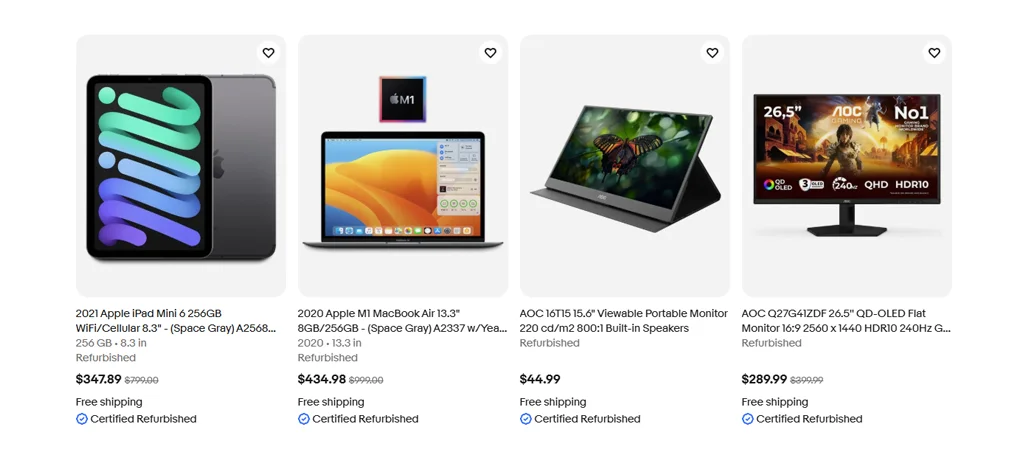
Collecting information from multiple retail websites is only the first step. Businesses also need a consistent way to organize, compare, and analyze the information.
An ecommerce data API for competitive analysis helps businesses access structured product information through a standardized data delivery process. Depending on the supported sources and fields, this information may include product titles, prices, brands, descriptions, ratings, seller details, category information, and availability indicators.
Structured data makes it easier to combine information from different online retailers without repeatedly processing unorganized website content.
For example, a retail research team can create a unified product dataset using common fields such as:
| Data field | Research application |
|---|---|
| Product name | Identifies comparable products |
| Brand and model | Supports product matching |
| Current price | Enables price comparisons |
| Discounted price | Identifies promotional offers |
| Product category | Supports category-level analysis |
| Seller information | Helps evaluate seller competition |
| Customer ratings | Provides marketplace feedback indicators |
| Product URL | Supports source verification |
| Collection timestamp | Establishes when information was observed |
Businesses can use these fields to develop competitor dashboards, identify pricing gaps, compare product assortments, and evaluate category performance.
The most important requirement is data consistency. Different retailers may describe the same product using different names, abbreviations, or model formats. Product matching and normalization help reduce incorrect comparisons.
Data quality checks should also identify missing values, duplicate records, unusual price movements, and inconsistent currencies.
For market researchers, structured information improves the transition from raw collection to meaningful analysis. It also makes it easier to refresh datasets, compare historical observations, and share insights across merchandising, marketing, and pricing teams.
What Can Product Availability Reveal About Retail Demand?
Product availability is an important market indicator because it helps businesses understand which products are visible, purchasable, temporarily unavailable, or no longer listed across monitored retail websites.
Businesses that extract product availability data for retail analytics can monitor inventory-related signals across online stores and marketplaces. Relevant information may include stock status, availability messages, product listing changes, estimated delivery information, and seller availability, where publicly displayed.
This information supports several research activities. Retailers can identify products that repeatedly become unavailable, compare assortment coverage across competitors, and examine whether certain categories experience frequent stock interruptions.
Availability information becomes more valuable when analyzed alongside pricing and product information. For example, a product that is unavailable at one retailer but available at several competitors may indicate an assortment or replenishment difference. However, an out-of-stock message alone does not establish actual consumer demand or the reason for the shortage.
Retail teams should monitor the following indicators:
- Product availability status across different websites.
- Frequency of observed stock-status changes.
- Number of competing retailers listing the same product.
- Changes in product listing visibility.
- Delivery estimates and availability messages.
- Differences between seller-level and product-level availability.
Historical observations are particularly useful because a single snapshot cannot explain how availability changes over time.
Businesses should also distinguish between temporarily unavailable products, discontinued listings, and products that are simply hidden from a particular search result.
Combining these indicators with sales information, where available, can provide a stronger understanding of retail performance. This helps merchandising teams identify assortment gaps, investigate replenishment issues, and improve product planning.
Actionable insight: Maintain a historical availability record with source, product identifier, collection time, and observed status. This creates a more reliable foundation for retail inventory analysis.
How Does Large-Scale Online Data Collection Support Market Research?
Businesses operating across multiple marketplaces need more than occasional competitor checks. They require consistent information that helps them understand market movements across products, categories, brands, and geographical regions.
ecommerce data scraping supports this process by collecting publicly accessible information from selected online retail sources and converting it into structured datasets.
For market research teams, the collected information can support several business activities:
- Consumer trend identification: Product launches, changing product assortments, customer ratings, and review patterns can help researchers identify emerging interests. These are demand signals, not direct proof of purchase behavior.
- Category research: Comparing product counts, brands, specifications, and prices across categories helps businesses understand competitive positioning and assortment differences.
- Geographical comparisons: Retailers can compare product availability and pricing across supported country-specific websites to identify regional differences.
- Promotional research: Historical price observations help analysts examine discount patterns, seasonal campaigns, and promotional positioning.
- Product opportunity identification: Businesses can investigate categories where competitors offer limited product variety or where certain customer requirements appear underserved.
The importance of monitoring online shopping behavior is also reflected in official European statistics. Eurostat maintains an annual dataset covering internet purchases by individuals from 2020 through 2025, including purchase frequency and other online shopping indicators. This provides a valuable macro-level reference for researchers studying digital consumer behavior.
However, online product listings should not be treated as complete consumer research. Product visibility, ratings, and availability cannot independently establish actual sales, customer income, or purchase intentions.
A stronger research strategy combines marketplace observations with official statistics, surveys, transaction data where available, and internal business intelligence.
For organizations, this combination helps transform online retail information into a more comprehensive understanding of market opportunities and competitive changes.
Why Are Reliable Product Datasets Important for Business Decisions?
Market research becomes more useful when businesses can access consistent historical and current product information. Disconnected spreadsheets and manually collected website records often make it difficult to compare competitors or identify long-term changes.
E-Commerce Datasets provide organized information that can be used for pricing intelligence, product research, category analysis, and marketplace monitoring.
A useful dataset should contain clearly defined fields, consistent product identifiers, source information, timestamps, and relevant product attributes. Depending on the research objective, businesses may require:
| Dataset category | Important information | Business application |
|---|---|---|
| Product dataset | Names, brands, specifications | Product research |
| Pricing dataset | Regular and discounted prices | Competitor benchmarking |
| Availability dataset | Stock and listing status | Retail analytics |
| Seller dataset | Seller names and marketplace details | Seller competition |
| Review dataset | Ratings and review counts | Customer feedback analysis |
| Category dataset | Product categories and attributes | Market segmentation |
| Historical dataset | Previous observations and timestamps | Trend analysis |
Data enrichment can improve the usefulness of these records. Product matching connects equivalent products across retailers, while normalization standardizes attributes such as size, color, brand, currency, and model number.
Businesses should also establish quality-control processes. These may include duplicate detection, missing-field checks, source validation, timestamp verification, and monitoring for unexpected changes.
Historical datasets are particularly valuable because they help researchers compare different periods instead of relying exclusively on current market conditions.
For example, pricing teams can investigate how frequently products were discounted, while merchandising teams can compare changes in competitor assortments. Marketing teams can also use category-level information to identify products receiving greater visibility across monitored platforms.
The most effective datasets are designed around specific research questions. Collecting every available field is not necessarily useful. Selecting relevant information, maintaining consistency, and refreshing records at appropriate intervals produce more actionable business intelligence.
Why Choose Real Data API?
Real Data API helps businesses access structured online retail information to support competitor research, pricing intelligence, product monitoring, and market analysis.
With Ecommerce Data Scraping Helps Marketplace Sellers, businesses can better understand competitor activities and evaluate product positioning across supported eCommerce platforms.
Key advantages include:
- Structured data delivery: Organize product information into consistent fields for easier analysis.
- Competitor monitoring: Collect product prices, promotional information, and seller details from supported sources.
- Product intelligence: Examine product descriptions, categories, specifications, and marketplace listings.
- Availability tracking: Monitor publicly displayed stock and listing information.
- Scalable research: Support data collection across multiple selected websites and product categories.
- Business-focused insights: Prepare datasets for pricing strategies, merchandising decisions, and market opportunity research.
The right data collection strategy should reflect business objectives, target websites, required attributes, collection frequency, and data-quality expectations.
Real Data API can help businesses build a more organized approach to online retail research and competitive intelligence.
Explore Real Data API to turn online retail information into structured insights for smarter business decisions.
Conclusion
Online retail markets continue to evolve as businesses compete through pricing, product selection, promotions, and customer experience. Access to accurate market information helps retailers understand these changes and identify opportunities for improvement.
ecommerce data scraping for market research gives businesses a practical way to examine competitor activities, track product prices, monitor availability, and identify emerging category trends.
However, successful market research depends on more than collecting information. Businesses must prioritize accurate product matching, consistent data structures, historical records, and meaningful analysis.
Companies should also ensure their collection methods respect applicable website terms, access restrictions, and privacy requirements. The IETF's Robots Exclusion Protocol standard provides guidance on crawler access preferences, although robots.txt is not itself an authorization mechanism.
Ready to make better market research decisions? Connect with Real Data API to explore structured eCommerce data collection solutions and build a stronger foundation for competitor intelligence, retail analytics, and business growth!
Frequently Asked Questions
1. How does online retail data help identify market opportunities?
ecommerce data scraping for market research helps businesses examine product trends, competitor assortments, pricing differences, and availability patterns to identify potential market opportunities and improve strategic planning.
2. What is the purpose of an API in retail research?
An Ecommerce Scraping API delivers structured product information from supported websites, helping businesses organize retail data, automate collection workflows, and simplify competitor monitoring across multiple online platforms.
3. Can businesses monitor competitor product pricing?
Yes. Businesses can scrape ecommerce prices for competitor analysis to compare product prices, discounts, seller offers, and promotional strategies across selected online retail websites.
4. Why is historical pricing information important?
ecommerce competitor price change analysis helps businesses identify recurring discounts, pricing fluctuations, promotional patterns, and competitor positioning, supporting informed pricing strategies and better merchandising decisions.
5. How can businesses improve competitive intelligence?
An ecommerce data API for competitive analysis helps businesses organize product information, compare retailers, and identify market movements. Real Data API supports structured retail research workflows.
Latest posts
How Can a Web Scraper for Large-Scale Data Collection Help Businesses Reduce Manual Research Costs
Used & Rental Car Price Scraping: Turo, Kayak, Priceline & mobile.de Vehicle Listings
Marketplace Seller Data Scraping: Walmart, TikTok Shop, Etsy & Amazon Category Data
BookMyShow Data Scraping: Movie-Wise & City-Wise Ticket Availability and Pricing



.png)


