Introduction
Businesses can Extract grocery product prices from Ocado using automated data scraping and APIs to monitor real-time prices, promotions, stock availability, and product changes. This enables retailers, FMCG brands, pricing analysts, and market researchers to make faster pricing decisions, improve competitiveness, and respond quickly to market changes.
Industry Insight: According to industry estimates, over 75% of grocery shoppers compare online prices before making a purchase, while retailers increasingly rely on automated pricing intelligence between 2020 and 2026 to optimize promotions, pricing strategies, and inventory planning.
Target Audience: Grocery retailers, FMCG brands, pricing analysts, category managers, market researchers, eCommerce businesses, and retail intelligence providers.
Pain Point Solved: Manual grocery price tracking is slow, inconsistent, and difficult to scale across thousands of products. Automated data extraction provides accurate, real-time grocery intelligence for smarter business decisions.
Online grocery retail has become highly competitive as consumers compare prices, discounts, and product availability before making purchasing decisions. Retailers and brands must continuously monitor competitor pricing to remain competitive while protecting profit margins. Extract grocery product prices from Ocado enables businesses to automate the collection of pricing, promotions, availability, product descriptions, and category information without relying on manual monitoring.
Businesses increasingly leverage the Ocado Grocery Scraping API to access structured grocery datasets that support competitive pricing analysis, assortment monitoring, promotional tracking, and demand forecasting. Automated grocery intelligence enables organizations to identify pricing opportunities, react quickly to market changes, and improve merchandising strategies using accurate, near real-time retail data.
This blog explains how automated grocery price extraction helps retailers, suppliers, manufacturers, and market researchers build scalable pricing intelligence systems while improving operational efficiency and customer satisfaction.
Why Is Automated Grocery Data Essential for Retail Success?
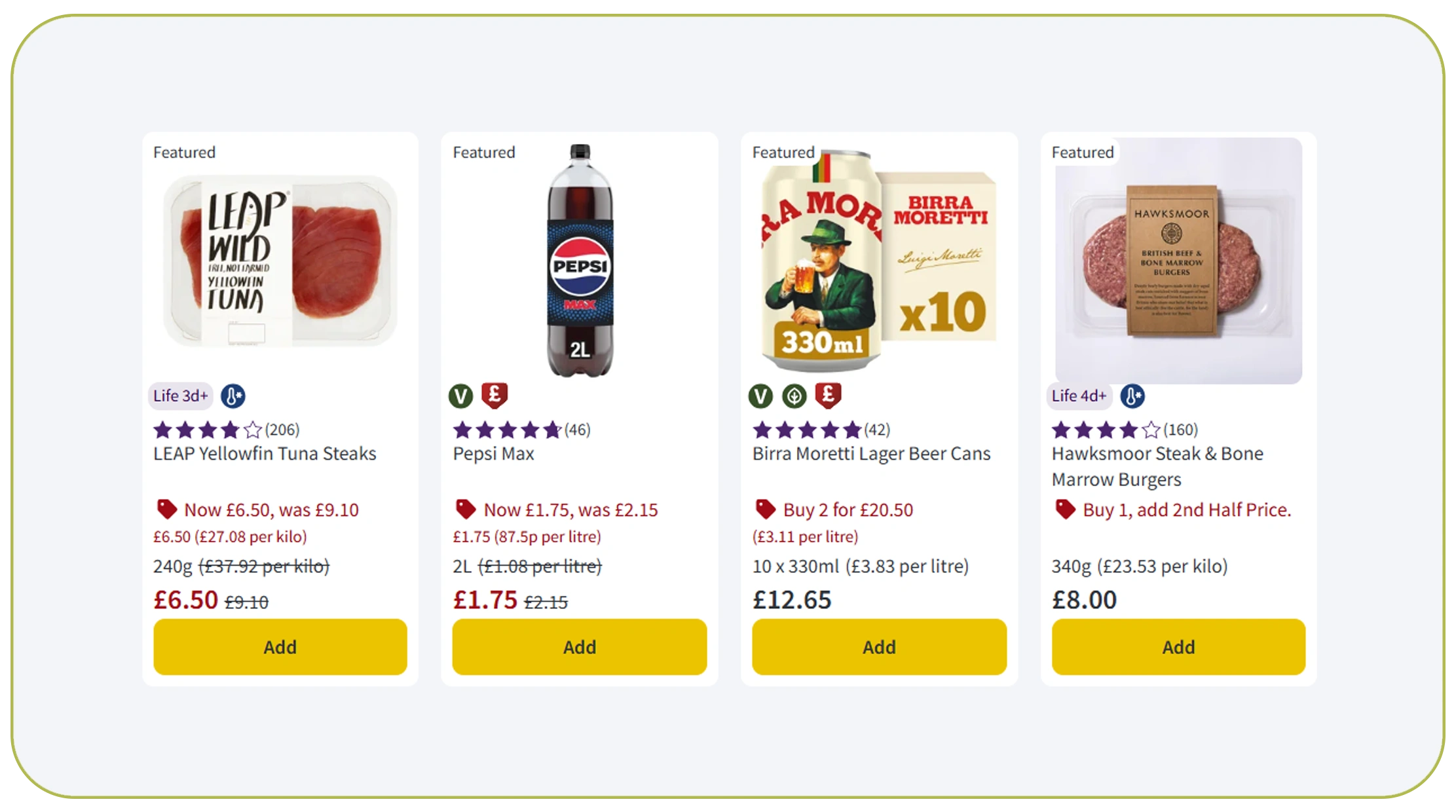
Retailers operate in an environment where prices change frequently due to promotions, seasonal campaigns, supplier costs, and competitive activity. Businesses increasingly rely on Grocery product data extraction from Ocado to capture accurate product prices, promotional offers, SKU information, nutritional details, package sizes, availability, and category data across thousands of grocery products.
Instead of manually checking hundreds of product pages each day, automated extraction collects updated information continuously. This allows pricing teams to compare competitor prices, monitor promotional campaigns, and identify assortment changes almost immediately. Marketing teams use the same data to evaluate promotional effectiveness, while category managers optimize pricing decisions based on current market conditions.
Automated grocery extraction also improves forecasting by providing historical pricing datasets for trend analysis. Businesses can analyze seasonal price fluctuations, understand consumer purchasing behavior, and identify products with the highest promotional impact. Suppliers benefit by evaluating retailer pricing consistency and optimizing product distribution strategies across multiple regions.
Grocery Data Collection Growth (2020-2026)
| Year | Products Monitored (Million) | Businesses Using Grocery Data (%) | Pricing Accuracy (%) |
|---|---|---|---|
| 2020 | 18 | 34% | 89% |
| 2021 | 23 | 40% | 91% |
| 2022 | 29 | 47% | 93% |
| 2023 | 36 | 55% | 95% |
| 2024 | 44 | 63% | 96% |
| 2025* | 53 | 71% | 97% |
| 2026* | 64 | 79% | 98% |
*Projected estimates.
Key Business Benefits
- Monitor thousands of grocery products automatically.
- Track pricing and promotional changes in near real time.
- Compare competitor assortments efficiently.
- Improve pricing strategies using historical data.
- Reduce manual research costs significantly.
- Support category management with reliable retail intelligence.
How Can Businesses Build Smarter Pricing Decisions?
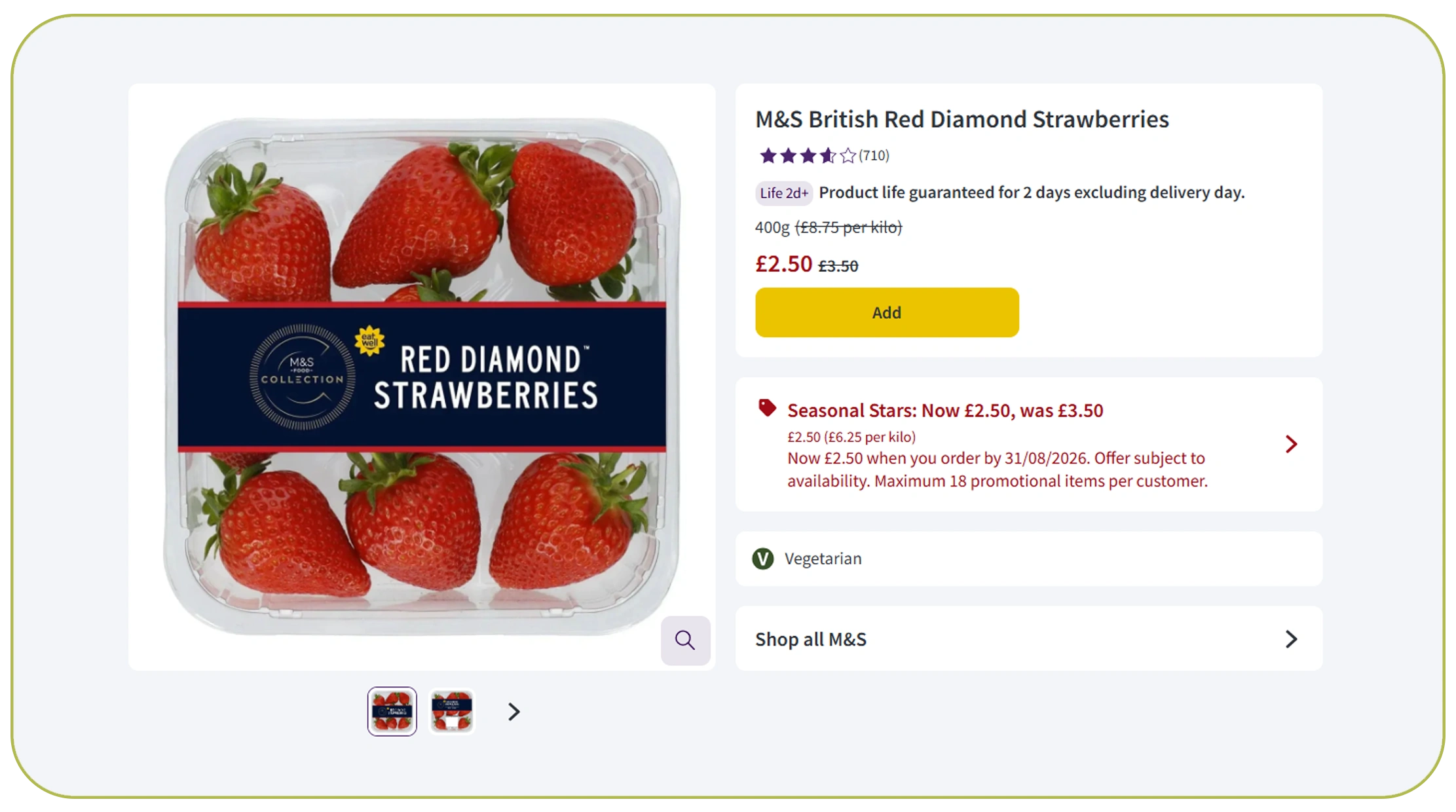
Pricing intelligence has become one of the most valuable competitive assets in grocery retail. Organizations increasingly use an Ocado grocery price data intelligence dashboard to visualize product prices, promotional activity, inventory changes, and category performance through interactive reporting tools.
Instead of working with spreadsheets that become outdated quickly, pricing dashboards consolidate live grocery data into one centralized platform. Decision-makers can monitor price movements across product categories, compare competitors, identify discount patterns, and measure promotional effectiveness using customizable analytics. This enables faster reactions to market changes while improving pricing consistency.
Interactive dashboards also support executive reporting by providing KPIs such as average selling price, promotion frequency, price index, stock availability, and competitor benchmarking. Marketing teams evaluate campaign performance, procurement teams negotiate supplier pricing more effectively, and category managers identify profitable assortment opportunities based on continuously updated retail intelligence.
As grocery competition intensifies, organizations increasingly integrate pricing dashboards with AI-powered forecasting tools to predict future pricing trends and customer demand. These insights help businesses optimize inventory planning, reduce pricing risks, and maximize profitability.
Grocery Pricing Intelligence Trends (2020-2026)
| Year | Organizations Using Pricing Dashboards (%) | Average Decision Speed Improvement (%) | Forecast Accuracy (%) |
|---|---|---|---|
| 2020 | 31% | 18% | 76% |
| 2021 | 38% | 24% | 79% |
| 2022 | 46% | 31% | 82% |
| 2023 | 55% | 39% | 85% |
| 2024 | 64% | 46% | 88% |
| 2025* | 73% | 53% | 91% |
| 2026* | 81% | 60% | 94% |
*Projected estimates.
Dashboard Capabilities
- Real-time grocery price monitoring.
- Promotion and discount tracking.
- Competitor benchmarking.
- Historical price trend analysis.
- Inventory and availability monitoring.
- AI-powered demand forecasting.
These capabilities help retailers make faster, data-driven decisions while improving competitiveness in the rapidly evolving online grocery market.
How Can Businesses Monitor Price Changes Automatically?
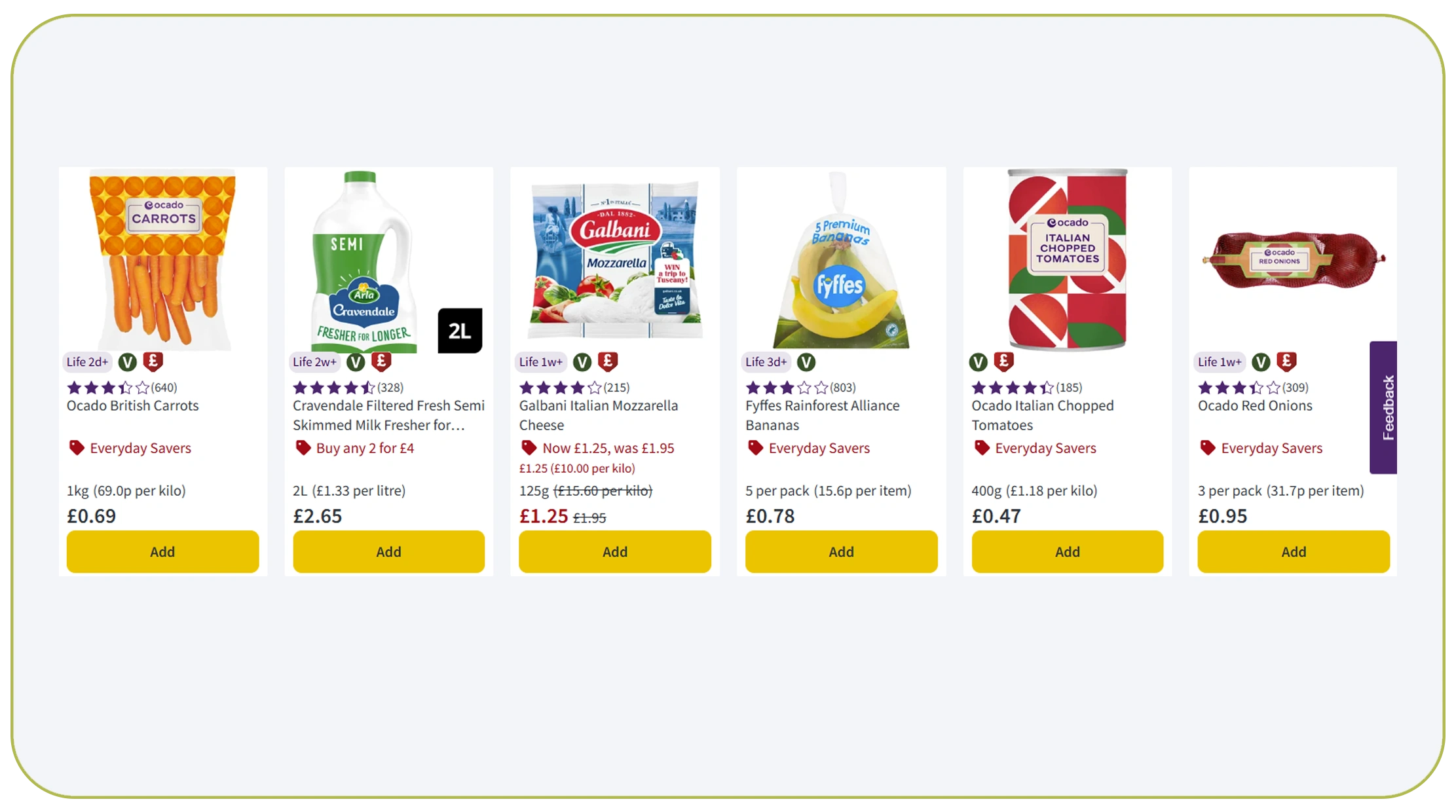
Frequent price fluctuations are common in online grocery retail due to promotions, seasonal demand, supplier costs, and competitive pricing strategies. Businesses increasingly rely on Ocado price monitoring with web scraping to automate the collection of product prices, discounts, stock availability, and promotional offers. Automated monitoring eliminates manual data collection while providing accurate and timely market intelligence that supports pricing optimization.
From 2020 to 2026, grocery retailers significantly expanded the use of web scraping technologies to capture product information across thousands of SKUs multiple times each day. Continuous monitoring allows pricing teams to identify competitor price changes instantly, compare promotional campaigns, and react before pricing gaps affect revenue or customer loyalty.
Web scraping also provides valuable historical pricing data that enables businesses to analyze seasonal trends, evaluate promotional effectiveness, and forecast future pricing behavior. Combined with AI-powered analytics, organizations can detect pricing anomalies, optimize markdown strategies, and improve inventory planning based on real-time market conditions.
Grocery Price Monitoring Trends (2020-2026)
| Year | Products Tracked Daily (Million) | Automated Price Updates (%) | Pricing Response Time (Hours) |
|---|---|---|---|
| 2020 | 14 | 46% | 18 |
| 2021 | 19 | 53% | 15 |
| 2022 | 25 | 61% | 12 |
| 2023 | 33 | 69% | 9 |
| 2024 | 42 | 76% | 7 |
| 2025* | 53 | 83% | 5 |
| 2026* | 66 | 89% | 3 |
*Projected estimates.
Benefits of Automated Monitoring
- Detect competitor price changes quickly.
- Track promotional campaigns automatically.
- Build historical pricing datasets.
- Improve pricing strategy accuracy.
- Reduce manual monitoring efforts.
- Enable faster retail decision-making.
What Makes Automated Product Collection More Efficient?
Retailers and brands require accurate, scalable solutions to collect thousands of grocery product records daily. An Ocado Scraper automates the extraction of product listings, pricing, discounts, nutritional information, package sizes, categories, availability, and product descriptions from Ocado's online platform. This automation significantly improves operational efficiency while ensuring data consistency.
Traditional manual research becomes impractical as grocery assortments expand and prices change frequently. Automated scraping tools capture structured data in near real time, allowing businesses to maintain updated product databases without extensive manual effort. This improves the accuracy of pricing intelligence and supports faster business decisions across merchandising, procurement, and category management.
Modern scraping solutions can be configured to monitor specific brands, product categories, or promotional events while integrating extracted data into analytics dashboards or business intelligence platforms. Organizations benefit from continuous visibility into competitor assortments and pricing strategies, enabling more agile responses to market changes.
Automated Product Collection Growth (2020-2026)
| Year | Products Collected Daily (Million) | Data Accuracy (%) | Businesses Using Automated Scrapers (%) |
|---|---|---|---|
| 2020 | 17 | 90% | 35% |
| 2021 | 22 | 92% | 42% |
| 2022 | 28 | 94% | 50% |
| 2023 | 35 | 95% | 59% |
| 2024 | 44 | 96% | 67% |
| 2025* | 55 | 97% | 75% |
| 2026* | 68 | 98% | 83% |
*Projected estimates.
Key Features
- Automated SKU collection.
- Price and promotion extraction.
- Product availability monitoring.
- Category-wise product tracking.
- Structured data exports.
- API-ready datasets.
These capabilities enable organizations to scale grocery intelligence programs while reducing operational costs and improving data reliability.
How Can Historical Grocery Data Improve Strategic Planning?
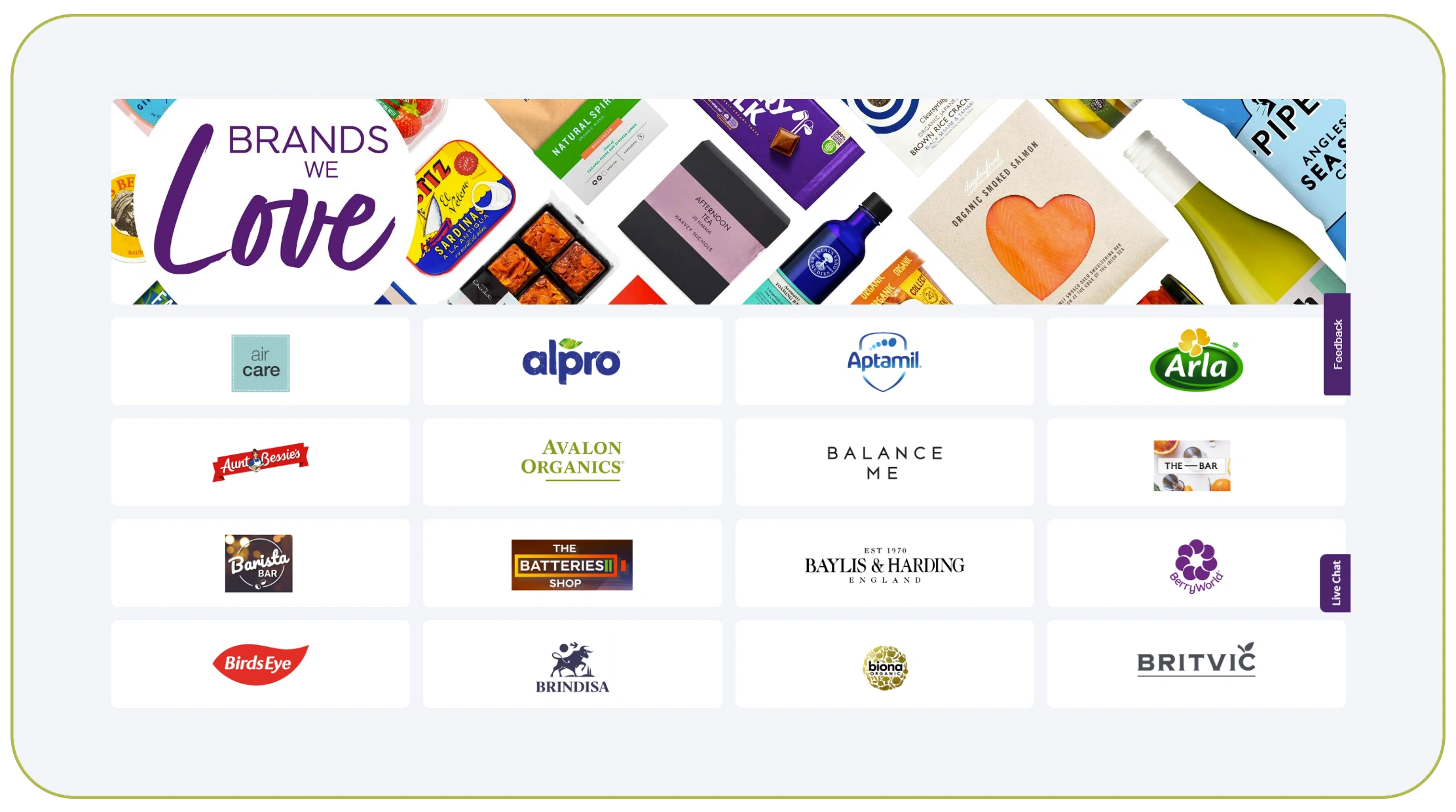
Historical retail datasets help businesses understand pricing behavior, promotional effectiveness, and long-term market trends. Organizations increasingly leverage Web Scraping Ocado Dataset solutions to build comprehensive databases containing historical prices, product information, inventory changes, promotional campaigns, and assortment updates collected over time.
Between 2020 and 2026, businesses expanded the use of historical grocery datasets to support demand forecasting, competitor benchmarking, pricing optimization, and AI model training. Instead of relying solely on current market snapshots, organizations analyze historical data to identify recurring seasonal trends, measure promotion effectiveness, and predict future pricing movements.
Comprehensive grocery datasets also improve machine learning applications by providing large volumes of structured retail information for predictive analytics. Retailers can forecast demand more accurately, optimize replenishment strategies, and reduce inventory risks. Manufacturers use historical datasets to evaluate retailer pricing consistency and understand consumer purchasing behavior across different regions.
Historical Grocery Dataset Trends (2020-2026)
| Year | Historical Records (Billion) | Organizations Using Historical Data (%) | Forecast Accuracy (%) |
|---|---|---|---|
| 2020 | 1.2 | 37% | 77% |
| 2021 | 1.7 | 44% | 80% |
| 2022 | 2.3 | 52% | 83% |
| 2023 | 3.0 | 60% | 86% |
| 2024 | 3.9 | 68% | 89% |
| 2025* | 5.0 | 76% | 92% |
| 2026* | 6.3 | 84% | 94% |
*Projected estimates.
Strategic Applications
- Historical price trend analysis.
- Promotion effectiveness measurement.
- Demand forecasting.
- AI model development.
- Competitor benchmarking.
- Inventory optimization.
Historical grocery datasets provide long-term intelligence that enables organizations to anticipate market changes, improve forecasting accuracy, and develop more resilient pricing and merchandising strategies.
How Can Delivery Intelligence Improve Grocery Operations?

As online grocery shopping continues to grow, businesses need greater visibility into delivery performance, fulfillment efficiency, inventory availability, and regional demand. A Grocery Delivery Dashboard consolidates operational and market data into a centralized platform, enabling retailers, brands, and logistics providers to monitor key performance indicators in real time. This unified view supports faster decision-making and improves the overall customer experience.
Between 2020 and 2026, grocery businesses increasingly adopted dashboard-driven analytics to track delivery timelines, order fulfillment rates, stock availability, pricing consistency, and regional sales performance. By integrating pricing intelligence with logistics and inventory metrics, organizations can identify operational bottlenecks, optimize delivery routes, and maintain competitive service levels.
Modern delivery dashboards also incorporate predictive analytics to forecast demand spikes, evaluate seasonal purchasing behavior, and optimize warehouse replenishment. Executives gain access to actionable KPIs through interactive visualizations, while operations teams receive timely alerts about inventory shortages, delayed deliveries, or pricing inconsistencies. These capabilities help organizations reduce operational costs, improve delivery performance, and strengthen customer satisfaction.
Grocery Delivery Intelligence Trends (2020-2026)
| Year | Retailers Using Delivery Dashboards (%) | On-Time Delivery Rate (%) | Order Fulfillment Accuracy (%) |
|---|---|---|---|
| 2020 | 33% | 88% | 90% |
| 2021 | 40% | 90% | 92% |
| 2022 | 48% | 92% | 93% |
| 2023 | 57% | 94% | 95% |
| 2024 | 66% | 95% | 96% |
| 2025* | 75% | 97% | 97% |
| 2026* | 83% | 98% | 98% |
*Projected estimates.
Dashboard Benefits
- Monitor delivery performance in real time.
- Track inventory and stock availability.
- Improve fulfillment efficiency.
- Analyze regional demand trends.
- Optimize logistics planning.
- Enhance customer satisfaction.
Organizations using delivery dashboards can streamline operations, improve forecasting accuracy, and deliver a superior online grocery experience while maintaining operational excellence.
Why Choose Real Data API?
Real Data API is a trusted provider of scalable web scraping, retail intelligence, and data automation solutions designed for modern businesses. Whether you need to Extract grocery product prices from Ocado or monitor product availability, promotions, assortment changes, and competitor pricing, our API delivers structured, high-quality data in near real time.
Our advanced data extraction platform leverages AI-driven automation and enterprise-grade scraping infrastructure to collect millions of grocery product records accurately and efficiently. Businesses can integrate our APIs directly into pricing dashboards, BI platforms, ERP systems, and analytics tools to support category management, demand forecasting, competitive benchmarking, and pricing optimization.
Real Data API offers customizable data delivery formats, flexible scheduling, robust compliance practices, and scalable infrastructure to meet the evolving needs of retailers, FMCG brands, manufacturers, market research firms, and eCommerce businesses. From monitoring daily price changes to building historical grocery datasets, our solutions empower organizations to make faster, data-driven decisions that improve profitability and strengthen competitive positioning.
Conclusion
The online grocery industry continues to evolve rapidly, making access to accurate and timely product data essential for competitive success. Businesses that Extract grocery product prices from Ocado gain valuable insights into pricing trends, promotional activities, product availability, assortment changes, and customer purchasing patterns. These insights support smarter pricing strategies, improved merchandising decisions, stronger competitor benchmarking, and more accurate demand forecasting.
By combining automated data extraction, AI-powered analytics, and real-time dashboards, organizations can eliminate manual monitoring, improve operational efficiency, and respond quickly to changing market conditions. As grocery competition intensifies, investing in scalable data intelligence solutions becomes a critical advantage for sustainable business growth.
Ready to transform your grocery pricing strategy? Partner with Real Data API to automate Ocado product data extraction, gain real-time retail intelligence, optimize pricing decisions, and stay ahead of the competition with reliable, enterprise-grade grocery data solutions!
Latest posts

How Myntra Fashion Dataset Solves Fashion Intelligence Challenges Across Products, Prices, Brands, and Fashion Market Trends?
How Hyatt Travel Dataset Helps Businesses Track Hotels, Room Prices, Amenities, Locations, and Travel Trends?

How Louis Vuitton Fashion Dataset Enables Better Analysis of Luxury Products, Prices, Brands, and Fashion Trends?
How Blinkit Grocery Dataset Enables Smarter Analysis of Products, Prices, Availability, and Quick-Commerce Trends?







.png)



