TL;DR
- The Hyatt Travel Dataset helps businesses organize hotel information such as property names, locations, room prices, amenities, availability, and other travel attributes.
- Travel Data Scraping can support recurring collection of hospitality information, enabling businesses to compare pricing, monitor market changes, study destinations, and identify emerging travel patterns.
- Structured hotel intelligence can help travel platforms, hospitality analysts, researchers, and businesses turn large volumes of online information into practical market insights.
Introduction
The hospitality market has become increasingly data-driven as travelers compare properties, room prices, amenities, destinations, and booking conditions across multiple digital channels. For businesses operating in travel, hospitality, market research, revenue management, and competitive intelligence, manually tracking this information can quickly become difficult as hotel portfolios and destinations expand.
A structured Hyatt Travel Dataset can bring together important hotel attributes in an organized format. Depending on the collection scope, this may include hotel names, property locations, room categories, displayed prices, amenities, ratings, available dates, descriptions, URLs, and other publicly accessible information. Once standardized, the information can be used for price benchmarking, hotel comparison, location analysis, market research, and travel trend monitoring.
The importance of structured hospitality information became particularly visible after 2020. The pandemic disrupted international travel, followed by a gradual reopening and a strong recovery in tourism. UN Tourism reported that international tourist arrivals reached 97% of pre-pandemic levels in Q1 2024 and approximately 1.4 billion arrivals were recorded during 2024.
For businesses, these changes make historical and current hotel information valuable. Travel Data Scraping can automate the collection of publicly available hotel information at scale, helping analysts build datasets that support comparisons across destinations and time periods.
The following sections examine how hotel information can be collected, organized, monitored, and converted into actionable hospitality intelligence.
Building a Reliable Hotel Information Pipeline
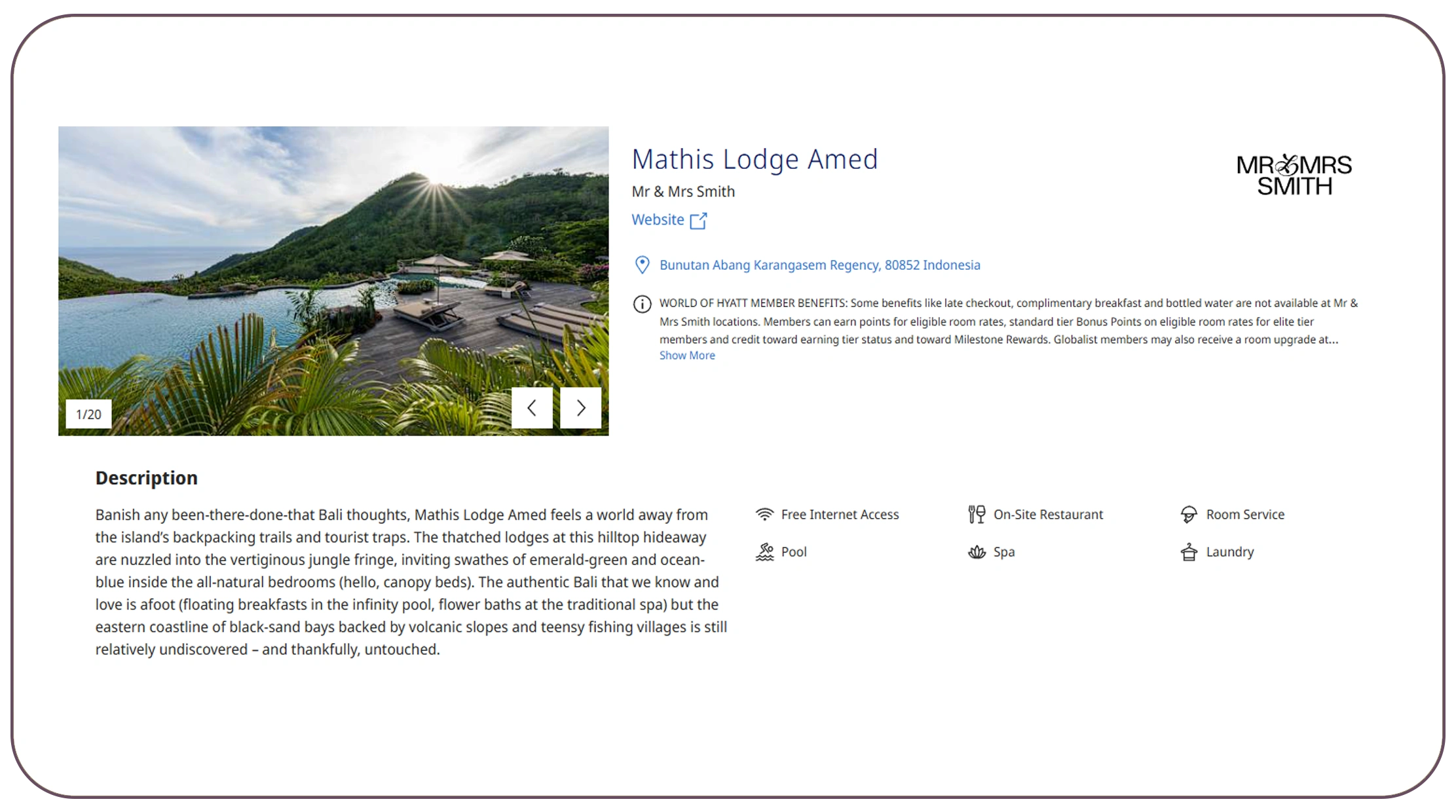
Hyatt Travel Data Scraping Services can help businesses collect publicly accessible hotel information at scale and transform it into structured records. Instead of manually visiting individual property pages, automated workflows can capture selected attributes according to predefined requirements.
A typical collection process may include hotel name, address, destination, room category, displayed price, amenities, property description, rating information, availability indicators, and source URL. The exact fields depend on the business requirement and the information publicly accessible at collection time.
Hospitality Data Development: 2020–2026
From 2020 onward, hotel and travel data requirements changed alongside the global tourism environment. In 2020, travel restrictions created major disruption across destinations. Hyatt reported that it opened 72 new hotels representing 14,972 rooms during the year, while its executed development pipeline stood at approximately 500 hotels and 101,000 rooms at year-end. (Hyatt Investors)
In 2021, international travel remained constrained. UN Tourism estimated 54 million international tourist arrivals in July 2021, still 67% below July 2019. This uneven recovery highlighted the importance of monitoring destination-level conditions rather than relying solely on global averages. (UNWTO)
By 2022, tourism recovery accelerated as more destinations reopened. Businesses increasingly needed datasets capable of tracking changing room prices, availability, destinations, and traveler-facing information.
In 2023, Hyatt reported a development pipeline of approximately 127,000 rooms, demonstrating continued portfolio expansion. (Hyatt Investors)
In 2024, Hyatt's portfolio exceeded 1,300 hotels and all-inclusive properties across 78 countries and six continents as of March. (Hyatt Investors)
In 2025, Hyatt reported 7.3% net rooms growth for the full year and an executed pipeline of approximately 148,000 rooms. (Hyatt Investors)
By 2026, businesses can use these historical changes alongside current observations to understand how hotel supply, pricing, destinations, and hospitality offerings have evolved.
Example Data Structure
| Data Attribute | Example Use |
|---|---|
| Hotel Name | Property identification |
| Location | Destination comparison |
| Room Type | Room-level analysis |
| Room Price | Price benchmarking |
| Amenities | Property comparison |
| Rating | Quality and customer research |
| Availability | Demand monitoring |
| Hotel URL | Source verification |
This structured approach makes large-scale hotel information easier to process, compare, and analyze.
Connecting Hotel Information With Business Intelligence
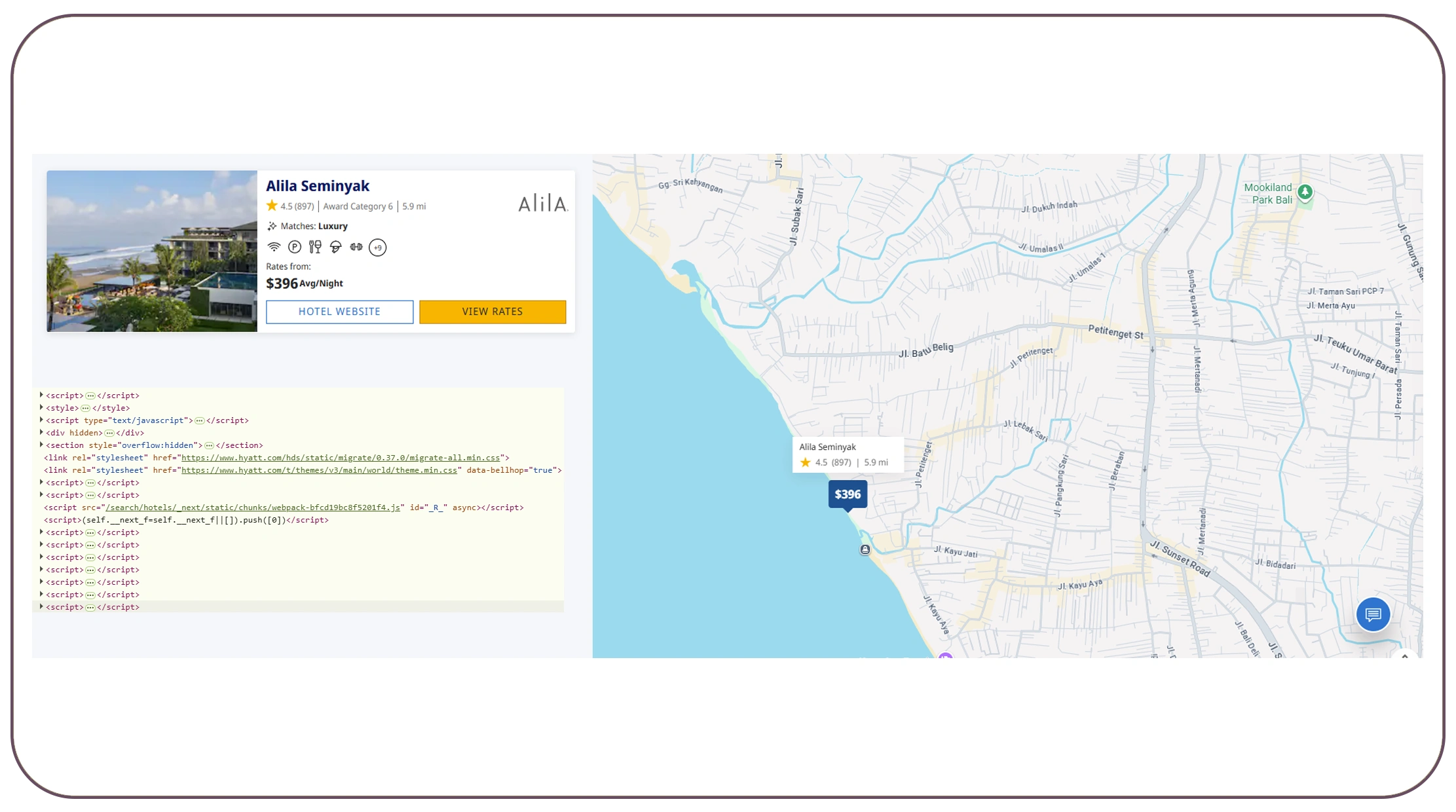
A Hyatt Travel API can provide a structured approach for applications that require hospitality information in machine-readable formats. Depending on the API's available fields and access permissions, structured responses can support applications such as hotel search, market analysis, internal dashboards, pricing tools, and travel intelligence platforms.
A Hyatt Travel Dataset may contain thousands of records organized around properties, destinations, room categories, prices, amenities, and other relevant attributes. It can complement API-driven workflows by providing historical or batch-oriented information for analysis. While APIs are often useful for application-level data access, datasets can be particularly useful when analysts need to compare records across destinations, dates, room categories, or property attributes.
Hospitality Market Development: 2020–2026
The period from 2020 to 2026 illustrates why businesses increasingly need structured travel information. In 2020, COVID-19 restrictions significantly affected international tourism. UN Tourism reported that by June 15, 2020, only 22% of destinations had started easing travel restrictions, while 65% still had borders completely closed to international tourism. (UNWTO)
During 2021, the gradual reopening of destinations created a fragmented travel environment. Businesses tracking hotels needed to account for changing availability and destination conditions. In 2022, the reopening cycle generated greater demand for travel information, making historical comparisons increasingly useful.
During 2023, Hyatt's pipeline reached approximately 127,000 rooms, covering approximately 650 hotels. The pipeline included properties across the Americas, Asia Pacific, and Europe, Africa, and Middle East regions. (Hyatt Investors)
In 2024, Hyatt reported a record pipeline of approximately 138,000 rooms at year-end, covering approximately 720 hotels. (Hyatt Investors)
In 2025, Hyatt's pipeline increased further to approximately 148,000 rooms, while net rooms grew 7.3% for the year. (Hyatt Investors)
For 2026, businesses can use these developments as historical context when studying portfolio expansion, destination coverage, and changing hospitality supply.
Potential Analytical Applications
| Business Function | Data Application |
|---|---|
| Revenue Management | Room-price comparison |
| Market Research | Destination analysis |
| Competitive Intelligence | Hotel benchmarking |
| Travel Platforms | Property discovery |
| Investment Research | Market expansion analysis |
| Data Science | Historical trend modeling |
Monitoring Changes as They Happen
Real-time Hyatt travel data can help businesses observe changes in publicly displayed hotel information at more frequent intervals. Hotel pricing and availability can change based on dates, room categories, occupancy, destination demand, promotions, and other market conditions.
Real-time or scheduled monitoring can therefore be useful when a business needs to identify price movements rather than relying on a static snapshot.
Market Evolution: 2020–2026
In 2020, hotel businesses operated in an unusually volatile environment because international travel restrictions and local regulations changed rapidly. This created a need for frequent monitoring rather than infrequent data collection.
In 2021, the tourism recovery remained uneven. UN Tourism reported that international arrivals during January–July 2021 were 80% below the same period in 2019, with substantial regional differences. (UNWTO)
In 2022, reopening and pent-up demand created new pricing and occupancy dynamics across destinations.
In 2023, international tourism continued its recovery, with UN Tourism reporting approximately 975 million international tourists between January and September, representing a 38% increase over the same period of 2022. (UNWTO)
In 2024, international tourism reached approximately 1.4 billion arrivals globally, according to UN Tourism. This represented recovery to pre-pandemic international tourism levels. (UNWTO)
In 2025, Hyatt reported 2.9% comparable system-wide RevPAR growth for the full year and 7.3% net rooms growth. (Hyatt Investors)
For 2026, recurring monitoring can help businesses compare newly collected observations with historical records and identify changes in pricing, hotel supply, room categories, and destination coverage.
Need structured hotel information for competitive analysis? Real Data API can help you build scalable data collection workflows tailored to your business requirements.
Get Insights Now!Example Monitoring Metrics
| Metric | Monitoring Objective |
|---|---|
| Room Price | Identify price movements |
| Availability | Track inventory signals |
| Room Category | Compare accommodation options |
| Amenities | Benchmark hotel offerings |
| Location | Analyze destination coverage |
| Rating | Monitor customer-facing indicators |
Turning Public Hotel Pages Into Structured Records
A Hyatt travel web data scraper can automate the collection of selected publicly available hotel information according to predefined fields and schedules. This can reduce repetitive manual research and provide consistently formatted records for downstream analysis.
A Hyatt Travel Dataset may contain thousands of records organized around properties, destinations, room categories, prices, amenities, and other relevant attributes.
Data Transformation Trends: 2020–2026
In 2020, hospitality companies faced a fragmented operating environment, making historical data difficult to compare because travel conditions changed rapidly.
In 2021, businesses increasingly needed destination-level information as reopening schedules differed between markets. Structured records could help analysts compare locations using consistent fields. In 2022, the recovery generated larger volumes of travel activity, increasing the usefulness of automated collection and normalization.
In 2023, Hyatt's global development pipeline reached approximately 127,000 rooms. The pipeline covered 650 hotels and multiple geographic markets, illustrating the scale of information that hospitality analysts may need to organize. (Hyatt Investors)
In 2024, Hyatt's portfolio surpassed 1,350 hotels and all-inclusive properties across 79 countries and six continents as of September 30. (Hyatt Investors)
In 2025, Hyatt reported approximately 148,000 rooms in its executed management and franchise pipeline. (Hyatt Investors)
In 2026, businesses can combine historical datasets with scheduled collection to develop longer-term views of hotel supply, pricing, amenities, and destination-level changes.
From Raw Information to Analytics
| Processing Stage | Purpose |
|---|---|
| Collection | Capture selected public information |
| Parsing | Separate individual attributes |
| Normalization | Standardize formats |
| Validation | Identify missing or inconsistent records |
| Deduplication | Remove duplicate entries |
| Storage | Maintain structured records |
| Delivery | Support dashboards and analytics |
Using Historical Records for Market Comparison
A Hyatt Travel Dataset can become more useful when collected repeatedly rather than treated as a one-time data file. Historical snapshots allow businesses to compare hotel information across dates and identify patterns that may not be visible in individual observations.
For example, a business could compare displayed room prices for the same property across different dates, examine changes in amenities, track destination expansion, or identify recurring pricing patterns.
Seven-Year Perspective: 2020–2026
In 2020, the global hospitality sector was primarily characterized by disruption and restricted international mobility. Hyatt continued expanding its network, opening 72 hotels and adding 14,972 rooms during the year. (Hyatt Investors)
In 2021, travel recovery began but remained uneven. International arrivals were still significantly below 2019 levels, making destination-specific data particularly important. (UNWTO)
In 2022, recovery broadened as more destinations reopened and traveler demand returned.
In 2023, Hyatt's pipeline reached approximately 127,000 rooms, indicating substantial future development activity across several geographic markets. (Hyatt Investors)
In 2024, Hyatt continued expanding its portfolio while international tourism recovered to approximately 1.4 billion arrivals globally. (UNWTO)
In 2025, Hyatt recorded 7.3% net rooms growth and a pipeline of approximately 148,000 rooms. (Hyatt Investors)
In 2026, these historical records can serve as a reference layer for businesses studying current hotel supply, destination expansion, pricing movements, and hospitality trends.
Historical Analysis Framework
| Analysis | Business Question |
|---|---|
| Price History | How have displayed prices changed? |
| Property Growth | How has hotel coverage evolved? |
| Destination Coverage | Which locations have expanded? |
| Amenity Changes | How have offerings developed? |
| Room Categories | What accommodation types are available? |
| Market Trends | What patterns appear over time? |
Expanding Travel Intelligence Beyond Individual Hotels
A Travel Dataset becomes especially valuable when hotel information is combined with broader market variables. Businesses can connect property-level records with destination, seasonal, pricing, accommodation, and travel-demand indicators to create more comprehensive analytical models.
Travel Intelligence From 2020–2026
The 2020–2026 period provides a useful example of how quickly travel-market conditions can change. In 2020, widespread restrictions disrupted international mobility and forced travel businesses to reassess conventional demand assumptions. (UNWTO)
In 2021, reopening was gradual and inconsistent, with international arrivals still substantially below 2019 levels. (UNWTO)
In 2022, the recovery accelerated and created new opportunities for destination and hotel comparison.
In 2023, international tourism continued its recovery, with nearly 975 million international arrivals recorded during the first nine months of the year. (UNWTO)
In 2024, international arrivals reached approximately 1.4 billion, marking a major milestone in global tourism recovery. (UNWTO)
In 2025, Hyatt reported full-year comparable system-wide RevPAR growth of 2.9% and net rooms growth of 7.3%, while its development pipeline reached approximately 148,000 rooms. (Hyatt Investors)
In 2026, businesses can use these historical patterns as a foundation for monitoring future hotel and travel-market developments.
Potential Travel Intelligence Outputs
| Output | Possible Business Use |
|---|---|
| Hotel Price Index | Pricing analysis |
| Destination Comparison | Market research |
| Amenity Benchmark | Product positioning |
| Property Inventory | Supply analysis |
| Historical Dataset | Trend research |
| Location Intelligence | Expansion planning |
Why Choose Real Data API?
Real Data API can support businesses that need structured, scalable, and repeatable web data collection workflows. Instead of relying on manually gathered information, organizations can define the fields, destinations, properties, and frequency required for their analysis.
The platform can be used to support Web Scraping Services designed around business-specific data requirements. Depending on the project, workflows may include data collection, parsing, normalization, validation, deduplication, scheduling, and structured delivery.
Key Benefits Can Include:
- Scalable collection: Support growing property and destination coverage.
- Structured outputs: Organize hotel information into consistent fields.
- Automated workflows: Reduce repetitive manual research.
- Historical monitoring: Maintain recurring snapshots for comparison.
- Data validation: Identify incomplete or inconsistent records.
- Custom fields: Collect attributes relevant to specific analytical goals.
- Analytics readiness: Prepare information for dashboards, databases, and business intelligence systems.
For travel companies, hospitality analysts, researchers, and other data-driven organizations, the value of hotel information increases when it is consistently collected and standardized over time.
Conclusion
Hotel markets are dynamic, with room prices, availability, amenities, property portfolios, and destinations changing continuously. A structured Hyatt Travel Dataset can help businesses organize these variables and use them for hotel benchmarking, pricing analysis, destination research, competitive monitoring, and travel trend analysis.
From the disruption of 2020 to the recovery of international tourism in 2024 and continued hotel portfolio expansion through 2025, the hospitality sector demonstrates why historical and recurring data collection matters. (UNWTO)
With scalable collection, structured processing, validation, and recurring monitoring, businesses can transform publicly available hotel information into a reliable foundation for hospitality intelligence.
Contact Real Data API to build a customized hotel and travel data solution for your pricing, competitive intelligence, market research, or travel analytics requirements!
FAQs
What is a Hyatt Travel Dataset?
A Hyatt Travel Dataset is a structured collection of publicly available hotel information, potentially covering properties, prices, room categories, amenities, locations, ratings, availability, and related travel attributes.
How does Travel Data Scraping support hotel analysis?
Travel Data Scraping can automate the collection of publicly available hotel information, helping businesses monitor prices, amenities, locations, availability, and market changes across multiple properties and destinations.
What are Hyatt Travel Data Scraping Services?
Hyatt Travel Data Scraping Services can provide customized workflows for collecting selected hotel information, normalizing records, validating datasets, scheduling recurring extraction, and delivering structured data for business analysis.
What is a Hyatt Travel API used for?
A Hyatt Travel API can support applications that require structured hospitality information, depending on the API's available fields, access permissions, usage conditions, and technical implementation requirements.
Can Real Data API provide Real-time Hyatt travel data?
Yes, Real-time Hyatt travel data workflows can be designed for frequent collection of publicly accessible information, subject to source availability, technical constraints, applicable terms, and the required monitoring frequency.
Latest posts

How Louis Vuitton Fashion Dataset Enables Better Analysis of Luxury Products, Prices, Brands, and Fashion Trends?
How Blinkit Grocery Dataset Enables Smarter Analysis of Products, Prices, Availability, and Quick-Commerce Trends?

How Chanel Fashion Dataset Enables Smarter Analysis of Luxury Products, Prices, Categories, and Fashion Trends?
How Foodpanda Food Dataset Helps Businesses Track Restaurants, Menus, Prices, Ratings, and Food Delivery Trends?






.png)