TL;DR
- Louis Vuitton fashion dataset helps businesses structure product, price, category, material, availability, and collection information for luxury-market analysis.
- Louis Vuitton Fashion Data Scraping supports recurring collection of changing catalog and pricing signals, enabling competitive monitoring and trend research.
- The resulting data can help retailers, luxury analysts, marketplaces, and brands identify assortment changes, pricing movements, product launches, and emerging fashion patterns.
Introduction
Luxury fashion businesses increasingly depend on structured digital product intelligence to understand what is being offered, how collections evolve, and how prices change across markets. A Louis Vuitton Fashion Dataset can provide the structured organization of product names, categories, materials, colors, collections, prices, availability, URLs, and other publicly visible attributes into a research-ready format.
The need is particularly relevant because luxury catalogs are dynamic. Louis Vuitton's official India website currently organizes handbags across categories such as crossbody bags, totes, mini bags, top handles, backpacks, and trunks, while also presenting collections including Pre-Fall 2026, LV Resort, Cruise 2026, and other seasonal lines.
For analysts, manually recording these changes can become difficult when hundreds of products, variants, colors, materials, and collection updates need to be monitored repeatedly. Louis Vuitton Fashion Data Scraping can convert publicly accessible catalog information into structured records for historical comparison and analytics.
This approach is useful for several buyer personas. Luxury retailers can monitor assortment and pricing. Market researchers can analyze product positioning. Data teams can create normalized datasets for dashboards. E-commerce analysts can study product visibility and availability. Trend researchers can connect product attributes with collection and category movements.
The objective is not simply to collect product pages. The greater value comes from transforming fragmented online information into consistent historical observations that can support price analysis, assortment intelligence, competitive research, and fashion trend discovery.
How can structured collection improve historical fashion analysis?
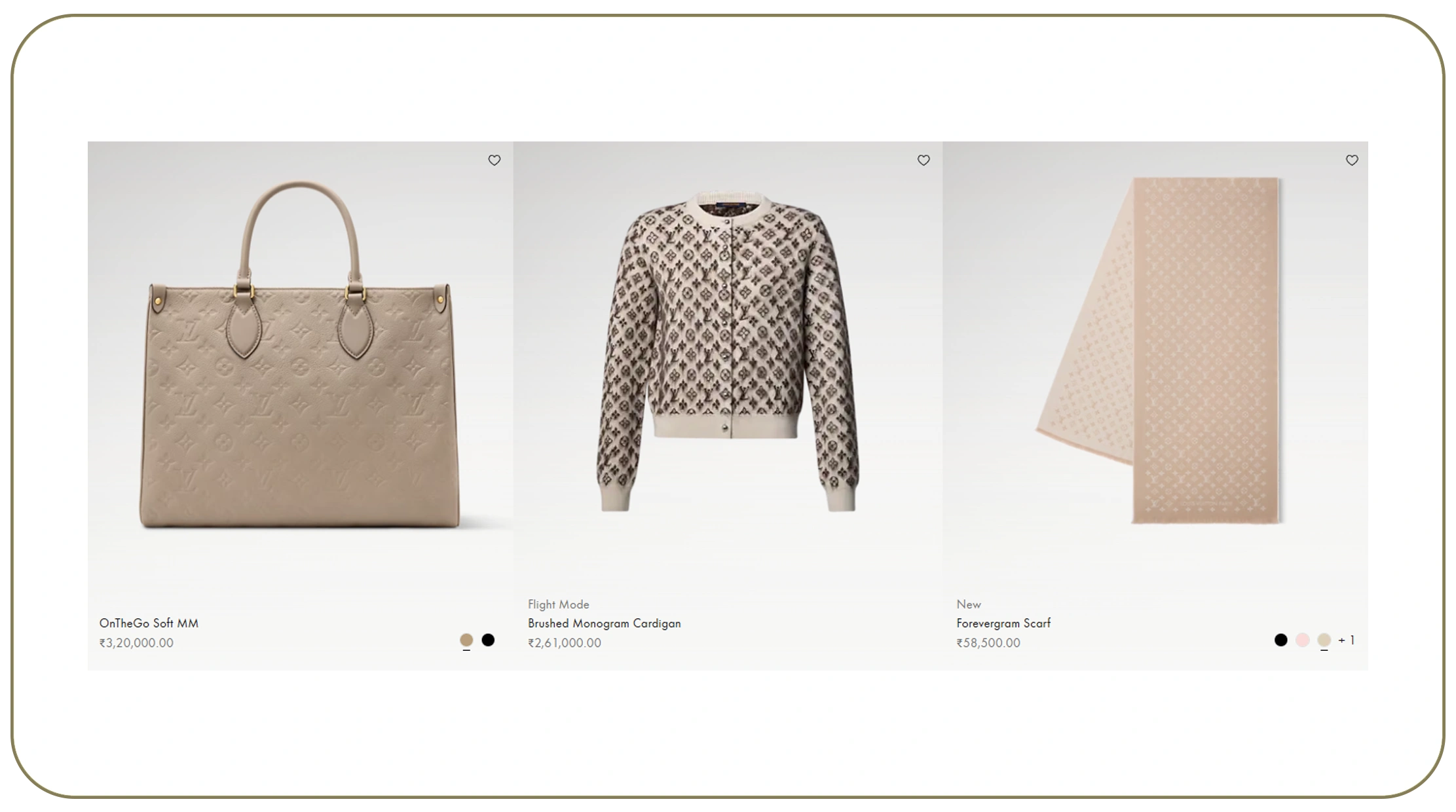
A structured Louis Vuitton fashion data web scraping workflow can turn frequently changing online catalog information into standardized records. Instead of reviewing product pages manually, analysts can capture product-level attributes at scheduled intervals and compare changes over time.
The most useful fields can include product title, product URL, category, subcategory, collection, material, color, price, currency, availability, product status, and collection label. Louis Vuitton's current catalog demonstrates why normalization matters: its handbag pages expose multiple categories, materials, colors, collections, and product variants.
Tracking Framework
| Period | Suggested Observation Frequency | Core Fields | Primary Analytical Use |
|---|---|---|---|
| 2020 | Monthly | Product, category, price | Historical baseline |
| 2021 | Monthly | Price, availability | Market recovery tracking |
| 2022 | Biweekly | Product, collection, price | Assortment monitoring |
| 2023 | Biweekly | Category, price, status | Competitive analysis |
| 2024 | Weekly | Product, price, collection | Pricing and assortment |
| 2025 | Weekly | Variant, price, availability | Digital shelf monitoring |
| 2026 | Daily/weekly | Product, price, collection | Near-current intelligence |
The frequencies above are an illustrative analytics framework, not reported Louis Vuitton historical collection statistics.
From 2020 to 2026, the analytical priority can move from basic catalog archiving toward higher-frequency monitoring. A historical dataset allows businesses to determine whether a product is genuinely new, temporarily unavailable, renamed, moved between collections, or simply displayed differently.
The same structure can support price-history analysis. A product observed repeatedly can be assigned a stable identifier, allowing analysts to calculate absolute price changes, percentage changes, duration between observations, and differences between product variants.
This creates a more reliable foundation for dashboards and research reports. Rather than treating every website visit as an isolated observation, businesses can build a time series that explains how the assortment changes.
What makes product-level extraction valuable for luxury research?
Louis Vuitton Data Extraction for Luxury Fashion Market Research can provide a consistent evidence base for studying product architecture, assortment depth, pricing, materials, and seasonal positioning.
Luxury fashion research often requires more than headline market numbers. Researchers need product-level information to understand what brands actually present to consumers. For example, the current Louis Vuitton India catalog separates products into categories and materials and displays specific prices for individual products. The official site currently shows examples such as the Neverfull MM, Alma BB, Speedy Bandoulière 20, and other models across its catalog.
Research Metrics
| Year | Product-Level Metric | Example Calculation | Research Purpose |
|---|---|---|---|
| 2020 | Assortment count | Unique SKUs observed | Baseline portfolio analysis |
| 2021 | Category mix | SKUs by category | Pricing research |
| 2022 | Price distribution | Median/range | Product positioning |
| 2023 | Material mix | Products by material | Seasonal analysis |
| 2024 | Collection mix | Products by collection | Digital shelf study |
| 2025 | Availability rate | Available/observed SKUs | Trend monitoring |
| 2026 | Change velocity | New/removed products per period | Trend monitoring |
These are suggested research metrics, not claimed historical Louis Vuitton results.
Luxury research becomes more useful when researchers can combine product-level observations with broader market context. Bain reported that China's mainland personal luxury market declined by approximately 18%–20% in 2024, illustrating why geographic and temporal context matters when interpreting luxury-market data.
A structured extraction project can therefore support both micro and macro analysis. At the micro level, analysts can study individual products and variants. At the macro level, aggregated records can reveal changes in category composition, pricing ranges, and collection activity.
For research teams, the biggest advantage is repeatability. A standardized schema makes it possible to compare observations across months and years without rebuilding the analysis from scratch.
How can current product signals support faster decision-making?
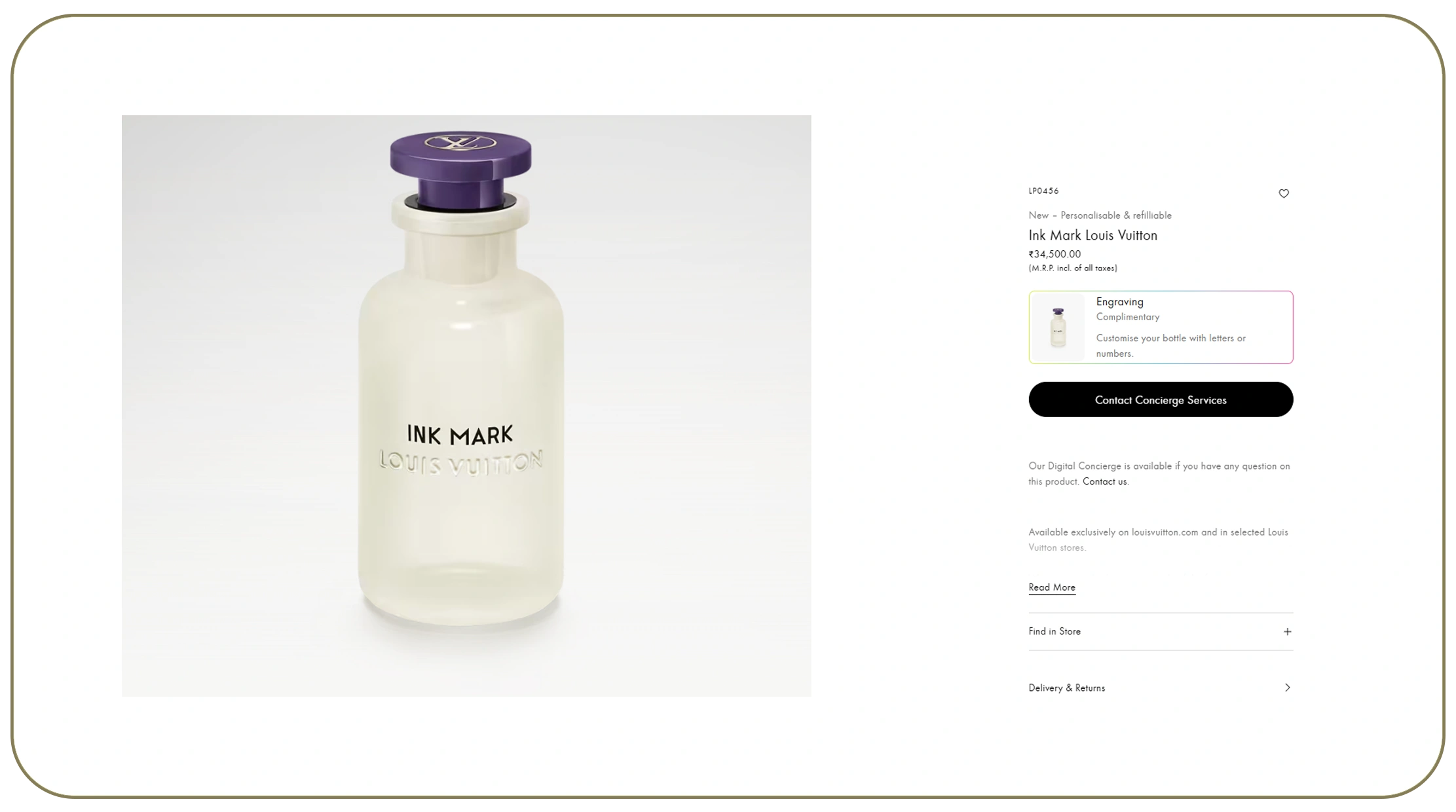
Real-time Louis Vuitton product data can help businesses respond more quickly when products, prices, availability, collections, or visible catalog attributes change.
The concept of real-time should be defined according to the business requirement. For some organizations, daily collection is sufficient. Others may require several observations per day for specific products or markets. The correct frequency depends on the speed of change, business value, and monitoring budget.
Example Monitoring Model
| Monitoring Layer | Suggested Frequency | Key Signals | Business Application |
|---|---|---|---|
| Strategic | Monthly | Category and collection | Market research |
| Tactical | Weekly | Prices and assortment | Competitive analysis |
| Operational | Daily | Availability and new products | Catalog monitoring |
| High-frequency | Multiple times daily | Selected daily price/status fields | Rapid-change monitoring |
Frequency recommendations are an illustrative operating model.
Louis Vuitton's official India catalog demonstrates the range of signals available for structured monitoring. Current pages show new products, seasonal collections, colors, materials, categories, and displayed Indian-rupee prices. For example, current handbag pages list specific models alongside prices and variant information.
The important step is preserving historical observations. If a product is available today but unavailable next week, a single snapshot cannot explain the transition. A time-stamped dataset can.
The same principle applies to price intelligence. Analysts can calculate price deltas between snapshots and distinguish between a product being newly introduced and an existing product receiving a price update.
For luxury retailers and market researchers, faster access to structured information can reduce manual monitoring and improve the consistency of recurring reports.
Build a recurring product-monitoring workflow that converts changing luxury catalog signals into structured, analysis-ready data!
Get Insights Now!What capabilities should a scalable collection system provide?
A Louis Vuitton fashion web data scraper should be designed around data quality, repeatability, scalability, and downstream usability rather than simple page collection.
A useful system starts by identifying the required fields. Product identifiers, names, categories, collections, materials, colors, prices, currencies, availability, URLs, and timestamps can form the core schema. Additional fields can be included according to the research objective.
Recommended Capability Framework
| Capability | 2020–2021 Focus | 2022–2023 Focus | 2024–2026 Focus |
|---|---|---|---|
| Catalog coverage | Core products | Expanded categories | Multi-category monitoring |
| Scheduling | Monthly | Weekly | Daily or customized |
| Validation | Basic | Rule-based | Multi-layer validation |
| Historical storage | Periodic snapshots | Time series | Continuous history |
| Analytics | Descriptive | Comparative | Trend and anomaly analysis |
| Delivery | CSV | Database/API | Dashboard/API pipelines |
This table represents a recommended technical evolution, not reported Louis Vuitton system performance.
A scalable workflow can include URL discovery, request management, parsing, field normalization, duplicate detection, validation, timestamping, storage, and delivery. Currency should be retained alongside price because the same nominal value cannot be interpreted consistently across markets.
Data quality is equally important. A product page may change its displayed price, availability, collection label, or variant information. Validation rules can flag missing prices, unexpected currency changes, duplicate records, invalid URLs, and abrupt field changes.
Historical versioning is another important feature. Instead of overwriting yesterday's record, the system can retain each observation. This enables analysts to reconstruct when changes occurred.
For business users, the final dataset should be delivered in a practical format such as CSV, Excel, JSON, database tables, or API-ready structures. The output should match the team's analytics environment so that collection does not become another isolated data process.
How can a dedicated dataset support pricing and assortment intelligence?
A Louis Vuitton Fashion Dataset can provide the structured foundation required to connect product attributes with pricing, availability, collections, and historical changes.
The value comes from consistency. Consider a handbag catalog containing product names, categories, materials, colors, displayed prices, and collection labels. If these fields are captured at regular intervals, analysts can build product-level histories rather than relying on individual screenshots or manually maintained spreadsheets.
Louis Vuitton's official India website currently illustrates this type of product complexity. Its catalog includes numerous handbag categories and materials, while current product pages show specific models and Indian-rupee prices.
Example Analytical Output
| Dataset Layer | Example Fields | Possible Analysis |
|---|---|---|
| Product | Name, URL, identifier | Catalog tracking |
| Classification | Category, subcategory | Assortment analysis |
| Attributes | Material, color | Product mix |
| Commercial | Price, currency | Price monitoring |
| Availability | Status, timestamp | Availability history |
| Collection | Seasonal/collection label | Trend research |
| Historical | Previous observations | Change detection |
A 2020–2026 historical structure can help researchers separate short-term changes from longer-term movements. For example, a product observed across several years can be analyzed for persistence, availability patterns, category movement, and price evolution.
The dataset can also support segmentation. Analysts may group products by category, material, collection, price band, or color and then compare those groups across observation periods.
Another use case is assortment mapping. Businesses can calculate the proportion of tracked products represented by different categories or collections. When repeated over time, these measurements can reveal how a digital catalog evolves.
Importantly, the dataset should preserve source URLs and timestamps. These fields provide traceability and allow analysts to understand when each observation was captured.
Which fashion intelligence workflows can combine product and trend signals?
Fashion Data Scraping, Louis Vuitton fashion dataset workflows can combine catalog observations with pricing, assortment, product attributes, and historical timestamps to create broader fashion intelligence.
From 2020 through 2026, the analytical workflow can evolve from basic data collection into a structured intelligence pipeline:
| Year | Analytical Development | Example Output |
|---|---|---|
| 2020 | Catalog archiving | Product inventory snapshot |
| 2021 | Historical comparison | Product availability changes |
| 2022 | Attribute normalization | Category/material analysis |
| 2023 | Pricing analysis | Price movement reports |
| 2024 | Collection tracking | Seasonal assortment views |
| 2025 | Automated monitoring | Recurring alerts |
| 2026 | Integrated intelligence | Trend and catalog dashboards |
The table describes a recommended analytical progression rather than reported Louis Vuitton historical results.
Trend analysis becomes more actionable when product observations are standardized. Analysts can measure how frequently specific categories appear, which materials are represented, how color assortments change, and how collections are introduced or retired.
Pricing adds another layer. A product's price should be analyzed alongside currency, market, timestamp, and product attributes. Without those dimensions, simple price comparisons can produce misleading conclusions.
The dataset can also support anomaly detection. An unexpected disappearance, price change, or category reassignment can be flagged for review. Analysts can then determine whether the change represents a genuine business event or a temporary catalog update.
For technology teams, the key is integration. Product records can feed databases, BI tools, internal dashboards, research models, or downstream machine-learning workflows.
The result is a repeatable process that transforms public digital catalog information into structured evidence for luxury-market research.
Why Choose Real Data API?
Fashion Datasets, Louis Vuitton fashion dataset solutions can be useful when internal teams need recurring collection, normalization, validation, historical storage, and analytics-ready delivery without building every component independently.
A specialized data workflow can address common operational challenges such as changing page structures, duplicate products, inconsistent attributes, missing values, product variants, and frequent catalog updates.
Key Capabilities to Evaluate
- Scalable product collection
- Scheduled monitoring
- Structured product schemas
- Historical snapshots
- Price and currency tracking
- Product availability monitoring
- Attribute normalization
- Duplicate detection
- Data validation
- API or database delivery
- Custom fields and geographic coverage
- Analytics-ready output
The right architecture depends on the organization's use case. A market research team may need weekly snapshots and historical datasets, while an e-commerce intelligence team may require more frequent monitoring.
A strong implementation should also make data traceable. Each record should ideally include a timestamp and source URL, allowing analysts to understand where and when an observation originated.
For organizations building fashion intelligence programs, this approach can reduce manual catalog review and create a reusable data foundation for recurring reports.
Conclusion
The value of a Louis Vuitton fashion dataset lies in turning constantly changing online catalog information into structured, historical, and analyzable records. Product names, categories, collections, materials, colors, prices, availability, and timestamps can collectively support luxury-market research, pricing analysis, assortment monitoring, and fashion trend intelligence.
The official Louis Vuitton India website demonstrates the breadth of catalog information available for analysis, including product categories, materials, collections, variants, and displayed prices.
For businesses, the practical objective is to move beyond one-time data collection. A recurring workflow can establish historical visibility, improve research consistency, and make product-level intelligence easier to integrate into dashboards and analytics systems.
Turn luxury fashion catalog information into structured, recurring intelligence with a scalable data collection and delivery workflow — partner with Real Data API!
FAQs
What is Louis Vuitton fashion data web scraping used for?
It captures publicly accessible product information such as names, categories, prices, materials, availability, and collection details for structured research, monitoring, and historical fashion analysis.
Why is Louis Vuitton Data Extraction for Luxury Fashion Market Research important?
It converts fragmented catalog information into consistent records, helping researchers compare assortment, product attributes, pricing, collections, and availability across defined periods and markets.
How can real-time Louis Vuitton product data support businesses?
It can provide frequently refreshed observations of product availability, prices, collections, and catalog changes, helping teams maintain current dashboards and recurring competitive intelligence workflows.
What does a Louis Vuitton fashion web data scraper collect?
Depending on requirements, it can collect product titles, URLs, categories, prices, currencies, materials, colors, collection labels, availability indicators, timestamps, and other publicly displayed attributes.
How can Louis Vuitton Fashion Dataset analysis reveal fashion trends?
It enables analysts to compare product categories, materials, colors, collections, pricing bands, and assortment changes over time, creating structured evidence for trend and market research.
Latest posts
How Louis Vuitton Fashion Dataset Enables Better Analysis of Luxury Products, Prices, Brands, and Fashion Trends?
How Blinkit Grocery Dataset Enables Smarter Analysis of Products, Prices, Availability, and Quick-Commerce Trends?
How Chanel Fashion Dataset Enables Smarter Analysis of Luxury Products, Prices, Categories, and Fashion Trends?
How Foodpanda Food Dataset Helps Businesses Track Restaurants, Menus, Prices, Ratings, and Food Delivery Trends?






.png)